CURRENT TRENDS & ISSUES IN
NURSING EDUCATION
Nursing Study Contents
Objectives
• Describe forces and issues driving nursing
education in the 21st century.
• Apply at least one theory to nursing
education.
• Define components of curriculum
development and design & redesign.
• Identify different approaches to teaching.
• Explain teaching methodologies applicable
for adult learners.
Then → Now
• Then: Traditional approach – objectives
with closely orchestrated learning
experiences; faculty controlled
• Now: Competencies and outcomes; focus
on “end product”; faculty-student
collaborative learning process
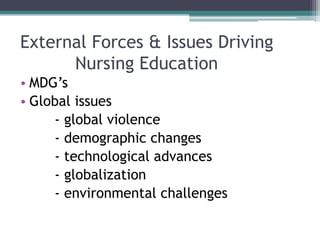
External Forces & Issues Driving
Nursing Education
• MDG’s
• Global issues
- global violence
- demographic changes
- technological advances
- globalization
- environmental challenges
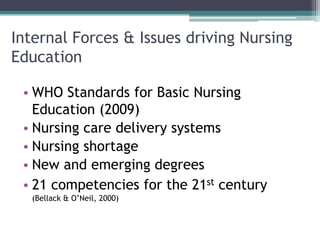
Internal Forces & Issues driving Nursing
Education
• WHO Standards for Basic Nursing
Education (2009)
• Nursing care delivery systems
• Nursing shortage
• New and emerging degrees
• 21 competencies for the 21st century
(Bellack & O’Neil, 2000)
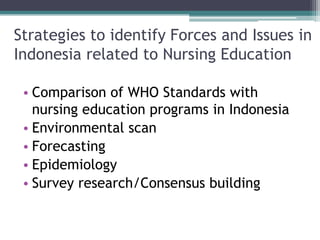
Strategies to identify Forces and Issues in
Indonesia related to Nursing Education
• Comparison of WHO Standards with
nursing education programs in Indonesia
• Environmental scan
• Forecasting
• Epidemiology
• Survey research/Consensus building
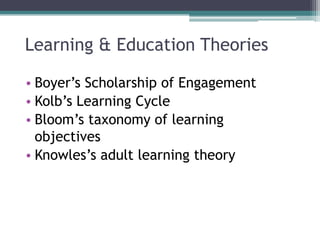
Learning & Education Theories
• Boyer’s Scholarship of Engagement
• Kolb’s Learning Cycle
• Bloom’s taxonomy of learning
objectives
• Knowles’s adult learning theory
Components of Curriculum
Development and Design
• Type of undergraduate nursing program:
diploma, associate or baccalaureate
degree
• Curriculum design:
• - blocked content
• - integrated content
• Sequencing of courses (master plan)
Use of Theory in Curriculum
Development
• Single specific nursing
theory or model
• Concepts from multiple
theories or models
Next Steps
• Mission
• Vision
• Core Values
• Philosophy
• Competencies (with leveling)
• Curriculum outcomes
• Quality improvement activities
Accrediting Bodies
• National League for Nursing
Accrediting Commission (NLNAC)
• Commission on Collegiate Nursing
Education (CCNE)
Teaching Approaches
• Lecture
• Problem-based learning
• Competency-based learning
• Concept mapping
• Portfolio
• Self-learning packets
Student Learning Styles
• Characteristics of the learner
• Diversity of learners
• Learning style preferences
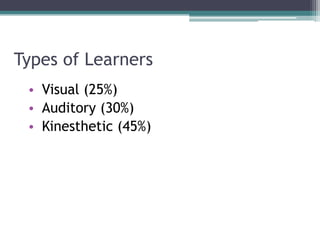
Types of Learners
• Visual (25%)
• Auditory (30%)
• Kinesthetic (45%)
0
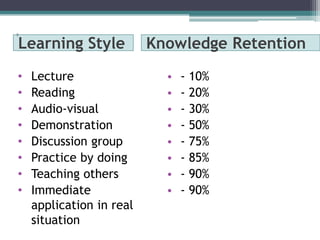
Learning Style Knowledge Retention
• Lecture
• Reading
• Audio-visual
• Demonstration
• Discussion group
• Practice by doing
• Teaching others
• Immediate
application in real
situation
• - 10%
• - 20%
• - 30%
• - 50%
• - 75%
• - 85%
• - 90%
• - 90%
Learning Style Assessment Tool
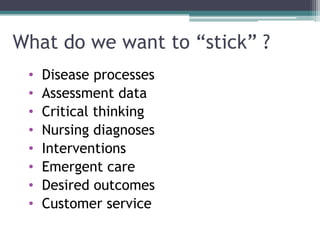
What do we want to “stick” ?
• Disease processes
• Assessment data
• Critical thinking
• Nursing diagnoses
• Interventions
• Emergent care
• Desired outcomes
• Customer service
Adult learner education components
• Reflection: Analysis of
experiences,
observations, feelings,
and perceptions
Strategies include
thinking out loud;
journaling
Adult learner education components
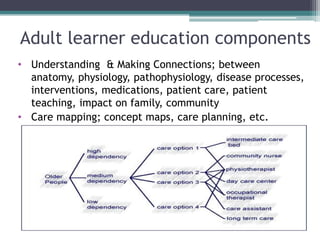
• Understanding & Making Connections; between
anatomy, physiology, pathophysiology, disease processes,
interventions, medications, patient care, patient
teaching, impact on family, community
• Care mapping; concept maps, care planning, etc.
Interactive Learning Methodologies
• Action methods
• Literature
• Art
• Memory aides
Action Methods
• Drama
• Case scenarios
• Simulation
• Soap operas/television segments
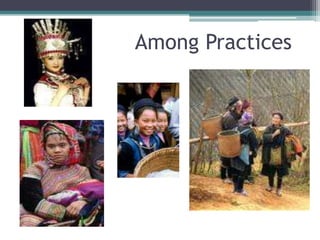
Among Practices
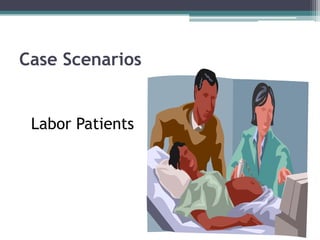
Case Scenarios
Labor Patients
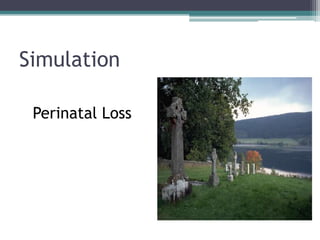
Simulation
Perinatal Loss
Time with my son
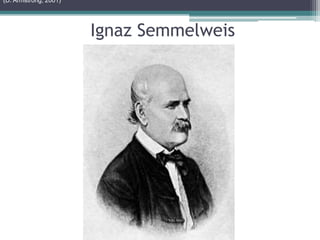
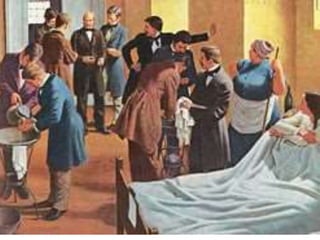
Literature
Ignaz Semmelweis
(D. Armstrong, 2001)
Art
• Audio clips
• Video clips
• Photography
• Artwork
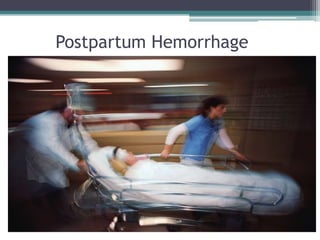
Postpartum Hemorrhage
Memory Aides
• Acronym
• Visual aides
• Poetry
• Music
• Games
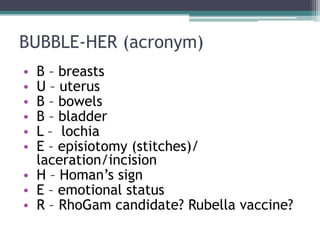
BUBBLE-HER (acronym)
• B – breasts
• U – uterus
• B – bowels
• B – bladder
• L – lochia
• E – episiotomy (stitches)/
laceration/incision
• H – Homan’s sign
• E – emotional status
• R – RhoGam candidate? Rubella vaccine?
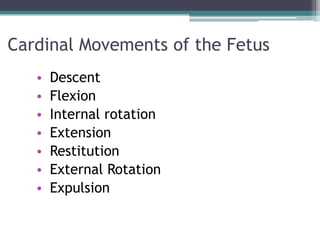
Cardinal Movements of the Fetus
• Descent
• Flexion
• Internal rotation
• Extension
• Restitution
• External Rotation
• Expulsion
“It’s a Decel”
(tune of “Clementine”)
It’s a decel; it’s a decel
to the left and to the right
Turn the Pit off; grab the 02
Let the doc know we’re all right!
“Hang the Mag” (tune of “Taps”)
Hang the Mag; or she’ll seize
Don’t you know that she has clonus
three?
Hang the Mag; or she’ll seize
Won’t you, please?
Games
• Perinatal Trivial Pursuit
• Postpartum Bingo
• Want to be a Millionaire
• Are you Smarter than a Student
Nurse?
Small Group Learning Activity
• Break into small groups
• Choose a topic (disease process,
assessment data, nursing interventions,
emergent care, desired outcome, etc.)
• Choose an interactive learning process
• Create your tool to “Make It Stick”!
Share Time
Future Trends & Issues in Nursing Education
• Increased collaboration between nursing
practice and nursing education
• Increased emphasis on collaboration between
healthcare disciplines
• Increased development of educational
products for faculty and students
• Increased student and nurse mobility
(including increased licensure mobility)
Future Trends & Issues in Nursing Education
• Increased distance (online) learning
• Schools of nursing providing ongoing
professional development for competence
requirements
• Increased teaching of evidence-based
practice.
Thanks
Like & Share
Nursing Study Contents

Current trends and issues in nursing education ppt

  • 1.
    CURRENT TRENDS &ISSUES IN NURSING EDUCATION Nursing Study Contents
  • 2.
    Objectives • Describe forcesand issues driving nursing education in the 21st century. • Apply at least one theory to nursing education. • Define components of curriculum development and design & redesign. • Identify different approaches to teaching. • Explain teaching methodologies applicable for adult learners.
  • 3.
    Then → Now •Then: Traditional approach – objectives with closely orchestrated learning experiences; faculty controlled • Now: Competencies and outcomes; focus on “end product”; faculty-student collaborative learning process
  • 4.
    External Forces &Issues Driving Nursing Education • MDG’s • Global issues - global violence - demographic changes - technological advances - globalization - environmental challenges
  • 5.
    Internal Forces &Issues driving Nursing Education • WHO Standards for Basic Nursing Education (2009) • Nursing care delivery systems • Nursing shortage • New and emerging degrees • 21 competencies for the 21st century (Bellack & O’Neil, 2000)
  • 6.
    Strategies to identifyForces and Issues in Indonesia related to Nursing Education • Comparison of WHO Standards with nursing education programs in Indonesia • Environmental scan • Forecasting • Epidemiology • Survey research/Consensus building
  • 7.
    Learning & EducationTheories • Boyer’s Scholarship of Engagement • Kolb’s Learning Cycle • Bloom’s taxonomy of learning objectives • Knowles’s adult learning theory
  • 8.
    Components of Curriculum Developmentand Design • Type of undergraduate nursing program: diploma, associate or baccalaureate degree • Curriculum design: • - blocked content • - integrated content • Sequencing of courses (master plan)
  • 9.
    Use of Theoryin Curriculum Development • Single specific nursing theory or model • Concepts from multiple theories or models
  • 10.
    Next Steps • Mission •Vision • Core Values • Philosophy • Competencies (with leveling) • Curriculum outcomes • Quality improvement activities
  • 11.
    Accrediting Bodies • NationalLeague for Nursing Accrediting Commission (NLNAC) • Commission on Collegiate Nursing Education (CCNE)
  • 12.
    Teaching Approaches • Lecture •Problem-based learning • Competency-based learning • Concept mapping • Portfolio • Self-learning packets
  • 13.
    Student Learning Styles •Characteristics of the learner • Diversity of learners • Learning style preferences
  • 14.
    Types of Learners •Visual (25%) • Auditory (30%) • Kinesthetic (45%)
  • 15.
    0 Learning Style KnowledgeRetention • Lecture • Reading • Audio-visual • Demonstration • Discussion group • Practice by doing • Teaching others • Immediate application in real situation • - 10% • - 20% • - 30% • - 50% • - 75% • - 85% • - 90% • - 90%
  • 16.
  • 17.
    What do wewant to “stick” ? • Disease processes • Assessment data • Critical thinking • Nursing diagnoses • Interventions • Emergent care • Desired outcomes • Customer service
  • 18.
    Adult learner educationcomponents • Reflection: Analysis of experiences, observations, feelings, and perceptions Strategies include thinking out loud; journaling
  • 19.
    Adult learner educationcomponents • Understanding & Making Connections; between anatomy, physiology, pathophysiology, disease processes, interventions, medications, patient care, patient teaching, impact on family, community • Care mapping; concept maps, care planning, etc.
  • 20.
    Interactive Learning Methodologies •Action methods • Literature • Art • Memory aides
  • 21.
    Action Methods • Drama •Case scenarios • Simulation • Soap operas/television segments
  • 22.
  • 23.
  • 24.
  • 25.
  • 26.
  • 27.
  • 29.
    Art • Audio clips •Video clips • Photography • Artwork
  • 30.
  • 31.
    Memory Aides • Acronym •Visual aides • Poetry • Music • Games
  • 32.
    BUBBLE-HER (acronym) • B– breasts • U – uterus • B – bowels • B – bladder • L – lochia • E – episiotomy (stitches)/ laceration/incision • H – Homan’s sign • E – emotional status • R – RhoGam candidate? Rubella vaccine?
  • 33.
    Cardinal Movements ofthe Fetus • Descent • Flexion • Internal rotation • Extension • Restitution • External Rotation • Expulsion
  • 35.
    “It’s a Decel” (tuneof “Clementine”) It’s a decel; it’s a decel to the left and to the right Turn the Pit off; grab the 02 Let the doc know we’re all right!
  • 36.
    “Hang the Mag”(tune of “Taps”) Hang the Mag; or she’ll seize Don’t you know that she has clonus three? Hang the Mag; or she’ll seize Won’t you, please?
  • 37.
    Games • Perinatal TrivialPursuit • Postpartum Bingo • Want to be a Millionaire • Are you Smarter than a Student Nurse?
  • 38.
    Small Group LearningActivity • Break into small groups • Choose a topic (disease process, assessment data, nursing interventions, emergent care, desired outcome, etc.) • Choose an interactive learning process • Create your tool to “Make It Stick”!
  • 39.
  • 40.
    Future Trends &Issues in Nursing Education • Increased collaboration between nursing practice and nursing education • Increased emphasis on collaboration between healthcare disciplines • Increased development of educational products for faculty and students • Increased student and nurse mobility (including increased licensure mobility)
  • 41.
    Future Trends &Issues in Nursing Education • Increased distance (online) learning • Schools of nursing providing ongoing professional development for competence requirements • Increased teaching of evidence-based practice.
  • 42.