Unit 3: Circulatory
(1) What is Blood?
• Type of connective tissue.
• Contains Living & Nonliving
components.
• Purpose: Transport nutrients &
waste throughout body.
(2) Blood Cells
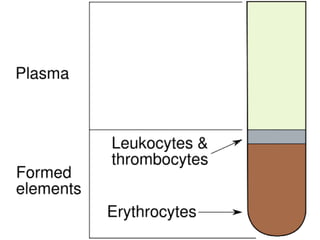
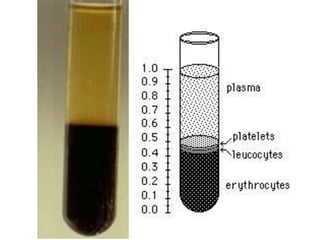
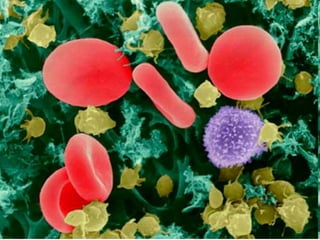
• Cells make up 45% of volume.
• Types:
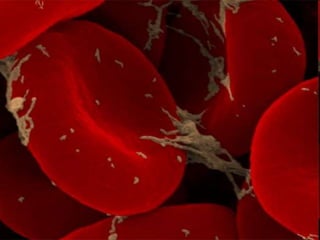
–Erythrocytes = Red Blood Cells = RBC’s
–Leukocytes = White Blood Cells = WBC’s
–Platelets = Not actually cells…Clotting
Factors
(3) Plasma
• Liquid part of blood.
• Contains:
–Plasma Proteins:
• Albumin  Maintains osmotic pressure.
• Fibrinogen & Globulin  Clotting Factors
–Water (THE liquid solvent)
–Salts (to maintain osmotic pressure)
–Nutrients carried in blood
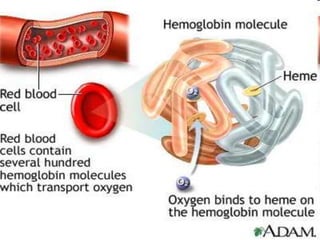
(4) Erythrocytes (RBC’s)
• Purpose: Carry oxygen to tissues.
• Hemoglogin:
–Type of Protein
–Contains Iron which binds with Oxygen
–Concentration determines availability of
Oxygen to cells
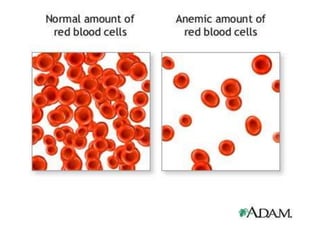
(5) Anemia
• Type of RBC Disease/Disorder
• Cause:
–Low RBC count
–Low hemoglobin concentration
–Deformed RBC
• Result:
–Decreased Oxygen availability
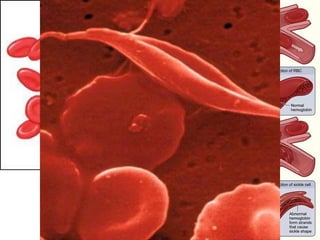
• Special Case = Sickle Cell Anemia
–Deformed RBC does not allow Oxygen
to bind
–Sickled cells can also clog blood vessels
• Treatments:
–Iron & Vitamin Supplements
–Blood Transfusions / Bone Marrow
Transplant
–Goal  Solve & Fix Underlying
Problem, not “cover up”
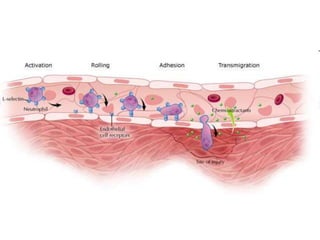
(6) Leukocytes (WBC’s)
• Purpose: Defend against infectious agents (bacteria,
viruses, parasites, etc.)
• Mechanisms:
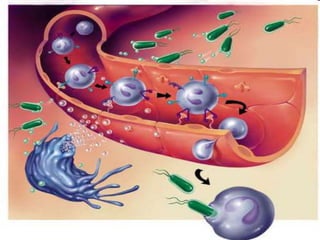
– Diapedesis…
• Have ability to move across/through blood
vessels
• Use circulatory system as highway
– Positive Chemotaxis…
• Can locate area of damage/infection by
responding to released immune/bacterial
chemicals
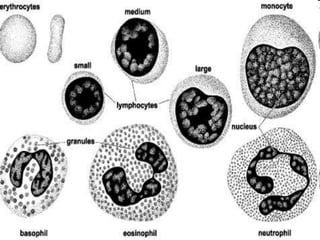
(7) Types of Leukocytes
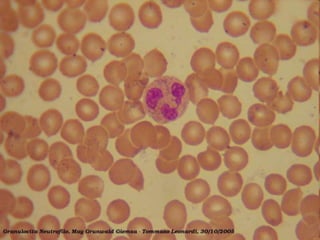
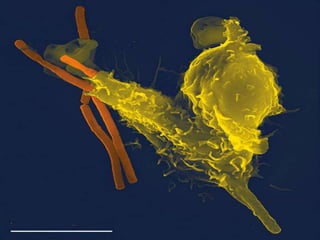
• Neutrophil:
–Active Phagocyte & 1st Responder
–Increase in number during infection
• Eosinophil: Kill larger parasites +
allergins
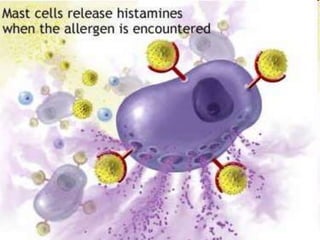
• Basophils: Cause Infection Response
–Release Histamine  Dilating Blood
Vessels
• Lymphocytes:
–B = produce antibodies
–T = respond to antibodies on foreign
tissue
• Monocytes:
–Largest + Most Active phagocytes
–Used for chronic, widespread infections
• http://www.youtube.com/watch?v=lrYlZJiuf18&fe
ature=fvw
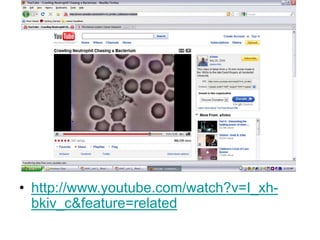
• http://www.youtube.com/watch?v=I_xh-
bkiv_c&feature=related
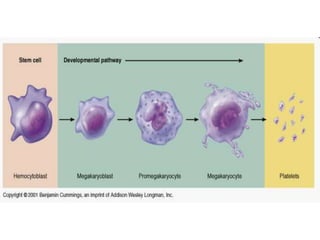
(8) Platelets
• Fragments of multinucleate cells
• Irregular shape (Necessary in Clotting)
• Initiate Clotting Cascade by clinging to
broken vessel walls
Composituin of blood

Composituin of blood

  • 1.
  • 2.
    (1) What isBlood? • Type of connective tissue. • Contains Living & Nonliving components. • Purpose: Transport nutrients & waste throughout body.
  • 4.
    (2) Blood Cells •Cells make up 45% of volume. • Types: –Erythrocytes = Red Blood Cells = RBC’s –Leukocytes = White Blood Cells = WBC’s –Platelets = Not actually cells…Clotting Factors
  • 5.
    (3) Plasma • Liquidpart of blood. • Contains: –Plasma Proteins: • Albumin  Maintains osmotic pressure. • Fibrinogen & Globulin  Clotting Factors –Water (THE liquid solvent) –Salts (to maintain osmotic pressure) –Nutrients carried in blood
  • 7.
    (4) Erythrocytes (RBC’s) •Purpose: Carry oxygen to tissues. • Hemoglogin: –Type of Protein –Contains Iron which binds with Oxygen –Concentration determines availability of Oxygen to cells
  • 10.
    (5) Anemia • Typeof RBC Disease/Disorder • Cause: –Low RBC count –Low hemoglobin concentration –Deformed RBC • Result: –Decreased Oxygen availability
  • 11.
    • Special Case= Sickle Cell Anemia –Deformed RBC does not allow Oxygen to bind –Sickled cells can also clog blood vessels • Treatments: –Iron & Vitamin Supplements –Blood Transfusions / Bone Marrow Transplant –Goal  Solve & Fix Underlying Problem, not “cover up”
  • 14.
    (6) Leukocytes (WBC’s) •Purpose: Defend against infectious agents (bacteria, viruses, parasites, etc.) • Mechanisms: – Diapedesis… • Have ability to move across/through blood vessels • Use circulatory system as highway – Positive Chemotaxis… • Can locate area of damage/infection by responding to released immune/bacterial chemicals
  • 18.
    (7) Types ofLeukocytes • Neutrophil: –Active Phagocyte & 1st Responder –Increase in number during infection • Eosinophil: Kill larger parasites + allergins • Basophils: Cause Infection Response –Release Histamine  Dilating Blood Vessels
  • 19.
    • Lymphocytes: –B =produce antibodies –T = respond to antibodies on foreign tissue • Monocytes: –Largest + Most Active phagocytes –Used for chronic, widespread infections
  • 24.
  • 25.
  • 26.
    (8) Platelets • Fragmentsof multinucleate cells • Irregular shape (Necessary in Clotting) • Initiate Clotting Cascade by clinging to broken vessel walls