Wookjin Choi, PhD
• PhD in Mechatronics: Medical Image Analysis
Automatic detection of pulmonary nodules in lung CT images
(Choi et al. CMPB 2014, Entropy 2013, Information Sciences 2012)
– Lung and nodule auto-segmentation algorithms
– A novel shape feature descriptor for pulmonary nodule
– A genetic programming model for the feature selection and
classification
• Individually optimized contrast-enhanced 4D-CT for radiotherapy
simulation in pancreatic adenocarcinoma (Accepted in Medical
Physics)
• Optimized Contrast Injection for Pulmonary Thromboembolic
Disease
• Inter-Fractional Tumor Motion Analysis Using 4D-CT and CBCT
1
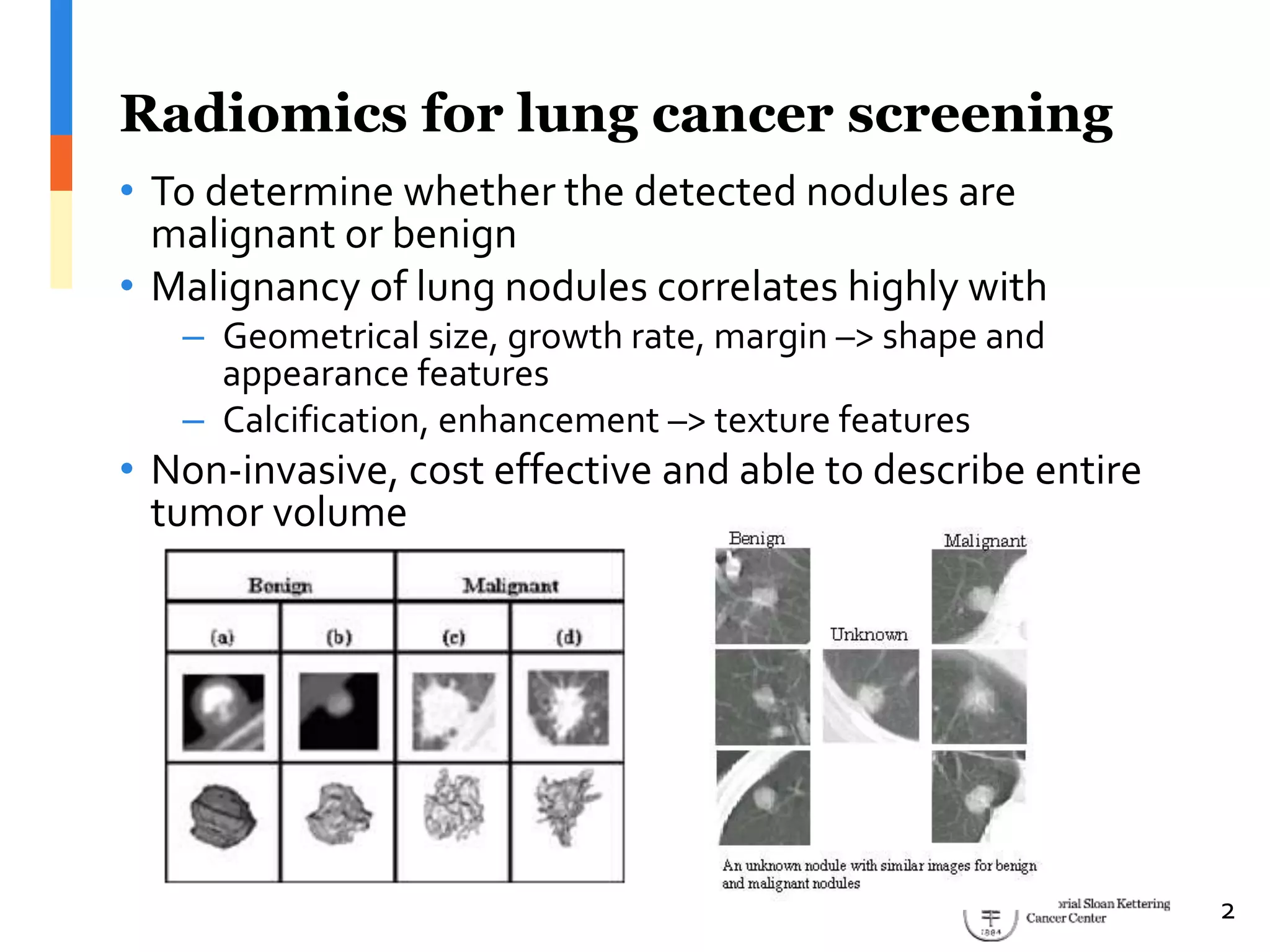
Radiomics for lung cancer screening
• To determine whether the detected nodules are
malignant or benign
• Malignancy of lung nodules correlates highly with
– Geometrical size, growth rate, margin –> shape and
appearance features
– Calcification, enhancement –> texture features
• Non-invasive, cost effective and able to describe entire
tumor volume
2
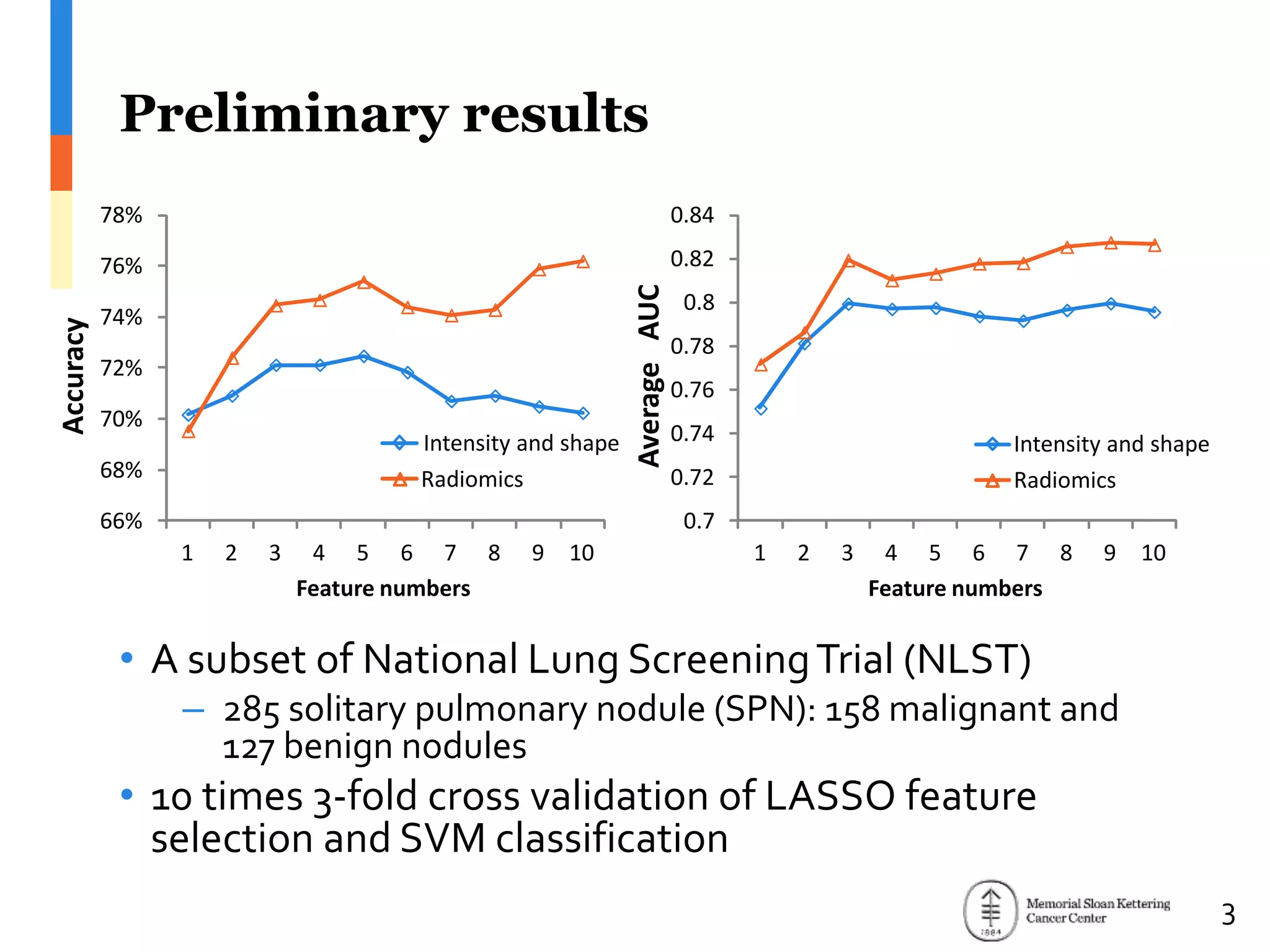
Preliminary results
• A subset of National Lung ScreeningTrial (NLST)
– 285 solitary pulmonary nodule (SPN): 158 malignant and
127 benign nodules
• 10 times 3-fold cross validation of LASSO feature
selection and SVM classification
3
66%
68%
70%
72%
74%
76%
78%
1 2 3 4 5 6 7 8 9 10
Accuracy
Feature numbers
Intensity and shape
Radiomics
0.7
0.72
0.74
0.76
0.78
0.8
0.82
0.84
1 2 3 4 5 6 7 8 9 10
AverageAUC
Feature numbers
Intensity and shape
Radiomics
Radiomics for Hepatocellular
Carcinoma (HCC) Radiation Therapy
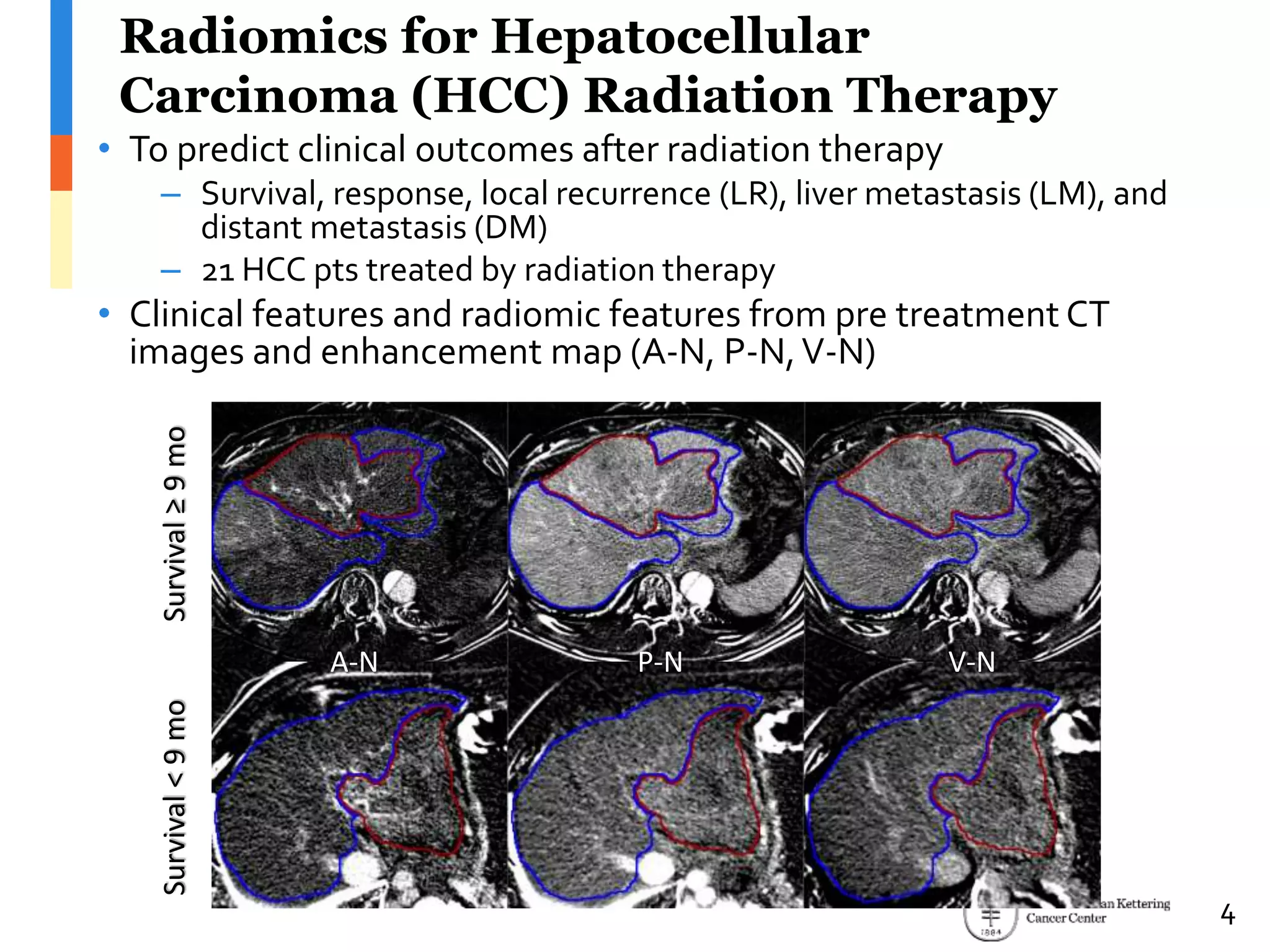
• To predict clinical outcomes after radiation therapy
– Survival, response, local recurrence (LR), liver metastasis (LM), and
distant metastasis (DM)
– 21 HCC pts treated by radiation therapy
• Clinical features and radiomic features from pre treatment CT
images and enhancement map (A-N, P-N,V-N)
A-N P-N V-N
Survival≥9moSurvival<9mo
4
Preliminary results
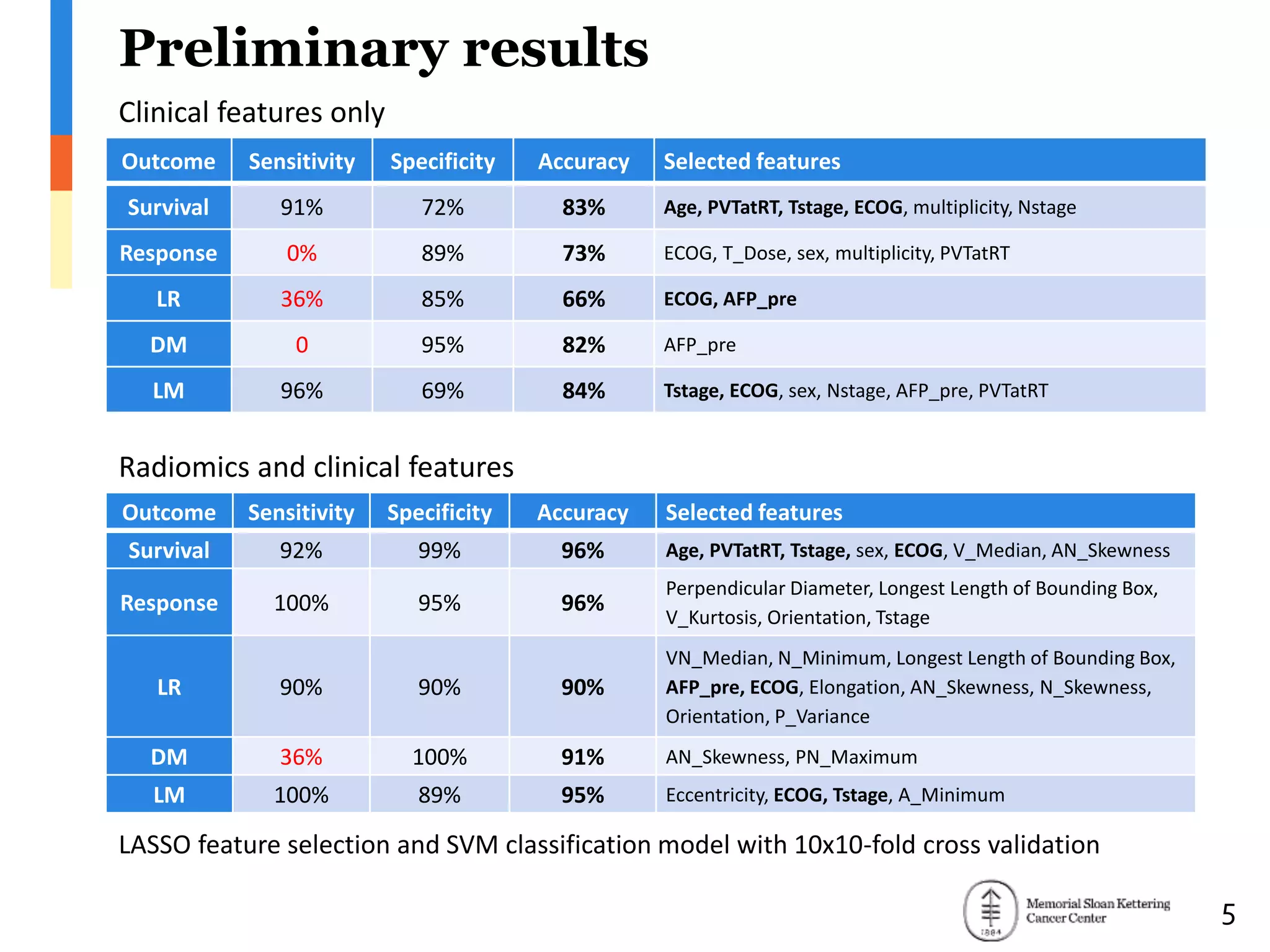
Outcome Sensitivity Specificity Accuracy Selected features
Survival 91% 72% 83% Age, PVTatRT, Tstage, ECOG, multiplicity, Nstage
Response 0% 89% 73% ECOG, T_Dose, sex, multiplicity, PVTatRT
LR 36% 85% 66% ECOG, AFP_pre
DM 0 95% 82% AFP_pre
LM 96% 69% 84% Tstage, ECOG, sex, Nstage, AFP_pre, PVTatRT
Clinical features only
Outcome Sensitivity Specificity Accuracy Selected features
Survival 92% 99% 96% Age, PVTatRT, Tstage, sex, ECOG, V_Median, AN_Skewness
Response 100% 95% 96%
Perpendicular Diameter, Longest Length of Bounding Box,
V_Kurtosis, Orientation, Tstage
LR 90% 90% 90%
VN_Median, N_Minimum, Longest Length of Bounding Box,
AFP_pre, ECOG, Elongation, AN_Skewness, N_Skewness,
Orientation, P_Variance
DM 36% 100% 91% AN_Skewness, PN_Maximum
LM 100% 89% 95% Eccentricity, ECOG, Tstage, A_Minimum
Radiomics and clinical features
LASSO feature selection and SVM classification model with 10x10-fold cross validation
5
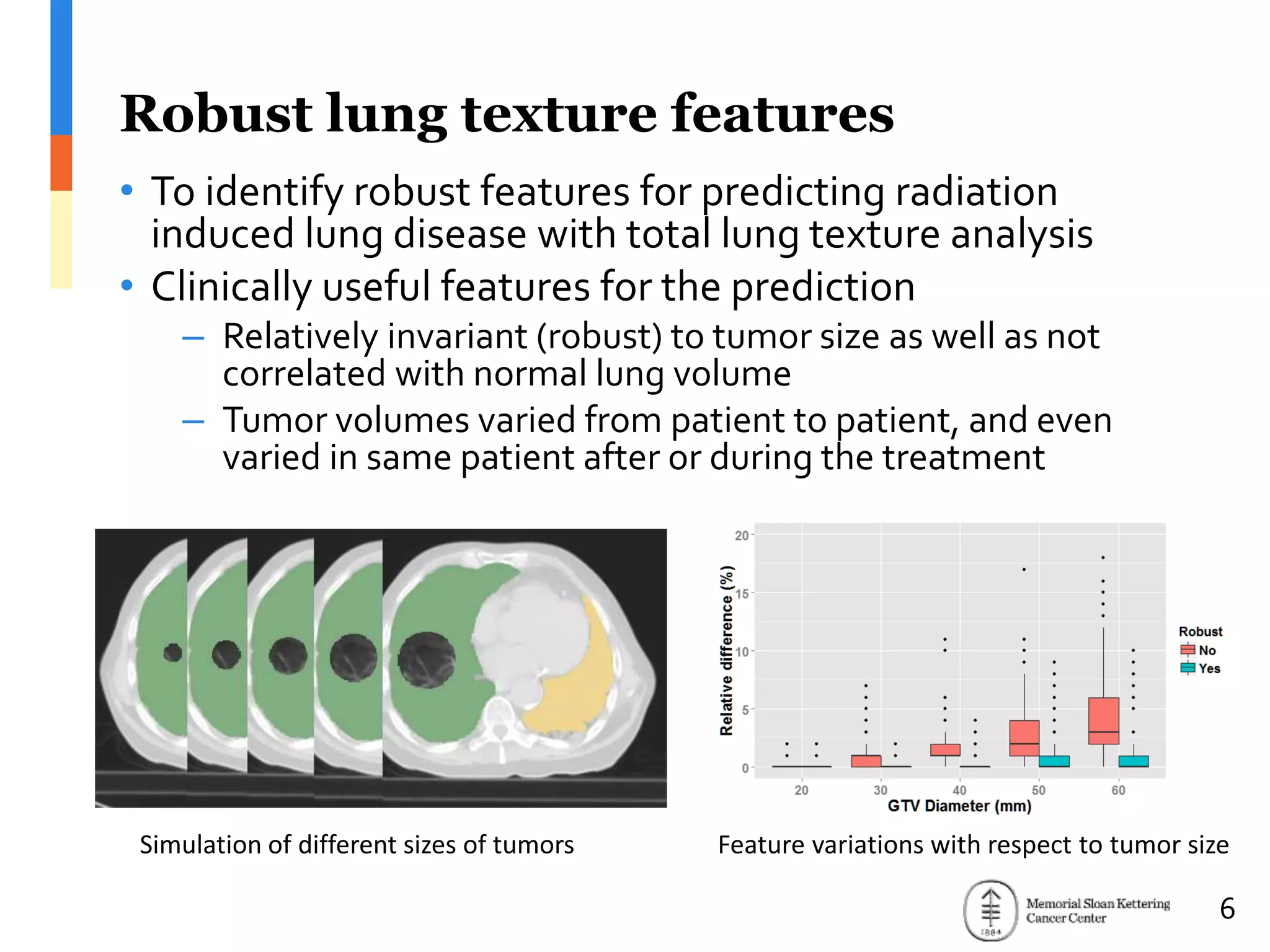
Robust lung texture features
• To identify robust features for predicting radiation
induced lung disease with total lung texture analysis
• Clinically useful features for the prediction
– Relatively invariant (robust) to tumor size as well as not
correlated with normal lung volume
– Tumor volumes varied from patient to patient, and even
varied in same patient after or during the treatment
Feature variations with respect to tumor sizeSimulation of different sizes of tumors
6
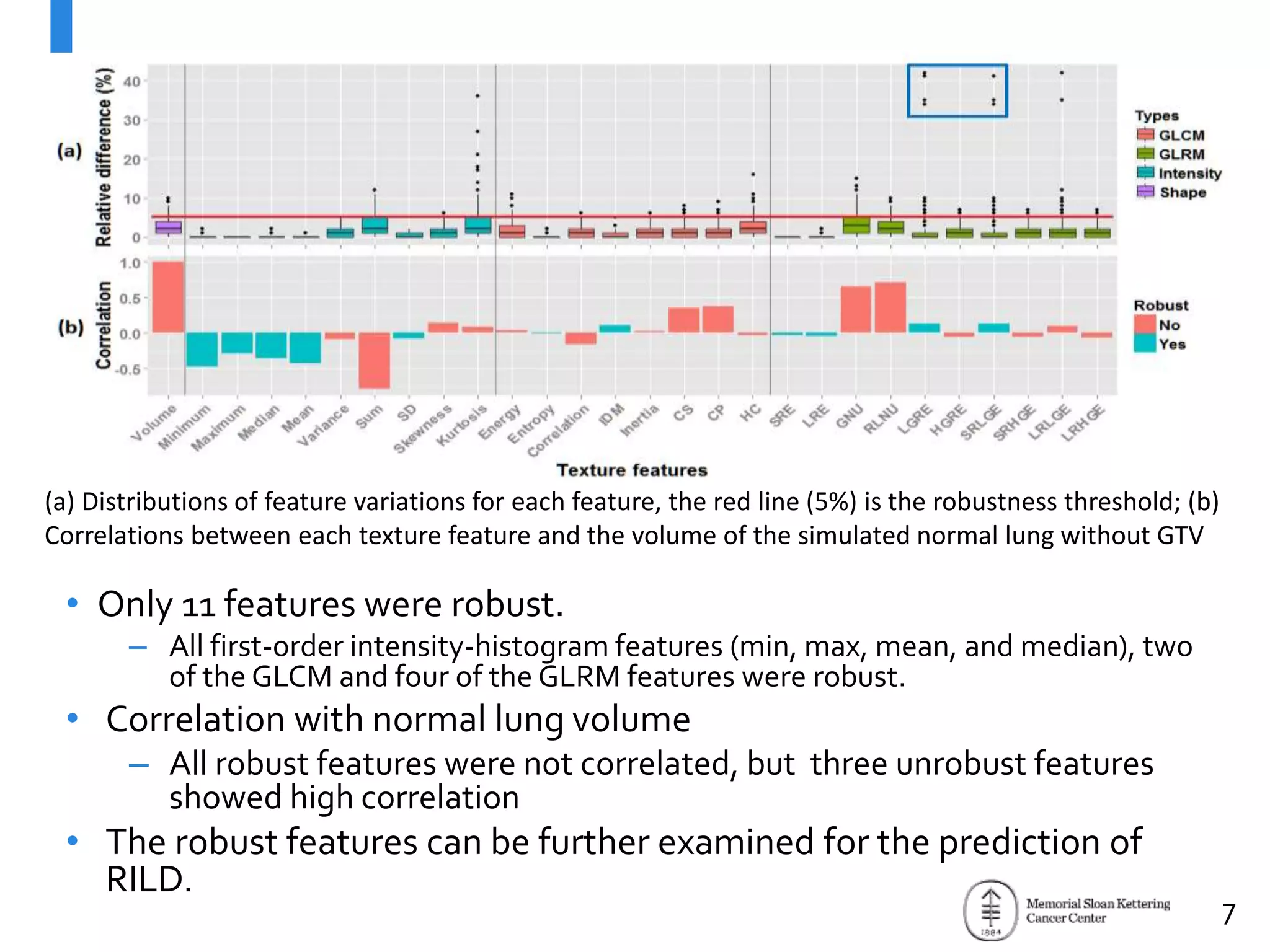
(a) Distributions of feature variations for each feature, the red line (5%) is the robustness threshold; (b)
Correlations between each texture feature and the volume of the simulated normal lung without GTV
• Only 11 features were robust.
– All first-order intensity-histogram features (min, max, mean, and median), two
of the GLCM and four of the GLRM features were robust.
• Correlation with normal lung volume
– All robust features were not correlated, but three unrobust features
showed high correlation
• The robust features can be further examined for the prediction of
RILD.
7
Future works
• New disease specific radiomic features
– Tumor morphological shape changes for the nodule
growth
– Tumor texture changes
– Developed features
• Nodule shape descriptor (Choi et al. CMPB 2014)
• Esophagus wall thickness and asymmetry (Wang et al. SPIE MI
2015)
• Integration of molecular biomarkers and imaging
radiomic features, and find associations between them
for lung screening
• Find robust radiomic features and its standardization
8

Current Projects - Wookjin Choi

  • 1.
    Wookjin Choi, PhD •PhD in Mechatronics: Medical Image Analysis Automatic detection of pulmonary nodules in lung CT images (Choi et al. CMPB 2014, Entropy 2013, Information Sciences 2012) – Lung and nodule auto-segmentation algorithms – A novel shape feature descriptor for pulmonary nodule – A genetic programming model for the feature selection and classification • Individually optimized contrast-enhanced 4D-CT for radiotherapy simulation in pancreatic adenocarcinoma (Accepted in Medical Physics) • Optimized Contrast Injection for Pulmonary Thromboembolic Disease • Inter-Fractional Tumor Motion Analysis Using 4D-CT and CBCT 1
  • 2.
    Radiomics for lungcancer screening • To determine whether the detected nodules are malignant or benign • Malignancy of lung nodules correlates highly with – Geometrical size, growth rate, margin –> shape and appearance features – Calcification, enhancement –> texture features • Non-invasive, cost effective and able to describe entire tumor volume 2
  • 3.
    Preliminary results • Asubset of National Lung ScreeningTrial (NLST) – 285 solitary pulmonary nodule (SPN): 158 malignant and 127 benign nodules • 10 times 3-fold cross validation of LASSO feature selection and SVM classification 3 66% 68% 70% 72% 74% 76% 78% 1 2 3 4 5 6 7 8 9 10 Accuracy Feature numbers Intensity and shape Radiomics 0.7 0.72 0.74 0.76 0.78 0.8 0.82 0.84 1 2 3 4 5 6 7 8 9 10 AverageAUC Feature numbers Intensity and shape Radiomics
  • 4.
    Radiomics for Hepatocellular Carcinoma(HCC) Radiation Therapy • To predict clinical outcomes after radiation therapy – Survival, response, local recurrence (LR), liver metastasis (LM), and distant metastasis (DM) – 21 HCC pts treated by radiation therapy • Clinical features and radiomic features from pre treatment CT images and enhancement map (A-N, P-N,V-N) A-N P-N V-N Survival≥9moSurvival<9mo 4
  • 5.
    Preliminary results Outcome SensitivitySpecificity Accuracy Selected features Survival 91% 72% 83% Age, PVTatRT, Tstage, ECOG, multiplicity, Nstage Response 0% 89% 73% ECOG, T_Dose, sex, multiplicity, PVTatRT LR 36% 85% 66% ECOG, AFP_pre DM 0 95% 82% AFP_pre LM 96% 69% 84% Tstage, ECOG, sex, Nstage, AFP_pre, PVTatRT Clinical features only Outcome Sensitivity Specificity Accuracy Selected features Survival 92% 99% 96% Age, PVTatRT, Tstage, sex, ECOG, V_Median, AN_Skewness Response 100% 95% 96% Perpendicular Diameter, Longest Length of Bounding Box, V_Kurtosis, Orientation, Tstage LR 90% 90% 90% VN_Median, N_Minimum, Longest Length of Bounding Box, AFP_pre, ECOG, Elongation, AN_Skewness, N_Skewness, Orientation, P_Variance DM 36% 100% 91% AN_Skewness, PN_Maximum LM 100% 89% 95% Eccentricity, ECOG, Tstage, A_Minimum Radiomics and clinical features LASSO feature selection and SVM classification model with 10x10-fold cross validation 5
  • 6.
    Robust lung texturefeatures • To identify robust features for predicting radiation induced lung disease with total lung texture analysis • Clinically useful features for the prediction – Relatively invariant (robust) to tumor size as well as not correlated with normal lung volume – Tumor volumes varied from patient to patient, and even varied in same patient after or during the treatment Feature variations with respect to tumor sizeSimulation of different sizes of tumors 6
  • 7.
    (a) Distributions offeature variations for each feature, the red line (5%) is the robustness threshold; (b) Correlations between each texture feature and the volume of the simulated normal lung without GTV • Only 11 features were robust. – All first-order intensity-histogram features (min, max, mean, and median), two of the GLCM and four of the GLRM features were robust. • Correlation with normal lung volume – All robust features were not correlated, but three unrobust features showed high correlation • The robust features can be further examined for the prediction of RILD. 7
  • 8.
    Future works • Newdisease specific radiomic features – Tumor morphological shape changes for the nodule growth – Tumor texture changes – Developed features • Nodule shape descriptor (Choi et al. CMPB 2014) • Esophagus wall thickness and asymmetry (Wang et al. SPIE MI 2015) • Integration of molecular biomarkers and imaging radiomic features, and find associations between them for lung screening • Find robust radiomic features and its standardization 8

Editor's Notes

  • #2 Computer vision or Machine vision - medical image analysis Electromechanics
  • #3 Peri-tumor area Difficult to distinguish and small (1-2cm)
  • #4 10 features were selected from each feature set
  • #5 Radiation oncologist contoured and manually registered to align vessels in liver
  • #6 Radiomic features from pre treatment CTs and enhancement maps (A-N, P-N, V-N) Clinical parameters (sex, age, ECOG, Child score, T Dose, multiplicity, PVT at RT, T stage, N stage, AFP pre, AFP post)