Psychology Basics
Lenses of Psychology
There are Different Ways to
Understand Behavior
• Biological
• Developmental
• Cognitive
• Behavioral
• Sociocultural
Biological Psychology
• Concerned with the attempt to understand
human behavior from the biological
perspective:
– Physiological processes in the body
– Detailed structure of the brain and entire
nervous system
– Treatments involving medication
– Physical Sensation
Cognitive Psychology
• Focuses on thinking and other mental
processes
• Cognition defined “ the mental act or process
by which knowledge is acquired.”
• Covers areas including:
– Attention
– Perception
– Learning
– Memory
– Problem solving
– language
Behavioral Psychology
• An individual’s experience with rewards
and punishments cause a person’s
development of behavior patterns
• How we can “train” people to behave in
certain ways
Developmental Psychology
• Concerned with the changes occurring
during the course of childhood, and its
impact on adult behavior
1. Cognitive and physiological
development of children as they develop
the ability to complete complex tasks
2. Social development of children
as they are able to interact effectively
with others and cultivate relationships
Sociocultural
• An individual’s social, cultural, biological,
and psychological factors cause
unique differences.
-How does your what is
acceptable in your culture/social
setting shape your behavior?
-Do you act differently in front of
your teacher? Your parents?
Your friends? Your grandparents?
There are Different Ways to
Understand Behavior
• Biological
• Developmental
• Cognitive
• Behavioral
• Sociocultural
A Brief Guide to
Depression
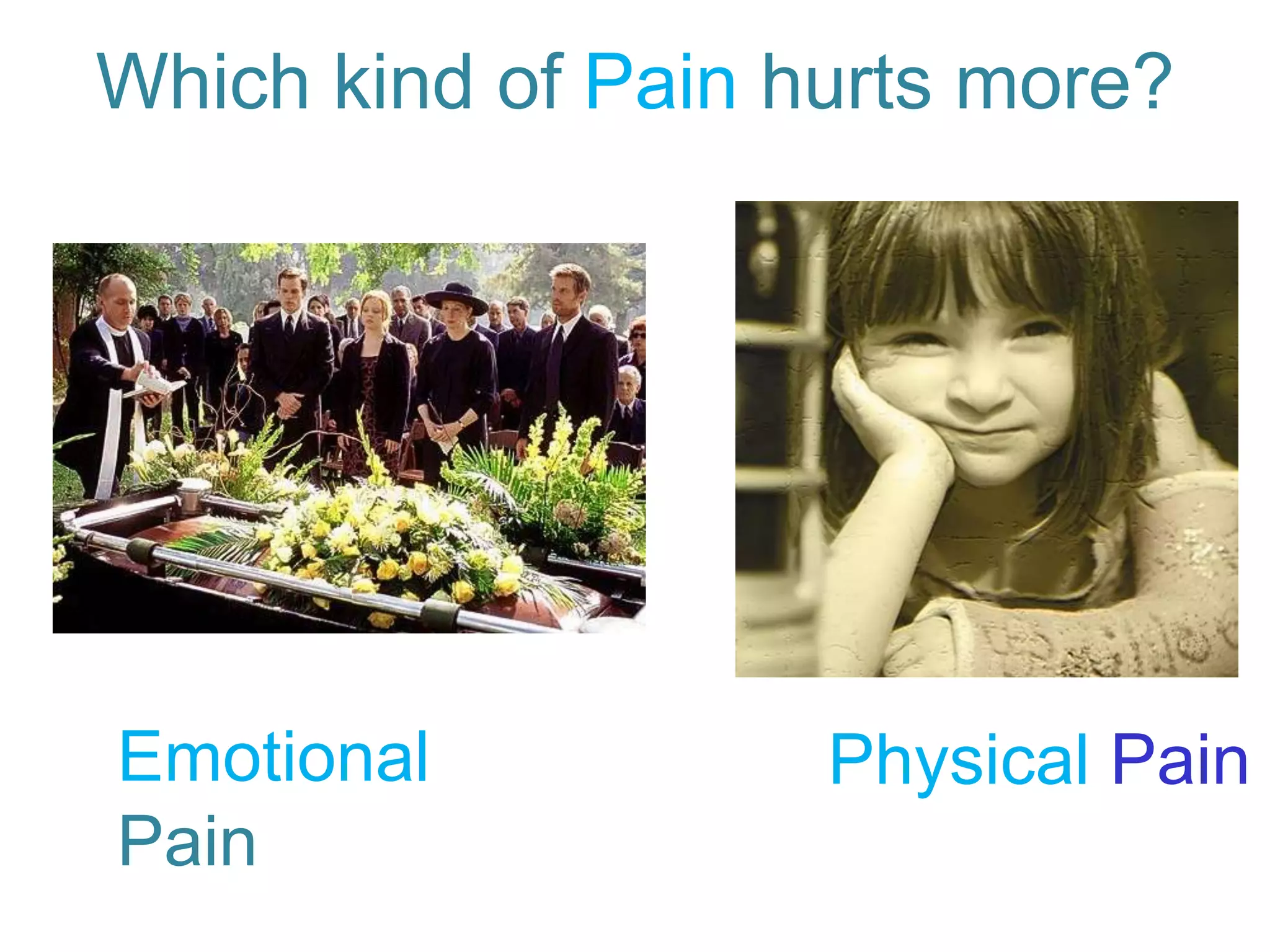
Which kind of Pain hurts more?
Emotional
Pain
Physical Pain
Depression is Real
• Mental illnesses are often not considered
“real”, or just “in your head”
• Mental health disorders are real, and can be
as debilitating as any disease or condition
This prejudice leads to:
• less money spent on research and
treatment
development
• less support from society
• difficulty in insurance coverage
• Up to 8% of adolescents have depression
• Suicide is the third largest cause of death in
adolescents
• Of the 7.7 million to 12.8 million children with mental
disorders, an estimated two-thirds are not getting the
help they need.
• About half of all of students diagnosed will be on
medication
Why is it Important to Understand
Depression as Students
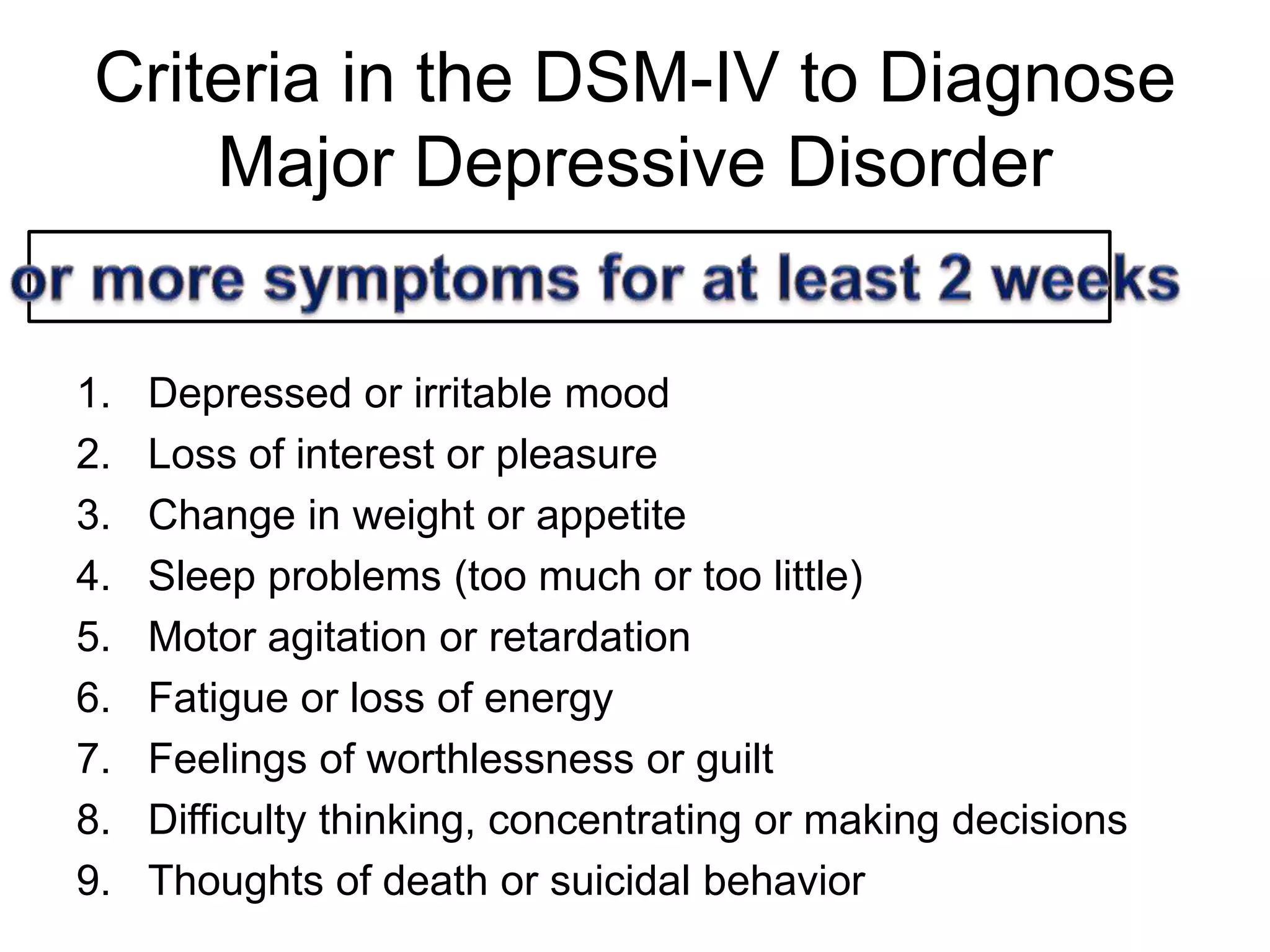
Criteria in the DSM-IV to Diagnose
Major Depressive Disorder
1. Depressed or irritable mood
2. Loss of interest or pleasure
3. Change in weight or appetite
4. Sleep problems (too much or too little)
5. Motor agitation or retardation
6. Fatigue or loss of energy
7. Feelings of worthlessness or guilt
8. Difficulty thinking, concentrating or making decisions
9. Thoughts of death or suicidal behavior
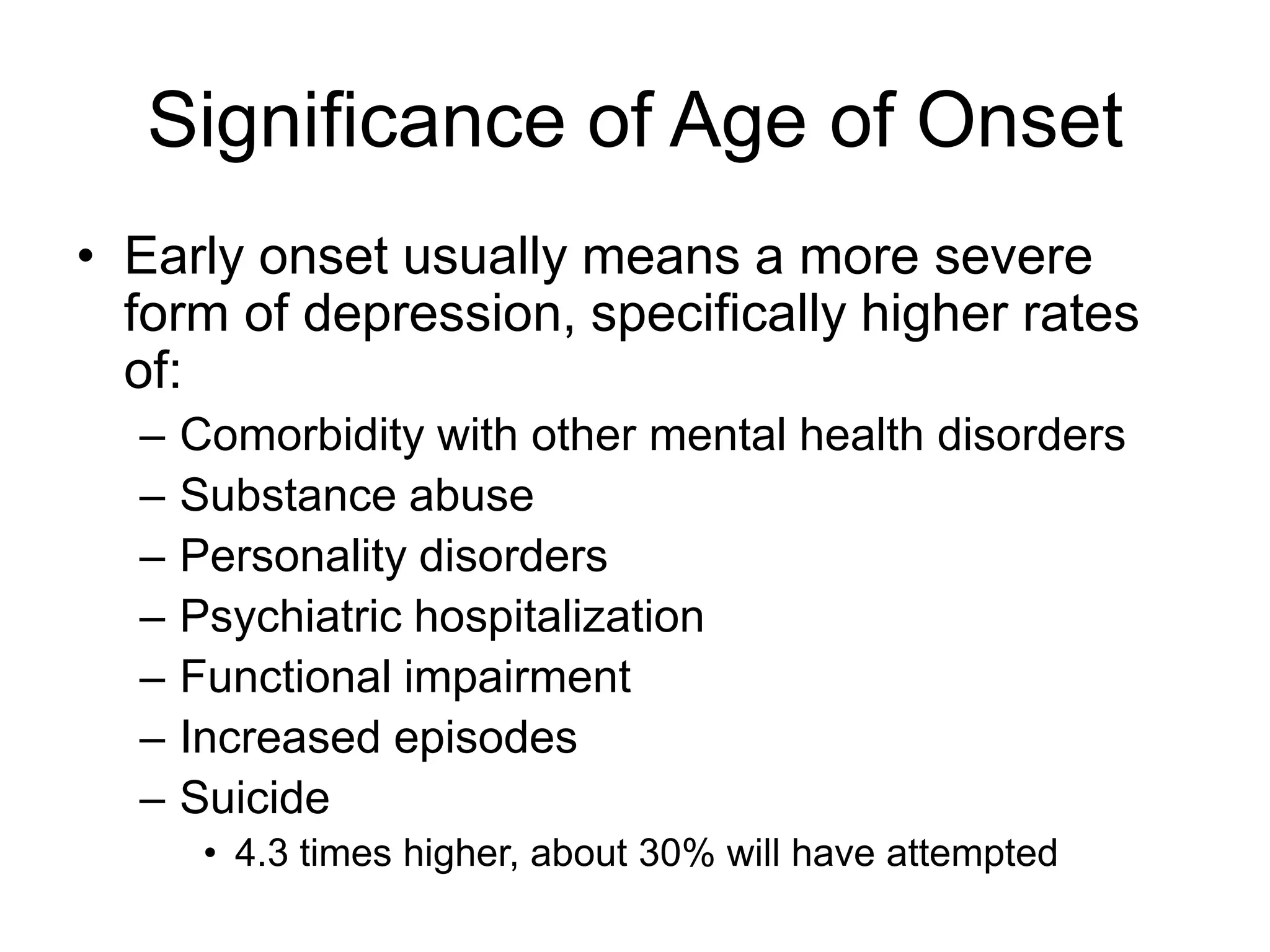
Significance of Age of Onset
• Early onset usually means a more severe
form of depression, specifically higher rates
of:
– Comorbidity with other mental health disorders
– Substance abuse
– Personality disorders
– Psychiatric hospitalization
– Functional impairment
– Increased episodes
– Suicide
• 4.3 times higher, about 30% will have attempted
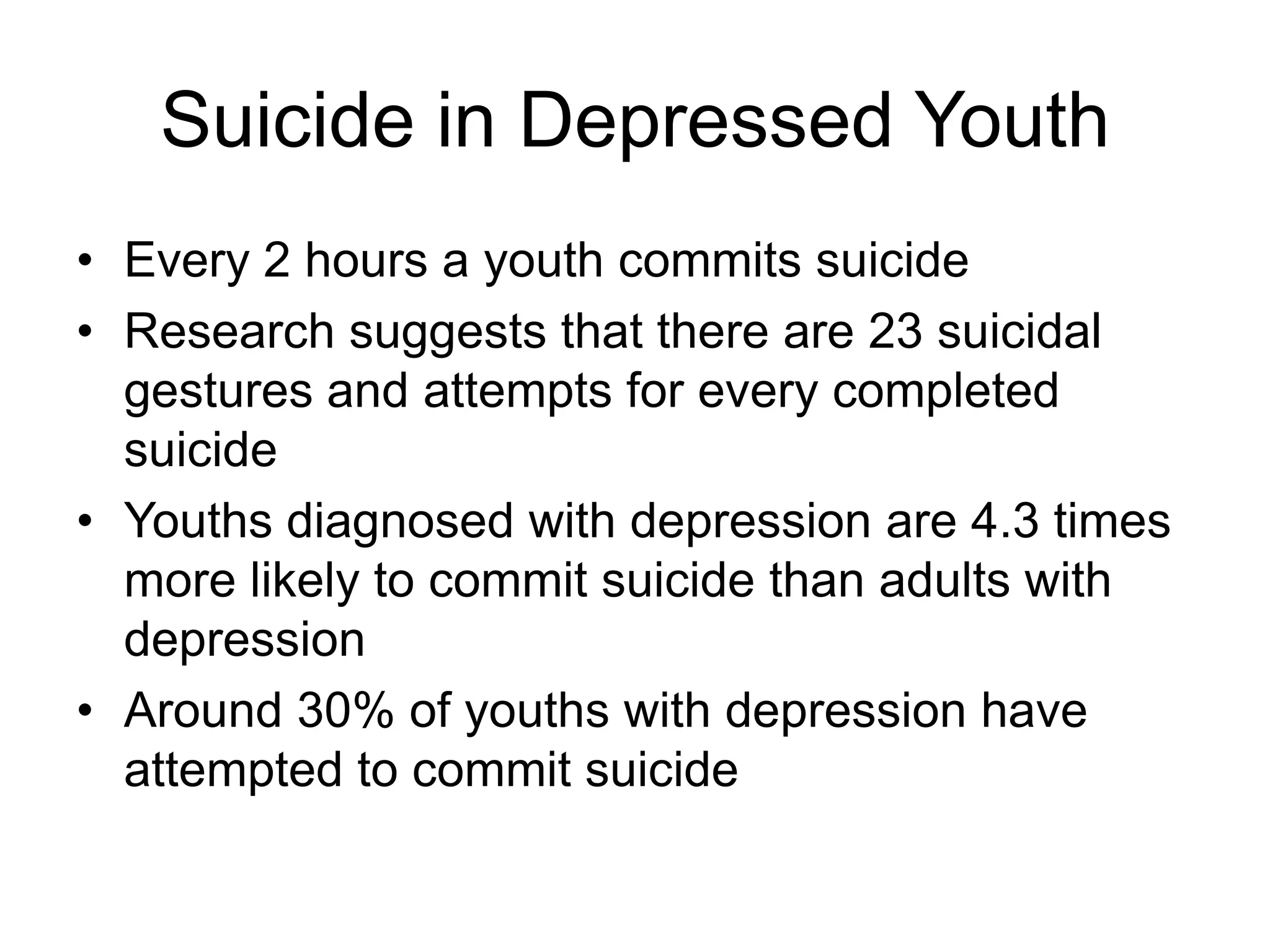
Suicide in Depressed Youth
• Every 2 hours a youth commits suicide
• Research suggests that there are 23 suicidal
gestures and attempts for every completed
suicide
• Youths diagnosed with depression are 4.3 times
more likely to commit suicide than adults with
depression
• Around 30% of youths with depression have
attempted to commit suicide
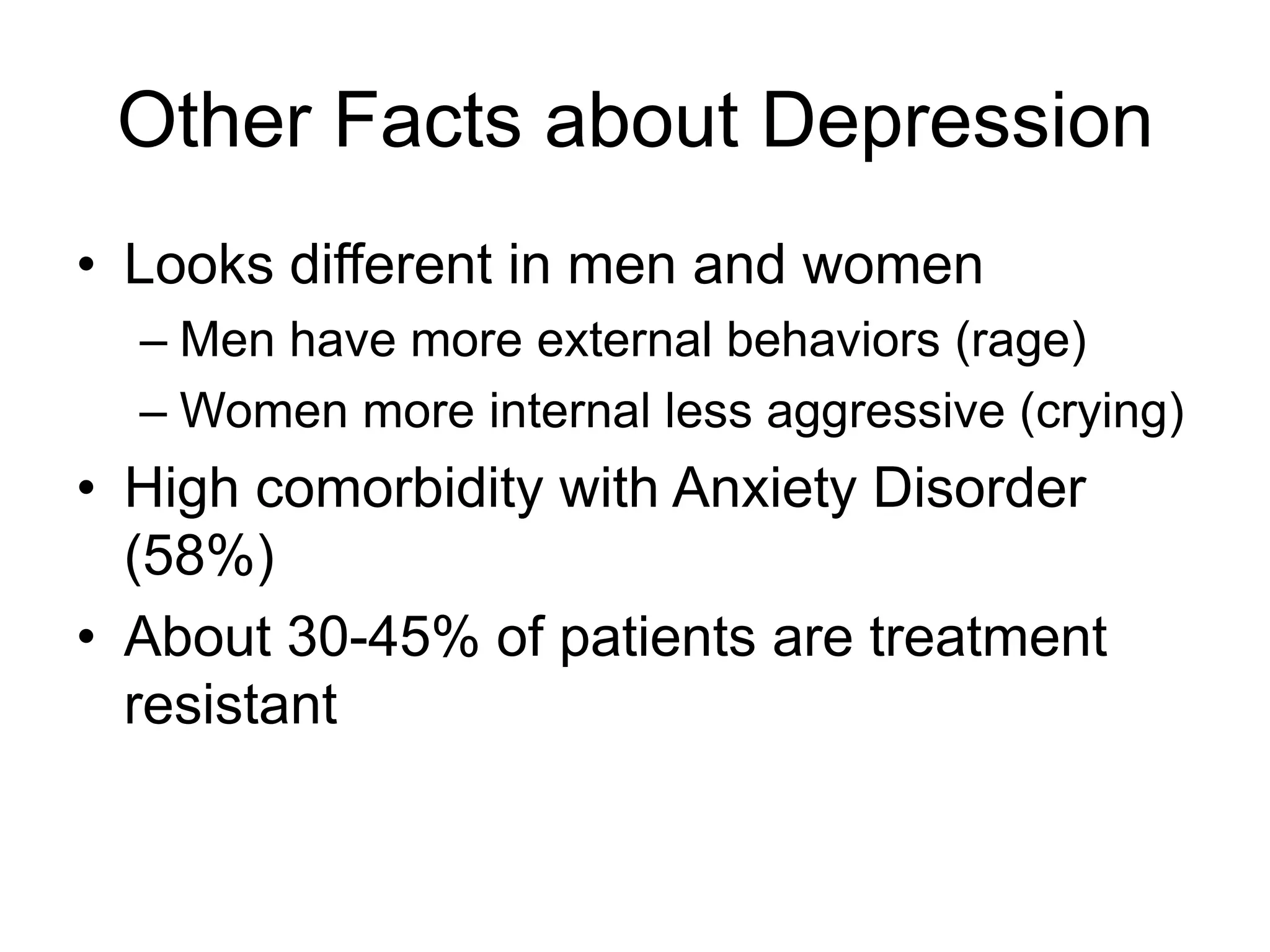
Other Facts about Depression
• Looks different in men and women
– Men have more external behaviors (rage)
– Women more internal less aggressive (crying)
• High comorbidity with Anxiety Disorder
(58%)
• About 30-45% of patients are treatment
resistant
Common Treatments
• Talk therapy-
– Cognitive Behavioral Therapy
– Family Based Therapy
• Medication
– Often SSRIs (Selective Serotonin Reuptake
Inhibitors)
• Lexapro
• Celexa
• Luvox
• Paxil
• Zoloft
• Prozac
Biological
• Biological processes influence behavior
and mental processes so there must be a
biological based reason for depression…
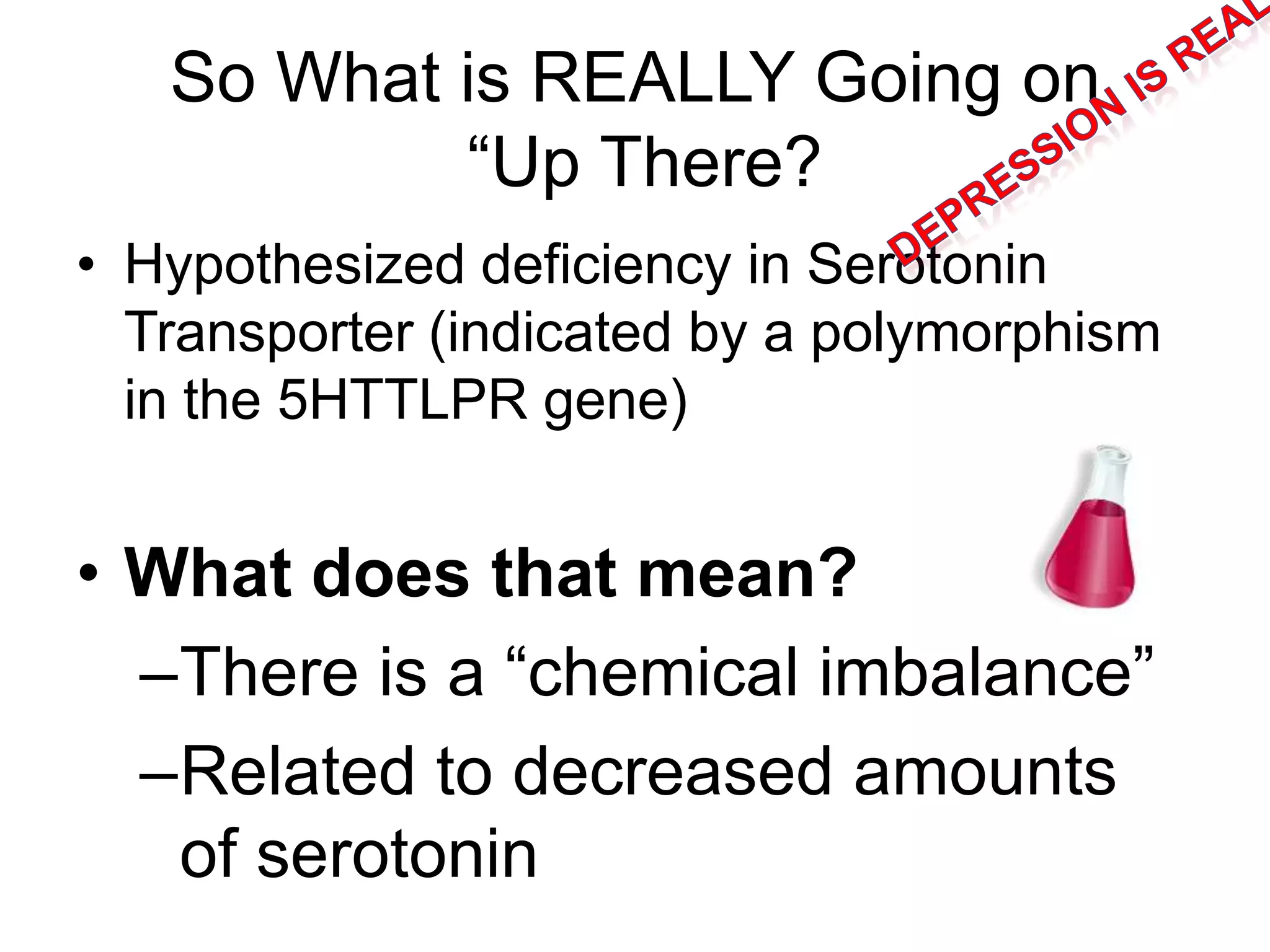
So What is REALLY Going on
“Up There?
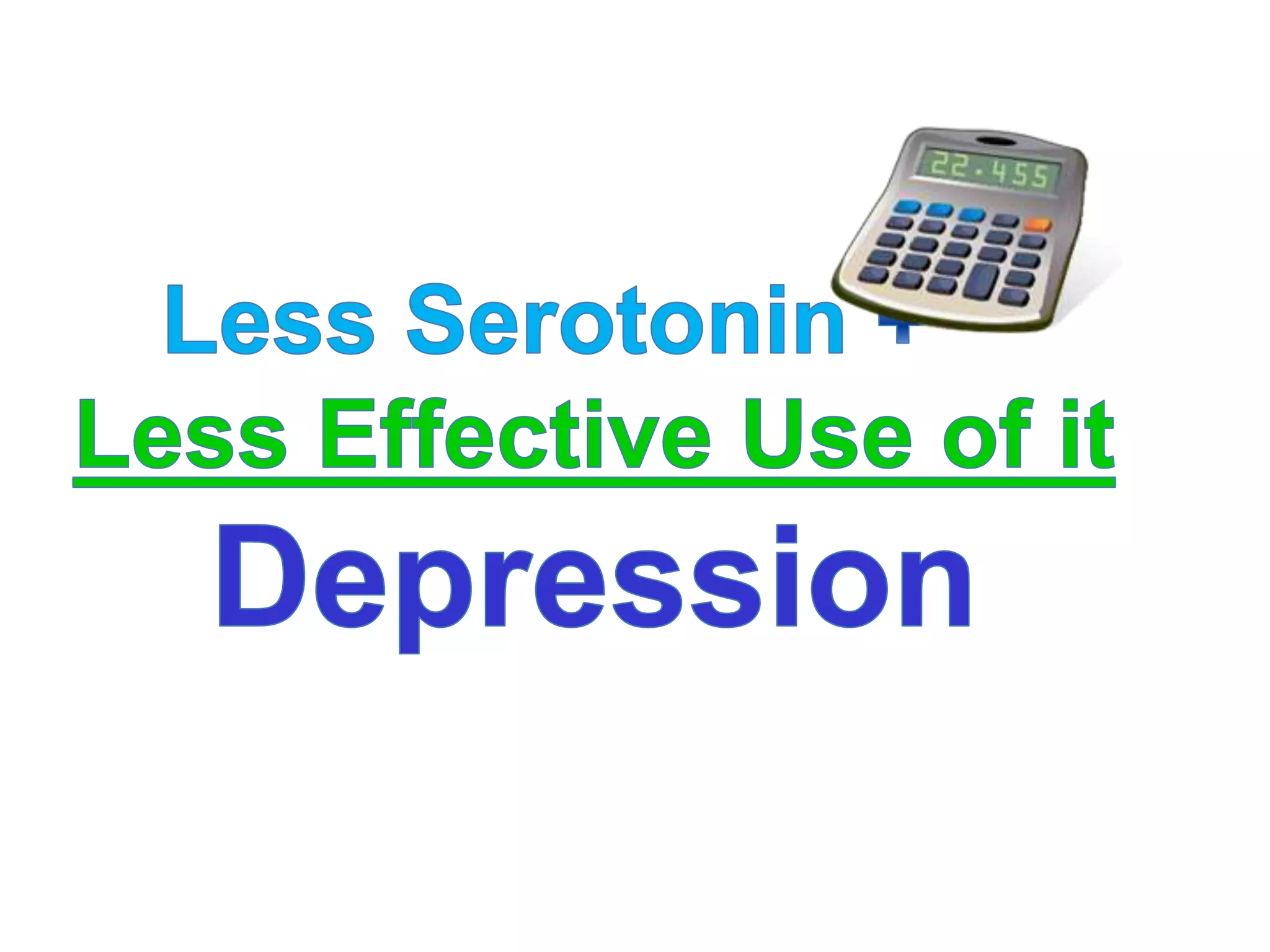
• Hypothesized deficiency in Serotonin
Transporter (indicated by a polymorphism
in the 5HTTLPR gene)
• What does that mean?
–There is a “chemical imbalance”
–Related to decreased amounts
of serotonin
The Neuroscience of
Depression and SSRI’s in 8
Slides
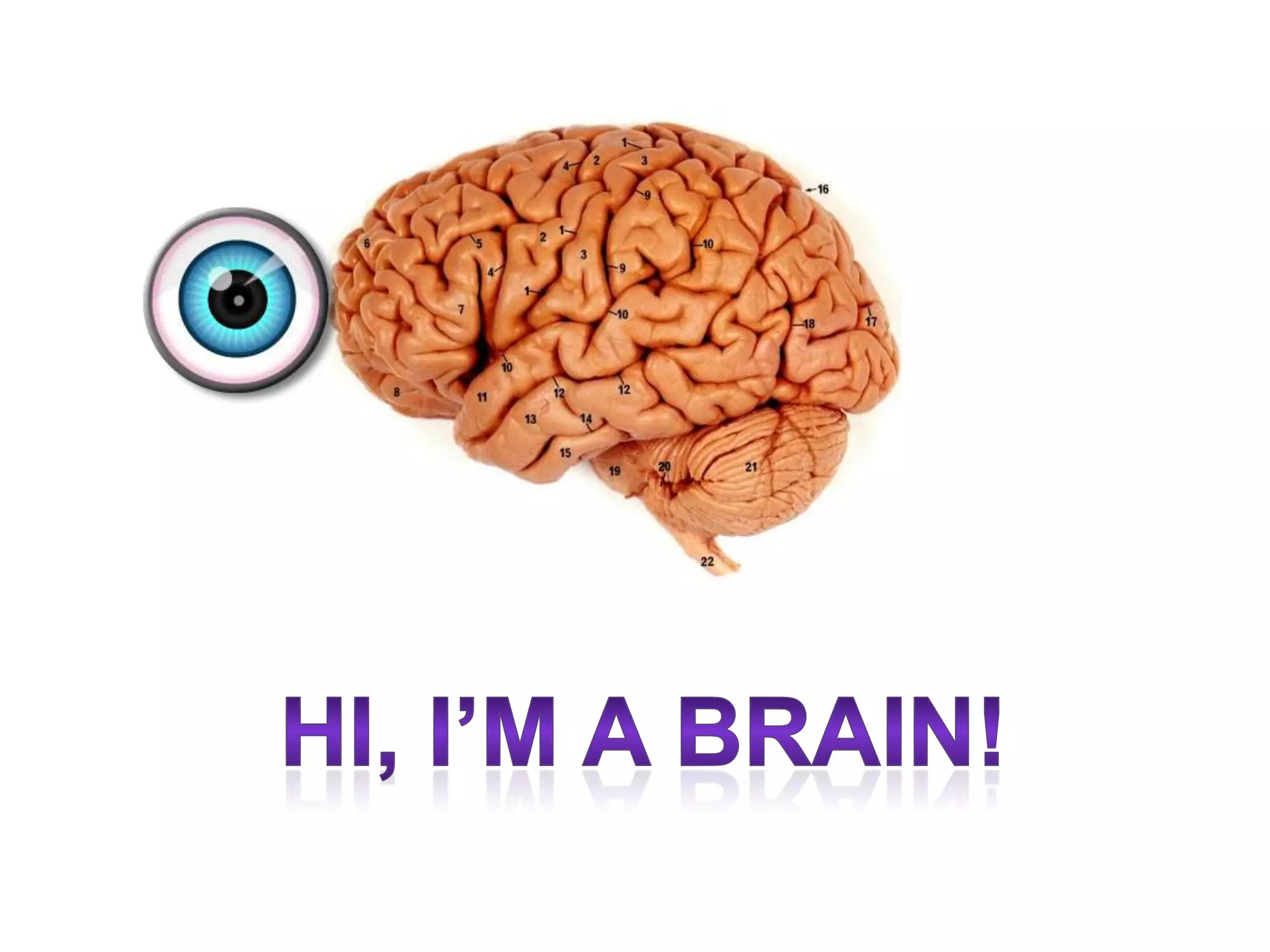
The Back of Your Head
The Front of Your Head
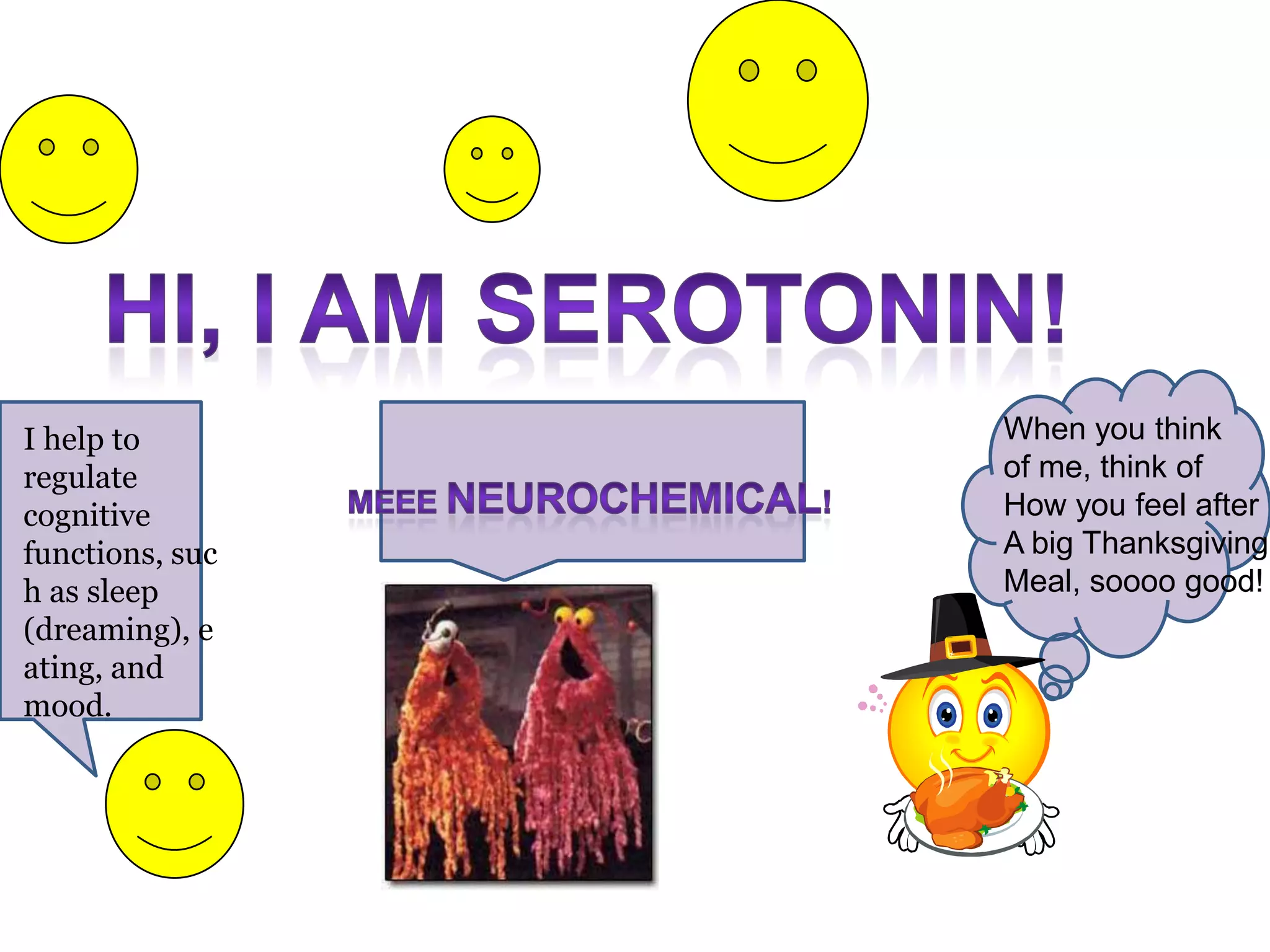
I help to
regulate
cognitive
functions,
such as sleep
(dreaming),
eating, and
mood.
When you think
of me, think of
How you feel after
A big Thanksgiving
Meal, soooo good!
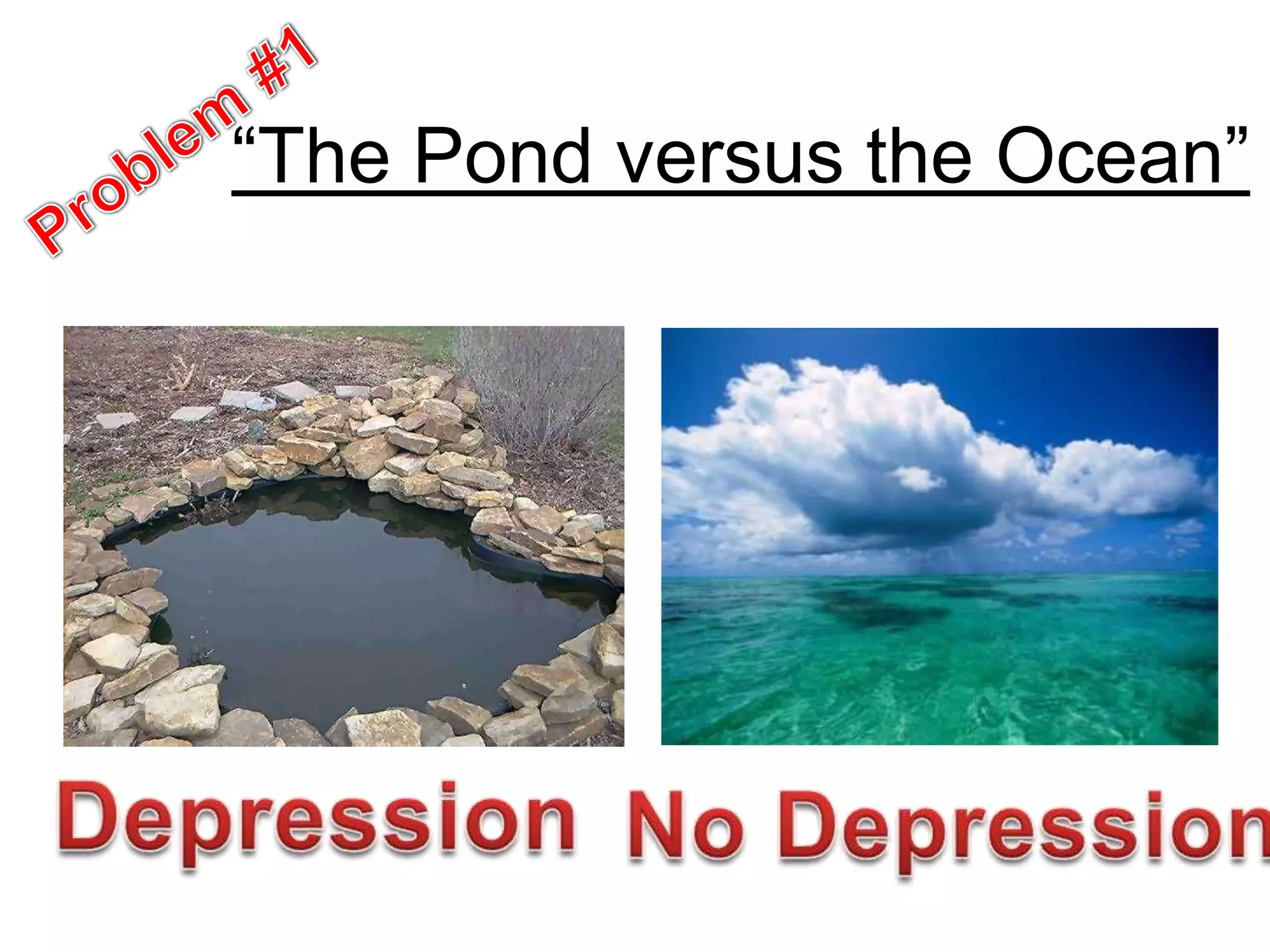
“The Pond of Serotonin versus the
Ocean of Serotonin”
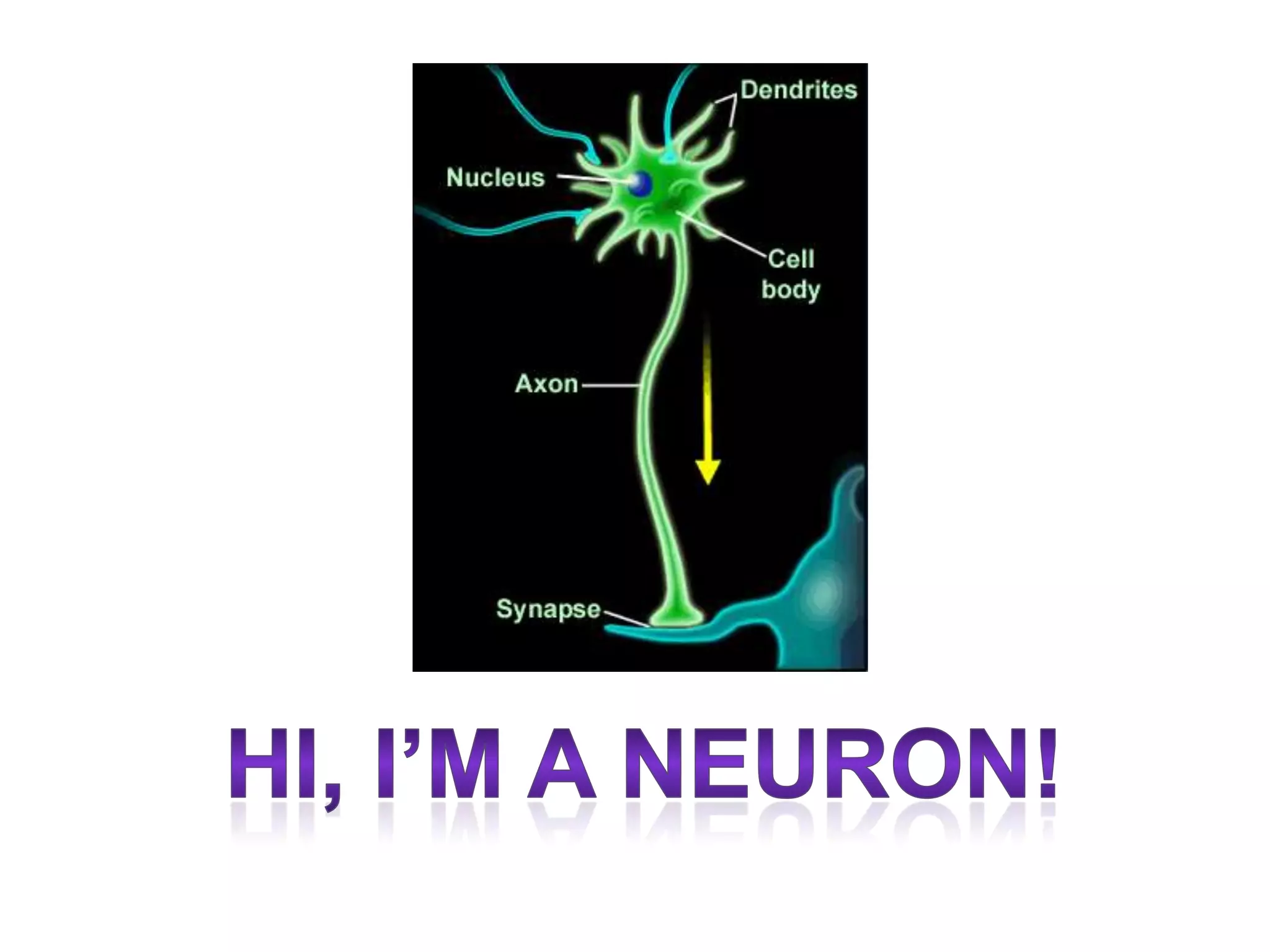
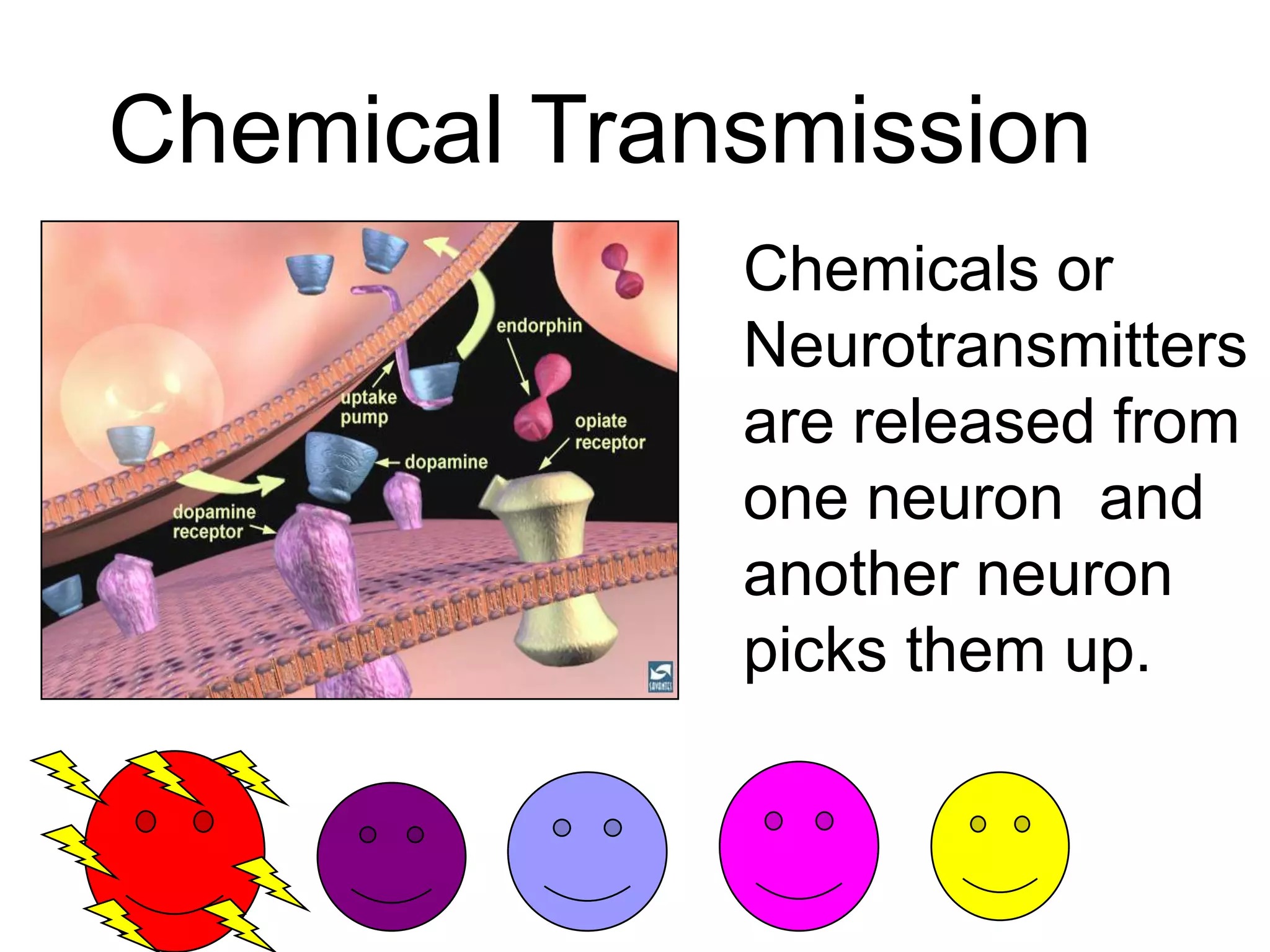
Chemical Transmission
Chemicals or
Neurotransmitters
are released from
one neuron and
another neuron
picks them up.
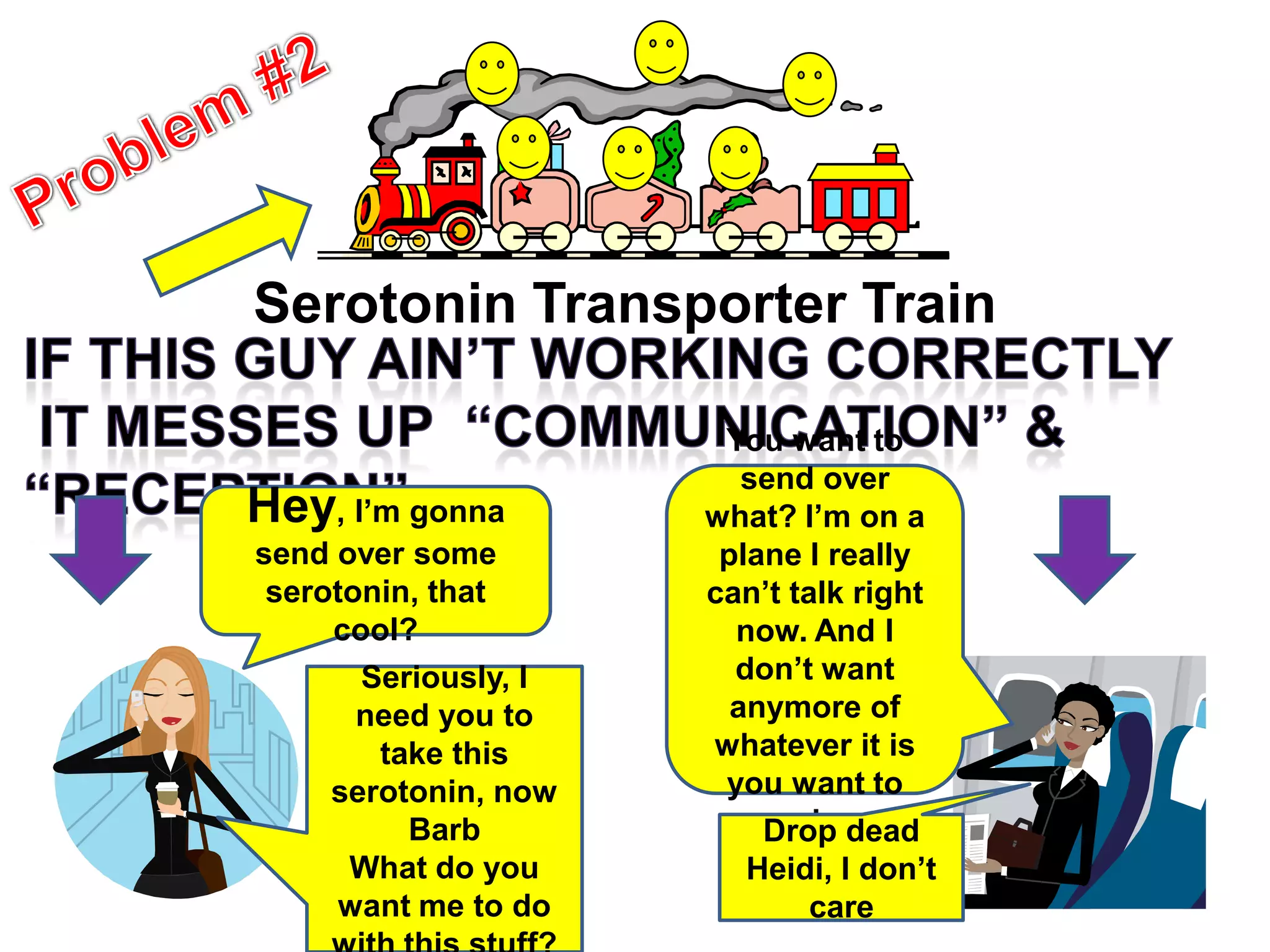
Serotonin Transporter Train
Hey, I’m gonna
send over some
serotonin, that
cool?
You want to
send over
what? I’m on a
plane I really
can’t talk right
now. And I
don’t want
anymore of
whatever it is
you want to
send me.
Seriously, I
need you to
take this
serotonin, now
Barb
What do you
want me to do
Drop dead
Heidi, I don’t
care
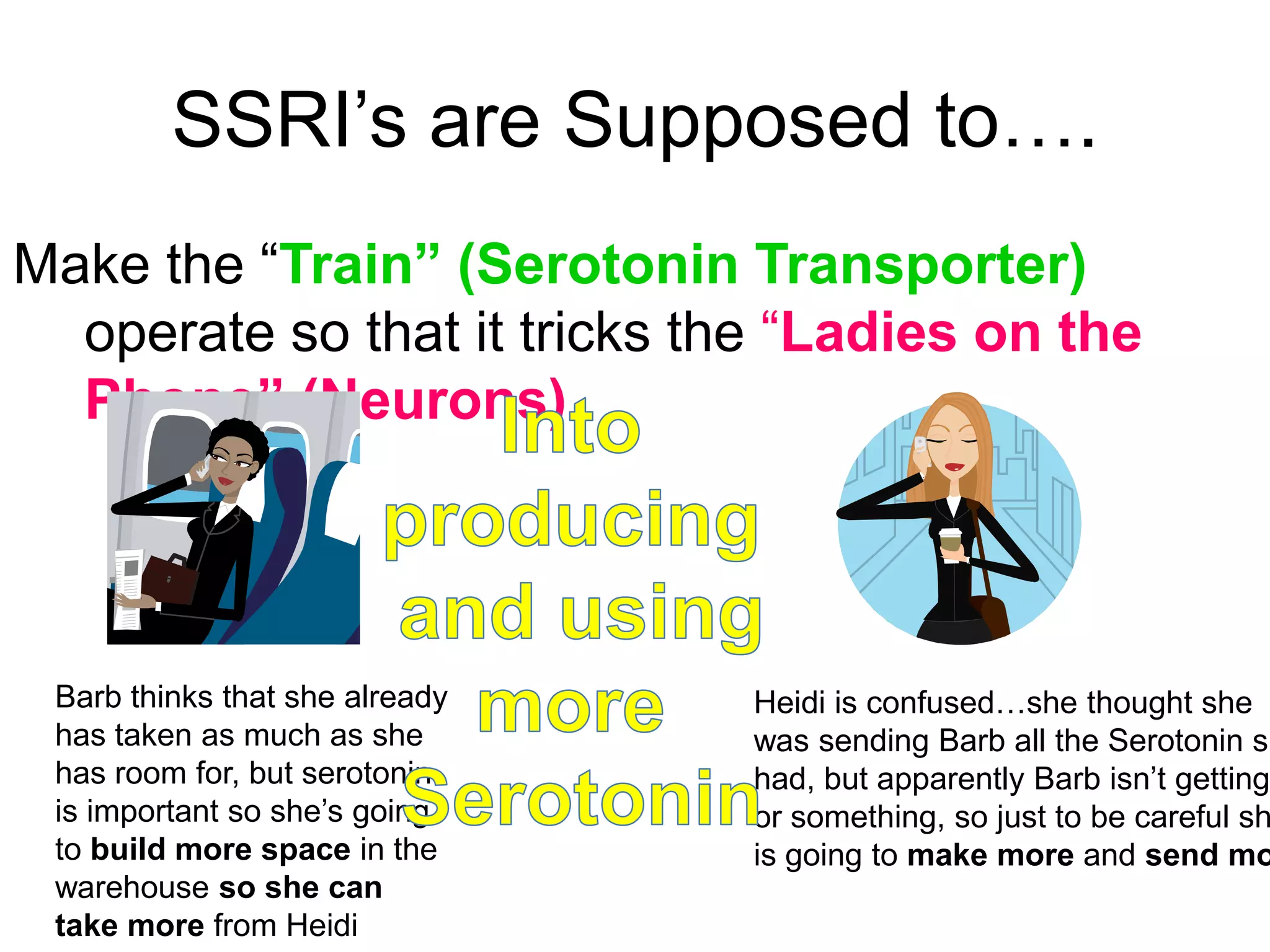
SSRIs like prozac are supposed
to….
Make the “Train” (Serotonin Transporter)
operate so that it tricks the “Ladies on the
Phone” (Neurons)
Barb thinks that she already
has taken as much as she
has room for, but serotonin
is important so she’s going
to build more space in the
warehouse so she can
take more from Heidi
Heidi is confused…she thought she
was sending Barb all the Serotonin sh
had, but apparently Barb isn’t getting
or something, so just to be careful sh
is going to make more and send mo
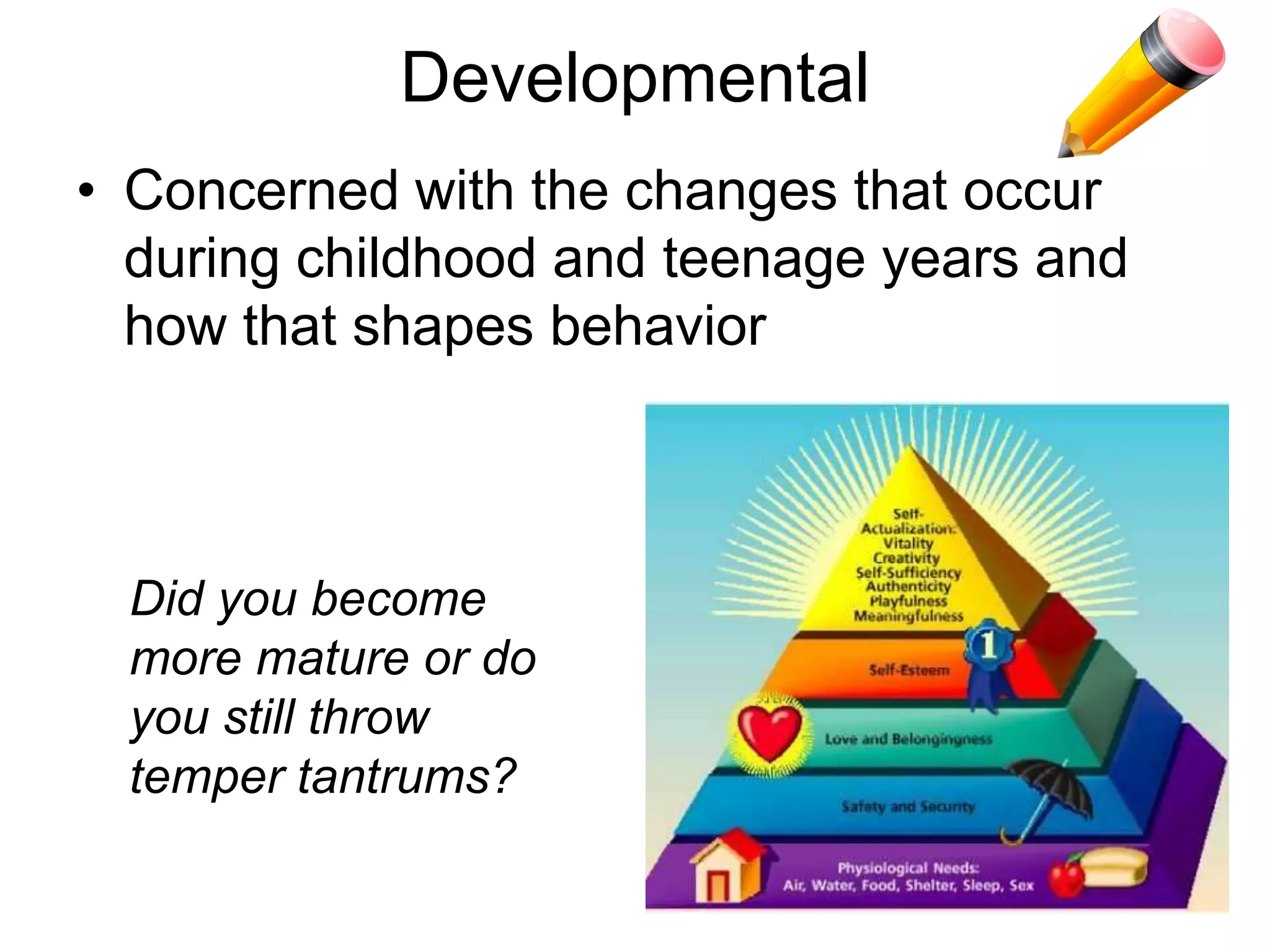
Developmental
• Concerned with the changes that occur
during childhood and teenage years and
how that shapes behavior
If you were not able
to develop normally
then that could
cause depression
Cognitive
• Thought and perceptions influence
behavior
– Attention
– Perception
– Learning
– Memory
– Problem solving
– Language
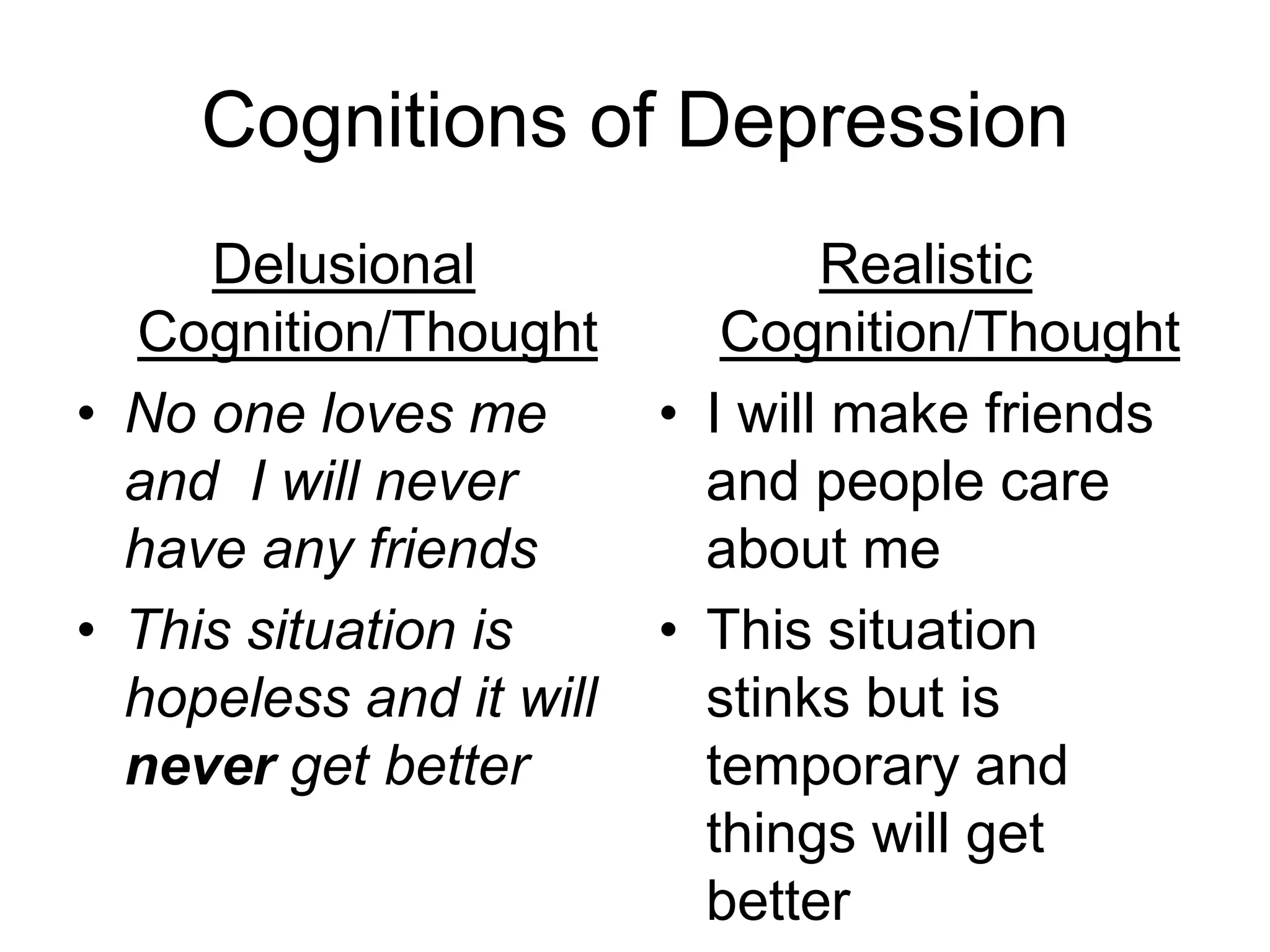
Cognitive Problems in
Depression
Delusional
Cognition/Thought
• No one loves me
and I will never
have any friends
• This situation is
hopeless and it will
never get better
Realistic
Cognition/Thought
• I will make friends
and people care
about me
• This situation
stinks but is
temporary and
things will get
better
Behavioral
• An individual’s experience with rewards
and punishments cause a person’s
development of behavior patterns
Every time they try to succeed something
happens and they fail…they learn they
cannot win and become depressed
Sociocultural
• An individual’s social, cultural, biological,
and psychological factors cause unique
differences.
-What if the way you behave is not acceptable
in your culture/social?
-If you live in a society that puts too much
pressure on you, or doesn’t value you- that
can play a role in causing depression too.

Multi perspective lens of psychology for slide share

  • 1.
  • 2.
    There are DifferentWays to Understand Behavior • Biological • Developmental • Cognitive • Behavioral • Sociocultural
  • 3.
    Biological Psychology • Concernedwith the attempt to understand human behavior from the biological perspective: – Physiological processes in the body – Detailed structure of the brain and entire nervous system – Treatments involving medication – Physical Sensation
  • 4.
    Cognitive Psychology • Focuseson thinking and other mental processes • Cognition defined “ the mental act or process by which knowledge is acquired.” • Covers areas including: – Attention – Perception – Learning – Memory – Problem solving – language
  • 5.
    Behavioral Psychology • Anindividual’s experience with rewards and punishments cause a person’s development of behavior patterns • How we can “train” people to behave in certain ways
  • 6.
    Developmental Psychology • Concernedwith the changes occurring during the course of childhood, and its impact on adult behavior 1. Cognitive and physiological development of children as they develop the ability to complete complex tasks 2. Social development of children as they are able to interact effectively with others and cultivate relationships
  • 7.
    Sociocultural • An individual’ssocial, cultural, biological, and psychological factors cause unique differences. -How does your what is acceptable in your culture/social setting shape your behavior? -Do you act differently in front of your teacher? Your parents? Your friends? Your grandparents?
  • 8.
    There are DifferentWays to Understand Behavior • Biological • Developmental • Cognitive • Behavioral • Sociocultural
  • 9.
    A Brief Guideto Depression
  • 10.
    Which kind ofPain hurts more? Emotional Pain Physical Pain
  • 11.
    Depression is Real •Mental illnesses are often not considered “real”, or just “in your head” • Mental health disorders are real, and can be as debilitating as any disease or condition This prejudice leads to: • less money spent on research and treatment development • less support from society • difficulty in insurance coverage
  • 12.
    • Up to8% of adolescents have depression • Suicide is the third largest cause of death in adolescents • Of the 7.7 million to 12.8 million children with mental disorders, an estimated two-thirds are not getting the help they need. • About half of all of students diagnosed will be on medication Why is it Important to Understand Depression as Students
  • 13.
    Criteria in theDSM-IV to Diagnose Major Depressive Disorder 1. Depressed or irritable mood 2. Loss of interest or pleasure 3. Change in weight or appetite 4. Sleep problems (too much or too little) 5. Motor agitation or retardation 6. Fatigue or loss of energy 7. Feelings of worthlessness or guilt 8. Difficulty thinking, concentrating or making decisions 9. Thoughts of death or suicidal behavior
  • 14.
    Significance of Ageof Onset • Early onset usually means a more severe form of depression, specifically higher rates of: – Comorbidity with other mental health disorders – Substance abuse – Personality disorders – Psychiatric hospitalization – Functional impairment – Increased episodes – Suicide • 4.3 times higher, about 30% will have attempted
  • 15.
    Suicide in DepressedYouth • Every 2 hours a youth commits suicide • Research suggests that there are 23 suicidal gestures and attempts for every completed suicide • Youths diagnosed with depression are 4.3 times more likely to commit suicide than adults with depression • Around 30% of youths with depression have attempted to commit suicide
  • 16.
    Other Facts aboutDepression • Looks different in men and women – Men have more external behaviors (rage) – Women more internal less aggressive (crying) • High comorbidity with Anxiety Disorder (58%) • About 30-45% of patients are treatment resistant
  • 17.
    Common Treatments • Talktherapy- – Cognitive Behavioral Therapy – Family Based Therapy • Medication – Often SSRIs (Selective Serotonin Reuptake Inhibitors) • Lexapro • Celexa • Luvox • Paxil • Zoloft • Prozac
  • 18.
    Biological • Biological processesinfluence behavior and mental processes so there must be a biological based reason for depression…
  • 19.
    So What isREALLY Going on “Up There? • Hypothesized deficiency in Serotonin Transporter (indicated by a polymorphism in the 5HTTLPR gene) • What does that mean? –There is a “chemical imbalance” –Related to decreased amounts of serotonin
  • 20.
    The Neuroscience of Depressionand SSRI’s in 8 Slides
  • 21.
    The Back ofYour Head The Front of Your Head
  • 23.
    I help to regulate cognitive functions, suchas sleep (dreaming), eating, and mood. When you think of me, think of How you feel after A big Thanksgiving Meal, soooo good!
  • 24.
    “The Pond ofSerotonin versus the Ocean of Serotonin”
  • 25.
    Chemical Transmission Chemicals or Neurotransmitters arereleased from one neuron and another neuron picks them up.
  • 26.
    Serotonin Transporter Train Hey,I’m gonna send over some serotonin, that cool? You want to send over what? I’m on a plane I really can’t talk right now. And I don’t want anymore of whatever it is you want to send me. Seriously, I need you to take this serotonin, now Barb What do you want me to do Drop dead Heidi, I don’t care
  • 28.
    SSRIs like prozacare supposed to…. Make the “Train” (Serotonin Transporter) operate so that it tricks the “Ladies on the Phone” (Neurons) Barb thinks that she already has taken as much as she has room for, but serotonin is important so she’s going to build more space in the warehouse so she can take more from Heidi Heidi is confused…she thought she was sending Barb all the Serotonin sh had, but apparently Barb isn’t getting or something, so just to be careful sh is going to make more and send mo
  • 29.
    Developmental • Concerned withthe changes that occur during childhood and teenage years and how that shapes behavior If you were not able to develop normally then that could cause depression
  • 30.
    Cognitive • Thought andperceptions influence behavior – Attention – Perception – Learning – Memory – Problem solving – Language
  • 31.
    Cognitive Problems in Depression Delusional Cognition/Thought •No one loves me and I will never have any friends • This situation is hopeless and it will never get better Realistic Cognition/Thought • I will make friends and people care about me • This situation stinks but is temporary and things will get better
  • 32.
    Behavioral • An individual’sexperience with rewards and punishments cause a person’s development of behavior patterns Every time they try to succeed something happens and they fail…they learn they cannot win and become depressed
  • 33.
    Sociocultural • An individual’ssocial, cultural, biological, and psychological factors cause unique differences. -What if the way you behave is not acceptable in your culture/social? -If you live in a society that puts too much pressure on you, or doesn’t value you- that can play a role in causing depression too.