Students: Hoang Thanh Ha – s3446504 &
Nguyen Tra My – s3462940
Lecture: Nguyen Thi Hong Phuong
Date: 17 July 2014
Cultivation theory
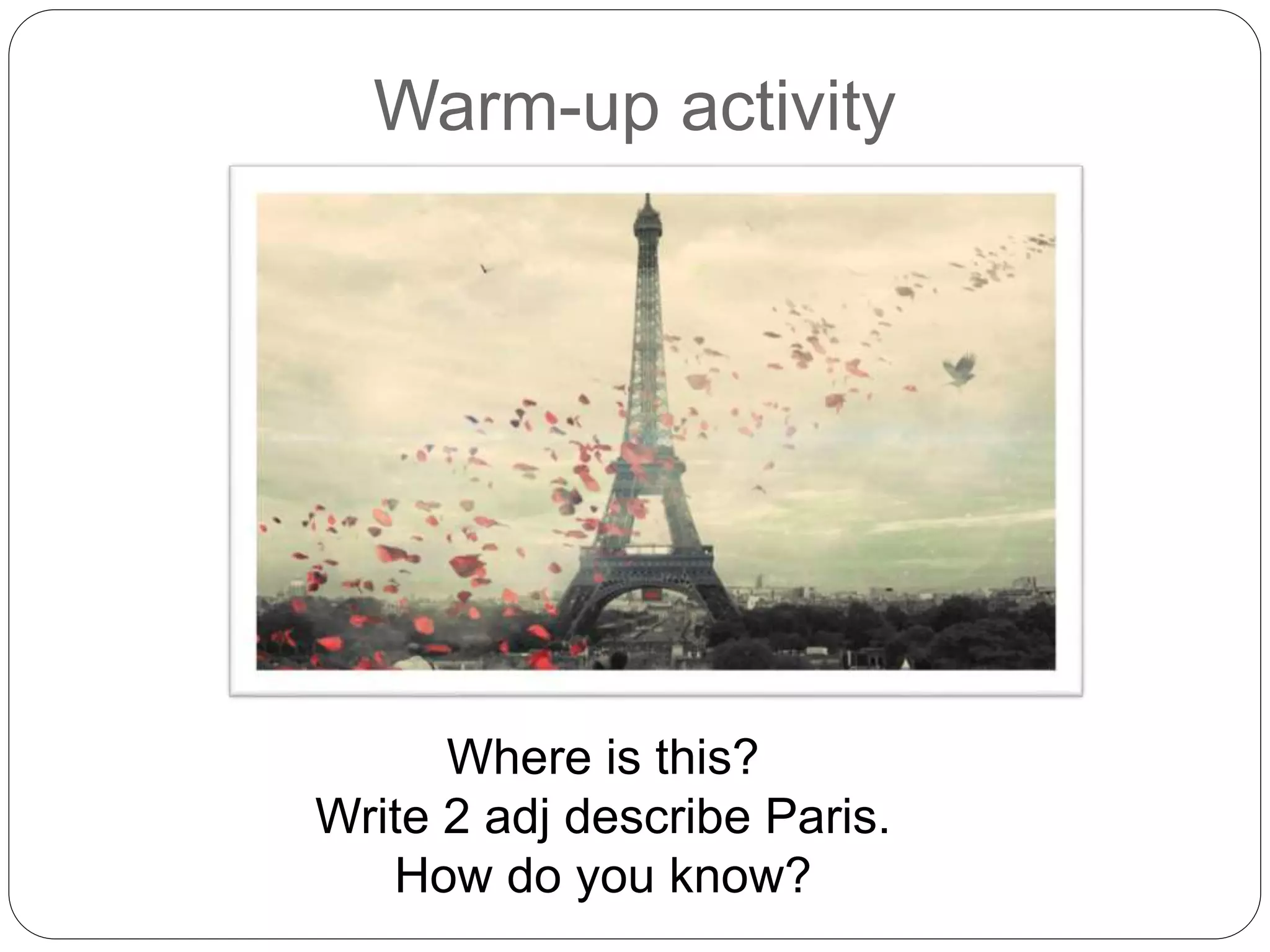
Warm-up activity
Where is this?
Write 2 adj describe Paris.
How do you know?
Outline
1. Historical background
2. Original cultivation theory
3. Case study: the violence on TV
4. Broader view: Body image
5. Case study: Victoria Secret Show
6. Discussion
7. Conclusion
8. Reference list
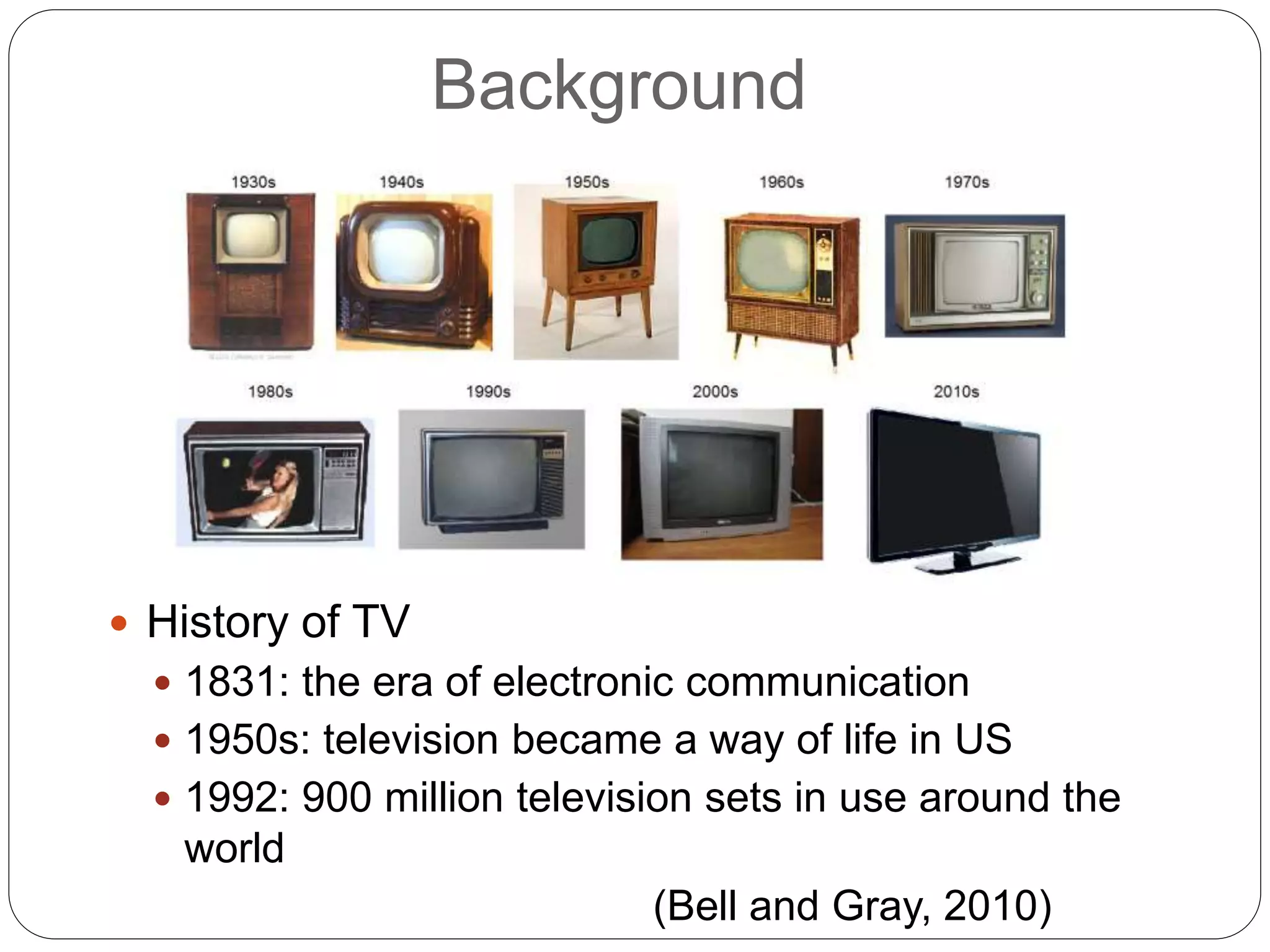
Background
 History of TV
 1831: the era of electronic communication
 1950s: television became a way of life in US
 1992: 900 million television sets in use around the
world
(Bell and Gray, 2010)
Original cultivation theory
• Proposed by Professor
George Gerbner & Larry
Gross of the university of
Pennsylnavia in 1970s
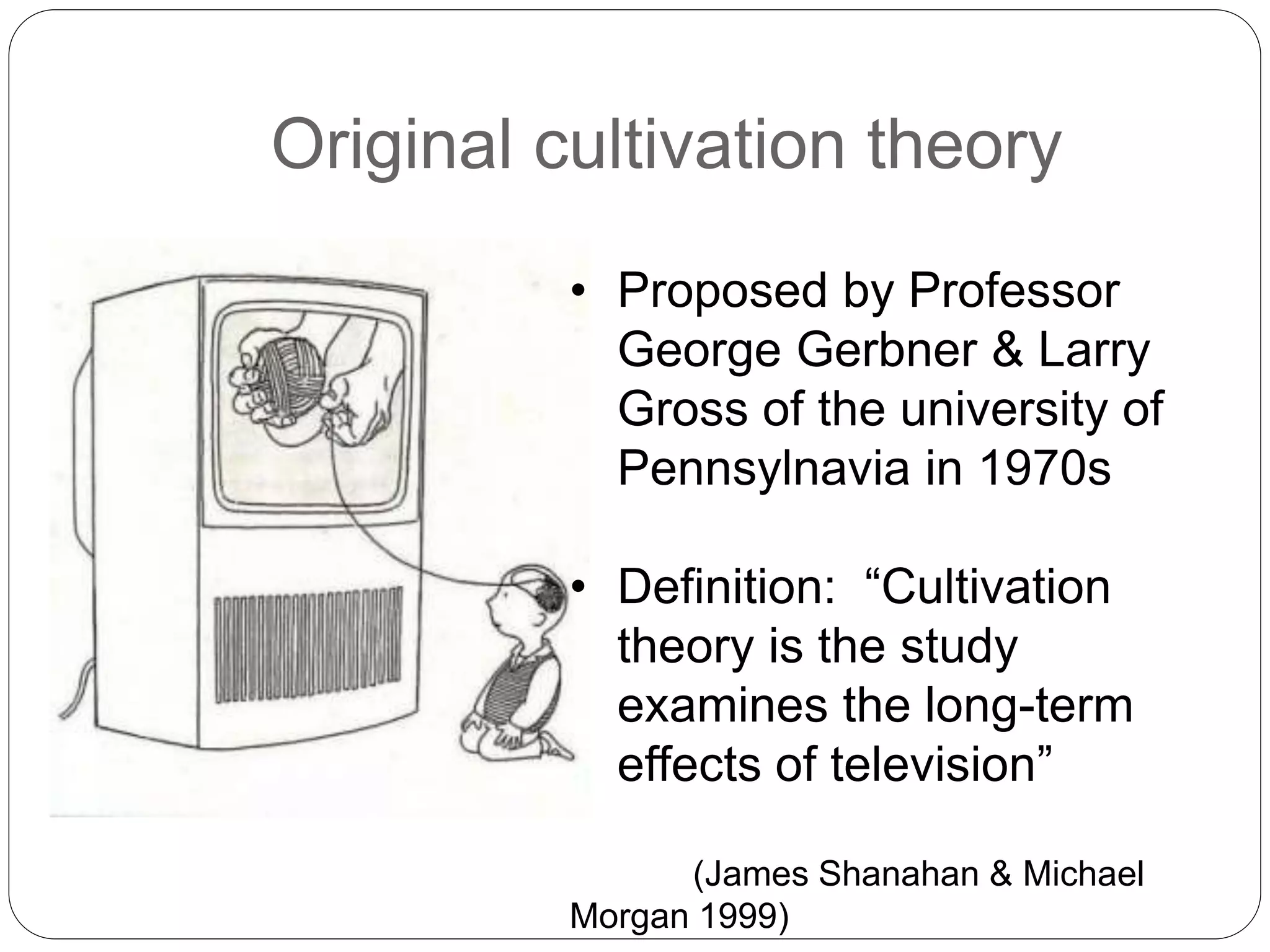
• Definition: “Cultivation
theory is the study
examines the long-term
effects of television”
(James Shanahan & Michael
Morgan 1999)
Original cultivation theory
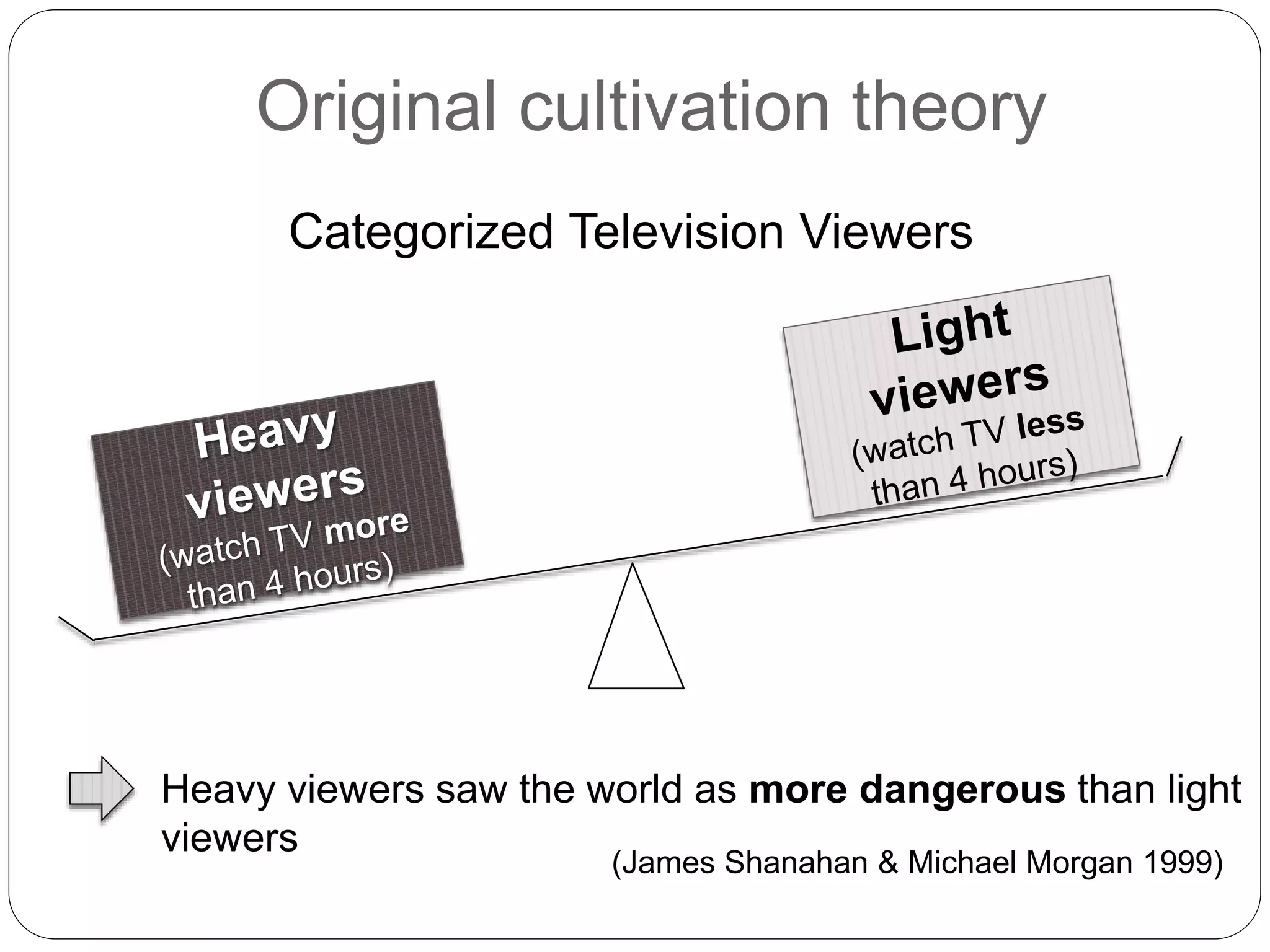
Categorized Television Viewers
Heavy viewers saw the world as more dangerous than light
viewers
(James Shanahan & Michael Morgan 1999)
Original cultivation theory
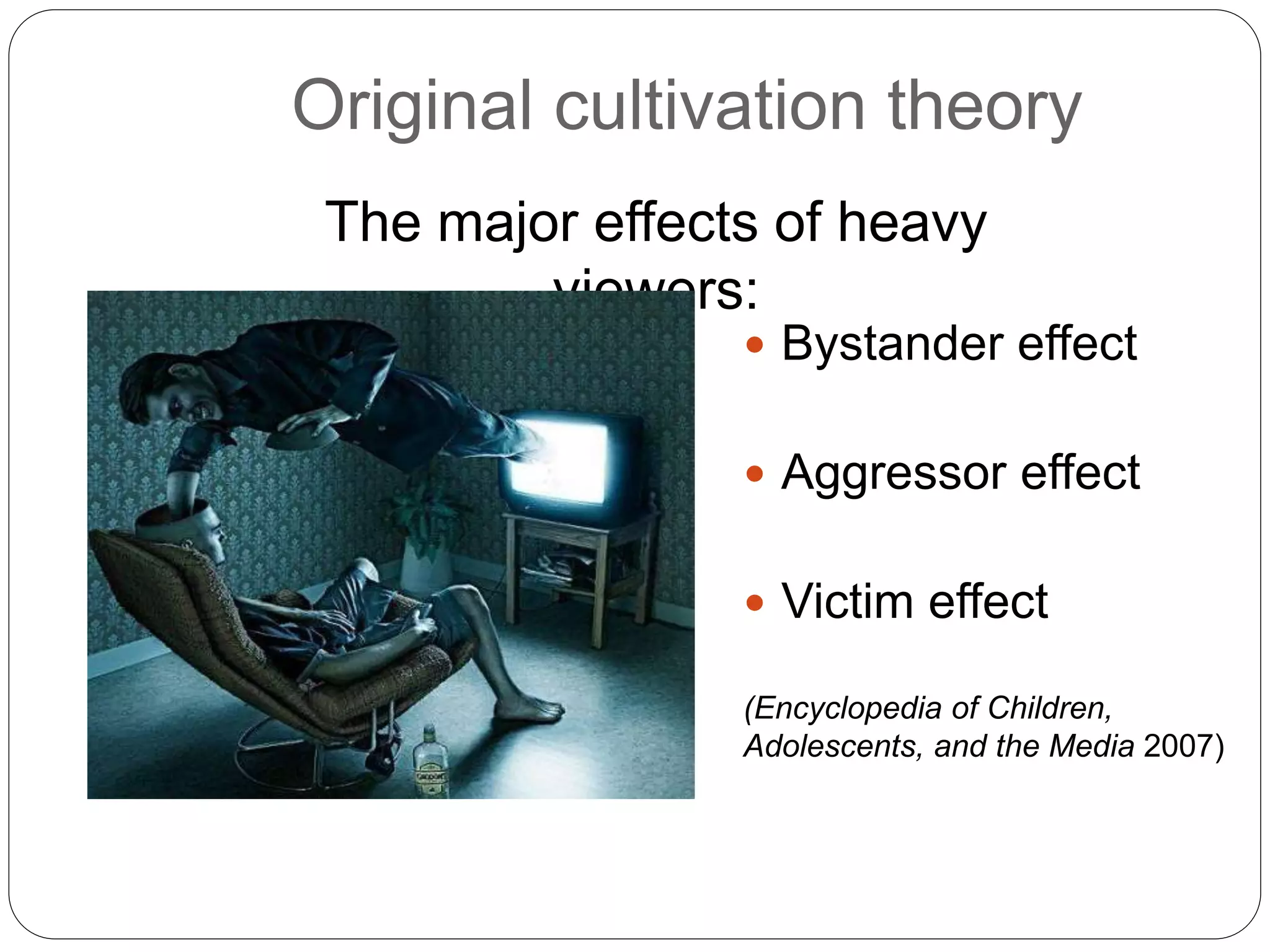
 Bystander effect
 Aggressor effect
 Victim effect
The major effects of heavy
viewers:
(Encyclopedia of Children,
Adolescents, and the Media 2007)
Case Study
A Broader Look of Cultivation Theory
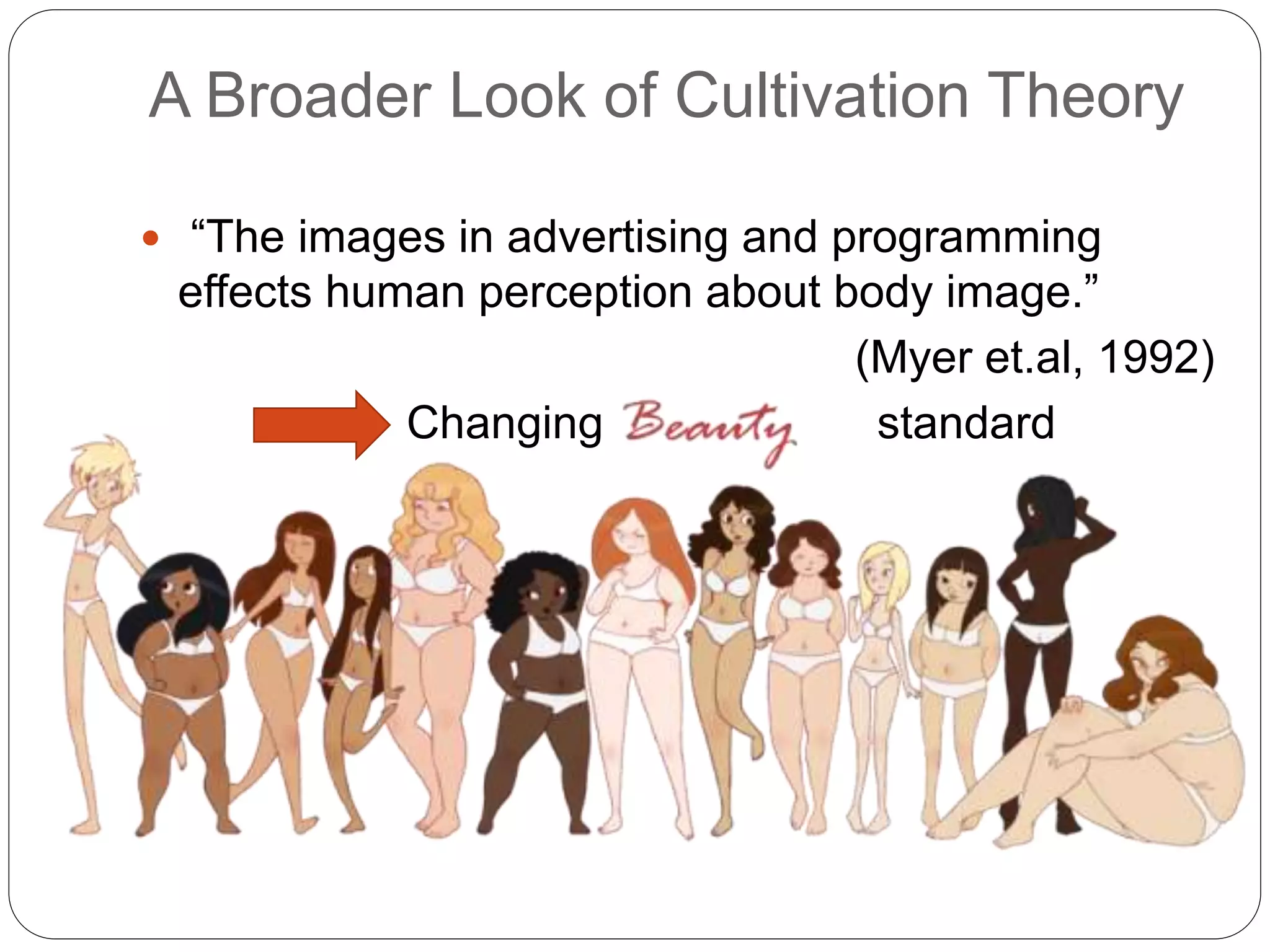
 “The images in advertising and programming
effects human perception about body image.”
(Myer et.al, 1992)
Changing standard
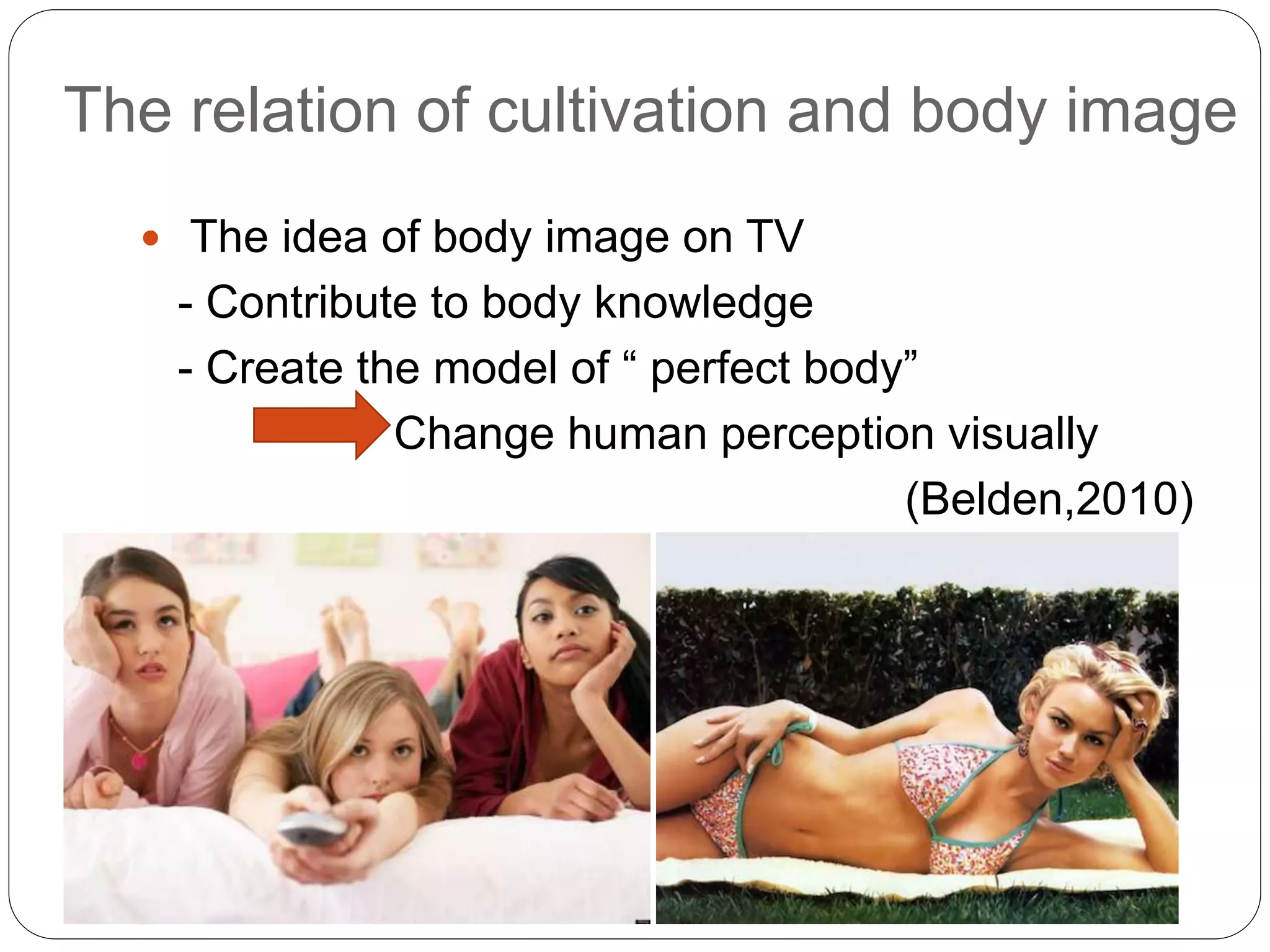
The relation of cultivation and body image
 The idea of body image on TV
- Contribute to body knowledge
- Create the model of “ perfect body”
Change human perception visually
(Belden,2010)
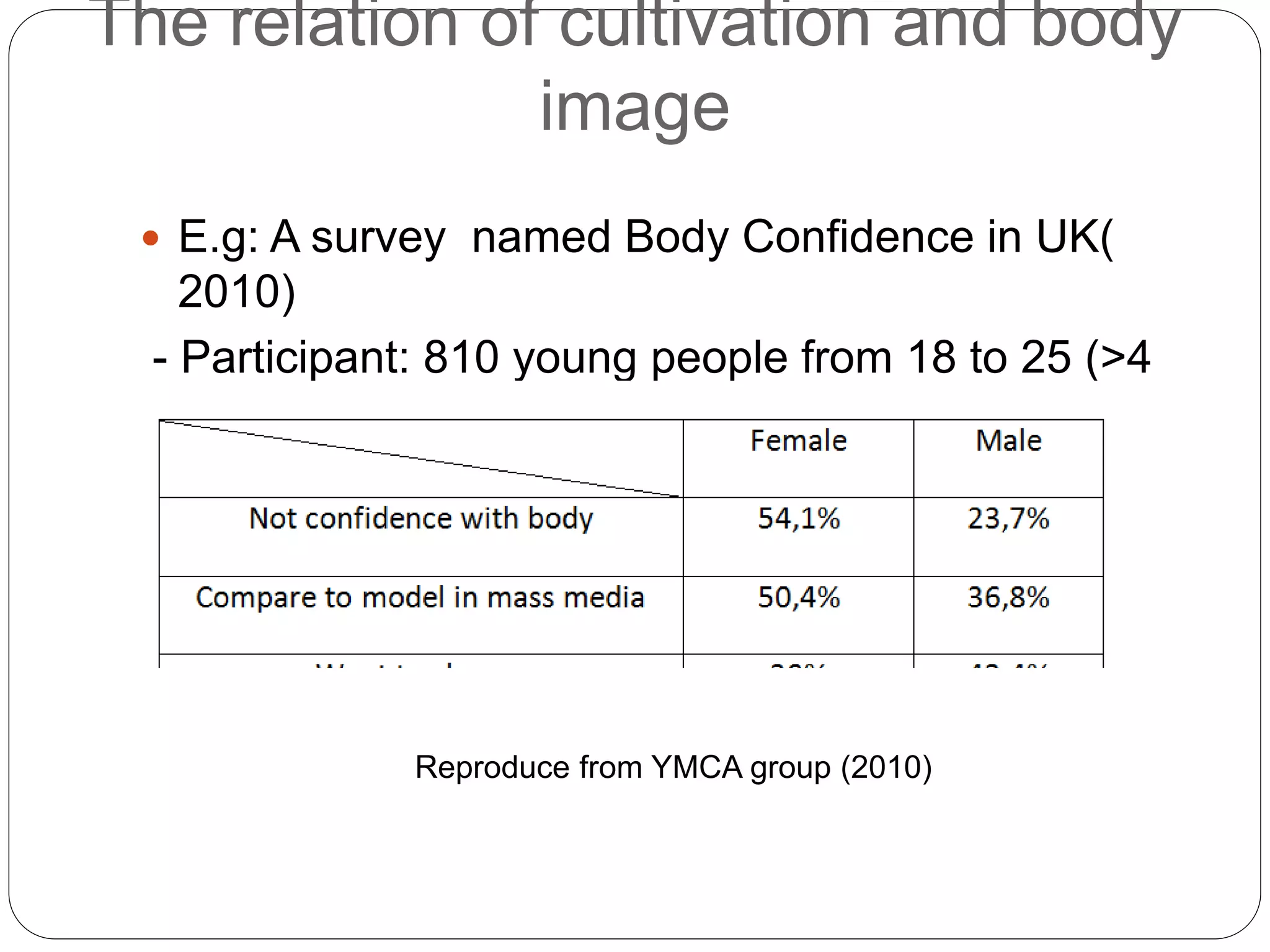
The relation of cultivation and body
image
 E.g: A survey named Body Confidence in UK(
2010)
- Participant: 810 young people from 18 to 25 (>4
hr watching TV)
Reproduce from YMCA group (2010)
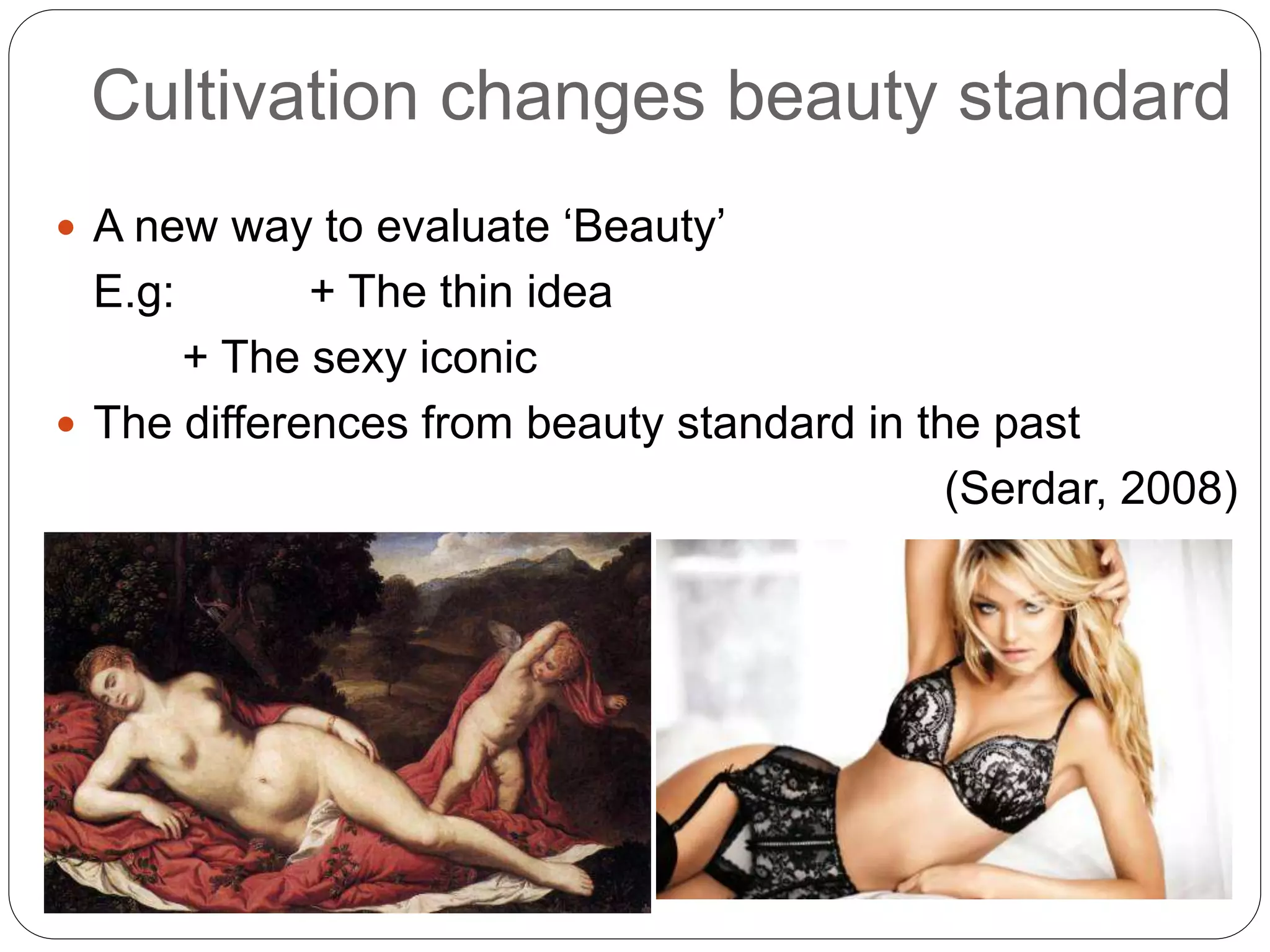
Cultivation changes beauty standard
 A new way to evaluate ‘Beauty’
E.g: + The thin idea
+ The sexy iconic
 The differences from beauty standard in the past
(Serdar, 2008)
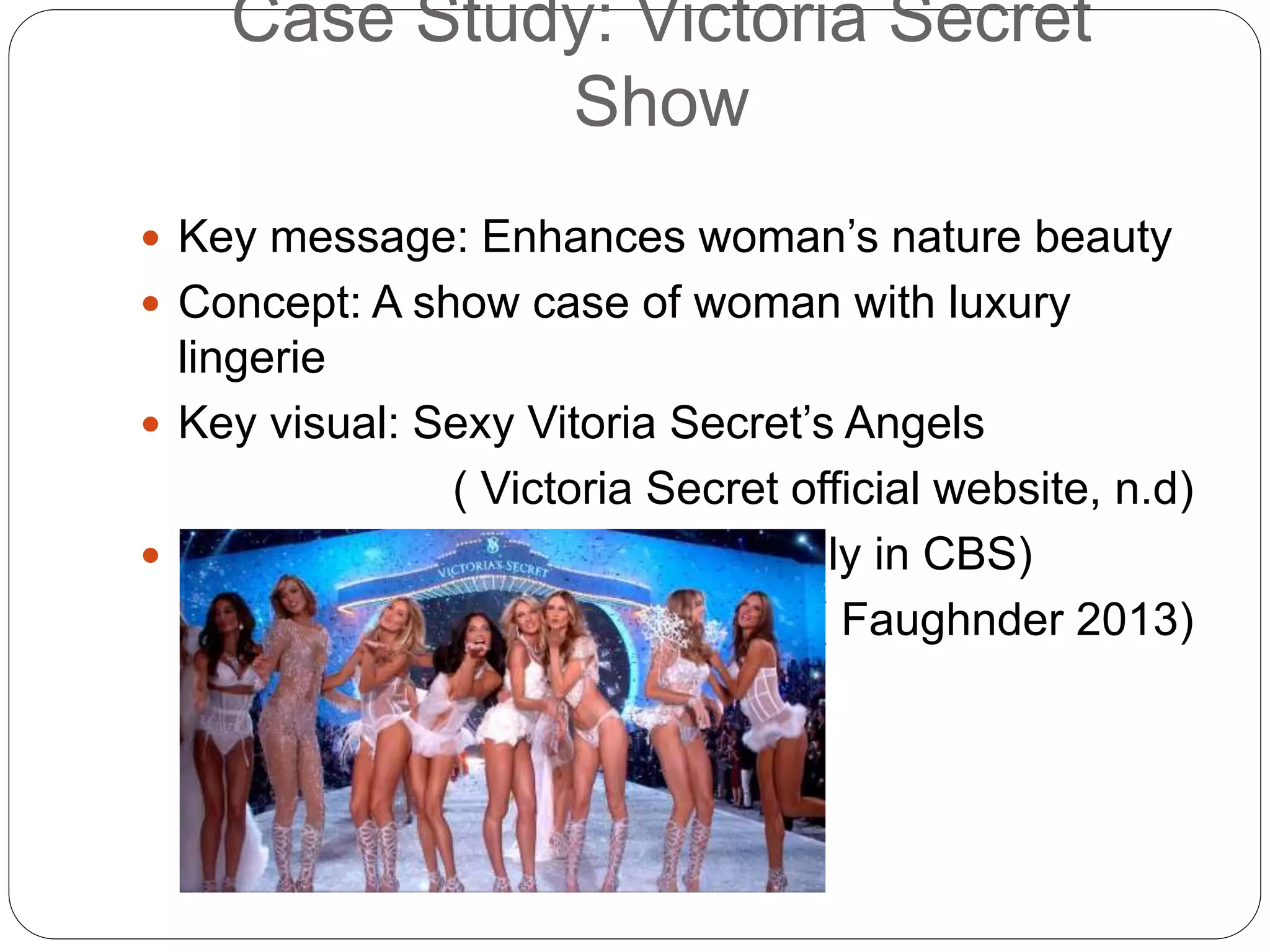
Case Study: Victoria Secret
Show
 Key message: Enhances woman’s nature beauty
 Concept: A show case of woman with luxury
lingerie
 Key visual: Sexy Vitoria Secret’s Angels
( Victoria Secret official website, n.d)
 Rating: 9,71 million viewers (only in CBS)
( Faughnder 2013)
Victoria Secret Show effects
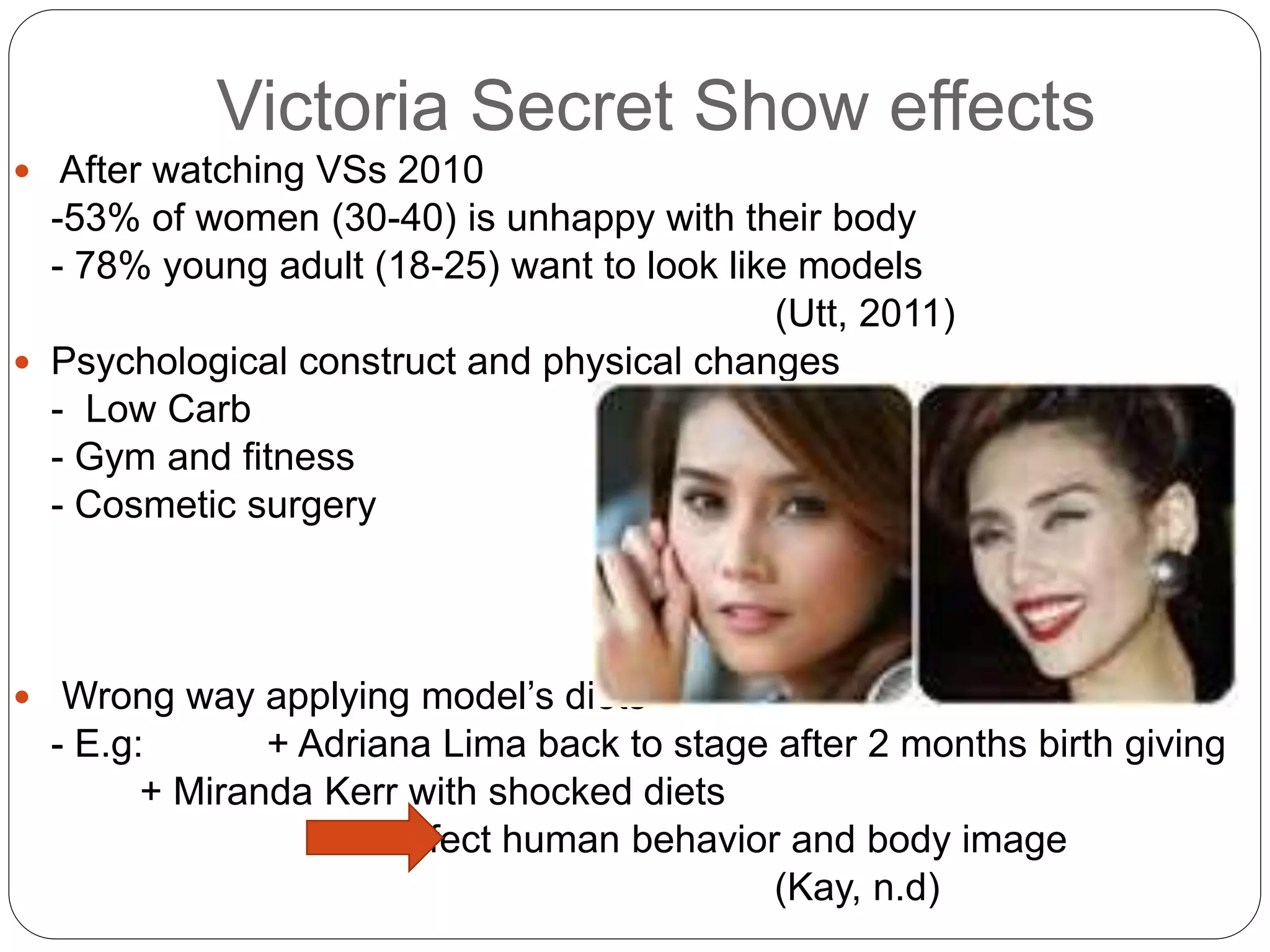
 After watching VSs 2010
-53% of women (30-40) is unhappy with their body
- 78% young adult (18-25) want to look like models
(Utt, 2011)
 Psychological construct and physical changes
- Low Carb
- Gym and fitness
- Cosmetic surgery
 Wrong way applying model’s diets
- E.g: + Adriana Lima back to stage after 2 months birth giving
+ Miranda Kerr with shocked diets
Effect human behavior and body image
(Kay, n.d)
Discussion
 Key learning
- The huge influence of TV/ mass media
- Negative messages and
misunderstanding
 Vietnam context:
- Peer pressure and mass media
- Perception and physical changing
Conclusion
 History of TV
 Original cultivation theory: Violence
effects
 A Broader look of theory: Body
Image
References
 Bell, E. and Gray, A. (2010). Televising history. 1st ed. Basingstoke
[U.K.]: Palgrave Macmillan.
 Encyclopedia of Children, Adolescents, and the Media. (2007).
Sage Publications.
 Jamie, U. (2011). Profitable Objectification: The Victoria's Secret
Fashion Show. [online] Change From Within. Available at:
http://changefromwithin.org/2011/12/01/profitable-objectification/
[Accessed 16 Jul. 2014].
 Kasey L, S. (2014). Westminster College: a private comprehensive
liberal arts college in Salt Lake City, UT, offering undergraduate and
graduate degrees in liberal arts and professional programs,
including business, nursing, education and communication.. [online]
Westminstercollege.edu.
http://www.westminstercollege.edu/myriad/index.cfm?parent=...&de
tail=4475&content=4795 [Accessed 16 Jul. 2014].
 Myers, P. (2014). [online] Shareok.org. Available at:
https://shareok.org/bitstream/handle/11244/6933/Department%20of
References
 Myers, P. and Biocca, F. (1992). The elastic body image: The
effect of television advertising and programming on body image
distortions in young women. Journal of communication, 42(3),
pp.108--133.
 Nguyen, T 2012, “Hỏng mắt do súng đồ chơi”, Gia Dinh Online
Newspaper, viewed 16 July 2014, <http://giadinh.net.vn/suc-
khoe/hong-mat-do-sung-do-choi-20121015103646300.htm>
 Rhiannon, K. (2014). Body Image Issues and Victoria’s Secret
Angels. Our Home Town. [online] Available at:
http://www.ourhometown.ca/lifestyle/RK0010.php [Accessed 16
Jul. 2014].
 Ryan, F. (2013). TV ratings: 'Victoria's Secret Fashion Show'
wins; 'SHIELD' hits low. Los Angeles Times. [online] Available at:
http://TV ratings: 'Victoria's Secret Fashion Show' wins; 'SHIELD'
hits low [Accessed 16 Jul. 2014].
 Shanahan, J. and Morgan, M. (1999). Television and the
mainstream. 1st ed. New York: Cambridge University Press.

Cultivation theory and case studies

  • 1.
    Students: Hoang ThanhHa – s3446504 & Nguyen Tra My – s3462940 Lecture: Nguyen Thi Hong Phuong Date: 17 July 2014 Cultivation theory
  • 2.
    Warm-up activity Where isthis? Write 2 adj describe Paris. How do you know?
  • 3.
    Outline 1. Historical background 2.Original cultivation theory 3. Case study: the violence on TV 4. Broader view: Body image 5. Case study: Victoria Secret Show 6. Discussion 7. Conclusion 8. Reference list
  • 4.
    Background  History ofTV  1831: the era of electronic communication  1950s: television became a way of life in US  1992: 900 million television sets in use around the world (Bell and Gray, 2010)
  • 5.
    Original cultivation theory •Proposed by Professor George Gerbner & Larry Gross of the university of Pennsylnavia in 1970s • Definition: “Cultivation theory is the study examines the long-term effects of television” (James Shanahan & Michael Morgan 1999)
  • 6.
    Original cultivation theory CategorizedTelevision Viewers Heavy viewers saw the world as more dangerous than light viewers (James Shanahan & Michael Morgan 1999)
  • 7.
    Original cultivation theory Bystander effect  Aggressor effect  Victim effect The major effects of heavy viewers: (Encyclopedia of Children, Adolescents, and the Media 2007)
  • 8.
  • 9.
    A Broader Lookof Cultivation Theory  “The images in advertising and programming effects human perception about body image.” (Myer et.al, 1992) Changing standard
  • 10.
    The relation ofcultivation and body image  The idea of body image on TV - Contribute to body knowledge - Create the model of “ perfect body” Change human perception visually (Belden,2010)
  • 11.
    The relation ofcultivation and body image  E.g: A survey named Body Confidence in UK( 2010) - Participant: 810 young people from 18 to 25 (>4 hr watching TV) Reproduce from YMCA group (2010)
  • 12.
    Cultivation changes beautystandard  A new way to evaluate ‘Beauty’ E.g: + The thin idea + The sexy iconic  The differences from beauty standard in the past (Serdar, 2008)
  • 13.
    Case Study: VictoriaSecret Show  Key message: Enhances woman’s nature beauty  Concept: A show case of woman with luxury lingerie  Key visual: Sexy Vitoria Secret’s Angels ( Victoria Secret official website, n.d)  Rating: 9,71 million viewers (only in CBS) ( Faughnder 2013)
  • 14.
    Victoria Secret Showeffects  After watching VSs 2010 -53% of women (30-40) is unhappy with their body - 78% young adult (18-25) want to look like models (Utt, 2011)  Psychological construct and physical changes - Low Carb - Gym and fitness - Cosmetic surgery  Wrong way applying model’s diets - E.g: + Adriana Lima back to stage after 2 months birth giving + Miranda Kerr with shocked diets Effect human behavior and body image (Kay, n.d)
  • 15.
    Discussion  Key learning -The huge influence of TV/ mass media - Negative messages and misunderstanding  Vietnam context: - Peer pressure and mass media - Perception and physical changing
  • 16.
    Conclusion  History ofTV  Original cultivation theory: Violence effects  A Broader look of theory: Body Image
  • 17.
    References  Bell, E.and Gray, A. (2010). Televising history. 1st ed. Basingstoke [U.K.]: Palgrave Macmillan.  Encyclopedia of Children, Adolescents, and the Media. (2007). Sage Publications.  Jamie, U. (2011). Profitable Objectification: The Victoria's Secret Fashion Show. [online] Change From Within. Available at: http://changefromwithin.org/2011/12/01/profitable-objectification/ [Accessed 16 Jul. 2014].  Kasey L, S. (2014). Westminster College: a private comprehensive liberal arts college in Salt Lake City, UT, offering undergraduate and graduate degrees in liberal arts and professional programs, including business, nursing, education and communication.. [online] Westminstercollege.edu. http://www.westminstercollege.edu/myriad/index.cfm?parent=...&de tail=4475&content=4795 [Accessed 16 Jul. 2014].  Myers, P. (2014). [online] Shareok.org. Available at: https://shareok.org/bitstream/handle/11244/6933/Department%20of
  • 18.
    References  Myers, P.and Biocca, F. (1992). The elastic body image: The effect of television advertising and programming on body image distortions in young women. Journal of communication, 42(3), pp.108--133.  Nguyen, T 2012, “Hỏng mắt do súng đồ chơi”, Gia Dinh Online Newspaper, viewed 16 July 2014, <http://giadinh.net.vn/suc- khoe/hong-mat-do-sung-do-choi-20121015103646300.htm>  Rhiannon, K. (2014). Body Image Issues and Victoria’s Secret Angels. Our Home Town. [online] Available at: http://www.ourhometown.ca/lifestyle/RK0010.php [Accessed 16 Jul. 2014].  Ryan, F. (2013). TV ratings: 'Victoria's Secret Fashion Show' wins; 'SHIELD' hits low. Los Angeles Times. [online] Available at: http://TV ratings: 'Victoria's Secret Fashion Show' wins; 'SHIELD' hits low [Accessed 16 Jul. 2014].  Shanahan, J. and Morgan, M. (1999). Television and the mainstream. 1st ed. New York: Cambridge University Press.