What is Crowdsourcing?
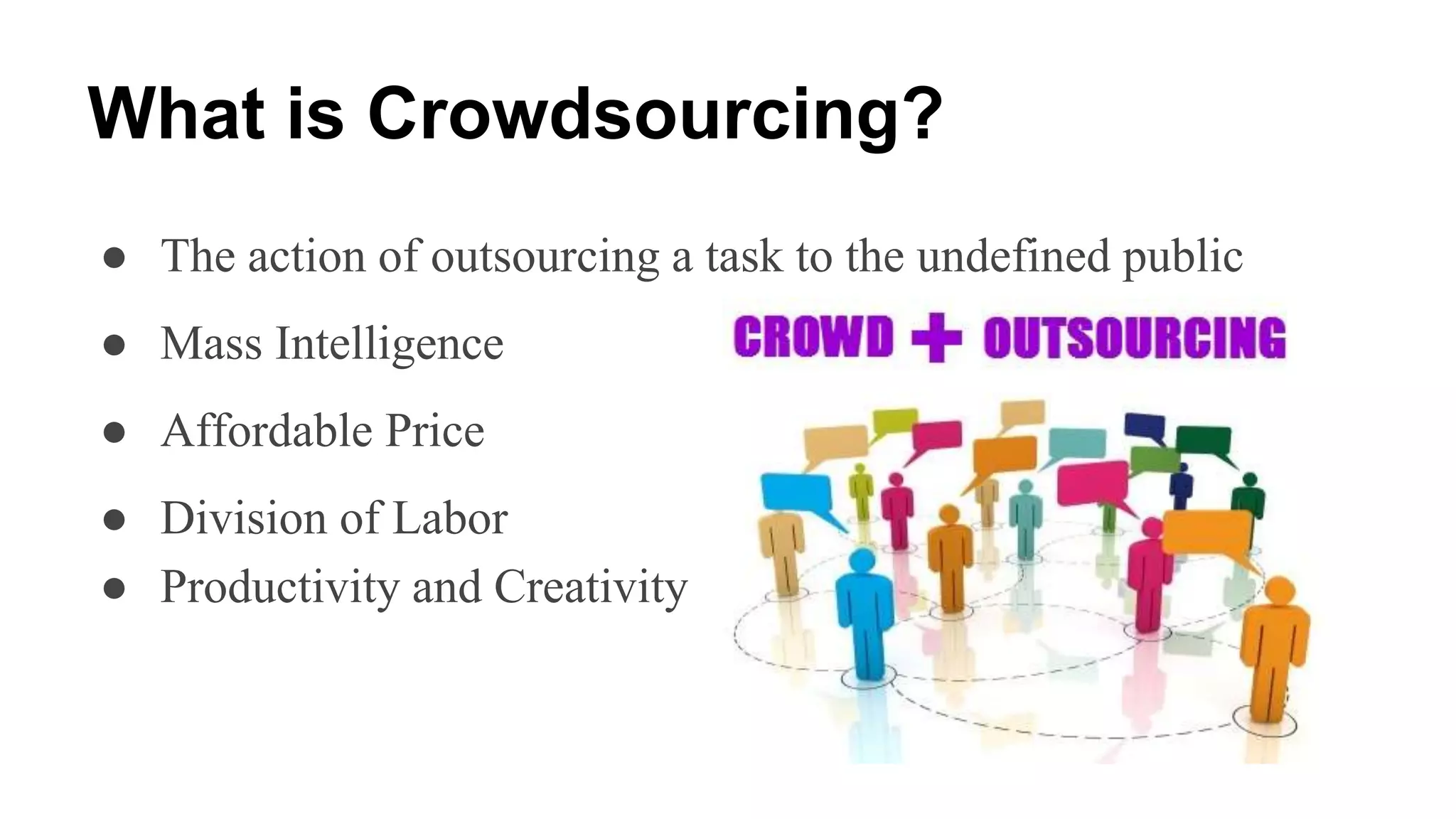
● The action of outsourcing a task to the undefined public
● Mass Intelligence
● Affordable Price
● Division of Labor
● Productivity and Creativity
History of Crowdsourcing?
1. The term “crowdsourcing” was coined by Jeff Howe back in 2006.
a. Wired Article
2. Despite being a somewhat new term, “crowdsourcing” has been existed in our society for years in many
forms.
a. Software and Video Games Beta Invitation
3. Crowdsourcing is often used for translation service.
a. Facebook and Wikipedia
4. Companies nowadays list the problems they’re working on to the public as an attempt to get help from
anyone.
a. R&D vs. Crowdsourcing
5. Certain companies even offer huge prizes for solving a problem on crowdsourcing sites.
a. Innocentive
Types of Crowdsourcing
1. Crowdfunding: need money for an initiative
or cause?
a. the practice of funding a project or venture by raising
monetary contributions from a large number of
people, typically via the internet.
Types of Crowdsourcing (cont.)
2. Crowdsourced Designs: need a new logo?
a. projects are funded for a large group of people to
design something, for example, a website.
Types of Crowdsourcing (cont.)
3. Crowdwisdom: need an answer to your
question?
a. Where users ask questions in front of a large pool of
people willing to answer any type of problem.
The Pros of Crowdsourcing
● Crowdsourcing has brought together a large amount of
previously disconnected people that together help to
achieve goals
● Large number of people willing to work at any given
time with differing expertise, ideas, and opinions
○ Able to get a variety of options that can solve
problems
○ Know what is most popular and therefore profitable
○ Huge wealth of knowledge
● Good for businesses that need something done, but it
isn’t an ongoing job
○ Making phone calls for a day
○ Conducting field research over widespread area
(map natural disasters, identify potholes)
● Crowdsourcing is affordable, and often can be done for
free
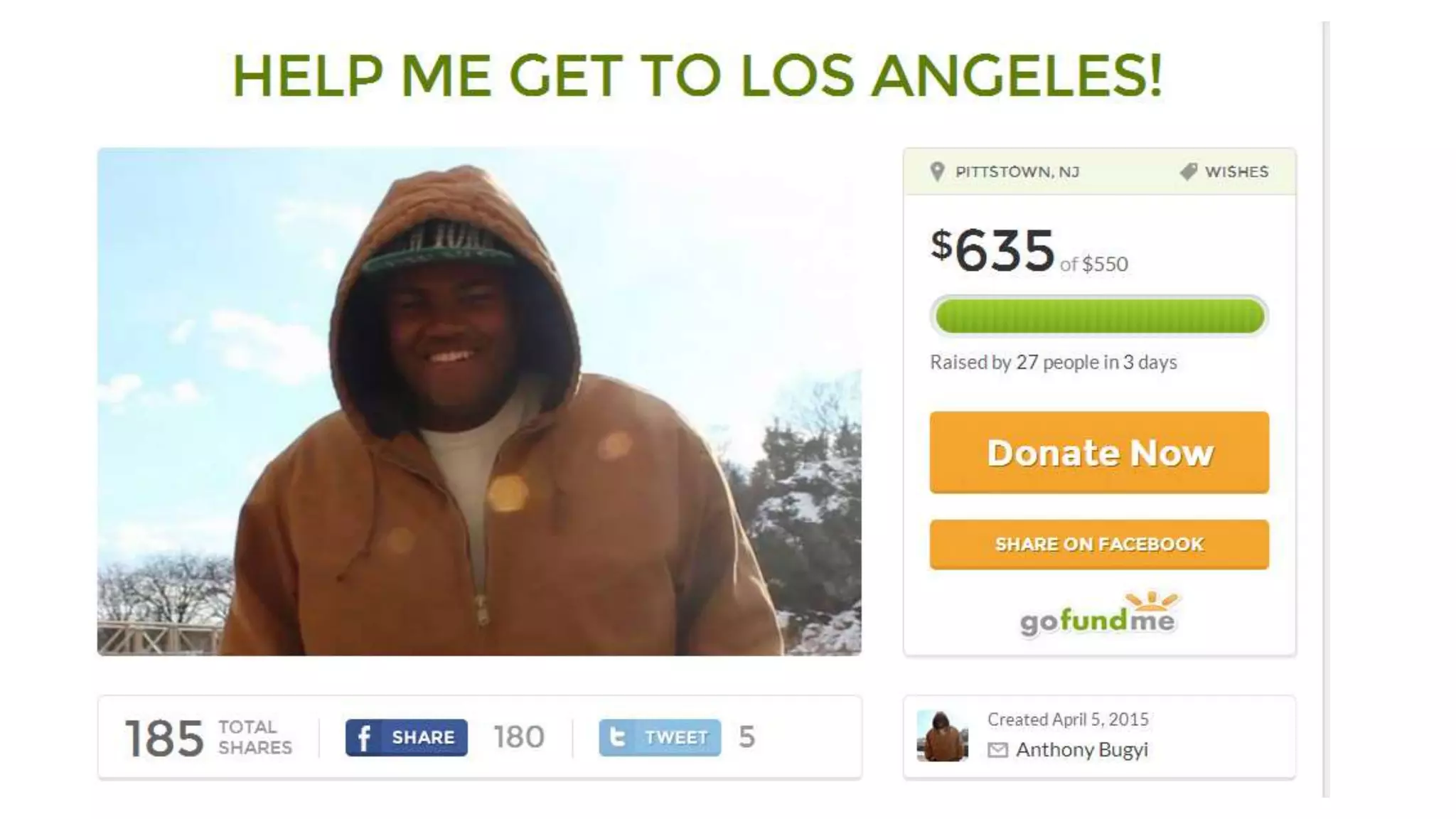
● Can be quick (GoFundMe)
Pros
The Cons of Crowdsourcing
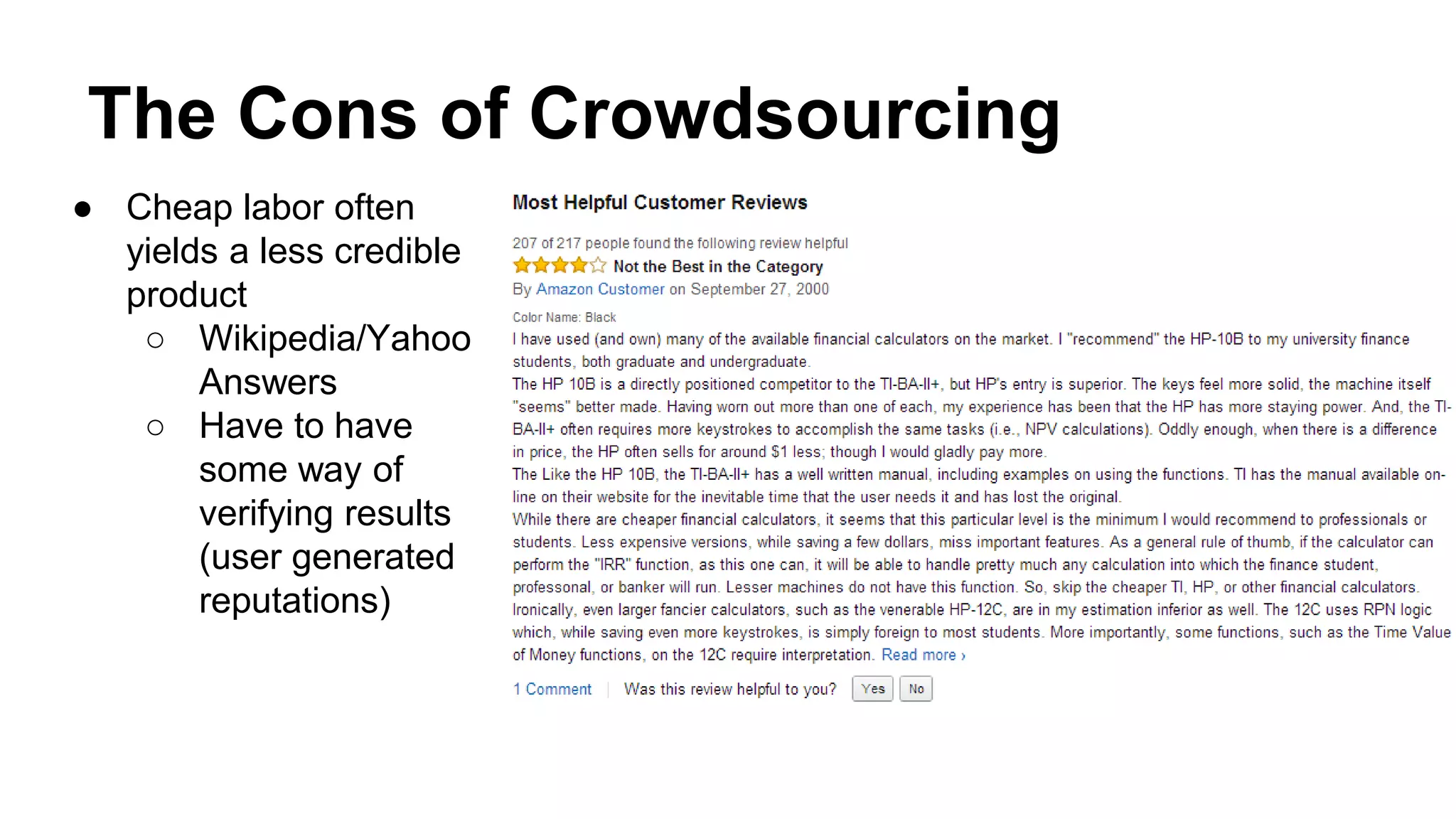
● Cheap labor often
yields a less credible
product
○ Wikipedia/Yahoo
Answers
○ Have to have
some way of
verifying results
(user generated
reputations)
Cons
● Management… how do you manage such a large scale
of workers?
● Only really helpful for simple tasks, anything else would
be too risky to crowdsource
● Collaboration among crowd is near impossible
● No contract → members can leave a project whenever
they want and ideas can be reused
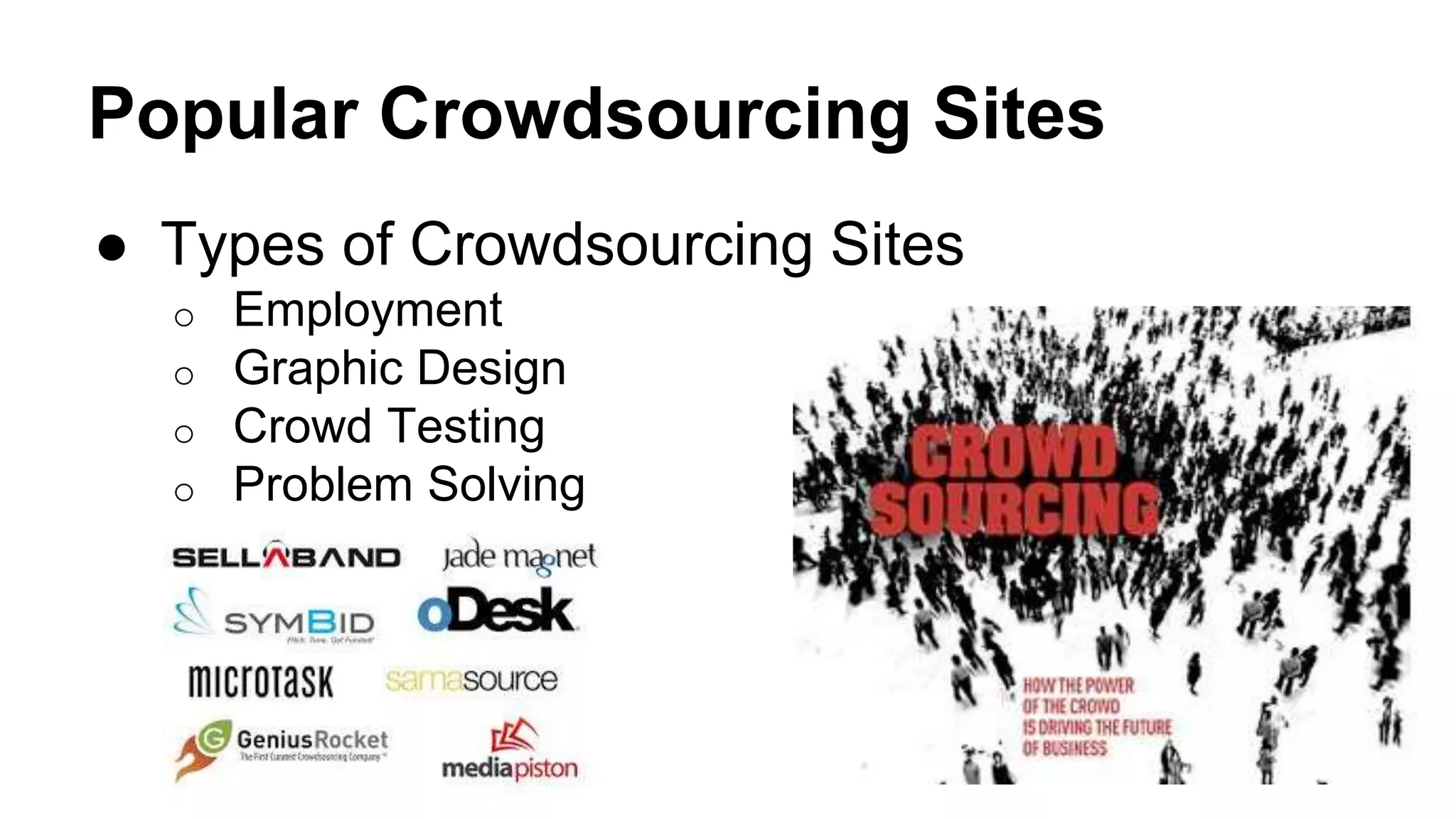
Popular Crowdsourcing Sites
● Types of Crowdsourcing Sites
o Employment
o Graphic Design
o Crowd Testing
o Problem Solving
Job Sites
● Freelancer.com
o offers online jobs to freelancers around the world
o companies or individuals post projects for a set price
● Guru
● ScriptLance
o hires programmers and software developers
o bid for work around the world offering own rate
Jobs Sites
● Elance
over 50,000 job postings
wide range from programming to designing
● Amazon Mechanical Turk
o used for tagging photos, categorizing products
o on-demand scalable workforce
o https://www.mturk.com/mturk/welcome
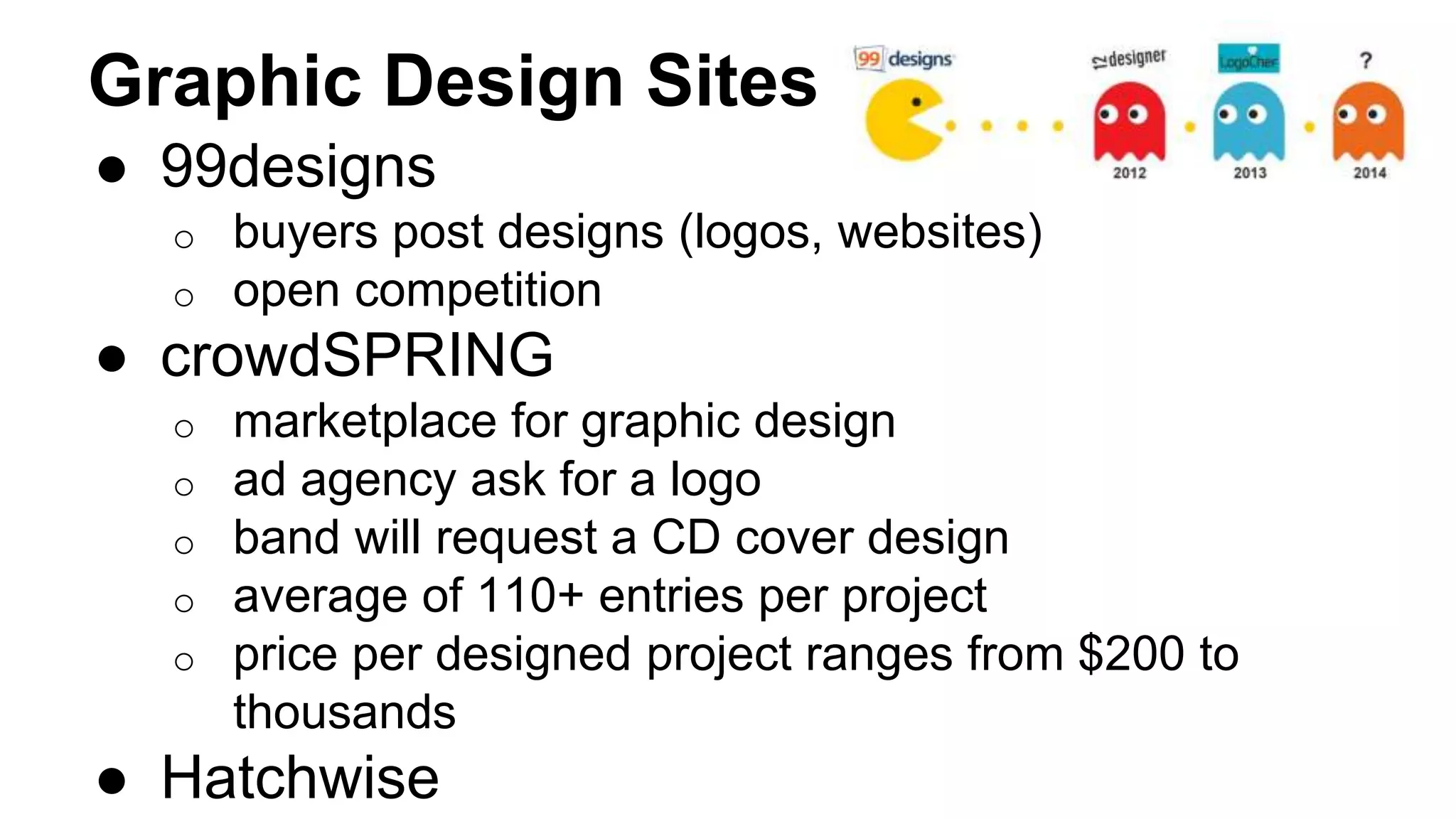
Graphic Design Sites
● 99designs
o buyers post designs (logos, websites)
o open competition
● crowdSPRING
o marketplace for graphic design
o ad agency ask for a logo
o band will request a CD cover design
o average of 110+ entries per project
o price per designed project ranges from $200 to
thousands
● Hatchwise
Crowd Testing
● Feedback Army
o tests your website with the use of crowds
● Utest
o offers software testing (security testing, usability
software)
● UserTesting
o video of a visitor speaking their thoughts as they use
your site
o a written summary describing problems
Problem Solving
● InnoCentive
o solve complicated questions
o deliver breakthrough ideas and solutions at lower
costs and less risk
● Innovation Exchange
o develop solutions and submitted for review by team
and sponsor
Questions for the Class
● Crowdsourcing is often used by small start-ups because they don’t have
the funds to pay professionals. Do you think that big corporations will begin
to more widely use crowdsourcing as well?
● As crowdsourcing becomes more and more common, how do we protect
intellectual property?
● Do you think that crowdsourcing has the capabilities to surpass the
popularity of traditional job searching?
● Do you think Villanova should initiate a type of crowdsourcing on campus
and why?

Crowdsourcing presentation

  • 2.
    What is Crowdsourcing? ●The action of outsourcing a task to the undefined public ● Mass Intelligence ● Affordable Price ● Division of Labor ● Productivity and Creativity
  • 3.
    History of Crowdsourcing? 1.The term “crowdsourcing” was coined by Jeff Howe back in 2006. a. Wired Article 2. Despite being a somewhat new term, “crowdsourcing” has been existed in our society for years in many forms. a. Software and Video Games Beta Invitation 3. Crowdsourcing is often used for translation service. a. Facebook and Wikipedia 4. Companies nowadays list the problems they’re working on to the public as an attempt to get help from anyone. a. R&D vs. Crowdsourcing 5. Certain companies even offer huge prizes for solving a problem on crowdsourcing sites. a. Innocentive
  • 4.
    Types of Crowdsourcing 1.Crowdfunding: need money for an initiative or cause? a. the practice of funding a project or venture by raising monetary contributions from a large number of people, typically via the internet.
  • 5.
    Types of Crowdsourcing(cont.) 2. Crowdsourced Designs: need a new logo? a. projects are funded for a large group of people to design something, for example, a website.
  • 6.
    Types of Crowdsourcing(cont.) 3. Crowdwisdom: need an answer to your question? a. Where users ask questions in front of a large pool of people willing to answer any type of problem.
  • 7.
    The Pros ofCrowdsourcing ● Crowdsourcing has brought together a large amount of previously disconnected people that together help to achieve goals ● Large number of people willing to work at any given time with differing expertise, ideas, and opinions ○ Able to get a variety of options that can solve problems ○ Know what is most popular and therefore profitable ○ Huge wealth of knowledge
  • 8.
    ● Good forbusinesses that need something done, but it isn’t an ongoing job ○ Making phone calls for a day ○ Conducting field research over widespread area (map natural disasters, identify potholes) ● Crowdsourcing is affordable, and often can be done for free ● Can be quick (GoFundMe) Pros
  • 10.
    The Cons ofCrowdsourcing ● Cheap labor often yields a less credible product ○ Wikipedia/Yahoo Answers ○ Have to have some way of verifying results (user generated reputations)
  • 11.
    Cons ● Management… howdo you manage such a large scale of workers? ● Only really helpful for simple tasks, anything else would be too risky to crowdsource ● Collaboration among crowd is near impossible ● No contract → members can leave a project whenever they want and ideas can be reused
  • 12.
    Popular Crowdsourcing Sites ●Types of Crowdsourcing Sites o Employment o Graphic Design o Crowd Testing o Problem Solving
  • 13.
    Job Sites ● Freelancer.com ooffers online jobs to freelancers around the world o companies or individuals post projects for a set price ● Guru ● ScriptLance o hires programmers and software developers o bid for work around the world offering own rate
  • 14.
    Jobs Sites ● Elance over50,000 job postings wide range from programming to designing ● Amazon Mechanical Turk o used for tagging photos, categorizing products o on-demand scalable workforce o https://www.mturk.com/mturk/welcome
  • 15.
    Graphic Design Sites ●99designs o buyers post designs (logos, websites) o open competition ● crowdSPRING o marketplace for graphic design o ad agency ask for a logo o band will request a CD cover design o average of 110+ entries per project o price per designed project ranges from $200 to thousands ● Hatchwise
  • 16.
    Crowd Testing ● FeedbackArmy o tests your website with the use of crowds ● Utest o offers software testing (security testing, usability software) ● UserTesting o video of a visitor speaking their thoughts as they use your site o a written summary describing problems
  • 17.
    Problem Solving ● InnoCentive osolve complicated questions o deliver breakthrough ideas and solutions at lower costs and less risk ● Innovation Exchange o develop solutions and submitted for review by team and sponsor
  • 18.
    Questions for theClass ● Crowdsourcing is often used by small start-ups because they don’t have the funds to pay professionals. Do you think that big corporations will begin to more widely use crowdsourcing as well? ● As crowdsourcing becomes more and more common, how do we protect intellectual property? ● Do you think that crowdsourcing has the capabilities to surpass the popularity of traditional job searching? ● Do you think Villanova should initiate a type of crowdsourcing on campus and why?

Editor's Notes

  • #5 Kickstarter is a great example, which millions of dollars are funded into all kinds of projects from movies to gadgets – with all the funds coming from people interested in supporting the project. These financial contributions are usually either from: (1) donations, philanthropy and sponsorships where there is no expected financial return (2) lending (3) investment in exchange for equity, profit or revenue sharing
  • #6 This type of crowdsourcing is used to tap into online communities of thousands of talented people to develop original products and concepts, including photography, advertising, graphic design, apparel, and branding concepts. A great example of this type of crowdsourcing is crowdSPRING. It is great because not only one person from an agency doing the work, but rather have multiple people to bid on the work. It allows for hundreds of designs for the price of one, in which you select the logo you like and pay only that one designer.
  • #7 This type of crowdsourcing is used to develop, aggregate, and share knowledge and information through open Q&A and user-generated knowledge systems. A great example of this is Yahoo Answers, where users ask questions in front of a large pool of people willing to answer or if you’re looking to develop a glass for the next iPhone that won’t smudge, ask a crowd to see if they have a solution through sites such as InnoCentive and BrightIdea.
  • #8 Minted, a stationery company, uses crowdsourcing to choose designs they are going to sell → approval from the crowd
  • #11 Combated through