CROUP
DR KALUBI PETERS
INTRODUCTION
• Common childhood illness.
• Viral croup most common form of air way
obstruction in children 6mons – 6 yrs.
• Annual incidence (USA) 6 per 100 cases in age < 6
yrs.
• Accounts for 15% of RTIS among children.
Definition
• Heterogeneous group of illnesses affecting larynx, trachea
and bronchi.
• Laryngotracheitis, LTB, laryngotracheo-
bronchopneumonitis and spasmodic croup are inclusive.
• Upper airway obstruction in croup causes :
 A barking cough, hoarse voice, inspiratory stridor and
variable respiratory distress.
Epidemiology
• Affects age 6/12 – 12 yrs. PI at 2yrs
• M > Fs
• Predominates in winter and falls.
Aetiology
• Para-influenza viruses (1,2 and 3) in 75%
cases.
• Human parainfluenza-1 (most common).
• Causes about 18% croup cases.
• Others: Adenoviruses, RSV, rhino viruses,
entero-viruses and influenza A and B.
• Rarely mycoplasma pneumoniae
DD/Non- infectious causes of stridor
• F.B aspiration
• Trauma
• Allergic reaction(acute angioneurotic oedema)
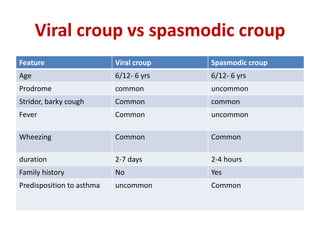
Viral croup vs spasmodic croup
Feature Viral croup Spasmodic croup
Age 6/12- 6 yrs 6/12- 6 yrs
Prodrome common uncommon
Stridor, barky cough Common common
Fever Common uncommon
Wheezing Common Common
duration 2-7 days 2-4 hours
Family history No Yes
Predisposition to asthma uncommon Common
Spasmodic croup
• Tends to recur
• And may represent an allergic reaction to viral
antigens .
Bacterial tracheitis
Common aetiology:
• Staph aureus, H. influenza, Corynebacterium
diphtheriae.
• Considered in the DD of croup.
Anatomic explanation of s+s of croup
• Subglottic region of larynx is held within a
rigid ring of cricoid cartilage.
• Viral infections cause inflammation with
edema in area.
• This can lead to airway obstruction.
Clinical course
• Viral croup typically is preceded by low grade
fever and coryza.
• With progress a barky cough follows.
• Other symptoms:
Dyspnea,hoarseness,wheezing and stridor
Croup
• Symptoms worse at night
• Peak between 24-48 hrs.
• Generally resolve within a week.
• Agitation and crying may aggravate the s+s
• Preference to sit up or be held upright.
 About 15% get complications;
• Otitis media
• Dehydration
• Pneumonia
DD of croup
• Acute laryngeal fracture
• Angioneurotic oedema
• Bacterial tracheitis
• Burns
• Diphtheria
• Epiglottitis
• FB
• Laryngomalacia
• Neoplasm or haemangioma
• Peritonsillar abscess
• Smoke inhalation
• Subglottic stenosis
• Viral croup
• Vocal cord paralysis
• Laryngeal web
• Laryngeal papillomatosis
evaluation
• Most cases have normal pulse oximetry.
• Hypoxia and low oxygen saturation only in
severe cases.
DIAGNOSIS
• Plain neck x-ray.
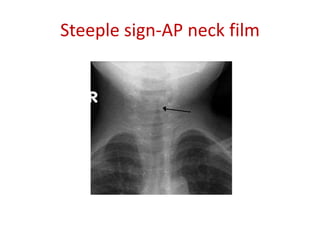
• The classic steeple sign in 50% cases.
• Narrowed column of air on AP
• And an over distended hypopharynx on lateral view.
• CT scan
Steeple sign-AP neck film
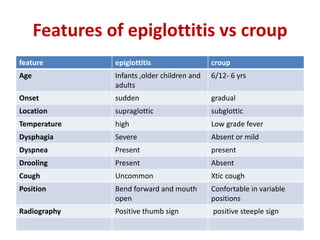
Features of epiglottitis vs croup
feature epiglottitis croup
Age Infants ,older children and
adults
6/12- 6 yrs
Onset sudden gradual
Location supraglottic subglottic
Temperature high Low grade fever
Dysphagia Severe Absent or mild
Dyspnea Present present
Drooling Present Absent
Cough Uncommon Xtic cough
Position Bend forward and mouth
open
Confortable in variable
positions
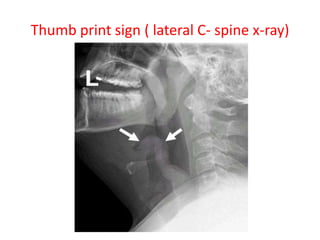
Radiography Positive thumb sign positive steeple sign
Thumb print sign ( lateral C- spine x-ray)
evaluation
• Most children don’t require direct visualization
of laryngeal area or intubation.
• Except for suspected epiglottitis or deteriorating
illness.
• Children < 4/12 and those with long standing
stridor should be evaluated for anatomic
obstruction.
monitoring
• Serial observation and frequent physical
examination is most useful monitoring tool.
Prognosis
• Usually self limiting
• Few require inpatient care
• And < 15% of these will require intubation.
• Death is rare provided good air management is taken.
• Studies in older children show those with h/o hospital admission for
croup have:
 Higher prevalence of bronchial hyper-responsiveness, allergic skin
response and serum IgE levels
management
• Airway maintenance is most important.
• Standard treatment: mist therapy, corticosteroids
and racemic epinephrine.
Mist therapy effects.
• Mucosal cooling, vasoconstriction and reduced
oedema.
COOL MIST
• Cool mist also moistens secretions, soothes
inflamed mucosa and decreases viscosity of
mucous secretions.
• Warm steam may ease symptoms.
Steroids
• Oral dexamethasone beneficial in Out Patient
management of mild-moderate cases.
• Oral dexamethasone 0.6 mg/kg or IM OR 2MG
of nebulized budesonide beneficial as by
studies
Epinephrine
• For long has been standard for treatment of
moderate-severe croup.
• Racemic epinephrine reduces bronchial and
tracheal secretions and mucosal oedema.
• Dose : 0.05-0.1 ml/kg per dose mixed with NS
and delivered with humidified oxygen.
RACEMIC EPINEPHRINE
• Symptomatic relief within 30 minutes and
duration of action of about 2 hrs.
• Common side effects : tachycardia and
hypertension

Croup

  • 1.
  • 2.
    INTRODUCTION • Common childhoodillness. • Viral croup most common form of air way obstruction in children 6mons – 6 yrs. • Annual incidence (USA) 6 per 100 cases in age < 6 yrs. • Accounts for 15% of RTIS among children.
  • 3.
    Definition • Heterogeneous groupof illnesses affecting larynx, trachea and bronchi. • Laryngotracheitis, LTB, laryngotracheo- bronchopneumonitis and spasmodic croup are inclusive. • Upper airway obstruction in croup causes :  A barking cough, hoarse voice, inspiratory stridor and variable respiratory distress.
  • 4.
    Epidemiology • Affects age6/12 – 12 yrs. PI at 2yrs • M > Fs • Predominates in winter and falls.
  • 5.
    Aetiology • Para-influenza viruses(1,2 and 3) in 75% cases. • Human parainfluenza-1 (most common). • Causes about 18% croup cases. • Others: Adenoviruses, RSV, rhino viruses, entero-viruses and influenza A and B. • Rarely mycoplasma pneumoniae
  • 6.
    DD/Non- infectious causesof stridor • F.B aspiration • Trauma • Allergic reaction(acute angioneurotic oedema)
  • 7.
    Viral croup vsspasmodic croup Feature Viral croup Spasmodic croup Age 6/12- 6 yrs 6/12- 6 yrs Prodrome common uncommon Stridor, barky cough Common common Fever Common uncommon Wheezing Common Common duration 2-7 days 2-4 hours Family history No Yes Predisposition to asthma uncommon Common
  • 8.
    Spasmodic croup • Tendsto recur • And may represent an allergic reaction to viral antigens .
  • 9.
    Bacterial tracheitis Common aetiology: •Staph aureus, H. influenza, Corynebacterium diphtheriae. • Considered in the DD of croup.
  • 10.
    Anatomic explanation ofs+s of croup • Subglottic region of larynx is held within a rigid ring of cricoid cartilage. • Viral infections cause inflammation with edema in area. • This can lead to airway obstruction.
  • 11.
    Clinical course • Viralcroup typically is preceded by low grade fever and coryza. • With progress a barky cough follows. • Other symptoms: Dyspnea,hoarseness,wheezing and stridor
  • 12.
    Croup • Symptoms worseat night • Peak between 24-48 hrs. • Generally resolve within a week. • Agitation and crying may aggravate the s+s • Preference to sit up or be held upright.
  • 13.
     About 15%get complications; • Otitis media • Dehydration • Pneumonia
  • 14.
    DD of croup •Acute laryngeal fracture • Angioneurotic oedema • Bacterial tracheitis • Burns • Diphtheria • Epiglottitis • FB • Laryngomalacia • Neoplasm or haemangioma • Peritonsillar abscess • Smoke inhalation • Subglottic stenosis • Viral croup • Vocal cord paralysis • Laryngeal web • Laryngeal papillomatosis
  • 15.
    evaluation • Most caseshave normal pulse oximetry. • Hypoxia and low oxygen saturation only in severe cases.
  • 16.
    DIAGNOSIS • Plain neckx-ray. • The classic steeple sign in 50% cases. • Narrowed column of air on AP • And an over distended hypopharynx on lateral view. • CT scan
  • 17.
  • 18.
    Features of epiglottitisvs croup feature epiglottitis croup Age Infants ,older children and adults 6/12- 6 yrs Onset sudden gradual Location supraglottic subglottic Temperature high Low grade fever Dysphagia Severe Absent or mild Dyspnea Present present Drooling Present Absent Cough Uncommon Xtic cough Position Bend forward and mouth open Confortable in variable positions Radiography Positive thumb sign positive steeple sign
  • 19.
    Thumb print sign( lateral C- spine x-ray)
  • 20.
    evaluation • Most childrendon’t require direct visualization of laryngeal area or intubation. • Except for suspected epiglottitis or deteriorating illness. • Children < 4/12 and those with long standing stridor should be evaluated for anatomic obstruction.
  • 21.
    monitoring • Serial observationand frequent physical examination is most useful monitoring tool.
  • 22.
    Prognosis • Usually selflimiting • Few require inpatient care • And < 15% of these will require intubation. • Death is rare provided good air management is taken. • Studies in older children show those with h/o hospital admission for croup have:  Higher prevalence of bronchial hyper-responsiveness, allergic skin response and serum IgE levels
  • 23.
    management • Airway maintenanceis most important. • Standard treatment: mist therapy, corticosteroids and racemic epinephrine. Mist therapy effects. • Mucosal cooling, vasoconstriction and reduced oedema.
  • 24.
    COOL MIST • Coolmist also moistens secretions, soothes inflamed mucosa and decreases viscosity of mucous secretions. • Warm steam may ease symptoms.
  • 25.
    Steroids • Oral dexamethasonebeneficial in Out Patient management of mild-moderate cases. • Oral dexamethasone 0.6 mg/kg or IM OR 2MG of nebulized budesonide beneficial as by studies
  • 26.
    Epinephrine • For longhas been standard for treatment of moderate-severe croup. • Racemic epinephrine reduces bronchial and tracheal secretions and mucosal oedema. • Dose : 0.05-0.1 ml/kg per dose mixed with NS and delivered with humidified oxygen.
  • 27.
    RACEMIC EPINEPHRINE • Symptomaticrelief within 30 minutes and duration of action of about 2 hrs. • Common side effects : tachycardia and hypertension