Cross Cultural Issues in HRMISL chapterHandling the cross-cultural issues within the organization
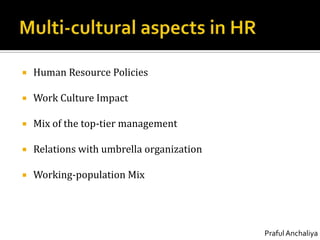
Multi-cultural aspects in HRHuman Resource PoliciesWork Culture ImpactMix of the top-tier managementRelations with umbrella organizationWorking-population Mix
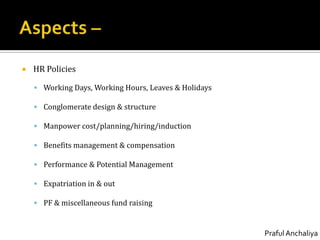
Aspects –HR PoliciesWorking Days, Working Hours, Leaves & HolidaysConglomerate design & structureManpower cost/planning/hiring/inductionBenefits management & compensationPerformance & Potential ManagementExpatriation in & outPF & miscellaneous fund raising
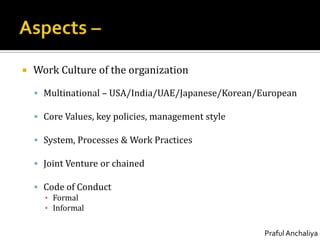
Aspects – Work Culture of the organizationMultinational – USA/India/UAE/Japanese/Korean/EuropeanCore Values, key policies, management styleSystem, Processes & Work PracticesJoint Venture or chainedCode of ConductFormalInformal
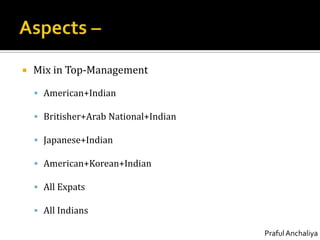
Aspects –Mix in Top-ManagementAmerican+IndianBritisher+ArabNational+IndianJapanese+IndianAmerican+Korean+IndianAll ExpatsAll Indians
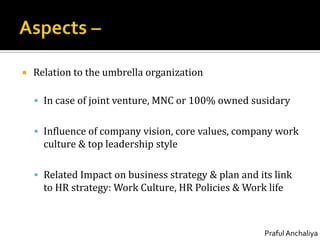
Aspects –Relation to the umbrella organizationIn case of joint venture, MNC or 100% owned susidaryInfluence of company vision, core values, company work culture & top leadership styleRelated Impact on business strategy & plan and its link to HR strategy: Work Culture, HR Policies & Work life
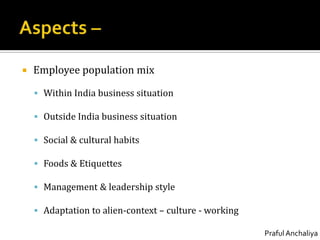
Aspects –Employee population mixWithin India business situationOutside India business situationSocial & cultural habitsFoods & EtiquettesManagement & leadership styleAdaptation to alien-context – culture - working
Some real issues:Work CultureTendency of parent company in case of MNCs to have same work culture in an overseas companyDisconnect between umbrella company culture & local context. Eg: Indian SubsidiaryMisunderstanding due to lack of sensitization of local & social structure & cultural contextImpact of blue collar workers – unionsMorale, motivation, ownership & commitment of the work force
Some real issues:Compensation & BenefitsRelatively low annual salary increase compared to Indian ContextSimple & compact salary structure without any consideration to tax savings etc.High focus on variable Pay & bonuses and cash element rather than fixed salary & long term benefitsClear link of individual performance to variable pay & annual salary reviewStrong link of financial performance of the company to define variable pay & salary decision
Some real issues:Job Security – People OrientationRelocation, No increase, salary cut, pink slips, bench or downsizing in case of:Economic downturnAcquisitions & Mergers of companiesNon-performance of employeeIn case of restructuringIn case of closure of business-plants/locations
Handling Multi-cultural teamsRespect for each-otherInter-personal relationsInitiative & AdaptabilityUnderstanding of unique cultural contextEqual participationAbility of sensitive listening
The MISL ChapterAt Maruti Suzuki India Ltd.Please elaborate with basic structure @ Maruti.
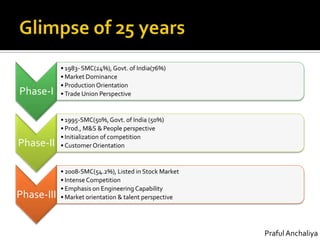
Glimpse of 25 years
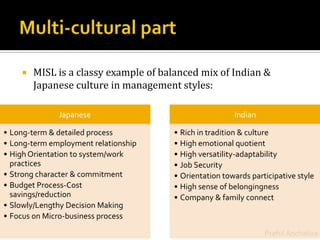
Multi-cultural partMISL is a classy example of balanced mix of Indian & Japanese culture in management styles:
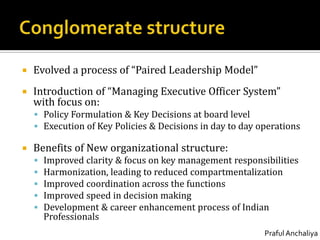
Conglomerate structureEvolved a process of “Paired Leadership Model”Introduction of “Managing Executive Officer System” with focus on:Policy Formulation & Key Decisions at board levelExecution of Key Policies & Decisions in day to day operationsBenefits of New organizational structure:Improved clarity & focus on key management responsibilitiesHarmonization, leading to reduced compartmentalizationImproved coordination across the functionsImproved speed in decision makingDevelopment & career enhancement process of Indian Professionals
MISL’s training interventionsA well defined training module has been initiated at middle & senior management level to:Strengthen the bondAddress multi-cultural issues related to both Japanese & Indian employeesThe training program has been initiated with focus on:Creating team synergyPromoting culture of innovationEnhancing risk taking abilitiesDeveloping cultural sensitivityLanguage training  has been  brought in to bridge the language barrier; Specialized interpreters have been roped in to facilitate better understandingEffective communication across the company on regular basis across all levels divison
HR Ground Realities: Indian ContextHRM, is strongly influenced by:Local CultureSocial NormsLocal beliefs & practicesFrequent failure of some MNCs:A common mistake: overlooking the local ground realities under the unconscious bias of their parent Corporate Culture, Policies & PracticesPeople management in India or any other alien overseas operation cannot be successful managed in any “Japanese” or “American” or “Korean” or “Arab” or “European” way
HR Ground realities: Indian ContextHR Policies, system & practices based on the culture & core values of the parent company may or may not work in the Indian ContextKey to success lies in embracing flexibility, understanding, acceptance, respect & adaptability to the local ground realitiesCollaborative process of gradual change through trust, mutual exchange, training & flexible management approach can help in establishing a strong link & facilitate desired results
HR Ground realities: Indian ContextMaruti is the most successful & live example of such business success in India – The Suzuki Way – credit to Chairman O. Suzuki & the SMC Top Management Team.The team Govt. thus decorated Chairman O. Suzuki with – PADMA VIBHUSHAN – the highest Indian honor in year 2007
Concluding…Managing multi-cultural initiatives help an Organization keep a competitive HR advantage through:Improved corporate cultureImproved employee morale & higher retention of employeeEnabling the organization to move into emerging marketsDecreased interpersonal conflict among employeesIncreased productivity, innovation & brand identity
Concluding…

Cross cultural issues in hr

  • 1.
    Cross Cultural Issuesin HRMISL chapterHandling the cross-cultural issues within the organization
  • 2.
    Multi-cultural aspects inHRHuman Resource PoliciesWork Culture ImpactMix of the top-tier managementRelations with umbrella organizationWorking-population Mix
  • 3.
    Aspects –HR PoliciesWorkingDays, Working Hours, Leaves & HolidaysConglomerate design & structureManpower cost/planning/hiring/inductionBenefits management & compensationPerformance & Potential ManagementExpatriation in & outPF & miscellaneous fund raising
  • 4.
    Aspects – WorkCulture of the organizationMultinational – USA/India/UAE/Japanese/Korean/EuropeanCore Values, key policies, management styleSystem, Processes & Work PracticesJoint Venture or chainedCode of ConductFormalInformal
  • 5.
    Aspects –Mix inTop-ManagementAmerican+IndianBritisher+ArabNational+IndianJapanese+IndianAmerican+Korean+IndianAll ExpatsAll Indians
  • 6.
    Aspects –Relation tothe umbrella organizationIn case of joint venture, MNC or 100% owned susidaryInfluence of company vision, core values, company work culture & top leadership styleRelated Impact on business strategy & plan and its link to HR strategy: Work Culture, HR Policies & Work life
  • 7.
    Aspects –Employee populationmixWithin India business situationOutside India business situationSocial & cultural habitsFoods & EtiquettesManagement & leadership styleAdaptation to alien-context – culture - working
  • 8.
    Some real issues:WorkCultureTendency of parent company in case of MNCs to have same work culture in an overseas companyDisconnect between umbrella company culture & local context. Eg: Indian SubsidiaryMisunderstanding due to lack of sensitization of local & social structure & cultural contextImpact of blue collar workers – unionsMorale, motivation, ownership & commitment of the work force
  • 9.
    Some real issues:Compensation& BenefitsRelatively low annual salary increase compared to Indian ContextSimple & compact salary structure without any consideration to tax savings etc.High focus on variable Pay & bonuses and cash element rather than fixed salary & long term benefitsClear link of individual performance to variable pay & annual salary reviewStrong link of financial performance of the company to define variable pay & salary decision
  • 10.
    Some real issues:JobSecurity – People OrientationRelocation, No increase, salary cut, pink slips, bench or downsizing in case of:Economic downturnAcquisitions & Mergers of companiesNon-performance of employeeIn case of restructuringIn case of closure of business-plants/locations
  • 11.
    Handling Multi-cultural teamsRespectfor each-otherInter-personal relationsInitiative & AdaptabilityUnderstanding of unique cultural contextEqual participationAbility of sensitive listening
  • 12.
    The MISL ChapterAtMaruti Suzuki India Ltd.Please elaborate with basic structure @ Maruti.
  • 13.
  • 14.
    Multi-cultural partMISL isa classy example of balanced mix of Indian & Japanese culture in management styles:
  • 15.
    Conglomerate structureEvolved aprocess of “Paired Leadership Model”Introduction of “Managing Executive Officer System” with focus on:Policy Formulation & Key Decisions at board levelExecution of Key Policies & Decisions in day to day operationsBenefits of New organizational structure:Improved clarity & focus on key management responsibilitiesHarmonization, leading to reduced compartmentalizationImproved coordination across the functionsImproved speed in decision makingDevelopment & career enhancement process of Indian Professionals
  • 16.
    MISL’s training interventionsAwell defined training module has been initiated at middle & senior management level to:Strengthen the bondAddress multi-cultural issues related to both Japanese & Indian employeesThe training program has been initiated with focus on:Creating team synergyPromoting culture of innovationEnhancing risk taking abilitiesDeveloping cultural sensitivityLanguage training has been brought in to bridge the language barrier; Specialized interpreters have been roped in to facilitate better understandingEffective communication across the company on regular basis across all levels divison
  • 17.
    HR Ground Realities:Indian ContextHRM, is strongly influenced by:Local CultureSocial NormsLocal beliefs & practicesFrequent failure of some MNCs:A common mistake: overlooking the local ground realities under the unconscious bias of their parent Corporate Culture, Policies & PracticesPeople management in India or any other alien overseas operation cannot be successful managed in any “Japanese” or “American” or “Korean” or “Arab” or “European” way
  • 18.
    HR Ground realities:Indian ContextHR Policies, system & practices based on the culture & core values of the parent company may or may not work in the Indian ContextKey to success lies in embracing flexibility, understanding, acceptance, respect & adaptability to the local ground realitiesCollaborative process of gradual change through trust, mutual exchange, training & flexible management approach can help in establishing a strong link & facilitate desired results
  • 19.
    HR Ground realities:Indian ContextMaruti is the most successful & live example of such business success in India – The Suzuki Way – credit to Chairman O. Suzuki & the SMC Top Management Team.The team Govt. thus decorated Chairman O. Suzuki with – PADMA VIBHUSHAN – the highest Indian honor in year 2007
  • 20.
    Concluding…Managing multi-cultural initiativeshelp an Organization keep a competitive HR advantage through:Improved corporate cultureImproved employee morale & higher retention of employeeEnabling the organization to move into emerging marketsDecreased interpersonal conflict among employeesIncreased productivity, innovation & brand identity
  • 21.