Oct	
  29,	
  2010	
  
1.    Can	
  everyone	
  in	
  the	
  team	
  name	
  at	
  least	
  5	
  users	
  
      of	
  the	
  system	
  you	
  are	
  developing?	
  
2.    Have	
  at	
  least	
  2	
  people	
  in	
  the	
  team	
  observed	
  the	
  
      users	
  of	
  your	
  system	
  in	
  their	
  context?	
  
3.    Has	
  the	
  entire	
  team	
  worked	
  together	
  at	
  least	
  
      once	
  in	
  the	
  last	
  two	
  weeks	
  to	
  discuss	
  a	
  design	
  
      solution	
  
Where	
  there	
  is	
  a	
  user	
  and	
  a	
  user	
  interface,	
  there	
  
is	
  user	
  experience.	
  	
  So,	
  user	
  experience	
  design	
  
not	
  optional,	
  it	
  is	
  very	
  much	
  a	
  part	
  of	
  what	
  we	
  
deliver	
  
User	
  experience	
  design	
  is	
  a	
  collaborative	
  
process,	
  it	
  lives	
  within	
  the	
  context	
  of	
  a	
  business	
  
and	
  requires	
  the	
  synthesis	
  of	
  a	
  variety	
  of	
  skills	
  
User	
  experience	
  design	
  is	
  a	
  collaborative	
  
process,	
  it	
  lives	
  within	
  the	
  context	
  of	
  a	
  business	
  
and	
  requires	
  the	
  synthesis	
  of	
  a	
  variety	
  of	
  skills	
  
User	
  experience	
  design	
  is	
  the	
  collective	
  
responsibility	
  of	
  the	
  team,	
  it	
  is	
  not	
  an	
  exclusive	
  
ownership	
  of	
  any	
  one	
  role	
  or	
  discipline	
  
User	
  experience	
  design	
  is	
  an	
  ongoing	
  process	
  
that	
  needs	
  attention	
  through	
  out	
  the	
  lifecycle	
  of	
  
the	
  system,	
  it	
  is	
  not	
  a	
  one-­‐time	
  deliverable	
  
¡    If	
  it’s	
  not	
  optional	
  
¡    It	
  it’s	
  a	
  collaborative	
  process	
  
¡    If	
  it’s	
  our	
  collective	
  responsibility	
  
¡    If	
  it’s	
  something	
  that	
  is	
  ongoing	
  

Let’s	
  get	
  comfortable	
  with	
  it	
  
1.    Understanding	
  the	
  principles	
  of	
  user-­‐centered	
  
      design	
  
2.    Putting	
  user-­‐centered	
  design	
  into	
  practice	
  
3.    Becoming	
  aware	
  of	
  good	
  design	
  patterns	
  
ü        Know	
  your	
  user	
  
      ü   You	
  are	
  not	
  your	
  user	


ü               Keep	
  your	
  user	
  involved	
  
      ü                Continuously	
  evaluate	
  usability	


ü  Create	
  user	
  models	
  to	
  visually	
  illustrate	
  and	
  share	
  
    your	
  knowledge	
  of	
  your	
  user	
  
ü  Create	
  scenarios	
  informed	
  by	
  context-­‐rich	
  stories	
  
    focused	
  on	
  what	
  people	
  do	
  and	
  why	
  
ü  Co-­‐create	
  usage	
  models	
  in	
  the	
  form	
  of	
  storyboards,	
  
    sketches,	
  paper	
  prototypes	
  etc.	


ü     Get	
  into	
  the	
  habit	
  of	
  recognizing	
  design	
  patterns	
  and	
  
       the	
  interaction	
  design	
  problems	
  they	
  solve	


ü     Create	
  your	
  own	
  repository	
  of	
  references	
  on	
  good	
  
       design	


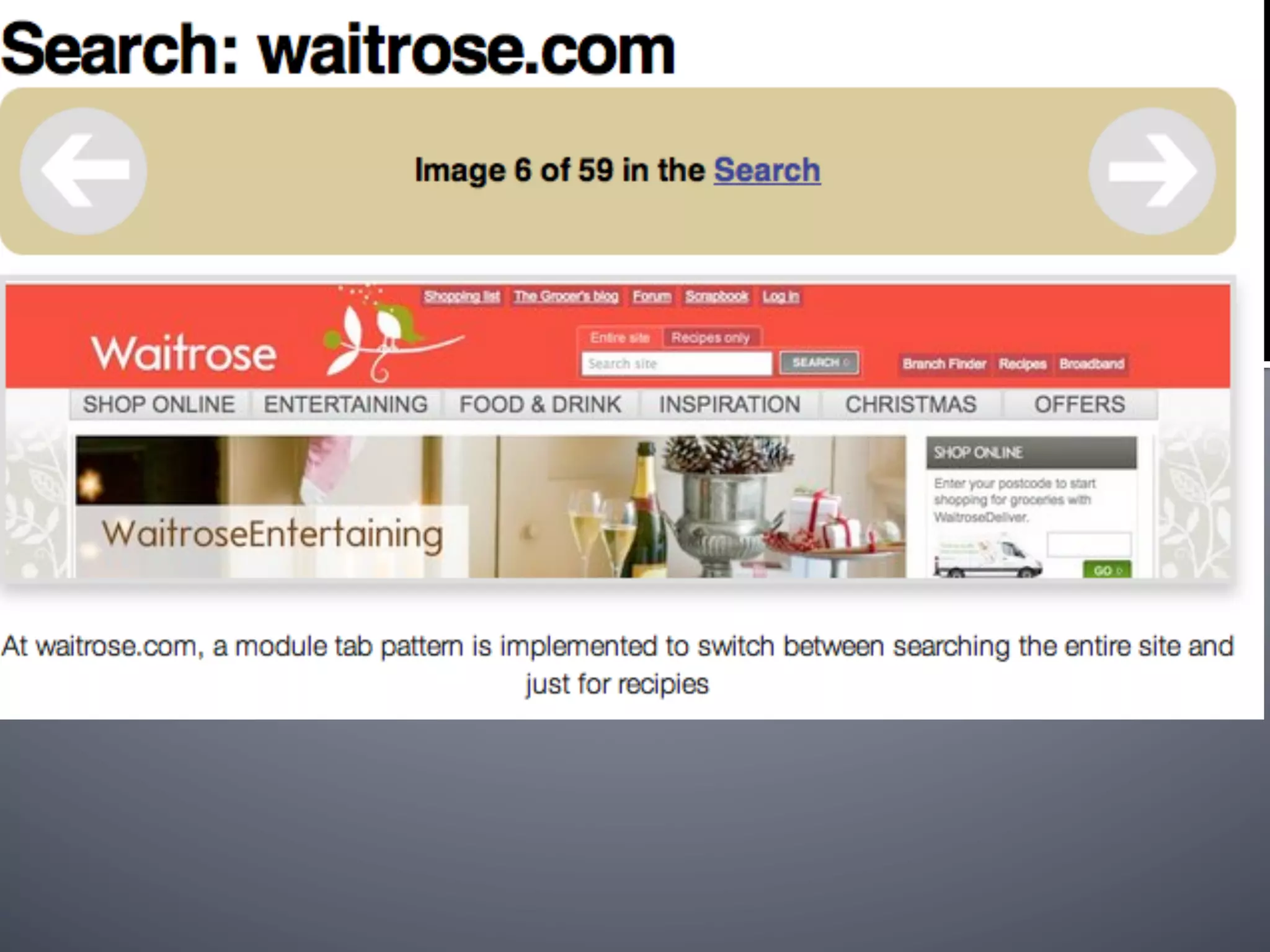
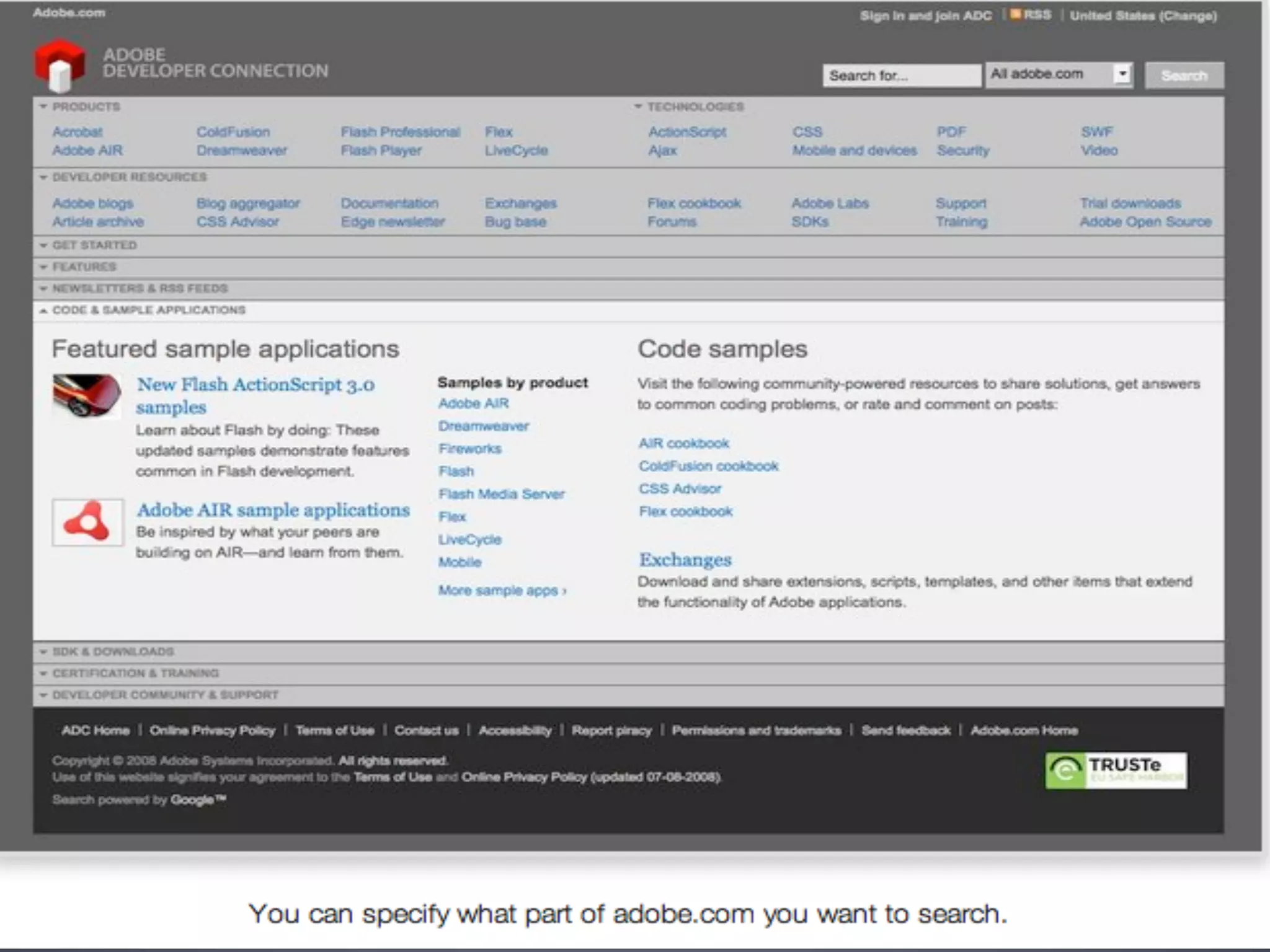
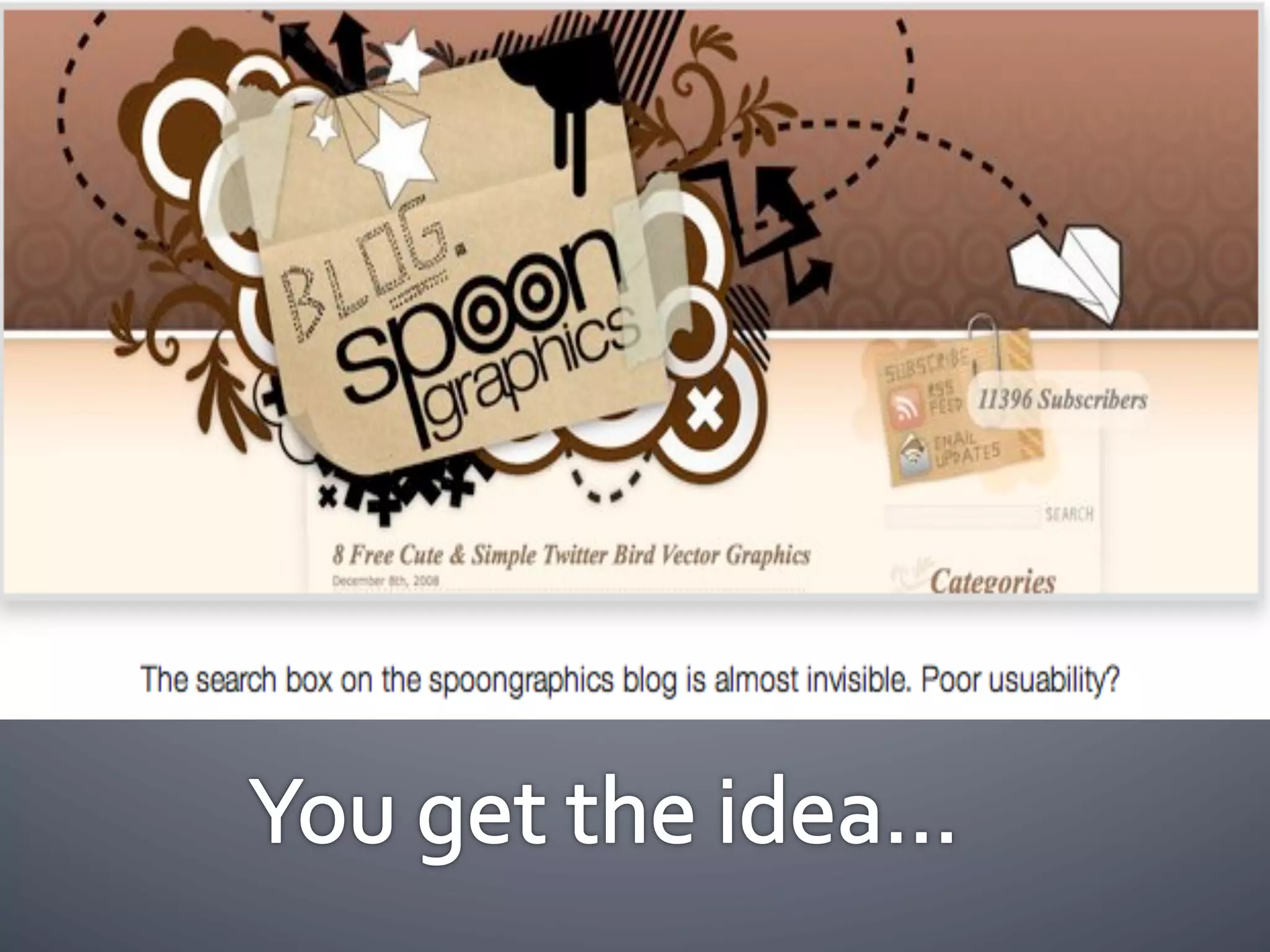
An	
  example	


Some	
  design	
  patterns	
  for	
  Search	
  
Thanks	
  to	
  ui-­‐patterns.com	


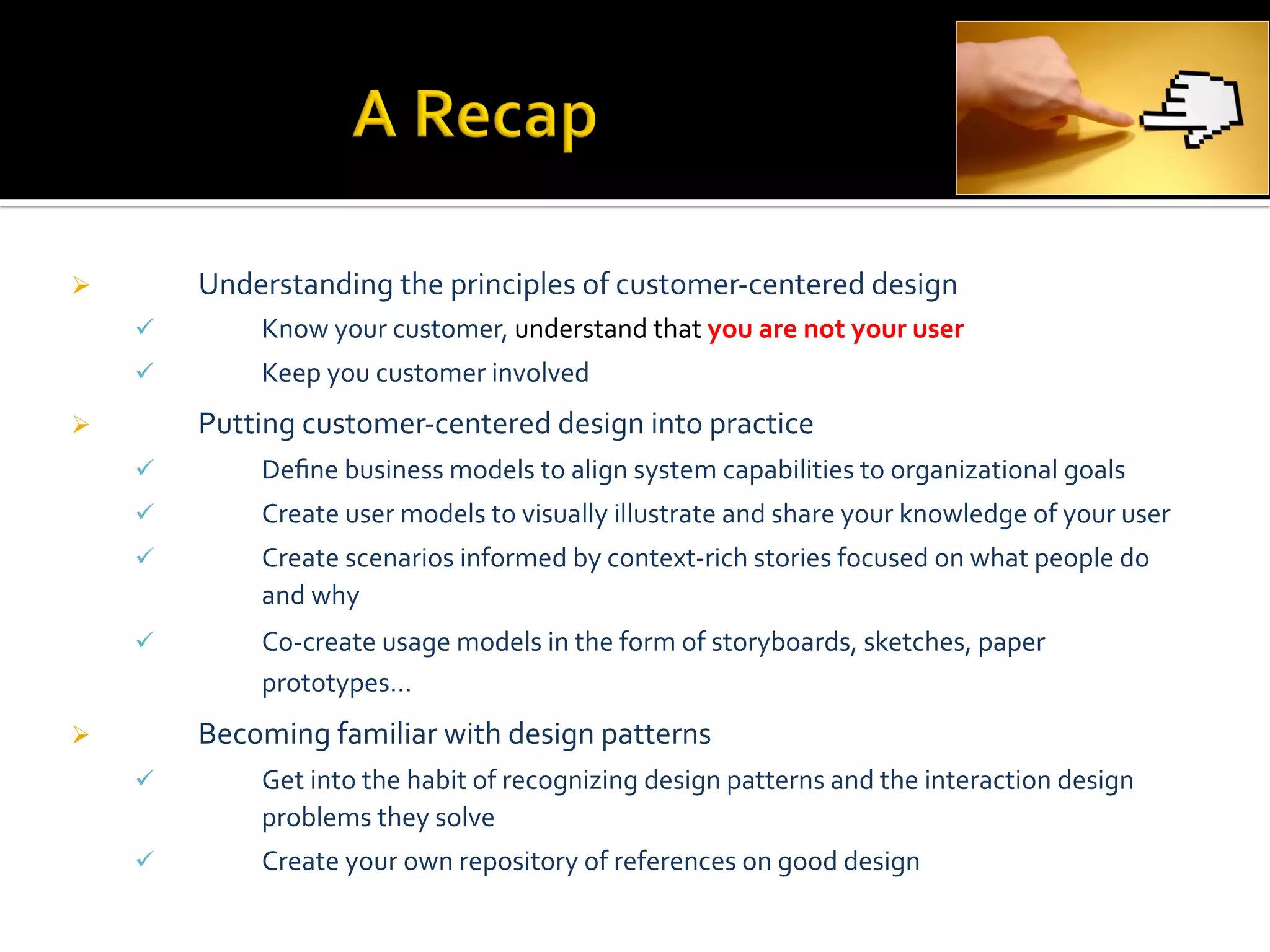
Ø          Understanding	
  the	
  principles	
  of	
  customer-­‐centered	
  design	
  
      ü          Know	
  your	
  customer,	
  understand	
  that	
  you	
  are	
  not	
  your	
  user	
  
      ü          Keep	
  you	
  customer	
  involved	
  
Ø          Putting	
  customer-­‐centered	
  design	
  into	
  practice	
  
      ü          Define	
  business	
  models	
  to	
  align	
  system	
  capabilities	
  to	
  organizational	
  goals	
  
      ü          Create	
  user	
  models	
  to	
  visually	
  illustrate	
  and	
  share	
  your	
  knowledge	
  of	
  your	
  user	
  
      ü          Create	
  scenarios	
  informed	
  by	
  context-­‐rich	
  stories	
  focused	
  on	
  what	
  people	
  do	
  
                  and	
  why	
  
      ü          Co-­‐create	
  usage	
  models	
  in	
  the	
  form	
  of	
  storyboards,	
  sketches,	
  paper	
  
                  prototypes…	
  
Ø          Becoming	
  familiar	
  with	
  design	
  patterns	
  
      ü          Get	
  into	
  the	
  habit	
  of	
  recognizing	
  design	
  patterns	
  and	
  the	
  interaction	
  design	
  
                  problems	
  they	
  solve	
  
      ü          Create	
  your	
  own	
  repository	
  of	
  references	
  on	
  good	
  design	
  
Creating a Culture of UX in your Organization

Creating a Culture of UX in your Organization

  • 1.
  • 2.
    1.  Can  everyone  in  the  team  name  at  least  5  users   of  the  system  you  are  developing?   2.  Have  at  least  2  people  in  the  team  observed  the   users  of  your  system  in  their  context?   3.  Has  the  entire  team  worked  together  at  least   once  in  the  last  two  weeks  to  discuss  a  design   solution  
  • 3.
    Where  there  is  a  user  and  a  user  interface,  there   is  user  experience.    So,  user  experience  design   not  optional,  it  is  very  much  a  part  of  what  we   deliver  
  • 4.
    User  experience  design  is  a  collaborative   process,  it  lives  within  the  context  of  a  business   and  requires  the  synthesis  of  a  variety  of  skills  
  • 5.
    User  experience  design  is  a  collaborative   process,  it  lives  within  the  context  of  a  business   and  requires  the  synthesis  of  a  variety  of  skills  
  • 6.
    User  experience  design  is  the  collective   responsibility  of  the  team,  it  is  not  an  exclusive   ownership  of  any  one  role  or  discipline  
  • 7.
    User  experience  design  is  an  ongoing  process   that  needs  attention  through  out  the  lifecycle  of   the  system,  it  is  not  a  one-­‐time  deliverable  
  • 8.
    ¡  If  it’s  not  optional   ¡  It  it’s  a  collaborative  process   ¡  If  it’s  our  collective  responsibility   ¡  If  it’s  something  that  is  ongoing   Let’s  get  comfortable  with  it  
  • 9.
    1.  Understanding  the  principles  of  user-­‐centered   design   2.  Putting  user-­‐centered  design  into  practice   3.  Becoming  aware  of  good  design  patterns  
  • 10.
    ü  Know  your  user   ü  You  are  not  your  user     ü  Keep  your  user  involved   ü  Continuously  evaluate  usability      
  • 11.
    ü  Create  user  models  to  visually  illustrate  and  share   your  knowledge  of  your  user   ü  Create  scenarios  informed  by  context-­‐rich  stories   focused  on  what  people  do  and  why   ü  Co-­‐create  usage  models  in  the  form  of  storyboards,   sketches,  paper  prototypes  etc.      
  • 12.
    ü  Get  into  the  habit  of  recognizing  design  patterns  and   the  interaction  design  problems  they  solve     ü  Create  your  own  repository  of  references  on  good   design    
  • 13.
    An  example     Some  design  patterns  for  Search   Thanks  to  ui-­‐patterns.com    
  • 19.
    Ø  Understanding  the  principles  of  customer-­‐centered  design   ü  Know  your  customer,  understand  that  you  are  not  your  user   ü  Keep  you  customer  involved   Ø  Putting  customer-­‐centered  design  into  practice   ü  Define  business  models  to  align  system  capabilities  to  organizational  goals   ü  Create  user  models  to  visually  illustrate  and  share  your  knowledge  of  your  user   ü  Create  scenarios  informed  by  context-­‐rich  stories  focused  on  what  people  do   and  why   ü  Co-­‐create  usage  models  in  the  form  of  storyboards,  sketches,  paper   prototypes…   Ø  Becoming  familiar  with  design  patterns   ü  Get  into  the  habit  of  recognizing  design  patterns  and  the  interaction  design   problems  they  solve   ü  Create  your  own  repository  of  references  on  good  design