


UPDATES IN RADIATION THERAPY OF
COLORECTAL CANCERS
Dr. Ashutosh Mukherji
Senior Consultant and Academic Coordinator,
Department of Radiation Oncology
Yashoda Hospital, Hyderabad, India
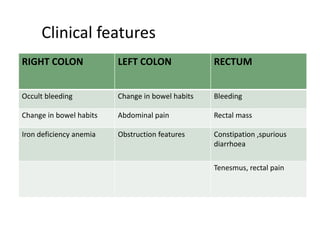
Clinical features
RIGHT COLON LEFT COLON RECTUM
Occult bleeding Change in bowel habits Bleeding
Change in bowel habits Abdominal pain Rectal mass
Iron deficiency anemia Obstruction features Constipation ,spurious
diarrhoea
Tenesmus, rectal pain
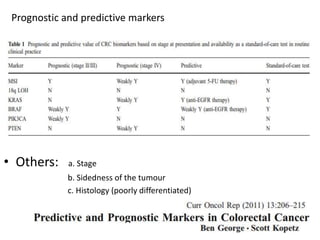
Prognostic and predictive markers
• Others: a. Stage
b. Sidedness of the tumour
c. Histology (poorly differentiated)
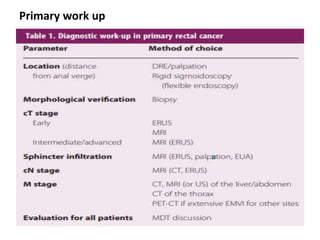
Primary work up
5
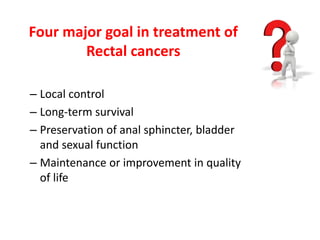
Four major goal in treatment of
Rectal cancers
– Local control
– Long-term survival
– Preservation of anal sphincter, bladder
and sexual function
– Maintenance or improvement in quality
of life
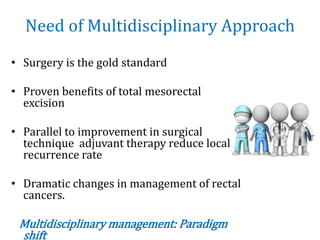
Need of Multidisciplinary Approach
• Surgery is the gold standard
• Proven benefits of total mesorectal
excision
• Parallel to improvement in surgical
technique adjuvant therapy reduce local
recurrence rate
• Dramatic changes in management of rectal
cancers.
Multidisciplinary management: Paradigm
shift
MULTIDISCIPLINARY MANAGEMENT :
WHERE ARE WE GOING?
• Benefits of RT/CRT Vs Burden
• Identify the patients at low risk of local recurrence, and
ideally may not benefit from neo-adjuvant therapy
• Prognostic role of circumferential resection margin (CRM)
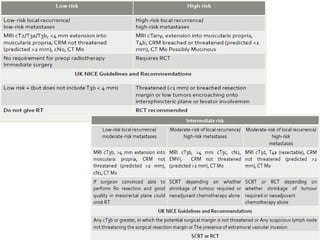
• ESMO sub-categorize rectal tumours (favourable,
intermediate ,high risk ) based on MRI finding
(Low risk ?? Benefit )
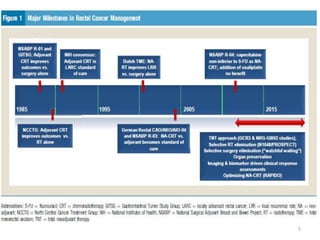
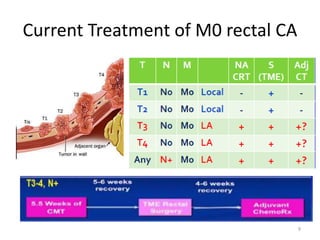
Current Treatment of M0 rectal CA
9
Adjuvant Therapy: Rectal Cancer
• High rate of local recurrence locally advanced
disease. Tumor fixation is a limitation
• Adjuvant radiotherapy significant increase in loco-
regional control
• Sphincter sparing procedure, Organ preservation
• Role of adjuvant chemo-radiotherapy was
evaluated to improve treatment outcome .
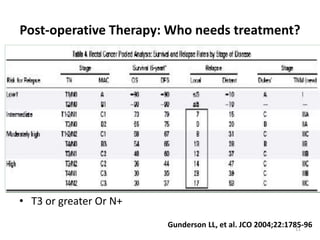
Post-operative Therapy: Who needs treatment?
• T3 or greater Or N+
Gunderson LL, et al. JCO 2004;22:1785-9611
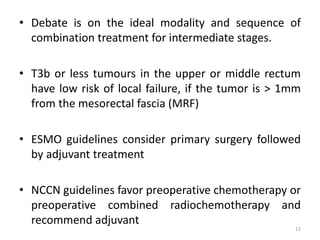
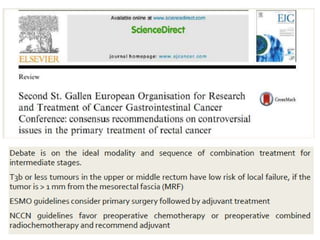
• Debate is on the ideal modality and sequence of
combination treatment for intermediate stages.
• T3b or less tumours in the upper or middle rectum
have low risk of local failure, if the tumor is > 1mm
from the mesorectal fascia (MRF)
• ESMO guidelines consider primary surgery followed
by adjuvant treatment
• NCCN guidelines favor preoperative chemotherapy or
preoperative combined radiochemotherapy and
recommend adjuvant
12
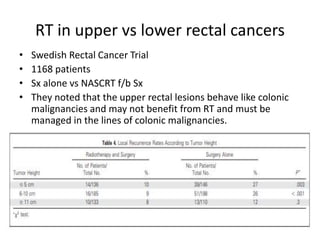
RT in upper vs lower rectal cancers
• Swedish Rectal Cancer Trial
• 1168 patients
• Sx alone vs NASCRT f/b Sx
• They noted that the upper rectal lesions behave like colonic
malignancies and may not benefit from RT and must be
managed in the lines of colonic malignancies.
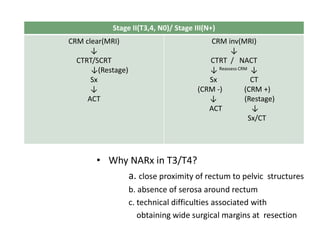
• Why NARx in T3/T4?
a. close proximity of rectum to pelvic structures
b. absence of serosa around rectum
c. technical difficulties associated with
obtaining wide surgical margins at resection
Stage II(T3,4, N0)/ Stage III(N+)
CRM clear(MRI)
↓
CTRT/SCRT
↓(Restage)
Sx
↓
ACT
CRM inv(MRI)
↓
CTRT / NACT
↓ ↓
Sx CT
(CRM -) (CRM +)
↓ (Restage)
ACT ↓
Sx/CT
Reassess CRM
• Why NART ??
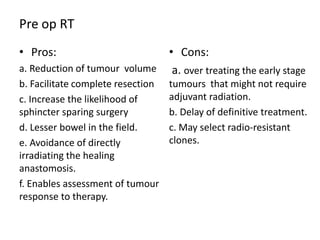
Pre op RT
• Pros:
a. Reduction of tumour volume
b. Facilitate complete resection
c. Increase the likelihood of
sphincter sparing surgery
d. Lesser bowel in the field.
e. Avoidance of directly
irradiating the healing
anastomosis.
f. Enables assessment of tumour
response to therapy.
• Cons:
a. over treating the early stage
tumours that might not require
adjuvant radiation.
b. Delay of definitive treatment.
c. May select radio-resistant
clones.
• Pre-operative radiotherapy has generally been better
tolerated than postoperative. This was also seen in the single
trial comparing pre- and postoperative radiotherapy.
• In all pre-operative trials irrespective of whether conventional
fractions of about 2 Gy or high fractions of 5 Gy were used,
more perineal complications after an abdominoperineal
resection were seen in irradiated patients
• Increased risk of postoperative ileus has been seen in trials
irradiating large volumes of small bowel, either pre-op or
postop but not when smaller volumes were irradiated
17
• Pre Op CTRT VS
Pre OP radiation alone??
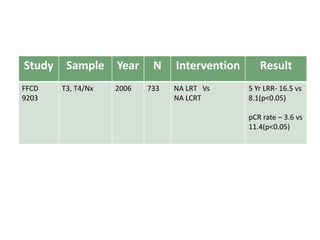
Study Sample Year N Intervention Result
FFCD
9203
T3, T4/Nx 2006 733 NA LRT Vs
NA LCRT
5 Yr LRR- 16.5 vs
8.1(p<0.05)
pCR rate – 3.6 vs
11.4(p<0.05)
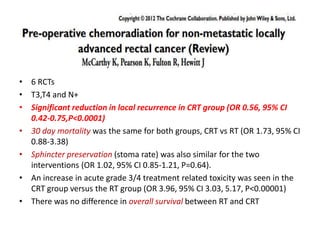
• 6 RCTs
• T3,T4 and N+
• Significant reduction in local recurrence in CRT group (OR 0.56, 95% CI
0.42-0.75,P<0.0001)
• 30 day mortality was the same for both groups, CRT vs RT (OR 1.73, 95% CI
0.88-3.38)
• Sphincter preservation (stoma rate) was also similar for the two
interventions (OR 1.02, 95% CI 0.85-1.21, P=0.64).
• An increase in acute grade 3/4 treatment related toxicity was seen in the
CRT group versus the RT group (OR 3.96, 95% CI 3.03, 5.17, P<0.00001)
• There was no difference in overall survival between RT and CRT
Pre op chemo radiation VS
post op chemoradiation ??
Preoperative vs Postoperative
approach
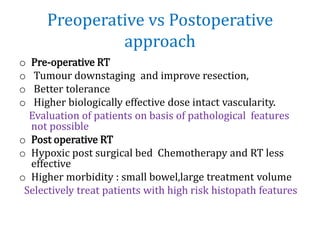
o Pre-operative RT
o Tumour downstaging and improve resection,
o Better tolerance
o Higher biologically effective dose intact vascularity.
Evaluation of patients on basis of pathological features
not possible
o Post operative RT
o Hypoxic post surgical bed Chemotherapy and RT less
effective
o Higher morbidity : small bowel,large treatment volume
Selectively treat patients with high risk histopath features
23
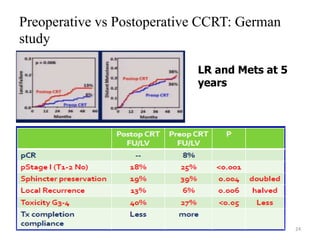
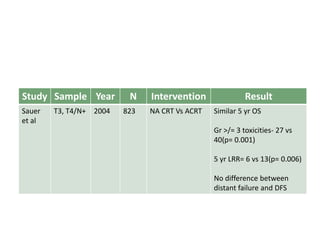
Preoperative vs Postoperative CCRT: German
study
24
LR and Mets at 5
years
Study Sample Year N Intervention Result
Sauer
et al
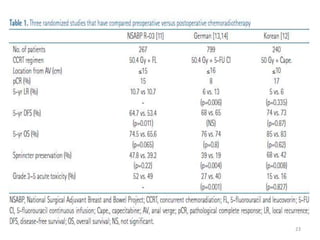
T3, T4/N+ 2004 823 NA CRT Vs ACRT Similar 5 yr OS
Gr >/= 3 toxicities- 27 vs
40(p= 0.001)
5 yr LRR= 6 vs 13(p= 0.006)
No difference between
distant failure and DFS
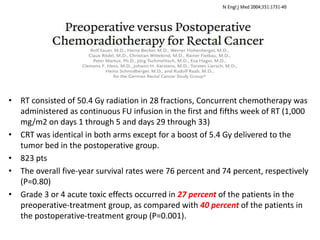
• RT consisted of 50.4 Gy radiation in 28 fractions, Concurrent chemotherapy was
administered as continuous FU infusion in the first and fifths week of RT (1,000
mg/m2 on days 1 through 5 and days 29 through 33)
• CRT was identical in both arms except for a boost of 5.4 Gy delivered to the
tumor bed in the postoperative group.
• 823 pts
• The overall five-year survival rates were 76 percent and 74 percent, respectively
(P=0.80)
• Grade 3 or 4 acute toxic effects occurred in 27 percent of the patients in the
preoperative-treatment group, as compared with 40 percent of the patients in
the postoperative-treatment group (P=0.001).
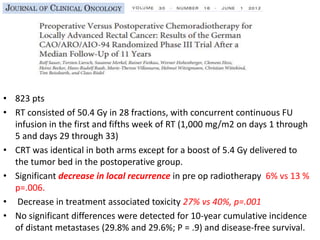
• 823 pts
• RT consisted of 50.4 Gy in 28 fractions, with concurrent continuous FU
infusion in the first and fifths week of RT (1,000 mg/m2 on days 1 through
5 and days 29 through 33)
• CRT was identical in both arms except for a boost of 5.4 Gy delivered to
the tumor bed in the postoperative group.
• Significant decrease in local recurrence in pre op radiotherapy 6% vs 13 %
p=.006.
• Decrease in treatment associated toxicity 27% vs 40%, p=.001
• No significant differences were detected for 10-year cumulative incidence
of distant metastases (29.8% and 29.6%; P = .9) and disease-free survival.
Conclusion :
• Preoperative chemo radiotherapy, as compared with
postoperative chemo radiotherapy, improved local
control and was associated with reduced toxicity but
did not improve overall survival.
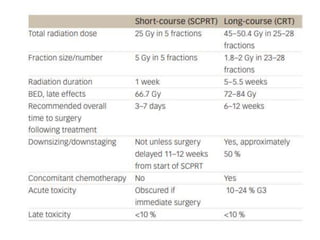
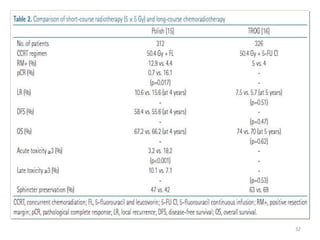
• Short course RT VS
Long course RT ??
32
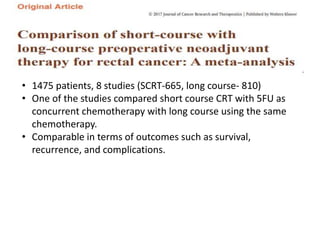
• 1475 patients, 8 studies (SCRT-665, long course- 810)
• One of the studies compared short course CRT with 5FU as
concurrent chemotherapy with long course using the same
chemotherapy.
• Comparable in terms of outcomes such as survival,
recurrence, and complications.
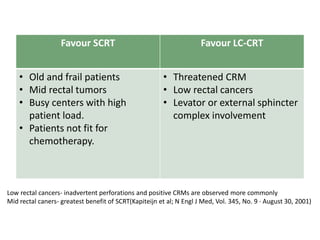
Favour SCRT Favour LC-CRT
• Old and frail patients
• Mid rectal tumors
• Busy centers with high
patient load.
• Patients not fit for
chemotherapy.
• Threatened CRM
• Low rectal cancers
• Levator or external sphincter
complex involvement
Low rectal cancers- inadvertent perforations and positive CRMs are observed more commonly
Mid rectal caners- greatest benefit of SCRT(Kapiteijn et al; N Engl J Med, Vol. 345, No. 9 · August 30, 2001)
36
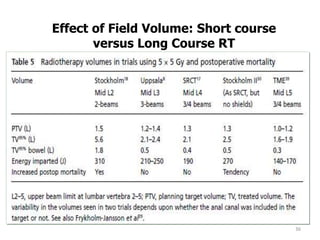
Effect of Field Volume: Short course
versus Long Course RT
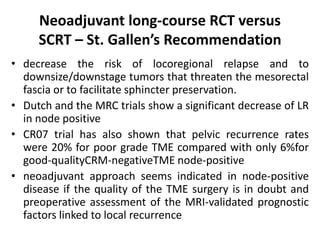
Neoadjuvant long-course RCT versus
SCRT – St. Gallen’s Recommendation
• decrease the risk of locoregional relapse and to
downsize/downstage tumors that threaten the mesorectal
fascia or to facilitate sphincter preservation.
• Dutch and the MRC trials show a significant decrease of LR
in node positive
• CR07 trial has also shown that pelvic recurrence rates
were 20% for poor grade TME compared with only 6%for
good-qualityCRM-negativeTME node-positive
• neoadjuvant approach seems indicated in node-positive
disease if the quality of the TME surgery is in doubt and
preoperative assessment of the MRI-validated prognostic
factors linked to local recurrence
Gap between NARx and Sx
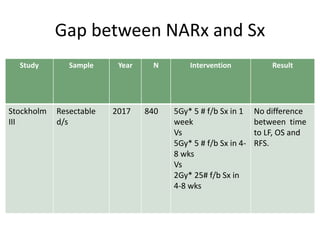
Study Sample Year N Intervention Result
Stockholm
III
Resectable
d/s
2017 840 5Gy* 5 # f/b Sx in 1
week
Vs
5Gy* 5 # f/b Sx in 4-
8 wks
Vs
2Gy* 25# f/b Sx in
4-8 wks
No difference
between time
to LF, OS and
RFS.
Gap between NARx and Sx
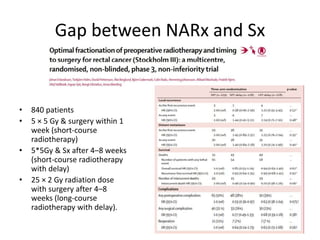
• 840 patients
• 5 × 5 Gy & surgery within 1
week (short-course
radiotherapy)
• 5*5Gy & Sx after 4–8 weeks
(short-course radiotherapy
with delay)
• 25 × 2 Gy radiation dose
with surgery after 4–8
weeks (long-course
radiotherapy with delay).
NARx f/b observation for patients with
pCR
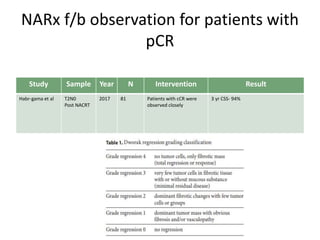
Study Sample Year N Intervention Result
Habr-gama et al T2N0
Post NACRT
2017 81 Patients with cCR were
observed closely
3 yr CSS- 94%
NARx f/b observation for patients with pCR
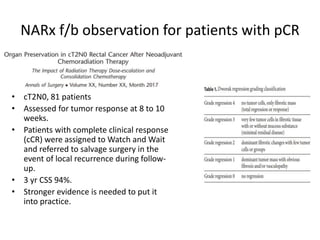
• cT2N0, 81 patients
• Assessed for tumor response at 8 to 10
weeks.
• Patients with complete clinical response
(cCR) were assigned to Watch and Wait
and referred to salvage surgery in the
event of local recurrence during follow-
up.
• 3 yr CSS 94%.
• Stronger evidence is needed to put it
into practice.
Omission of adjuvant chemotherapy in
patients that received NACTRT
Does elimination of ACT worsen outcome in
LARC?
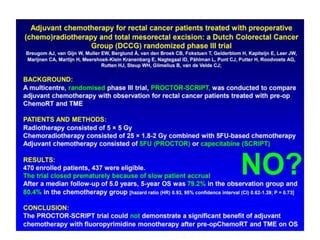
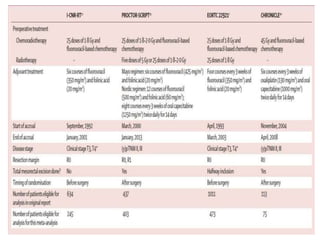
• 4 RCTS
– EORTC 22921: FU/LV vs Observation
– I-CNR-RT trial: FU/LV vs Observation
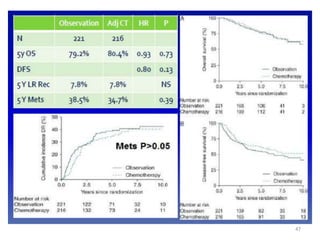
– PROCTOR-SCRIPT: FU/LV or Cape vs Observation
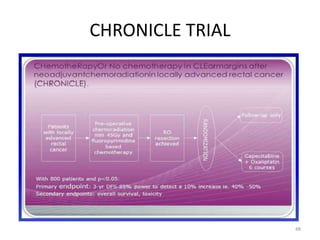
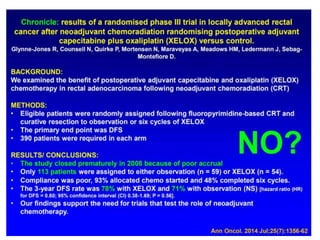
– Chronicle : Capeox vs observation
• One metaanalysis
43
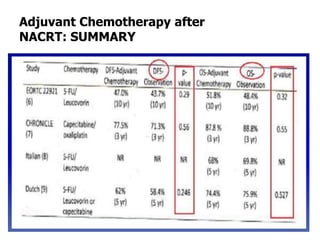
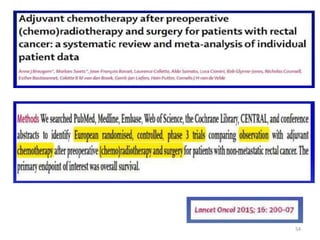
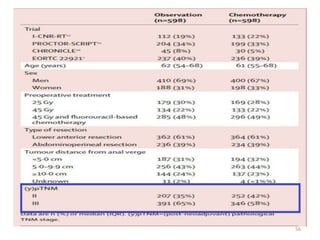
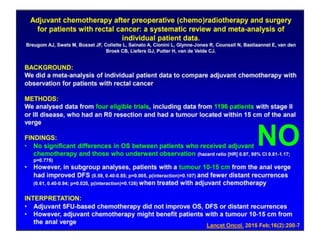
• Five recent European trials (CHRONICLE, QUASAR, EORTC 22921,
PROCTO-SCRIPT, I-CNR-RT) enrolling 3143 patients with stage Ⅱ
and Ⅲrectal cancer investigated the benefits of postoperative
chemotherapy after neoadjuvant chemoradiotherapy and surgery
• Four out of five trials reported negative results and only QUASAR
study found significantly increased survival in the postoperative
chemotherapy group.
• Adherence was poor in these trials but that is NOT an argument
for chemotherapy.
• PROCTOR-SCRIPT trial showed no benefit of chemotherapy for
patients who completed all cycles.
44
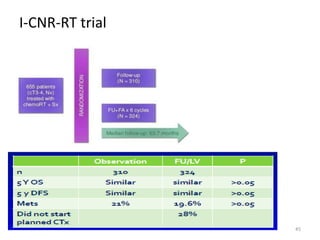
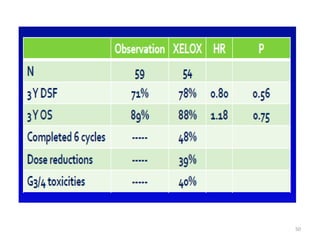
I-CNR-RT trial
45
47
CHRONICLE TRIAL
48
50
51
52
53
Adjuvant Chemotherapy after
NACRT: SUMMARY
54
55
56
57
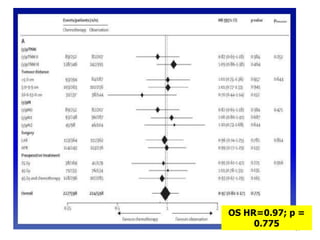
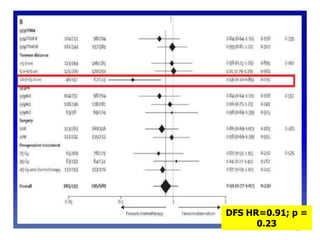
OS HR=0.97; p =
0.775
58
DFS HR=0.91; p =
0.23
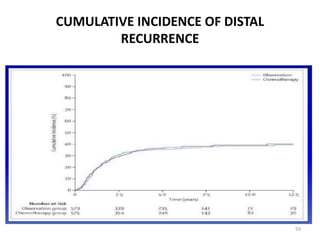
CUMULATIVE INCIDENCE OF DISTAL
RECURRENCE
59
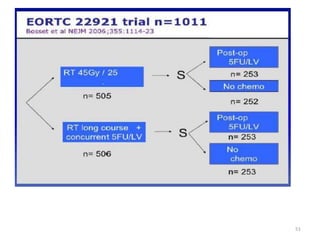
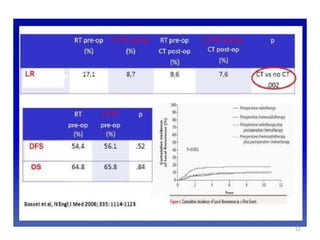
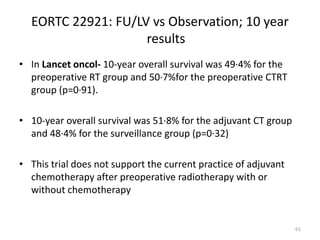
EORTC 22921: FU/LV vs Observation; 10 year
results
• In Lancet oncol- 10-year overall survival was 49·4% for the
preoperative RT group and 50·7%for the preoperative CTRT
group (p=0·91).
• 10-year overall survival was 51·8% for the adjuvant CT group
and 48·4% for the surveillance group (p=0·32)
• This trial does not support the current practice of adjuvant
chemotherapy after preoperative radiotherapy with or
without chemotherapy
61
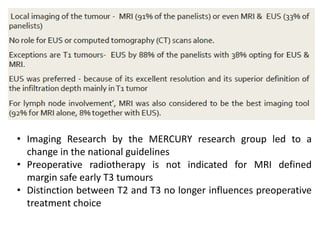
• Imaging Research by the MERCURY research group led to a
change in the national guidelines
• Preoperative radiotherapy is not indicated for MRI defined
margin safe early T3 tumours
• Distinction between T2 and T3 no longer influences preoperative
treatment choice
66
67
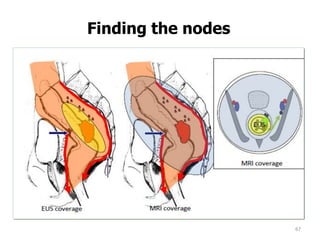
Finding the nodes
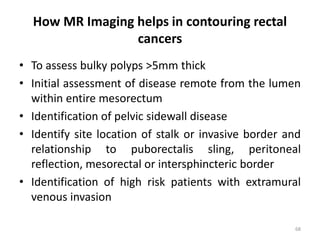
How MR Imaging helps in contouring rectal
cancers
• To assess bulky polyps >5mm thick
• Initial assessment of disease remote from the lumen
within entire mesorectum
• Identification of pelvic sidewall disease
• Identify site location of stalk or invasive border and
relationship to puborectalis sling, peritoneal
reflection, mesorectal or intersphincteric border
• Identification of high risk patients with extramural
venous invasion
68
69
St. Gallen’s recommendations
• Cancer-related deaths due to distant metastasis
• ACT reduces the incidence of distant relapse and improves
overall survival.
• Most panelists (83%) recommended against ACT for cN0/ypN0
tumors
• For cN+ /ypN0 the panelists opinion onACT was divided (pro
41%, con 59%)
• Histologically confirmed positive lymph nodes after
neoadjuvant RCT (ypN+ ), the majority of panelists (77%)
voted in favour ofACT.
70
• Panel recommended MRI or MRI + EUS as mandatory staging
modalities, except for early T1 cancers with option for local
excision.
• Primary surgery with TME recommended for early tumours (cT1-2
or cT3a N0 with clear mesorectal fascia and above the
levatormuscles), whereas all other stages considered for
multimodal treatment
• Long-course RCT over short-course RT for most clinical situations
where neoadjuvant treatment is indicated, except T3a/b N0
tumours where short-course radiotherapy or even no neoadjuvant
therapy regarded an option.
• In resectable tumours and synchronous liver metastases, no
indication to start with classical fluoropyrimidine-based RCT but
start preoperative short-course radiotherapy with combination
chemotherapy or alternatively a liver-first resection approach in
resectable metastases
Rectal Cancer Radiotherapy Contouring
Guideline for clinical target volumes (CTV) for neoadjuvant
chemoradiotherapy in locally advanced rectal cancer: gross tumor,
peri-rectal, pre-sacral, internal iliac and external iliac.
NTUH practice:
• GTV: main tumor mass + involved lymph nodes
• CTV:
– GTV with 15 mm expansion
– Distal 20 mm margin to GTV for CTV
– Vessels with 7 mm expansion
– Contour CTV to include mesorectum and pre-sacrum
– Avoid bone and small bowel
Int J Radiat Oncol Biol Phys. 2009 Jul 1;74(3):824-30. doi: 10.1016/j.ijrobp.2008.08.070.
RTOG CONSENSUS PANEL RECOMMENDATIONS
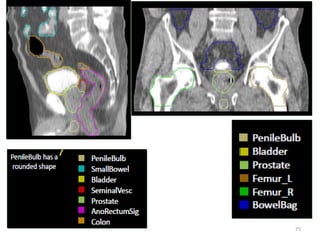
• Risk volumes defined as
CTVs: these were local and
nodal.
• Local CTV included
mesorectum, presacrum,
scar tissue and
anastomosis.
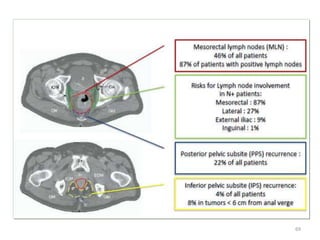
• Nodal CTV included
perirectal, iliac (external
and internal) and inguinal.
• Nodal CTVs:
– CTVA: internal iliac,
presacral and peri-rectal
– CTVB: external iliac
– CTVC: inguinal
73
https://www.rtog.org/CoreLab/ContouringAtlases/Anorectal.aspx;
Myerson et al. IJROBP 2009
International consensus guidelines on Clinical Target
Volume delineation in rectal cancer
• Consensus was obtained for delineation of the CTV
for elective irradiation of all regional lymph node
levels.
• Seven subsites at risk were identified: presacral
space (PS), mesorectum (M), lateral lymph nodes
(LLN), external iliac nodes (EIN), inguinal nodes (IN),
ischiorectal fossa (IRF) and sphincter complex (SC).
74
Radiotherapy and Oncology 120 (2016) 195–201
http://dx.doi.org/10.1016/j.radonc.2016.07.017
75
76
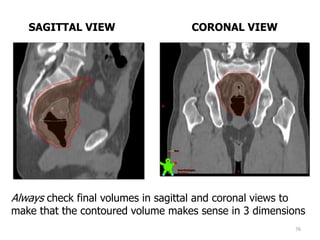
SAGITTAL VIEW CORONAL VIEW
Always check final volumes in sagittal and coronal views to
make that the contoured volume makes sense in 3 dimensions
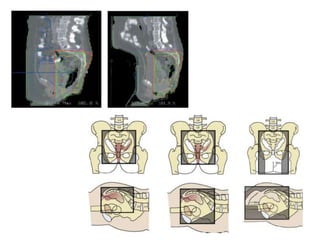
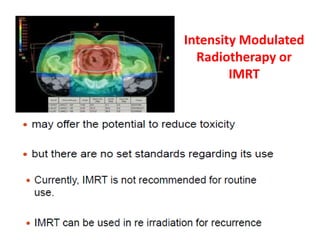
Intensity Modulated
Radiotherapy or
IMRT
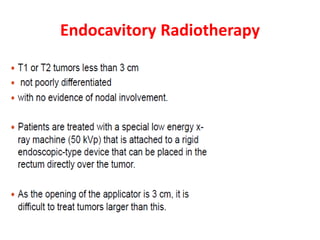
Endocavitory Radiotherapy
Take Home Message
• Low-risk patients (LRR <10%) are recommended TME
alone,
• intermediate-risk patients (LRR 10%–20%) are advised
preoperative SCRT followed by TME and adjuvant
chemotherapy as standard treatment,
• high-risk patients (LRR >20%) are recommended pre-
operative CRT followed by TME and adjuvant
chemotherapy.
• 3DCRT Radiotherapy technique of choice.
• IMRT indicated for re-irradiation, but provides better dose
distribution, can also be used selectively up front.
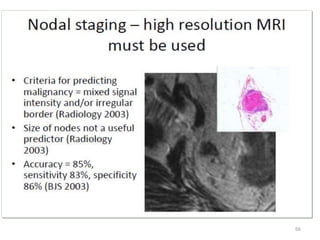
• Nodal areas cannot be missed, MRI must for evaluation.
82
THANK YOU

Crc rt updates ethiopia

  • 1.
    UPDATES IN RADIATIONTHERAPY OF COLORECTAL CANCERS Dr. Ashutosh Mukherji Senior Consultant and Academic Coordinator, Department of Radiation Oncology Yashoda Hospital, Hyderabad, India
  • 2.
    Clinical features RIGHT COLONLEFT COLON RECTUM Occult bleeding Change in bowel habits Bleeding Change in bowel habits Abdominal pain Rectal mass Iron deficiency anemia Obstruction features Constipation ,spurious diarrhoea Tenesmus, rectal pain
  • 3.
    Prognostic and predictivemarkers • Others: a. Stage b. Sidedness of the tumour c. Histology (poorly differentiated)
  • 4.
  • 5.
  • 6.
    Four major goalin treatment of Rectal cancers – Local control – Long-term survival – Preservation of anal sphincter, bladder and sexual function – Maintenance or improvement in quality of life
  • 7.
    Need of MultidisciplinaryApproach • Surgery is the gold standard • Proven benefits of total mesorectal excision • Parallel to improvement in surgical technique adjuvant therapy reduce local recurrence rate • Dramatic changes in management of rectal cancers. Multidisciplinary management: Paradigm shift
  • 8.
    MULTIDISCIPLINARY MANAGEMENT : WHEREARE WE GOING? • Benefits of RT/CRT Vs Burden • Identify the patients at low risk of local recurrence, and ideally may not benefit from neo-adjuvant therapy • Prognostic role of circumferential resection margin (CRM) • ESMO sub-categorize rectal tumours (favourable, intermediate ,high risk ) based on MRI finding (Low risk ?? Benefit )
  • 9.
    Current Treatment ofM0 rectal CA 9
  • 10.
    Adjuvant Therapy: RectalCancer • High rate of local recurrence locally advanced disease. Tumor fixation is a limitation • Adjuvant radiotherapy significant increase in loco- regional control • Sphincter sparing procedure, Organ preservation • Role of adjuvant chemo-radiotherapy was evaluated to improve treatment outcome .
  • 11.
    Post-operative Therapy: Whoneeds treatment? • T3 or greater Or N+ Gunderson LL, et al. JCO 2004;22:1785-9611
  • 12.
    • Debate ison the ideal modality and sequence of combination treatment for intermediate stages. • T3b or less tumours in the upper or middle rectum have low risk of local failure, if the tumor is > 1mm from the mesorectal fascia (MRF) • ESMO guidelines consider primary surgery followed by adjuvant treatment • NCCN guidelines favor preoperative chemotherapy or preoperative combined radiochemotherapy and recommend adjuvant 12
  • 13.
    RT in uppervs lower rectal cancers • Swedish Rectal Cancer Trial • 1168 patients • Sx alone vs NASCRT f/b Sx • They noted that the upper rectal lesions behave like colonic malignancies and may not benefit from RT and must be managed in the lines of colonic malignancies.
  • 14.
    • Why NARxin T3/T4? a. close proximity of rectum to pelvic structures b. absence of serosa around rectum c. technical difficulties associated with obtaining wide surgical margins at resection Stage II(T3,4, N0)/ Stage III(N+) CRM clear(MRI) ↓ CTRT/SCRT ↓(Restage) Sx ↓ ACT CRM inv(MRI) ↓ CTRT / NACT ↓ ↓ Sx CT (CRM -) (CRM +) ↓ (Restage) ACT ↓ Sx/CT Reassess CRM
  • 15.
  • 16.
    Pre op RT •Pros: a. Reduction of tumour volume b. Facilitate complete resection c. Increase the likelihood of sphincter sparing surgery d. Lesser bowel in the field. e. Avoidance of directly irradiating the healing anastomosis. f. Enables assessment of tumour response to therapy. • Cons: a. over treating the early stage tumours that might not require adjuvant radiation. b. Delay of definitive treatment. c. May select radio-resistant clones.
  • 17.
    • Pre-operative radiotherapyhas generally been better tolerated than postoperative. This was also seen in the single trial comparing pre- and postoperative radiotherapy. • In all pre-operative trials irrespective of whether conventional fractions of about 2 Gy or high fractions of 5 Gy were used, more perineal complications after an abdominoperineal resection were seen in irradiated patients • Increased risk of postoperative ileus has been seen in trials irradiating large volumes of small bowel, either pre-op or postop but not when smaller volumes were irradiated 17
  • 18.
    • Pre OpCTRT VS Pre OP radiation alone??
  • 19.
    Study Sample YearN Intervention Result FFCD 9203 T3, T4/Nx 2006 733 NA LRT Vs NA LCRT 5 Yr LRR- 16.5 vs 8.1(p<0.05) pCR rate – 3.6 vs 11.4(p<0.05)
  • 20.
    • 6 RCTs •T3,T4 and N+ • Significant reduction in local recurrence in CRT group (OR 0.56, 95% CI 0.42-0.75,P<0.0001) • 30 day mortality was the same for both groups, CRT vs RT (OR 1.73, 95% CI 0.88-3.38) • Sphincter preservation (stoma rate) was also similar for the two interventions (OR 1.02, 95% CI 0.85-1.21, P=0.64). • An increase in acute grade 3/4 treatment related toxicity was seen in the CRT group versus the RT group (OR 3.96, 95% CI 3.03, 5.17, P<0.00001) • There was no difference in overall survival between RT and CRT
  • 21.
    Pre op chemoradiation VS post op chemoradiation ??
  • 22.
    Preoperative vs Postoperative approach oPre-operative RT o Tumour downstaging and improve resection, o Better tolerance o Higher biologically effective dose intact vascularity. Evaluation of patients on basis of pathological features not possible o Post operative RT o Hypoxic post surgical bed Chemotherapy and RT less effective o Higher morbidity : small bowel,large treatment volume Selectively treat patients with high risk histopath features
  • 23.
  • 24.
    Preoperative vs PostoperativeCCRT: German study 24 LR and Mets at 5 years
  • 25.
    Study Sample YearN Intervention Result Sauer et al T3, T4/N+ 2004 823 NA CRT Vs ACRT Similar 5 yr OS Gr >/= 3 toxicities- 27 vs 40(p= 0.001) 5 yr LRR= 6 vs 13(p= 0.006) No difference between distant failure and DFS
  • 26.
    • RT consistedof 50.4 Gy radiation in 28 fractions, Concurrent chemotherapy was administered as continuous FU infusion in the first and fifths week of RT (1,000 mg/m2 on days 1 through 5 and days 29 through 33) • CRT was identical in both arms except for a boost of 5.4 Gy delivered to the tumor bed in the postoperative group. • 823 pts • The overall five-year survival rates were 76 percent and 74 percent, respectively (P=0.80) • Grade 3 or 4 acute toxic effects occurred in 27 percent of the patients in the preoperative-treatment group, as compared with 40 percent of the patients in the postoperative-treatment group (P=0.001).
  • 27.
    • 823 pts •RT consisted of 50.4 Gy in 28 fractions, with concurrent continuous FU infusion in the first and fifths week of RT (1,000 mg/m2 on days 1 through 5 and days 29 through 33) • CRT was identical in both arms except for a boost of 5.4 Gy delivered to the tumor bed in the postoperative group. • Significant decrease in local recurrence in pre op radiotherapy 6% vs 13 % p=.006. • Decrease in treatment associated toxicity 27% vs 40%, p=.001 • No significant differences were detected for 10-year cumulative incidence of distant metastases (29.8% and 29.6%; P = .9) and disease-free survival.
  • 29.
    Conclusion : • Preoperativechemo radiotherapy, as compared with postoperative chemo radiotherapy, improved local control and was associated with reduced toxicity but did not improve overall survival.
  • 30.
    • Short courseRT VS Long course RT ??
  • 32.
  • 34.
    • 1475 patients,8 studies (SCRT-665, long course- 810) • One of the studies compared short course CRT with 5FU as concurrent chemotherapy with long course using the same chemotherapy. • Comparable in terms of outcomes such as survival, recurrence, and complications.
  • 35.
    Favour SCRT FavourLC-CRT • Old and frail patients • Mid rectal tumors • Busy centers with high patient load. • Patients not fit for chemotherapy. • Threatened CRM • Low rectal cancers • Levator or external sphincter complex involvement Low rectal cancers- inadvertent perforations and positive CRMs are observed more commonly Mid rectal caners- greatest benefit of SCRT(Kapiteijn et al; N Engl J Med, Vol. 345, No. 9 · August 30, 2001)
  • 36.
    36 Effect of FieldVolume: Short course versus Long Course RT
  • 37.
    Neoadjuvant long-course RCTversus SCRT – St. Gallen’s Recommendation • decrease the risk of locoregional relapse and to downsize/downstage tumors that threaten the mesorectal fascia or to facilitate sphincter preservation. • Dutch and the MRC trials show a significant decrease of LR in node positive • CR07 trial has also shown that pelvic recurrence rates were 20% for poor grade TME compared with only 6%for good-qualityCRM-negativeTME node-positive • neoadjuvant approach seems indicated in node-positive disease if the quality of the TME surgery is in doubt and preoperative assessment of the MRI-validated prognostic factors linked to local recurrence
  • 38.
    Gap between NARxand Sx Study Sample Year N Intervention Result Stockholm III Resectable d/s 2017 840 5Gy* 5 # f/b Sx in 1 week Vs 5Gy* 5 # f/b Sx in 4- 8 wks Vs 2Gy* 25# f/b Sx in 4-8 wks No difference between time to LF, OS and RFS.
  • 39.
    Gap between NARxand Sx • 840 patients • 5 × 5 Gy & surgery within 1 week (short-course radiotherapy) • 5*5Gy & Sx after 4–8 weeks (short-course radiotherapy with delay) • 25 × 2 Gy radiation dose with surgery after 4–8 weeks (long-course radiotherapy with delay).
  • 40.
    NARx f/b observationfor patients with pCR Study Sample Year N Intervention Result Habr-gama et al T2N0 Post NACRT 2017 81 Patients with cCR were observed closely 3 yr CSS- 94%
  • 41.
    NARx f/b observationfor patients with pCR • cT2N0, 81 patients • Assessed for tumor response at 8 to 10 weeks. • Patients with complete clinical response (cCR) were assigned to Watch and Wait and referred to salvage surgery in the event of local recurrence during follow- up. • 3 yr CSS 94%. • Stronger evidence is needed to put it into practice.
  • 42.
    Omission of adjuvantchemotherapy in patients that received NACTRT
  • 43.
    Does elimination ofACT worsen outcome in LARC? • 4 RCTS – EORTC 22921: FU/LV vs Observation – I-CNR-RT trial: FU/LV vs Observation – PROCTOR-SCRIPT: FU/LV or Cape vs Observation – Chronicle : Capeox vs observation • One metaanalysis 43
  • 44.
    • Five recentEuropean trials (CHRONICLE, QUASAR, EORTC 22921, PROCTO-SCRIPT, I-CNR-RT) enrolling 3143 patients with stage Ⅱ and Ⅲrectal cancer investigated the benefits of postoperative chemotherapy after neoadjuvant chemoradiotherapy and surgery • Four out of five trials reported negative results and only QUASAR study found significantly increased survival in the postoperative chemotherapy group. • Adherence was poor in these trials but that is NOT an argument for chemotherapy. • PROCTOR-SCRIPT trial showed no benefit of chemotherapy for patients who completed all cycles. 44
  • 45.
  • 47.
  • 48.
  • 50.
  • 51.
  • 52.
  • 53.
  • 54.
  • 55.
  • 56.
  • 57.
  • 58.
  • 59.
    CUMULATIVE INCIDENCE OFDISTAL RECURRENCE 59
  • 61.
    EORTC 22921: FU/LVvs Observation; 10 year results • In Lancet oncol- 10-year overall survival was 49·4% for the preoperative RT group and 50·7%for the preoperative CTRT group (p=0·91). • 10-year overall survival was 51·8% for the adjuvant CT group and 48·4% for the surveillance group (p=0·32) • This trial does not support the current practice of adjuvant chemotherapy after preoperative radiotherapy with or without chemotherapy 61
  • 64.
    • Imaging Researchby the MERCURY research group led to a change in the national guidelines • Preoperative radiotherapy is not indicated for MRI defined margin safe early T3 tumours • Distinction between T2 and T3 no longer influences preoperative treatment choice
  • 66.
  • 67.
  • 68.
    How MR Imaginghelps in contouring rectal cancers • To assess bulky polyps >5mm thick • Initial assessment of disease remote from the lumen within entire mesorectum • Identification of pelvic sidewall disease • Identify site location of stalk or invasive border and relationship to puborectalis sling, peritoneal reflection, mesorectal or intersphincteric border • Identification of high risk patients with extramural venous invasion 68
  • 69.
  • 70.
    St. Gallen’s recommendations •Cancer-related deaths due to distant metastasis • ACT reduces the incidence of distant relapse and improves overall survival. • Most panelists (83%) recommended against ACT for cN0/ypN0 tumors • For cN+ /ypN0 the panelists opinion onACT was divided (pro 41%, con 59%) • Histologically confirmed positive lymph nodes after neoadjuvant RCT (ypN+ ), the majority of panelists (77%) voted in favour ofACT. 70
  • 71.
    • Panel recommendedMRI or MRI + EUS as mandatory staging modalities, except for early T1 cancers with option for local excision. • Primary surgery with TME recommended for early tumours (cT1-2 or cT3a N0 with clear mesorectal fascia and above the levatormuscles), whereas all other stages considered for multimodal treatment • Long-course RCT over short-course RT for most clinical situations where neoadjuvant treatment is indicated, except T3a/b N0 tumours where short-course radiotherapy or even no neoadjuvant therapy regarded an option. • In resectable tumours and synchronous liver metastases, no indication to start with classical fluoropyrimidine-based RCT but start preoperative short-course radiotherapy with combination chemotherapy or alternatively a liver-first resection approach in resectable metastases
  • 72.
    Rectal Cancer RadiotherapyContouring Guideline for clinical target volumes (CTV) for neoadjuvant chemoradiotherapy in locally advanced rectal cancer: gross tumor, peri-rectal, pre-sacral, internal iliac and external iliac. NTUH practice: • GTV: main tumor mass + involved lymph nodes • CTV: – GTV with 15 mm expansion – Distal 20 mm margin to GTV for CTV – Vessels with 7 mm expansion – Contour CTV to include mesorectum and pre-sacrum – Avoid bone and small bowel Int J Radiat Oncol Biol Phys. 2009 Jul 1;74(3):824-30. doi: 10.1016/j.ijrobp.2008.08.070.
  • 73.
    RTOG CONSENSUS PANELRECOMMENDATIONS • Risk volumes defined as CTVs: these were local and nodal. • Local CTV included mesorectum, presacrum, scar tissue and anastomosis. • Nodal CTV included perirectal, iliac (external and internal) and inguinal. • Nodal CTVs: – CTVA: internal iliac, presacral and peri-rectal – CTVB: external iliac – CTVC: inguinal 73 https://www.rtog.org/CoreLab/ContouringAtlases/Anorectal.aspx; Myerson et al. IJROBP 2009
  • 74.
    International consensus guidelineson Clinical Target Volume delineation in rectal cancer • Consensus was obtained for delineation of the CTV for elective irradiation of all regional lymph node levels. • Seven subsites at risk were identified: presacral space (PS), mesorectum (M), lateral lymph nodes (LLN), external iliac nodes (EIN), inguinal nodes (IN), ischiorectal fossa (IRF) and sphincter complex (SC). 74 Radiotherapy and Oncology 120 (2016) 195–201 http://dx.doi.org/10.1016/j.radonc.2016.07.017
  • 75.
  • 76.
    76 SAGITTAL VIEW CORONALVIEW Always check final volumes in sagittal and coronal views to make that the contoured volume makes sense in 3 dimensions
  • 78.
  • 81.
  • 82.
    Take Home Message •Low-risk patients (LRR <10%) are recommended TME alone, • intermediate-risk patients (LRR 10%–20%) are advised preoperative SCRT followed by TME and adjuvant chemotherapy as standard treatment, • high-risk patients (LRR >20%) are recommended pre- operative CRT followed by TME and adjuvant chemotherapy. • 3DCRT Radiotherapy technique of choice. • IMRT indicated for re-irradiation, but provides better dose distribution, can also be used selectively up front. • Nodal areas cannot be missed, MRI must for evaluation. 82
  • 83.