Presented By:-
Ashok
Mpharma. 1st Year
210121210013
COX 1 & COX2
Inhibitors
Guided By:-
Dr. Vikramjeet Singh
Dept. of Pharmaceutical Sciences
GJUS&T. Hissar
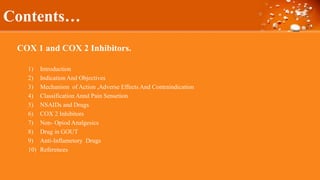
COX 1 and COX 2 Inhibitors.
1) Introduction
2) Indication And Objectives
3) Mechanism of Action ,Adverse Effects And Contraindication
4) Classification Annd Pain Sensetion
5) NSAIDs and Drugs
6) COX 2 Inhibitors
7) Non- Opiod Analgesics
8) Drug in GOUT
9) Anti-Inflametory Drugs
10) References
Contents…
Introduction
COX inhibitors
•
COX inhibitors :- are medications used in the management and treatment of chronic
pain syndromes. They are in the anti-inflammatory class of drugs.
•This activity reviews the indications, action, and contraindications for COX inhibitors as
valuable agents in the management of a variety of different pain syndromes in many vario
us diseases.
•This activity will highlight the mechanism of action, adverse event profile, and other key
factors (e.g., off-label uses, dosing, pharmacodynamics, pharmacokinetics, monitoring, re
levant interactions) pertinent for members of a multi-disciplinary health team in the mana
gement of patients with chronic pain syndromes and related conditions.y are in the anti-in
flammatory class of drugs.
Objectives:
•Identify the mechanism of action of COX inhibitors.
•Describe the adverse effects and contraindications of COX inhibitors.
•Review the toxicity of COX inhibitors.
•Summarize interprofessional team strategies for improving care coordination and commu
nication to advance COX inhibitor use and improve outcomes.
Indications
Cyclooxygenase (COX) inhibitors enjoy use in a wide variety of conditions and diseases for their
analgesic, anti-inflammatory, and antipyretic properties.
Diseases and conditions in which COX-inhibitors are indicated include but are not limited to
osteoarthritis, rheumatoid arthritis, musculoskeletal injury, spondyloarthritis, migraines, and colon
cancer (aspirin).
According to the WHO ladder, COX inhibitors are indicated for mild pain. Most professional societies, includin
g the American College of Rheumatology, recommend the lowest dose and shortest duration regimen due to the
risks associated with COX inhibitors.Indications for aspirin include the secondary prevention of cardiovascular
and cerebrovascular events.
Mechanism Of Action
The cox enzyme catalyzes the conversion of arachidonic acid into prostaglandin. It has two known
isoforms, cyclooxygenase-1 (COX-1) and cyclooxygenase-2 (COX-2). There are over 20 COX
inhibitors, and each varies in the amount they inhibit each of the isoforms.
 The COX-1 enzyme regulates many cellular processes, including platelet aggregation, kidney
afferet arteriole vasodilation, and gastric mucosa acid protection.The COX-2 enzyme is an
inducible enzyme and increases during inflammatory processes. It is present in the brain, kidney,
bone, and female reproductive system.
 C2s NSAIDs work by preferentially inhibiting COX-2. Aspirin irreversibly inhibits both COX-1 and
COX-2 but, more so, inhibits COX-1 than COX-2
Administration
COX inhibitors are most commonly given orally by mouth.
Ketorolac administration can be via the intramuscular or
intravenous route. Several COX inhibitors are administered
topically, as well. Topical NSAIDs have been shown to
have the least amount of systemic side effects.
Adverse Effects
Adverse effects vary depending on the COX inhibitor used.
Mortality Rate - The mortality rate associated with COX inhibitors is 21 per million and 24.8 per one million f
or NSAIDs and low-dose aspirin, respectively
•GI Effects
•CV Effects
•Renal Effects
•Hematologic Effects
•Hypersensitivity Reactions
•Malignancy
Contraindications
•Allergy
•History of ulcers
•History of GI bleeding
•History of coronary artery bypass
•Renal impairment
•Cirrhosis
•Preexisting platelet defects
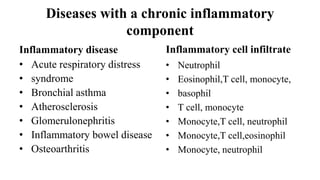
Diseases with a chronic inflammatory
component
Inflammatory disease
• Acute respiratory distress
• syndrome
• Bronchial asthma
• Atherosclerosis
• Glomerulonephritis
• Inflammatory bowel disease
• Osteoarthritis
Inflammatory cell infiltrate
• Neutrophil
• Eosinophil,T cell, monocyte,
• basophil
• T cell, monocyte
• Monocyte,T cell, neutrophil
• Monocyte,T cell,eosinophil
• Monocyte, neutrophil
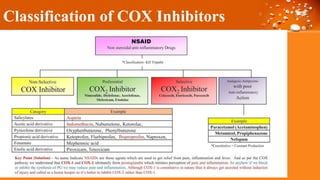
Classification of COX Inhibitors
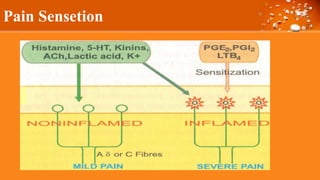
Pain Sensetion
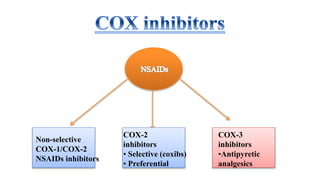
Non-selective
COX-1/COX-2
NSAIDs inhibitors
COX-2
inhibitors
• Selective (coxibs)
• Preferential
COX-3
inhibitors
•Antipyretic
analgesics
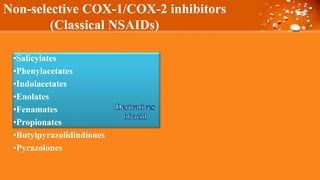
Non-selective COX-1/COX-2 inhibitors
(Classical NSAIDs)
•Salicylates
•Phenylacetates
•Indolacetates
•Enolates
•Fenamates
•Propionates
•Butylpyrazolidindiones
•Pyrazolones
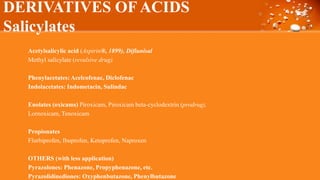
DERIVATIVES OF ACIDS
Salicylates
Acetylsalicylic acid (Aspirin®, 1899), Diflunisal
Methyl salicylate (revulsive drug)
Phenylacetates: Acelcofenac, Diclofenac
Indolacetates: Indometacin, Sulindac
Enolates (oxicams) Piroxicam, Piroxicam beta-cyclodextrin (prodrug),
Lornoxicam, Tenoxicam
Propionates
Flurbiprofen, Ibuprofen, Ketoprofen, Naproxen
OTHERS (with less application)
Pyrazolones: Phenazone, Propyphenazone, etc.
Pyrazolidinediones: Oxyphenbutazone, Phenylbutazone
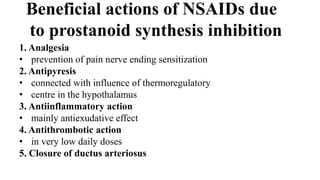
Beneficial actions of NSAIDs due
to prostanoid synthesis inhibition
1. Analgesia
• prevention of pain nerve ending sensitization
2. Antipyresis
• connected with influence of thermoregulatory
• centre in the hypothalamus
3. Antiinflammatory action
• mainly antiexudative effect
4. Antithrombotic action
• in very low daily doses
5. Closure of ductus arteriosus
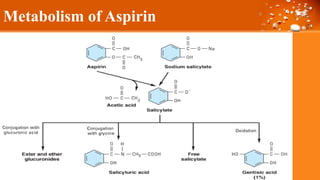
Metabolism of Aspirin
Ibuprofen
Ibuprofen is a derivative of phenylpropionic acid. In doses of 2.4 g daily it is is equivalent to 4 g of Aspirin i
n anti-inflammatory effect. Oral ibuprofen is
often prescribed in lower doses (< 2.4 g/d), at which it has analgesic but not antiinflammatory efficacy.
It is available in low dose forms under several trade names (e. g. Nurofen® – film-tabl. 400 mg).
A topical cream preparation is absorbed into fascia and muscle. A liquid gel preparation of ibuprofen provides pr
ompt relief in postsurgical dental pain. In comparison with indometacin, ibuprofen decreases urine output less a
nd also causes less fluid retention.
It is effective in closing ductus arteriosus in preterm infants, with much the same efficacy as indometacin.
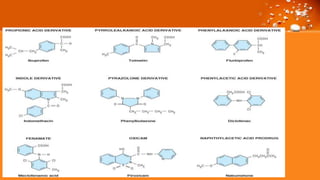
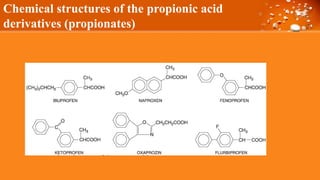
Chemical structures of the propionic acid
derivatives (propionates)
Flurbiprofen
Flurbiprofen is a propionic acid derivative with a possibly more comple
x mechanism
of action than other NSAIDs. Its (S)(-) enantiomer inhibits COX nonselect
ively, but it
has been shown in rat tissue to also affect TNF-α and NO synthesis. Hepati
c metabolism is extensive. It does demonstrate enterohepatic circulation.
Ketoprofen
Ketoprofen is a propionic acid derivative that inhibits both COX (nonselectively) and
lipoxygenase. Concurrent administration of probenecid elevates ketoprofen levels and prolongs
its plasma half-life.
The effectiveness of ketoprofen at dosages of 100–300 mg/d is equivalent to that of other NSAIDs
in the treatment of rheumatoid arthritis, osteoarthritis, gout, dysmenorrhea, and other painful
conditions. In spite of its dual effect on prostaglandins and leukotrienes, ketoprofen is not superior to othe
r NSAIDs. Its major adverse effects are on the GIT and the CNS.
Phenylbutazone is a derivative of pyrazolidinedione
with a high GI toxicity. It is rarely used now
Indometacin
Indometacin is a potent nonselective COX inhibitor and may also inhibit
phospholipase A and C, reduce neutrophil migration, and decrease T cell and B cell
proliferation. Probenecid prolongs indometacin's half-life by inhibiting both renal
and biliary clearance.
Indometacin is indicated for use in juvenile rheumatoid arthritis, gout and ankylosing
spondylitis, postepisiotomy pain, etc. It has been used to treat patent ductus
arteriosus. An ophthalmic preparation seems to be efficacious for conjunctival infla
mmation and to reduce pain after traumatic corneal abrasion. Gingival inflammation i
s reduced after administration of indometacin oral rinse. A high incidence (up to 5
0%) of GI and CNS side effects is produced: GI bleeding, diarrhoea, frontal headache,
mental confusion
Diclofenac
Diclofenac is a phenylacetic acid derivative.
A 0.1% ophthalmic preparation is recommended for prevention of postoperative ophthalmic inflammatio
n and can be used after intraocular lens implantation and strabismus surgery. A topical gel containing 3%
diclofenac is effective for solar keratoses. Diclofenac in rectal suppository form can be considered a drug
of choice for analgesia and postoperative nausea. It is also available for intramuscular and oral administra
tion (Voltaren® and Feloran® – SR tablet: 100 mg/24 h). Side effects occur in approximately 20%: GI
distress and occult bleeding, gastric ulceration. A preparation combining diclofenac and misoprostol (PG
E1) decreasesupper GI
ulceration but may result in diarrhoea.
Piroxicam
Piroxicam, an oxicam (enolate derivative), is a nonselective COX-1/COX-2 inhibitor that at high concentrati
ons also inhibits polymorphonuclear
leukocyte migration, decreases oxygen radical production, and inhibits lymphocyte function. Its long half-life
permits once-daily dosing.
Piroxicam can be used for the usual rheumatic indications. Toxicity includes GI symptoms (20% of patients), di
zziness, tinnitus, headache, rash. When piroxicam is used in dosages higher than 20 mg/d, an increased inciden
ce of peptic ulcer and bleeding is encountered. This risk is as much as 10 times higher with piroxicam than w
ith other NSAIDs.
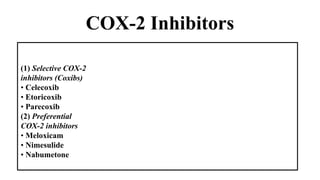
COX-2 Inhibitors
(1) Selective COX-2
inhibitors (Coxibs)
• Celecoxib
• Etoricoxib
• Parecoxib
(2) Preferential
COX-2 inhibitors
• Meloxicam
• Nimesulide
• Nabumetone
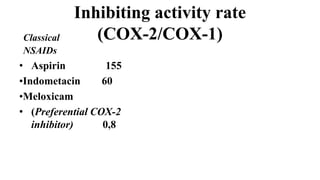
Inhibiting activity rate
(COX-2/COX-1)
Classical
NSAIDs
• Aspirin 155
•Indometacin 60
•Meloxicam
• (Preferential COX-2
inhibitor) 0,8
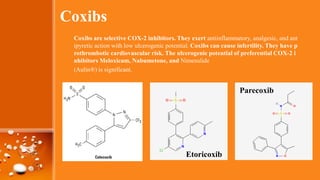
Coxibs
Coxibs are selective COX-2 inhibitors. They exert antiinflammatory, analgesic, and ant
ipyretic action with low ulcerogenic potential. Coxibs can cause infertility. They have p
rothrombotic cardiovascular risk. The ulcerogenic potential of preferential COX-2 i
nhibitors Meloxicam, Nabumetone, and Nimesulide
(Aulin®) is significant.
Parecoxib
Etoricoxib
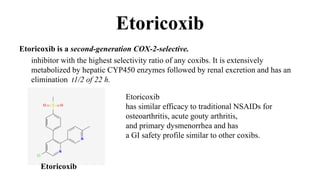
Etoricoxib
Etoricoxib is a second-generation COX-2-selective.
inhibitor with the highest selectivity ratio of any coxibs. It is extensively
metabolized by hepatic CYP450 enzymes followed by renal excretion and has an
elimination t1/2 of 22 h.
Etoricoxib
Etoricoxib
has similar efficacy to traditional NSAIDs for
osteoarthritis, acute gouty arthritis,
and primary dysmenorrhea and has
a GI safety profile similar to other coxibs.
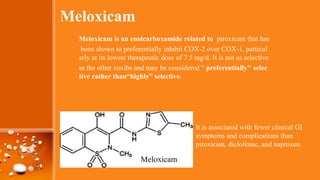
Meloxicam
Meloxicam is an enolcarboxamide related to piroxicam that has
been shown to preferentially inhibit COX-2 over COX-1, particul
arly at its lowest therapeutic dose of 7.5 mg/d. It is not as selective
as the other coxibs and may be considered “ preferentially" selec
tive rather than“highly” selective.
It is associated with fewer clinical GI
symptoms and complications than
piroxicam, diclofenac, and naproxen.
Meloxicam
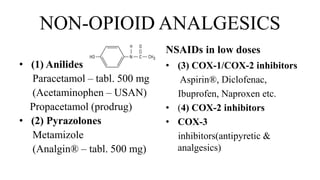
NON-OPIOID ANALGESICS
• (1) Anilides
Paracetamol – tabl. 500 mg
(Acetaminophen – USAN)
Propacetamol (prodrug)
• (2) Pyrazolones
Metamizole
(Analgin® – tabl. 500 mg)
NSAIDs in low doses
• (3) COX-1/COX-2 inhibitors
Aspirin®, Diclofenac,
Ibuprofen, Naproxen etc.
• (4) COX-2 inhibitors
• COX-3
inhibitors(antipyretic &
analgesics)
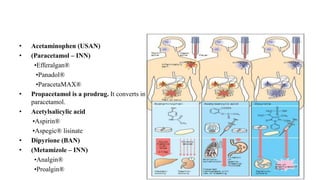
• Acetaminophen (USAN)
• (Paracetamol – INN)
•Efferalgan®
•Panadol®
•ParacetaMAX®
• Propacetamol is a prodrug. It converts into
paracetamol.
• Acetylsalicylic acid
•Aspirin®
•Aspegic® lisinate
• Dipyrione (BAN)
• (Metamizole – INN)
•Analgin®
•Proalgin®
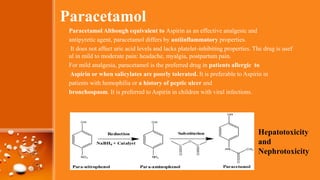
Paracetamol
Paracetamol Although equivalent to Aspirin as an effective analgesic and
antipyretic agent, paracetamol differs by antiinflammatory properties.
It does not affect uric acid levels and lacks platelet-inhibiting properties. The drug is usef
ul in mild to moderate pain: headache, myalgia, postpartum pain.
For mild analgesia, paracetamol is the preferred drug in patients allergic to
Aspirin or when salicylates are poorly tolerated. It is preferable to Aspirin in
patients with hemophilia or a history of peptic ulcer and
bronchospasm. It is preferred to Aspirin in children with viral infections.
Hepatotoxicity
and
Nephrotoxicity
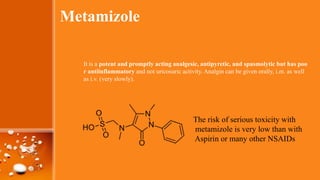
Metamizole
It is a potent and promptly acting analgesic, antipyretic, and spasmolytic but has poo
r antiinflammatory and not uricosuric activity. Analgin can be given orally, i.m. as well
as i.v. (very slowly).
The risk of serious toxicity with
metamizole is very low than with
Aspirin or many other NSAIDs
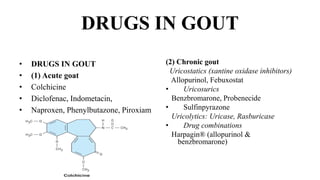
DRUGS IN GOUT
• DRUGS IN GOUT
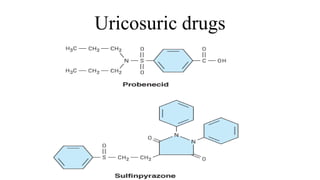
• (1) Acute goat
• Colchicine
• Diclofenac, Indometacin,
• Naproxen, Phenylbutazone, Piroxiam
(2) Chronic gout
Uricostatics (xantine oxidase inhibitors)
Allopurinol, Febuxostat
• Uricosurics
Benzbromarone, Probenecide
• Sulfinpyrazone
Uricolytics: Uricase, Rasburicase
• Drug combinations
Harpagin® (allopurinol &
benzbromarone)
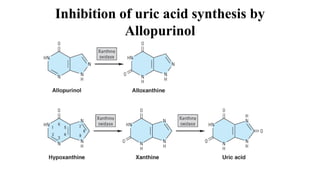
Inhibition of uric acid synthesis by
Allopurinol
Uricosuric drugs
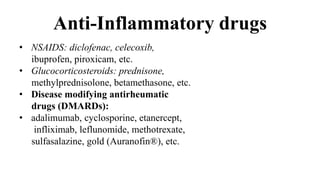
Anti-Inflammatory drugs
• NSAIDS: diclofenac, celecoxib,
ibuprofen, piroxicam, etc.
• Glucocorticosteroids: prednisone,
methylprednisolone, betamethasone, etc.
• Disease modifying antirheumatic
drugs (DMARDs):
• adalimumab, cyclosporine, etanercept,
infliximab, leflunomide, methotrexate,
sulfasalazine, gold (Auranofin®), etc.
References
• 1. https://www.slideshare.net/E_neutron/cox-
inhibitors-nonsteroid-antiinflammatory-drugs
• 2. Tripathi K.D.,”Essential Of Medical
Pharmacology,” 7th Edition , Jaypee Brothers
Medical Publishers (P) Ltd, New
Delhi,2013,Page no. 94-105.
FOR LISTENING

Cox 1 and cox 2 inhibitirs

  • 1.
    Presented By:- Ashok Mpharma. 1stYear 210121210013 COX 1 & COX2 Inhibitors Guided By:- Dr. Vikramjeet Singh Dept. of Pharmaceutical Sciences GJUS&T. Hissar
  • 2.
    COX 1 andCOX 2 Inhibitors. 1) Introduction 2) Indication And Objectives 3) Mechanism of Action ,Adverse Effects And Contraindication 4) Classification Annd Pain Sensetion 5) NSAIDs and Drugs 6) COX 2 Inhibitors 7) Non- Opiod Analgesics 8) Drug in GOUT 9) Anti-Inflametory Drugs 10) References Contents…
  • 3.
    Introduction COX inhibitors • COX inhibitors:- are medications used in the management and treatment of chronic pain syndromes. They are in the anti-inflammatory class of drugs. •This activity reviews the indications, action, and contraindications for COX inhibitors as valuable agents in the management of a variety of different pain syndromes in many vario us diseases. •This activity will highlight the mechanism of action, adverse event profile, and other key factors (e.g., off-label uses, dosing, pharmacodynamics, pharmacokinetics, monitoring, re levant interactions) pertinent for members of a multi-disciplinary health team in the mana gement of patients with chronic pain syndromes and related conditions.y are in the anti-in flammatory class of drugs.
  • 4.
    Objectives: •Identify the mechanismof action of COX inhibitors. •Describe the adverse effects and contraindications of COX inhibitors. •Review the toxicity of COX inhibitors. •Summarize interprofessional team strategies for improving care coordination and commu nication to advance COX inhibitor use and improve outcomes.
  • 5.
    Indications Cyclooxygenase (COX) inhibitorsenjoy use in a wide variety of conditions and diseases for their analgesic, anti-inflammatory, and antipyretic properties. Diseases and conditions in which COX-inhibitors are indicated include but are not limited to osteoarthritis, rheumatoid arthritis, musculoskeletal injury, spondyloarthritis, migraines, and colon cancer (aspirin). According to the WHO ladder, COX inhibitors are indicated for mild pain. Most professional societies, includin g the American College of Rheumatology, recommend the lowest dose and shortest duration regimen due to the risks associated with COX inhibitors.Indications for aspirin include the secondary prevention of cardiovascular and cerebrovascular events.
  • 6.
    Mechanism Of Action Thecox enzyme catalyzes the conversion of arachidonic acid into prostaglandin. It has two known isoforms, cyclooxygenase-1 (COX-1) and cyclooxygenase-2 (COX-2). There are over 20 COX inhibitors, and each varies in the amount they inhibit each of the isoforms.  The COX-1 enzyme regulates many cellular processes, including platelet aggregation, kidney afferet arteriole vasodilation, and gastric mucosa acid protection.The COX-2 enzyme is an inducible enzyme and increases during inflammatory processes. It is present in the brain, kidney, bone, and female reproductive system.  C2s NSAIDs work by preferentially inhibiting COX-2. Aspirin irreversibly inhibits both COX-1 and COX-2 but, more so, inhibits COX-1 than COX-2
  • 7.
    Administration COX inhibitors aremost commonly given orally by mouth. Ketorolac administration can be via the intramuscular or intravenous route. Several COX inhibitors are administered topically, as well. Topical NSAIDs have been shown to have the least amount of systemic side effects.
  • 8.
    Adverse Effects Adverse effectsvary depending on the COX inhibitor used. Mortality Rate - The mortality rate associated with COX inhibitors is 21 per million and 24.8 per one million f or NSAIDs and low-dose aspirin, respectively •GI Effects •CV Effects •Renal Effects •Hematologic Effects •Hypersensitivity Reactions •Malignancy
  • 9.
    Contraindications •Allergy •History of ulcers •Historyof GI bleeding •History of coronary artery bypass •Renal impairment •Cirrhosis •Preexisting platelet defects
  • 10.
    Diseases with achronic inflammatory component Inflammatory disease • Acute respiratory distress • syndrome • Bronchial asthma • Atherosclerosis • Glomerulonephritis • Inflammatory bowel disease • Osteoarthritis Inflammatory cell infiltrate • Neutrophil • Eosinophil,T cell, monocyte, • basophil • T cell, monocyte • Monocyte,T cell, neutrophil • Monocyte,T cell,eosinophil • Monocyte, neutrophil
  • 11.
  • 12.
  • 13.
    Non-selective COX-1/COX-2 NSAIDs inhibitors COX-2 inhibitors • Selective(coxibs) • Preferential COX-3 inhibitors •Antipyretic analgesics
  • 14.
    Non-selective COX-1/COX-2 inhibitors (ClassicalNSAIDs) •Salicylates •Phenylacetates •Indolacetates •Enolates •Fenamates •Propionates •Butylpyrazolidindiones •Pyrazolones
  • 15.
    DERIVATIVES OF ACIDS Salicylates Acetylsalicylicacid (Aspirin®, 1899), Diflunisal Methyl salicylate (revulsive drug) Phenylacetates: Acelcofenac, Diclofenac Indolacetates: Indometacin, Sulindac Enolates (oxicams) Piroxicam, Piroxicam beta-cyclodextrin (prodrug), Lornoxicam, Tenoxicam Propionates Flurbiprofen, Ibuprofen, Ketoprofen, Naproxen OTHERS (with less application) Pyrazolones: Phenazone, Propyphenazone, etc. Pyrazolidinediones: Oxyphenbutazone, Phenylbutazone
  • 17.
    Beneficial actions ofNSAIDs due to prostanoid synthesis inhibition 1. Analgesia • prevention of pain nerve ending sensitization 2. Antipyresis • connected with influence of thermoregulatory • centre in the hypothalamus 3. Antiinflammatory action • mainly antiexudative effect 4. Antithrombotic action • in very low daily doses 5. Closure of ductus arteriosus
  • 18.
  • 19.
    Ibuprofen Ibuprofen is aderivative of phenylpropionic acid. In doses of 2.4 g daily it is is equivalent to 4 g of Aspirin i n anti-inflammatory effect. Oral ibuprofen is often prescribed in lower doses (< 2.4 g/d), at which it has analgesic but not antiinflammatory efficacy. It is available in low dose forms under several trade names (e. g. Nurofen® – film-tabl. 400 mg). A topical cream preparation is absorbed into fascia and muscle. A liquid gel preparation of ibuprofen provides pr ompt relief in postsurgical dental pain. In comparison with indometacin, ibuprofen decreases urine output less a nd also causes less fluid retention. It is effective in closing ductus arteriosus in preterm infants, with much the same efficacy as indometacin.
  • 20.
    Chemical structures ofthe propionic acid derivatives (propionates)
  • 21.
    Flurbiprofen Flurbiprofen is apropionic acid derivative with a possibly more comple x mechanism of action than other NSAIDs. Its (S)(-) enantiomer inhibits COX nonselect ively, but it has been shown in rat tissue to also affect TNF-α and NO synthesis. Hepati c metabolism is extensive. It does demonstrate enterohepatic circulation.
  • 22.
    Ketoprofen Ketoprofen is apropionic acid derivative that inhibits both COX (nonselectively) and lipoxygenase. Concurrent administration of probenecid elevates ketoprofen levels and prolongs its plasma half-life. The effectiveness of ketoprofen at dosages of 100–300 mg/d is equivalent to that of other NSAIDs in the treatment of rheumatoid arthritis, osteoarthritis, gout, dysmenorrhea, and other painful conditions. In spite of its dual effect on prostaglandins and leukotrienes, ketoprofen is not superior to othe r NSAIDs. Its major adverse effects are on the GIT and the CNS. Phenylbutazone is a derivative of pyrazolidinedione with a high GI toxicity. It is rarely used now
  • 23.
    Indometacin Indometacin is apotent nonselective COX inhibitor and may also inhibit phospholipase A and C, reduce neutrophil migration, and decrease T cell and B cell proliferation. Probenecid prolongs indometacin's half-life by inhibiting both renal and biliary clearance. Indometacin is indicated for use in juvenile rheumatoid arthritis, gout and ankylosing spondylitis, postepisiotomy pain, etc. It has been used to treat patent ductus arteriosus. An ophthalmic preparation seems to be efficacious for conjunctival infla mmation and to reduce pain after traumatic corneal abrasion. Gingival inflammation i s reduced after administration of indometacin oral rinse. A high incidence (up to 5 0%) of GI and CNS side effects is produced: GI bleeding, diarrhoea, frontal headache, mental confusion
  • 24.
    Diclofenac Diclofenac is aphenylacetic acid derivative. A 0.1% ophthalmic preparation is recommended for prevention of postoperative ophthalmic inflammatio n and can be used after intraocular lens implantation and strabismus surgery. A topical gel containing 3% diclofenac is effective for solar keratoses. Diclofenac in rectal suppository form can be considered a drug of choice for analgesia and postoperative nausea. It is also available for intramuscular and oral administra tion (Voltaren® and Feloran® – SR tablet: 100 mg/24 h). Side effects occur in approximately 20%: GI distress and occult bleeding, gastric ulceration. A preparation combining diclofenac and misoprostol (PG E1) decreasesupper GI ulceration but may result in diarrhoea.
  • 25.
    Piroxicam Piroxicam, an oxicam(enolate derivative), is a nonselective COX-1/COX-2 inhibitor that at high concentrati ons also inhibits polymorphonuclear leukocyte migration, decreases oxygen radical production, and inhibits lymphocyte function. Its long half-life permits once-daily dosing. Piroxicam can be used for the usual rheumatic indications. Toxicity includes GI symptoms (20% of patients), di zziness, tinnitus, headache, rash. When piroxicam is used in dosages higher than 20 mg/d, an increased inciden ce of peptic ulcer and bleeding is encountered. This risk is as much as 10 times higher with piroxicam than w ith other NSAIDs.
  • 26.
    COX-2 Inhibitors (1) SelectiveCOX-2 inhibitors (Coxibs) • Celecoxib • Etoricoxib • Parecoxib (2) Preferential COX-2 inhibitors • Meloxicam • Nimesulide • Nabumetone
  • 27.
    Inhibiting activity rate (COX-2/COX-1) Classical NSAIDs •Aspirin 155 •Indometacin 60 •Meloxicam • (Preferential COX-2 inhibitor) 0,8
  • 28.
    Coxibs Coxibs are selectiveCOX-2 inhibitors. They exert antiinflammatory, analgesic, and ant ipyretic action with low ulcerogenic potential. Coxibs can cause infertility. They have p rothrombotic cardiovascular risk. The ulcerogenic potential of preferential COX-2 i nhibitors Meloxicam, Nabumetone, and Nimesulide (Aulin®) is significant. Parecoxib Etoricoxib
  • 29.
    Etoricoxib Etoricoxib is asecond-generation COX-2-selective. inhibitor with the highest selectivity ratio of any coxibs. It is extensively metabolized by hepatic CYP450 enzymes followed by renal excretion and has an elimination t1/2 of 22 h. Etoricoxib Etoricoxib has similar efficacy to traditional NSAIDs for osteoarthritis, acute gouty arthritis, and primary dysmenorrhea and has a GI safety profile similar to other coxibs.
  • 30.
    Meloxicam Meloxicam is anenolcarboxamide related to piroxicam that has been shown to preferentially inhibit COX-2 over COX-1, particul arly at its lowest therapeutic dose of 7.5 mg/d. It is not as selective as the other coxibs and may be considered “ preferentially" selec tive rather than“highly” selective. It is associated with fewer clinical GI symptoms and complications than piroxicam, diclofenac, and naproxen. Meloxicam
  • 31.
    NON-OPIOID ANALGESICS • (1)Anilides Paracetamol – tabl. 500 mg (Acetaminophen – USAN) Propacetamol (prodrug) • (2) Pyrazolones Metamizole (Analgin® – tabl. 500 mg) NSAIDs in low doses • (3) COX-1/COX-2 inhibitors Aspirin®, Diclofenac, Ibuprofen, Naproxen etc. • (4) COX-2 inhibitors • COX-3 inhibitors(antipyretic & analgesics)
  • 32.
    • Acetaminophen (USAN) •(Paracetamol – INN) •Efferalgan® •Panadol® •ParacetaMAX® • Propacetamol is a prodrug. It converts into paracetamol. • Acetylsalicylic acid •Aspirin® •Aspegic® lisinate • Dipyrione (BAN) • (Metamizole – INN) •Analgin® •Proalgin®
  • 33.
    Paracetamol Paracetamol Although equivalentto Aspirin as an effective analgesic and antipyretic agent, paracetamol differs by antiinflammatory properties. It does not affect uric acid levels and lacks platelet-inhibiting properties. The drug is usef ul in mild to moderate pain: headache, myalgia, postpartum pain. For mild analgesia, paracetamol is the preferred drug in patients allergic to Aspirin or when salicylates are poorly tolerated. It is preferable to Aspirin in patients with hemophilia or a history of peptic ulcer and bronchospasm. It is preferred to Aspirin in children with viral infections. Hepatotoxicity and Nephrotoxicity
  • 34.
    Metamizole It is apotent and promptly acting analgesic, antipyretic, and spasmolytic but has poo r antiinflammatory and not uricosuric activity. Analgin can be given orally, i.m. as well as i.v. (very slowly). The risk of serious toxicity with metamizole is very low than with Aspirin or many other NSAIDs
  • 35.
    DRUGS IN GOUT •DRUGS IN GOUT • (1) Acute goat • Colchicine • Diclofenac, Indometacin, • Naproxen, Phenylbutazone, Piroxiam (2) Chronic gout Uricostatics (xantine oxidase inhibitors) Allopurinol, Febuxostat • Uricosurics Benzbromarone, Probenecide • Sulfinpyrazone Uricolytics: Uricase, Rasburicase • Drug combinations Harpagin® (allopurinol & benzbromarone)
  • 36.
    Inhibition of uricacid synthesis by Allopurinol
  • 37.
  • 38.
    Anti-Inflammatory drugs • NSAIDS:diclofenac, celecoxib, ibuprofen, piroxicam, etc. • Glucocorticosteroids: prednisone, methylprednisolone, betamethasone, etc. • Disease modifying antirheumatic drugs (DMARDs): • adalimumab, cyclosporine, etanercept, infliximab, leflunomide, methotrexate, sulfasalazine, gold (Auranofin®), etc.
  • 39.
    References • 1. https://www.slideshare.net/E_neutron/cox- inhibitors-nonsteroid-antiinflammatory-drugs •2. Tripathi K.D.,”Essential Of Medical Pharmacology,” 7th Edition , Jaypee Brothers Medical Publishers (P) Ltd, New Delhi,2013,Page no. 94-105.
  • 40.