Morphology,
Specimen collection,
Processing of
samples
Covid 19 Sample Collection
and Laboratory Diagnosis
Dr. Moumita Adhikary
Associate Professor
Dept. of Microbiology
Nodal Officer : RTPCR laboratory
Rampurhat Govt. Medical College and Hospital
Objectives
•Sample Collection:
Procedure, Formalities and
Packaging
•Diagnosis: Real Time RTPCR,
TRUENAT, CBNAAT, RAT, Ab
test
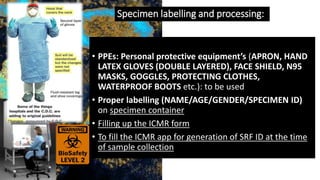
Specimen labelling and processing:
• PPEs: Personal protective equipment’s (APRON, HAND
LATEX GLOVES (DOUBLE LAYERED), FACE SHIELD, N95
MASKS, GOGGLES, PROTECTING CLOTHES,
WATERPROOF BOOTS etc.): to be used
• Proper labelling (NAME/AGE/GENDER/SPECIMEN ID)
on specimen container
• Filling up the ICMR form
• To fill the ICMR app for generation of SRF ID at the time
of sample collection
Requirements for
Clinical Samples
Collection, Packaging
and Transport
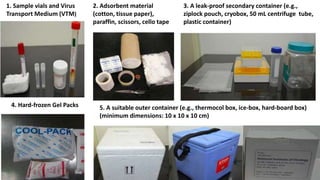
1. Sample vials and Virus
Transport Medium (VTM)
2. Adsorbent material
(cotton, tissue paper),
paraffin, scissors, cello tape
3. A leak-proof secondary container (e.g.,
ziplock pouch, cryobox, 50 mL centrifuge tube,
plastic container)
4. Hard-frozen Gel Packs 5. A suitable outer container (e.g., thermocol box, ice-box, hard-board box)
(minimum dimensions: 10 x 10 x 10 cm)
Collecting the Specimen
Appropriate infection control precautions
Interim Guidelines for Collecting, Handling, and Testing Clinical Specimens
from Patients Under Investigation (PUIs) for 2019 Novel Coronavirus (2019-
nCoV https://www.cdc.gov/coronavirus/2019-nCoV/guidelines-clinical-
specimens.html)
- To follow specimen collection device manufacturer instructions for proper
collection methods
- Swab specimens: Collected using only swabs with a synthetic tip, such as
Nylon or Dacron®, and an Aluminum or Plastic Shaft
Not Recommended: Calcium alginate swabs/cotton swabs with wooden
shafts
Place swabs immediately into sterile tubes containing 1-3 ml of viral
transport media
Transporting Specimens
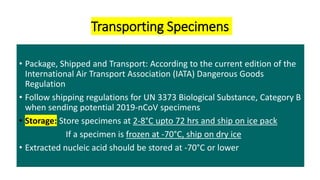
• Package, Shipped and Transport: According to the current edition of the
International Air Transport Association (IATA) Dangerous Goods
Regulation
• Follow shipping regulations for UN 3373 Biological Substance, Category B
when sending potential 2019-nCoV specimens
• Storage: Store specimens at 2-8°C upto 72 hrs and ship on ice pack
If a specimen is frozen at -70°C, ship on dry ice
• Extracted nucleic acid should be stored at -70°C or lower
Types of Specimens
1. Upper respiratory tract specimens: Nasopharyngeal and oropharyngeal
swab
2. Lower respiratory tract specimens: Deep cough sputum, BAL,
pulmonary tissue biopsy
3. Blood samples: Acute stage fasting blood within 7 days of onset, 5 ml in
vacutainer with anticoagulants
4. Serum specimens: Combine acute and recovery period double serum.
1st serum to be collected as early as possible (preferably within 7 days of
onset) and the 2nd serum to be collected 3 to 4 weeks after onset.
Amount: 5 ml, fasting blood, it is recommended to use vacutainer
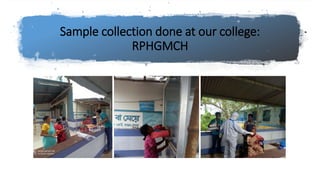
Sample collection done at our college:
RPHGMCH
Procedure for
Specimen Packaging
and Transport
1. Use PPE while handling
specimen
2. Seal the neck of the
sample vials using
parafilm
3. Cover the sample vials
using absorbent
material
4. Arrange primary
container (vial) in
secondary container
5. Placing the centrifuge tube
inside a zip-lock pouch
6. Placing the zip-lock pouch
inside a sturdy plastic
container and seal the neck
of the container
Note: Sample vials can
also be placed inside a
zip-lock pouch, covered
in absorbent material
and secured by heat-
sealing or rubber
bands. Then, the zip-
lock pouch should be
placed inside another
plastic pouch and
secured
7. Using a thermocol box as
an outer container and
placing the secondary
container within it,
surrounded by hard- frozen
gel packs
7. Using a hard card-
board box as an
outer container and
placing the
secondary container
and the gel packs
8. Placing the completed
Specimen Referral Form
(ICMR) and request
letter inside a leak-
proof, zip-lock pouch
9. Securing the zip-
lock pouch with the
Specimen Referral
Form on the outer
container
10. Attaching the
labels:
Senders’ address,
contact number;
Consignee’s
address /contact
number;
Biological
substance-
Category B;
‘UN 3373’;
Orientation label,
Handle with care
Documents to accompany
1) Packaging list/proforma Invoice
2) Airway bill (for air transport) (to be prepared by sender or
shipper)
3) Value equivalence document (for road/rail/sea transport)
[ Note: 1. A vaccine-carrier/ice-box can also be used as an outer
container
2. The minimum dimensions of the outer container should
be 10 x 10 x 10 cm (length x width x height)]
Laboratory &
POC Diagnosis
Testing Methods
•Real Time RTPCR
•TRUENAT
•CBNAAT
•POC RAT
•Ab test
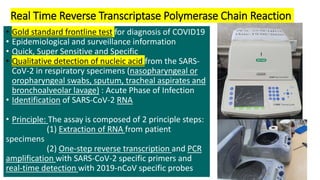
Real Time Reverse Transcriptase Polymerase Chain Reaction
• Gold standard frontline test for diagnosis of COVID19
• Epidemiological and surveillance information
• Quick, Super Sensitive and Specific
• Qualitative detection of nucleic acid from the SARS-
CoV-2 in respiratory specimens (nasopharyngeal or
oropharyngeal swabs, sputum, tracheal aspirates and
bronchoalveolar lavage) : Acute Phase of Infection
• Identification of SARS-CoV-2 RNA
• Principle: The assay is composed of 2 principle steps:
(1) Extraction of RNA from patient
specimens
(2) One-step reverse transcription and PCR
amplification with SARS-CoV-2 specific primers and
real-time detection with 2019-nCoV specific probes
PCR Laboratory at RPHGMCH
• The assay targets regions of the virus nucleocapsid N gene (N1 & N3)
• Specimens are identified from populations based on positive rate (by zip code
or by client)
• Result: after 35 cycles. Around 35 billion new copies. 2-5 hours: TAT
NEGATIVE: Negative results must be combined with clinical observations, patient
history and epidemiological information
POSITIVE: Do not rule out bacterial infection or co-infection with other viruses
POOLING: 5 patient specimens are combined
Pool - Positive/Inconclusive/Invalid. Each of the samples are re-tested
as a separate individual specimen
- Negative: Each constituent sample is reported as negative
- Specimens with low viral loads may not be detected in sample
pools due to the decreased sensitivity of pooled testing
Interpretation
Precautions
• To follow standard precautions
• All patient specimens and positive controls should be considered
potentially infectious and handled accordingly
• No: Eat, Drink, Smoke, apply cosmetics or handle contact lenses in
areas where reagents and human specimens are handled
• To Handle all specimens as if infectious using safe laboratory
procedures
• Refer to Interim Laboratory Biosafety Guidelines for Handling and
Processing Specimens Associated with 2019-nCoV
https://www.cdc.gov/coronavirus/2019-nCoV/labbiosafety-
guidelines.html
• Specimen processing should be performed in accordance with national
biological safety regulations
Limitations
• Trained Personal: Perform the assay independently. Should Use, analyse and report
diagnostic results
• Performance: Only established for upper and lower respiratory specimens
• Interpretation:
 Negative: Should not be used as the sole basis in patient management
 False Negative/Inconclusive
- Specimen is improperly collected, transported or handled
- If amplification inhibitors are present in the specimen
- Inadequate number of organisms are present in the specimen
- Prevalence of disease is high
 False positive: Prevalence is moderate to low
 Cannot be used to detect a past infection
• Require specialized laboratory facilities in terms of equipments, biosafety and
biosecurity
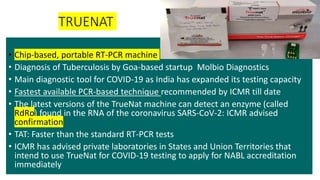
TRUENAT
TRUENAT
• Chip-based, portable RT-PCR machine
• Diagnosis of Tuberculosis by Goa-based startup Molbio Diagnostics
• Main diagnostic tool for COVID-19 as India has expanded its testing capacity
• Fastest available PCR-based technique recommended by ICMR till date
• The latest versions of the TrueNat machine can detect an enzyme (called
RdRp) found in the RNA of the coronavirus SARS-CoV-2: ICMR advised
confirmation
• TAT: Faster than the standard RT-PCR tests
• ICMR has advised private laboratories in States and Union Territories that
intend to use TrueNat for COVID-19 testing to apply for NABL accreditation
immediately
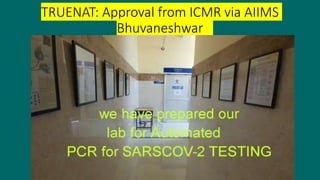
TRUENAT: Approval from ICMR via AIIMS
Bhuvaneshwar
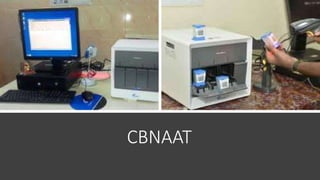
CBNAAT
CBNAAT
• Cartridge-based nucleic acid amplification test (CBNAAT) using Cepheid's Xpert
Xpress SARS-CoV-2 test
• Done under the biosafety 2 level (BSL-2) conditions and with appropriate precautions
• ICMR: Any new govt. laboratory seeking to initiate the CBNAAT must meet the
minimum ICMR requirements such as:-
1. Availability of a BSL-2 level laboratory facility
2. Molecular biology setup for virological diagnosis and a functioning and
calibrated biosafety cabinet type 2A/2B in the laboratory
3. Staff having experience in molecular virology
4. Robust institutional policy on biomedical waste management
• Private laboratories should have National Accreditation Board for Testing &
Calibration Laboratories (NABL) accreditation for molecular detection of RNA viruses
either by the real-time PCR/CBNAAT
POC RAT
- Urgent need
- Reliable point-of-care rapid antigen
detection test with good sensitivity and
specificity for early detection
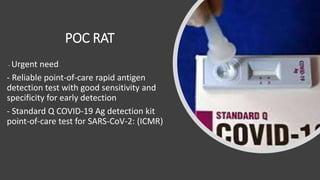
- Standard Q COVID-19 Ag detection kit
point-of-care test for SARS-CoV-2: (ICMR)
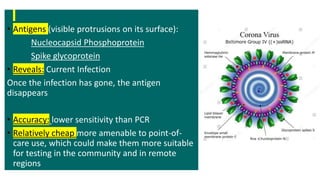
• Antigens (visible protrusions on its surface):
Nucleocapsid Phosphoprotein
Spike glycoprotein
• Reveals: Current Infection
Once the infection has gone, the antigen
disappears
• Accuracy: lower sensitivity than PCR
• Relatively cheap more amenable to point-of-
care use, which could make them more suitable
for testing in the community and in remote
regions
• Procedure: Nasopharyngeal Swab to be collected by a trained healthcare
worker following full infection control practices including use of proper PPE
• Time: After 15 minutes of putting the sample into the well. Maximum duration
for interpreting a positive or negative test is 30 minutes
• Observation: Appearance of test and control lines which can be read with
naked eye, requiring no specialized equipment. Test strip should be discarded
• Storage: Test kit should be stored between 2° to 30° C
Not as sensitive as RTPCR
• Interpretation: Positive results from antigen tests are highly accurate but there
is a higher chance of false negatives
(so negative results do not rule out infection and need a confirmation via the RT-
PCR test)
• Advantage: Gives results much faster within 30 minutes
• Low sensitivity: Higher likelihood of false negatives
• Eg, 1st antigen test kit approved by the ICMR was made by SD Biosensor, a
South Korean company manufacturing in Gurugram, India. High specificity
(ability to detect true negatives), relatively low sensitivity (ability to detect
true positives)
Specificity : 99.3% to 100%,
Sensitivity : 50.6% to 84%
Means, positive result: 99.3% to 100% accurate, negative result: 50.6% to
84% accurate
Limitations:
Government’s stand:
• Those with symptoms of Covid-19 can get tested with the antigen test.
If their result comes out negative, a re-test using the RT-PCR must be
undertaken
• Field level test for early detection of infection and quick containment &
quick diagnosis
• Use: Field settings (outside of the laboratory)
Hospitals along with the RT-PCR test technology
• So far, antigen tests manufactured by 3 companies approved by the
ICMR for use in India
A. Containment zones or hotspots (to be performed onsite under strict
medical supervision and maintaining kit temperature between 2°to 30°C
i) All symptomatic Influenza Like Illness (ILI)
ii) Asymptomatic direct and high-risk contacts with co-morbidities
(lung disease, heart disease, liver disease, kidney disease, diabetes,
neurological disorders, blood disorders) of a confirmed case to be tested
once between day 5 and day 10 of coming into contact
B. Healthcare settings to be performed onsite under strict medical
supervision and maintaining kit temperature between 2° to 30°
When will the test be done?
i) All symptomatic ILI patients presenting in a healthcare setting and are
suspected of having COVID-19 infection
ii) Asymptomatic patients who are hospitalized or seeking hospitalization, in
the following high risk groups: Patients undergoing chemotherapy,
Immunosuppressed patients including those who are HIV+; Patients diagnosed
with malignant disease; Transplant patients; Elderly patients (>65 yrs of age)
with co-morbidities (lung disease, heart disease, liver disease, kidney disease,
diabetes, neurological disorders, blood disorders)
iii) Asymptomatic patients undergoing aerosol-generating surgical / non-
surgical interventions: Elective/emergency surgical procedures like
neurosurgery, ENT surgery, dental procedures; Non-surgical interventions like
bronchoscopy, upper GI endoscopy and dialysis
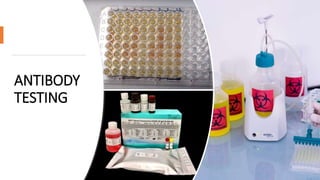
ANTIBODY
TESTING
Antibody test
• Reveals if a person has already been exposed to an infection
• Blood/Serum
• ELISA (enzyme-linked immunosorbent assay)/CIA (chemiluminescent
immunoassay)/Point-of-care test based on lateral flow technology
• IgM antibody response peaks around 2 weeks after infection, followed by the IgG
antibody peak at 3 weeks
• Advantage: 1. Track the spread of disease. Estimates how many people have already
been infected with SARS-CoV-2, which can be important in assessing herd immunity
2. Distinguish between IgM and IgG: Identify phase of infection
indicating how long ago the person was infected with SARS-CoV-2
3. Identify those who should be prioritized for vaccinations when they
become available
4. Identify potential donors for convalescent plasma therapy
• Interpretation: Negative test result may occur if the test is taken too soon
after infection before antibodies have been produced by the body
False positive: Results could also occur due to cross-reactivity
with antibodies present as a result of previous infection with other
coronaviruses
Limitations
• Data from a recent study showed that antibody levels begin to wane after
two months. This could mean that the window for which antibody testing
can identify people who have been infected is relatively short, and therefore
antibody test results will need to be interpreted with caution
Availability: developed by Roche, Beckman-Coulter, EUROIMMUN and Abbott
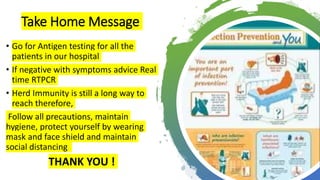
Take Home Message
• Go for Antigen testing for all the
patients in our hospital
• If negative with symptoms advice Real
time RTPCR
• Herd Immunity is still a long way to
reach therefore,
Follow all precautions, maintain
hygiene, protect yourself by wearing
mask and face shield and maintain
social distancing
THANK YOU !

Covid 19 sample collection and diagnosis

  • 1.
    Morphology, Specimen collection, Processing of samples Covid19 Sample Collection and Laboratory Diagnosis Dr. Moumita Adhikary Associate Professor Dept. of Microbiology Nodal Officer : RTPCR laboratory Rampurhat Govt. Medical College and Hospital
  • 2.
    Objectives •Sample Collection: Procedure, Formalitiesand Packaging •Diagnosis: Real Time RTPCR, TRUENAT, CBNAAT, RAT, Ab test
  • 3.
    Specimen labelling andprocessing: • PPEs: Personal protective equipment’s (APRON, HAND LATEX GLOVES (DOUBLE LAYERED), FACE SHIELD, N95 MASKS, GOGGLES, PROTECTING CLOTHES, WATERPROOF BOOTS etc.): to be used • Proper labelling (NAME/AGE/GENDER/SPECIMEN ID) on specimen container • Filling up the ICMR form • To fill the ICMR app for generation of SRF ID at the time of sample collection
  • 4.
  • 5.
    1. Sample vialsand Virus Transport Medium (VTM) 2. Adsorbent material (cotton, tissue paper), paraffin, scissors, cello tape 3. A leak-proof secondary container (e.g., ziplock pouch, cryobox, 50 mL centrifuge tube, plastic container) 4. Hard-frozen Gel Packs 5. A suitable outer container (e.g., thermocol box, ice-box, hard-board box) (minimum dimensions: 10 x 10 x 10 cm)
  • 6.
    Collecting the Specimen Appropriateinfection control precautions Interim Guidelines for Collecting, Handling, and Testing Clinical Specimens from Patients Under Investigation (PUIs) for 2019 Novel Coronavirus (2019- nCoV https://www.cdc.gov/coronavirus/2019-nCoV/guidelines-clinical- specimens.html) - To follow specimen collection device manufacturer instructions for proper collection methods - Swab specimens: Collected using only swabs with a synthetic tip, such as Nylon or Dacron®, and an Aluminum or Plastic Shaft Not Recommended: Calcium alginate swabs/cotton swabs with wooden shafts Place swabs immediately into sterile tubes containing 1-3 ml of viral transport media
  • 7.
    Transporting Specimens • Package,Shipped and Transport: According to the current edition of the International Air Transport Association (IATA) Dangerous Goods Regulation • Follow shipping regulations for UN 3373 Biological Substance, Category B when sending potential 2019-nCoV specimens • Storage: Store specimens at 2-8°C upto 72 hrs and ship on ice pack If a specimen is frozen at -70°C, ship on dry ice • Extracted nucleic acid should be stored at -70°C or lower
  • 8.
    Types of Specimens 1.Upper respiratory tract specimens: Nasopharyngeal and oropharyngeal swab 2. Lower respiratory tract specimens: Deep cough sputum, BAL, pulmonary tissue biopsy 3. Blood samples: Acute stage fasting blood within 7 days of onset, 5 ml in vacutainer with anticoagulants 4. Serum specimens: Combine acute and recovery period double serum. 1st serum to be collected as early as possible (preferably within 7 days of onset) and the 2nd serum to be collected 3 to 4 weeks after onset. Amount: 5 ml, fasting blood, it is recommended to use vacutainer
  • 9.
    Sample collection doneat our college: RPHGMCH
  • 10.
  • 11.
    1. Use PPEwhile handling specimen 2. Seal the neck of the sample vials using parafilm 3. Cover the sample vials using absorbent material 4. Arrange primary container (vial) in secondary container 5. Placing the centrifuge tube inside a zip-lock pouch 6. Placing the zip-lock pouch inside a sturdy plastic container and seal the neck of the container Note: Sample vials can also be placed inside a zip-lock pouch, covered in absorbent material and secured by heat- sealing or rubber bands. Then, the zip- lock pouch should be placed inside another plastic pouch and secured 7. Using a thermocol box as an outer container and placing the secondary container within it, surrounded by hard- frozen gel packs
  • 12.
    7. Using ahard card- board box as an outer container and placing the secondary container and the gel packs 8. Placing the completed Specimen Referral Form (ICMR) and request letter inside a leak- proof, zip-lock pouch 9. Securing the zip- lock pouch with the Specimen Referral Form on the outer container 10. Attaching the labels: Senders’ address, contact number; Consignee’s address /contact number; Biological substance- Category B; ‘UN 3373’; Orientation label, Handle with care
  • 13.
    Documents to accompany 1)Packaging list/proforma Invoice 2) Airway bill (for air transport) (to be prepared by sender or shipper) 3) Value equivalence document (for road/rail/sea transport) [ Note: 1. A vaccine-carrier/ice-box can also be used as an outer container 2. The minimum dimensions of the outer container should be 10 x 10 x 10 cm (length x width x height)]
  • 14.
  • 15.
    Testing Methods •Real TimeRTPCR •TRUENAT •CBNAAT •POC RAT •Ab test
  • 16.
    Real Time ReverseTranscriptase Polymerase Chain Reaction • Gold standard frontline test for diagnosis of COVID19 • Epidemiological and surveillance information • Quick, Super Sensitive and Specific • Qualitative detection of nucleic acid from the SARS- CoV-2 in respiratory specimens (nasopharyngeal or oropharyngeal swabs, sputum, tracheal aspirates and bronchoalveolar lavage) : Acute Phase of Infection • Identification of SARS-CoV-2 RNA • Principle: The assay is composed of 2 principle steps: (1) Extraction of RNA from patient specimens (2) One-step reverse transcription and PCR amplification with SARS-CoV-2 specific primers and real-time detection with 2019-nCoV specific probes
  • 17.
  • 18.
    • The assaytargets regions of the virus nucleocapsid N gene (N1 & N3) • Specimens are identified from populations based on positive rate (by zip code or by client) • Result: after 35 cycles. Around 35 billion new copies. 2-5 hours: TAT NEGATIVE: Negative results must be combined with clinical observations, patient history and epidemiological information POSITIVE: Do not rule out bacterial infection or co-infection with other viruses POOLING: 5 patient specimens are combined Pool - Positive/Inconclusive/Invalid. Each of the samples are re-tested as a separate individual specimen - Negative: Each constituent sample is reported as negative - Specimens with low viral loads may not be detected in sample pools due to the decreased sensitivity of pooled testing Interpretation
  • 19.
    Precautions • To followstandard precautions • All patient specimens and positive controls should be considered potentially infectious and handled accordingly • No: Eat, Drink, Smoke, apply cosmetics or handle contact lenses in areas where reagents and human specimens are handled • To Handle all specimens as if infectious using safe laboratory procedures • Refer to Interim Laboratory Biosafety Guidelines for Handling and Processing Specimens Associated with 2019-nCoV https://www.cdc.gov/coronavirus/2019-nCoV/labbiosafety- guidelines.html • Specimen processing should be performed in accordance with national biological safety regulations
  • 20.
    Limitations • Trained Personal:Perform the assay independently. Should Use, analyse and report diagnostic results • Performance: Only established for upper and lower respiratory specimens • Interpretation:  Negative: Should not be used as the sole basis in patient management  False Negative/Inconclusive - Specimen is improperly collected, transported or handled - If amplification inhibitors are present in the specimen - Inadequate number of organisms are present in the specimen - Prevalence of disease is high  False positive: Prevalence is moderate to low  Cannot be used to detect a past infection • Require specialized laboratory facilities in terms of equipments, biosafety and biosecurity
  • 21.
  • 22.
    TRUENAT • Chip-based, portableRT-PCR machine • Diagnosis of Tuberculosis by Goa-based startup Molbio Diagnostics • Main diagnostic tool for COVID-19 as India has expanded its testing capacity • Fastest available PCR-based technique recommended by ICMR till date • The latest versions of the TrueNat machine can detect an enzyme (called RdRp) found in the RNA of the coronavirus SARS-CoV-2: ICMR advised confirmation • TAT: Faster than the standard RT-PCR tests • ICMR has advised private laboratories in States and Union Territories that intend to use TrueNat for COVID-19 testing to apply for NABL accreditation immediately
  • 23.
    TRUENAT: Approval fromICMR via AIIMS Bhuvaneshwar
  • 24.
  • 25.
    CBNAAT • Cartridge-based nucleicacid amplification test (CBNAAT) using Cepheid's Xpert Xpress SARS-CoV-2 test • Done under the biosafety 2 level (BSL-2) conditions and with appropriate precautions • ICMR: Any new govt. laboratory seeking to initiate the CBNAAT must meet the minimum ICMR requirements such as:- 1. Availability of a BSL-2 level laboratory facility 2. Molecular biology setup for virological diagnosis and a functioning and calibrated biosafety cabinet type 2A/2B in the laboratory 3. Staff having experience in molecular virology 4. Robust institutional policy on biomedical waste management • Private laboratories should have National Accreditation Board for Testing & Calibration Laboratories (NABL) accreditation for molecular detection of RNA viruses either by the real-time PCR/CBNAAT
  • 26.
    POC RAT - Urgentneed - Reliable point-of-care rapid antigen detection test with good sensitivity and specificity for early detection - Standard Q COVID-19 Ag detection kit point-of-care test for SARS-CoV-2: (ICMR)
  • 27.
    • Antigens (visibleprotrusions on its surface): Nucleocapsid Phosphoprotein Spike glycoprotein • Reveals: Current Infection Once the infection has gone, the antigen disappears • Accuracy: lower sensitivity than PCR • Relatively cheap more amenable to point-of- care use, which could make them more suitable for testing in the community and in remote regions
  • 28.
    • Procedure: NasopharyngealSwab to be collected by a trained healthcare worker following full infection control practices including use of proper PPE • Time: After 15 minutes of putting the sample into the well. Maximum duration for interpreting a positive or negative test is 30 minutes • Observation: Appearance of test and control lines which can be read with naked eye, requiring no specialized equipment. Test strip should be discarded • Storage: Test kit should be stored between 2° to 30° C Not as sensitive as RTPCR • Interpretation: Positive results from antigen tests are highly accurate but there is a higher chance of false negatives (so negative results do not rule out infection and need a confirmation via the RT- PCR test) • Advantage: Gives results much faster within 30 minutes
  • 29.
    • Low sensitivity:Higher likelihood of false negatives • Eg, 1st antigen test kit approved by the ICMR was made by SD Biosensor, a South Korean company manufacturing in Gurugram, India. High specificity (ability to detect true negatives), relatively low sensitivity (ability to detect true positives) Specificity : 99.3% to 100%, Sensitivity : 50.6% to 84% Means, positive result: 99.3% to 100% accurate, negative result: 50.6% to 84% accurate Limitations:
  • 30.
    Government’s stand: • Thosewith symptoms of Covid-19 can get tested with the antigen test. If their result comes out negative, a re-test using the RT-PCR must be undertaken • Field level test for early detection of infection and quick containment & quick diagnosis • Use: Field settings (outside of the laboratory) Hospitals along with the RT-PCR test technology • So far, antigen tests manufactured by 3 companies approved by the ICMR for use in India
  • 31.
    A. Containment zonesor hotspots (to be performed onsite under strict medical supervision and maintaining kit temperature between 2°to 30°C i) All symptomatic Influenza Like Illness (ILI) ii) Asymptomatic direct and high-risk contacts with co-morbidities (lung disease, heart disease, liver disease, kidney disease, diabetes, neurological disorders, blood disorders) of a confirmed case to be tested once between day 5 and day 10 of coming into contact B. Healthcare settings to be performed onsite under strict medical supervision and maintaining kit temperature between 2° to 30° When will the test be done?
  • 32.
    i) All symptomaticILI patients presenting in a healthcare setting and are suspected of having COVID-19 infection ii) Asymptomatic patients who are hospitalized or seeking hospitalization, in the following high risk groups: Patients undergoing chemotherapy, Immunosuppressed patients including those who are HIV+; Patients diagnosed with malignant disease; Transplant patients; Elderly patients (>65 yrs of age) with co-morbidities (lung disease, heart disease, liver disease, kidney disease, diabetes, neurological disorders, blood disorders) iii) Asymptomatic patients undergoing aerosol-generating surgical / non- surgical interventions: Elective/emergency surgical procedures like neurosurgery, ENT surgery, dental procedures; Non-surgical interventions like bronchoscopy, upper GI endoscopy and dialysis
  • 33.
  • 34.
    Antibody test • Revealsif a person has already been exposed to an infection • Blood/Serum • ELISA (enzyme-linked immunosorbent assay)/CIA (chemiluminescent immunoassay)/Point-of-care test based on lateral flow technology • IgM antibody response peaks around 2 weeks after infection, followed by the IgG antibody peak at 3 weeks • Advantage: 1. Track the spread of disease. Estimates how many people have already been infected with SARS-CoV-2, which can be important in assessing herd immunity 2. Distinguish between IgM and IgG: Identify phase of infection indicating how long ago the person was infected with SARS-CoV-2 3. Identify those who should be prioritized for vaccinations when they become available 4. Identify potential donors for convalescent plasma therapy
  • 35.
    • Interpretation: Negativetest result may occur if the test is taken too soon after infection before antibodies have been produced by the body False positive: Results could also occur due to cross-reactivity with antibodies present as a result of previous infection with other coronaviruses Limitations • Data from a recent study showed that antibody levels begin to wane after two months. This could mean that the window for which antibody testing can identify people who have been infected is relatively short, and therefore antibody test results will need to be interpreted with caution Availability: developed by Roche, Beckman-Coulter, EUROIMMUN and Abbott
  • 36.
    Take Home Message •Go for Antigen testing for all the patients in our hospital • If negative with symptoms advice Real time RTPCR • Herd Immunity is still a long way to reach therefore, Follow all precautions, maintain hygiene, protect yourself by wearing mask and face shield and maintain social distancing THANK YOU !

Editor's Notes

  • #4 BSC: Biological Safety Cabinet
  • #7 If infection with SARS-CoV-2 is suspected based on current clinical and epidemiological screening criteria recommended by public health authorities,
  • #9 , BAL, Tracheal aspirate, Nasal wash, sputum, Tissue Biopsy, Serum/whole blood
  • #15 Documents to accompany: 1) Packaging list/proforma Invoice 2) Air way bill (for air transport) (to be prepared by sender or shipper) 3) Value equivalence document (for road/rail/sea transport) [ Note: 1. A vaccine-carrier/ice-box can also be used as an outer container 2. The minimum dimensions of the outer container should be 10 x 10 x 10 cm (length x width x height)]
  • #18 the actual time during which a process or event occurs. Positive results are indicative of the presence of SARS-CoV-2 RNA; clinical correlation with patient history and other diagnostic information is necessary to determine patient infection status.
  • #20 and is designed for the detection of SARSCoV-2. To ensure the absence of non-specific PCR inhibition of a sample, an Internal positive amplification control (IPC) is included with each specimen Do not preclude SARS-CoV-2 infection and should not be used as the sole basis for treatment or other patient management decisions Amplification and detection are accomplished using TaqMan chemistry on the ABI 7500 Internal positive amplification control (IPC)
  • #22 to perform this procedure by a competent instructor. They should demonstrate their ability to perform the test and interpret the results prior to performing the assay independently. Positive and Negative predictive values are highly dependent on prevalence These specifications limit the widespread use of the RT-PCR test and also impedes quick augmentation of testing capacity in various containment zones and hospital settings Performance of the test has only been established in upper and lower respiratory specimens (such as nasopharyngeal or oropharyngeal swabs, sputum, tracheal aspirates, and bronchoalveolar lavage/wash) do not preclude SARS-CoV-2 infection and should not be used as the sole basis for treatment or other patient management decisions. Optimum specimen types and timing for peak viral levels during infections caused by SARS-CoV-2 have not been determined. Collection of multiple specimens (types and time points) from the same patient may be necessary to detect the virus
  • #24 Most modern PCR tests can detect a wide range of pathogens in real-time, with results visible as the chain reaction is underway. Rdrp: RNA dependant RNA polymerase
  • #27 of human origin and well-defined arrangement for segregation and discarding of biomedical waste
  • #28 Indian Council of Medical Research (ICMR) has recommended the use of Standard Q COVID-19 Ag detection assay (antigen detection test) as a point of care diagnostic assay for testing under certain settings in combination with RT-PCR test
  • #29 Like the RT-PCR test, and unlike antibody tests, antigen testing looks for the The RT-PCR test also looks for the presence of the virus, but here the samples are tested for genetic material of the virus. (The antibody test is different–in this, blood samples are tested for the presence of antibodies that develop while or after a person has developed some level of immune response to the virus).
  • #30 Negative should be definitely tested sequentially by RT-PCR to rule out infection, whereas a positive test should be considered as a true positive and does not need reconfirmation by RT-PCR test
  • #31 So even though antigen testing is very useful to detect new positive cases of Covid-19, the fact that many of its results could be false negatives can directly impact how good a city looks on Covid-19 charts (Mixing up these two data points could give an impression that a state is testing widely and that its number of positive cases is falling or that the increase in case numbers is slowing, when in fact that may not be the case)
  • #36 An antibody is a Y-shaped protein produced by B cells of the immune system in response to exposure to antigens. The tip of each Y-shaped arm contains antigen binding sites (paratopes) that bind to a specific portion of the antigen’s surface (epitope). This binding helps to eliminate antigens from the body, either by direct neutralization or by “tagging” them for elimination by other arms of the immune system. Antibody tests anot usually used to diagnose current infection as it takes the body some time to produce antibodies. During the period before the adaptive immune system kicks in, the fast-acting and non-specific innate immune response combats infection. 70% to 90% of a population needs immunity against the contagious virus in order to achieve herd immunity. At present, India holds a population of 135.26 crores. about 94 to 122 crore people from all across India will have to get infected with the virus and subsequently develop antibodies. In contrast, the current number of COVID-19 recovered patients who have built an immunity to the disease is just over 11 lakh—a negligible fraction of the desired number. Therefore, a countrywide herd immunity remains too long a shot with high population density.
  • #37 Interpretation of results and what they mean also warrants caution. In the case of COVID-19, it is not yet known if a person’s own antibodies will protect them against re-infection from SARS-CoV-2, and if so, how long this protection will last. This means “immunity passports”, which have been suggested as a means of identifying immune individuals who are safe to return to work, are not currently recommended by the WHO.