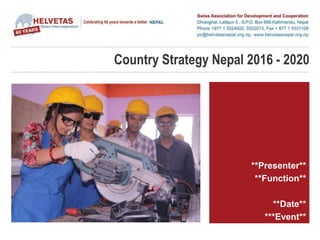
Country Strategy Nepal 2016 - 2020
**Presenter**
**Function**
**Date**
***Event**
Summary
• Covers the period 2016 to 2020
• Works towards all women and men in Nepal, especially those who
are economically poor and socially marginalized, having dignified lives.
• Aligns with sustainable development goals, government and donor
priorities
• About 15 million CHF annual budget
• Six interlinked programmes
• Project implementation, technical advisory and advocacy
• Working in all 75 districts, focusing on 13 districts in the hills and 8
districts in the Tarai
Our History
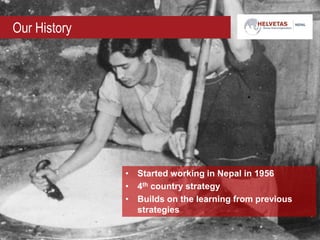
• Started working in Nepal in 1956
• 4th country strategy
• Builds on the learning from previous
strategies
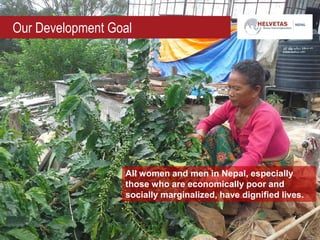
Our Development Goal
All women and men in Nepal, especially
those who are economically poor and
socially marginalized, have dignified lives.
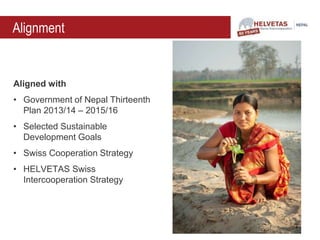
Alignment
Aligned with
• Government of Nepal Thirteenth
Plan 2013/14 – 2015/16
• Selected Sustainable
Development Goals
• Swiss Cooperation Strategy
• HELVETAS Swiss
Intercooperation Strategy
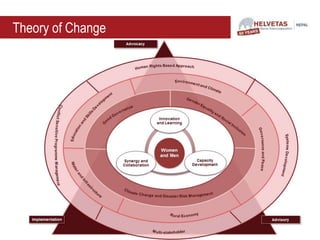
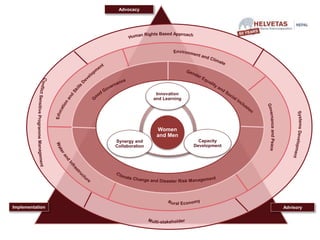
Theory of Change
Advocacy
Implementation Advisory
Innovation
and Learning
Capacity
Development
Synergy and
Collaboration
Women
and Men
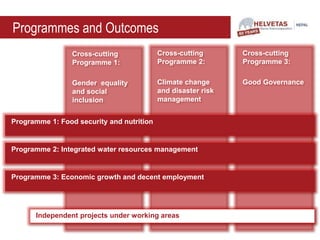
Programmes and Outcomes
Cross-cutting
Programme 2:
Climate change
and disaster risk
management
Cross-cutting
Programme 1:
Gender equality
and social
inclusion
Cross-cutting
Programme 3:
Good Governance
Programme 1: Food security and nutrition
Programme 2: Integrated water resources management
Programme 3: Economic growth and decent employment
Independent projects under working areas
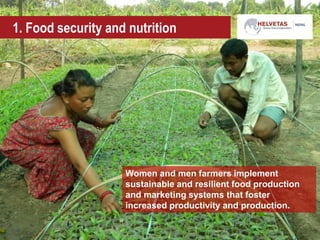
1. Food security and nutrition
Women and men farmers implement
sustainable and resilient food production
and marketing systems that foster
increased productivity and production.
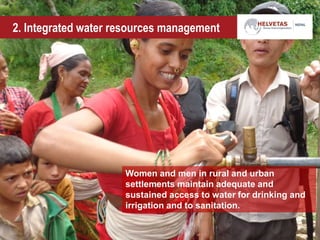
2. Integrated water resources management
Women and men in rural and urban
settlements maintain adequate and
sustained access to water for drinking and
irrigation and to sanitation.
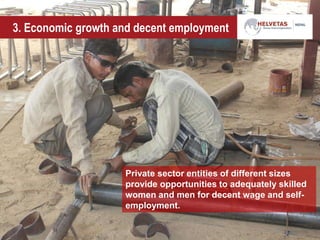
3. Economic growth and decent employment
Private sector entities of different sizes
provide opportunities to adequately skilled
women and men for decent wage and self-
employment.
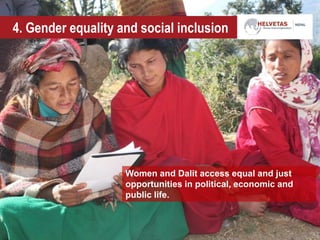
4. Gender equality and social inclusion
Women and Dalit access equal and just
opportunities in political, economic and
public life.
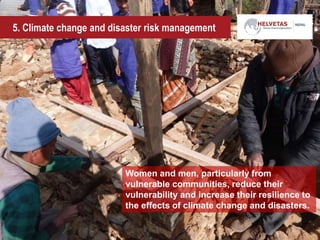
5. Climate change and disaster risk management
Women and men, particularly from
vulnerable communities, reduce their
vulnerability and increase their resilience to
the effects of climate change and disasters.
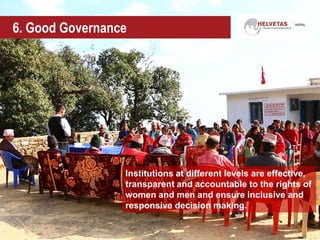
6. Good Governance
Institutions at different levels are effective,
transparent and accountable to the rights of
women and men and ensure inclusive and
responsive decision making.
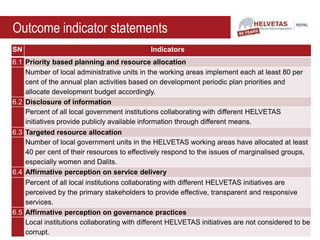
Outcome indicator statements
SN Indicators
6.1 Priority based planning and resource allocation
Number of local administrative units in the working areas implement each at least 80 per
cent of the annual plan activities based on development periodic plan priorities and
allocate development budget accordingly.
6.2 Disclosure of information
Percent of all local government institutions collaborating with different HELVETAS
initiatives provide publicly available information through different means.
6.3 Targeted resource allocation
Number of local government units in the HELVETAS working areas have allocated at least
40 per cent of their resources to effectively respond to the issues of marginalised groups,
especially women and Dalits.
6.4 Affirmative perception on service delivery
Percent of all local institutions collaborating with different HELVETAS initiatives are
perceived by the primary stakeholders to provide effective, transparent and responsive
services.
6.5 Affirmative perception on governance practices
Local institutions collaborating with different HELVETAS initiatives are not considered to be
corrupt.
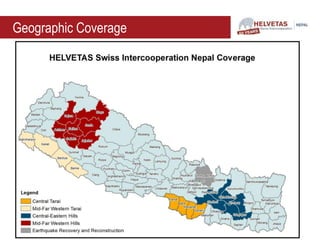
Geographic Coverage
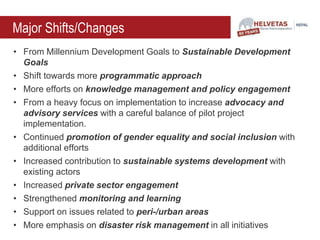
Major Shifts/Changes
• From Millennium Development Goals to Sustainable Development
Goals
• Shift towards more programmatic approach
• More efforts on knowledge management and policy engagement
• From a heavy focus on implementation to increase advocacy and
advisory services with a careful balance of pilot project
implementation.
• Continued promotion of gender equality and social inclusion with
additional efforts
• Increased contribution to sustainable systems development with
existing actors
• Increased private sector engagement
• Strengthened monitoring and learning
• Support on issues related to peri-/urban areas
• More emphasis on disaster risk management in all initiatives
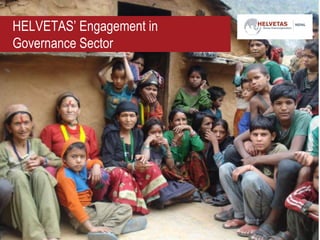
HELVETAS’ Engagement in
Governance Sector
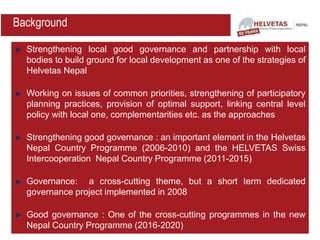
Strengthening local good governance and partnership with local
bodies to build ground for local development as one of the strategies of
Helvetas Nepal
Working on issues of common priorities, strengthening of participatory
planning practices, provision of optimal support, linking central level
policy with local one, complementarities etc. as the approaches
Strengthening good governance : an important element in the Helvetas
Nepal Country Programme (2006-2010) and the HELVETAS Swiss
Intercooperation Nepal Country Programme (2011-2015)
Governance: a cross-cutting theme, but a short term dedicated
governance project implemented in 2008
Good governance : One of the cross-cutting programmes in the new
Nepal Country Programme (2016-2020)
Background
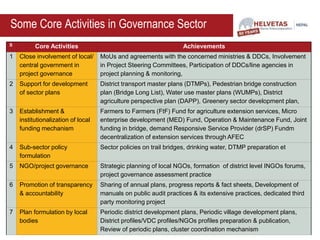
Some Core Activities in Governance Sector
S Core Activities Achievements
1 Close involvement of local/
central government in
project governance
MoUs and agreements with the concerned ministries & DDCs, Involvement
in Project Steering Committees, Participation of DDCs/line agencies in
project planning & monitoring,
2 Support for development
of sector plans
District transport master plans (DTMPs), Pedestrian bridge construction
plan (Bridge Long List), Water use master plans (WUMPs), District
agriculture perspective plan (DAPP), Greenery sector development plan,
3 Establishment &
institutionalization of local
funding mechanism
Farmers to Farmers (FtF) Fund for agriculture extension services, Micro
enterprise development (MED) Fund, Operation & Maintenance Fund, Joint
funding in bridge, demand Responsive Service Provider (drSP) Fundm
decentralization of extension services through AFEC
4 Sub-sector policy
formulation
Sector policies on trail bridges, drinking water, DTMP preparation et
5 NGO/project governance Strategic planning of local NGOs, formation of district level INGOs forums,
project governance assessment practice
6 Promotion of transparency
& accountability
Sharing of annual plans, progress reports & fact sheets, Development of
manuals on public audit practices & its extensive practices, dedicated third
party monitoring project
7 Plan formulation by local
bodies
Periodic district development plans, Periodic village development plans,
District profiles/VDC profiles/NGOs profiles preparation & publication,
Review of periodic plans, cluster coordination mechanism
Thank you!

Country strategy+governance

  • 1.
    Country Strategy Nepal2016 - 2020 **Presenter** **Function** **Date** ***Event**
  • 2.
    Summary • Covers theperiod 2016 to 2020 • Works towards all women and men in Nepal, especially those who are economically poor and socially marginalized, having dignified lives. • Aligns with sustainable development goals, government and donor priorities • About 15 million CHF annual budget • Six interlinked programmes • Project implementation, technical advisory and advocacy • Working in all 75 districts, focusing on 13 districts in the hills and 8 districts in the Tarai
  • 3.
    Our History • Startedworking in Nepal in 1956 • 4th country strategy • Builds on the learning from previous strategies
  • 4.
    Our Development Goal Allwomen and men in Nepal, especially those who are economically poor and socially marginalized, have dignified lives.
  • 5.
    Alignment Aligned with • Governmentof Nepal Thirteenth Plan 2013/14 – 2015/16 • Selected Sustainable Development Goals • Swiss Cooperation Strategy • HELVETAS Swiss Intercooperation Strategy
  • 6.
  • 7.
  • 8.
    Programmes and Outcomes Cross-cutting Programme2: Climate change and disaster risk management Cross-cutting Programme 1: Gender equality and social inclusion Cross-cutting Programme 3: Good Governance Programme 1: Food security and nutrition Programme 2: Integrated water resources management Programme 3: Economic growth and decent employment Independent projects under working areas
  • 9.
    1. Food securityand nutrition Women and men farmers implement sustainable and resilient food production and marketing systems that foster increased productivity and production.
  • 10.
    2. Integrated waterresources management Women and men in rural and urban settlements maintain adequate and sustained access to water for drinking and irrigation and to sanitation.
  • 11.
    3. Economic growthand decent employment Private sector entities of different sizes provide opportunities to adequately skilled women and men for decent wage and self- employment.
  • 12.
    4. Gender equalityand social inclusion Women and Dalit access equal and just opportunities in political, economic and public life.
  • 13.
    5. Climate changeand disaster risk management Women and men, particularly from vulnerable communities, reduce their vulnerability and increase their resilience to the effects of climate change and disasters.
  • 14.
    6. Good Governance Institutionsat different levels are effective, transparent and accountable to the rights of women and men and ensure inclusive and responsive decision making.
  • 15.
    Outcome indicator statements SNIndicators 6.1 Priority based planning and resource allocation Number of local administrative units in the working areas implement each at least 80 per cent of the annual plan activities based on development periodic plan priorities and allocate development budget accordingly. 6.2 Disclosure of information Percent of all local government institutions collaborating with different HELVETAS initiatives provide publicly available information through different means. 6.3 Targeted resource allocation Number of local government units in the HELVETAS working areas have allocated at least 40 per cent of their resources to effectively respond to the issues of marginalised groups, especially women and Dalits. 6.4 Affirmative perception on service delivery Percent of all local institutions collaborating with different HELVETAS initiatives are perceived by the primary stakeholders to provide effective, transparent and responsive services. 6.5 Affirmative perception on governance practices Local institutions collaborating with different HELVETAS initiatives are not considered to be corrupt.
  • 16.
  • 17.
    Major Shifts/Changes • FromMillennium Development Goals to Sustainable Development Goals • Shift towards more programmatic approach • More efforts on knowledge management and policy engagement • From a heavy focus on implementation to increase advocacy and advisory services with a careful balance of pilot project implementation. • Continued promotion of gender equality and social inclusion with additional efforts • Increased contribution to sustainable systems development with existing actors • Increased private sector engagement • Strengthened monitoring and learning • Support on issues related to peri-/urban areas • More emphasis on disaster risk management in all initiatives
  • 18.
  • 19.
    Strengthening local goodgovernance and partnership with local bodies to build ground for local development as one of the strategies of Helvetas Nepal Working on issues of common priorities, strengthening of participatory planning practices, provision of optimal support, linking central level policy with local one, complementarities etc. as the approaches Strengthening good governance : an important element in the Helvetas Nepal Country Programme (2006-2010) and the HELVETAS Swiss Intercooperation Nepal Country Programme (2011-2015) Governance: a cross-cutting theme, but a short term dedicated governance project implemented in 2008 Good governance : One of the cross-cutting programmes in the new Nepal Country Programme (2016-2020) Background
  • 20.
    Some Core Activitiesin Governance Sector S Core Activities Achievements 1 Close involvement of local/ central government in project governance MoUs and agreements with the concerned ministries & DDCs, Involvement in Project Steering Committees, Participation of DDCs/line agencies in project planning & monitoring, 2 Support for development of sector plans District transport master plans (DTMPs), Pedestrian bridge construction plan (Bridge Long List), Water use master plans (WUMPs), District agriculture perspective plan (DAPP), Greenery sector development plan, 3 Establishment & institutionalization of local funding mechanism Farmers to Farmers (FtF) Fund for agriculture extension services, Micro enterprise development (MED) Fund, Operation & Maintenance Fund, Joint funding in bridge, demand Responsive Service Provider (drSP) Fundm decentralization of extension services through AFEC 4 Sub-sector policy formulation Sector policies on trail bridges, drinking water, DTMP preparation et 5 NGO/project governance Strategic planning of local NGOs, formation of district level INGOs forums, project governance assessment practice 6 Promotion of transparency & accountability Sharing of annual plans, progress reports & fact sheets, Development of manuals on public audit practices & its extensive practices, dedicated third party monitoring project 7 Plan formulation by local bodies Periodic district development plans, Periodic village development plans, District profiles/VDC profiles/NGOs profiles preparation & publication, Review of periodic plans, cluster coordination mechanism
  • 21.