AN IN DEPTH ANALYSIS OF PROBLEMS
IN IMPLETATION OF COST CONTROL
MEASURES IN CONSTRUCTION FIRM
PRESENTED BY :
ASHUTOSH THOMBARE (213011)
ANATA KSHIRSAGAR (213050)
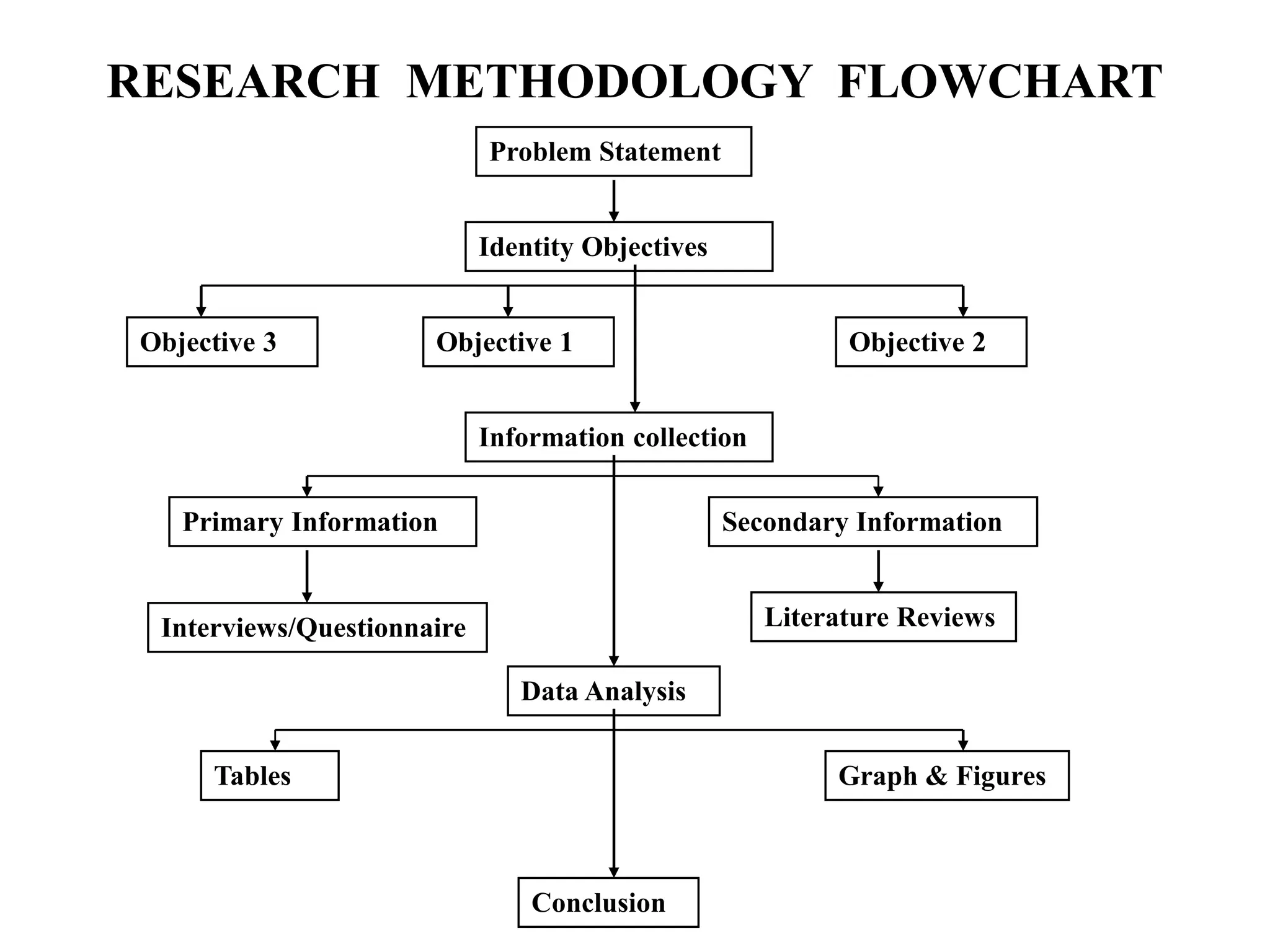
RESEARCH METHODOLOGY FLOWCHART
Problem Statement
Identity Objectives
Objective 1
Objective 3 Objective 2
Information collection
Primary Information Secondary Information
Interviews/Questionnaire Literature Reviews
Data Analysis
Tables Graph & Figures
Conclusion
IMPORTANCE OF COST CONTROL
 Cost control of a project involves the measuring and collecting the cost
record of a project and the work progress
 It also involves the comparison of actual progress with the planning
 The main objective of cost control of a project is to gain the maximum
profit within the designated period and satisfactory quality of work
STATEMENT OF PROBLEM
 A brief interview with a contractor found out that they
faced problem in carrying out the cost control system
 Study is carried out to know how is the situation of
cost control system in the site of construction project
OBJECTIVES 0F STUDY
 To study the cost control method in a construction
project
 To identify the cost control method frequently used by
contractor during the construction stage
 To identify the main problem faced by the contractor in
controlling the costs on site
SCOPE OF STUDY
 The study is carried out for construction firms and
involves the contractor.
 The study only covers cost control during the
construction phase and not in bidding and design
phase.
INTERVIEWS / QUESTIONAIRE
 Interviews with experienced personnel from the construction company
to collect the information and perspectives regarding the aspects in the
objectives of the research.
 The questionnaire are all categorized as below:
a) Respondents information
b) General information about the cost control
c) Purpose, principle, philosophy and objectives of the cost control
d) Weakness/Mistakes
FACT IN COST CONTROL
 According to Nunnally (1998), cost control of a project involves the
measuring and collecting the cost record of a project and the work
progress. It also involves the comparison of actual progress with the
planning.
 Mueller (1986) states that the cost control is the ability to influence
the final cost of project positively with modifying negative
performance trends.
 Neale (1984) states the main purpose in cost controlling for a
construction project should be active controlling of final costs for
owner, and not just to record and registering the payment.
AIM OF THE COST CONTROL
 a) To give the building client good value for money.
 b) To achieved a balanced and logical distribution of the
available funds.
 C) To keep total expenditure within the amount agreed
by the client.
COST CONTROL METHODS
 Three types of cost control system:
1. Comparison with a cost standard method.
2. Subdivision by detail method.
3. By integration with other functions method.
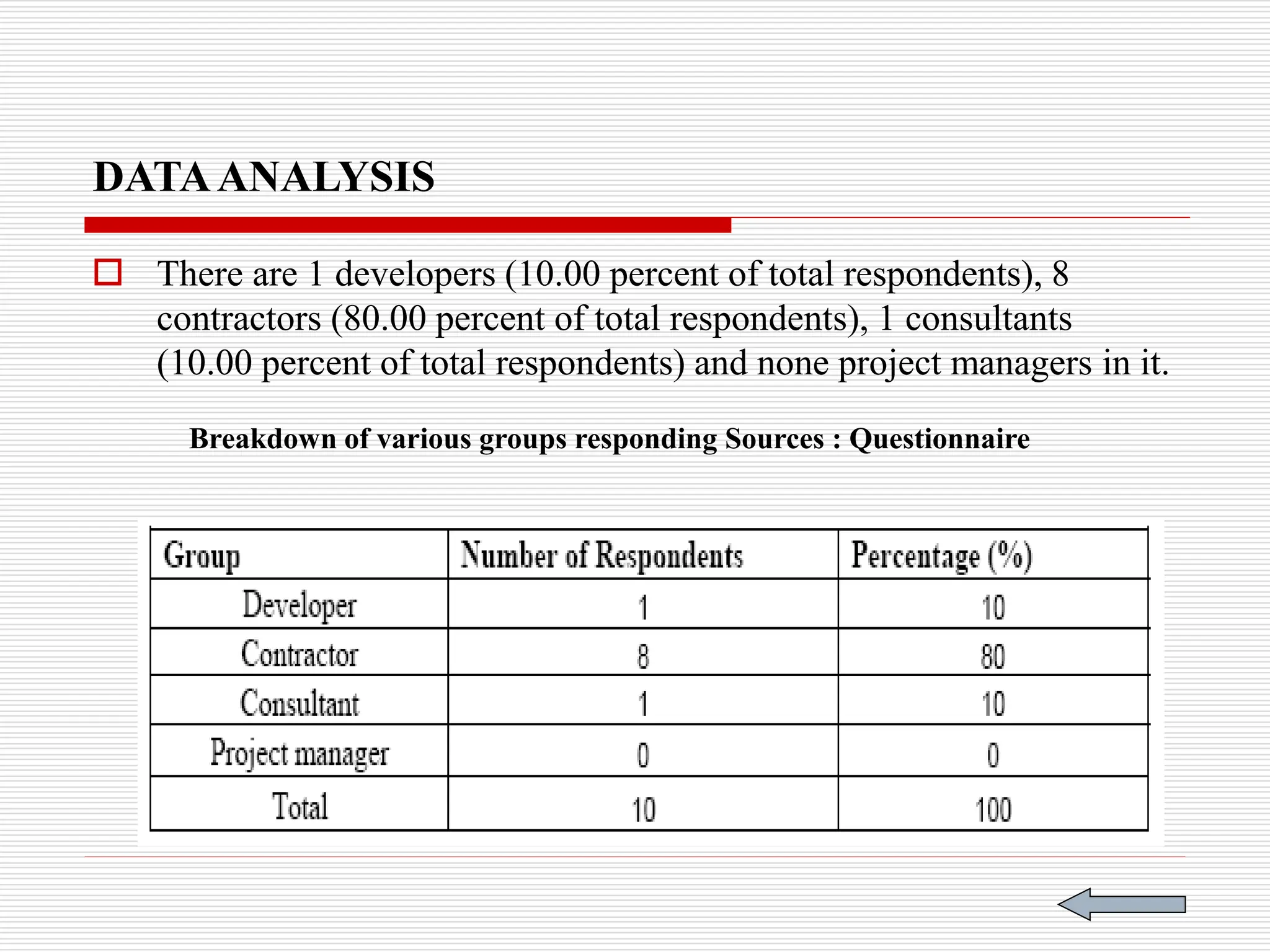
DATAANALYSIS
 There are 1 developers (10.00 percent of total respondents), 8
contractors (80.00 percent of total respondents), 1 consultants
(10.00 percent of total respondents) and none project managers in it.
Breakdown of various groups responding Sources : Questionnaire
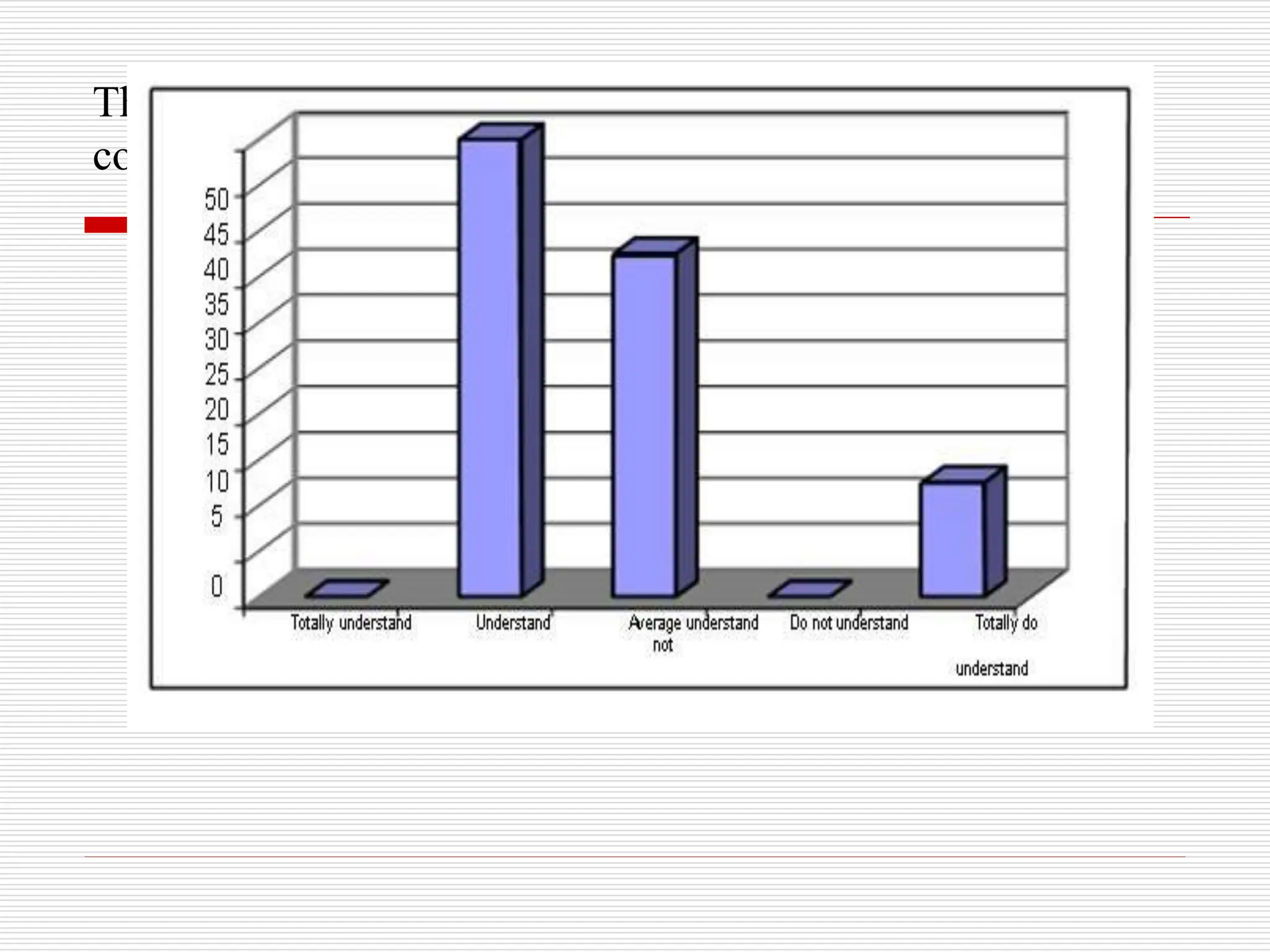
The percentages of the understanding of contractors about
cost control system in construction
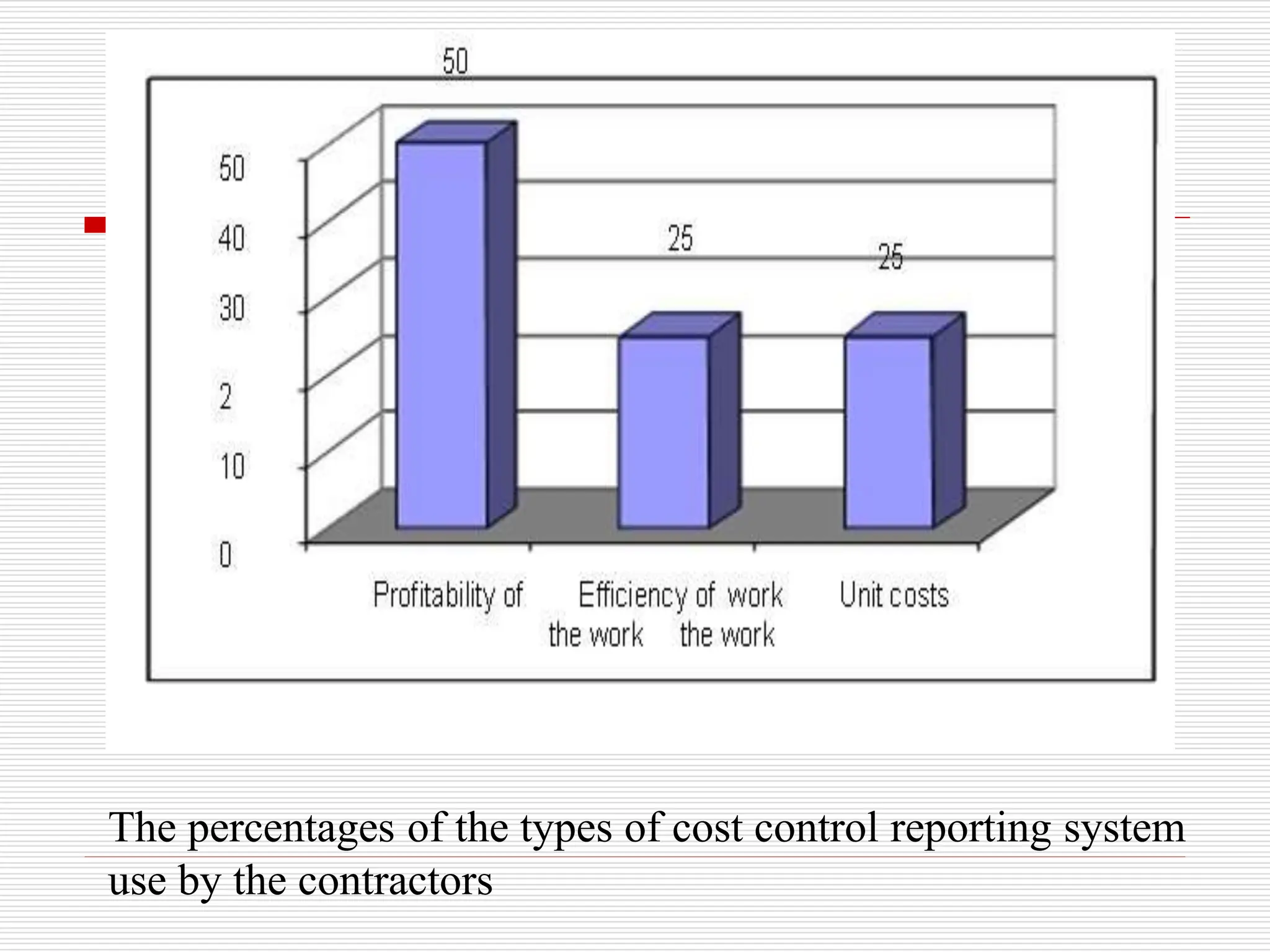
The percentages of the types of cost control reporting system
use by the contractors
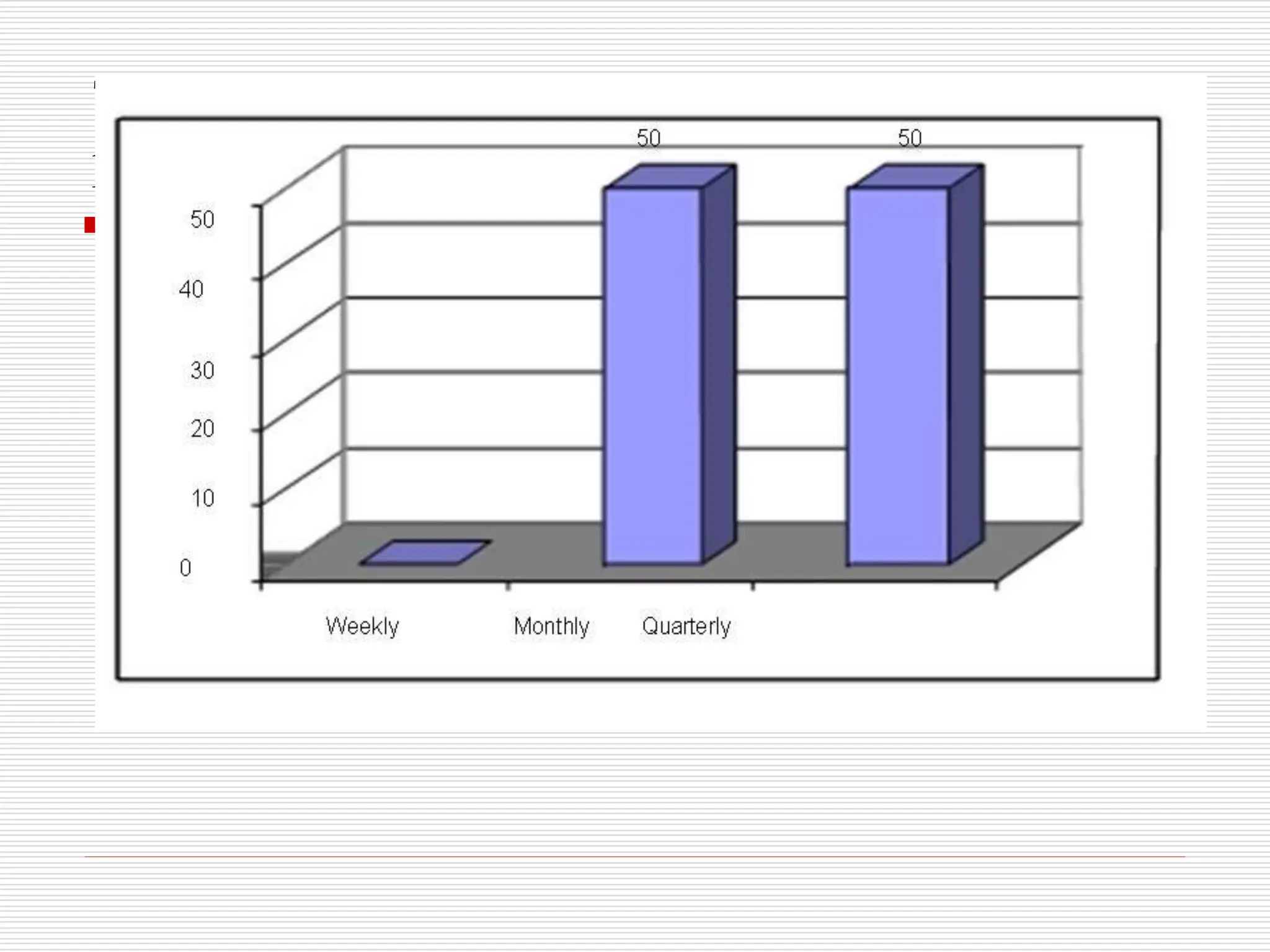
The percentages of the interval time contractors
prepare their cost reports
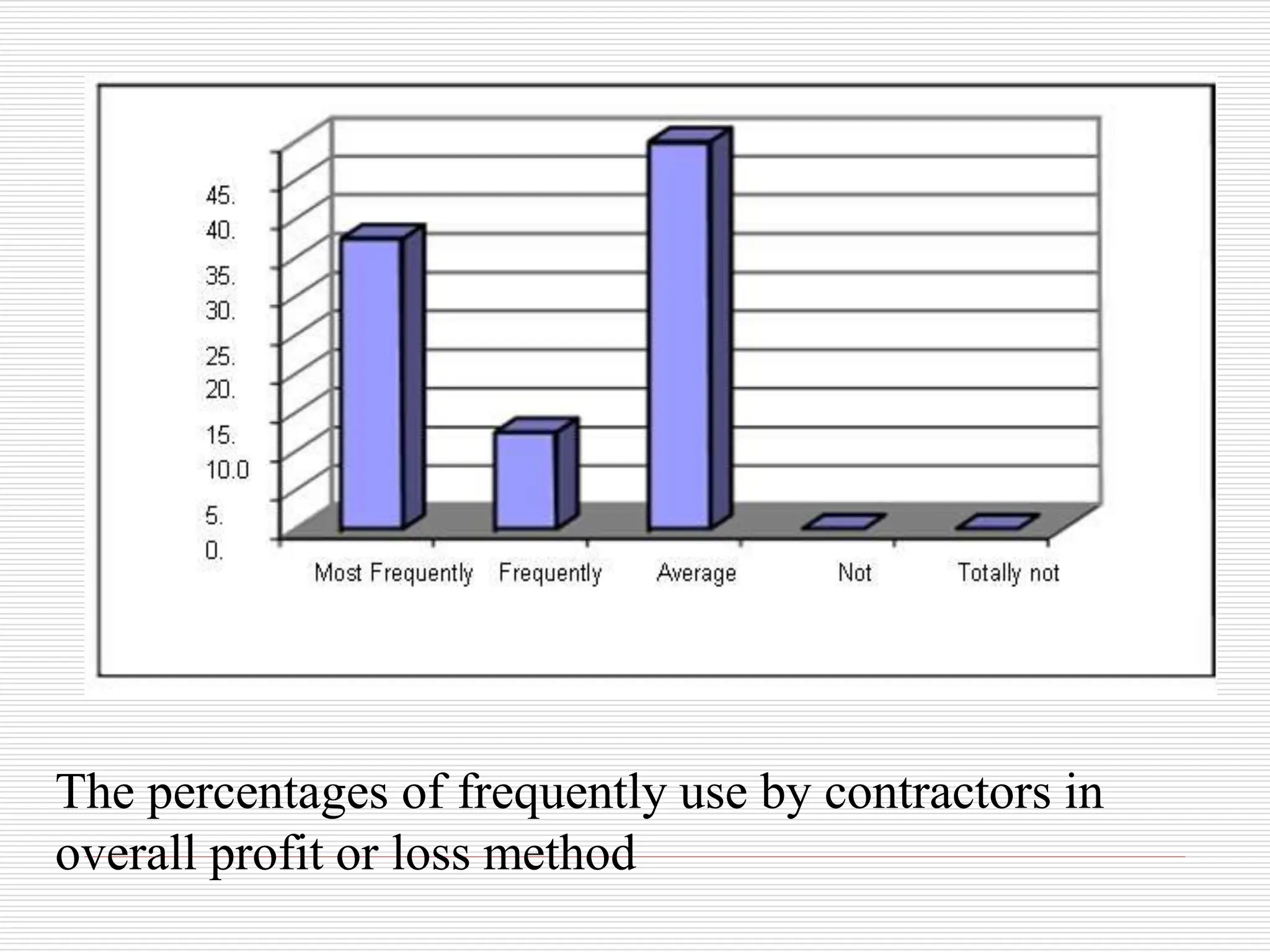
The percentages of frequently use by contractors in
overall profit or loss method
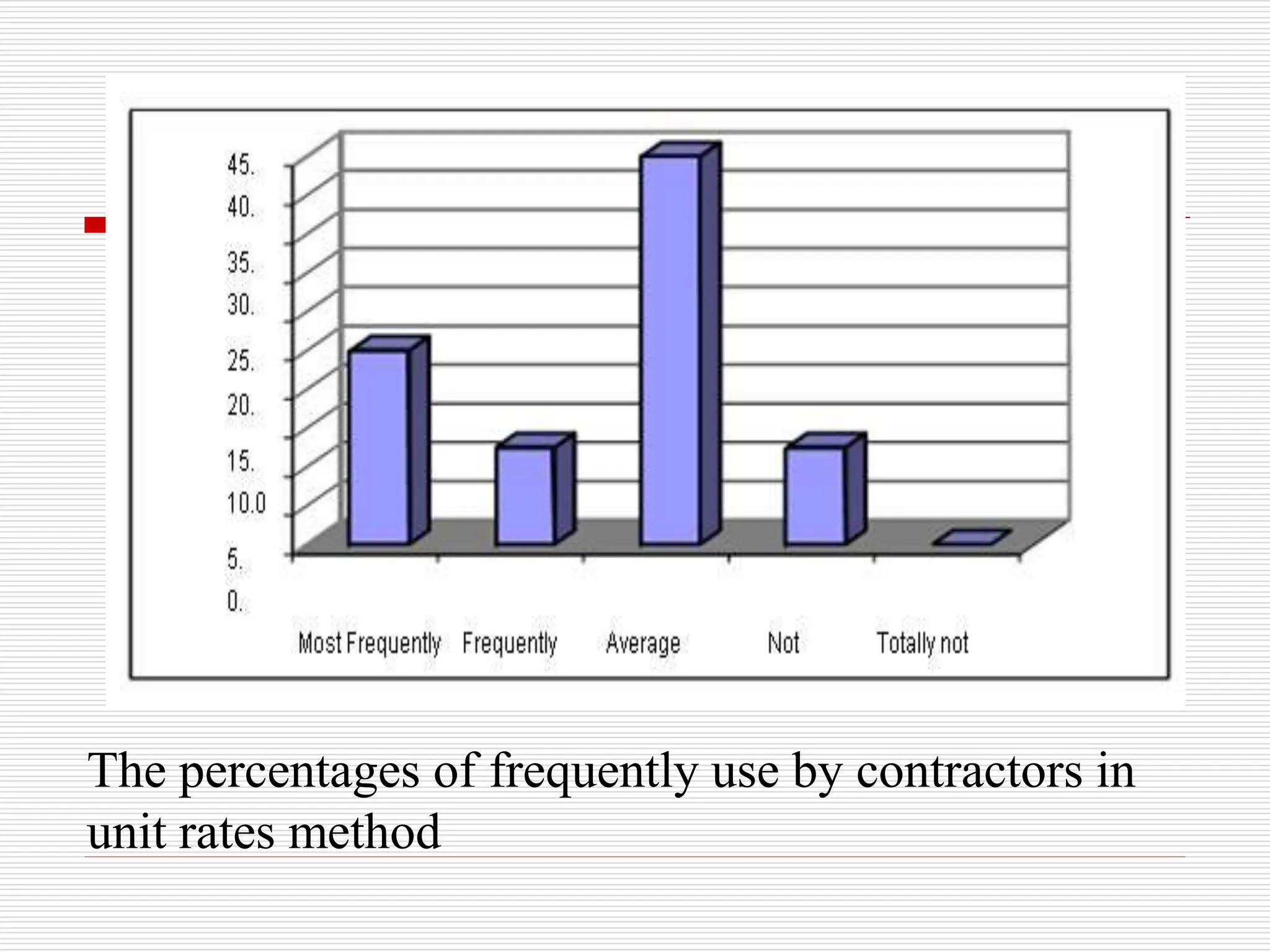
The percentages of frequently use by contractors in
unit rates method
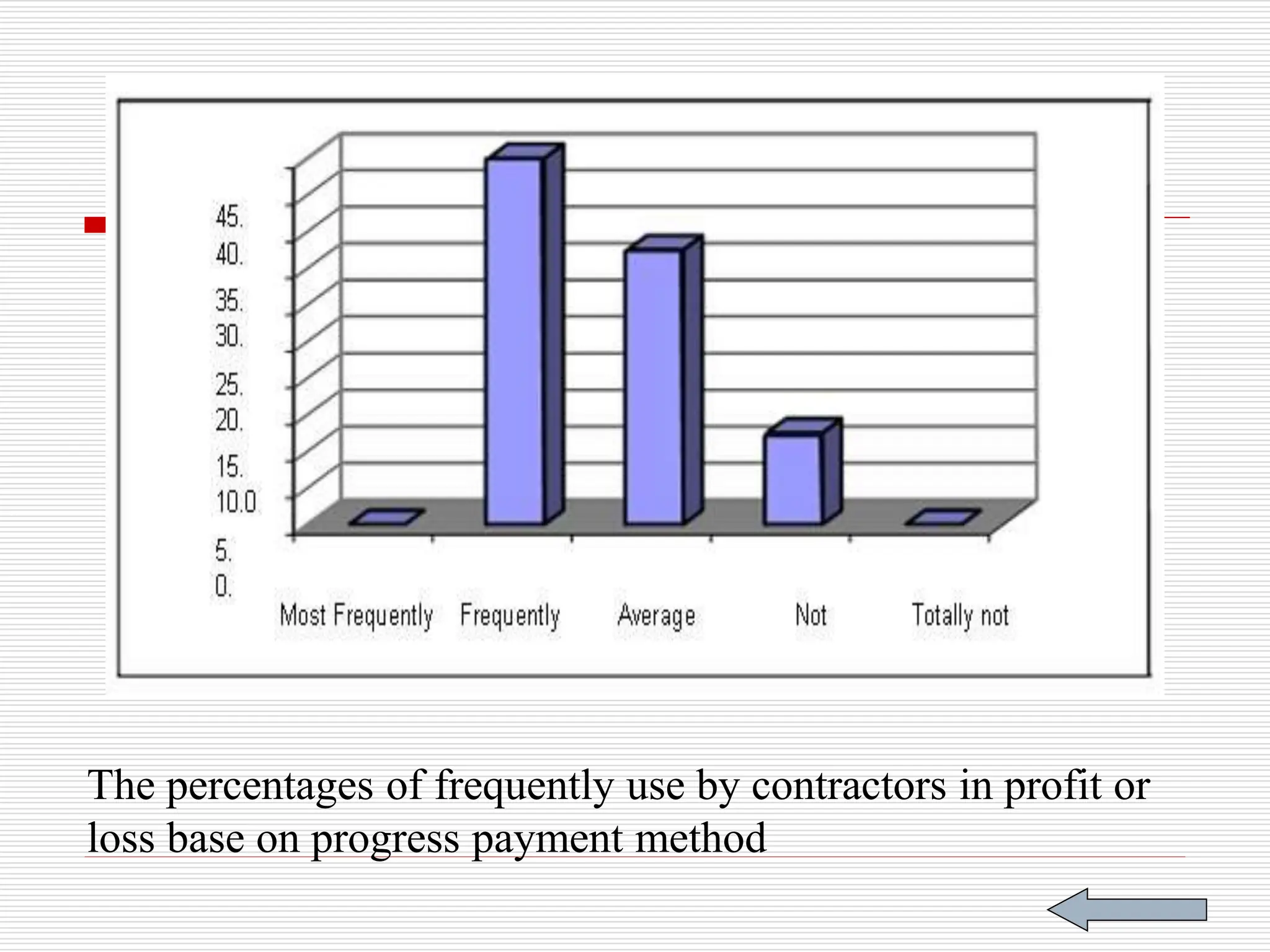
The percentages of frequently use by contractors in profit or
loss base on progress payment method
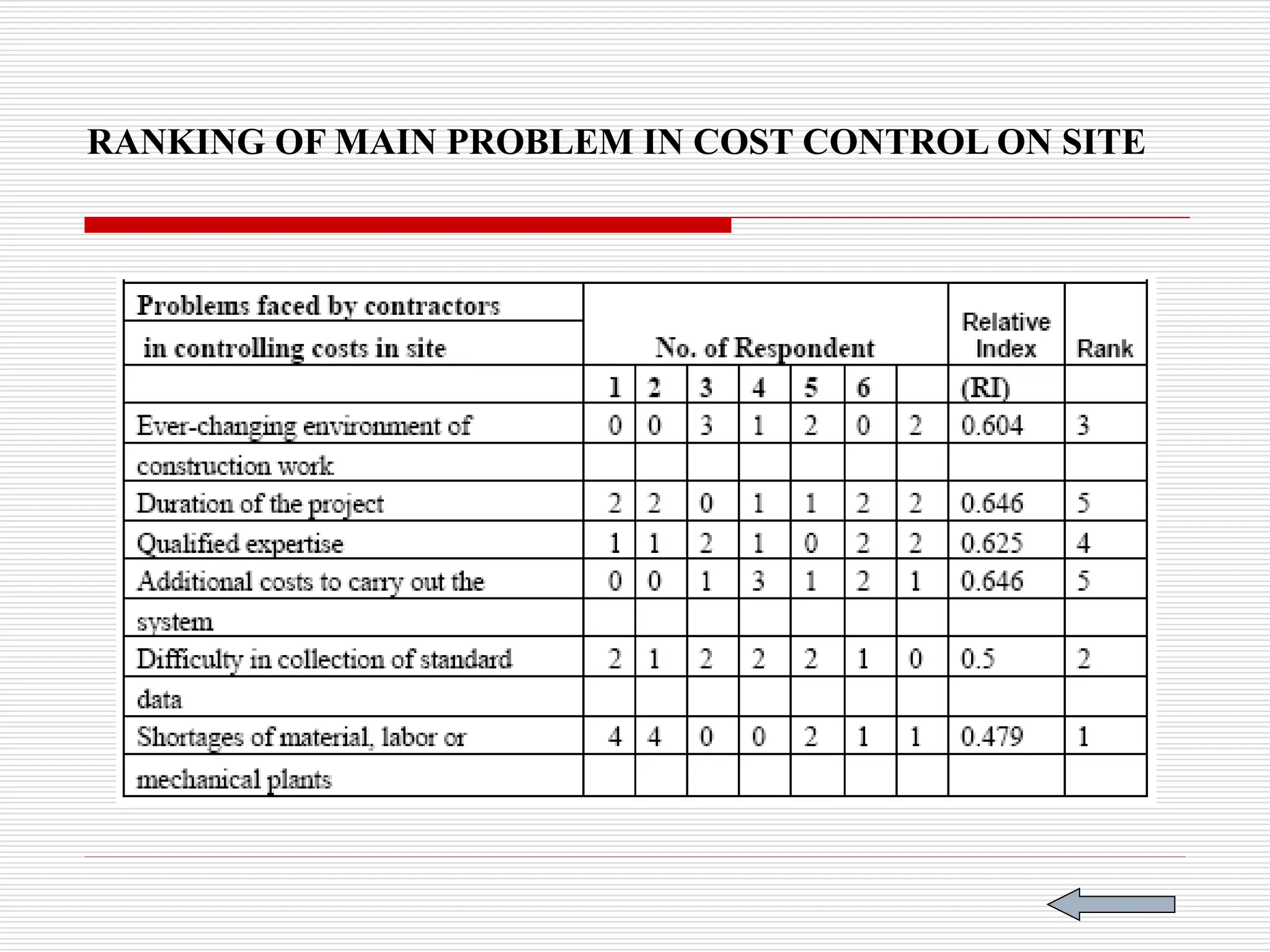
RANKING OF MAIN PROBLEM IN COST CONTROL ON SITE
OUTCOME
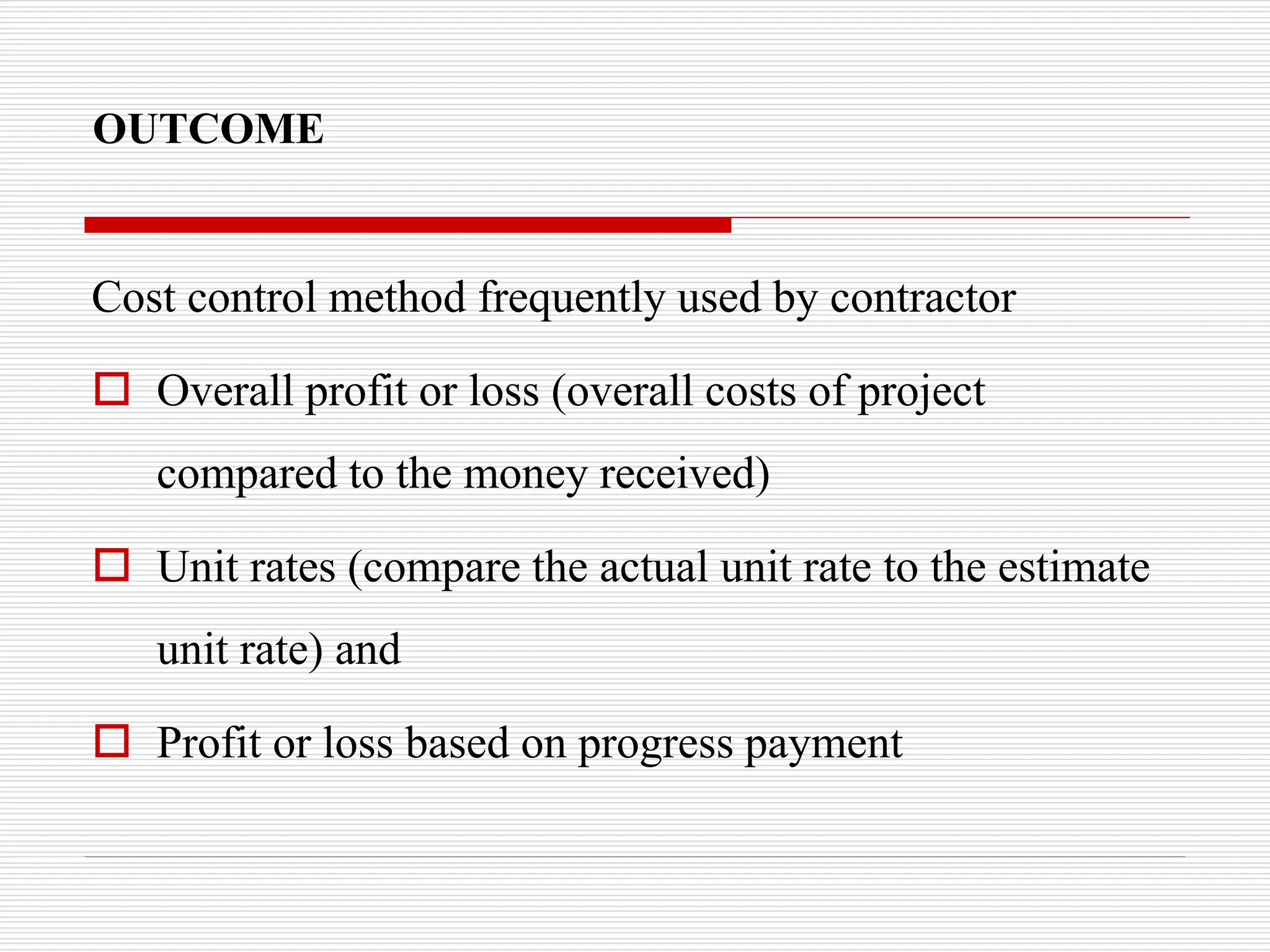
Cost control method frequently used by contractor
 Overall profit or loss (overall costs of project
compared to the money received)
 Unit rates (compare the actual unit rate to the estimate
unit rate) and
 Profit or loss based on progress payment
OUTCOME
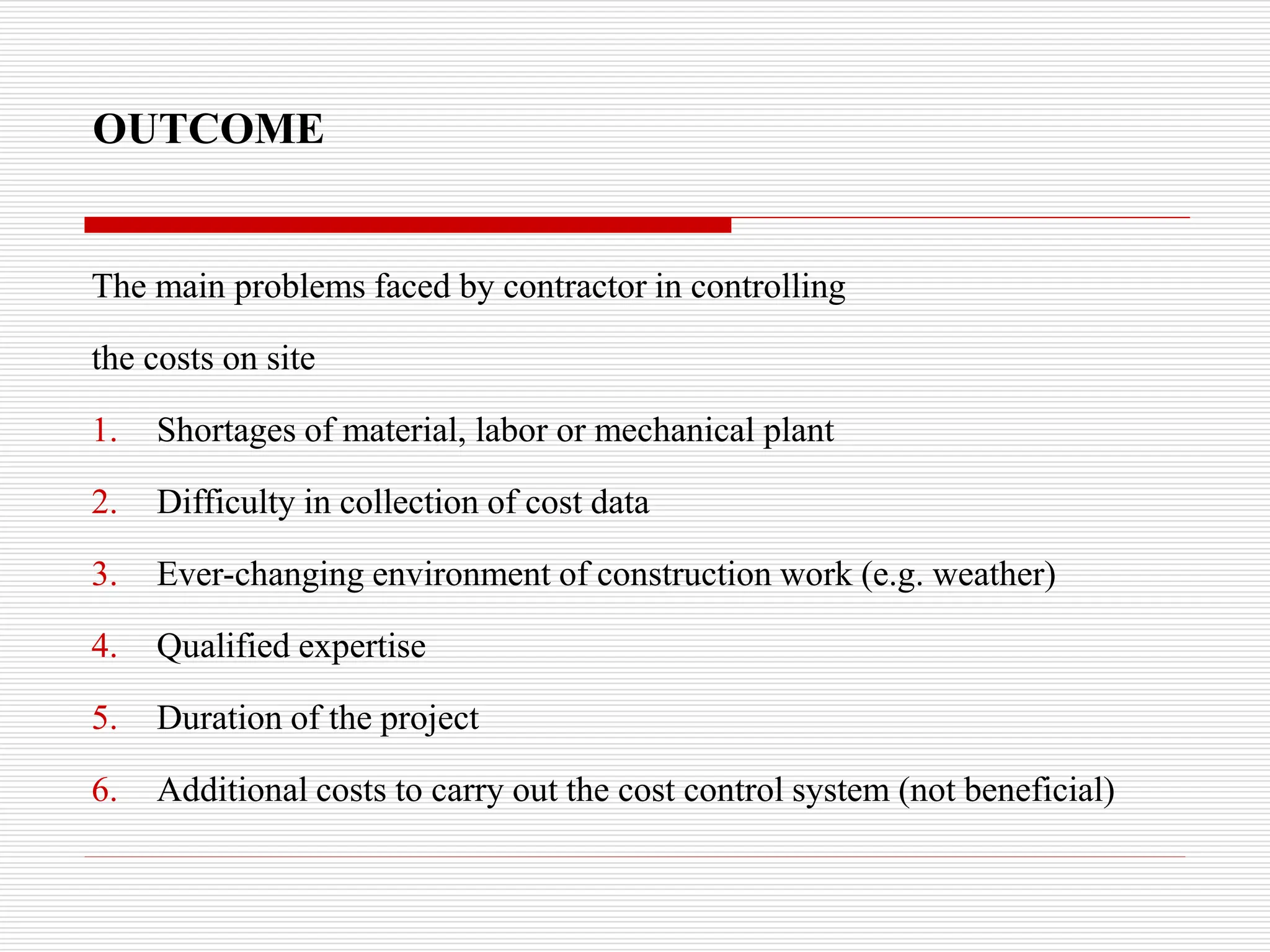
The main problems faced by contractor in controlling
the costs on site
1. Shortages of material, labor or mechanical plant
2. Difficulty in collection of cost data
3. Ever-changing environment of construction work (e.g. weather)
4. Qualified expertise
5. Duration of the project
6. Additional costs to carry out the cost control system (not beneficial)
SUGGESTIONS
 Overall study reveals that the contractor emphasis on cost controlling
measures where much less. Contractors have to focus on cost control
along with timely completion as well as quality of work
 Along with planning and schedule of activities of the entire project,
resource planning should also be done equally well. Scheduling of
activities will not just help the project to get complete on time but
necessary resources required for execution of all activities should be
planned well in advanced.
SUGGESTIONS (Contd)
 Progress of the project is mostly tracked in percentage of work done.
Equally progress of the project should done in term of cost
i)Budgeted cost of work done
ii) Actual cost of work done
iii) Scheduled cost of work done
 Progress of the project on this parameters help to know whether the
project progress is in desired direction or not.
SUGGESTIONS (Contd)
 The contractor should have well knowledge planning expertise
personnel’s who should be well versed in scheduling and planning
of actitivities and their respective resources, tracking the progress of
the project, and should be enough to counter adverse condition.
 The time interval of reporting cost control measures should be
adequately less so that there will time to implement controlling
measures if there is divergence in progress of project in term of cost.
SUGGESTIONS (Contd)
 Cost control tracking should be braced up at site level and not only
at managerial level. The site engineer should be trained and should
be made well versed in evaluating the daily progress in term of cost
of work.
SCOPE OF FUTURE STUDY
 Cost reductions techniques during pre construction
stages, i.e., during the design of the project the entire
design should be as such it results in cost control
 This study covers implementations of cost control
measure only to be adopted during construction stage.
Hence there is a scope of cost control technique during
pre construction stage
SCOPE OF FUTURE STUDY (Contd)
 Study of cost control measures that should be adopted
by consultants, designer, developers and infrastructure
firms
 Development of implementation tools / analytical tools
for individual construction firm with internal and
external analysis with reference to above study
THANK YOU
Cost Control Problems observed in construction project.

Cost Control Problems observed in construction project.

  • 1.
    AN IN DEPTHANALYSIS OF PROBLEMS IN IMPLETATION OF COST CONTROL MEASURES IN CONSTRUCTION FIRM PRESENTED BY : ASHUTOSH THOMBARE (213011) ANATA KSHIRSAGAR (213050)
  • 2.
    RESEARCH METHODOLOGY FLOWCHART ProblemStatement Identity Objectives Objective 1 Objective 3 Objective 2 Information collection Primary Information Secondary Information Interviews/Questionnaire Literature Reviews Data Analysis Tables Graph & Figures Conclusion
  • 3.
    IMPORTANCE OF COSTCONTROL  Cost control of a project involves the measuring and collecting the cost record of a project and the work progress  It also involves the comparison of actual progress with the planning  The main objective of cost control of a project is to gain the maximum profit within the designated period and satisfactory quality of work
  • 4.
    STATEMENT OF PROBLEM A brief interview with a contractor found out that they faced problem in carrying out the cost control system  Study is carried out to know how is the situation of cost control system in the site of construction project
  • 5.
    OBJECTIVES 0F STUDY To study the cost control method in a construction project  To identify the cost control method frequently used by contractor during the construction stage  To identify the main problem faced by the contractor in controlling the costs on site
  • 6.
    SCOPE OF STUDY The study is carried out for construction firms and involves the contractor.  The study only covers cost control during the construction phase and not in bidding and design phase.
  • 7.
    INTERVIEWS / QUESTIONAIRE Interviews with experienced personnel from the construction company to collect the information and perspectives regarding the aspects in the objectives of the research.  The questionnaire are all categorized as below: a) Respondents information b) General information about the cost control c) Purpose, principle, philosophy and objectives of the cost control d) Weakness/Mistakes
  • 8.
    FACT IN COSTCONTROL  According to Nunnally (1998), cost control of a project involves the measuring and collecting the cost record of a project and the work progress. It also involves the comparison of actual progress with the planning.  Mueller (1986) states that the cost control is the ability to influence the final cost of project positively with modifying negative performance trends.  Neale (1984) states the main purpose in cost controlling for a construction project should be active controlling of final costs for owner, and not just to record and registering the payment.
  • 9.
    AIM OF THECOST CONTROL  a) To give the building client good value for money.  b) To achieved a balanced and logical distribution of the available funds.  C) To keep total expenditure within the amount agreed by the client.
  • 10.
    COST CONTROL METHODS Three types of cost control system: 1. Comparison with a cost standard method. 2. Subdivision by detail method. 3. By integration with other functions method.
  • 11.
    DATAANALYSIS  There are1 developers (10.00 percent of total respondents), 8 contractors (80.00 percent of total respondents), 1 consultants (10.00 percent of total respondents) and none project managers in it. Breakdown of various groups responding Sources : Questionnaire
  • 12.
    The percentages ofthe understanding of contractors about cost control system in construction
  • 13.
    The percentages ofthe types of cost control reporting system use by the contractors
  • 14.
    The percentages ofthe interval time contractors prepare their cost reports
  • 15.
    The percentages offrequently use by contractors in overall profit or loss method
  • 16.
    The percentages offrequently use by contractors in unit rates method
  • 17.
    The percentages offrequently use by contractors in profit or loss base on progress payment method
  • 18.
    RANKING OF MAINPROBLEM IN COST CONTROL ON SITE
  • 19.
    OUTCOME Cost control methodfrequently used by contractor  Overall profit or loss (overall costs of project compared to the money received)  Unit rates (compare the actual unit rate to the estimate unit rate) and  Profit or loss based on progress payment
  • 20.
    OUTCOME The main problemsfaced by contractor in controlling the costs on site 1. Shortages of material, labor or mechanical plant 2. Difficulty in collection of cost data 3. Ever-changing environment of construction work (e.g. weather) 4. Qualified expertise 5. Duration of the project 6. Additional costs to carry out the cost control system (not beneficial)
  • 21.
    SUGGESTIONS  Overall studyreveals that the contractor emphasis on cost controlling measures where much less. Contractors have to focus on cost control along with timely completion as well as quality of work  Along with planning and schedule of activities of the entire project, resource planning should also be done equally well. Scheduling of activities will not just help the project to get complete on time but necessary resources required for execution of all activities should be planned well in advanced.
  • 22.
    SUGGESTIONS (Contd)  Progressof the project is mostly tracked in percentage of work done. Equally progress of the project should done in term of cost i)Budgeted cost of work done ii) Actual cost of work done iii) Scheduled cost of work done  Progress of the project on this parameters help to know whether the project progress is in desired direction or not.
  • 23.
    SUGGESTIONS (Contd)  Thecontractor should have well knowledge planning expertise personnel’s who should be well versed in scheduling and planning of actitivities and their respective resources, tracking the progress of the project, and should be enough to counter adverse condition.  The time interval of reporting cost control measures should be adequately less so that there will time to implement controlling measures if there is divergence in progress of project in term of cost.
  • 24.
    SUGGESTIONS (Contd)  Costcontrol tracking should be braced up at site level and not only at managerial level. The site engineer should be trained and should be made well versed in evaluating the daily progress in term of cost of work.
  • 25.
    SCOPE OF FUTURESTUDY  Cost reductions techniques during pre construction stages, i.e., during the design of the project the entire design should be as such it results in cost control  This study covers implementations of cost control measure only to be adopted during construction stage. Hence there is a scope of cost control technique during pre construction stage
  • 26.
    SCOPE OF FUTURESTUDY (Contd)  Study of cost control measures that should be adopted by consultants, designer, developers and infrastructure firms  Development of implementation tools / analytical tools for individual construction firm with internal and external analysis with reference to above study
  • 27.