Laksamee Putnamlputnam@towson.eduResearch and Instruction LibrarianCOSC 111: Finding Information Using Cook Library
Take Away…Search strategies and Search tipsFinding books: Cook Library CatalogFinding articles: DatabasesWebsite evaluatehttp://www.ted.com/talks/derek_sivers_weird_or_just_different.html
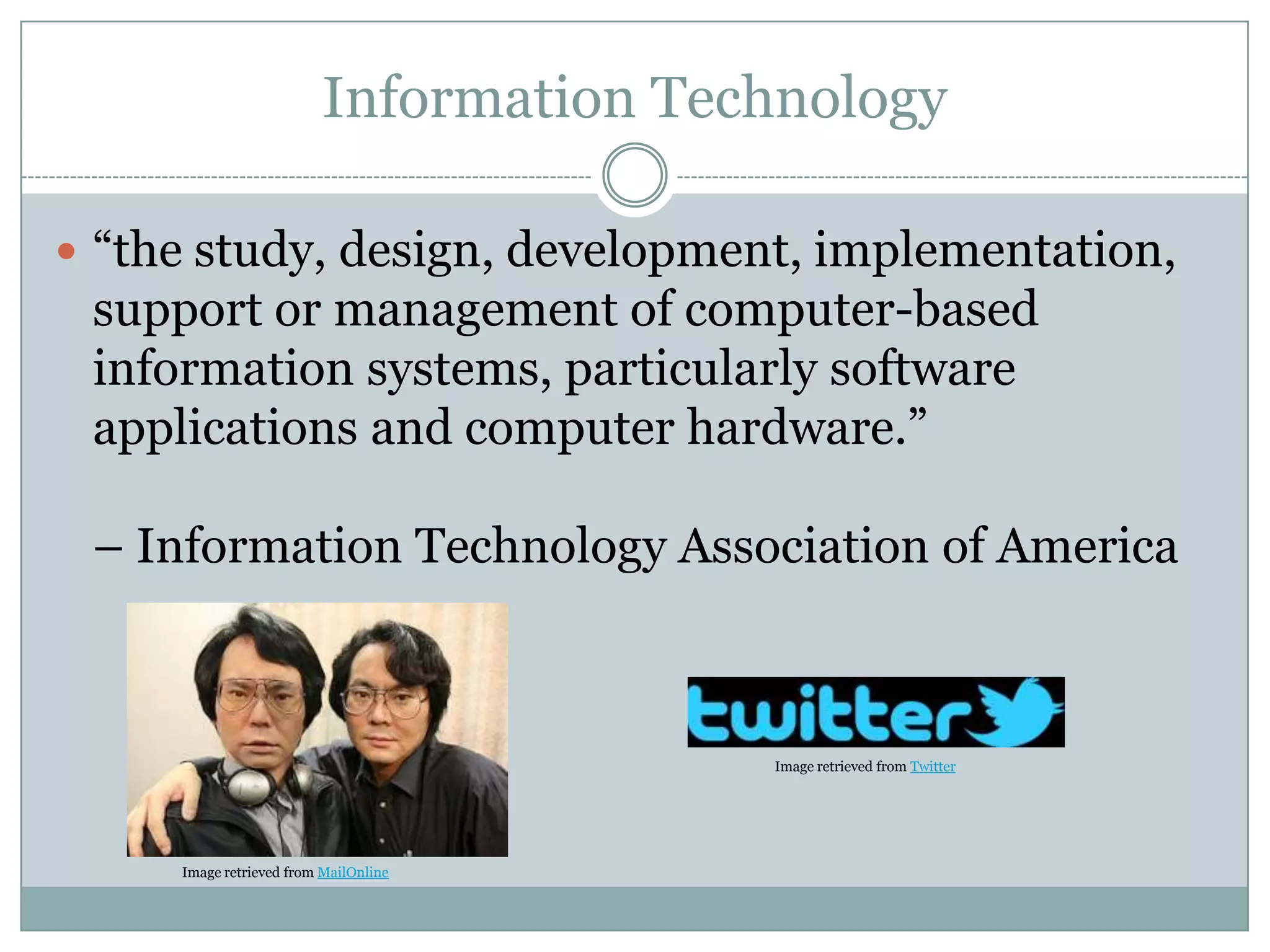
Information Technology“the study, design, development, implementation, support or management of computer-based information systems, particularly software applications and computer hardware.” – Information Technology Association of AmericaImage retrieved from TwitterImage retrieved from MailOnline
Technology BrainstormingWhat kinds of (information) technologies?Technologies used to achieve specific goalsEncourage communication or learning, etc.Targeted towards certain populationsBusiness or college students, etc.
Preparing to SearchArticulate your topicChoose important ideasBrainstormSynonymsMore specific termsBroader conceptsStrategize where to searchWhat sources of information will you need?Background informationEncyclopedias?
Search Terms & Keyword RemindersKeywords come from the search questionUse broader terms/concepts when looking for BOOKS.Use narrower terms when looking for ARTICLES.
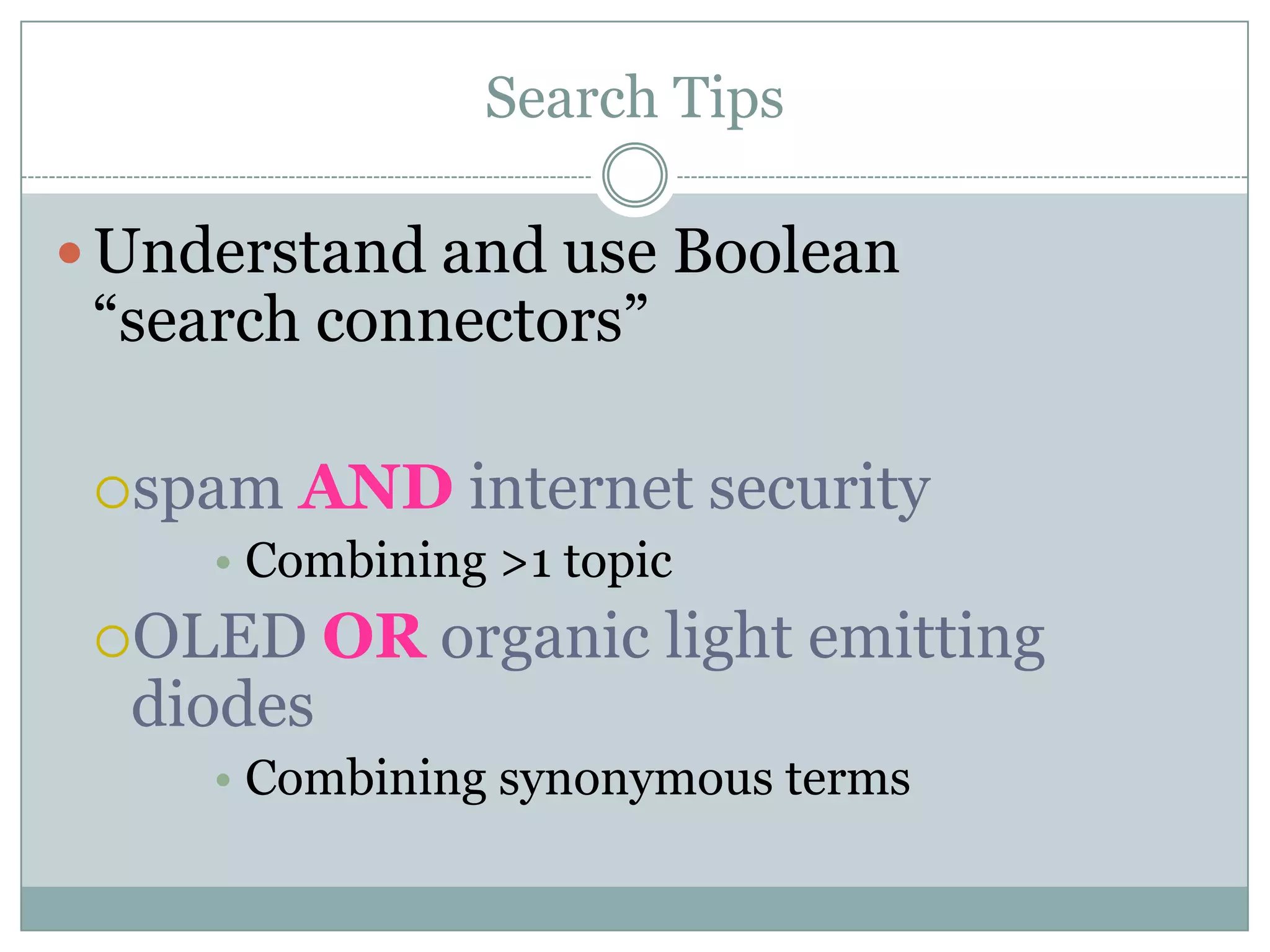
Search TipsUnderstand and use Boolean “search connectors”spam AND internet securityCombining >1 topicOLED OR organic light emitting diodesCombining synonymous terms
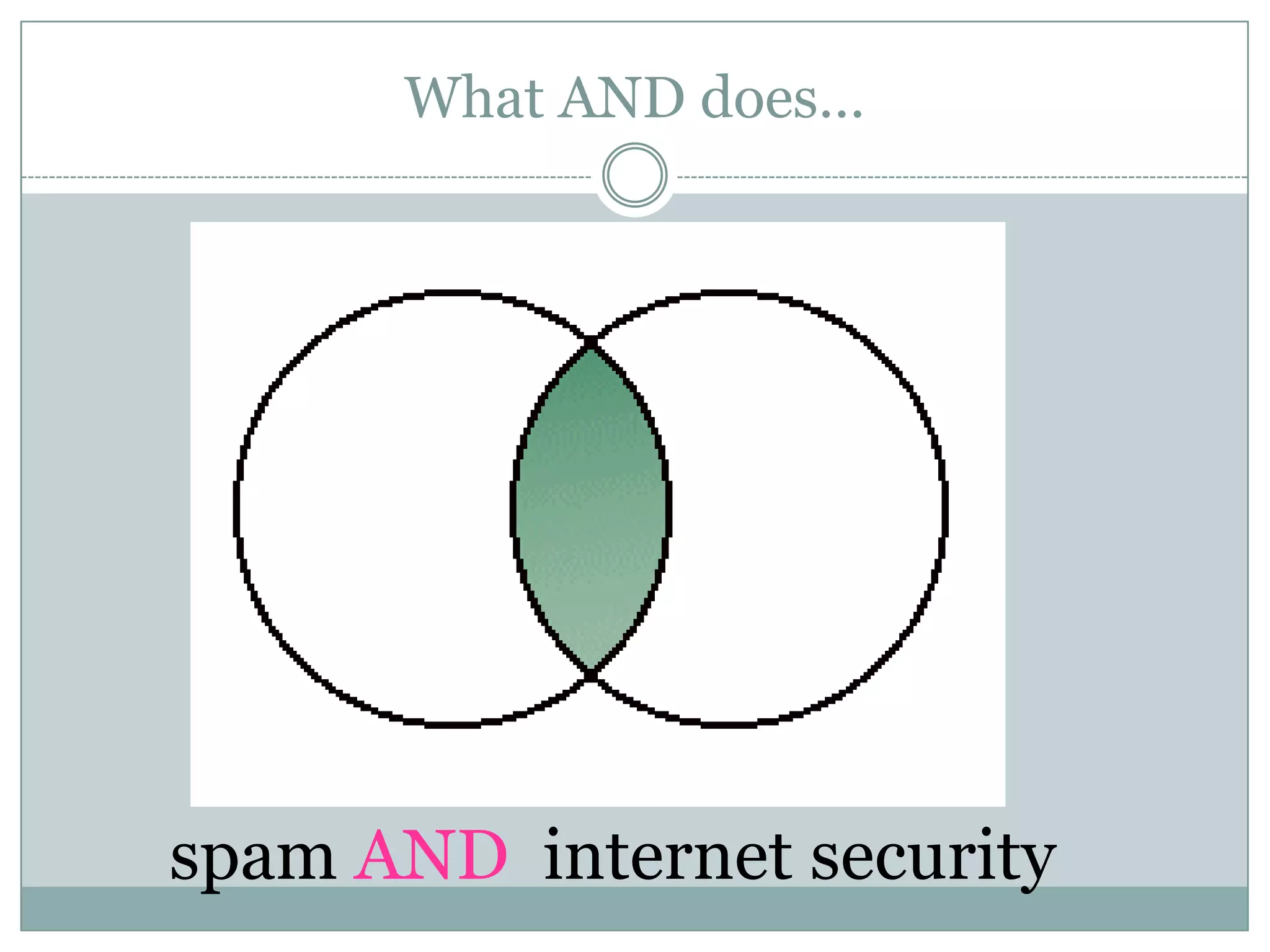
What AND does…spam AND  internet security
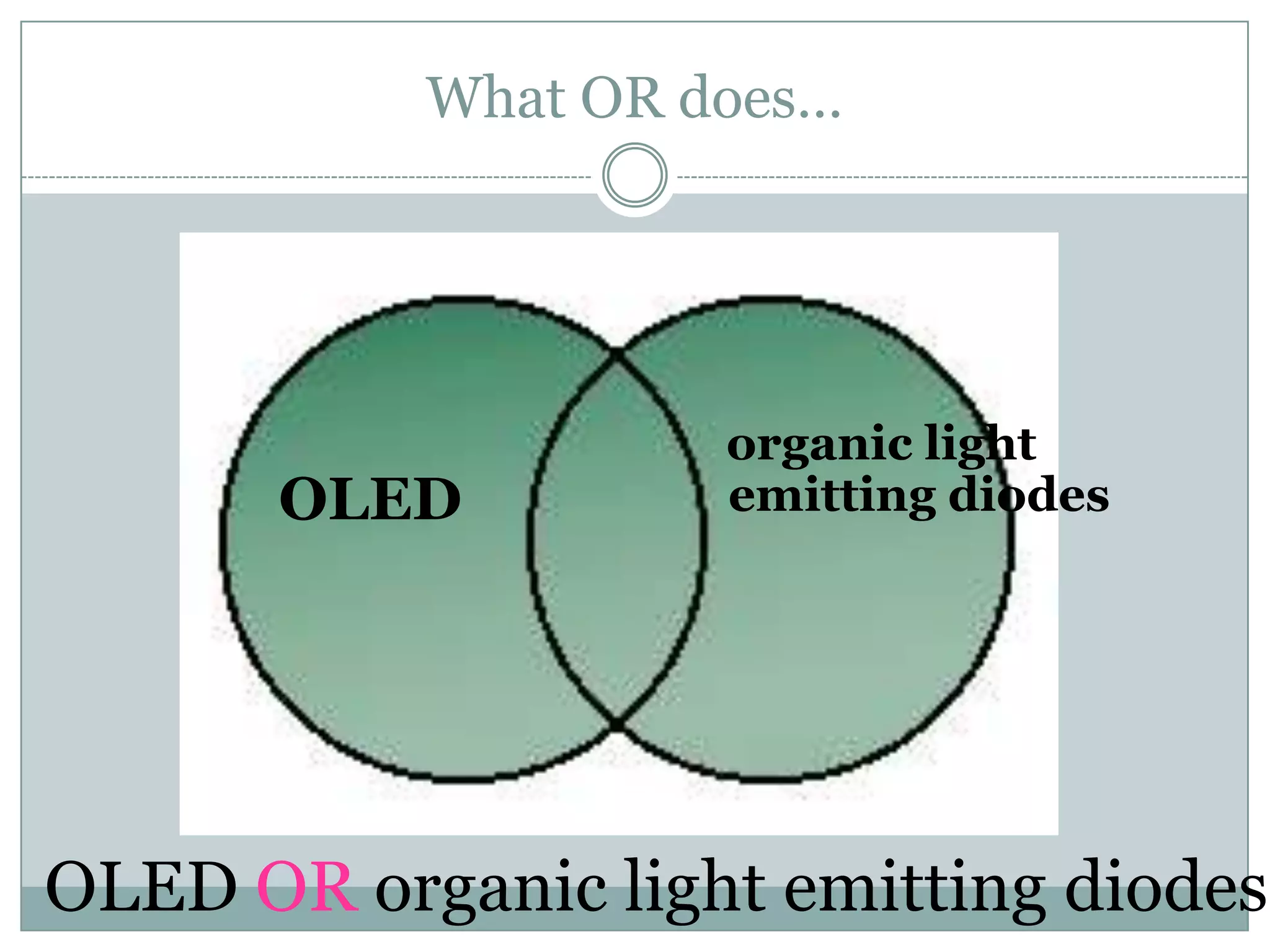
What OR does…   organic light emitting diodesOLEDOLED OR organic light emitting diodes
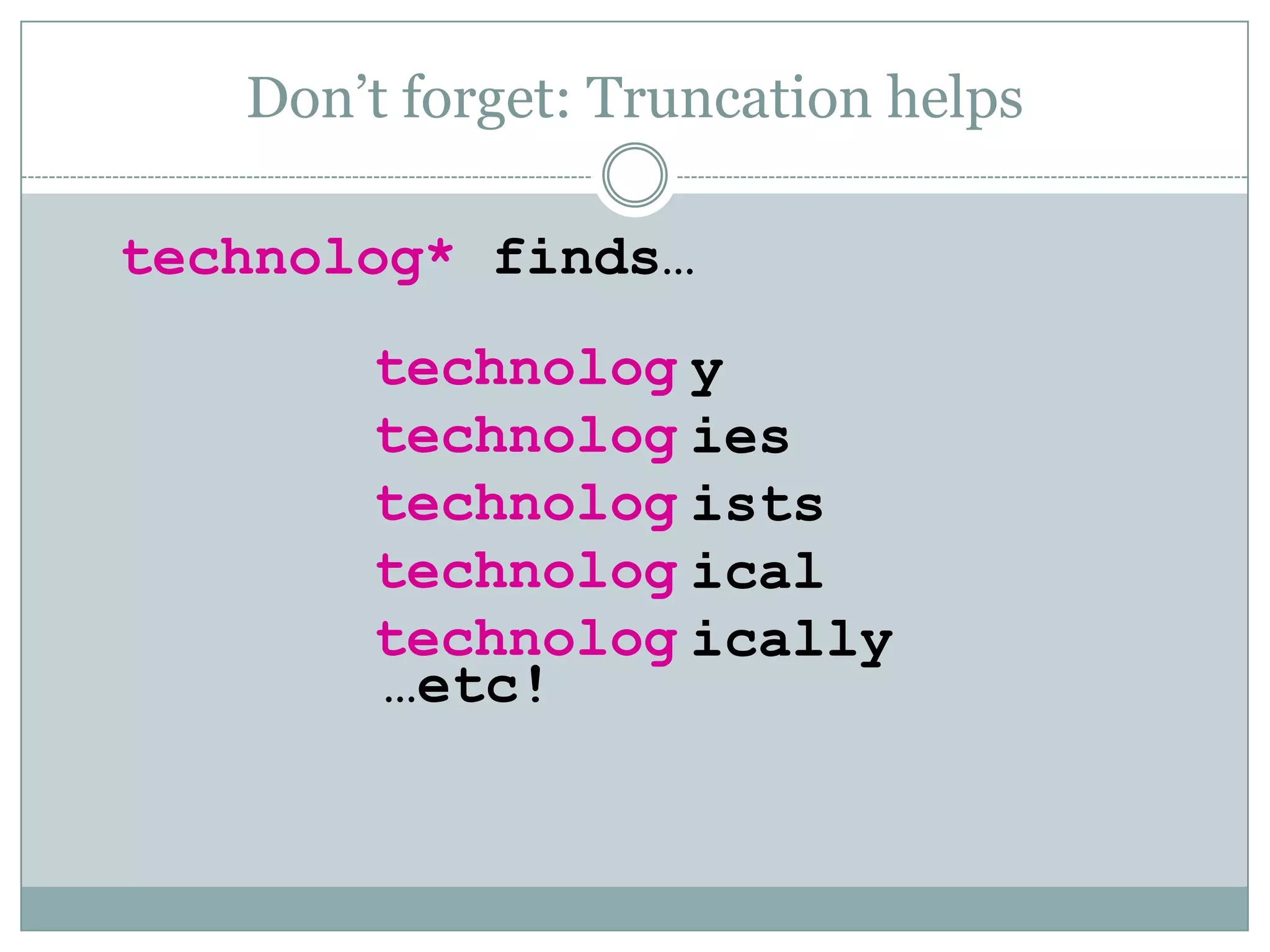
Don’t forget: Truncation helpstechnolog* finds… technologtechnologtechnologtechnologtechnologyiesistsicalically…etc!
Similar ideas … different wordsLaw enforcementPoliceCriminal justiceand other issues such as spelling…
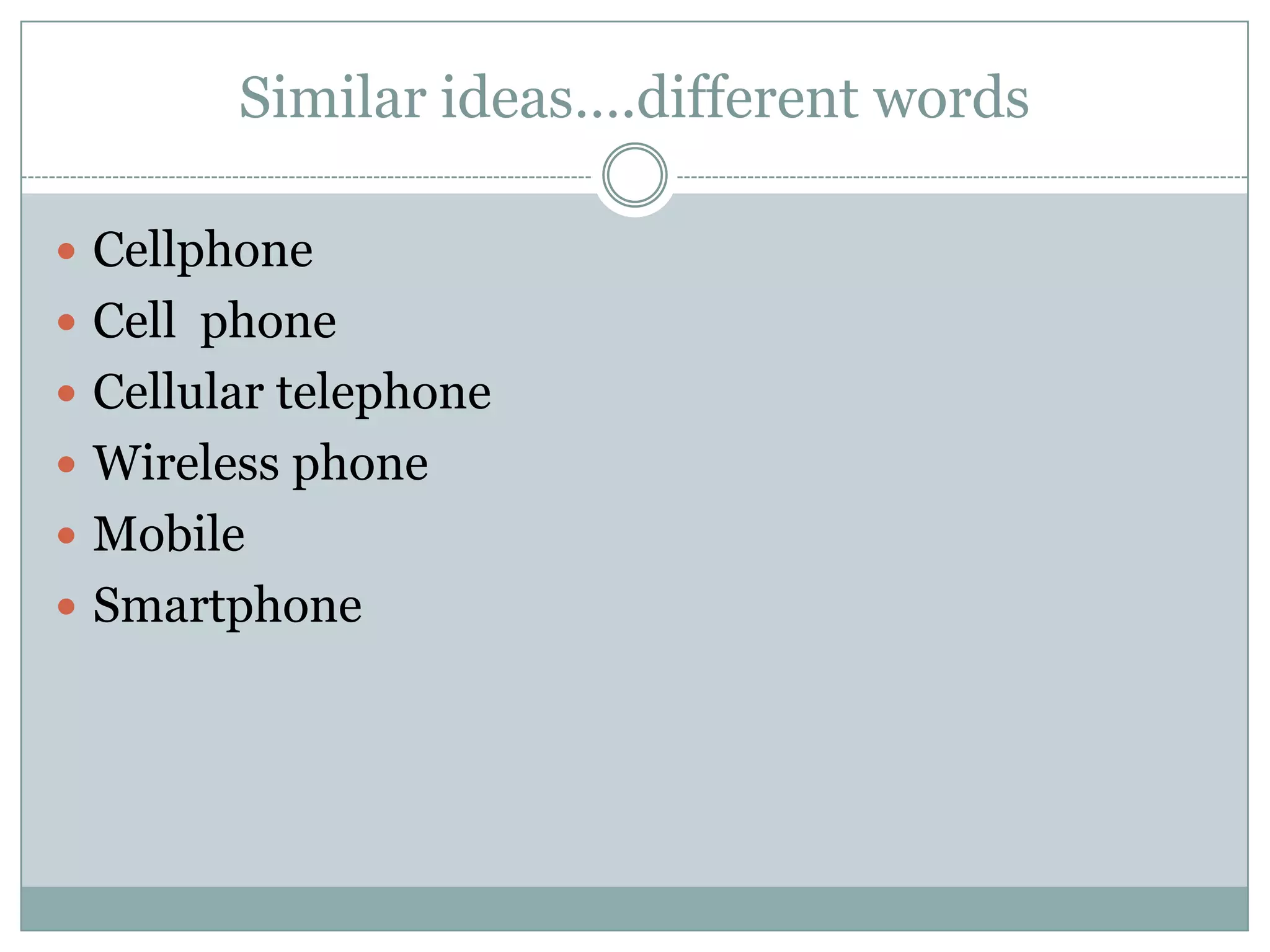
Similar ideas….different wordsCellphoneCell  phoneCellular telephoneWireless phoneMobileSmartphone
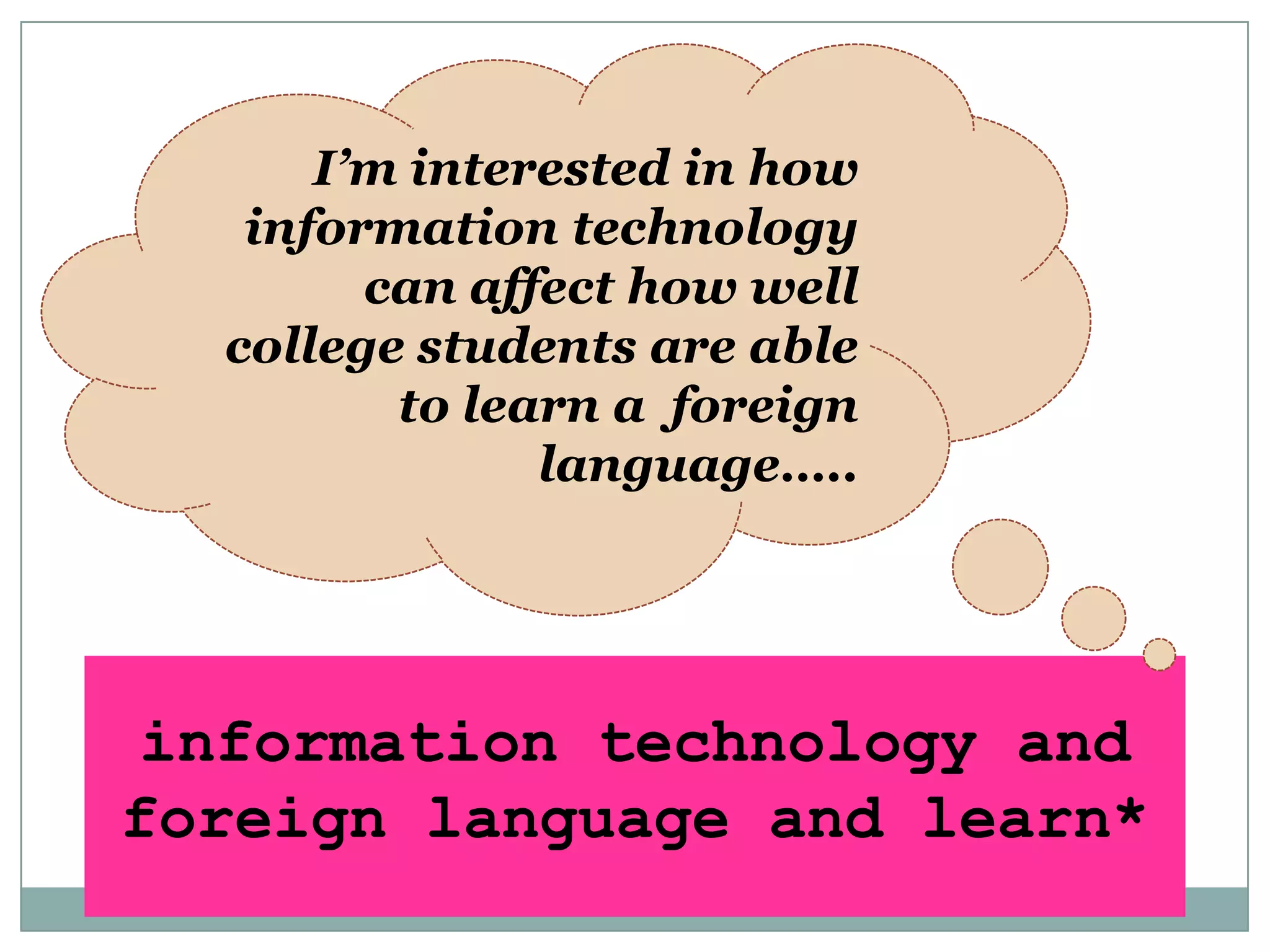
I’m interested in how information technology can affect how well college students are able to learn a  foreign language…..information technology and foreign language and learn*
Finding BooksTowson CatalogAdvanced SearchUSMAI Combined CatalogRequestsTU WorldCatInterlibrary Loan (Illiad)
Searching the CatalogCook LibraryResearchLibrary CatalogsAdvanced Search OptionsLocationCall numberLibrary MapOther locationsRequestInterlibrary loan (Illiad)
Searching DatabasesCook LibrarySubject GatewaysComputer ScienceFrom:Scholarly JournalsMagazines (inc. Trade Publications)NewspapersPeer-reviewed articles in multiple journalsJournalsTowson: 64 journals with the words “Computer Science” in the titleDatabasesComputer Science Index: 500 journals on a variety of topicsResearch vs Review
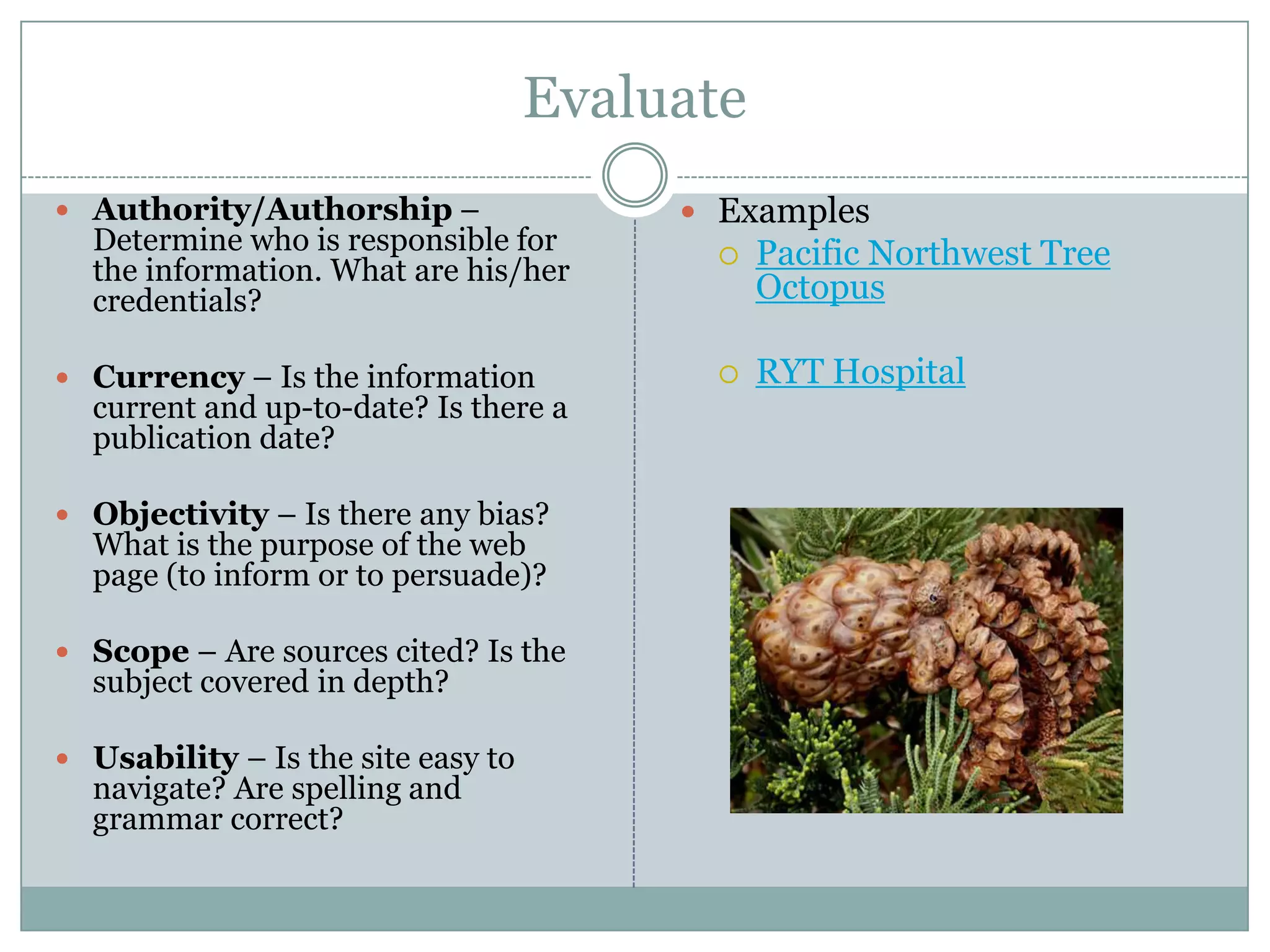
EvaluateAuthority/Authorship – Determine who is responsible for the information. What are his/her credentials?Currency – Is the information current and up-to-date? Is there a publication date?Objectivity – Is there any bias? What is the purpose of the web page (to inform or to persuade)? Scope – Are sources cited? Is the subject covered in depth?Usability – Is the site easy to navigate? Are spelling and grammar correct?ExamplesPacific Northwest Tree OctopusRYT Hospital
Questions?Feel free to contact me:Laksamee Putnamlputnam@towson.edu410.704.3746.Twitter: @LibrarianLaksOr any reference librarian:Visit Cook Library Reference Desk410.704.2462.IM – tucookchat

COSC 111 Searching Spring 2011

  • 1.
    Laksamee Putnamlputnam@towson.eduResearch andInstruction LibrarianCOSC 111: Finding Information Using Cook Library
  • 2.
    Take Away…Search strategiesand Search tipsFinding books: Cook Library CatalogFinding articles: DatabasesWebsite evaluatehttp://www.ted.com/talks/derek_sivers_weird_or_just_different.html
  • 3.
    Information Technology“the study,design, development, implementation, support or management of computer-based information systems, particularly software applications and computer hardware.” – Information Technology Association of AmericaImage retrieved from TwitterImage retrieved from MailOnline
  • 4.
    Technology BrainstormingWhat kindsof (information) technologies?Technologies used to achieve specific goalsEncourage communication or learning, etc.Targeted towards certain populationsBusiness or college students, etc.
  • 5.
    Preparing to SearchArticulateyour topicChoose important ideasBrainstormSynonymsMore specific termsBroader conceptsStrategize where to searchWhat sources of information will you need?Background informationEncyclopedias?
  • 6.
    Search Terms &Keyword RemindersKeywords come from the search questionUse broader terms/concepts when looking for BOOKS.Use narrower terms when looking for ARTICLES.
  • 7.
    Search TipsUnderstand anduse Boolean “search connectors”spam AND internet securityCombining >1 topicOLED OR organic light emitting diodesCombining synonymous terms
  • 8.
    What AND does…spamAND internet security
  • 9.
    What OR does… organic light emitting diodesOLEDOLED OR organic light emitting diodes
  • 10.
    Don’t forget: Truncationhelpstechnolog* finds… technologtechnologtechnologtechnologtechnologyiesistsicalically…etc!
  • 11.
    Similar ideas …different wordsLaw enforcementPoliceCriminal justiceand other issues such as spelling…
  • 12.
    Similar ideas….different wordsCellphoneCell phoneCellular telephoneWireless phoneMobileSmartphone
  • 13.
    I’m interested inhow information technology can affect how well college students are able to learn a foreign language…..information technology and foreign language and learn*
  • 14.
    Finding BooksTowson CatalogAdvancedSearchUSMAI Combined CatalogRequestsTU WorldCatInterlibrary Loan (Illiad)
  • 15.
    Searching the CatalogCookLibraryResearchLibrary CatalogsAdvanced Search OptionsLocationCall numberLibrary MapOther locationsRequestInterlibrary loan (Illiad)
  • 16.
    Searching DatabasesCook LibrarySubjectGatewaysComputer ScienceFrom:Scholarly JournalsMagazines (inc. Trade Publications)NewspapersPeer-reviewed articles in multiple journalsJournalsTowson: 64 journals with the words “Computer Science” in the titleDatabasesComputer Science Index: 500 journals on a variety of topicsResearch vs Review
  • 17.
    EvaluateAuthority/Authorship – Determinewho is responsible for the information. What are his/her credentials?Currency – Is the information current and up-to-date? Is there a publication date?Objectivity – Is there any bias? What is the purpose of the web page (to inform or to persuade)? Scope – Are sources cited? Is the subject covered in depth?Usability – Is the site easy to navigate? Are spelling and grammar correct?ExamplesPacific Northwest Tree OctopusRYT Hospital
  • 18.
    Questions?Feel free tocontact me:Laksamee Putnamlputnam@towson.edu410.704.3746.Twitter: @LibrarianLaksOr any reference librarian:Visit Cook Library Reference Desk410.704.2462.IM – tucookchat

Editor's Notes

  • #5 Applications of information technology within a specific field – this can still be a huge topic that can benefit from some whittling down. Otherwise you can have too many sources to wade through, and too much trouble focusing your final product.Some ways to think about it:What are some examples of kinds of technologies you might want to pursue? (mobile communications, social media, software, robotics, etc.).Technologies are tools. They ideally should be used to achieve specific goals. For instance, certain technologies might encourage certain kinds of learning by college students. So one way to approach this would be to think of the goals that are important and then find out which technologies are being used to achieve them.Or, in some (many!) cases, technologies applied in certain ways might cause problems; then other technologies might be used to solve those problems. Computer hacking vs. computer security is one obvious example, but there are others!!Since your professor’s expertise is in INFORMATION TECHNOLOGY, you might want to focus on this kind of tech. “as defined by the Information Technology Association of America (ITAA), is ‘the study, design, development, implementation, support or management of computer-based information systems, particularly software applications and computer hardware.’” – Wikipedia
  • #6 Example: Someone studying technology and educationWhat population? (k12, college)Specific tasks/venues: Classroom or assignment use?What subject matter? (ex: biology or history?)What specific technology? (Blackboard, wiki, web site, videoconferencing, IM, online databases, what?)Who is using/”making” that technology? (Student or teacher?)What country? (one or comparing countries)What time period? ( and change over time)
  • #7 We can’t search the innards of a book when we use the Towson Catalog to find books. Think of a book that is likely to talk about your subject.Examples: maybe you won’t find a book on the subject of motion detectors in the home. But you might find one on security systems for the home.Maybe you won’t find a book on Blackboard per se. But there might be a book that discusses online education that has a chapter on different systems like Blackboard or even Blackboard specifically.When we search for articles using databases, you can search for much more specific topics. Articles because of their length are more specific & also we can search the entire text of articles most of the time to find that needle in the haystack.
  • #16 First go over Cook Library Website Help locations: Need Help, Ask a Librarian Quick Tools: Off campus login, Journal List, Help GuidesCatalogs – Towson, USMAI, Worldcat TU Search Foursquare -> Social Media Advanced SearchLook at entry Find it or Availability Subject headings Cite feature
  • #17 Databases are more efficient!Search Academic Search Premier - facebook AND privacy Note difference between magazine and peer reviewed