Laksamee Putnam
lputnam@towson.edu
Research & Instruction Librarian
http://bit.ly/tsemfathsp2017c1
First…
 Laksamee Putnam
 lputnam@towson.edu
 Cook Library Reference:
 410.704.2462.
 IM/email
 Phone: 410.704.3746.
 Twitter: @CookLibraryofTU
 Albert S. Cook Facebook profile!
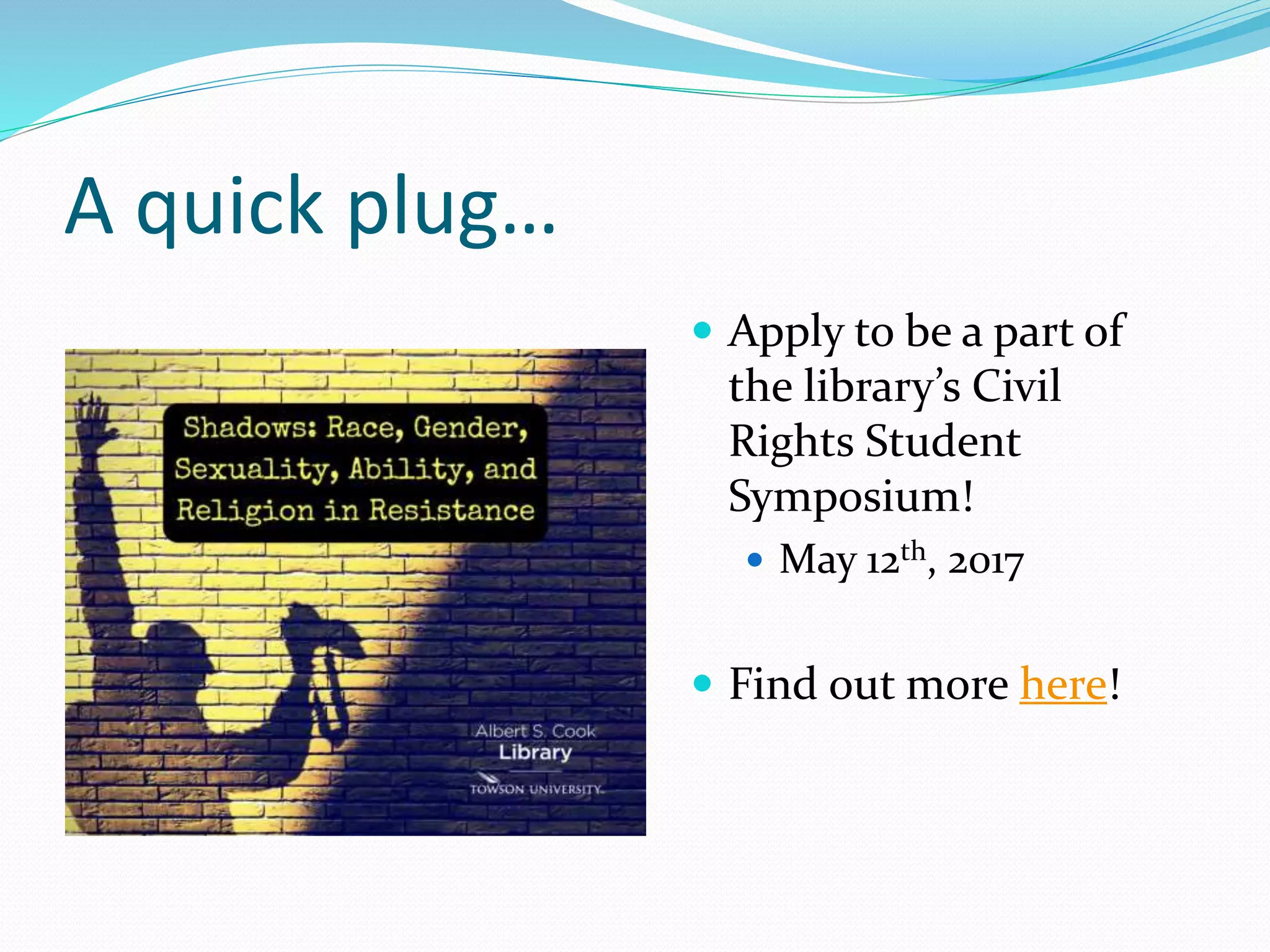
A quick plug…
 Apply to be a part of
the library’s Civil
Rights Student
Symposium!
 May 12th, 2017
 Find out more here!
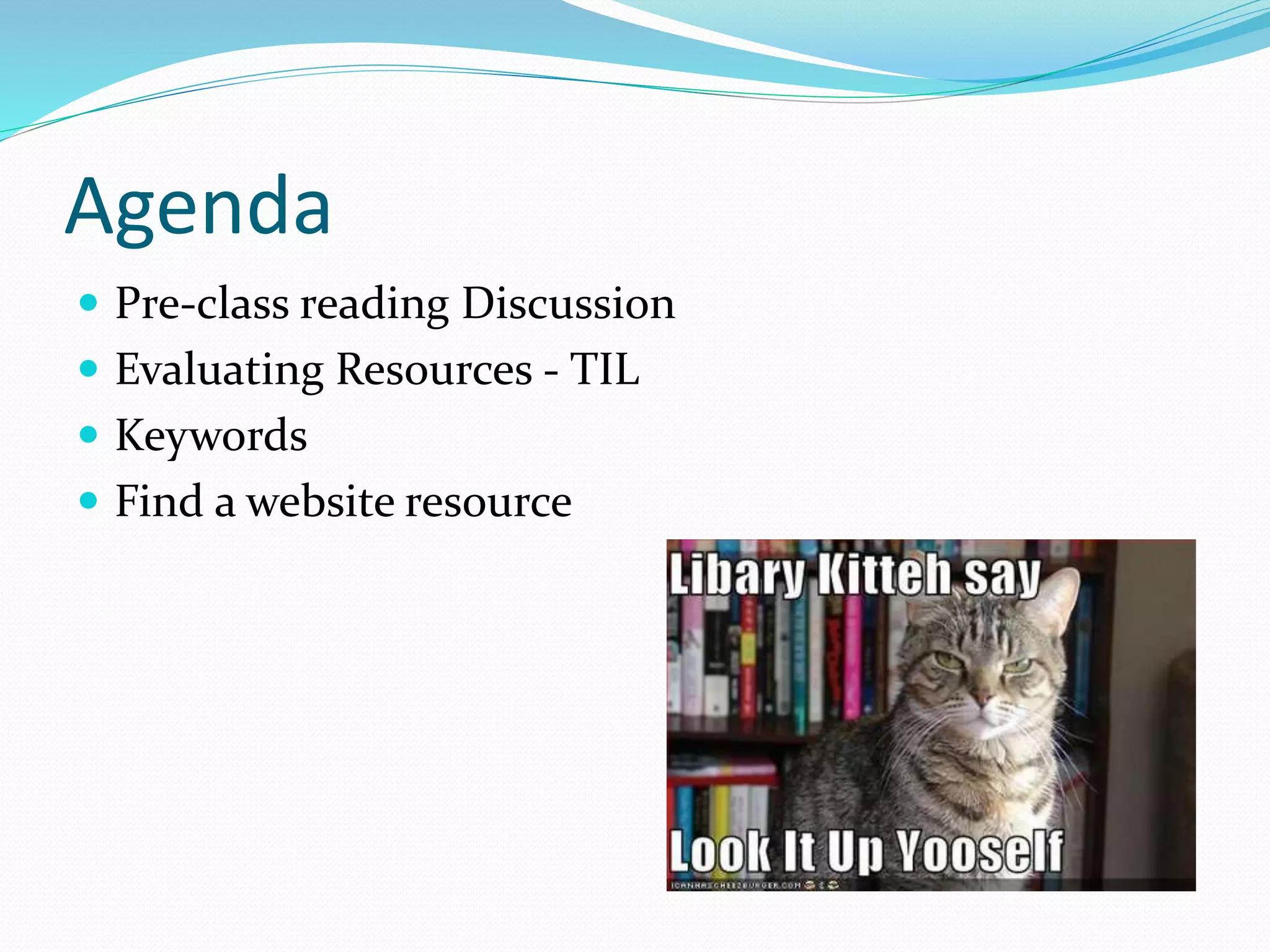
Agenda
 Pre-class reading Discussion
 Evaluating Resources - TIL
 Keywords
 Find a website resource
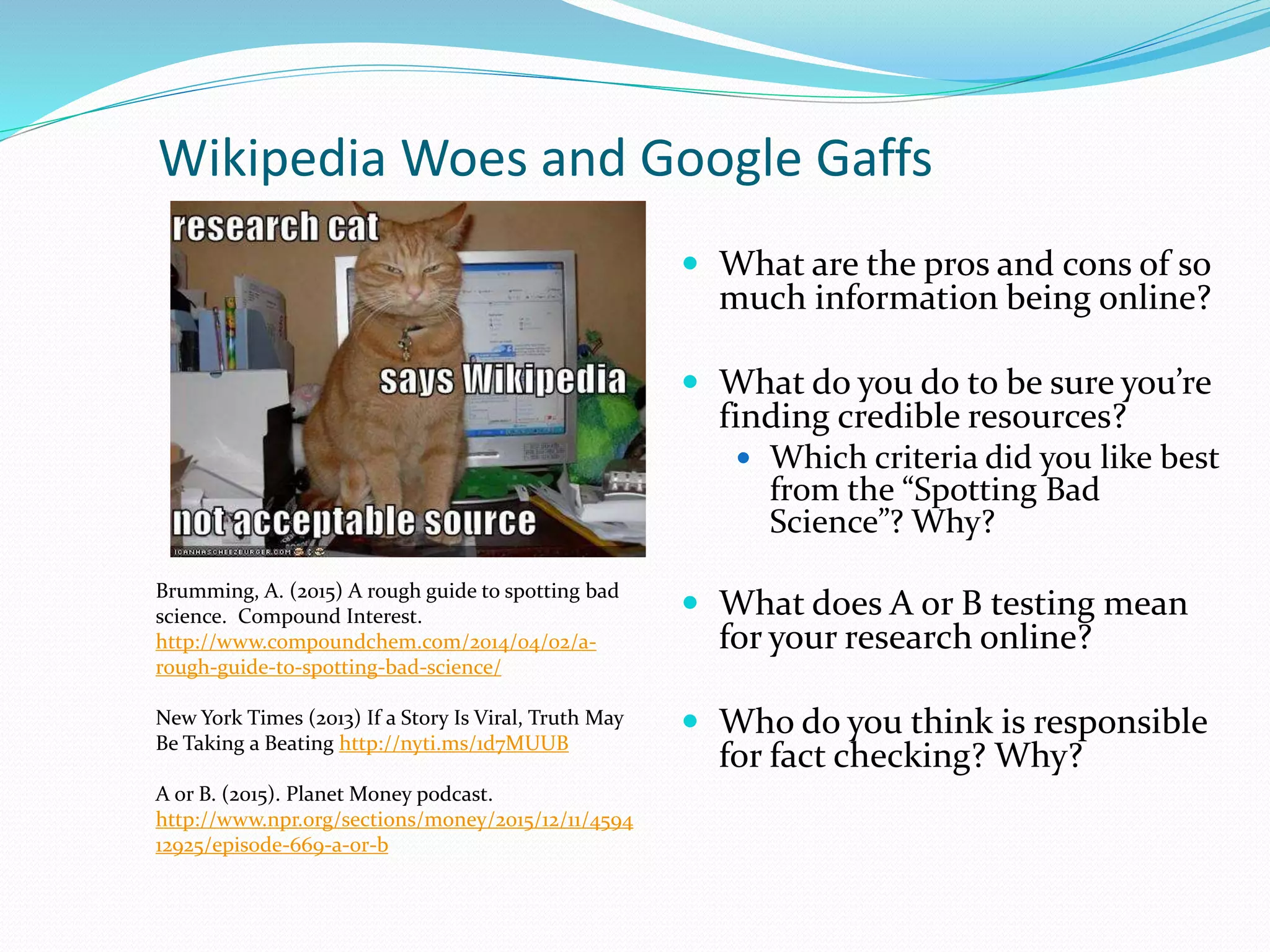
Wikipedia Woes and Google Gaffs
 What are the pros and cons of so
much information being online?
 What do you do to be sure you’re
finding credible resources?
 Which criteria did you like best
from the “Spotting Bad
Science”? Why?
 What does A or B testing mean
for your research online?
 Who do you think is responsible
for fact checking? Why?
Brumming, A. (2015) A rough guide to spotting bad
science. Compound Interest.
http://www.compoundchem.com/2014/04/02/a-
rough-guide-to-spotting-bad-science/
New York Times (2013) If a Story Is Viral, Truth May
Be Taking a Beating http://nyti.ms/1d7MUUB
A or B. (2015). Planet Money podcast.
http://www.npr.org/sections/money/2015/12/11/4594
12925/episode-669-a-or-b
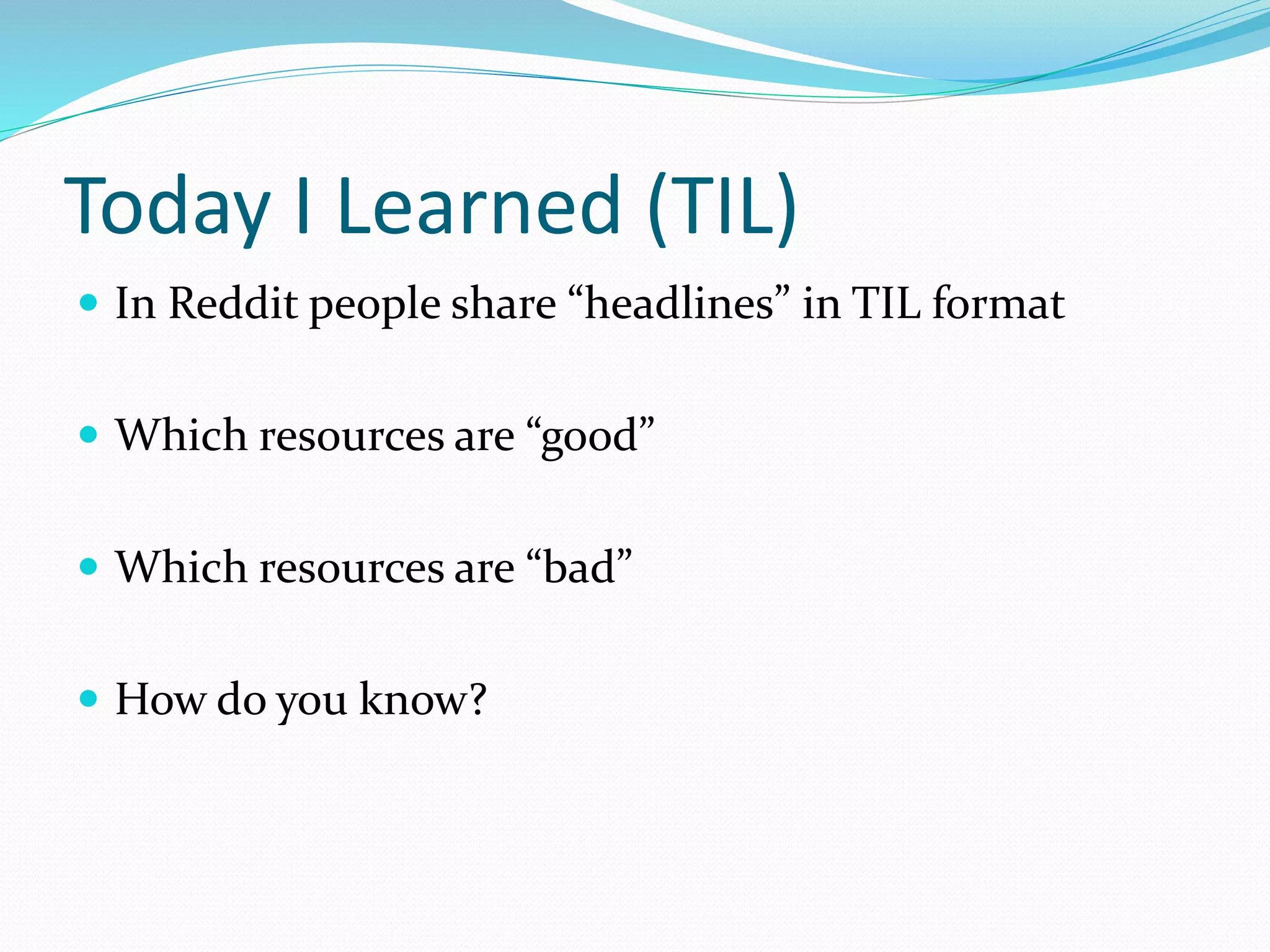
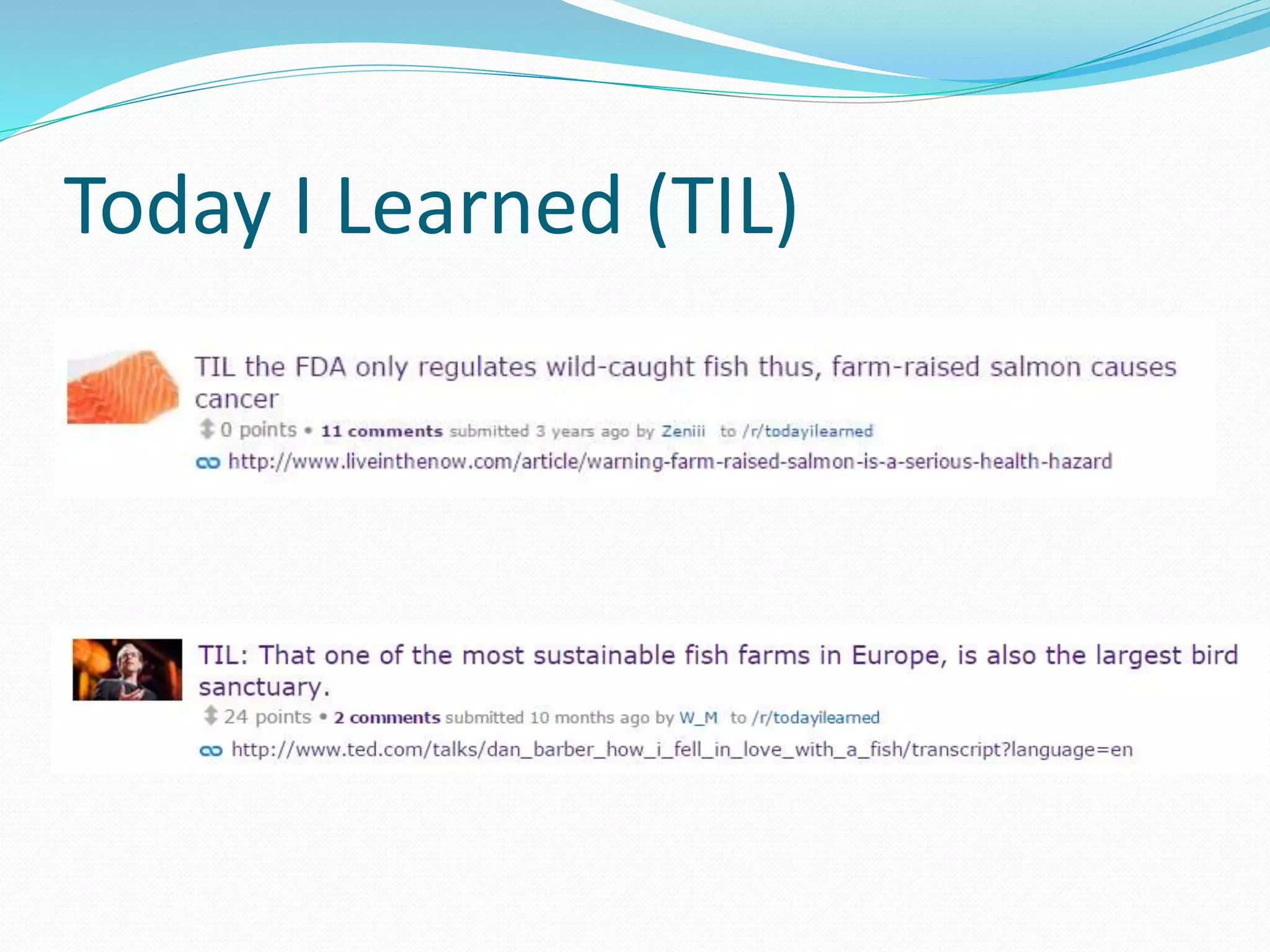
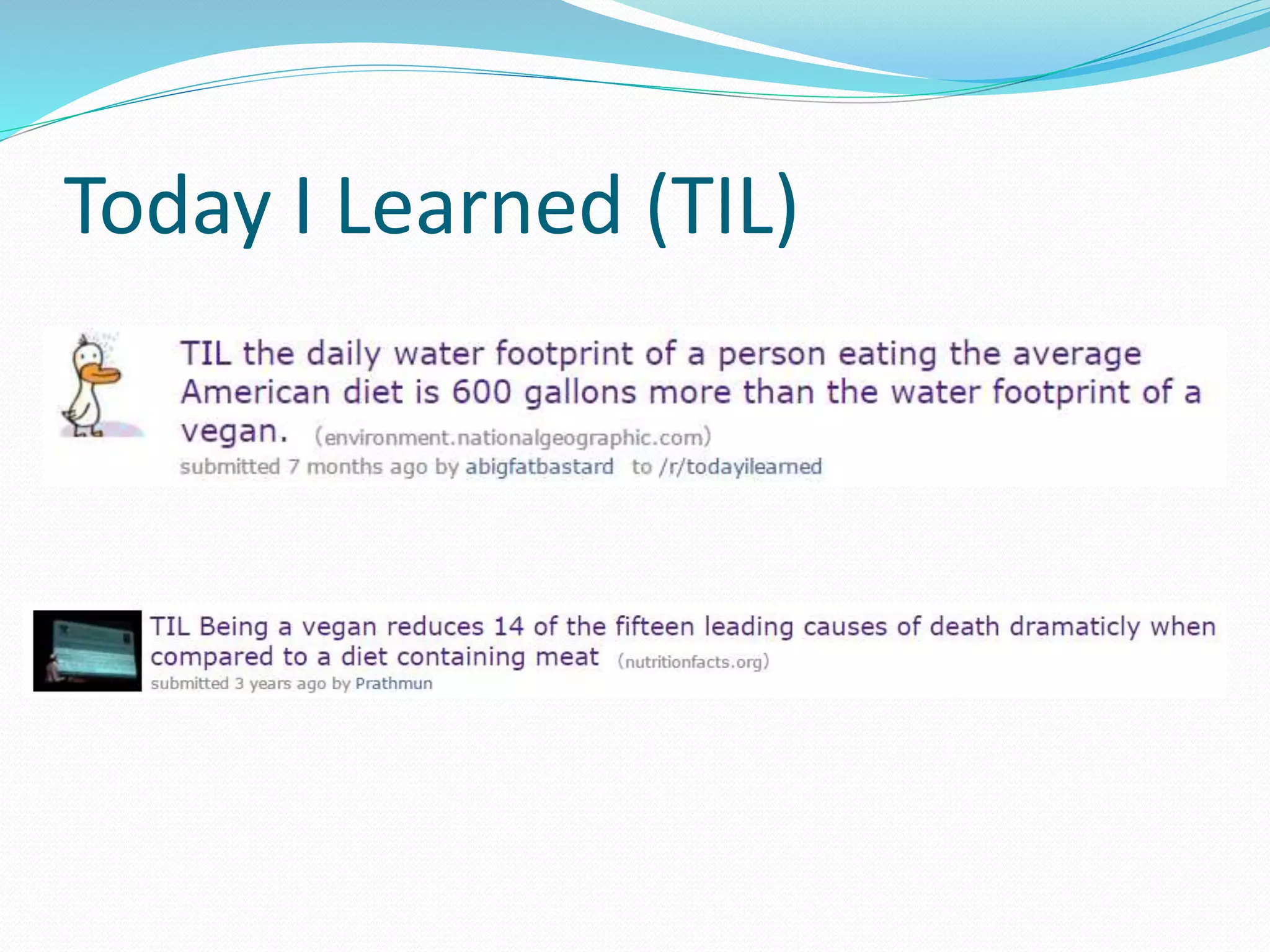
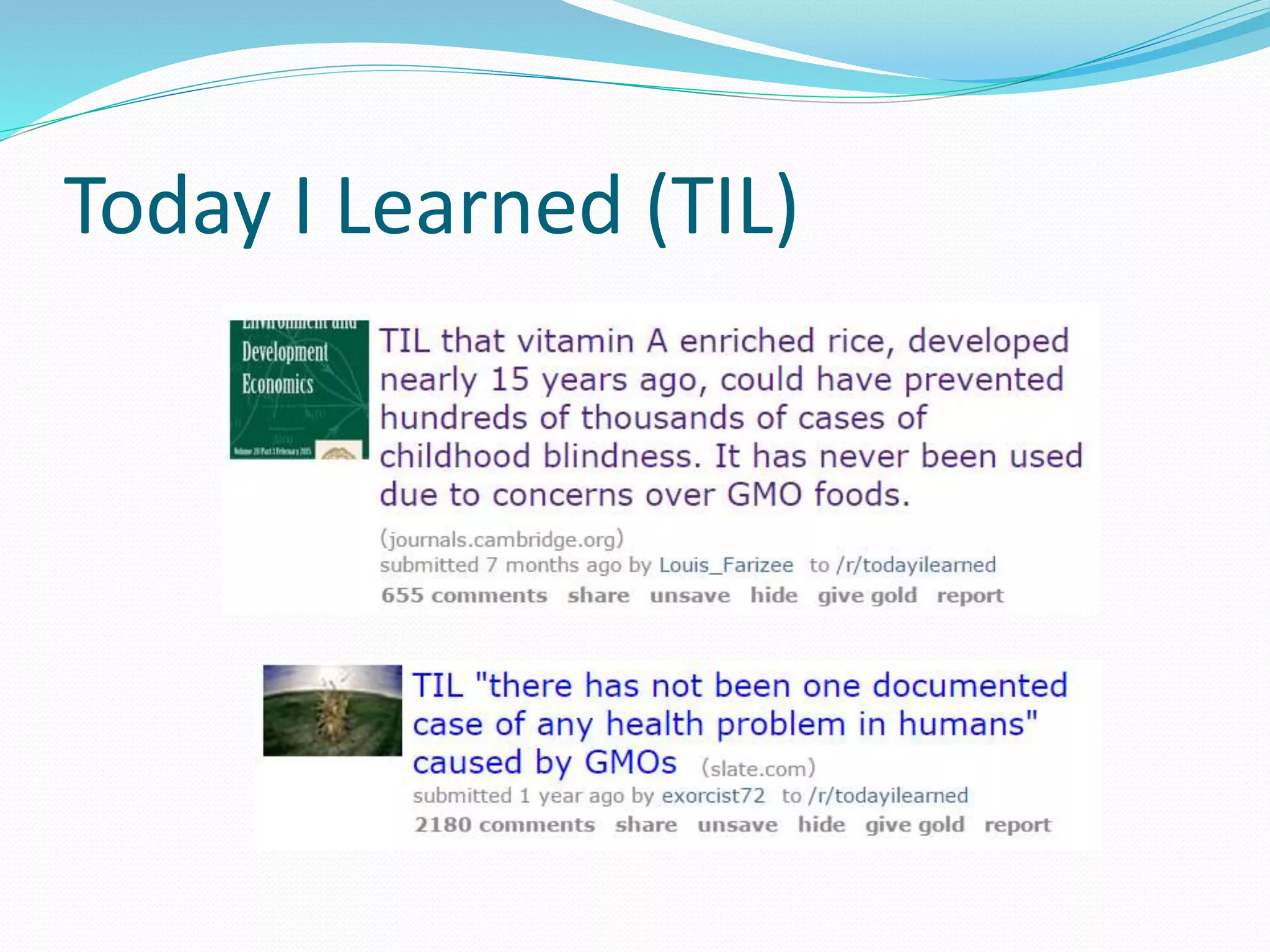
Today I Learned (TIL)
 In Reddit people share “headlines” in TIL format
 Which resources are “good”
 Which resources are “bad”
 How do you know?
Today I Learned (TIL)
Check for CRAAP
Currency
Relevance
Authority
Accuracy
Purpose/Point of View
Check for CRAAP
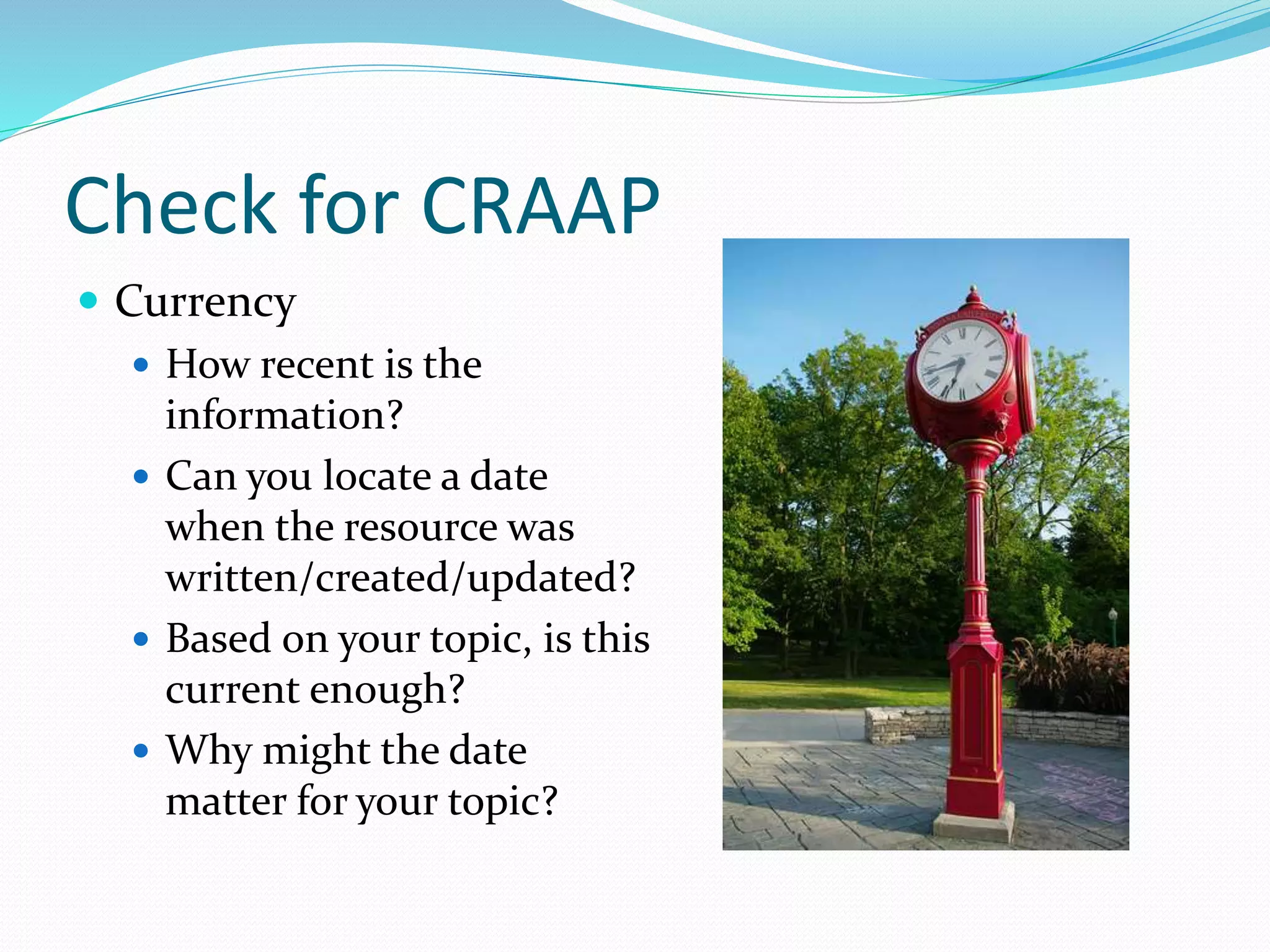
 Currency
 How recent is the
information?
 Can you locate a date
when the resource was
written/created/updated?
 Based on your topic, is this
current enough?
 Why might the date
matter for your topic?
Check for CRAAP
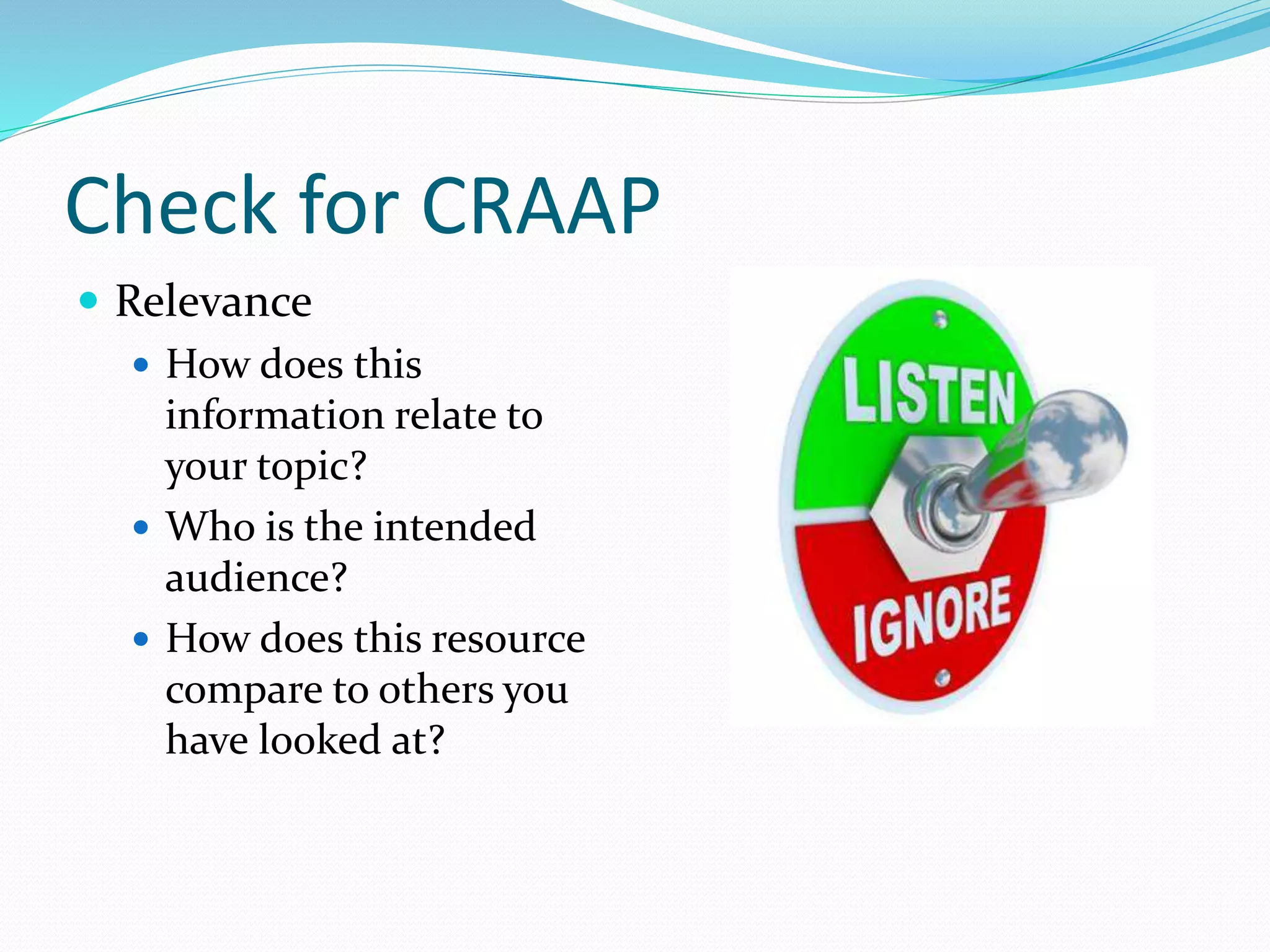
 Relevance
 How does this
information relate to
your topic?
 Who is the intended
audience?
 How does this resource
compare to others you
have looked at?
Check for CRAAP
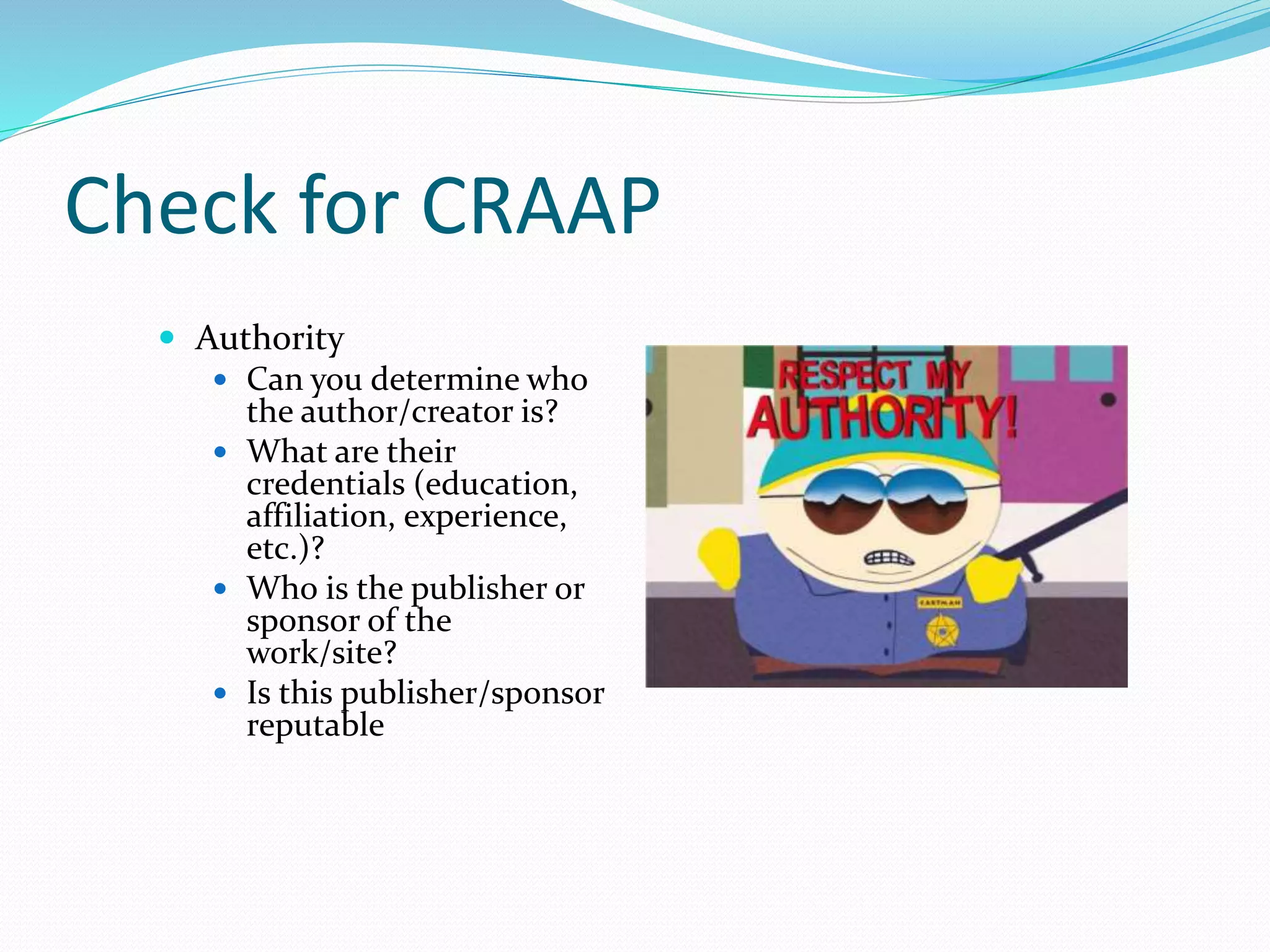
 Authority
 Can you determine who
the author/creator is?
 What are their
credentials (education,
affiliation, experience,
etc.)?
 Who is the publisher or
sponsor of the
work/site?
 Is this publisher/sponsor
reputable
Check for CRAAP
 Accuracy
 Is the information
supported with evidence?
 Has the information been
reviewed?
 How confident are you that
the content is correct?
Check for CRAAP
 Purpose
 Is the content primarily
opinion?
 Is the information
balanced or biased?
 What is the purpose of
the information? Is it to
inform, teach, sell,
entertain or persuade
Which words?
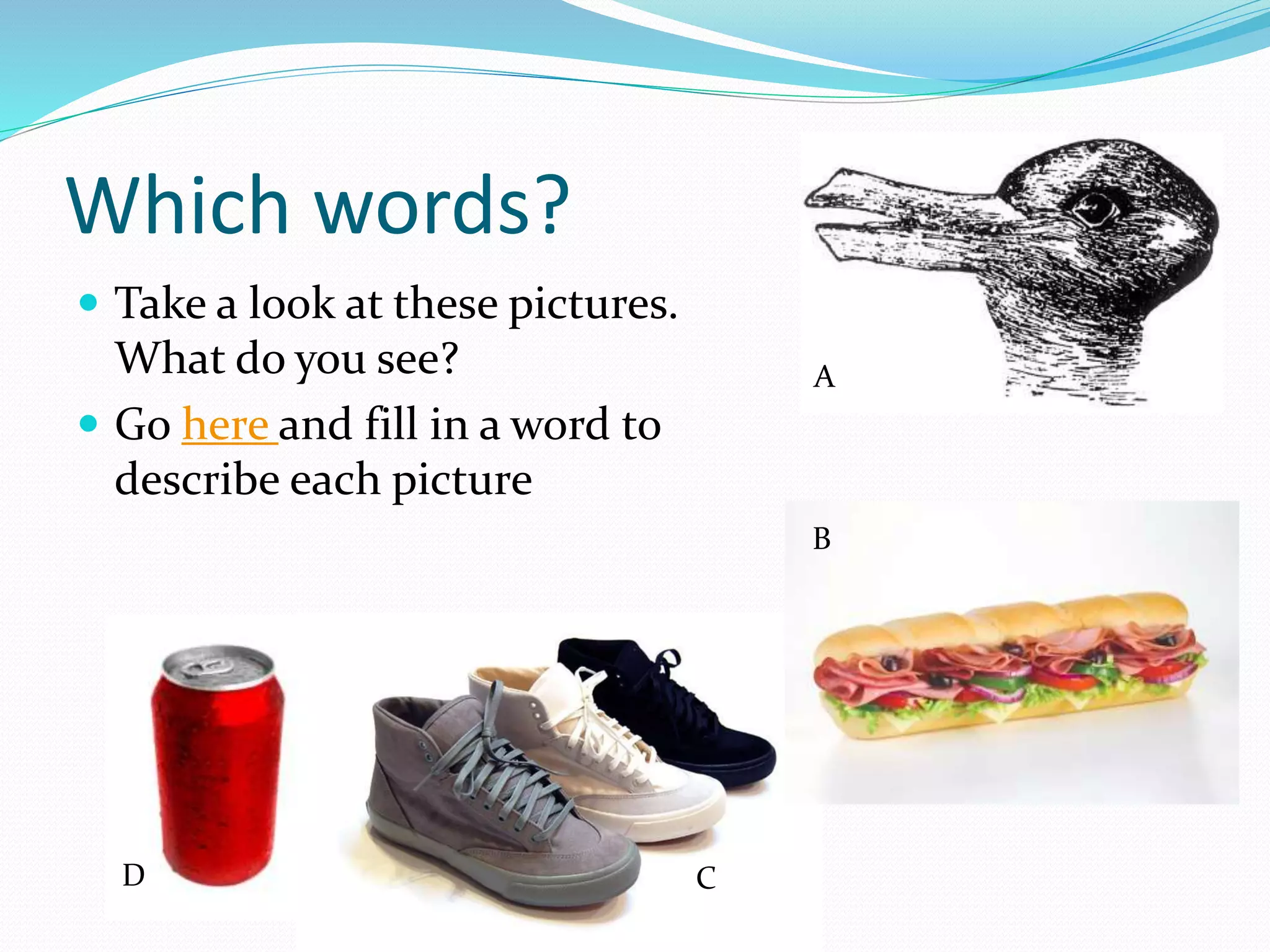
 Take a look at these pictures.
What do you see?
 Go here and fill in a word to
describe each picture
A
D C
B
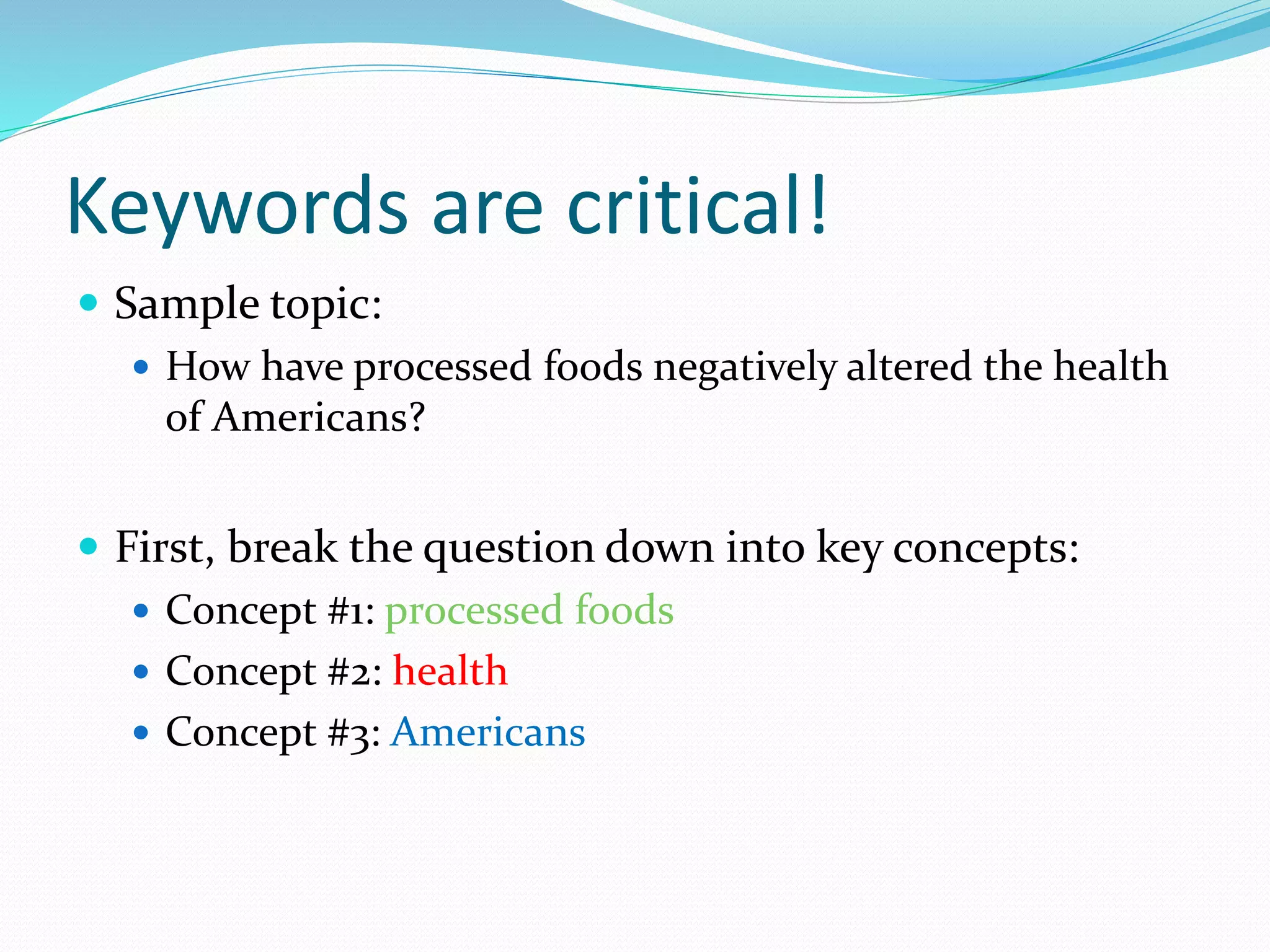
Keywords are critical!
 Sample topic:
 How have processed foods negatively altered the health
of Americans?
 First, break the question down into key concepts:
 Concept #1: processed foods
 Concept #2: health
 Concept #3: Americans
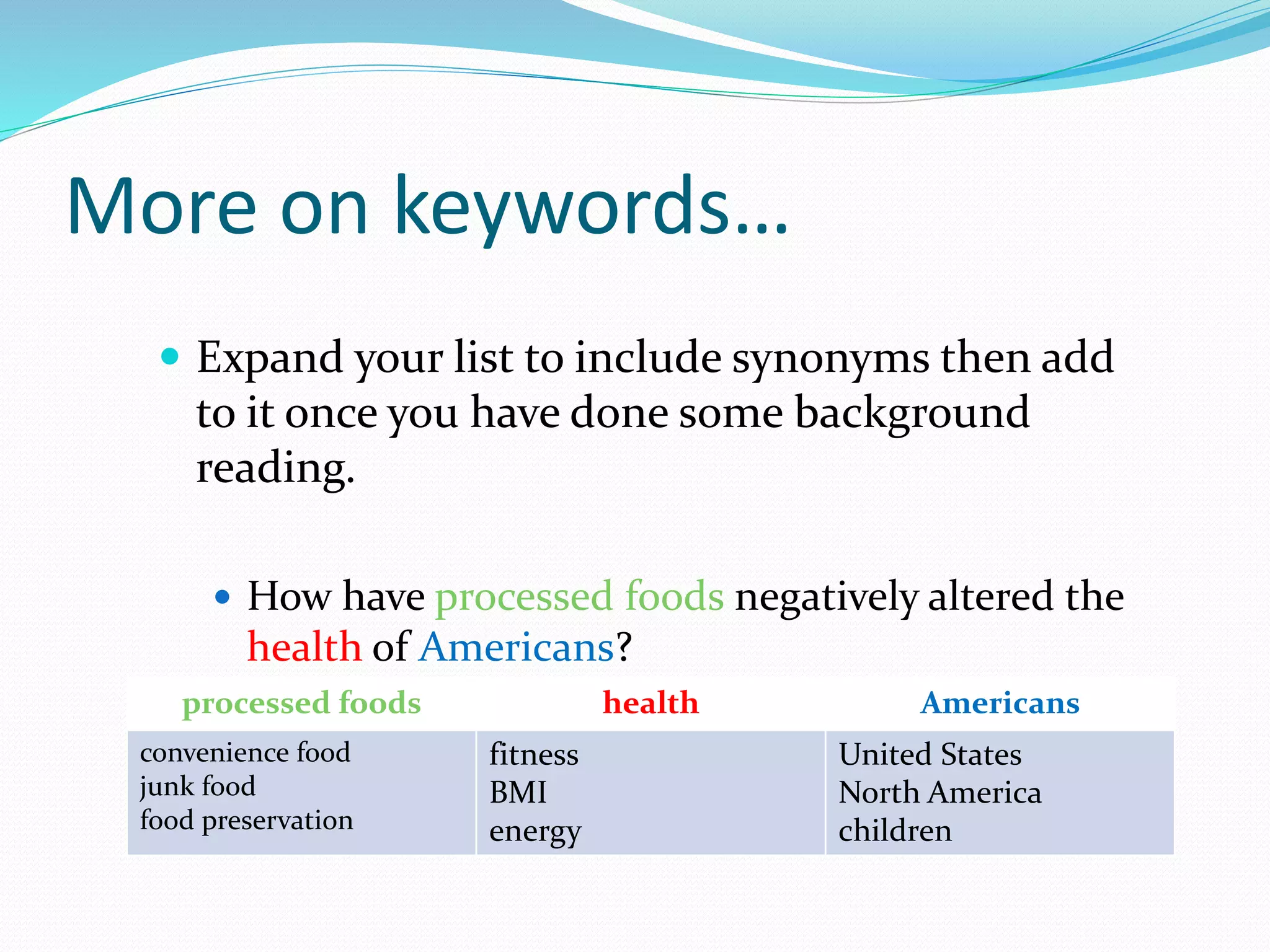
More on keywords…
 Expand your list to include synonyms then add
to it once you have done some background
reading.
 How have processed foods negatively altered the
health of Americans?
processed foods health Americans
convenience food
junk food
food preservation
fitness
BMI
energy
United States
North America
children
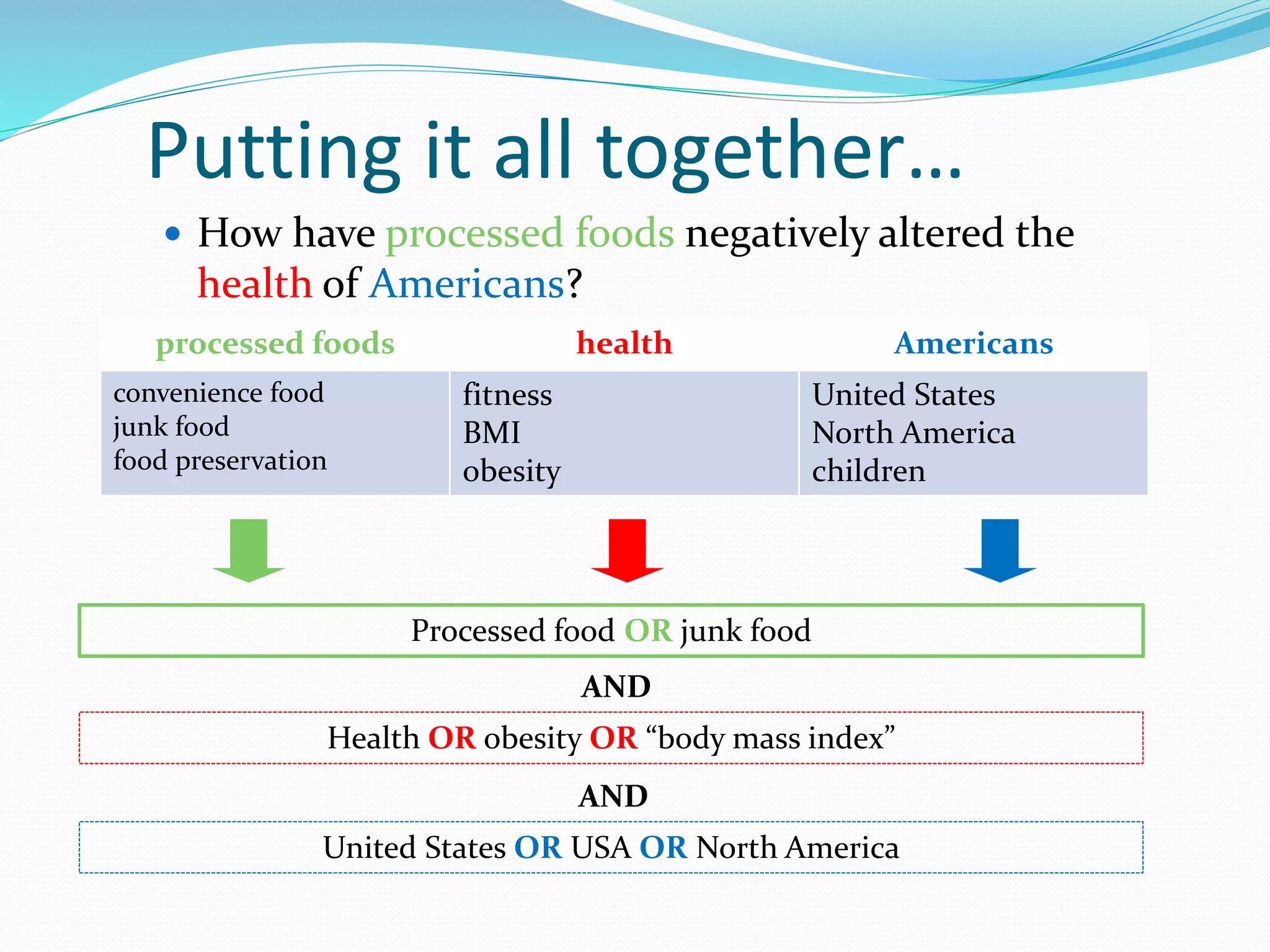
Putting it all together…
 How have processed foods negatively altered the
health of Americans?
Processed food OR junk food
AND
Health OR obesity OR “body mass index”
AND
United States OR USA OR North America
processed foods health Americans
convenience food
junk food
food preservation
fitness
BMI
obesity
United States
North America
children
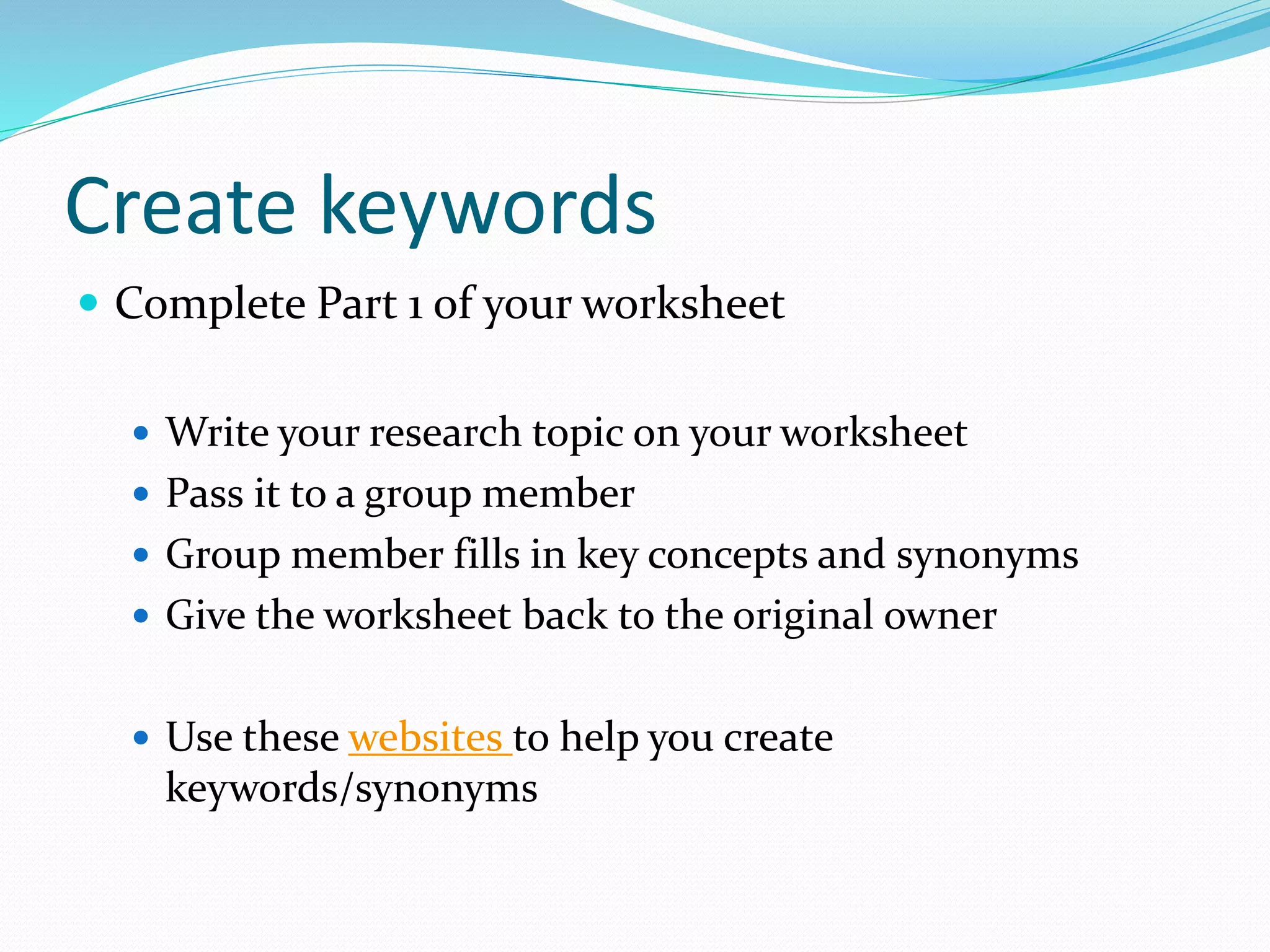
Create keywords
 Complete Part 1 of your worksheet
 Write your research topic on your worksheet
 Pass it to a group member
 Group member fills in key concepts and synonyms
 Give the worksheet back to the original owner
 Use these websites to help you create
keywords/synonyms
Potential Topics
 Positive/negative effects of fish farming
 Environmental problems/solutions with the meat
industry
 US government support for farming, pros/cons
 Food deserts in urban populations
 Sustainability of a vegan diet
Improve Google
 Advanced Google
searching
 Duck Duck Go
Try these alternatives
 Environmental Protection
Agency
 Check out the TSEM
Research Guide
Find a website resource!
 Use your keywords in Google
 Use your keywords in one of the Google alternatives
 Pick the most interesting result
 Enter your results here:
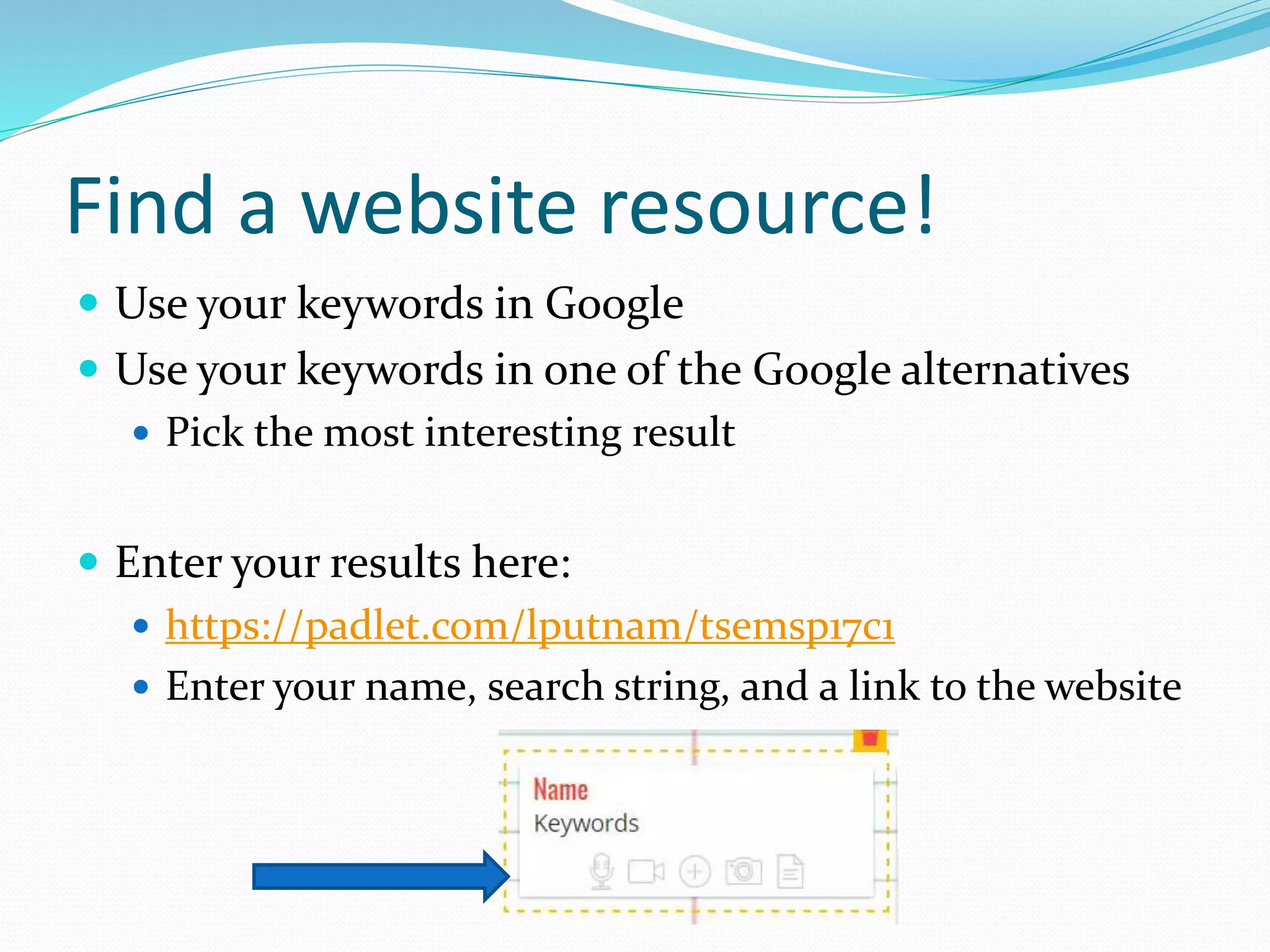
 https://padlet.com/lputnam/tsemsp17c1
 Enter your name, search string, and a link to the website
Take a look at the results
 Assess the results posted with the CRAAP assessment
 What problems did you have ….
 Coming up with keywords?
 Searching for a website?
Thanks for listening!
 Fill out Part 2 of your paper worksheet
 Fill out 3 TIL statements about your library session today
 Hand the worksheet in to the librarian
 Next library session:
 Pre-class reading and prepare for discussion
 Use your keywords to find books/articles
Questions?
 Feel free to contact me:
 Laksamee Putnam
 lputnam@towson.edu
 410.704.3746.
 Twitter: @CookLibraryofTU
 Or any reference librarian:
 Visit Cook Library Reference Desk
 410.704.2462.
 IM – tucookchat

TSEM Spring 2017 Fath Class1

  • 1.
    Laksamee Putnam lputnam@towson.edu Research &Instruction Librarian http://bit.ly/tsemfathsp2017c1
  • 2.
    First…  Laksamee Putnam lputnam@towson.edu  Cook Library Reference:  410.704.2462.  IM/email  Phone: 410.704.3746.  Twitter: @CookLibraryofTU  Albert S. Cook Facebook profile!
  • 3.
    A quick plug… Apply to be a part of the library’s Civil Rights Student Symposium!  May 12th, 2017  Find out more here!
  • 4.
    Agenda  Pre-class readingDiscussion  Evaluating Resources - TIL  Keywords  Find a website resource
  • 5.
    Wikipedia Woes andGoogle Gaffs  What are the pros and cons of so much information being online?  What do you do to be sure you’re finding credible resources?  Which criteria did you like best from the “Spotting Bad Science”? Why?  What does A or B testing mean for your research online?  Who do you think is responsible for fact checking? Why? Brumming, A. (2015) A rough guide to spotting bad science. Compound Interest. http://www.compoundchem.com/2014/04/02/a- rough-guide-to-spotting-bad-science/ New York Times (2013) If a Story Is Viral, Truth May Be Taking a Beating http://nyti.ms/1d7MUUB A or B. (2015). Planet Money podcast. http://www.npr.org/sections/money/2015/12/11/4594 12925/episode-669-a-or-b
  • 6.
    Today I Learned(TIL)  In Reddit people share “headlines” in TIL format  Which resources are “good”  Which resources are “bad”  How do you know?
  • 7.
  • 8.
  • 9.
  • 10.
  • 11.
    Check for CRAAP Currency  How recent is the information?  Can you locate a date when the resource was written/created/updated?  Based on your topic, is this current enough?  Why might the date matter for your topic?
  • 12.
    Check for CRAAP Relevance  How does this information relate to your topic?  Who is the intended audience?  How does this resource compare to others you have looked at?
  • 13.
    Check for CRAAP Authority  Can you determine who the author/creator is?  What are their credentials (education, affiliation, experience, etc.)?  Who is the publisher or sponsor of the work/site?  Is this publisher/sponsor reputable
  • 14.
    Check for CRAAP Accuracy  Is the information supported with evidence?  Has the information been reviewed?  How confident are you that the content is correct?
  • 15.
    Check for CRAAP Purpose  Is the content primarily opinion?  Is the information balanced or biased?  What is the purpose of the information? Is it to inform, teach, sell, entertain or persuade
  • 16.
    Which words?  Takea look at these pictures. What do you see?  Go here and fill in a word to describe each picture A D C B
  • 17.
    Keywords are critical! Sample topic:  How have processed foods negatively altered the health of Americans?  First, break the question down into key concepts:  Concept #1: processed foods  Concept #2: health  Concept #3: Americans
  • 18.
    More on keywords… Expand your list to include synonyms then add to it once you have done some background reading.  How have processed foods negatively altered the health of Americans? processed foods health Americans convenience food junk food food preservation fitness BMI energy United States North America children
  • 19.
    Putting it alltogether…  How have processed foods negatively altered the health of Americans? Processed food OR junk food AND Health OR obesity OR “body mass index” AND United States OR USA OR North America processed foods health Americans convenience food junk food food preservation fitness BMI obesity United States North America children
  • 20.
    Create keywords  CompletePart 1 of your worksheet  Write your research topic on your worksheet  Pass it to a group member  Group member fills in key concepts and synonyms  Give the worksheet back to the original owner  Use these websites to help you create keywords/synonyms
  • 21.
    Potential Topics  Positive/negativeeffects of fish farming  Environmental problems/solutions with the meat industry  US government support for farming, pros/cons  Food deserts in urban populations  Sustainability of a vegan diet
  • 22.
    Improve Google  AdvancedGoogle searching  Duck Duck Go Try these alternatives  Environmental Protection Agency  Check out the TSEM Research Guide
  • 23.
    Find a websiteresource!  Use your keywords in Google  Use your keywords in one of the Google alternatives  Pick the most interesting result  Enter your results here:  https://padlet.com/lputnam/tsemsp17c1  Enter your name, search string, and a link to the website
  • 24.
    Take a lookat the results  Assess the results posted with the CRAAP assessment  What problems did you have ….  Coming up with keywords?  Searching for a website?
  • 25.
    Thanks for listening! Fill out Part 2 of your paper worksheet  Fill out 3 TIL statements about your library session today  Hand the worksheet in to the librarian  Next library session:  Pre-class reading and prepare for discussion  Use your keywords to find books/articles
  • 26.
    Questions?  Feel freeto contact me:  Laksamee Putnam  lputnam@towson.edu  410.704.3746.  Twitter: @CookLibraryofTU  Or any reference librarian:  Visit Cook Library Reference Desk  410.704.2462.  IM – tucookchat

Editor's Notes

  • #8 http://www.liveinthenow.com/article/warning-farm-raised-salmon-is-a-serious-health-hazard http://www.ted.com/talks/dan_barber_how_i_fell_in_love_with_a_fish/transcript?language=en
  • #9 http://environment.nationalgeographic.com/environment/freshwater/water-conservation-tips/ http://nutritionfacts.org/video/uprooting-the-leading-causes-of-death/
  • #10 http://journals.cambridge.org/action/displayFulltext?type=1&fid=9402219&jid=EDE&volumeId=19&issueId=06&aid=9402215 http://www.slate.com/articles/health_and_science/science/2013/08/can_gmo_corn_cause_allergies_don_t_believe_elle_s_scary_story.html
  • #17 https://www.polleverywhere.com/free_text_polls/eYSuGNQ07ia54V8?preview=true https://www.polleverywhere.com/free_text_polls/lbrht2tMkPOtFi3?preview=true https://www.polleverywhere.com/free_text_polls/GqOwHfdzGITZTTx?preview=true https://www.polleverywhere.com/free_text_polls/S641QXDPmJJbXCp?preview=true
  • #24  https://padlet.com/lputnam/tsemsp17c1 https://padlet.com/lputnam/tsemsp17c2