Controversy about the use ofControversy about the use of
corticosteroids in pediatricscorticosteroids in pediatrics
ByBy
Mohamed Zannoun (MD)
Associated Professor of pediatric Al-Azhar University
Dameitta
09/16/16 Mohamed Zannoun
ControversyControversy
09/16/16 Mohamed Zannoun
Types of Steroids
• Replacement Therapy
• glucocorticoid (hydrocortisone)
• mineralocorticoid (fludrocortisone)
• Anti-inflammatory Therapy
• Short acting: hydrocortisone
• Intermediate acting: prednisolone;
methylprednisolone; triamcinolone
• Long acting: dexamethasone
09/16/16 Mohamed Zannoun
Routes of Administration
• Systemic : oral,
transrectal, IV, IM
• Local: topical,
intranasal,
intraocular,
intraarticular
09/16/16 Mohamed Zannoun
Availability of International Guidelines
on Use of Steroid
• No one-for-all guideline
• Glucocorticoid Replacement Therapy : Guidelines
published by Royal College of Physicians of
London, UK ; not available from Endocrine
Society, USA.
• Systemic Use of Glucocorticoid: Guidelines
available for EULAR (European League for
Rheumatology)
• Local Use of Steroid: guidelines on individual
disease, general guidelines not available
09/16/16 Mohamed Zannoun
Royal College of Physicians of London Guidelines
on Glucocorticoid Replacement Therapy
• Recommended Daily Dose for
Glucocorticoid
• Hydrocortisone (cortisol) 15-30mg
• Cortisone acetate 25-37.5mg
• Prednisolone 5-7.5mg
• Dexamethasone 0.5mg
• Recommended Daily Dose of
Mineralocorticoid
• Fludrocortisone 100-200mcg09/16/16 Mohamed Zannoun
09/16/16 Mohamed Zannoun
Pediatric
emergency
09/16/16 Mohamed Zannoun
HIGH ALTITUDE CEREBRAL EDEMA HACE
• . Dexamethasone should be
administered at a dose of
0.15 mg/kg per dose given
orally every 6 hr. The few
mild cases of HACE reported
in children have recovered
with dexamethasone and
descent. Nelson 2016 p557
09/16/16 Mohamed Zannoun
Brain Death
• Corticosteroids should generally not be used
unless adrenal insufficiency is documented.
Nelson 2016 p512
09/16/16 Mohamed Zannoun
Role of corticosteroids in management of
hereditary angioedema
• corticosteroids have no effect. Nelson 2016
p1060.09/16/16 Mohamed Zannoun
corrosive
• The use of corticosteroids or
prophylactic antibiotics is not
beneficial.
Nelson 2016p464
• The role of corticosteroids is
controversial. Nelson 2016 p1795
09/16/16 Mohamed Zannoun
In human studies: Inconclusive
so far
• NEJM. 1990:
– Prospective study over an
18-year period
– No benefit
• Toxicol Rev. 2005:
– 1991-2004 in the English,
German, French, Spanish
– No benefit
09/16/16 Mohamed Zannoun
hydrocarbons and hydrocarbon-
induced pneumonitis
Treatment is supportive Neither corticosteroids nor
prophylactic antibiotics have shown any clear
benefit.
Nelson 2016 p465
09/16/16 Mohamed Zannoun
Burns
• Treatment is initially focused
on establishing and
maintaining a patent airway
through prompt and early
nasotracheal or orotracheal
intubation and adequate
ventilation and oxygenation.
• Wheezing is common, and β-
agonist aerosols or inhaled
corticosteroids are useful.
Nelson 2016 p574.09/16/16 Mohamed Zannoun
Generally in Pediatric emergency
• Inhaled bronchodilators, such as
albuterol, augmented by oral or IV
corticosteroids, remain the
mainstay
of therapy:-
• 1- Mild to moderate acute distress
caused by lower airway obstruction.
• 2- Children with more significant
obstruction appear dyspneic, with
tachypnea, retractions, and easily
audible wheezing. Nelson 2016 p49409/16/16 Mohamed Zannoun
Perinatal09/16/16 Mohamed Zannoun
Antenatal corticosteroids
• A single course of antenatal corticosteroids is
recommended in pregnancies 24-34 wk of gestation that
are at risk for preterm delivery. Antenatal steroids decrease
the risk of death, grades III and IV IVH, and PVL in the
neonate.
• The prophylactic administration of low-dose
indomethacin (0.1 mg/kg/day for 3 days)
to VLBW preterm infants reduces
the incidence of severe IVH.
Nelson 2016 p836-837.
09/16/16 Mohamed Zannoun
Congenital Adrenal Hyperplasia
21-hydroxylase deficiency
• This suppresses secretion of
steroids by the fetal adrenal,
including secretion of
adrenal androgens. If started
by 6 wk of gestation, it
ameliorates virilization of the
external genitalia Nelson
2016 p2720
09/16/16 Mohamed Zannoun
Congenital heart block
• Prenatal Dexamethasone
thearpy , Nelson 2016
p817
09/16/16 Mohamed Zannoun
Post natal corticosteroids
• Long-term adverse neurodevelopmental
outcomes are also associated with high-dose
postnatal corticosteroid use in VLBW infants.
• Early postnatal exposure to dexamethasone,
within the 1st wk of life, is associated with
metabolic derangements, poor growth,
increased risk for sepsis, and an increased
risk of spontaneous bowel perforation.
Nelson 2016 p838.
09/16/16 Mohamed Zannoun
Post natal corticosteroids
• Infants exposed to postnatal steroids after
the 1st wk of life have an increased risk of
cerebral palsy and developmental delay.
The risk may be increased with prolonged
steroid use (>6 wk).
• At 8 yr of age, dexamethasone-treated
children are smaller, have smaller head
circumferences, poorer motor skills and
coordination, more difficulty with visual
motor integration and lower full-scale
verbal IQ and performance IQ scores.
Nelson 2016 p838.
09/16/16 Mohamed Zannoun
Post natal corticosteroids
• It is recommended that postnatal
corticosteroid use in VLBW infants
be limited to exceptional clinical
circumstances and that parents of
infants in whom corticosteroids are
used be informed of the potential
adverse side effects, including
increased risk for developmental
delay, cerebral palsy, and impaired
growth. Nelson 2016 p838.09/16/16 Mohamed Zannoun
Prior to extubation from mechanically
ventilatted babies
• Administration of intravenous
corticosteroids (dexamethasone 0.5
mg/kg every 6 hr for 4 doses prior to
extubation) has been shown to minimize
the incidence of postextubation airway
obstruction.
• In patients in whom postextubation
airway obstruction develops, the need
for re-intubation may be obviated by
administration of nebulized racemic
epinephrine and heliox. Nelson 2016
p544.
09/16/16 Mohamed Zannoun
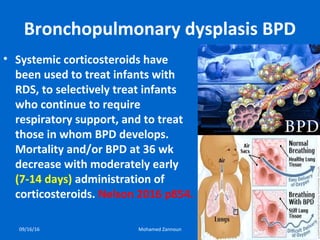
Bronchopulmonary dysplasis BPD
• Systemic corticosteroids have
been used to treat infants with
RDS, to selectively treat infants
who continue to require
respiratory support, and to treat
those in whom BPD develops.
Mortality and/or BPD at 36 wk
decrease with moderately early
(7-14 days) administration of
corticosteroids. Nelson 2016 p854.
09/16/16 Mohamed Zannoun
BPD
• Early (<96 hr) and delayed (>2 wk)
administration of systemic steroids as also
been assessed with meta-analyses, and the
results are qualitatively similar. However,
there are short-term adverse effects,
including hyperglycemia, hypertension,
gastrointestinal bleeding, gastrointestinal
perforation, hypertrophic obstructive
cardiomyopathy, poor weight gain, poor
growth of the head, and a trend toward a
higher incidence of periventricular
leukomalacia. Nelson 2016 p854.
09/16/16 Mohamed Zannoun
BPD
• Routine use of systemic
corticosteroids for the
prevention or treatment of
BPD is not recommended by
the Consensus Group of the
American Academy of
Pediatrics and the Canadian
Pediatric Society. Nelson 2016
p854.
09/16/16 Mohamed Zannoun
BPD
• Administration of inhaled
steroids to ventilated
preterm infants during the
1st 2 wk after birth reduced
the need for systemic
steroids and tended to
decrease rates of death
and/or BPD at 36 wk without
an increase in adverse
effects. Nelson 2016 p854.
09/16/16 Mohamed Zannoun
hypotension
09/16/16 Mohamed Zannoun
hypotension
• Hypotension in some infants weighing <1,000 g
does not respond to fluids or inotropic gents but
may respond to therapy with intravenous
hydrocortisone. Nelson 2016 p831.
09/16/16 Mohamed Zannoun
Vascular Disorders
09/16/16 Mohamed Zannoun
Treatment of Kawasaki Disease
• Corticosteroids have been trialed
as primary therapy with the first
dose of IVIG in hopes of improving
coronary outcomes. A North
American trial using a single pulse
dose of intravenous
methylprednisolone (30 mg/kg)
with IVIG as primary therapy did
not improve coronary outcomes.
Nelson 2016 p1147.
09/16/16 Mohamed Zannoun
Treatment of Kawasaki Disease
• However, a trial in Japan utilizing the
Kobayashi score to identify high-risk
children demonstrated improved
coronary outcomes with a regimen of
prednisolone (2 mg/kg) plus IVIG as
primary therapy.
• Despite these promising results,
administration of corticosteroids, as
primary therapy to all children with KD
awaits the development of a risk score
that identifies high-risk children in a
multiracial population. Nelson 2016
p1147.
09/16/16 Mohamed Zannoun
Treatment of Kawasaki Disease
• Corticosteroids in varying doses
and via different routes have
also been used as secondary or
“rescue” therapy when fever
persists after the first IVIG.
However, the lack of clear data
regarding the most effective way
to administer corticosteroids as
rescue therapy has led to
significant practice variation
across centers. Nelson 2016
p1147.09/16/16 Mohamed Zannoun
Henoch-Schnlein Purpura
• Treatment for mild and self-
limited HSP is supportive, with
an emphasis on assuring
adequate hydration, nutrition,
and analgesia. Steroids are most
often used to treat significant
gastrointestinal involvement or
other life-threatening
manifestations. Nelson 2016
p121809/16/16 Mohamed Zannoun
• Prednisone (1 mg/kg/day
for 1-2 wk, followed by
taper) reduces abdominal
and joint pain but does
not alter overall prognosis
nor prevent renal disease.
Rapid tapering of
corticosteroids may lead
to a flare of HSP
symptoms. Nelson 2016
p1218
09/16/16 Mohamed Zannoun
ITP
• Pulsed high-dose dexamethasone
therapy in children with chronic
idiopathic thrombocytopenic purpura
before considering splenectomy
• Dexamethasone orally or iv ??? At a
dosage of 40 mg /m2 /day maximium
40 mg /day for 4 consecutive days the
cycle repeated once monthly for six
months
• pediatric haematol oncol. 2002 Jul-
Aug 19(5):329-3509/16/16 Mohamed Zannoun
Infectious diseases09/16/16 Mohamed Zannoun
Pharyngitis
• Systemic corticosteroids are sometimes used in children
who have evidence of upper airway compromise due to
mononucleosis. Although corticosteroids are used fairly
commonly in adults with pharyngitis, large scale studies
capable of providing safety and efficacy data are lacking in
children. Corticosteroids cannot be recommended for
treatment of most pediatric pharyngitis.
• Nelson 2016 p2019.
09/16/16 Mohamed Zannoun
In tonsillectomy
• The Clinical Guidelines for
Tonsillectomy include a
recommendation for
• intravenous a single dose of
intraoperative dexamethasone
(0.5 mg/kg), which decreases
postoperative nausea and
vomiting and reduces swelling.
Nelson 2016 p2026
09/16/16 Mohamed Zannoun
Bronchiolitis
• Corticosteroid therapy is not
indicated except in older
children with an established
diagnosis of asthma, because
its use is associated with
prolonged virus shedding and
is of no proven clinical benefit.
Nelson 2016 p1608
09/16/16 Mohamed Zannoun
Bronchiolitis
• Corticosteroids, whether
parenteral, oral, or inhaled,
have been used for bronchiolitis
despite conflicting and often
negative studies.
Corticosteroids are not
recommended in previously
healthy infants with RSV.
Nelson 2016 p2047
09/16/16 Mohamed Zannoun
Bronchiolitis
• Combined therapy with nebulized
epinephrine and dexamethasone
has been used with some success,
but additional studies are needed
to confirm its efficacy and
investigate the long-term adverse
effects in infants before this
combination can be recommended.
Nelson 2016 p2048
09/16/16 Mohamed Zannoun
• Croup
• The effectiveness of oral
corticosteroids in viral croup is well
established. Corticosteroids
decrease the edema in the laryngeal
mucosa through their anti-
inflammatory action. Oral steroids
are beneficial, even in mild croup, as
measured by reduced
hospitalization, shorter duration of
hospitalization, and reduced need
for subsequent interventions such as
epinephrine administration. Nelson
2016 p2034
09/16/16 Mohamed Zannoun
Croup
•Most studies that demonstrated the
efficacy of oral dexamethasone used
a single dose of 0.6 mg/ kg,
•a dose as low as 0.15 mg/kg may be
just as effective intramuscular
dexamethasone and nebulized
budesonide have an equivalent
clinical effect; oral dosing of
dexamethasone is as effective as
intramuscular administration. A
single dose of oral prednisolone is less
effective. Nelson 2016 p2034
09/16/16 Mohamed Zannoun
• croup
• There are no controlled studies
examining the effectiveness of
multiple doses of
corticosteroids. The only
adverse effect in the treatment
of croup with corticosteroids is
the development of Candida
albicans laryngotracheitis in a
patient who received
dexamethasone, 1 mg/ kg/24
hr, for 8 days. Nelson 2016
p2034
09/16/16 Mohamed Zannoun
Epiglottitis
• Racemic epinephrine
and corticosteroids
are ineffective.
Nelson 2016 p203409/16/16 Mohamed Zannoun
Meningitis
• Some experts recommend
use of corticosteroids in
pneumococcal meningitis
early in the course of disease,
but data demonstrating clear
benefit in children is lacking.
Nelson 2016 p1325
09/16/16 Mohamed Zannoun
• Data support the use of
intravenous dexamethasone,
0.15 mg/kg/ dose given every 6
hr for 2 days, in the treatment of
children older than 6 wk with
acute bacterial meningitis caused
by H. influenzae type b. lead to
reduction in sensorineural
hearing loss. Data in children
regarding benefits, if any, of
corticosteroids in the treatment
of meningitis caused by other
bacteria are inconclusive. Nelson
2016 page 294309/16/16 Mohamed Zannoun
• . Early steroid treatment of adults
with bacterial meningitis, especially
those with pneumococcal meningitis,
results in improved outcome
Corticosteroids appear to have
maximum benefit if given 1-2 hr
before antibiotics are initiated. They
also may be effective if given
concurrently with or soon after the
first dose of antibiotics.
• Nelson 2016 page 2943
09/16/16 Mohamed Zannoun
Pertussis Bordetella pertussis
• No randomized, blinded
clinical trial of sufficient size
has been performed to
evaluate the usefulness of
corticosteroids in the
management of pertussis
Nelson 2016 p1380
09/16/16 Mohamed Zannoun
Salmonella typhoid fever
• Although additional treatment with
dexamethasone (3 mg/kg for the
initial dose, followed by 1 mg/kg
every 6 hr for 48 hr) is recommended
for severely ill patients with shock,
stupor, or coma; corticosteroids
should be administered only under
strict controlled conditions and
supervision, because their use may
mask signs of abdominal
complications. Nelson 2016 p1392
09/16/16 Mohamed Zannoun
Tuberculosis
• Corticosteroids decrease mortality rates and
long-term neurologic sequelae in some
patients with tuberculous meningitis by
reducing vasculitis, inflammation, and,
ultimately, intracranial pressure. Lowering
the intracranial pressure limits tissue damage
and favors circulation of antituberculosis
drugs through the brain and meninges..
Nelson 2016 p1459.
09/16/16 Mohamed Zannoun
tuberculosis
• Short courses of corticosteroids also may be
effective for children with endobronchial
tuberculosis
• Several randomized clinical trials have
shown that corticosteroids can help relieve
symptoms and constriction associated with
acute tuberculous pericardial effusion.
Corticosteroids can cause dramatic
improvement in symptoms in some patients
with tuberculous pleural effusion and shift
of the mediastinum. However, the long-
term course of disease is probably
unaffected. Nelson 2016 p1459.09/16/16 Mohamed Zannoun
miliary tuberculosis
• in case of tuberculoma, a tumor-
like mass resulting from
aggregation of caseous tubercles
that usually manifests clinically as
a brain tumor Corticosteroids are
usually administered during the
1st few wk of treatment or in the
immediate postoperative period
to decrease cerebral edema
• Nelson 2016 p1452-53.
09/16/16 Mohamed Zannoun
Miliary tuberculosis
• Some children with severe miliary
tuberculosis have dramatic improvement
with corticosteroid therapy if the
inflammatory reaction is so severe that
alveolocapillary block is present. There is
no convincing evidence to support a
specific corticosteroid preparation. The
most commonly used regimen is
prednisone, 1-2 mg/kg/day in 1-2 divided
doses orally for 4-6 wk, followed by a
taper. Nelson 2016 p1459.
• @@@@@@@@@@@@@@@@@@@
09/16/16 Mohamed Zannoun
Herpes zoster
• Use of corticosteroids in
the treatment of herpes
zoster in children is not
recommended. Nelson
2016 p1585
09/16/16 Mohamed Zannoun
Infectious mononucleosis
• Short courses of corticosteroids
(<2 wk) may be helpful for
selected complications of
infectious mononucleosis, but this
use has not been evaluated
critically. Some appropriate
indications include incipient
airway obstruction,
thrombocytopenia with
hemorrhaging, autoimmune
hemolytic anemia, seizures, and
09/16/16 Mohamed Zannoun
Infectious mononucleosis
• A recommended regimen is prednisone
1 mg/kg/day (maximum: 60 mg/day) or
equivalent for 7 days and tapered over
another 7 days. There are no controlled
data showing efficacy of corticosteroids
in any of these conditions. In view of the
potential and unknown hazards of
immunosuppression for a virus infection
with oncogenic complications,
corticosteroids should not be used in
uncomplicated cases of infectious
mononucleosis. Nelson 2016 p1589
09/16/16 Mohamed Zannoun
Sepsis and Septic shock
• Corticosteroids should
not be administered for
the treatment of sepsis
in the absence of shock.
• Nelson 2016 p525-26
09/16/16 Mohamed Zannoun
Sepsis and Septic shock
• In adults if adequate fluid resuscitation
and vasopressor therapy are not able to
restore hemodynamic stability In case
we suggest intravenous hydrocortisone
alone at a dose of 200 mg per day.
Timely hydrocortisone therapy in
children with fluid refractory,
catecholamine resistant shock and
suspected or proven absolute (classic)
adrenal insufficiency. Nelson 2016
p525-2609/16/16 Mohamed Zannoun
cardiogenic shock
• Currently available pediatric
data do not demonstrate an
overall survival benefit in
patients with cardiogenic shock
treated with hydrocortisone.
Determination of baseline
cortisol levels prior to steroid
administration may be beneficial
in guiding therapy, although this
idea remains controversial.
Nelson 2016 p52609/16/16 Mohamed Zannoun
live vaccines
• Corticosteroids can suppress the
immune system. Children
receiving corticosteroids (≥2
mg/kg/day or ≥20 mg/day of
prednisone or equivalent) for 14
or more days should not receive
live vaccines until therapy has
been discontinued for at least 1
mo. Nelson 2016 p1256
09/16/16 Mohamed Zannoun
live vaccines
• Children on the same dose levels
but for <2 wk may receive live
viral vaccines as soon as therapy is
discontinued, although some
experts would wait 2 wk after
therapy has been discontinued.
Children receiving lower doses of
corticosteroids may be vaccinated
while receiving therapy. Nelson
2016 p125609/16/16 Mohamed Zannoun
09/16/16 Mohamed Zannoun
wheezing infants
• Oral steroids are generally
reserved for atopic wheezing
infants thought to have asthma
that is refractory to other
medications.
• Their use in 1st-time wheezing
infants or in infants who do not
need hospitalization is
controversial. Nelson 2016
p204709/16/16 Mohamed Zannoun
Bronchial Asthma
• Corticosteroids are the most
potent and most effective
medications used to treat
both the acute (administered
systemically) and chronic
(administered by inhalation)
manifestations of asthma.
They are available in inhaled,
oral, and parenteral forms
Nelson 2016 p1107.09/16/16 Mohamed Zannoun
Oral vs IV
• Short-course systemic corticosteroid
therapy is recommended for use in
moderate to severe asthma
exacerbations to hasten recovery and
prevent recurrence of symptoms.
Corticosteroids are effective as single
doses administered in the emergency
department, short courses in the clinic
setting, and both oral and intravenous
formulations in hospitalized
children. Nelson 2016 p1114.09/16/16 Mohamed Zannoun
Oral vs IV
• Studies in children hospitalized with
acute asthma have found
corticosteroids administered orally to
be as effective as intravenous
corticosteroids. Accordingly, oral
corticosteroid therapy can often be
used, although children with sustained
respiratory distress who are unable to
tolerate oral preparations or liquids
are obvious candidates
for intravenous corticosteroid therapy.
Nelson 2016 p1114
09/16/16 Mohamed Zannoun
• Systemic corticosteroids are
rarely indicated in the
treatment of chronic AD.
The dramatic clinical
improvement that may
occur with systemic
corticosteroids is frequently
associated with a severe
rebound flare of AD after
therapy discontinuation..
Nelson 2016 p1119.
Systemic CS in Atopic Dermatitis
AD (Atopic Eczema)
09/16/16 Mohamed Zannoun
• Short courses of oral
corticosteroids may
be appropriate for an
acute exacerbation of
AD while other
treatment measures
are being instituted in
parallel. Nelson 2016
p1119.
09/16/16 Mohamed Zannoun
Urticaria
• In Chronic urticaria If hives
persist after maximal H1-
and/or H2-receptor blockade
has been achieved, a brief
course of oral corticosteroids
may be considered, but long-
term steroid use is best
avoided. Nelson 2016 p1130.
09/16/16 Mohamed Zannoun
Stevens-Johnson Syndrome SJS and Toxic
Epidermal Necrolysis TEN
• Adverse Reactions to Drugs
• Corticosteroids are
contraindicated because they
can significantly increase the
risk of infection. Nelson 2016
p1147.
09/16/16 Mohamed Zannoun
DIAPER DERMATITIS
• A common practice is to presumptively treat
any diaper rash that has been present for
longer than 3 days with topical antifungal
therapy such as nystatin, clotrimazole, or
miconazole. If significant inflammation is
present, the addition of hydrocortisone 1%
may be useful for the 1st 1-2 days, but
topical corticosteroids should be used
cautiously in infants because the relatively
potent topical corticosteroid can lead to
adverse effects. Frequent diaper changes
and short periods without diapers are
important adjunctive treatments. Nelson
2016 p151709/16/16 Mohamed Zannoun
Eosinophilic Esophagitis
corticosteroids have been
used successfully for
nonresponders and for
nonallergic (“primary”) EoE,
with symptomatic and
histologic remission rates
reaching 90%. Nelson 2016
p1791
09/16/16 Mohamed Zannoun
Eosinophilic Gastroenteritis
• A majority of patients
require treatment with
systemic corticosteroids,
which are often
effective. Nelson 2016
p1831
09/16/16 Mohamed Zannoun
GIT disorders09/16/16 Mohamed Zannoun
Ulcerative colitis
• Children with moderate to severe
pancolitis or colitis that is
unresponsive to 5-aminosalicylate 5-
ASA therapy should be treated with
corticosteroids, most commonly,
prednisone. The usual starting dose of
prednisone is 1-2 mg/kg/24 hr (40-60
mg maximum dose). This medication
can be given once daily. With severe
colitis, the dose can be divided twice
daily and can be given intravenously.
Nelson 2016 p182409/16/16 Mohamed Zannoun
Ulcerative colitis
Steroids are considered
an effective medication
for acute flares, but they
are not appropriate
maintenance medications
because of loss of effect
and side effects, Nelson
2016 p1824
09/16/16 Mohamed Zannoun
Crohn disease
• Corticosteroids are utilized for
acute exacerbations of pediatric
Crohn disease because they
effectively suppress acute
inflammation, rapidly relieving
symptoms (prednisone, 1-2
mg/kg/day, maximum 40-60
mg). The goal is to taper dosing
as soon as the disease becomes
quiescent. Nelson 2016 p183009/16/16 Mohamed Zannoun
09/16/16 Mohamed Zannoun

Contoversy about the use Corticosteroids in pediatric

  • 1.
    Controversy about theuse ofControversy about the use of corticosteroids in pediatricscorticosteroids in pediatrics ByBy Mohamed Zannoun (MD) Associated Professor of pediatric Al-Azhar University Dameitta 09/16/16 Mohamed Zannoun
  • 2.
  • 3.
    Types of Steroids •Replacement Therapy • glucocorticoid (hydrocortisone) • mineralocorticoid (fludrocortisone) • Anti-inflammatory Therapy • Short acting: hydrocortisone • Intermediate acting: prednisolone; methylprednisolone; triamcinolone • Long acting: dexamethasone 09/16/16 Mohamed Zannoun
  • 4.
    Routes of Administration •Systemic : oral, transrectal, IV, IM • Local: topical, intranasal, intraocular, intraarticular 09/16/16 Mohamed Zannoun
  • 5.
    Availability of InternationalGuidelines on Use of Steroid • No one-for-all guideline • Glucocorticoid Replacement Therapy : Guidelines published by Royal College of Physicians of London, UK ; not available from Endocrine Society, USA. • Systemic Use of Glucocorticoid: Guidelines available for EULAR (European League for Rheumatology) • Local Use of Steroid: guidelines on individual disease, general guidelines not available 09/16/16 Mohamed Zannoun
  • 6.
    Royal College ofPhysicians of London Guidelines on Glucocorticoid Replacement Therapy • Recommended Daily Dose for Glucocorticoid • Hydrocortisone (cortisol) 15-30mg • Cortisone acetate 25-37.5mg • Prednisolone 5-7.5mg • Dexamethasone 0.5mg • Recommended Daily Dose of Mineralocorticoid • Fludrocortisone 100-200mcg09/16/16 Mohamed Zannoun
  • 7.
  • 8.
  • 9.
    HIGH ALTITUDE CEREBRALEDEMA HACE • . Dexamethasone should be administered at a dose of 0.15 mg/kg per dose given orally every 6 hr. The few mild cases of HACE reported in children have recovered with dexamethasone and descent. Nelson 2016 p557 09/16/16 Mohamed Zannoun
  • 10.
    Brain Death • Corticosteroidsshould generally not be used unless adrenal insufficiency is documented. Nelson 2016 p512 09/16/16 Mohamed Zannoun
  • 11.
    Role of corticosteroidsin management of hereditary angioedema • corticosteroids have no effect. Nelson 2016 p1060.09/16/16 Mohamed Zannoun
  • 12.
    corrosive • The useof corticosteroids or prophylactic antibiotics is not beneficial. Nelson 2016p464 • The role of corticosteroids is controversial. Nelson 2016 p1795 09/16/16 Mohamed Zannoun
  • 13.
    In human studies:Inconclusive so far • NEJM. 1990: – Prospective study over an 18-year period – No benefit • Toxicol Rev. 2005: – 1991-2004 in the English, German, French, Spanish – No benefit 09/16/16 Mohamed Zannoun
  • 14.
    hydrocarbons and hydrocarbon- inducedpneumonitis Treatment is supportive Neither corticosteroids nor prophylactic antibiotics have shown any clear benefit. Nelson 2016 p465 09/16/16 Mohamed Zannoun
  • 15.
    Burns • Treatment isinitially focused on establishing and maintaining a patent airway through prompt and early nasotracheal or orotracheal intubation and adequate ventilation and oxygenation. • Wheezing is common, and β- agonist aerosols or inhaled corticosteroids are useful. Nelson 2016 p574.09/16/16 Mohamed Zannoun
  • 16.
    Generally in Pediatricemergency • Inhaled bronchodilators, such as albuterol, augmented by oral or IV corticosteroids, remain the mainstay of therapy:- • 1- Mild to moderate acute distress caused by lower airway obstruction. • 2- Children with more significant obstruction appear dyspneic, with tachypnea, retractions, and easily audible wheezing. Nelson 2016 p49409/16/16 Mohamed Zannoun
  • 17.
  • 18.
    Antenatal corticosteroids • Asingle course of antenatal corticosteroids is recommended in pregnancies 24-34 wk of gestation that are at risk for preterm delivery. Antenatal steroids decrease the risk of death, grades III and IV IVH, and PVL in the neonate. • The prophylactic administration of low-dose indomethacin (0.1 mg/kg/day for 3 days) to VLBW preterm infants reduces the incidence of severe IVH. Nelson 2016 p836-837. 09/16/16 Mohamed Zannoun
  • 19.
    Congenital Adrenal Hyperplasia 21-hydroxylasedeficiency • This suppresses secretion of steroids by the fetal adrenal, including secretion of adrenal androgens. If started by 6 wk of gestation, it ameliorates virilization of the external genitalia Nelson 2016 p2720 09/16/16 Mohamed Zannoun
  • 20.
    Congenital heart block •Prenatal Dexamethasone thearpy , Nelson 2016 p817 09/16/16 Mohamed Zannoun
  • 21.
    Post natal corticosteroids •Long-term adverse neurodevelopmental outcomes are also associated with high-dose postnatal corticosteroid use in VLBW infants. • Early postnatal exposure to dexamethasone, within the 1st wk of life, is associated with metabolic derangements, poor growth, increased risk for sepsis, and an increased risk of spontaneous bowel perforation. Nelson 2016 p838. 09/16/16 Mohamed Zannoun
  • 22.
    Post natal corticosteroids •Infants exposed to postnatal steroids after the 1st wk of life have an increased risk of cerebral palsy and developmental delay. The risk may be increased with prolonged steroid use (>6 wk). • At 8 yr of age, dexamethasone-treated children are smaller, have smaller head circumferences, poorer motor skills and coordination, more difficulty with visual motor integration and lower full-scale verbal IQ and performance IQ scores. Nelson 2016 p838. 09/16/16 Mohamed Zannoun
  • 23.
    Post natal corticosteroids •It is recommended that postnatal corticosteroid use in VLBW infants be limited to exceptional clinical circumstances and that parents of infants in whom corticosteroids are used be informed of the potential adverse side effects, including increased risk for developmental delay, cerebral palsy, and impaired growth. Nelson 2016 p838.09/16/16 Mohamed Zannoun
  • 24.
    Prior to extubationfrom mechanically ventilatted babies • Administration of intravenous corticosteroids (dexamethasone 0.5 mg/kg every 6 hr for 4 doses prior to extubation) has been shown to minimize the incidence of postextubation airway obstruction. • In patients in whom postextubation airway obstruction develops, the need for re-intubation may be obviated by administration of nebulized racemic epinephrine and heliox. Nelson 2016 p544. 09/16/16 Mohamed Zannoun
  • 25.
    Bronchopulmonary dysplasis BPD •Systemic corticosteroids have been used to treat infants with RDS, to selectively treat infants who continue to require respiratory support, and to treat those in whom BPD develops. Mortality and/or BPD at 36 wk decrease with moderately early (7-14 days) administration of corticosteroids. Nelson 2016 p854. 09/16/16 Mohamed Zannoun
  • 26.
    BPD • Early (<96hr) and delayed (>2 wk) administration of systemic steroids as also been assessed with meta-analyses, and the results are qualitatively similar. However, there are short-term adverse effects, including hyperglycemia, hypertension, gastrointestinal bleeding, gastrointestinal perforation, hypertrophic obstructive cardiomyopathy, poor weight gain, poor growth of the head, and a trend toward a higher incidence of periventricular leukomalacia. Nelson 2016 p854. 09/16/16 Mohamed Zannoun
  • 27.
    BPD • Routine useof systemic corticosteroids for the prevention or treatment of BPD is not recommended by the Consensus Group of the American Academy of Pediatrics and the Canadian Pediatric Society. Nelson 2016 p854. 09/16/16 Mohamed Zannoun
  • 28.
    BPD • Administration ofinhaled steroids to ventilated preterm infants during the 1st 2 wk after birth reduced the need for systemic steroids and tended to decrease rates of death and/or BPD at 36 wk without an increase in adverse effects. Nelson 2016 p854. 09/16/16 Mohamed Zannoun
  • 29.
  • 30.
  • 31.
    hypotension • Hypotension insome infants weighing <1,000 g does not respond to fluids or inotropic gents but may respond to therapy with intravenous hydrocortisone. Nelson 2016 p831. 09/16/16 Mohamed Zannoun
  • 32.
  • 33.
    Treatment of KawasakiDisease • Corticosteroids have been trialed as primary therapy with the first dose of IVIG in hopes of improving coronary outcomes. A North American trial using a single pulse dose of intravenous methylprednisolone (30 mg/kg) with IVIG as primary therapy did not improve coronary outcomes. Nelson 2016 p1147. 09/16/16 Mohamed Zannoun
  • 34.
    Treatment of KawasakiDisease • However, a trial in Japan utilizing the Kobayashi score to identify high-risk children demonstrated improved coronary outcomes with a regimen of prednisolone (2 mg/kg) plus IVIG as primary therapy. • Despite these promising results, administration of corticosteroids, as primary therapy to all children with KD awaits the development of a risk score that identifies high-risk children in a multiracial population. Nelson 2016 p1147. 09/16/16 Mohamed Zannoun
  • 35.
    Treatment of KawasakiDisease • Corticosteroids in varying doses and via different routes have also been used as secondary or “rescue” therapy when fever persists after the first IVIG. However, the lack of clear data regarding the most effective way to administer corticosteroids as rescue therapy has led to significant practice variation across centers. Nelson 2016 p1147.09/16/16 Mohamed Zannoun
  • 36.
    Henoch-Schnlein Purpura • Treatmentfor mild and self- limited HSP is supportive, with an emphasis on assuring adequate hydration, nutrition, and analgesia. Steroids are most often used to treat significant gastrointestinal involvement or other life-threatening manifestations. Nelson 2016 p121809/16/16 Mohamed Zannoun
  • 37.
    • Prednisone (1mg/kg/day for 1-2 wk, followed by taper) reduces abdominal and joint pain but does not alter overall prognosis nor prevent renal disease. Rapid tapering of corticosteroids may lead to a flare of HSP symptoms. Nelson 2016 p1218 09/16/16 Mohamed Zannoun
  • 38.
    ITP • Pulsed high-dosedexamethasone therapy in children with chronic idiopathic thrombocytopenic purpura before considering splenectomy • Dexamethasone orally or iv ??? At a dosage of 40 mg /m2 /day maximium 40 mg /day for 4 consecutive days the cycle repeated once monthly for six months • pediatric haematol oncol. 2002 Jul- Aug 19(5):329-3509/16/16 Mohamed Zannoun
  • 39.
  • 40.
    Pharyngitis • Systemic corticosteroidsare sometimes used in children who have evidence of upper airway compromise due to mononucleosis. Although corticosteroids are used fairly commonly in adults with pharyngitis, large scale studies capable of providing safety and efficacy data are lacking in children. Corticosteroids cannot be recommended for treatment of most pediatric pharyngitis. • Nelson 2016 p2019. 09/16/16 Mohamed Zannoun
  • 41.
    In tonsillectomy • TheClinical Guidelines for Tonsillectomy include a recommendation for • intravenous a single dose of intraoperative dexamethasone (0.5 mg/kg), which decreases postoperative nausea and vomiting and reduces swelling. Nelson 2016 p2026 09/16/16 Mohamed Zannoun
  • 42.
  • 43.
    Bronchiolitis • Corticosteroid therapyis not indicated except in older children with an established diagnosis of asthma, because its use is associated with prolonged virus shedding and is of no proven clinical benefit. Nelson 2016 p1608 09/16/16 Mohamed Zannoun
  • 44.
    Bronchiolitis • Corticosteroids, whether parenteral,oral, or inhaled, have been used for bronchiolitis despite conflicting and often negative studies. Corticosteroids are not recommended in previously healthy infants with RSV. Nelson 2016 p2047 09/16/16 Mohamed Zannoun
  • 45.
    Bronchiolitis • Combined therapywith nebulized epinephrine and dexamethasone has been used with some success, but additional studies are needed to confirm its efficacy and investigate the long-term adverse effects in infants before this combination can be recommended. Nelson 2016 p2048 09/16/16 Mohamed Zannoun
  • 46.
  • 47.
    • Croup • Theeffectiveness of oral corticosteroids in viral croup is well established. Corticosteroids decrease the edema in the laryngeal mucosa through their anti- inflammatory action. Oral steroids are beneficial, even in mild croup, as measured by reduced hospitalization, shorter duration of hospitalization, and reduced need for subsequent interventions such as epinephrine administration. Nelson 2016 p2034 09/16/16 Mohamed Zannoun
  • 48.
    Croup •Most studies thatdemonstrated the efficacy of oral dexamethasone used a single dose of 0.6 mg/ kg, •a dose as low as 0.15 mg/kg may be just as effective intramuscular dexamethasone and nebulized budesonide have an equivalent clinical effect; oral dosing of dexamethasone is as effective as intramuscular administration. A single dose of oral prednisolone is less effective. Nelson 2016 p2034 09/16/16 Mohamed Zannoun
  • 49.
    • croup • Thereare no controlled studies examining the effectiveness of multiple doses of corticosteroids. The only adverse effect in the treatment of croup with corticosteroids is the development of Candida albicans laryngotracheitis in a patient who received dexamethasone, 1 mg/ kg/24 hr, for 8 days. Nelson 2016 p2034 09/16/16 Mohamed Zannoun
  • 50.
    Epiglottitis • Racemic epinephrine andcorticosteroids are ineffective. Nelson 2016 p203409/16/16 Mohamed Zannoun
  • 51.
    Meningitis • Some expertsrecommend use of corticosteroids in pneumococcal meningitis early in the course of disease, but data demonstrating clear benefit in children is lacking. Nelson 2016 p1325 09/16/16 Mohamed Zannoun
  • 52.
    • Data supportthe use of intravenous dexamethasone, 0.15 mg/kg/ dose given every 6 hr for 2 days, in the treatment of children older than 6 wk with acute bacterial meningitis caused by H. influenzae type b. lead to reduction in sensorineural hearing loss. Data in children regarding benefits, if any, of corticosteroids in the treatment of meningitis caused by other bacteria are inconclusive. Nelson 2016 page 294309/16/16 Mohamed Zannoun
  • 53.
    • . Earlysteroid treatment of adults with bacterial meningitis, especially those with pneumococcal meningitis, results in improved outcome Corticosteroids appear to have maximum benefit if given 1-2 hr before antibiotics are initiated. They also may be effective if given concurrently with or soon after the first dose of antibiotics. • Nelson 2016 page 2943 09/16/16 Mohamed Zannoun
  • 54.
  • 55.
    Pertussis Bordetella pertussis •No randomized, blinded clinical trial of sufficient size has been performed to evaluate the usefulness of corticosteroids in the management of pertussis Nelson 2016 p1380 09/16/16 Mohamed Zannoun
  • 56.
    Salmonella typhoid fever •Although additional treatment with dexamethasone (3 mg/kg for the initial dose, followed by 1 mg/kg every 6 hr for 48 hr) is recommended for severely ill patients with shock, stupor, or coma; corticosteroids should be administered only under strict controlled conditions and supervision, because their use may mask signs of abdominal complications. Nelson 2016 p1392 09/16/16 Mohamed Zannoun
  • 57.
    Tuberculosis • Corticosteroids decreasemortality rates and long-term neurologic sequelae in some patients with tuberculous meningitis by reducing vasculitis, inflammation, and, ultimately, intracranial pressure. Lowering the intracranial pressure limits tissue damage and favors circulation of antituberculosis drugs through the brain and meninges.. Nelson 2016 p1459. 09/16/16 Mohamed Zannoun
  • 58.
    tuberculosis • Short coursesof corticosteroids also may be effective for children with endobronchial tuberculosis • Several randomized clinical trials have shown that corticosteroids can help relieve symptoms and constriction associated with acute tuberculous pericardial effusion. Corticosteroids can cause dramatic improvement in symptoms in some patients with tuberculous pleural effusion and shift of the mediastinum. However, the long- term course of disease is probably unaffected. Nelson 2016 p1459.09/16/16 Mohamed Zannoun
  • 59.
    miliary tuberculosis • incase of tuberculoma, a tumor- like mass resulting from aggregation of caseous tubercles that usually manifests clinically as a brain tumor Corticosteroids are usually administered during the 1st few wk of treatment or in the immediate postoperative period to decrease cerebral edema • Nelson 2016 p1452-53. 09/16/16 Mohamed Zannoun
  • 60.
    Miliary tuberculosis • Somechildren with severe miliary tuberculosis have dramatic improvement with corticosteroid therapy if the inflammatory reaction is so severe that alveolocapillary block is present. There is no convincing evidence to support a specific corticosteroid preparation. The most commonly used regimen is prednisone, 1-2 mg/kg/day in 1-2 divided doses orally for 4-6 wk, followed by a taper. Nelson 2016 p1459. • @@@@@@@@@@@@@@@@@@@ 09/16/16 Mohamed Zannoun
  • 61.
    Herpes zoster • Useof corticosteroids in the treatment of herpes zoster in children is not recommended. Nelson 2016 p1585 09/16/16 Mohamed Zannoun
  • 62.
    Infectious mononucleosis • Shortcourses of corticosteroids (<2 wk) may be helpful for selected complications of infectious mononucleosis, but this use has not been evaluated critically. Some appropriate indications include incipient airway obstruction, thrombocytopenia with hemorrhaging, autoimmune hemolytic anemia, seizures, and 09/16/16 Mohamed Zannoun
  • 63.
    Infectious mononucleosis • Arecommended regimen is prednisone 1 mg/kg/day (maximum: 60 mg/day) or equivalent for 7 days and tapered over another 7 days. There are no controlled data showing efficacy of corticosteroids in any of these conditions. In view of the potential and unknown hazards of immunosuppression for a virus infection with oncogenic complications, corticosteroids should not be used in uncomplicated cases of infectious mononucleosis. Nelson 2016 p1589 09/16/16 Mohamed Zannoun
  • 64.
    Sepsis and Septicshock • Corticosteroids should not be administered for the treatment of sepsis in the absence of shock. • Nelson 2016 p525-26 09/16/16 Mohamed Zannoun
  • 65.
    Sepsis and Septicshock • In adults if adequate fluid resuscitation and vasopressor therapy are not able to restore hemodynamic stability In case we suggest intravenous hydrocortisone alone at a dose of 200 mg per day. Timely hydrocortisone therapy in children with fluid refractory, catecholamine resistant shock and suspected or proven absolute (classic) adrenal insufficiency. Nelson 2016 p525-2609/16/16 Mohamed Zannoun
  • 66.
    cardiogenic shock • Currentlyavailable pediatric data do not demonstrate an overall survival benefit in patients with cardiogenic shock treated with hydrocortisone. Determination of baseline cortisol levels prior to steroid administration may be beneficial in guiding therapy, although this idea remains controversial. Nelson 2016 p52609/16/16 Mohamed Zannoun
  • 67.
    live vaccines • Corticosteroidscan suppress the immune system. Children receiving corticosteroids (≥2 mg/kg/day or ≥20 mg/day of prednisone or equivalent) for 14 or more days should not receive live vaccines until therapy has been discontinued for at least 1 mo. Nelson 2016 p1256 09/16/16 Mohamed Zannoun
  • 68.
    live vaccines • Childrenon the same dose levels but for <2 wk may receive live viral vaccines as soon as therapy is discontinued, although some experts would wait 2 wk after therapy has been discontinued. Children receiving lower doses of corticosteroids may be vaccinated while receiving therapy. Nelson 2016 p125609/16/16 Mohamed Zannoun
  • 69.
  • 70.
    wheezing infants • Oralsteroids are generally reserved for atopic wheezing infants thought to have asthma that is refractory to other medications. • Their use in 1st-time wheezing infants or in infants who do not need hospitalization is controversial. Nelson 2016 p204709/16/16 Mohamed Zannoun
  • 71.
    Bronchial Asthma • Corticosteroidsare the most potent and most effective medications used to treat both the acute (administered systemically) and chronic (administered by inhalation) manifestations of asthma. They are available in inhaled, oral, and parenteral forms Nelson 2016 p1107.09/16/16 Mohamed Zannoun
  • 72.
    Oral vs IV •Short-course systemic corticosteroid therapy is recommended for use in moderate to severe asthma exacerbations to hasten recovery and prevent recurrence of symptoms. Corticosteroids are effective as single doses administered in the emergency department, short courses in the clinic setting, and both oral and intravenous formulations in hospitalized children. Nelson 2016 p1114.09/16/16 Mohamed Zannoun
  • 73.
    Oral vs IV •Studies in children hospitalized with acute asthma have found corticosteroids administered orally to be as effective as intravenous corticosteroids. Accordingly, oral corticosteroid therapy can often be used, although children with sustained respiratory distress who are unable to tolerate oral preparations or liquids are obvious candidates for intravenous corticosteroid therapy. Nelson 2016 p1114 09/16/16 Mohamed Zannoun
  • 74.
    • Systemic corticosteroidsare rarely indicated in the treatment of chronic AD. The dramatic clinical improvement that may occur with systemic corticosteroids is frequently associated with a severe rebound flare of AD after therapy discontinuation.. Nelson 2016 p1119. Systemic CS in Atopic Dermatitis AD (Atopic Eczema) 09/16/16 Mohamed Zannoun
  • 75.
    • Short coursesof oral corticosteroids may be appropriate for an acute exacerbation of AD while other treatment measures are being instituted in parallel. Nelson 2016 p1119. 09/16/16 Mohamed Zannoun
  • 76.
    Urticaria • In Chronicurticaria If hives persist after maximal H1- and/or H2-receptor blockade has been achieved, a brief course of oral corticosteroids may be considered, but long- term steroid use is best avoided. Nelson 2016 p1130. 09/16/16 Mohamed Zannoun
  • 77.
    Stevens-Johnson Syndrome SJSand Toxic Epidermal Necrolysis TEN • Adverse Reactions to Drugs • Corticosteroids are contraindicated because they can significantly increase the risk of infection. Nelson 2016 p1147. 09/16/16 Mohamed Zannoun
  • 78.
    DIAPER DERMATITIS • Acommon practice is to presumptively treat any diaper rash that has been present for longer than 3 days with topical antifungal therapy such as nystatin, clotrimazole, or miconazole. If significant inflammation is present, the addition of hydrocortisone 1% may be useful for the 1st 1-2 days, but topical corticosteroids should be used cautiously in infants because the relatively potent topical corticosteroid can lead to adverse effects. Frequent diaper changes and short periods without diapers are important adjunctive treatments. Nelson 2016 p151709/16/16 Mohamed Zannoun
  • 79.
    Eosinophilic Esophagitis corticosteroids havebeen used successfully for nonresponders and for nonallergic (“primary”) EoE, with symptomatic and histologic remission rates reaching 90%. Nelson 2016 p1791 09/16/16 Mohamed Zannoun
  • 80.
    Eosinophilic Gastroenteritis • Amajority of patients require treatment with systemic corticosteroids, which are often effective. Nelson 2016 p1831 09/16/16 Mohamed Zannoun
  • 81.
  • 82.
    Ulcerative colitis • Childrenwith moderate to severe pancolitis or colitis that is unresponsive to 5-aminosalicylate 5- ASA therapy should be treated with corticosteroids, most commonly, prednisone. The usual starting dose of prednisone is 1-2 mg/kg/24 hr (40-60 mg maximum dose). This medication can be given once daily. With severe colitis, the dose can be divided twice daily and can be given intravenously. Nelson 2016 p182409/16/16 Mohamed Zannoun
  • 83.
    Ulcerative colitis Steroids areconsidered an effective medication for acute flares, but they are not appropriate maintenance medications because of loss of effect and side effects, Nelson 2016 p1824 09/16/16 Mohamed Zannoun
  • 84.
    Crohn disease • Corticosteroidsare utilized for acute exacerbations of pediatric Crohn disease because they effectively suppress acute inflammation, rapidly relieving symptoms (prednisone, 1-2 mg/kg/day, maximum 40-60 mg). The goal is to taper dosing as soon as the disease becomes quiescent. Nelson 2016 p183009/16/16 Mohamed Zannoun
  • 85.