Prepared By:
Praveen Venugopal
MBA, BIMS
CORRUPTION
Misuse of public power
for private gains.
- A form of dishonest or unethical conduct by a person
entrusted with a position of authority, often to acquire
personal benefit.
Selfishness and greed are at the root of it
It also implies lack of integrity and honesty.
A corrupt society is characterized by immorality and lack of fear or
respect for the law.
When it stops valuing integrity, virtue or moral principles it starts
decaying.
Corruption is the abuse of public power for private gain. Corruption
comes under many different guises: bribery, misappropriations of
public goods, nepotism (favoring family members for jobs and
contracts), and influencing the formulation of laws or
regulations for private gain.
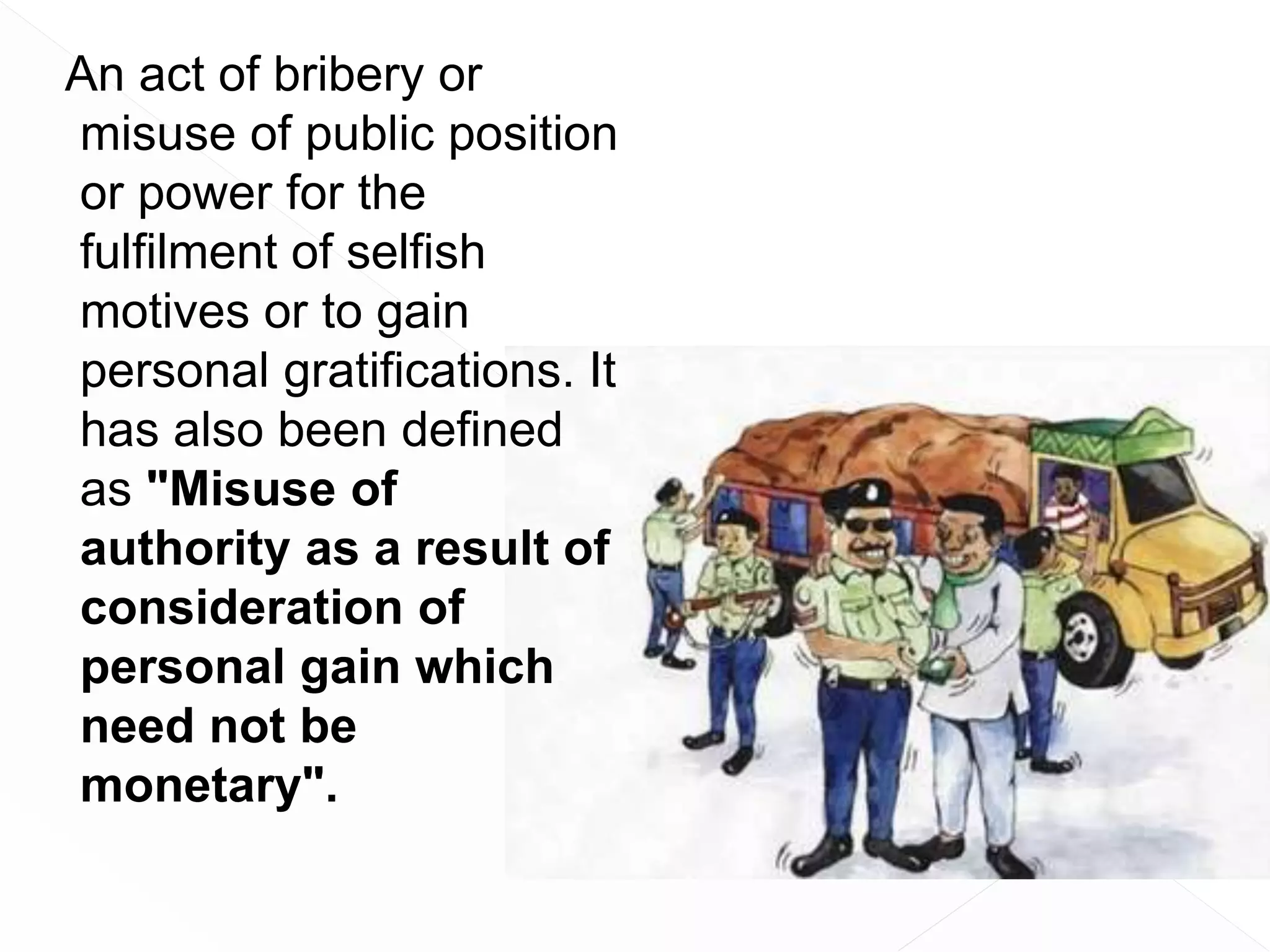
An act of bribery or
misuse of public position
or power for the
fulfilment of selfish
motives or to gain
personal gratifications. It
has also been defined
as "Misuse of
authority as a result of
consideration of
personal gain which
need not be
monetary".
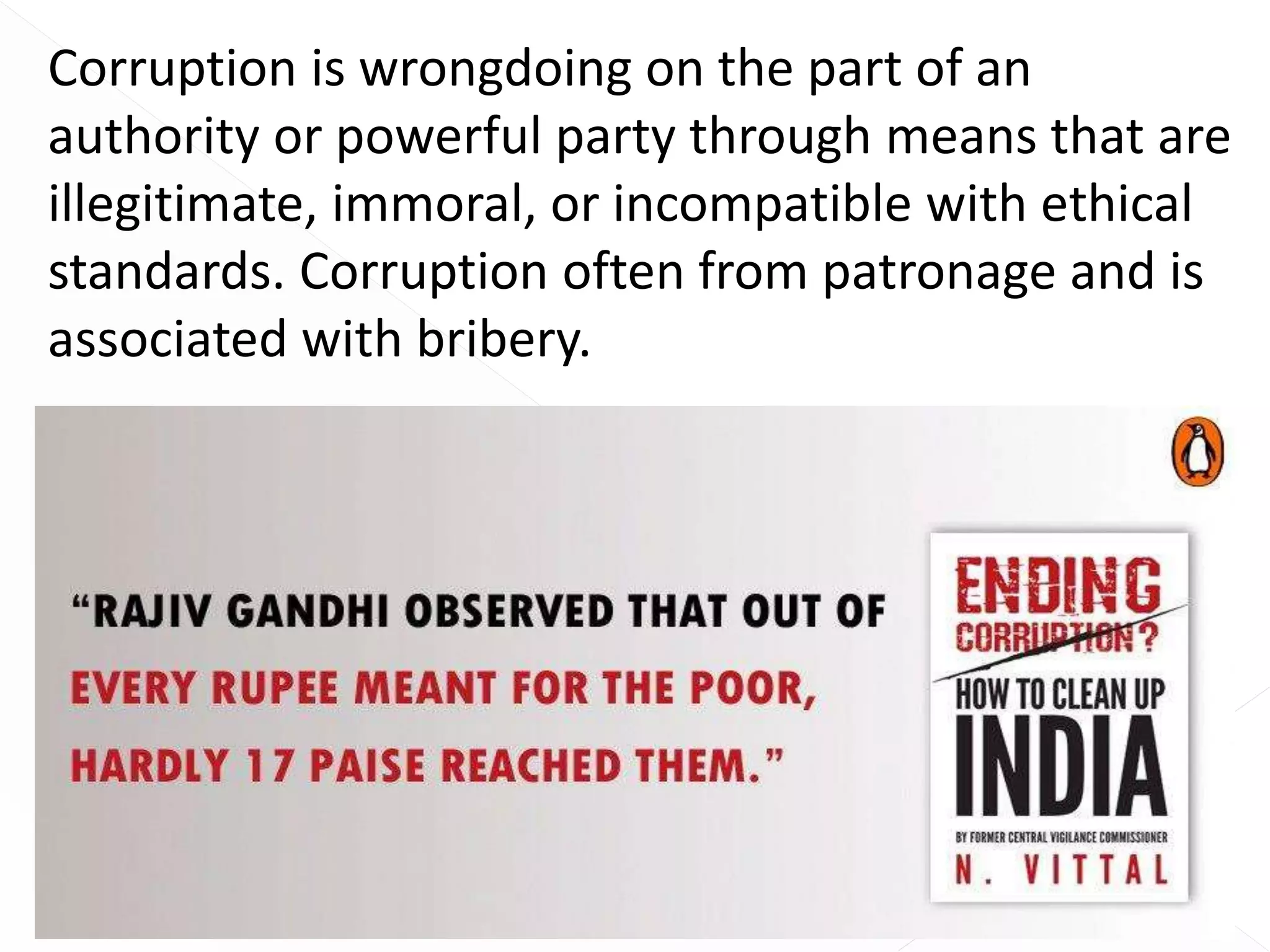
Corruption is wrongdoing on the part of an
authority or powerful party through means that are
illegitimate, immoral, or incompatible with ethical
standards. Corruption often from patronage and is
associated with bribery.
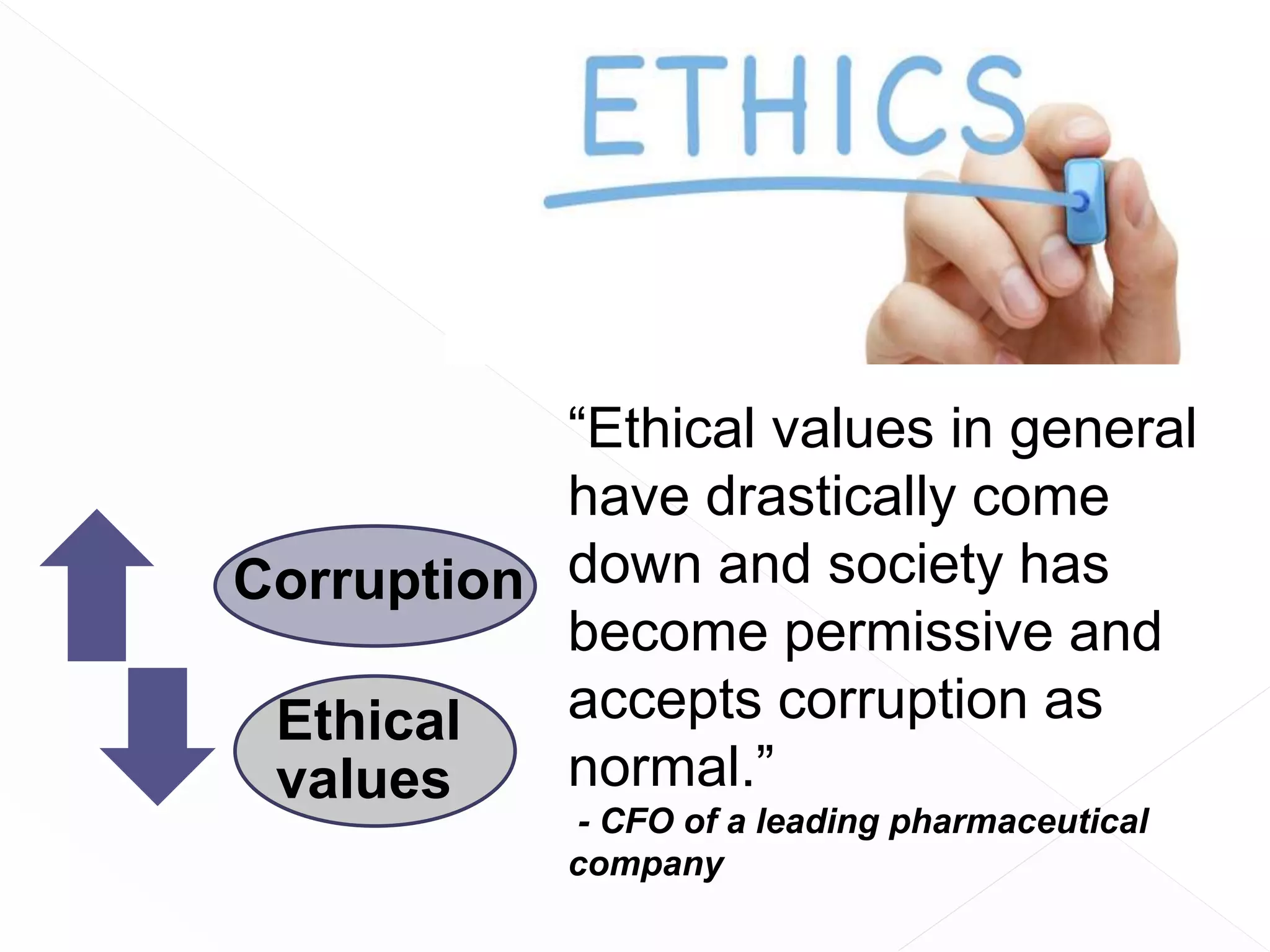
Corruption
Ethical
values
“Ethical values in general
have drastically come
down and society has
become permissive and
accepts corruption as
normal.”
- CFO of a leading pharmaceutical
company
“Corruption threatens the integrity of markets,
undermines fair competition, distorts resource
allocation, destroys public trust and undermines
the rule of law”.
– G-20 Summit, Seoul
A corrupt society stops valuing integrity,
virtue or moral principles.
“Corruption = Monopoly + Discretion –
”Accountability”
Corruption tends to increase
when an organization or
person has monopoly (M)
power
over a good or service, which
generates income, has the
discretion (D) on its
allocation,
and is not accountable (A).
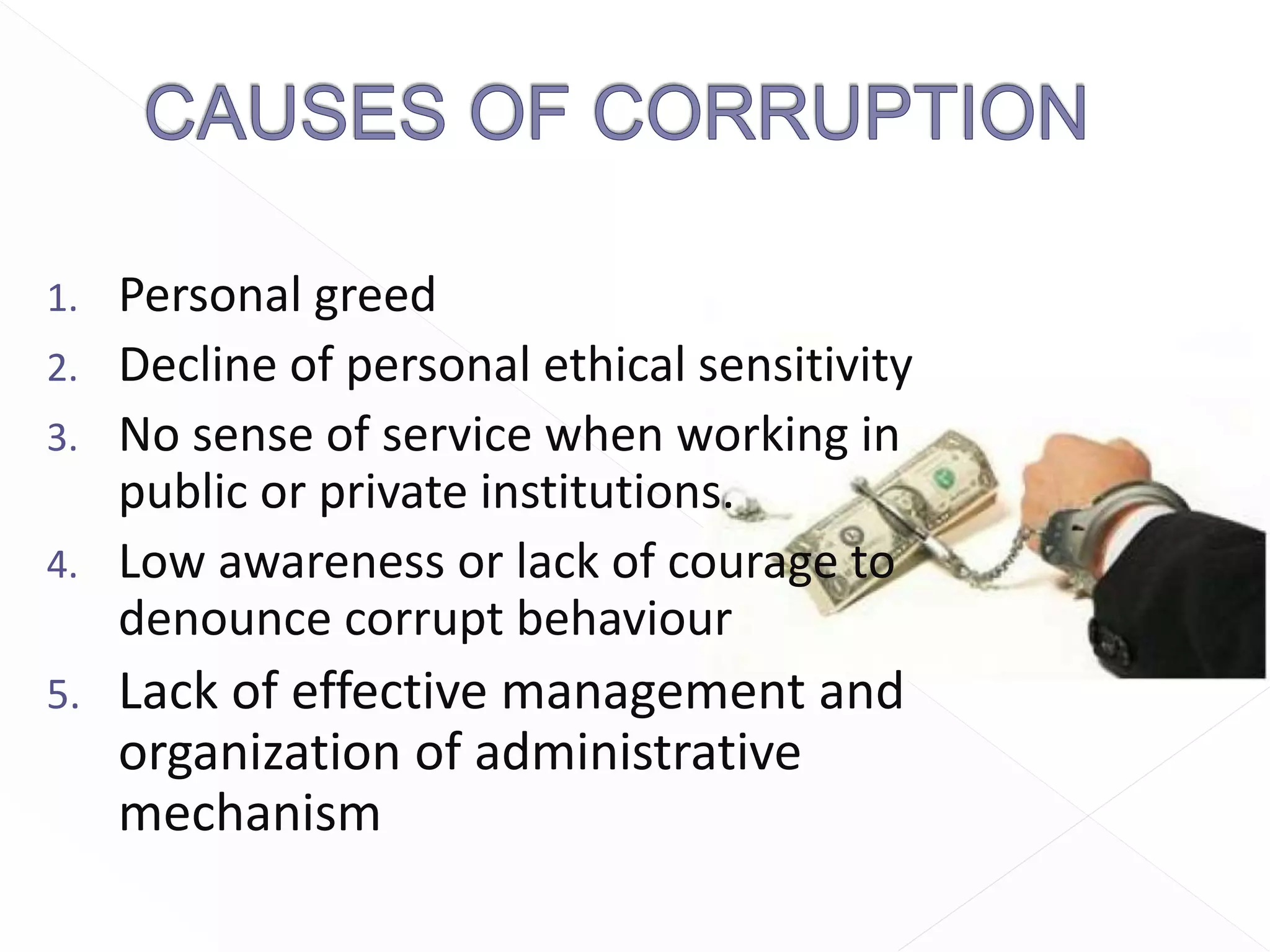
1. Personal greed
2. Decline of personal ethical sensitivity
3. No sense of service when working in
public or private institutions.
4. Low awareness or lack of courage to
denounce corrupt behaviour
5. Lack of effective management and
organization of administrative
mechanism
6. Low Pay scales/ Wages
7. Low Job opportunities
8. Lack of Strict and fast punishments
9. Lack of ill fame
10. Lack of Unity in public
11. Lack of accountability
12. Option of many political parties
there are two forms of corruption:
Administrative Corruption: Corruption that alters
the implementation of policies, such as
getting a license even if you don’t qualify for it.
Political Corruption: Corruption that influences the
formulation of laws, regulations, and policies,
such as revoking all licenses, and gaining the sole
right to operate some public utility with
monopoly.
Extortion
Embezzlement
ScamsFraud
Bribery
one-sided where in the
public servant extorts
bribe from the beneficiary
on the pretext of the
threat of denial of service.
Extortionary Corruption
can be defined as
corruption where money
has to be paid to acquire
services that are
legitimately due and
honestly entitled.
Extortion (also
called
blackmail, shakedo
wn, outwresting) is
a criminal offence of
unlawfully obtaining
money, property, or
services from a
person, entity, or
institution,
through coercion.
Act of giving money,
goods or other forms
of recompense to a
recipient in exchange
for an alteration of
their behaviour (to the
benefit/interest of the
giver) that the recipient
would otherwise not
alter.
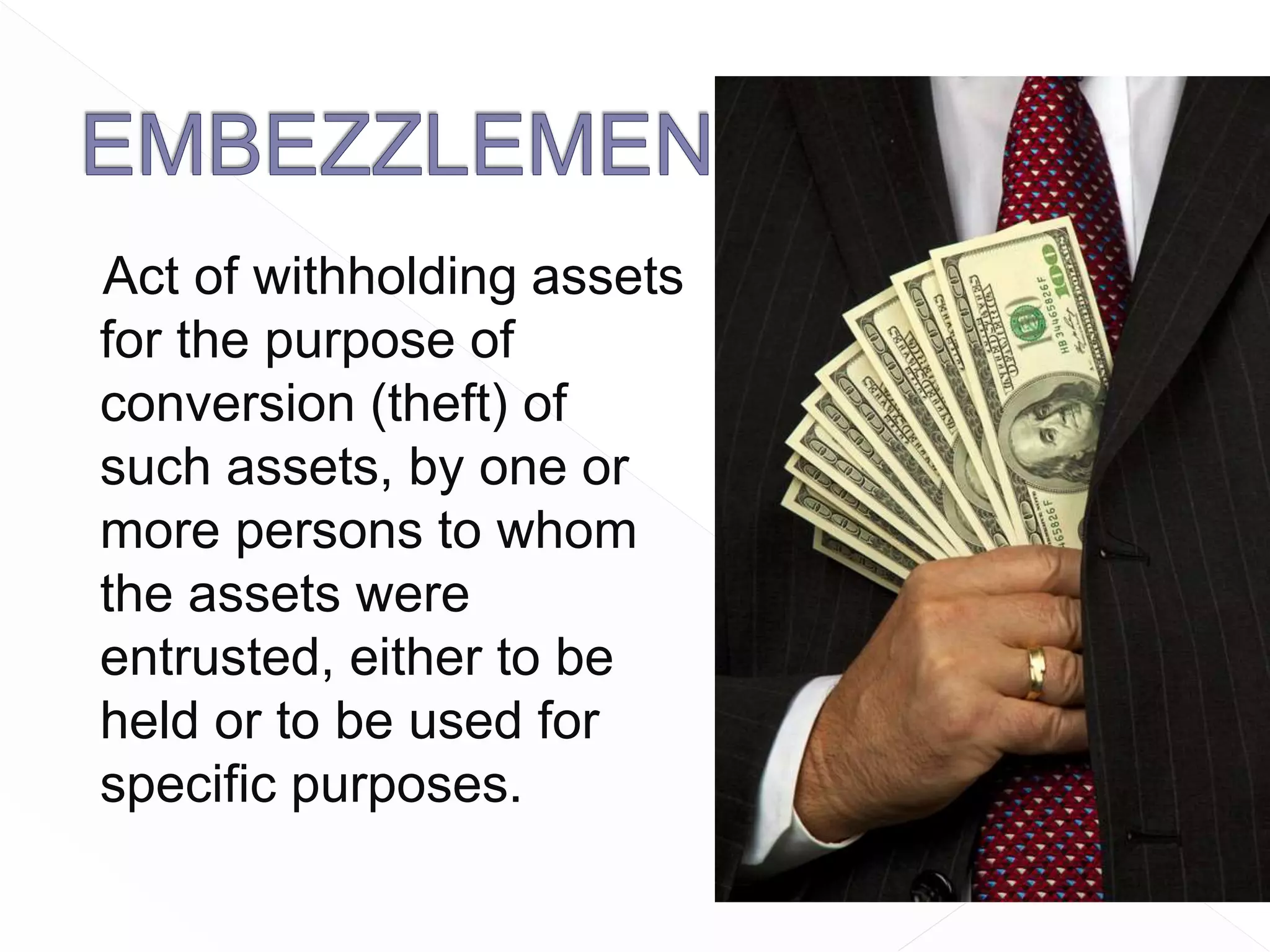
Act of withholding assets
for the purpose of
conversion (theft) of
such assets, by one or
more persons to whom
the assets were
entrusted, either to be
held or to be used for
specific purposes.
A fraudulent scheme performed by a
dishonest individual, group, or company in
an attempt obtain money or something else
of value.
Scams traditionally resided in confidence
tricks, where an individual would
misrepresent themselves as someone
with skill or authority, i.e. a
doctor, lawyer, investor.
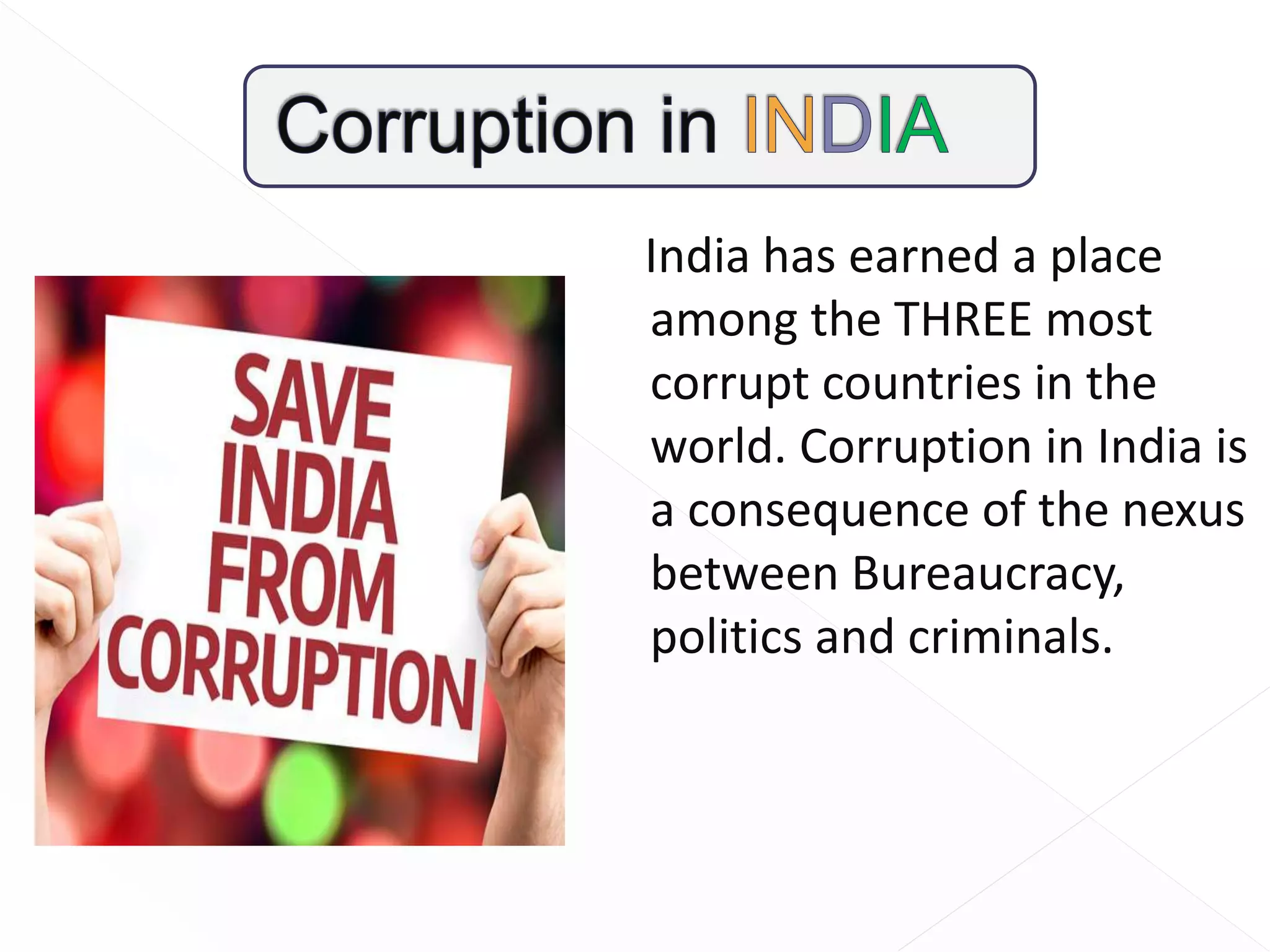
India has earned a place
among the THREE most
corrupt countries in the
world. Corruption in India is
a consequence of the nexus
between Bureaucracy,
politics and criminals.
C K Prahalad
estimated that almost Rs. 2.5 lakh
crore is earned by politicians
over a 5 year term.
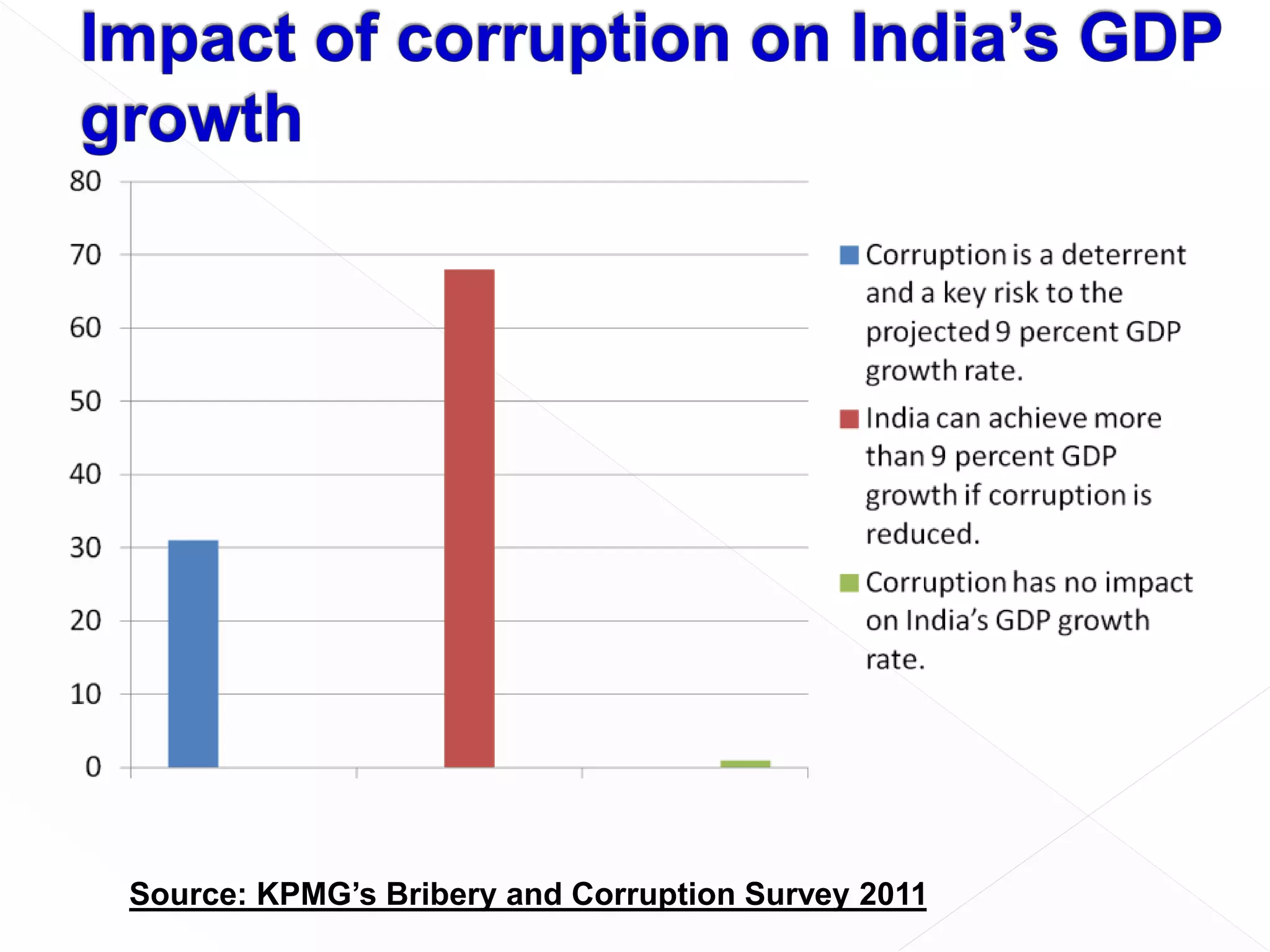
Source: KPMG’s Bribery and Corruption Survey 2011
What should common people do?
Common people should use RTI
to expose corruption. With
informed collective assertion,
common people can over years
transform the extent of
corruption in India. Common
people should elect clean
politicians.
Corruptions, causes, forms, Corruption in India

Corruptions, causes, forms, Corruption in India

  • 1.
  • 2.
    Misuse of publicpower for private gains. - A form of dishonest or unethical conduct by a person entrusted with a position of authority, often to acquire personal benefit.
  • 3.
    Selfishness and greedare at the root of it It also implies lack of integrity and honesty. A corrupt society is characterized by immorality and lack of fear or respect for the law. When it stops valuing integrity, virtue or moral principles it starts decaying. Corruption is the abuse of public power for private gain. Corruption comes under many different guises: bribery, misappropriations of public goods, nepotism (favoring family members for jobs and contracts), and influencing the formulation of laws or regulations for private gain.
  • 4.
    An act ofbribery or misuse of public position or power for the fulfilment of selfish motives or to gain personal gratifications. It has also been defined as "Misuse of authority as a result of consideration of personal gain which need not be monetary".
  • 5.
    Corruption is wrongdoingon the part of an authority or powerful party through means that are illegitimate, immoral, or incompatible with ethical standards. Corruption often from patronage and is associated with bribery.
  • 6.
    Corruption Ethical values “Ethical values ingeneral have drastically come down and society has become permissive and accepts corruption as normal.” - CFO of a leading pharmaceutical company
  • 7.
    “Corruption threatens theintegrity of markets, undermines fair competition, distorts resource allocation, destroys public trust and undermines the rule of law”. – G-20 Summit, Seoul
  • 8.
    A corrupt societystops valuing integrity, virtue or moral principles. “Corruption = Monopoly + Discretion – ”Accountability” Corruption tends to increase when an organization or person has monopoly (M) power over a good or service, which generates income, has the discretion (D) on its allocation, and is not accountable (A).
  • 9.
    1. Personal greed 2.Decline of personal ethical sensitivity 3. No sense of service when working in public or private institutions. 4. Low awareness or lack of courage to denounce corrupt behaviour 5. Lack of effective management and organization of administrative mechanism
  • 10.
    6. Low Payscales/ Wages 7. Low Job opportunities 8. Lack of Strict and fast punishments 9. Lack of ill fame 10. Lack of Unity in public 11. Lack of accountability 12. Option of many political parties
  • 11.
    there are twoforms of corruption: Administrative Corruption: Corruption that alters the implementation of policies, such as getting a license even if you don’t qualify for it. Political Corruption: Corruption that influences the formulation of laws, regulations, and policies, such as revoking all licenses, and gaining the sole right to operate some public utility with monopoly.
  • 12.
  • 13.
    one-sided where inthe public servant extorts bribe from the beneficiary on the pretext of the threat of denial of service. Extortionary Corruption can be defined as corruption where money has to be paid to acquire services that are legitimately due and honestly entitled.
  • 14.
    Extortion (also called blackmail, shakedo wn,outwresting) is a criminal offence of unlawfully obtaining money, property, or services from a person, entity, or institution, through coercion.
  • 15.
    Act of givingmoney, goods or other forms of recompense to a recipient in exchange for an alteration of their behaviour (to the benefit/interest of the giver) that the recipient would otherwise not alter.
  • 16.
    Act of withholdingassets for the purpose of conversion (theft) of such assets, by one or more persons to whom the assets were entrusted, either to be held or to be used for specific purposes.
  • 17.
    A fraudulent schemeperformed by a dishonest individual, group, or company in an attempt obtain money or something else of value. Scams traditionally resided in confidence tricks, where an individual would misrepresent themselves as someone with skill or authority, i.e. a doctor, lawyer, investor.
  • 18.
    India has earneda place among the THREE most corrupt countries in the world. Corruption in India is a consequence of the nexus between Bureaucracy, politics and criminals.
  • 21.
    C K Prahalad estimatedthat almost Rs. 2.5 lakh crore is earned by politicians over a 5 year term.
  • 22.
    Source: KPMG’s Briberyand Corruption Survey 2011
  • 24.
    What should commonpeople do? Common people should use RTI to expose corruption. With informed collective assertion, common people can over years transform the extent of corruption in India. Common people should elect clean politicians.