 ECONOMIC CRIMES
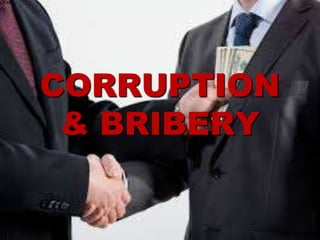
CORRUPTION
& BRIBERY
What is corruption?
 Is a form of dishonest or unethical
conduct by a person entrusted
with a position of authority, often
to acquire personal benefit.
What is bribery?
 Dishonestly persuade
(someone) to act in one’s favor
by a gift of money or other
inducement.
Scales of Corruption
 Petty corruption
 Grand corruption
 Systemic corruption
 Corruption in different sectors
 Government / Public Sector
corruption
 Political corruption
 Police corruption
 Judicial corruption
 Corruption in the Educational system
Methods of Corruption
 Bribery
 Embezzlement
 Theft
 Fraud
 Extortion and Blackmail
6 Types of Bribery Charges
 Bribery and Kickbacks
 Bribing a Public Official
 Bribery of or by a Witness
 Bribing a Foreign Official
 Banking Bribery
 Sporting Bribes
Bribery Prone Industries
 Aside from government related bribes and kickbacks, bribery is often found in a diverse number of
industries, including the building trades, pension/benefits administration and health care industries.
Types of Corrupt Gains
 Abuse of discretion
 Favoritism
 Nepotism
 Clientilism
Related Laws
 R.A. 6713 – Code of Conduct and Ethical
Standards for Public Officials and
Employees
 R.A.3019 – Anti-graft and Corrupt
Practices Act
CAUSES OF CORRUPTION &
BRIBERY
 Personal greed
 Decline of personal ethical sensitivity
 No sense of service when working in public or private institutions
 Low awareness or lack of courage to denounce corrupt
behavior and situations
 Cultural environments that condone corruption
 Lack of transparency
 Regulations and inefficient controls
 Slow judicial processes
 Lack of moral criteria in promotion
 Downplaying or reacting mildly to corruption charges
 Low Salary
 Lack of tolerance
Impact Of Corruption
• Hinders social and economic development
and increases poverty by diverting domestic
and foreign investment away from where it are
most needed;
• Weakens education and health systems,
depriving people of the basic building blocks
of a decent life;
• Undermines democracy by distorting
electoral processes and undermining
government institutions, which can lead to
political instability;
• Exacerbates inequality and injustice by
perverting the rule of law and punishing
victims of crime through corrupt rulings
Conclusion
 Corruption, as we know is the criminal
thing that a person in a certain capacity
especially with negative connotation, they
do the illegal thing to make a benefit for
them self.

CORRUPTION&BRIBERY...FINAL.pptx

  • 1.
  • 2.
  • 3.
    What is corruption? Is a form of dishonest or unethical conduct by a person entrusted with a position of authority, often to acquire personal benefit. What is bribery?  Dishonestly persuade (someone) to act in one’s favor by a gift of money or other inducement.
  • 4.
    Scales of Corruption Petty corruption  Grand corruption  Systemic corruption  Corruption in different sectors  Government / Public Sector corruption  Political corruption  Police corruption  Judicial corruption  Corruption in the Educational system
  • 5.
    Methods of Corruption Bribery  Embezzlement  Theft  Fraud  Extortion and Blackmail 6 Types of Bribery Charges  Bribery and Kickbacks  Bribing a Public Official  Bribery of or by a Witness  Bribing a Foreign Official  Banking Bribery  Sporting Bribes Bribery Prone Industries  Aside from government related bribes and kickbacks, bribery is often found in a diverse number of industries, including the building trades, pension/benefits administration and health care industries.
  • 6.
    Types of CorruptGains  Abuse of discretion  Favoritism  Nepotism  Clientilism Related Laws  R.A. 6713 – Code of Conduct and Ethical Standards for Public Officials and Employees  R.A.3019 – Anti-graft and Corrupt Practices Act
  • 7.
    CAUSES OF CORRUPTION& BRIBERY  Personal greed  Decline of personal ethical sensitivity  No sense of service when working in public or private institutions  Low awareness or lack of courage to denounce corrupt behavior and situations  Cultural environments that condone corruption  Lack of transparency  Regulations and inefficient controls  Slow judicial processes  Lack of moral criteria in promotion  Downplaying or reacting mildly to corruption charges  Low Salary  Lack of tolerance
  • 8.
    Impact Of Corruption •Hinders social and economic development and increases poverty by diverting domestic and foreign investment away from where it are most needed; • Weakens education and health systems, depriving people of the basic building blocks of a decent life; • Undermines democracy by distorting electoral processes and undermining government institutions, which can lead to political instability; • Exacerbates inequality and injustice by perverting the rule of law and punishing victims of crime through corrupt rulings
  • 9.
    Conclusion  Corruption, aswe know is the criminal thing that a person in a certain capacity especially with negative connotation, they do the illegal thing to make a benefit for them self.