CORPORATE SOCIAL RESPONSIBILITY PRESENTED BY,                             SOUMIK MUKHERJEE                   PGDM,3rd SEM,                  REG. NO-4018
Corporate Citizenship ConceptsCorporate social responsibility – 	emphasizes obligation and accountability to societyCorporate social responsiveness– emphasizes   	action, activity
Corporate social performance – emphasizes 	outcomes, resultsCorporate Social Responsibility (CSR)Preliminary definitions of CSRThe impact of a company’s actions on society
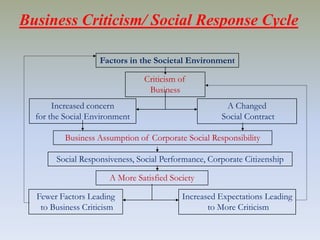
Requires a manager to consider his acts in terms of a whole social system, and holds him responsible for the effects of his acts anywhere in that systemBusiness Criticism/ Social Response CycleFactors in the Societal EnvironmentCriticism of BusinessIncreased concern for the Social EnvironmentA Changed Social ContractBusiness Assumption of Corporate Social ResponsibilitySocial Responsiveness, Social Performance, Corporate CitizenshipA More Satisfied SocietyFewer Factors Leading to Business CriticismIncreased Expectations Leading to More Criticism
Historical Perspective     From the 1950’s to the present the concept of CSR has gained considerable acceptance and the meaning has been broadened to include additional componentsEconomic model– the invisible hand of the marketplace 	protected societal interest
Legal model– laws protected societal interests
Modified the economic model
Philanthropy
Community obligations
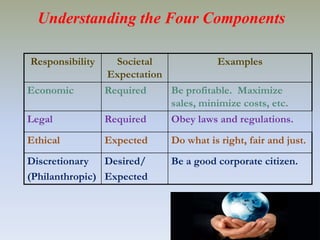
PaternalismCarroll’s Four Part DefinitionCSR encompasses the economic, legal, ethical and discretionary (philanthropic) expectations that society has of organizations at a given point in timeUnderstanding the Four Components
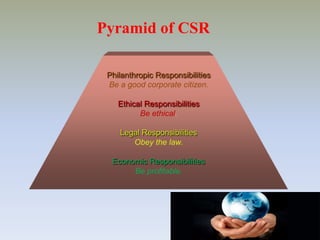
Pyramid of CSRPhilanthropic ResponsibilitiesBe a good corporate citizen.Ethical ResponsibilitiesBe ethical.Legal ResponsibilitiesObey the law.Economic ResponsibilitiesBe profitable.
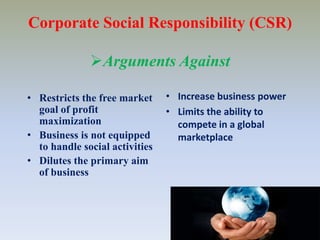
Corporate Social Responsibility (CSR)Arguments Against

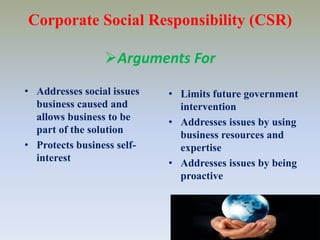
Corporate Social Responsibility