CORONARY HEART DISEASE
PRESENTERS
MANJU BHUDIA
SEKATE RODNEY
TUTOR
Dr. ZHANG
OUTLINE
• definition
• anatomy
• epidemiology
• Scope of CHD and definitions
• Pathophysiology of CHD
• Diagnosis of CHD(stable, Acute coronary syndrome)
• Differential diagnoses of acute chest pain
• Complications of acute coronary syndrome
• Drugs for CHD(list and rationale)
• Immediate management of acute coronary syndrome
DEFINITION
• Is a condition in which there is an
inadequate supply of blood and oxygen to
a portion of the myocardium.
• Occurs when there is an imbalance
between myocardial oxygen supply and
demand
Anatomy of coronary arteries
The right coronary artery
 Right atrium
 Right ventricle
Parts of the left atrium and left
ventricle and the atrioventricular
septum.
Left coronary artery divides into
1.An anterior interventricular branch
->> right and left ventricles and anterior
part of the ventricular septum
2.A circumflex branch.
A. Left marginal artery is a large branch
that supplies the left margin of the left
ventricle down to the apex.
B. Anterior and posterior ventricular
branches supply the left ventricle.
C. Atrial branches supply the left atrium.
EPIDEMIOLOGY
 World wide: 17million died of CVD particularly CAD/year.
 Africa: 10%30%
2001; 8th cause of death in africa, how ever above 60’s is number 1
leading cause of death in men and number two in women after stroke.
2005; 361,000 death in africa
2030; 2X increase fold.
 Uganda: Very low CAD prevalence rates were reported from Kenya and
Uganda.
 In Uganda, 449 out of the 15 176 admissions in a 1-year period had CVD
and, of these, only three were considered to be CAD
 in Kampala, electrocardiographic evidence of possible CAD was found in
only one of 412 villagers over the age of 45 years.
 However CAD is believed to be on rise due to lifestyle changes
 Sex: mortality Male>female
RISK FACTORS
Non- modifiable
• Age >50 yrs
• Sex male>female
• Family Hx( x2 in 1st degree relatives)
• Ethnic background south
asians>caucasions>blacks
RISK FACTORS Cont…
Modifiable
• Smoking
• High amounts of LDLs and cholesterol and low HDL
• Physical inactivity and obesity
• diabetes
• Air pollution( particulate matter)
• High blood pressure
• Alcohol intake
• Hypertension
• Metabolic syndrome
• Atherogenic diet
• Dyslipidemias
Emerging risk factors
• homocystenemia,
• C-reactive protein,
• lipoprotein a,
• infection(?chlamydia pneumoniae)
• Fibrinogen
• Coronary artery calcification(CAC)
• small dense LDL
Scope of CHD
 Chronic coronary artery disease (CAD)
 stable angina
 Acute coronary syndromes (ACSs)
 acute myocardial infarction (MI) with ST-segment
elevation(STEMI)
 unstable angina (UA)
 non-ST-segment elevation MI(NSTEMI)
Pathophysiology
 – Arteriosclerosis – natural changes in the intima,
connective tissue, and diameter of artery
 – Atherosclerosis – pathologic phenomenon occurring in
the coronary, carotid, iliac, and femoral arteries as
well as the aorta (coronary artery disease)
 Coronary blood flow also can be limited by spasm,
arterial thrombi, and, rarely, coronary emboli as well
as by ostial narrowing due to aortitis
The atherosclerotic process
 Response to Injury hypothesis
- inflammatory response resulting in proliferation of
tissue within the arterial wall which may result in
obstruction of blood flow
 Causes:
-elevated levels of cholesterol and triglyceride in
the blood,
-high blood pressure – turbulent blood flow
-tobacco smoke
-glycosylated substances
Pathophysiology contd.
 Response to Injury Hypothesis
 1. Injury to endothelium causing to platelets adhere
to endothelium then release of growth factors
 2. Monocytes attach to endothelium and penetrate
(also LDL receptor activation) – monocytes become
macrophages and take up LDL and SMC’s
 3. Smooth muscle cell proliferation and migrate from
medial to intimal layer
 4. Foam cells are formed - migration to the intima
smooth muscles with lipids form fatty streaks
 5. Fibromuscular plaque – fibromuscular layer with
cholesterol core
ANGINA
 Stable angina(Exertional); episodic clinical syndrome
due to transient myocardia ischemia lasts 2-5min,
aggravated by exertion or emotion and relieved by
nitroglycerin or rest. substernal discomfort (Levine's
sign).
 Prinzmental angina; a form of angina pectoris xterised
by pain not ppted by cardiac work, is longer in
duration, more severe and has unusual ECG finding(ST-
segment elevation) (transmural ischemia) and responds
to nitroglycerin and calcium-channel blocker
(vasodilator)
ANGINA contd..
 Unstable angina; angina pectoris or equivalent ischaemic
discomfort with at rest/minimal exertion of >10minutes
or severe and new onset or crescendo pattern
 Decubitus angina is that occurring on lying down. It
usually occurs in association with impaired LVF, as a
result of severe coronary artery disease.
 Nocturnal angina occurs at night and may wake the
patient from sleep. It can be provoked by vivid dreams.
occurs in patients with critical coronary artery disease
and may be the result of vasospasm.
TREATMENT FOR ANGINA
 Nitrates
 Glyceryl trinitrate( GTN)
 Isosorbide trinitrate
 May b used alone in stable angina
 BBs
 Atenolol
 CCBs
 Verapamil
 Potassium channel activators
 Nicorandin
 Cause both arterial and venous dilation
RISK STRATIFICATION FOR
DEVELOPING MI
High Risk Low Risk
Clinical Post infarct angina
Recurrent pain at
rest
Heart failure
No history of MI
Rapid resolution of
symptoms
ECG Arrhythmia
ST depression
Transient ST
elevation
Persistent deep T-
wave inversion
Minor or no ECG
changes
Biochemistry Troponin T>0.1g/l Troponin T<0.1g/l
MYOCARDIAL INFARCTION
 Due to formation of occlusive thrombus at the site of rupture
or erosion of an artheromatous plaque in a coronary artery.
 The thrombus undergoes lysis over the course of the next
few days, by this time irreversible damage has occurred.
 Sudden death from VF or asystole may occur immediately
and many deaths occur within the 1st hr , if the pt survives
the most critical stage the liability to dangerous arrythmias
remains but diminishes as each hr passes by. Those who
survive may die of cardiac failure. The process of infarction
takes around 8 hours and therefore most patient present
when it is still possible to save myocardium.
MYOCARDIAL INFRACTION
 NSTEMI; angina pectoris or equivalent ischemic discomfort at rest/
minimal exertion> 10minutes or severe and new onset or crescendo
pattern + elevated cardiac biomarkers and ST segment depression/t
wave inversion
 STEMI; Sudden onset of severe retrosternal pain
 Lasts more than 30 to 45 minutes
 Not relieved by nitroglycerin
 Radiates down the left arm into the shoulders or into the jaw or
epigastrium
 Associated with sweating (diaphoresis), anxiety, and hypotension
 "Silent" acute MIs
 May occur in the elderly and in individuals with diabetes mellitus
 Due to high pain threshold or problems with nervous system
Clinical features of MI
Symptoms
 severe chest pain lasts longer than that due to angina
 breathlessness,
 collapse or syncope,
 nausea and vomiting
 anxiety and fear of impending death.
CLINICAL FEATURES Cont…
Signs
 Signs of sympathetic activation; pallor sweating,
tachycardia
 Signs of vagal activation; vomiting, bradycardia
 Signs of impaired myocardial function; hypotension,
oliguria, narrow pulse pressure, raised JVP, 3rd heart
sound, quiet 1st HS, diffuse apical impulse, lung
crepitations
 Signs of tissue damage; fever
 Signs of complications; MR, pericarditis
Diagnosis of CHD
 Stable angina
 history,
 physical examination(abdominal aortic aneurysm, carotid
arterial bruits, and diminished arterial pulses in the
lower extremities, xanthelasmas and xanthomas, blood
pressure, fundi exam, signs of anemia, thyroid disease,
and nicotine stains on the fingertips from cigarette
smoking, Palpation may reveal cardiac enlargement and
abnormal contraction of the cardiac impulse,
Auscultation can uncover arterial bruits, a third and/or
fourth heart sound, or apical systolic murmur),
 lab exam(urine, blood for lipid profile, glucose,
creatinine, hematocrit or Hb, TFTs, CXR, CRP),
 ECG,
Dx contd..
 Unstable angina/NSTEMI; history, physical
examination, ECG, cardiac biomarkers
 Cardiac enzymes
Troponin T & I
CK-MB
LDH
 CXR
 stress testing,
 cardiac imaging, eg echo,coronary
arteriography
ECG changes in MI
 Zone of Ischemia: T wave inversion
 Zone of Injury: ST elevation
Inferior wall MI: leads I, II, AVF
Anterior wall MI; all chest leads
 Zone of Necrosis: Abnormal Q wave
 Remember
STEMI
NSTEMI
Cardiac Enzymes levels
Myocardial Infarction WHO Diagnosis
- Typical history
- ECG finding
- Raised biochemical markers
 ECG findings;
I. Hyper acute T waves- this is the earliest sign, changes are
only present for 5-30 mins.
II. ST segment elevation follows- within the 1st few hrs of
symptom onset.
III.Diminution of the R wave
IV.Pathological Q waves within 1-2hrs and these act as a
permanent marker of myocardial necrosis
V. Resolution of changes; ST segment elevation diminishes over a
period of weeks, T waves inversion may persists for many
MI WHO Diagnosis Cont…
 Plasma biochemical markers
- Creatinine kinase (CK) or CK-MB that rises 4-6hrs then
peaks at 12hrs and falls to normal after within 48-72
hrs.
- Cardiac troponins T and I released within 4-6 hrs and
remain elevated for up to 2 weeks.
 Leukocytosis
 Raised ESR
 Raised C reactive protein
 CXR; pulmonary edema with pre existing myocardial
damage.
 Echocardiography to assess left and right ventricular
function
Differential diagnoses of acute chest
pain
 CHEST WALL PAIN
 Musculoskeletal pain
 Isolated musculoskeletal chest pain
syndromes
 Rheumatic diseases
 Nonrheumatic systemic diseases
 Skin and sensory nerves
 CARDIAC CAUSES OF CHEST PAIN
 Coronary heart disease
 Aortic dissection
 Valvular heart disease
 Pericarditis
 Myocarditis
 Stress-induced cardiomyopathy
 Cardiac syndrome X
 Pheochromocytoma
 GASTROINTESTINAL CAUSES OF CHEST PAIN
 Gastroesophageal reflux disease
 Esophageal hyperalgesia
 Abnormal motility patterns and achalasia
 Esophageal rupture, mediastinitis, and
foreign bodies
 Medication-induced esophagitis
 Other gastrointestinal causes of chest pain
 PULMONARY CAUSES OF CHEST PAIN
 Pulmonary vasculature
 Acute pulmonary thromboembolism
 Pulmonary hypertension and cor
pulmonale
 Lung parenchyma-
 Pneumonia
 Cancer
 Sarcoidosis
 Pleura and pleural space
MANAGEMENT
The goals are to:
 Relieve symptoms
 Resolve risk factors in a bid to slow, stop, or
reverse plaque buildup
 Lower the risk of blood clot formation
 Widen or bypass clogged arteries
 Prevent complications of CHD
 Entails
 Lifestyle changes
 Drugs
 Invasive treatment
MANAGEMENT Cont…
Lifestyle Changes
 Diet aimed at controlling HTN & lowering
cholesterol
 low cholesterol & salt
 fiber, fruits and vegetables
 Increase physical activity-@least 30mins daily
 Quit smoking
 Reduce alcohol intake to about 2-4 units daily
 Learn to cope with and reduce stress.
MANAGEMENT Cont…
DRUGS
Anti-platelets
 aspirin 75mg o.d, clopidogrel 75mg o.d (in pts with S/E to ASA)
 M.O.A- Inhibit platelet aggregation by selective blockade of platelet
cyclooxygenase
 S/E- bleeding
Anti- anginal drugs
1. Nitrates
- Sublingual glyceryl trinitrate 400-500µg, isosobide
dinitrate10-20mg 8hrly
- MOA- act directly on vascular smooth muscle to produce
venous and arteriolar dilatation
- S/E-severe headaches
TREATMENT Cont…
2. Beta blockers
- Atenolol 50-100mg od, metoprolol 50-200mg od,
larsoprolol 5-10mg od
- MOA- lower myocardial O2 demand by reducing HR, BP
and myocardial contractility
- S/E- bronchospasms.
3. Calcium antagonists
- Nifedipine 5-20mg 8hourly, Amlodipine 2.5-10mg od,
Verapamil 40-80mg 8hourly
- MOA- inhibit the slow inward entry of extracellular
calcium through the cardiac cell membranes & lower
myocardial contractility.
TREATMENT Cont…
4. K+ channel activators
- Niorandil 10-30mg bd
- MOA- arterial and venous dilating properties
TREATMENT Cont…
Early management of MI
 Admit the patient
 Defibrillation
 bed rest
 oral aspirin
 high flow O2,
 I.V analgesia with opiates
 I.V antiemetic
 Thrombolysis wth streptokinase
 monitor ECG
 Rx complications.
TREATMENT Cont…
 Invasive treatment
- Percutaneous coronary intervention(PCI)
Performed by passing a fine guide wire a cross coronary
stenosis under radiological guidance a balloon is
inflated to dilate the stenosis. and CABG are used as
treatments.
- Coronary artery bypass graft (CABG)
Stenosed arteries are bypassed using sahenous vein grafts,
or by utilizing internal mammary artery.
Moa of antithrombotic drugs
PREVENTION
 Recognize the symptoms
 Reduce your risk factors:
 Lose weight
 Quit Smoking
 Keep your cholesterol at a normal level.
 Keep your blood pressure under control.
 Use techniques to ease stress.
 Control blood sugar level.
 Eat Right
 REGULER EXERCISE
COMPLICATIONS
 ARRHYTHMIAS IN AMI
 Ventricular fibrillation tachycardia
 Atrial fibrillation and tachycardia
 Heart block
 ISCHAEMIA
 ACUTE CIRCULATORY FAILURE
 DRESSLER’S SYNDROME
 Post MI syndrome characterized by pericarditis, pleurisy
and persistent fever.
 MECHANICAL COMPLICATIONS
 Pappilary muscle demage
 Rupture of IV septa
 Rupture of the ventrical
 EMBOLISM
 VENTRICULA ANEURSYM
Ischemic Changes
T-waves, ST-segment, and Q-waves
1. T-waves
 Hyperacute (tall and peaked)
 Flattened
 Inverted (symmetrical)
2. ST-segments
 Elevated (Infarct)
 Depressed (Ischemia or Infarct)
3. Q-Waves
 Late change of Infarction
Ischemia – ST-Segment
 ST-segment Elevation
 A change of Infarction (concave down)
 DDx: Prinzmetal angina, Aneurysm, LBBB,
Pericarditis, Hypothermia, Hyperkalemia,
Benign early repolarization
Benign Early Repolarization
(concave up)
Acute Infarction
(concave down)
Ischemia – ST-Segment
 ST-segment depression
 Ischemia or Infarction (horizontal or down-slope)
 DDx: Reciprocal Infarct changes, Digoxin, LVH,
hypokalemia, LBBB/RBBB
Ischemia – Q-Waves
 Q-waves
 Indicates infarction
 Occur several hours
to days after infarct
 Persist lifelong
 Pathological Q
 Ensure there is no R
wave!
 Should be > 0.04 s
(1 small block)
 Should be > 25% of
the R wave
amplitude
Q waves
NOT Q waves (they are S waves)
Ischemic Changes
 Remember the anatomical correlations
 Especially important when diagnosing ischemia
or infarction
I aVR V1 V4
II aVL V2 V5
III aVF V3 V6
Rhythm Strip (II)
Ischemia – Examples
Acute Anterior ST-elevation MI
ST-segment elevation
V1-V4
Reciprocal
ST-depression
II, III, aVF
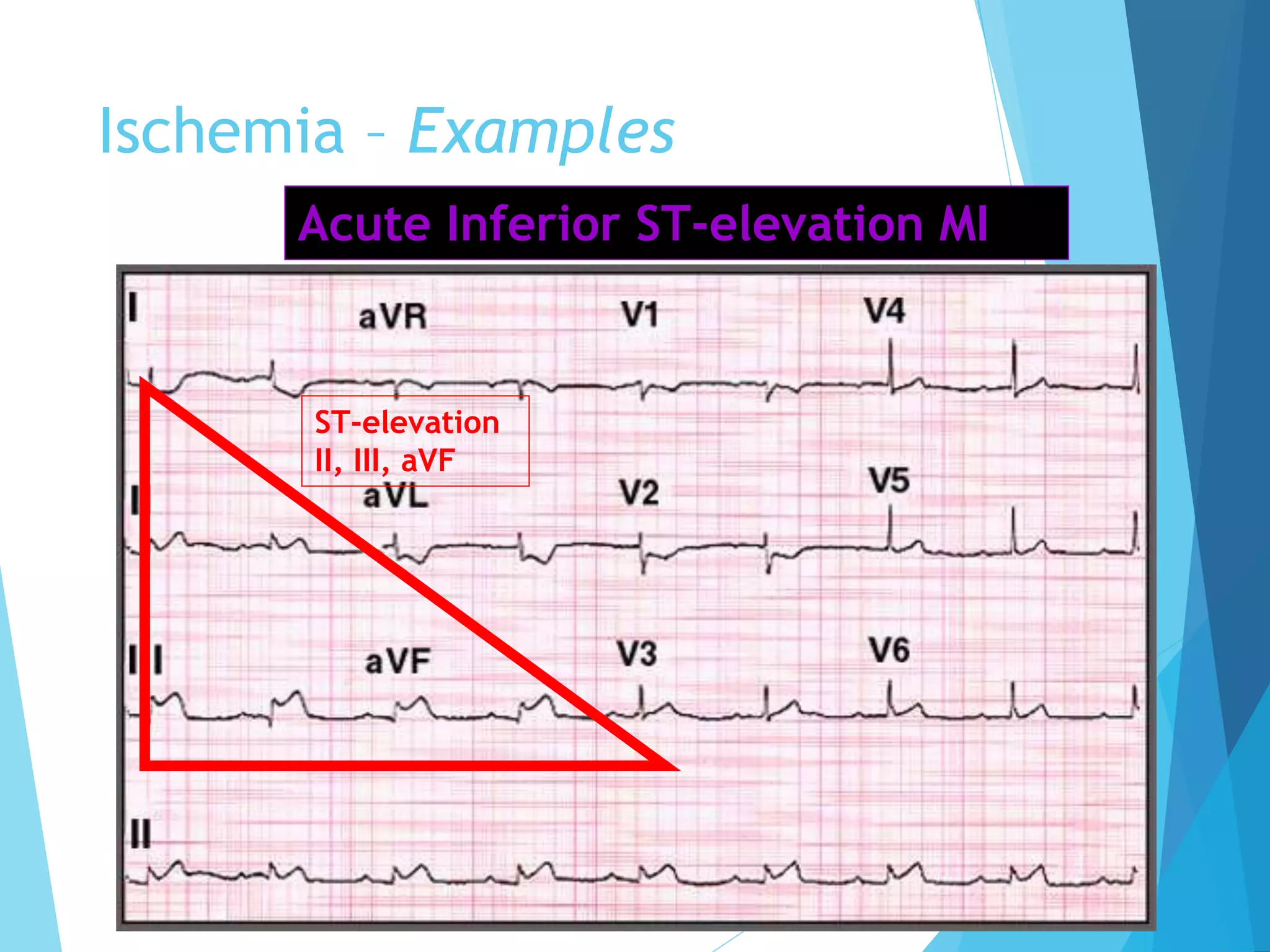
Ischemia – Examples
ST-elevation
II, III, aVF
Acute Inferior ST-elevation MI
Thank you

Coronary heart disease

  • 1.
    CORONARY HEART DISEASE PRESENTERS MANJUBHUDIA SEKATE RODNEY TUTOR Dr. ZHANG
  • 2.
    OUTLINE • definition • anatomy •epidemiology • Scope of CHD and definitions • Pathophysiology of CHD • Diagnosis of CHD(stable, Acute coronary syndrome) • Differential diagnoses of acute chest pain • Complications of acute coronary syndrome • Drugs for CHD(list and rationale) • Immediate management of acute coronary syndrome
  • 3.
    DEFINITION • Is acondition in which there is an inadequate supply of blood and oxygen to a portion of the myocardium. • Occurs when there is an imbalance between myocardial oxygen supply and demand
  • 4.
    Anatomy of coronaryarteries The right coronary artery  Right atrium  Right ventricle Parts of the left atrium and left ventricle and the atrioventricular septum. Left coronary artery divides into 1.An anterior interventricular branch ->> right and left ventricles and anterior part of the ventricular septum 2.A circumflex branch. A. Left marginal artery is a large branch that supplies the left margin of the left ventricle down to the apex. B. Anterior and posterior ventricular branches supply the left ventricle. C. Atrial branches supply the left atrium.
  • 5.
    EPIDEMIOLOGY  World wide:17million died of CVD particularly CAD/year.  Africa: 10%30% 2001; 8th cause of death in africa, how ever above 60’s is number 1 leading cause of death in men and number two in women after stroke. 2005; 361,000 death in africa 2030; 2X increase fold.  Uganda: Very low CAD prevalence rates were reported from Kenya and Uganda.  In Uganda, 449 out of the 15 176 admissions in a 1-year period had CVD and, of these, only three were considered to be CAD  in Kampala, electrocardiographic evidence of possible CAD was found in only one of 412 villagers over the age of 45 years.  However CAD is believed to be on rise due to lifestyle changes  Sex: mortality Male>female
  • 6.
    RISK FACTORS Non- modifiable •Age >50 yrs • Sex male>female • Family Hx( x2 in 1st degree relatives) • Ethnic background south asians>caucasions>blacks
  • 7.
    RISK FACTORS Cont… Modifiable •Smoking • High amounts of LDLs and cholesterol and low HDL • Physical inactivity and obesity • diabetes • Air pollution( particulate matter) • High blood pressure • Alcohol intake • Hypertension • Metabolic syndrome • Atherogenic diet • Dyslipidemias
  • 8.
    Emerging risk factors •homocystenemia, • C-reactive protein, • lipoprotein a, • infection(?chlamydia pneumoniae) • Fibrinogen • Coronary artery calcification(CAC) • small dense LDL
  • 9.
    Scope of CHD Chronic coronary artery disease (CAD)  stable angina  Acute coronary syndromes (ACSs)  acute myocardial infarction (MI) with ST-segment elevation(STEMI)  unstable angina (UA)  non-ST-segment elevation MI(NSTEMI)
  • 10.
    Pathophysiology  – Arteriosclerosis– natural changes in the intima, connective tissue, and diameter of artery  – Atherosclerosis – pathologic phenomenon occurring in the coronary, carotid, iliac, and femoral arteries as well as the aorta (coronary artery disease)  Coronary blood flow also can be limited by spasm, arterial thrombi, and, rarely, coronary emboli as well as by ostial narrowing due to aortitis
  • 11.
    The atherosclerotic process Response to Injury hypothesis - inflammatory response resulting in proliferation of tissue within the arterial wall which may result in obstruction of blood flow  Causes: -elevated levels of cholesterol and triglyceride in the blood, -high blood pressure – turbulent blood flow -tobacco smoke -glycosylated substances
  • 12.
    Pathophysiology contd.  Responseto Injury Hypothesis  1. Injury to endothelium causing to platelets adhere to endothelium then release of growth factors  2. Monocytes attach to endothelium and penetrate (also LDL receptor activation) – monocytes become macrophages and take up LDL and SMC’s  3. Smooth muscle cell proliferation and migrate from medial to intimal layer  4. Foam cells are formed - migration to the intima smooth muscles with lipids form fatty streaks  5. Fibromuscular plaque – fibromuscular layer with cholesterol core
  • 15.
    ANGINA  Stable angina(Exertional);episodic clinical syndrome due to transient myocardia ischemia lasts 2-5min, aggravated by exertion or emotion and relieved by nitroglycerin or rest. substernal discomfort (Levine's sign).  Prinzmental angina; a form of angina pectoris xterised by pain not ppted by cardiac work, is longer in duration, more severe and has unusual ECG finding(ST- segment elevation) (transmural ischemia) and responds to nitroglycerin and calcium-channel blocker (vasodilator)
  • 16.
    ANGINA contd..  Unstableangina; angina pectoris or equivalent ischaemic discomfort with at rest/minimal exertion of >10minutes or severe and new onset or crescendo pattern  Decubitus angina is that occurring on lying down. It usually occurs in association with impaired LVF, as a result of severe coronary artery disease.  Nocturnal angina occurs at night and may wake the patient from sleep. It can be provoked by vivid dreams. occurs in patients with critical coronary artery disease and may be the result of vasospasm.
  • 17.
    TREATMENT FOR ANGINA Nitrates  Glyceryl trinitrate( GTN)  Isosorbide trinitrate  May b used alone in stable angina  BBs  Atenolol  CCBs  Verapamil  Potassium channel activators  Nicorandin  Cause both arterial and venous dilation
  • 18.
    RISK STRATIFICATION FOR DEVELOPINGMI High Risk Low Risk Clinical Post infarct angina Recurrent pain at rest Heart failure No history of MI Rapid resolution of symptoms ECG Arrhythmia ST depression Transient ST elevation Persistent deep T- wave inversion Minor or no ECG changes Biochemistry Troponin T>0.1g/l Troponin T<0.1g/l
  • 19.
    MYOCARDIAL INFARCTION  Dueto formation of occlusive thrombus at the site of rupture or erosion of an artheromatous plaque in a coronary artery.  The thrombus undergoes lysis over the course of the next few days, by this time irreversible damage has occurred.  Sudden death from VF or asystole may occur immediately and many deaths occur within the 1st hr , if the pt survives the most critical stage the liability to dangerous arrythmias remains but diminishes as each hr passes by. Those who survive may die of cardiac failure. The process of infarction takes around 8 hours and therefore most patient present when it is still possible to save myocardium.
  • 20.
    MYOCARDIAL INFRACTION  NSTEMI;angina pectoris or equivalent ischemic discomfort at rest/ minimal exertion> 10minutes or severe and new onset or crescendo pattern + elevated cardiac biomarkers and ST segment depression/t wave inversion  STEMI; Sudden onset of severe retrosternal pain  Lasts more than 30 to 45 minutes  Not relieved by nitroglycerin  Radiates down the left arm into the shoulders or into the jaw or epigastrium  Associated with sweating (diaphoresis), anxiety, and hypotension  "Silent" acute MIs  May occur in the elderly and in individuals with diabetes mellitus  Due to high pain threshold or problems with nervous system
  • 21.
    Clinical features ofMI Symptoms  severe chest pain lasts longer than that due to angina  breathlessness,  collapse or syncope,  nausea and vomiting  anxiety and fear of impending death.
  • 22.
    CLINICAL FEATURES Cont… Signs Signs of sympathetic activation; pallor sweating, tachycardia  Signs of vagal activation; vomiting, bradycardia  Signs of impaired myocardial function; hypotension, oliguria, narrow pulse pressure, raised JVP, 3rd heart sound, quiet 1st HS, diffuse apical impulse, lung crepitations  Signs of tissue damage; fever  Signs of complications; MR, pericarditis
  • 23.
    Diagnosis of CHD Stable angina  history,  physical examination(abdominal aortic aneurysm, carotid arterial bruits, and diminished arterial pulses in the lower extremities, xanthelasmas and xanthomas, blood pressure, fundi exam, signs of anemia, thyroid disease, and nicotine stains on the fingertips from cigarette smoking, Palpation may reveal cardiac enlargement and abnormal contraction of the cardiac impulse, Auscultation can uncover arterial bruits, a third and/or fourth heart sound, or apical systolic murmur),  lab exam(urine, blood for lipid profile, glucose, creatinine, hematocrit or Hb, TFTs, CXR, CRP),  ECG,
  • 24.
    Dx contd..  Unstableangina/NSTEMI; history, physical examination, ECG, cardiac biomarkers  Cardiac enzymes Troponin T & I CK-MB LDH  CXR  stress testing,  cardiac imaging, eg echo,coronary arteriography
  • 25.
    ECG changes inMI  Zone of Ischemia: T wave inversion  Zone of Injury: ST elevation Inferior wall MI: leads I, II, AVF Anterior wall MI; all chest leads  Zone of Necrosis: Abnormal Q wave  Remember STEMI NSTEMI
  • 26.
  • 27.
    Myocardial Infarction WHODiagnosis - Typical history - ECG finding - Raised biochemical markers  ECG findings; I. Hyper acute T waves- this is the earliest sign, changes are only present for 5-30 mins. II. ST segment elevation follows- within the 1st few hrs of symptom onset. III.Diminution of the R wave IV.Pathological Q waves within 1-2hrs and these act as a permanent marker of myocardial necrosis V. Resolution of changes; ST segment elevation diminishes over a period of weeks, T waves inversion may persists for many
  • 28.
    MI WHO DiagnosisCont…  Plasma biochemical markers - Creatinine kinase (CK) or CK-MB that rises 4-6hrs then peaks at 12hrs and falls to normal after within 48-72 hrs. - Cardiac troponins T and I released within 4-6 hrs and remain elevated for up to 2 weeks.  Leukocytosis  Raised ESR  Raised C reactive protein  CXR; pulmonary edema with pre existing myocardial damage.  Echocardiography to assess left and right ventricular function
  • 29.
    Differential diagnoses ofacute chest pain  CHEST WALL PAIN  Musculoskeletal pain  Isolated musculoskeletal chest pain syndromes  Rheumatic diseases  Nonrheumatic systemic diseases  Skin and sensory nerves  CARDIAC CAUSES OF CHEST PAIN  Coronary heart disease  Aortic dissection  Valvular heart disease  Pericarditis  Myocarditis  Stress-induced cardiomyopathy  Cardiac syndrome X  Pheochromocytoma  GASTROINTESTINAL CAUSES OF CHEST PAIN  Gastroesophageal reflux disease  Esophageal hyperalgesia  Abnormal motility patterns and achalasia  Esophageal rupture, mediastinitis, and foreign bodies  Medication-induced esophagitis  Other gastrointestinal causes of chest pain  PULMONARY CAUSES OF CHEST PAIN  Pulmonary vasculature  Acute pulmonary thromboembolism  Pulmonary hypertension and cor pulmonale  Lung parenchyma-  Pneumonia  Cancer  Sarcoidosis  Pleura and pleural space
  • 30.
    MANAGEMENT The goals areto:  Relieve symptoms  Resolve risk factors in a bid to slow, stop, or reverse plaque buildup  Lower the risk of blood clot formation  Widen or bypass clogged arteries  Prevent complications of CHD  Entails  Lifestyle changes  Drugs  Invasive treatment
  • 31.
    MANAGEMENT Cont… Lifestyle Changes Diet aimed at controlling HTN & lowering cholesterol  low cholesterol & salt  fiber, fruits and vegetables  Increase physical activity-@least 30mins daily  Quit smoking  Reduce alcohol intake to about 2-4 units daily  Learn to cope with and reduce stress.
  • 32.
    MANAGEMENT Cont… DRUGS Anti-platelets  aspirin75mg o.d, clopidogrel 75mg o.d (in pts with S/E to ASA)  M.O.A- Inhibit platelet aggregation by selective blockade of platelet cyclooxygenase  S/E- bleeding Anti- anginal drugs 1. Nitrates - Sublingual glyceryl trinitrate 400-500µg, isosobide dinitrate10-20mg 8hrly - MOA- act directly on vascular smooth muscle to produce venous and arteriolar dilatation - S/E-severe headaches
  • 33.
    TREATMENT Cont… 2. Betablockers - Atenolol 50-100mg od, metoprolol 50-200mg od, larsoprolol 5-10mg od - MOA- lower myocardial O2 demand by reducing HR, BP and myocardial contractility - S/E- bronchospasms. 3. Calcium antagonists - Nifedipine 5-20mg 8hourly, Amlodipine 2.5-10mg od, Verapamil 40-80mg 8hourly - MOA- inhibit the slow inward entry of extracellular calcium through the cardiac cell membranes & lower myocardial contractility.
  • 34.
    TREATMENT Cont… 4. K+channel activators - Niorandil 10-30mg bd - MOA- arterial and venous dilating properties
  • 35.
    TREATMENT Cont… Early managementof MI  Admit the patient  Defibrillation  bed rest  oral aspirin  high flow O2,  I.V analgesia with opiates  I.V antiemetic  Thrombolysis wth streptokinase  monitor ECG  Rx complications.
  • 36.
    TREATMENT Cont…  Invasivetreatment - Percutaneous coronary intervention(PCI) Performed by passing a fine guide wire a cross coronary stenosis under radiological guidance a balloon is inflated to dilate the stenosis. and CABG are used as treatments. - Coronary artery bypass graft (CABG) Stenosed arteries are bypassed using sahenous vein grafts, or by utilizing internal mammary artery.
  • 37.
  • 38.
    PREVENTION  Recognize thesymptoms  Reduce your risk factors:  Lose weight  Quit Smoking  Keep your cholesterol at a normal level.  Keep your blood pressure under control.  Use techniques to ease stress.  Control blood sugar level.  Eat Right  REGULER EXERCISE
  • 39.
    COMPLICATIONS  ARRHYTHMIAS INAMI  Ventricular fibrillation tachycardia  Atrial fibrillation and tachycardia  Heart block  ISCHAEMIA  ACUTE CIRCULATORY FAILURE  DRESSLER’S SYNDROME  Post MI syndrome characterized by pericarditis, pleurisy and persistent fever.  MECHANICAL COMPLICATIONS  Pappilary muscle demage  Rupture of IV septa  Rupture of the ventrical  EMBOLISM  VENTRICULA ANEURSYM
  • 41.
    Ischemic Changes T-waves, ST-segment,and Q-waves 1. T-waves  Hyperacute (tall and peaked)  Flattened  Inverted (symmetrical) 2. ST-segments  Elevated (Infarct)  Depressed (Ischemia or Infarct) 3. Q-Waves  Late change of Infarction
  • 42.
    Ischemia – ST-Segment ST-segment Elevation  A change of Infarction (concave down)  DDx: Prinzmetal angina, Aneurysm, LBBB, Pericarditis, Hypothermia, Hyperkalemia, Benign early repolarization Benign Early Repolarization (concave up) Acute Infarction (concave down)
  • 43.
    Ischemia – ST-Segment ST-segment depression  Ischemia or Infarction (horizontal or down-slope)  DDx: Reciprocal Infarct changes, Digoxin, LVH, hypokalemia, LBBB/RBBB
  • 44.
    Ischemia – Q-Waves Q-waves  Indicates infarction  Occur several hours to days after infarct  Persist lifelong  Pathological Q  Ensure there is no R wave!  Should be > 0.04 s (1 small block)  Should be > 25% of the R wave amplitude Q waves NOT Q waves (they are S waves)
  • 45.
    Ischemic Changes  Rememberthe anatomical correlations  Especially important when diagnosing ischemia or infarction I aVR V1 V4 II aVL V2 V5 III aVF V3 V6 Rhythm Strip (II)
  • 46.
    Ischemia – Examples AcuteAnterior ST-elevation MI ST-segment elevation V1-V4 Reciprocal ST-depression II, III, aVF
  • 47.
    Ischemia – Examples ST-elevation II,III, aVF Acute Inferior ST-elevation MI
  • 48.

Editor's Notes

  • #6 Trends in coronary artery disease and associated risk factors in sub-Saharan Africans by O Akinboboye1, O Idris2, O Akinboboye3 and O Akinkugbe4 Received 1 May 2002; Revised 1 October 2002; Accepted 17 October 2002. Journal of Human Hypertension (2003) 17, 381–387. doi:10.1038/sj.jhh.1001562