WELCOME
TO MY
PRESENTATION
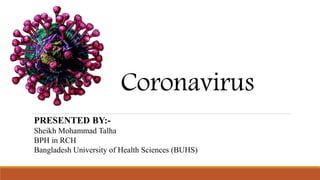
Coronavirus
PRESENTED BY:-
Sheikh Mohammad Talha
BPH in RCH
Bangladesh University of Health Sciences (BUHS)
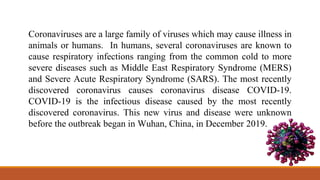
Coronaviruses are a large family of viruses which may cause illness in
animals or humans. In humans, several coronaviruses are known to
cause respiratory infections ranging from the common cold to more
severe diseases such as Middle East Respiratory Syndrome (MERS)
and Severe Acute Respiratory Syndrome (SARS). The most recently
discovered coronavirus causes coronavirus disease COVID-19.
COVID-19 is the infectious disease caused by the most recently
discovered coronavirus. This new virus and disease were unknown
before the outbreak began in Wuhan, China, in December 2019.
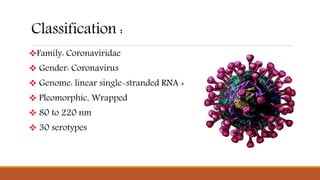
Classification :
Family: Coronaviridae
 Gender: Coronavirus
 Genome: linear single-stranded RNA +
 Pleomorphic, Wrapped
 80 to 220 nm
 30 serotypes
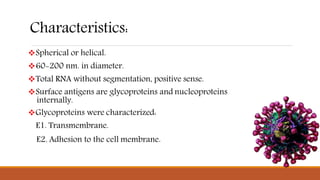
Characteristics:
Spherical or helical.
60-200 nm. in diameter.
Total RNA without segmentation, positive sense.
Surface antigens are glycoproteins and nucleoproteins
internally.
Glycoproteins were characterized:
E1. Transmembrane.
E2. Adhesion to the cell membrane.
Characteristics:
Protein S. Form projected responsible for stimulating neutralizing
antibody and interaction with cellular receptors.
Bind to cells via specific receptors.
Enter through membrane fusion.
In the cytoplasm, the viral RNA is translated by the host
machinery.
Viral proteins are synthesized, assembled, are fused to the cell
membrane and the virus out.
Characteristics:
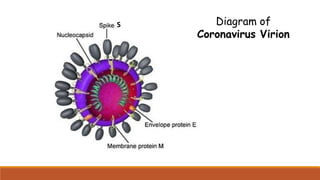
S – spike(receptor binding cell fusion).
E – envelope (small: envelope protein, not as abundant asS).
M – membrane protein (transmembrane budding andenvelope
formation)
Diagram of
Coronavirus Virion
S
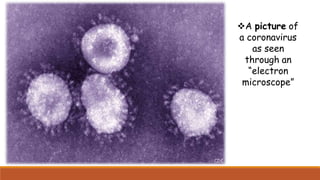
A picture of
a coronavirus
as seen
through an
“electron
microscope”
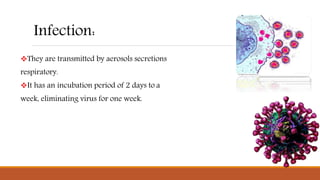
They are transmitted by aerosols secretions
respiratory.
It has an incubation period of 2 days to a
week, eliminating virus for one week.
Infection:
Infection:
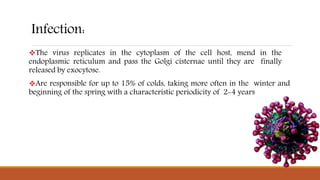
The virus replicates in the cytoplasm of the cell host, mend in the
endoplasmic reticulum and pass the Golgi cisternae until they are finally
released by exocytose.
Are responsible for up to 15% of colds, taking more often in the winter and
beginning of the spring with a characteristic periodicity of 2-4 years
Symptoms:
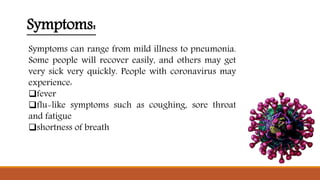
Symptoms can range from mild illness to pneumonia.
Some people will recover easily, and others may get
very sick very quickly. People with coronavirus may
experience:
fever
flu-like symptoms such as coughing, sore throat
and fatigue
shortness of breath
How it spreads
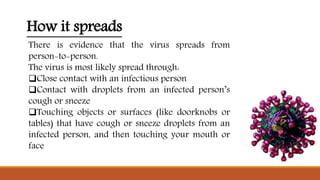
There is evidence that the virus spreads from
person-to-person.
The virus is most likely spread through:
Close contact with an infectious person
Contact with droplets from an infected person’s
cough or sneeze
Touching objects or surfaces (like doorknobs or
tables) that have cough or sneeze droplets from an
infected person, and then touching your mouth or
face
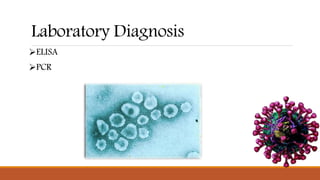
Laboratory Diagnosis
ELISA
PCR
Treatment
Currently, no antiviral medication is recommended to treat COVID-19.
Treatment is directed at relieving symptoms and may include: Pain
relievers, Cough syrup or medication & Rest Fluid intake.
If your doctor thinks you can be treated at home, he or she may give you
special instructions, such as to isolate yourself as much as possible from
family while you're sick and to stay home for a period of time. If you're very
ill, you may need to be treated in the hospital.
Corticosteroids should not be routinely given
systemically, according to WHO interim
guidance.
A randomized controlled trial has been initiated
quickly to assess the efficacy and safety of
combined use of lopinavir/ritonavir in patients
hospitalized with COVID-19 infection.
Any Questions..?

Corona Virus

  • 1.
  • 2.
    Coronavirus PRESENTED BY:- Sheikh MohammadTalha BPH in RCH Bangladesh University of Health Sciences (BUHS)
  • 3.
    Coronaviruses are alarge family of viruses which may cause illness in animals or humans. In humans, several coronaviruses are known to cause respiratory infections ranging from the common cold to more severe diseases such as Middle East Respiratory Syndrome (MERS) and Severe Acute Respiratory Syndrome (SARS). The most recently discovered coronavirus causes coronavirus disease COVID-19. COVID-19 is the infectious disease caused by the most recently discovered coronavirus. This new virus and disease were unknown before the outbreak began in Wuhan, China, in December 2019.
  • 4.
    Classification : Family: Coronaviridae Gender: Coronavirus  Genome: linear single-stranded RNA +  Pleomorphic, Wrapped  80 to 220 nm  30 serotypes
  • 5.
    Characteristics: Spherical or helical. 60-200nm. in diameter. Total RNA without segmentation, positive sense. Surface antigens are glycoproteins and nucleoproteins internally. Glycoproteins were characterized: E1. Transmembrane. E2. Adhesion to the cell membrane.
  • 6.
    Characteristics: Protein S. Formprojected responsible for stimulating neutralizing antibody and interaction with cellular receptors. Bind to cells via specific receptors. Enter through membrane fusion. In the cytoplasm, the viral RNA is translated by the host machinery. Viral proteins are synthesized, assembled, are fused to the cell membrane and the virus out.
  • 7.
    Characteristics: S – spike(receptorbinding cell fusion). E – envelope (small: envelope protein, not as abundant asS). M – membrane protein (transmembrane budding andenvelope formation)
  • 8.
  • 9.
    A picture of acoronavirus as seen through an “electron microscope”
  • 10.
    They are transmittedby aerosols secretions respiratory. It has an incubation period of 2 days to a week, eliminating virus for one week. Infection:
  • 11.
    Infection: The virus replicatesin the cytoplasm of the cell host, mend in the endoplasmic reticulum and pass the Golgi cisternae until they are finally released by exocytose. Are responsible for up to 15% of colds, taking more often in the winter and beginning of the spring with a characteristic periodicity of 2-4 years
  • 12.
    Symptoms: Symptoms can rangefrom mild illness to pneumonia. Some people will recover easily, and others may get very sick very quickly. People with coronavirus may experience: fever flu-like symptoms such as coughing, sore throat and fatigue shortness of breath
  • 13.
    How it spreads Thereis evidence that the virus spreads from person-to-person. The virus is most likely spread through: Close contact with an infectious person Contact with droplets from an infected person’s cough or sneeze Touching objects or surfaces (like doorknobs or tables) that have cough or sneeze droplets from an infected person, and then touching your mouth or face
  • 14.
  • 15.
    Treatment Currently, no antiviralmedication is recommended to treat COVID-19. Treatment is directed at relieving symptoms and may include: Pain relievers, Cough syrup or medication & Rest Fluid intake. If your doctor thinks you can be treated at home, he or she may give you special instructions, such as to isolate yourself as much as possible from family while you're sick and to stay home for a period of time. If you're very ill, you may need to be treated in the hospital.
  • 16.
    Corticosteroids should notbe routinely given systemically, according to WHO interim guidance. A randomized controlled trial has been initiated quickly to assess the efficacy and safety of combined use of lopinavir/ritonavir in patients hospitalized with COVID-19 infection.
  • 18.