How are the Core Values of the
Filipino child reflected
in the Report Card?
The goal of the K to 12 curriculum is to
holistically develop Filipinos with 21st century
skills. The development of learners’ cognitive
competencies and skills must be complemented
by the formation of their values and
attitudes anchored on the VISION, MISSION,
and CORE VALUES of the Department of
Education (DepEd Order no. 36, s.2013). Non-
DepEd schools may modify or adopt these
guidelines as appropriate to the philosophy,
vision, mission, and core values of their schools.
We dream of Filipinos who passionately love their
country and whose values and competencies enable
them to realize their full potential and contribute
meaningfully to building the nation.
As a learner- centered public institution, the
Department of Education continuously improves
itself to better serve its stakeholders.
To protect and promote the right of every Filipino to quality,
equitable, culture- based, and complete basic education where:
Student learn in a child- friendly, gender- sensitive, safe, and
motivating environment.
Teachers facilitate learning and motivating environment.
Administrators and staff, as stewards of the institution, ensure
an enabling and supportive environment for effective learning to
happen.
Family, community, and other stakeholders are actively engaged
and share responsibility for developing life- long learners.
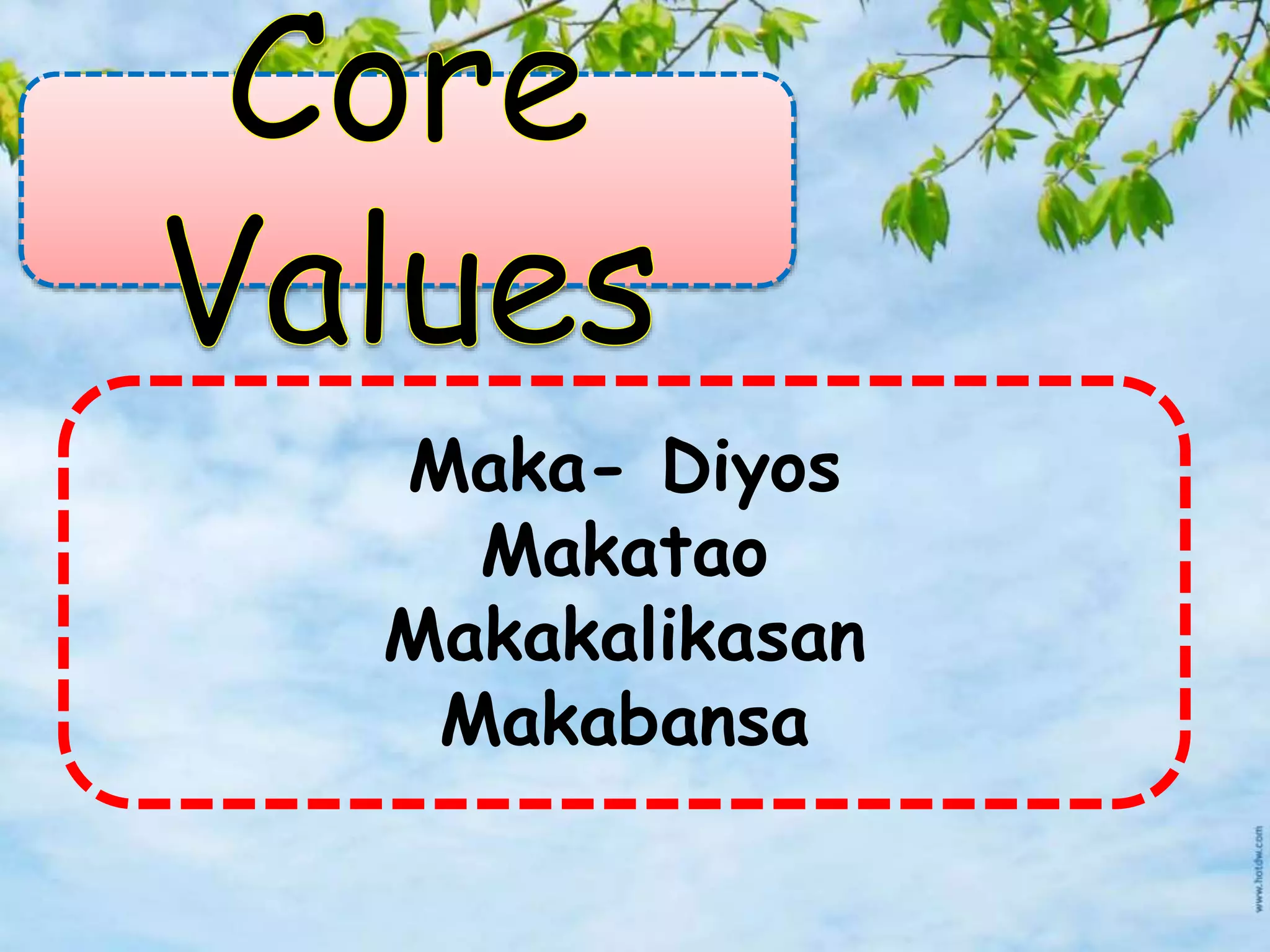
Maka- Diyos
Makatao
Makakalikasan
Makabansa
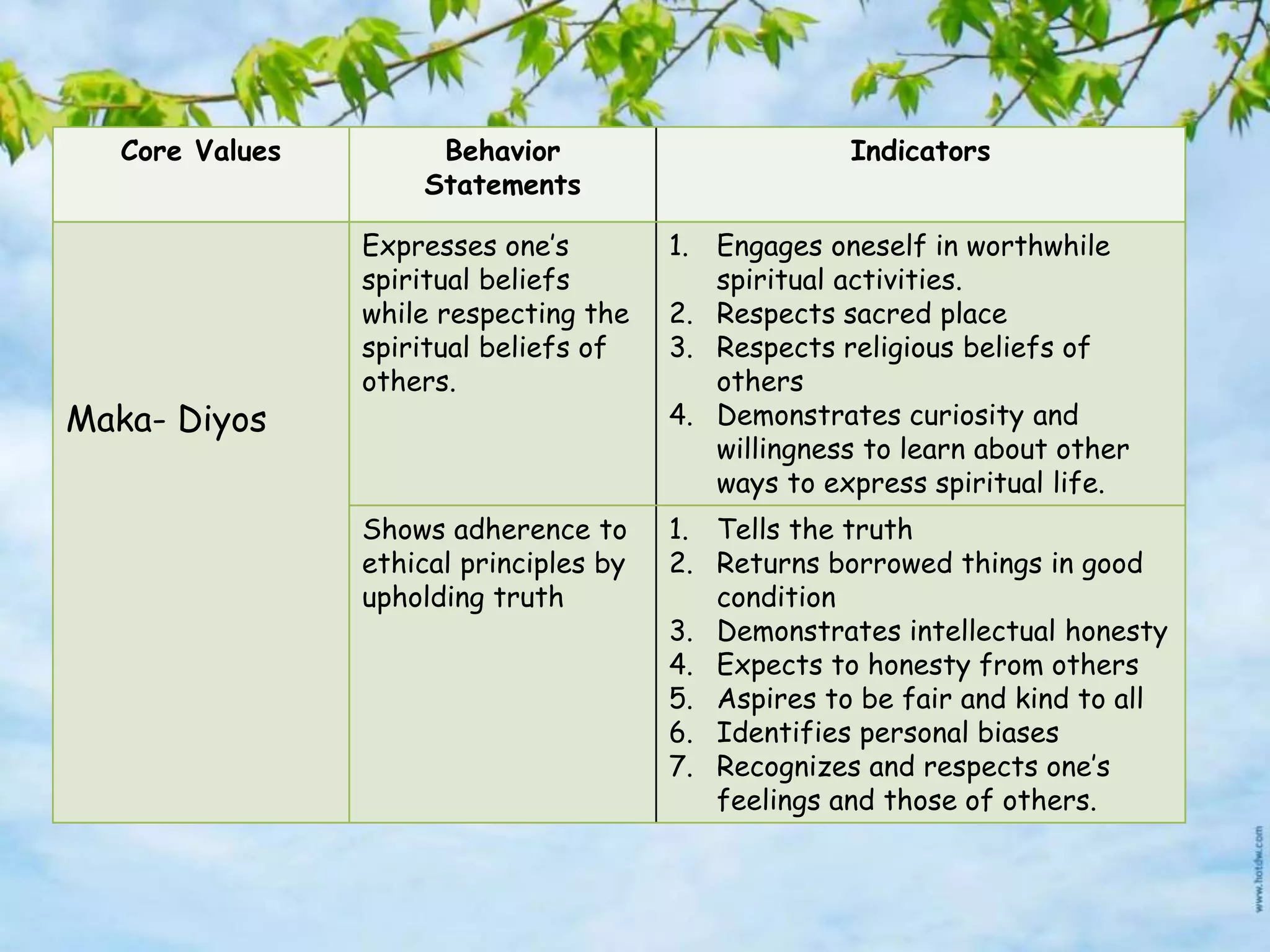
Core Values Behavior
Statements
Indicators
Maka- Diyos
Expresses one’s
spiritual beliefs
while respecting the
spiritual beliefs of
others.
1. Engages oneself in worthwhile
spiritual activities.
2. Respects sacred place
3. Respects religious beliefs of
others
4. Demonstrates curiosity and
willingness to learn about other
ways to express spiritual life.
Shows adherence to
ethical principles by
upholding truth
1. Tells the truth
2. Returns borrowed things in good
condition
3. Demonstrates intellectual honesty
4. Expects to honesty from others
5. Aspires to be fair and kind to all
6. Identifies personal biases
7. Recognizes and respects one’s
feelings and those of others.
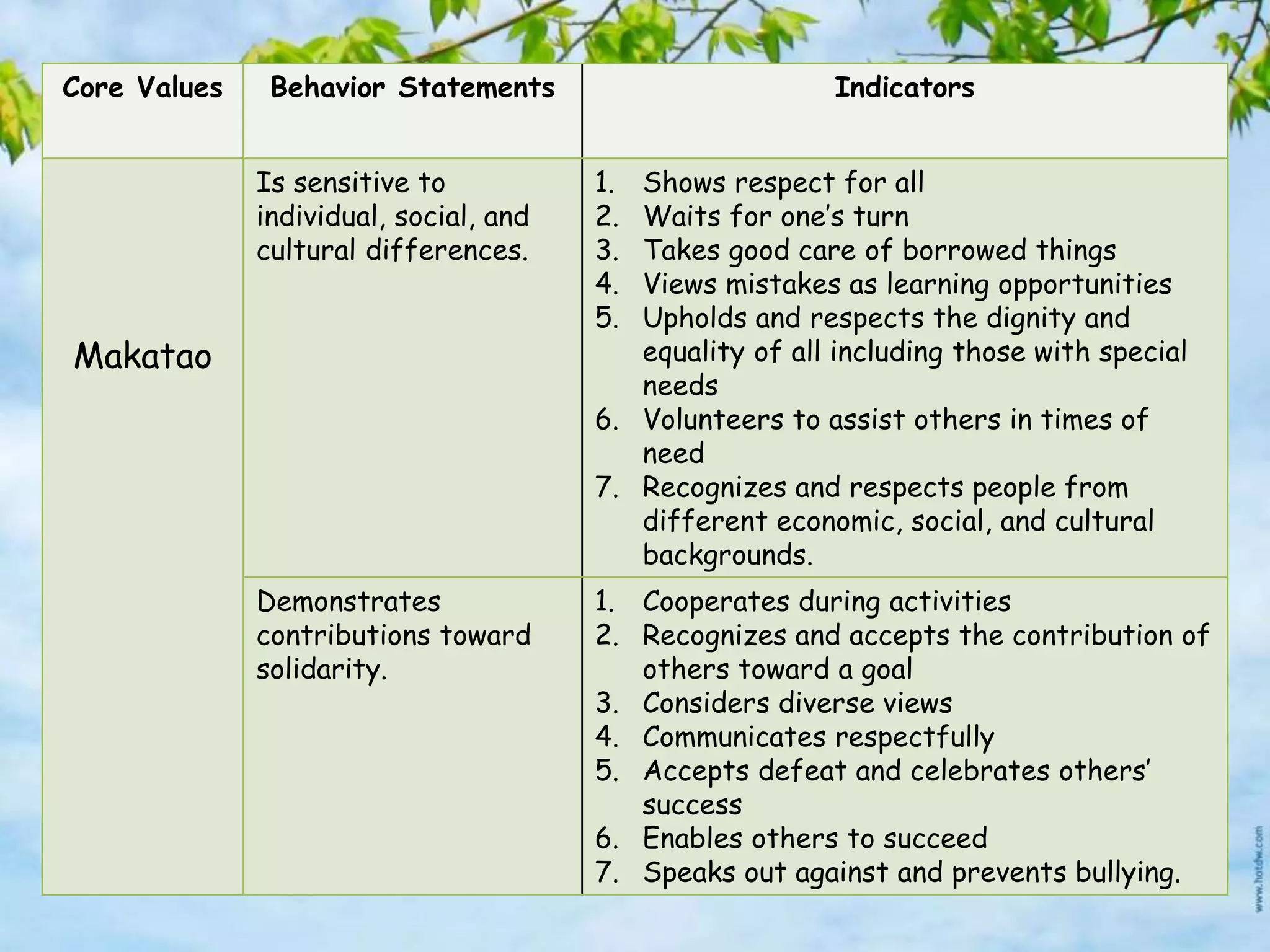
Core Values Behavior Statements Indicators
Makatao
Is sensitive to
individual, social, and
cultural differences.
1. Shows respect for all
2. Waits for one’s turn
3. Takes good care of borrowed things
4. Views mistakes as learning opportunities
5. Upholds and respects the dignity and
equality of all including those with special
needs
6. Volunteers to assist others in times of
need
7. Recognizes and respects people from
different economic, social, and cultural
backgrounds.
Demonstrates
contributions toward
solidarity.
1. Cooperates during activities
2. Recognizes and accepts the contribution of
others toward a goal
3. Considers diverse views
4. Communicates respectfully
5. Accepts defeat and celebrates others’
success
6. Enables others to succeed
7. Speaks out against and prevents bullying.
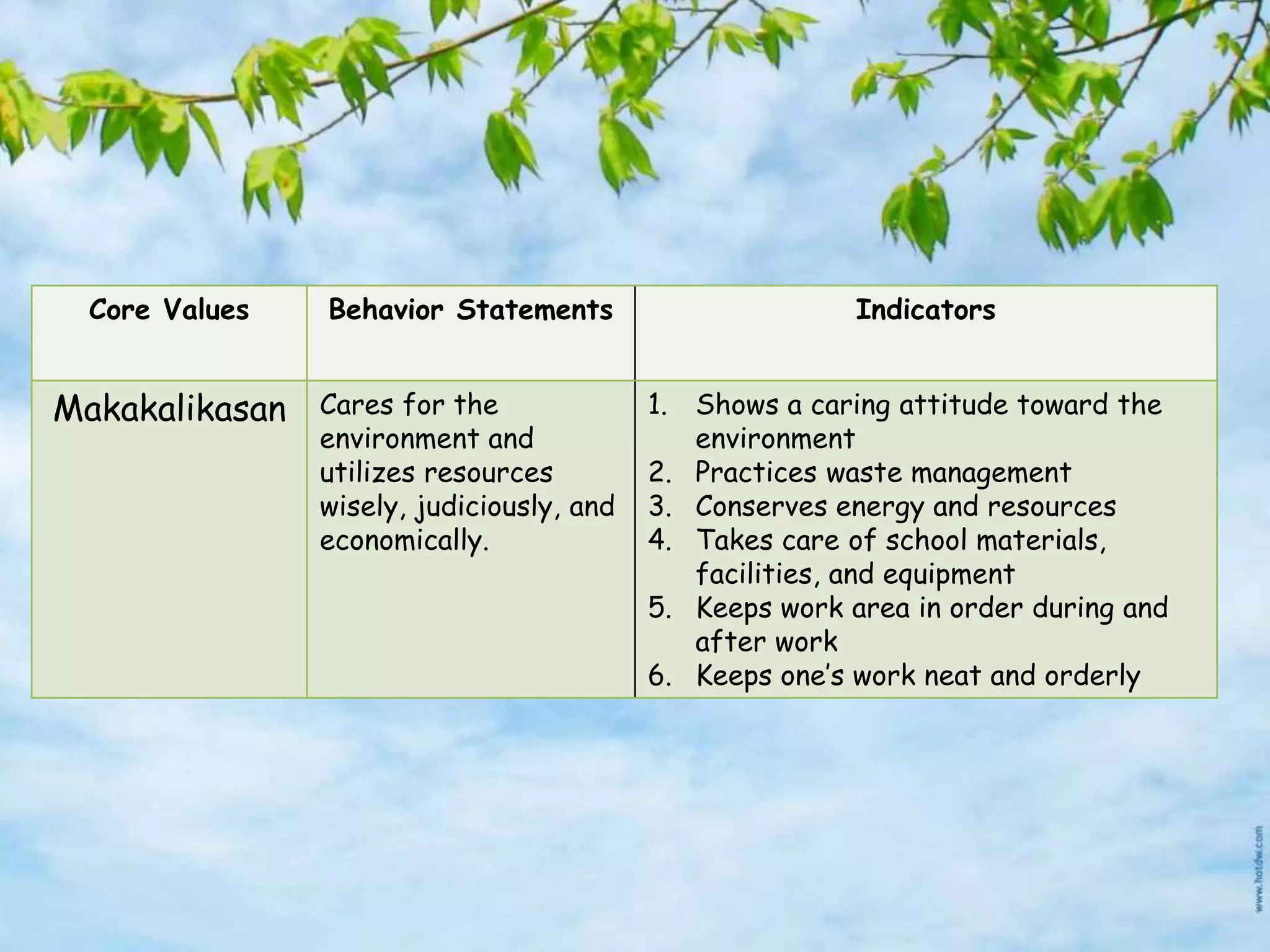
Core Values Behavior Statements Indicators
Makakalikasan Cares for the
environment and
utilizes resources
wisely, judiciously, and
economically.
1. Shows a caring attitude toward the
environment
2. Practices waste management
3. Conserves energy and resources
4. Takes care of school materials,
facilities, and equipment
5. Keeps work area in order during and
after work
6. Keeps one’s work neat and orderly
Core Values Behavior Statements Indicators
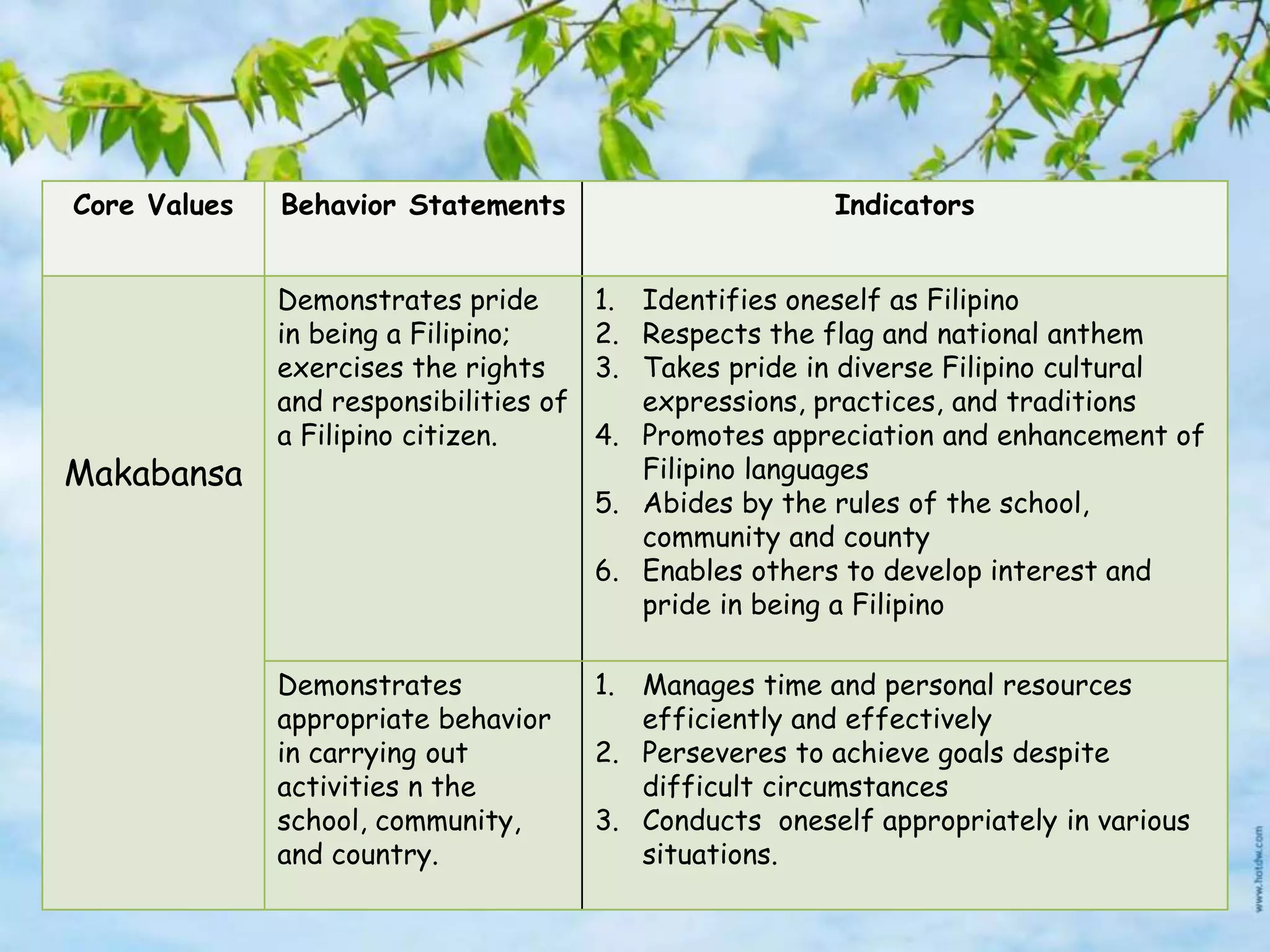
Makabansa
Demonstrates pride
in being a Filipino;
exercises the rights
and responsibilities of
a Filipino citizen.
1. Identifies oneself as Filipino
2. Respects the flag and national anthem
3. Takes pride in diverse Filipino cultural
expressions, practices, and traditions
4. Promotes appreciation and enhancement of
Filipino languages
5. Abides by the rules of the school,
community and county
6. Enables others to develop interest and
pride in being a Filipino
Demonstrates
appropriate behavior
in carrying out
activities n the
school, community,
and country.
1. Manages time and personal resources
efficiently and effectively
2. Perseveres to achieve goals despite
difficult circumstances
3. Conducts oneself appropriately in various
situations.
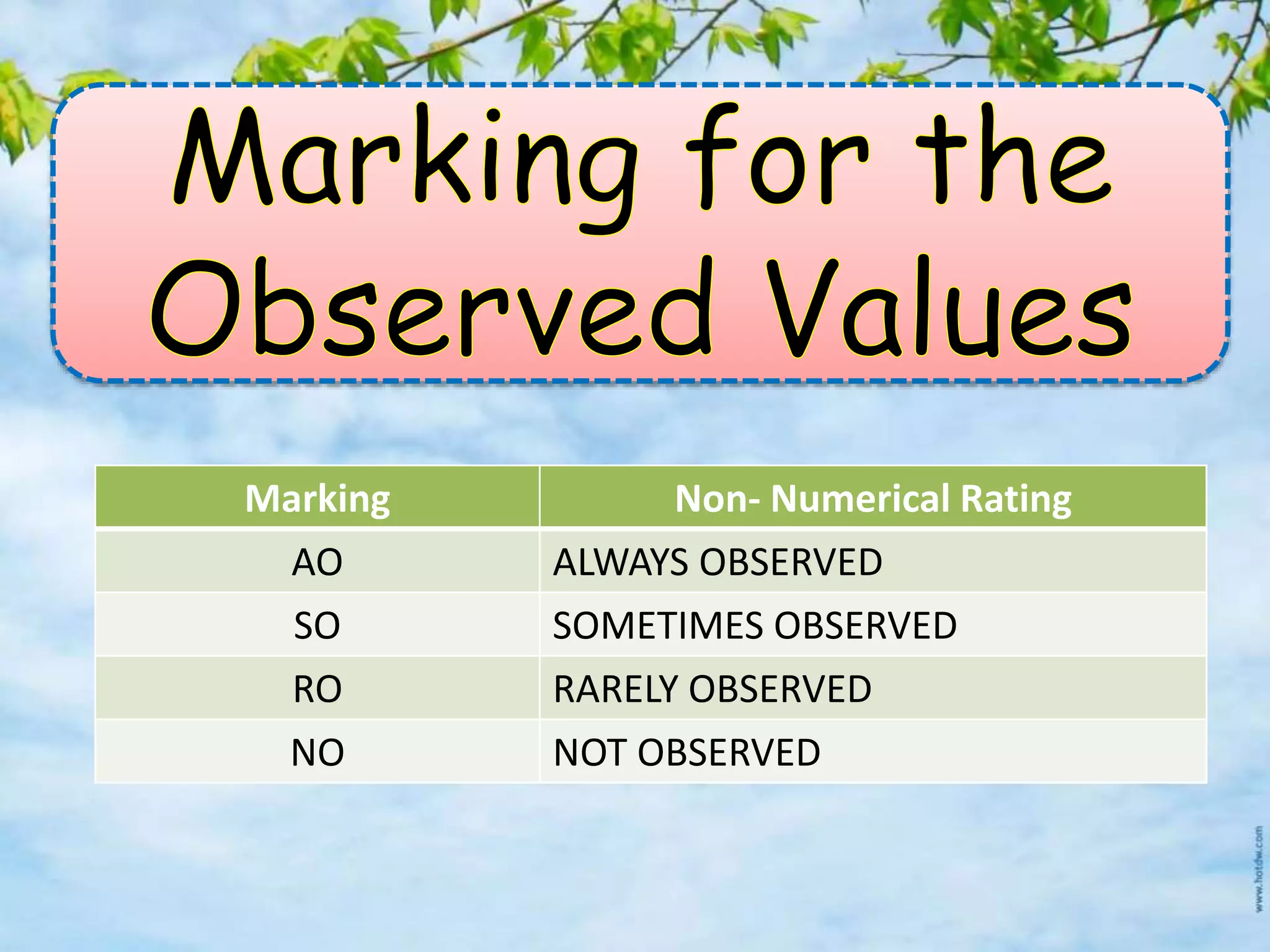
Marking Non- Numerical Rating
AO ALWAYS OBSERVED
SO SOMETIMES OBSERVED
RO RARELY OBSERVED
NO NOT OBSERVED
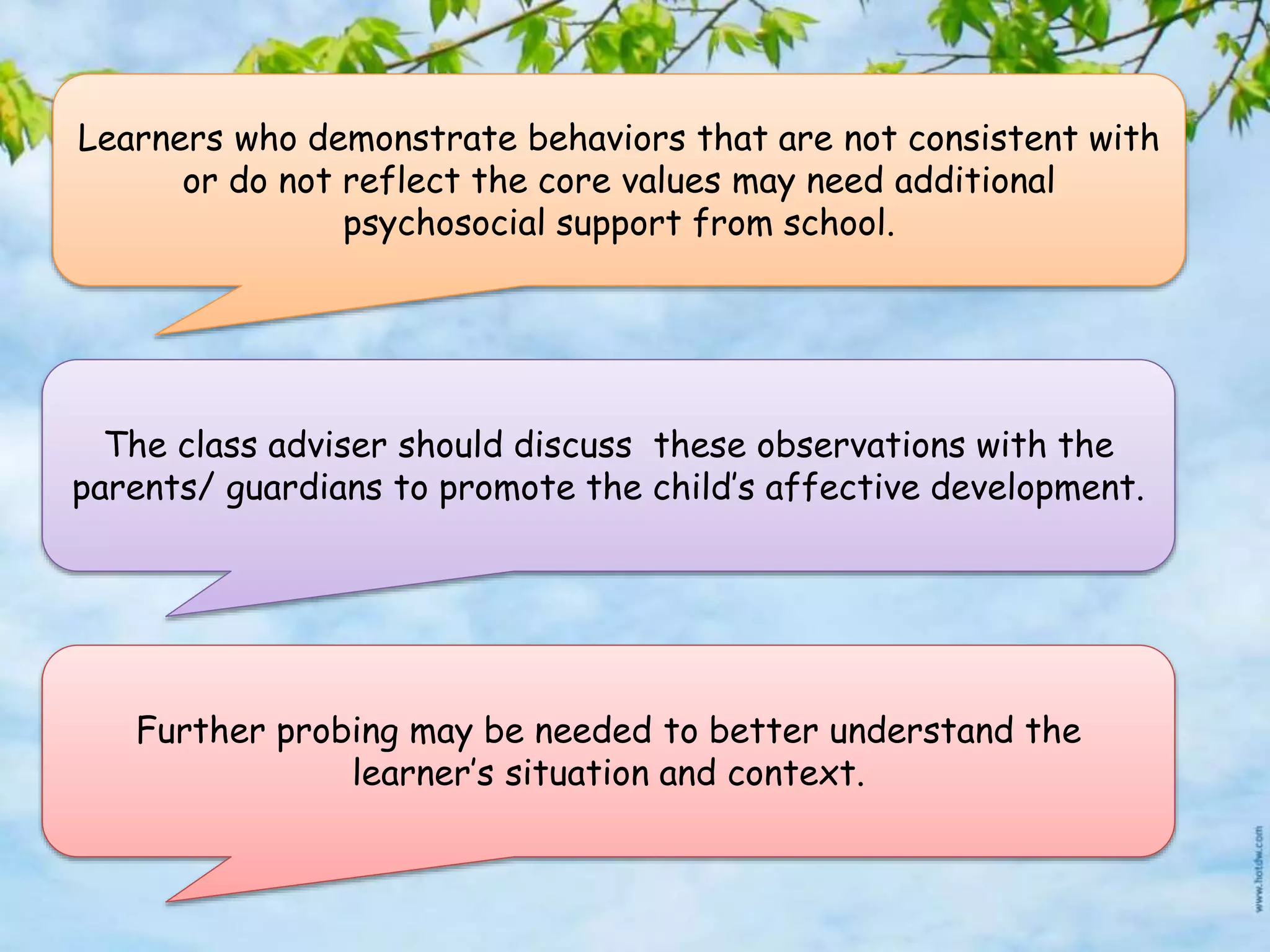
Learners who demonstrate behaviors that are not consistent with
or do not reflect the core values may need additional
psychosocial support from school.
The class adviser should discuss these observations with the
parents/ guardians to promote the child’s affective development.
Further probing may be needed to better understand the
learner’s situation and context.
How is attendance
reported?
Attendance Record at the End of the School Year.
JUN JUL AUG SEPT OCT NOV DEC JAN FEB MAR TOTAL
No. of school
days
21 21 22 21 21 20 14 21 21 18 200
No. of days
present
21 21 22 21 21 20 11 21 21 18 197
No. of days
absent
0 0 0 0 0 0 3 0 0 0 3
The number of the schools days in each month is presented, which is based on the school
calendar for a given school year. The number of days that each learner is present and
absent is indicated. Recording of attendance is recorded at the end of the school year.
To whom is classroom
Assessment
Reported?
Classroom assessment serves to help teachers and
parents understand the learners’ progress on
curriculum standards.
The results of assessment are reported to the
child, the child’s remedial class teacher, if any,
and the teacher of the next grade level, as well
as the child’s parents/ guardians.
Core Values

Core Values

  • 2.
    How are theCore Values of the Filipino child reflected in the Report Card?
  • 3.
    The goal ofthe K to 12 curriculum is to holistically develop Filipinos with 21st century skills. The development of learners’ cognitive competencies and skills must be complemented by the formation of their values and attitudes anchored on the VISION, MISSION, and CORE VALUES of the Department of Education (DepEd Order no. 36, s.2013). Non- DepEd schools may modify or adopt these guidelines as appropriate to the philosophy, vision, mission, and core values of their schools.
  • 4.
    We dream ofFilipinos who passionately love their country and whose values and competencies enable them to realize their full potential and contribute meaningfully to building the nation. As a learner- centered public institution, the Department of Education continuously improves itself to better serve its stakeholders.
  • 5.
    To protect andpromote the right of every Filipino to quality, equitable, culture- based, and complete basic education where: Student learn in a child- friendly, gender- sensitive, safe, and motivating environment. Teachers facilitate learning and motivating environment. Administrators and staff, as stewards of the institution, ensure an enabling and supportive environment for effective learning to happen. Family, community, and other stakeholders are actively engaged and share responsibility for developing life- long learners.
  • 6.
  • 7.
    Core Values Behavior Statements Indicators Maka-Diyos Expresses one’s spiritual beliefs while respecting the spiritual beliefs of others. 1. Engages oneself in worthwhile spiritual activities. 2. Respects sacred place 3. Respects religious beliefs of others 4. Demonstrates curiosity and willingness to learn about other ways to express spiritual life. Shows adherence to ethical principles by upholding truth 1. Tells the truth 2. Returns borrowed things in good condition 3. Demonstrates intellectual honesty 4. Expects to honesty from others 5. Aspires to be fair and kind to all 6. Identifies personal biases 7. Recognizes and respects one’s feelings and those of others.
  • 8.
    Core Values BehaviorStatements Indicators Makatao Is sensitive to individual, social, and cultural differences. 1. Shows respect for all 2. Waits for one’s turn 3. Takes good care of borrowed things 4. Views mistakes as learning opportunities 5. Upholds and respects the dignity and equality of all including those with special needs 6. Volunteers to assist others in times of need 7. Recognizes and respects people from different economic, social, and cultural backgrounds. Demonstrates contributions toward solidarity. 1. Cooperates during activities 2. Recognizes and accepts the contribution of others toward a goal 3. Considers diverse views 4. Communicates respectfully 5. Accepts defeat and celebrates others’ success 6. Enables others to succeed 7. Speaks out against and prevents bullying.
  • 9.
    Core Values BehaviorStatements Indicators Makakalikasan Cares for the environment and utilizes resources wisely, judiciously, and economically. 1. Shows a caring attitude toward the environment 2. Practices waste management 3. Conserves energy and resources 4. Takes care of school materials, facilities, and equipment 5. Keeps work area in order during and after work 6. Keeps one’s work neat and orderly
  • 10.
    Core Values BehaviorStatements Indicators Makabansa Demonstrates pride in being a Filipino; exercises the rights and responsibilities of a Filipino citizen. 1. Identifies oneself as Filipino 2. Respects the flag and national anthem 3. Takes pride in diverse Filipino cultural expressions, practices, and traditions 4. Promotes appreciation and enhancement of Filipino languages 5. Abides by the rules of the school, community and county 6. Enables others to develop interest and pride in being a Filipino Demonstrates appropriate behavior in carrying out activities n the school, community, and country. 1. Manages time and personal resources efficiently and effectively 2. Perseveres to achieve goals despite difficult circumstances 3. Conducts oneself appropriately in various situations.
  • 11.
    Marking Non- NumericalRating AO ALWAYS OBSERVED SO SOMETIMES OBSERVED RO RARELY OBSERVED NO NOT OBSERVED
  • 12.
    Learners who demonstratebehaviors that are not consistent with or do not reflect the core values may need additional psychosocial support from school. The class adviser should discuss these observations with the parents/ guardians to promote the child’s affective development. Further probing may be needed to better understand the learner’s situation and context.
  • 13.
  • 14.
    Attendance Record atthe End of the School Year. JUN JUL AUG SEPT OCT NOV DEC JAN FEB MAR TOTAL No. of school days 21 21 22 21 21 20 14 21 21 18 200 No. of days present 21 21 22 21 21 20 11 21 21 18 197 No. of days absent 0 0 0 0 0 0 3 0 0 0 3 The number of the schools days in each month is presented, which is based on the school calendar for a given school year. The number of days that each learner is present and absent is indicated. Recording of attendance is recorded at the end of the school year.
  • 15.
    To whom isclassroom Assessment Reported?
  • 16.
    Classroom assessment servesto help teachers and parents understand the learners’ progress on curriculum standards. The results of assessment are reported to the child, the child’s remedial class teacher, if any, and the teacher of the next grade level, as well as the child’s parents/ guardians.