Co-Operatives in Nepal
PRESENTED BY:
RUPESH NYAUPANE
Meaning and Concept
 “Cooperative society is the form of organization in which person voluntarily
associated together as human being on the basis of equality for the promotion of
economic interest of themselves.”(H. Calvert)
Co-Operative is a movement of helpless against the capitalism exploitation as it
is a joint effort for not only one but for all
History of Co-Operatives in Nepal
Establishment of Department of Cooperatives (DOC) under the Ministry of
Agriculture for Planning and Development in 1953
 Cooperative Movement started in 1954
Rapti valley Development project by USAID 1954
First National plan period (1956-60) developed 13 Saving and credit
Cooperative Societies for the rehabilitation of the flood Victims(Rapti)
The government of Nepal announced "Member from each household" policy
through its annual plans and programs in 2015
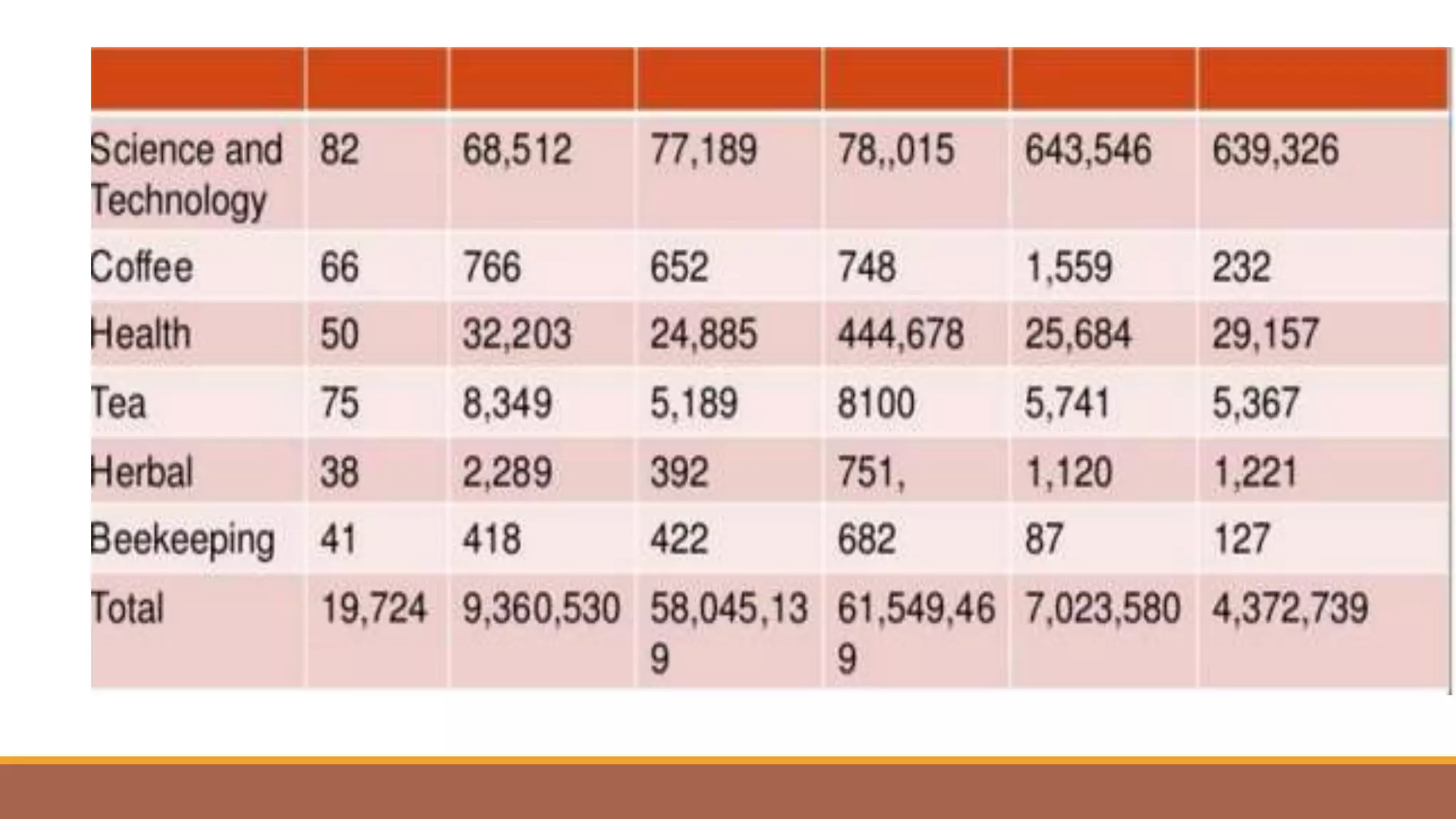
Activities of Cooperative up to 2011/12
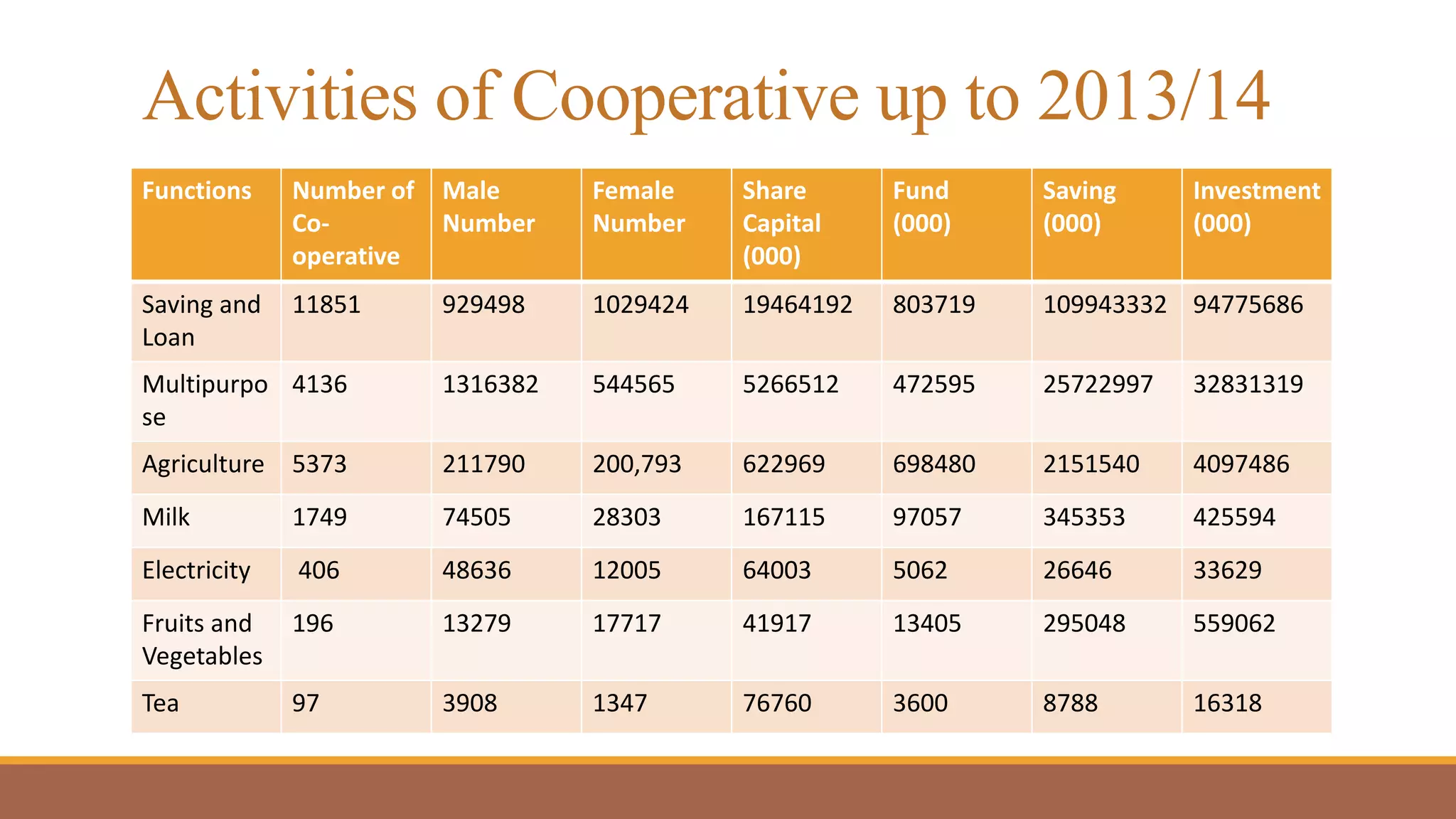
Activities of Cooperative up to 2013/14
Functions Number of
Co-
operative
Male
Number
Female
Number
Share
Capital
(000)
Fund
(000)
Saving
(000)
Investment
(000)
Saving and
Loan
11851 929498 1029424 19464192 803719 109943332 94775686
Multipurpo
se
4136 1316382 544565 5266512 472595 25722997 32831319
Agriculture 5373 211790 200,793 622969 698480 2151540 4097486
Milk 1749 74505 28303 167115 97057 345353 425594
Electricity 406 48636 12005 64003 5062 26646 33629
Fruits and
Vegetables
196 13279 17717 41917 13405 295048 559062
Tea 97 3908 1347 76760 3600 8788 16318
Coffee 80 2313 1704 14231 654 5240 5017
Herbs 144 3189 1530 19764 971 2020 8469
Bee Keeping 65 2214 1546 6782 3649 2835 3621
Science &
Technology
102 8579 3980 90215 5595 29499 33632
Health 85 4652 4256 223128 5552 132161 120745
Sugarcane 48 979 287 409 2 411 571
Junar 31 700 304 706 14 720 323
Others 722 57653 46483 834957 69181 775306 1073709
Total 26501 2709902 1934551 27095151 2187959 139543971 134383307
Source: STATISTICAL INFORMATION ON NEPALESE AGRICULTURE
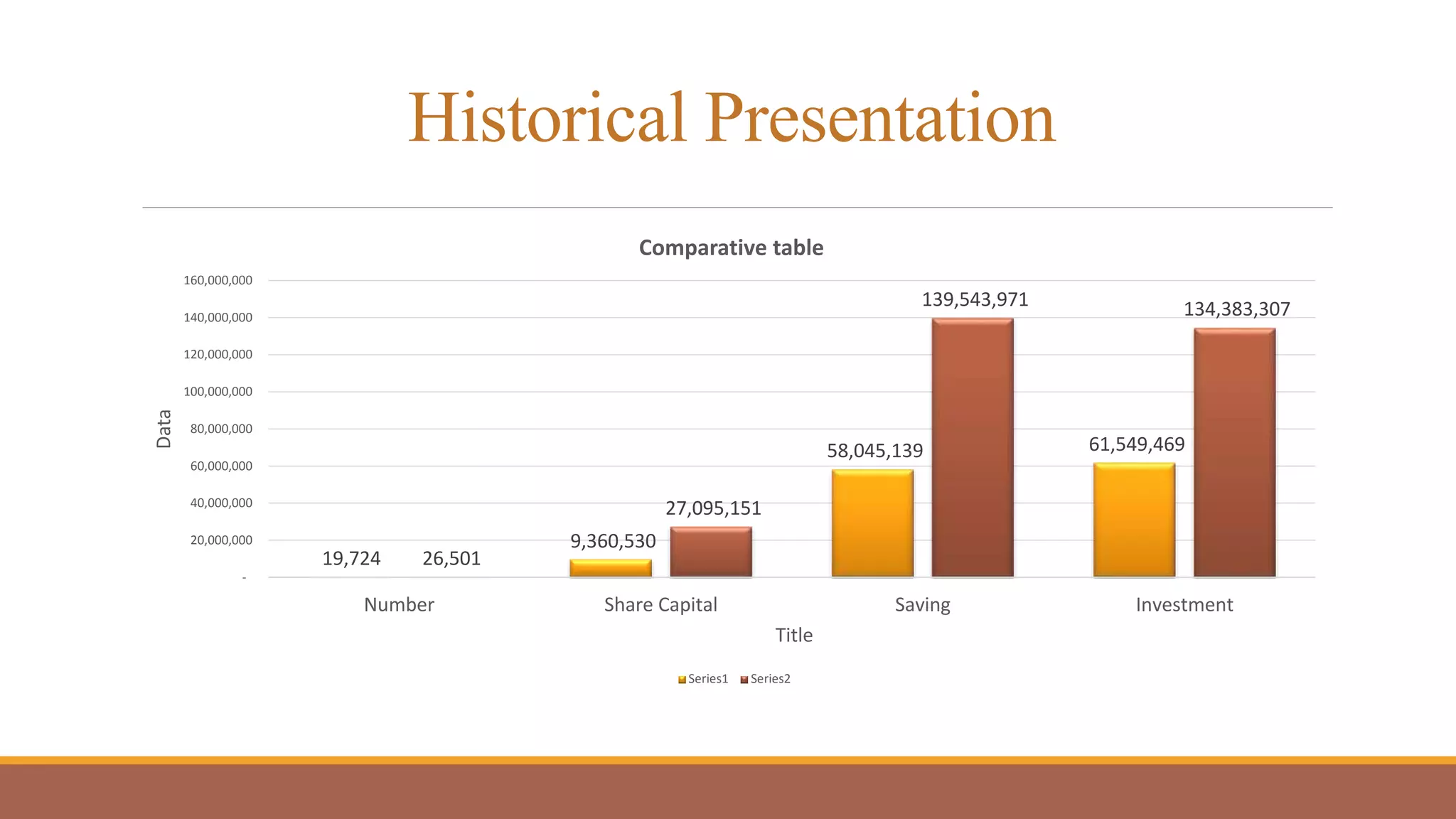
Historical Presentation
19,724
9,360,530
58,045,139 61,549,469
26,501
27,095,151
139,543,971 134,383,307
-
20,000,000
40,000,000
60,000,000
80,000,000
100,000,000
120,000,000
140,000,000
160,000,000
Number Share Capital Saving Investment
Data
Title
Comparative table
Series1 Series2
Current scenario
 This sector also provide direct employment to more than 50
thousands while in indirectly to more 100,000 job opportunities in
different fields
 Many cooperative suffer from unsound investment in risky areas
,where there are no returns
Most cooperative lack professional management and plagued by the
lack adequate knowledge, principles and practices of cooperatives
people are more attracted to cooperative because the returns are
higher and they provide high level services by going to the clients
house
 The interest rates are high so if u take loan and investment in other
project then you will have difficult to gets returns
It charges interest as well as different types of fee on loan( loan fee,
membership fee, aawhan fee, organization development fee, valuation
fee, other fee)
How can cooperative activities be
financed
Directly from members themselves
 one-time or annual membership fees
· member contributions with no individual ownership attached, such as service fees.
· member share capital
· individual member deposits with the cooperative which may be used for business
· deferred payment to members for part or all of their produce delivered to the cooperative
 From retained surpluses generated by the cooperative business
From outsiders
 grant
short-term loan
long-term loan
trade credit offered by a supplier.
Problems in Co-operatives
The development of cooperatives is not satisfactory in Nepal
Reasons:
Lack of clarity about mission, national vision and adequate monitoring on the
part of government with respect to cooperative movement
Lack of managerial skills and professionalism, sound planning and
implementation
Lack of working capital, appropriate research, extension and education about
cooperative movement
Lack of creditability.
Conclusions and suggestions
A cooperative organization can carry out its functions only after its
registration under the cooperative act 2048
 The Government has announce to celebrate cooperative year 2012
Many cooperative Suffer from unsound investment in risky areas where
there are no returns
 Most Cooperative lack professional management and are plagued by the
lack of adequate knowledge ,principles and practices of cooperative
Appropriate governmental policies and programs, rules and regulations, credit
availability, insurance policies, and governmental support systems should be in
place for a successful cooperative movement.
Government should recognized good cooperative and reward where as the bad
ones must be given a time or framework to improve
Encourage to form the Cooperative rural areas rather than the valley or city
based
 Necessary to provide the training and guideline from the smooth functioning of
the cooperative
Thank you

Cooperatives in nepal

  • 1.
  • 2.
    Meaning and Concept “Cooperative society is the form of organization in which person voluntarily associated together as human being on the basis of equality for the promotion of economic interest of themselves.”(H. Calvert) Co-Operative is a movement of helpless against the capitalism exploitation as it is a joint effort for not only one but for all
  • 3.
    History of Co-Operativesin Nepal Establishment of Department of Cooperatives (DOC) under the Ministry of Agriculture for Planning and Development in 1953  Cooperative Movement started in 1954 Rapti valley Development project by USAID 1954 First National plan period (1956-60) developed 13 Saving and credit Cooperative Societies for the rehabilitation of the flood Victims(Rapti) The government of Nepal announced "Member from each household" policy through its annual plans and programs in 2015
  • 4.
  • 6.
    Activities of Cooperativeup to 2013/14 Functions Number of Co- operative Male Number Female Number Share Capital (000) Fund (000) Saving (000) Investment (000) Saving and Loan 11851 929498 1029424 19464192 803719 109943332 94775686 Multipurpo se 4136 1316382 544565 5266512 472595 25722997 32831319 Agriculture 5373 211790 200,793 622969 698480 2151540 4097486 Milk 1749 74505 28303 167115 97057 345353 425594 Electricity 406 48636 12005 64003 5062 26646 33629 Fruits and Vegetables 196 13279 17717 41917 13405 295048 559062 Tea 97 3908 1347 76760 3600 8788 16318
  • 7.
    Coffee 80 23131704 14231 654 5240 5017 Herbs 144 3189 1530 19764 971 2020 8469 Bee Keeping 65 2214 1546 6782 3649 2835 3621 Science & Technology 102 8579 3980 90215 5595 29499 33632 Health 85 4652 4256 223128 5552 132161 120745 Sugarcane 48 979 287 409 2 411 571 Junar 31 700 304 706 14 720 323 Others 722 57653 46483 834957 69181 775306 1073709 Total 26501 2709902 1934551 27095151 2187959 139543971 134383307 Source: STATISTICAL INFORMATION ON NEPALESE AGRICULTURE
  • 8.
    Historical Presentation 19,724 9,360,530 58,045,139 61,549,469 26,501 27,095,151 139,543,971134,383,307 - 20,000,000 40,000,000 60,000,000 80,000,000 100,000,000 120,000,000 140,000,000 160,000,000 Number Share Capital Saving Investment Data Title Comparative table Series1 Series2
  • 9.
    Current scenario  Thissector also provide direct employment to more than 50 thousands while in indirectly to more 100,000 job opportunities in different fields  Many cooperative suffer from unsound investment in risky areas ,where there are no returns Most cooperative lack professional management and plagued by the lack adequate knowledge, principles and practices of cooperatives
  • 10.
    people are moreattracted to cooperative because the returns are higher and they provide high level services by going to the clients house  The interest rates are high so if u take loan and investment in other project then you will have difficult to gets returns It charges interest as well as different types of fee on loan( loan fee, membership fee, aawhan fee, organization development fee, valuation fee, other fee)
  • 11.
    How can cooperativeactivities be financed Directly from members themselves  one-time or annual membership fees · member contributions with no individual ownership attached, such as service fees. · member share capital · individual member deposits with the cooperative which may be used for business · deferred payment to members for part or all of their produce delivered to the cooperative  From retained surpluses generated by the cooperative business From outsiders  grant short-term loan long-term loan trade credit offered by a supplier.
  • 12.
    Problems in Co-operatives Thedevelopment of cooperatives is not satisfactory in Nepal Reasons: Lack of clarity about mission, national vision and adequate monitoring on the part of government with respect to cooperative movement Lack of managerial skills and professionalism, sound planning and implementation Lack of working capital, appropriate research, extension and education about cooperative movement Lack of creditability.
  • 13.
    Conclusions and suggestions Acooperative organization can carry out its functions only after its registration under the cooperative act 2048  The Government has announce to celebrate cooperative year 2012 Many cooperative Suffer from unsound investment in risky areas where there are no returns  Most Cooperative lack professional management and are plagued by the lack of adequate knowledge ,principles and practices of cooperative
  • 14.
    Appropriate governmental policiesand programs, rules and regulations, credit availability, insurance policies, and governmental support systems should be in place for a successful cooperative movement. Government should recognized good cooperative and reward where as the bad ones must be given a time or framework to improve Encourage to form the Cooperative rural areas rather than the valley or city based  Necessary to provide the training and guideline from the smooth functioning of the cooperative
  • 15.