Cooperative
Language Learning
Presented by :
Group I
Member of Group
Nur Holipah
@ oyiiep
201012500981
Syarisah
@cha_adjaah
201012500129
Background
Cooperative Learning is an approach to teaching that makes
maximum use of cooperative activities involving pairs and small
group of learners in the classroom.
Goals of CLL:
To provide opportunities for naturalistic second language
acquisition through the use of interactive pair and group activities
To provide teacher with a methodology
To enable focused attention to particular lexical items, language
structures, and communicative function
To provide opportunities for learners to develop successful learning and
communication strategies
To enhance learner motivation and reduce learner stress and to
create a positive affective classroom climate
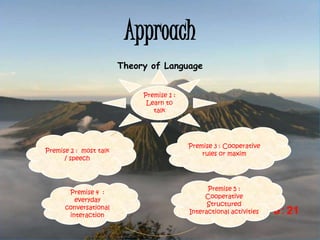
Approach
Theory of Language
Premise 1 :
Learn to
talk
Premise 3 : Cooperative
rules or maxim
Premise 5 :
Cooperative
Structured
Interactional activities
Premise 4 :
everyday
conversational
interaction
Premise 2 : most talk
/ speech
Theory of Learning
 Develop communicative competence
 Practise in conversing
 Develop learners
Six Learning Advantages for ESL students in CLL Calssroom :
 Increased frequency and variety of second language
 Support cognitive development and increased language skills
 Opportunities to integrate language with content-based instruction
 Opportunities to include a greater variety of curricular materials
 Freedom for teachers to master new professional skills, particularly
does emphasizing communication
 Opportunities for students to act as resources for each
others, thus assuming a more active role in their learning
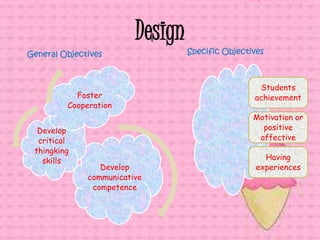
Design
Develop
communicative
competence
Develop
critical
thingking
skills
Foster
Cooperation
General Objectives
Students
achievement
Motivation or
positive
affective
Having
experiences
Specific Objectives
The Syllabus
CLL does not assume any particular form of language syllabus.
Types of learning and teaching actoivities (Johnson et al. (1994:4-5)) :
Formal cooperative learning groups.
Informal cooperative learning groups.
Cooperative base groups.
Key elements of succesful group based learning CL (Olsen and
Kagan (1992)) :
Positive interdependence
Group Formation
Individual accountability
Social skills
Structuring and structures
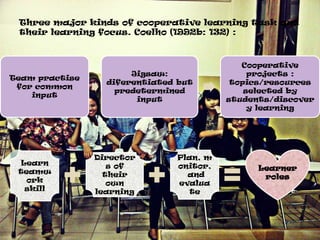
Three major kinds of cooperative learning task and
their learning focus. Coelho (1992b: 132) :
Team practise
for common
input
Jigsaw:
diferentiated but
predetermined
input
Cooperative
projects :
topics/resources
selected by
students/discover
y learning
Learn
teamw
ork
skill
Director
s of
their
own
learning
Plan, m
onitor,
and
evalua
te
Learner
roles
Teacher roles
Create a highly structured and well organized learning environment
 Setting goals
 Planning and structuring task
 Estabilishing the physical arrangement
 Assigning students to group and roles
 Selecting material and time
 Facilitator of learning
The role of instructional materials
Create opportunities for students to work
cooperatively
Procedure
The teacher assigns students to pairs with at least one good reader in
each pair
Student A describes the planning to write by student B
The prosedure is reversed
The student individually research the material they need for their
compositions
The student work together
The student write their composition individually
The student proofread and making correction to other’s composition
Revise their compositions
Reread each other’s compositions and sign their names to indicate that
each composition is error-free
Conclusions
• The use of discussion groups
• Increase student’s participation
• Planned to maximize student’s
interaction
• Facilitate student’s contributions
• Can be collaborated with other teaching
methods
• Enhances both learning and learner’s
interaction skills
Thank you for watching 

Cooperative Language Learning-group I

  • 1.
  • 2.
    Member of Group NurHolipah @ oyiiep 201012500981 Syarisah @cha_adjaah 201012500129
  • 3.
    Background Cooperative Learning isan approach to teaching that makes maximum use of cooperative activities involving pairs and small group of learners in the classroom. Goals of CLL: To provide opportunities for naturalistic second language acquisition through the use of interactive pair and group activities To provide teacher with a methodology To enable focused attention to particular lexical items, language structures, and communicative function To provide opportunities for learners to develop successful learning and communication strategies To enhance learner motivation and reduce learner stress and to create a positive affective classroom climate
  • 4.
    Approach Theory of Language Premise1 : Learn to talk Premise 3 : Cooperative rules or maxim Premise 5 : Cooperative Structured Interactional activities Premise 4 : everyday conversational interaction Premise 2 : most talk / speech
  • 5.
    Theory of Learning Develop communicative competence  Practise in conversing  Develop learners Six Learning Advantages for ESL students in CLL Calssroom :  Increased frequency and variety of second language  Support cognitive development and increased language skills  Opportunities to integrate language with content-based instruction  Opportunities to include a greater variety of curricular materials  Freedom for teachers to master new professional skills, particularly does emphasizing communication  Opportunities for students to act as resources for each others, thus assuming a more active role in their learning
  • 6.
  • 7.
    The Syllabus CLL doesnot assume any particular form of language syllabus. Types of learning and teaching actoivities (Johnson et al. (1994:4-5)) : Formal cooperative learning groups. Informal cooperative learning groups. Cooperative base groups. Key elements of succesful group based learning CL (Olsen and Kagan (1992)) : Positive interdependence Group Formation Individual accountability Social skills Structuring and structures
  • 8.
    Three major kindsof cooperative learning task and their learning focus. Coelho (1992b: 132) : Team practise for common input Jigsaw: diferentiated but predetermined input Cooperative projects : topics/resources selected by students/discover y learning Learn teamw ork skill Director s of their own learning Plan, m onitor, and evalua te Learner roles
  • 9.
    Teacher roles Create ahighly structured and well organized learning environment  Setting goals  Planning and structuring task  Estabilishing the physical arrangement  Assigning students to group and roles  Selecting material and time  Facilitator of learning The role of instructional materials Create opportunities for students to work cooperatively
  • 10.
    Procedure The teacher assignsstudents to pairs with at least one good reader in each pair Student A describes the planning to write by student B The prosedure is reversed The student individually research the material they need for their compositions The student work together The student write their composition individually The student proofread and making correction to other’s composition Revise their compositions Reread each other’s compositions and sign their names to indicate that each composition is error-free
  • 11.
    Conclusions • The useof discussion groups • Increase student’s participation • Planned to maximize student’s interaction • Facilitate student’s contributions • Can be collaborated with other teaching methods • Enhances both learning and learner’s interaction skills
  • 12.
    Thank you forwatching 