1
CONTRAST INDUCED
NEPHROPATHY
2
Introduction
 Incidence of CIN in normal renal function even in the presence
of diabetes – 1-2%
 In patient with pre existing renal impairment or in presence of
risk factors  25%
 It is responsible for 11 % cases of hospital acquired AKI.
Kidney disease: Improving Global Outcomes (KDIGO) Acute Kidney Injury Work Group. KDIGO CLINICAL PRACTICAL GUIDELINES FOR ACUTE
KIDNEY INJURY. Kidney Int 2012;Suppl 2:1 -138;
3
Mehran R, Nikolsky E. Contrast-induced nephropathy: definition, epidemiology, and patients at risk. Kidney Int Suppl.
2006(100):S11–5.
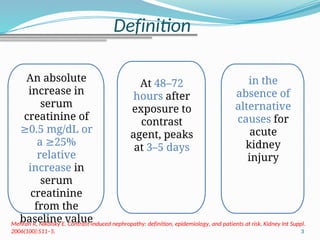
An absolute
increase in
serum
creatinine of
0.5 mg/dL
≥ or
a 25%
≥
relative
increase in
serum
creatinine
from the
baseline value
At 48–72
hours after
exposure to
contrast
agent, peaks
at 3–5 days
in the
absence of
alternative
causes for
acute
kidney
injury
Definition
4
KDIGO Definition
CI-AKI is defined by the Kidney Disease Global Outcomes (KDIGO)
guidelines as an “increase in serum creatinine of 0.3 mg/dL or greater within
48 hours of contrast use or a 50% or greater increase from baseline
serum creatinine within 7 days”
• or an increase in cystatin C
>10%
Kidney disease: Improving Global Outcomes (KDIGO) Acute Kidney Injury Work Group. KDIGO CLINICAL PRACTICAL GUIDELINES FOR ACUTE
KIDNEY INJURY. Kidney Int 2012;Suppl 2:1 -138;
5
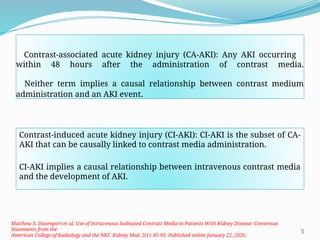
Contrast-associated acute kidney injury (CA-AKI): Any AKI occurring
within 48 hours after the administration of contrast media.
Neither term implies a causal relationship between contrast medium
administration and an AKI event.
Contrast-induced acute kidney injury (CI-AKI): CI-AKI is the subset of CA-
AKI that can be causally linked to contrast media administration.
CI-AKI implies a causal relationship between intravenous contrast media
and the development of AKI.
Matthew S. Davenport et al. Use of Intravenous Iodinated Contrast Media in Patients With Kidney Disease: Consensus
Statements from the
American College of Radiology and the NKF. Kidney Med. 2(1): 85-93. Published online January 22, 2020.
6
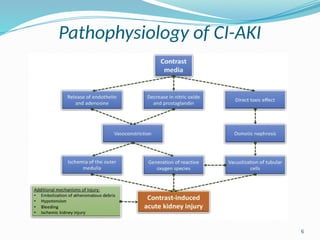
Pathophysiology of CI-AKI
7
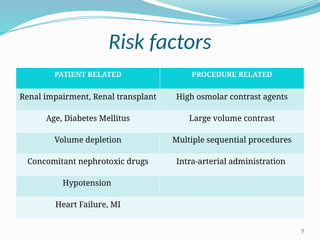
Risk factors
PATIENT RELATED PROCEDURE RELATED
Renal impairment, Renal transplant High osmolar contrast agents
Age, Diabetes Mellitus Large volume contrast
Volume depletion Multiple sequential procedures
Concomitant nephrotoxic drugs Intra-arterial administration
Hypotension
Heart Failure, MI
8
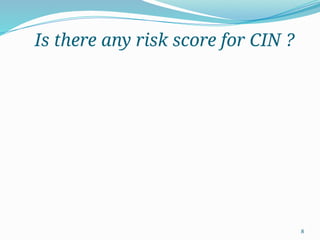
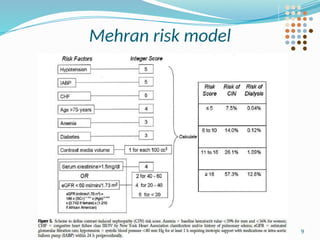
Is there any risk score for CIN ?
9
Mehran risk model
10
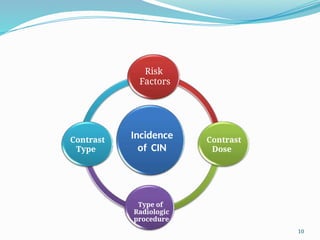
Incidence
of CIN
Risk
Factors
Contrast
Dose
Type of
Radiologic
procedure
Contrast
Type
11
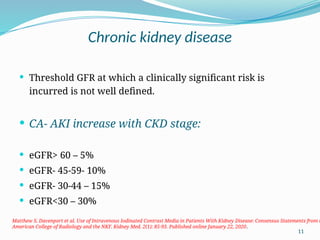
Chronic kidney disease
 Threshold GFR at which a clinically significant risk is
incurred is not well defined.
 CA- AKI increase with CKD stage:
 eGFR> 60 – 5%
 eGFR- 45-59- 10%
 eGFR- 30-44 – 15%
 eGFR<30 – 30%
Matthew S. Davenport et al. Use of Intravenous Iodinated Contrast Media in Patients With Kidney Disease: Consensus Statements from t
American College of Radiology and the NKF. Kidney Med. 2(1): 85-93. Published online January 22, 2020.
12
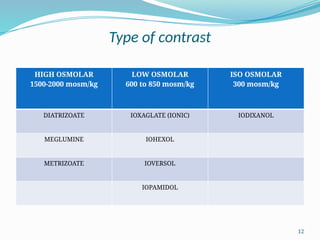
Type of contrast
HIGH OSMOLAR
1500-2000 mosm/kg
LOW OSMOLAR
600 to 850 mosm/kg
ISO OSMOLAR
300 mosm/kg
DIATRIZOATE IOXAGLATE (IONIC) IODIXANOL
MEGLUMINE IOHEXOL
METRIZOATE IOVERSOL
IOPAMIDOL
13
Dose of contrast
 Dose < 125 ml – safe but not free of risk.
 DM patients with creatinine > 5mg/dl - <20 ml
 Dose < 10 ml can be safely used in advanced kidney disease.
 V/CrCl ratio above 3.7 independently predicts CI-AKI.
Kian K, Wyatt C et al. Safety of low-dose radiocontrast for interventional AV fistula salvage in stage 4 chronic kidney disease
patients. Kidney Int. 2006 Apr;69(8):1444-9.
14
Type of procedure
 Highest risk with interventional procedures than diagnostic.
 Intra-arterial administration is associated with higher rate of
CIN and LOCM is more beneficial over HOCM than with
intravenous use.
 Cardiac angiography  higher risk, intra arterial injection,
increase chances of embolization, contrast medium dose to
kidney will be more abrupt and concentrated.
Kian K, Wyatt C et al. Safety of low-dose radiocontrast for interventional AV fistula salvage in stage 4 chronic kidney disease
patients. Kidney Int. 2006 Apr;69(8):1444-9.
15
Assessment of Population for CI-AKI
Kidney disease: Improving Global Outcomes (KDIGO) Acute Kidney Injury Work Group. KDIGO CLINICAL PRACTICAL GUIDELINES FOR ACUTE
KIDNEY INJURY. Kidney Int 2012;Suppl 2:1 -138;
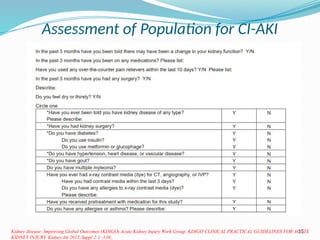
Screening for pre existing renal impairment : SCr
concentration is > 1.3 mg/dl in men and >1.0 mg/dl) in
women, equivalent to an eGFR < 60 ml/min per 1.73 m2.
Choyke questionnaire : reduced the number of patients in
need of a blood sample by 67%.
Negative urine protein test and no history of diseases
potentially associated with renal impairment, none had a
SCr level >2.0 mg/dl, and only 1% had a level >1.7 mg/dl.
16
Assessment of Population for CI-AKI
Work Group recommends that, when a recent SCr is not
available, a simple questionnaire or a dipstick testing for
urine protein may be useful for identifying pre-existing
kidney disease
Kidney disease: Improving Global Outcomes (KDIGO) Acute Kidney Injury Work Group. KDIGO CLINICAL PRACTICAL GUIDELINES FOR ACUTE
KIDNEY INJURY. Kidney Int 2012;Suppl 2:1 -138;
17
Differential Diagnosis
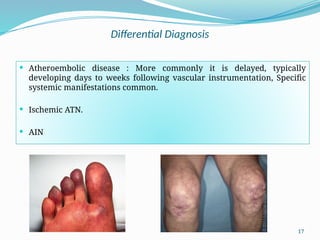
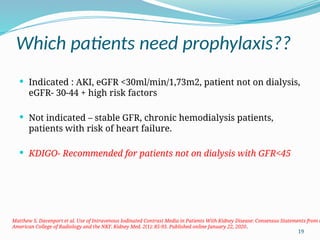
 Atheroembolic disease : More commonly it is delayed, typically
developing days to weeks following vascular instrumentation, Specific
systemic manifestations common.
 Ischemic ATN.
 AIN
18
PREVENTIVE MEASURES
19
Which patients need prophylaxis??
 Indicated : AKI, eGFR <30ml/min/1,73m2, patient not on dialysis,
eGFR- 30-44 + high risk factors
 Not indicated – stable GFR, chronic hemodialysis patients,
patients with risk of heart failure.
 KDIGO- Recommended for patients not on dialysis with GFR<45
Matthew S. Davenport et al. Use of Intravenous Iodinated Contrast Media in Patients With Kidney Disease: Consensus Statements from t
American College of Radiology and the NKF. Kidney Med. 2(1): 85-93. Published online January 22, 2020.
20
Non Pharmacological Prevention
 Use lowest possible dose of contrast.
 Use intravenous route of administration than intra-arterial.
 KDIGO recommends either iso osmolar or low osmolar contrast
media rather than high osmolar contrast media in patient with
increase risk of CI-AKI.
 Remote ischemic preconditioning
21
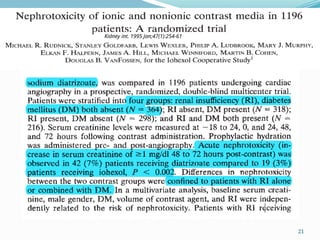
Kidney int. 1995 Jan;47(1):254-61
22
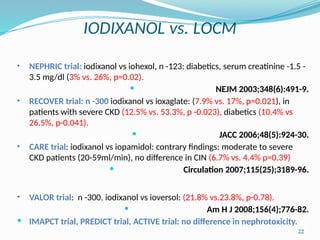
IODIXANOL vs. LOCM
• NEPHRIC trial: iodixanol vs iohexol, n -123: diabetics, serum creatinine -1.5 -
3.5 mg/dl (3% vs. 26%, p=0.02).
 NEJM 2003;348(6):491-9.
• RECOVER trial: n -300 iodixanol vs ioxaglate: (7.9% vs. 17%, p=0.021), in
patients with severe CKD (12.5% vs. 53.3%, p -0.023), diabetics (10.4% vs
26.5%, p-0.041).
 JACC 2006;48(5):924-30.
• CARE trial: iodixanol vs iopamidol: contrary findings: moderate to severe
CKD patients (20-59ml/min), no difference in CIN (6.7% vs. 4.4% p=0.39)
 Circulation 2007;115(25);3189-96.
• VALOR trial: n -300, iodixanol vs ioversol: (21.8% vs.23.8%, p-0.78).
 Am H J 2008;156(4);776-82.
 IMAPCT trial, PREDICT trial, ACTIVE trial: no difference in nephrotoxicity.
23
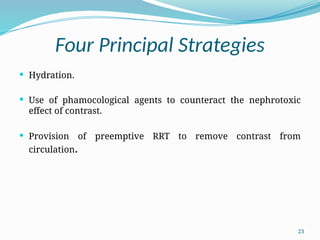
Four Principal Strategies
 Hydration.
 Use of phamocological agents to counteract the nephrotoxic
effect of contrast.
 Provision of preemptive RRT to remove contrast from
circulation.
24
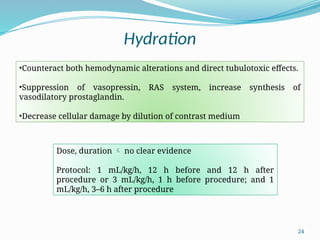
Hydration
•Counteract both hemodynamic alterations and direct tubulotoxic effects.
•Suppression of vasopressin, RAS system, increase synthesis of
vasodilatory prostaglandin.
•Decrease cellular damage by dilution of contrast medium
Dose, duration  no clear evidence
Protocol: 1 mL/kg/h, 12 h before and 12 h after
procedure or 3 mL/kg/h, 1 h before procedure; and 1
mL/kg/h, 3–6 h after procedure
25
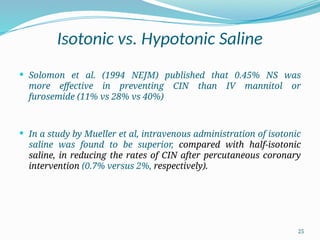
Isotonic vs. Hypotonic Saline
 Solomon et al. (1994 NEJM) published that 0.45% NS was
more effective in preventing CIN than IV mannitol or
furosemide (11% vs 28% vs 40%)
 In a study by Mueller et al, intravenous administration of isotonic
saline was found to be superior, compared with half-isotonic
saline, in reducing the rates of CIN after percutaneous coronary
intervention (0.7% versus 2%, respectively).
26
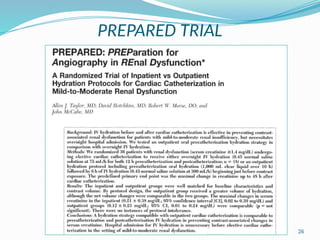
PREPARED TRIAL
27
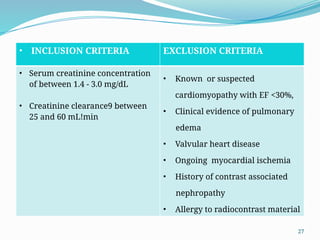
• INCLUSION CRITERIA EXCLUSION CRITERIA
• Serum creatinine concentration
of between 1.4 - 3.0 mg/dL
• Creatinine clearance9 between
25 and 60 mL!min
• Known or suspected
cardiomyopathy with EF <30%,
• Clinical evidence of pulmonary
edema
• Valvular heart disease
• Ongoing myocardial ischemia
• History of contrast associated
nephropathy
• Allergy to radiocontrast material
28
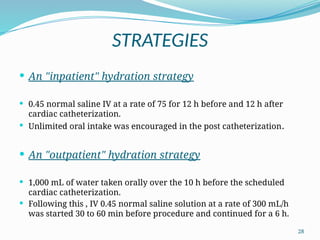
STRATEGIES
 An "inpatient" hydration strategy
 0.45 normal saline IV at a rate of 75 for 12 h before and 12 h after
cardiac catheterization.
 Unlimited oral intake was encouraged in the post catheterization.
 An "outpatient" hydration strategy
 1,000 mL of water taken orally over the 10 h before the scheduled
cardiac catheterization.
 Following this , IV 0.45 normal saline solution at a rate of 300 mL/h
was started 30 to 60 min before procedure and continued for a 6 h.
29
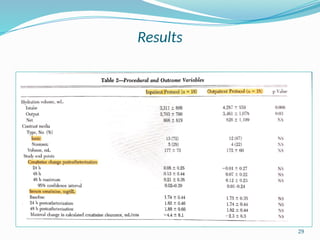
Results
30
Limitations
 Applicable to selected patients (mild to at most moderate renal
dysfunction)
 Safety of this protocol  unknown
 Outpatient hydration strategy in this study resulted in
significantly greater volume administration.
 Underpowered study
31
Conclusion
 Outpatient hydration consists of oral precatheterization and IV
postcatheterization hydration is comparable to 24-h IV hydration for
maintaining a stable serum creatinine for patients with mild-to-moderate
renal dysfunction undergoing elective cardiac catheterization.
32
Oral vs. Intravenous saline
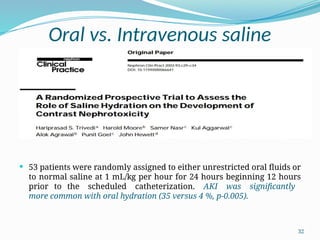
 53 patients were randomly assigned to either unrestricted oral fluids or
to normal saline at 1 mL/kg per hour for 24 hours beginning 12 hours
prior to the scheduled catheterization. AKI was significantly
more common with oral hydration (35 versus 4 %, p-0.005).
33
NACL vs. NaHCO3
• 10 clinical trials in the past 5 years (largest trial 502 patients).
• 6 had lower incidence of CIN in the NaHCO3 group, 4 showed
no significant benefits
 BOSS (Bicarbonate or Saline Study): no difference in the incidence
of CIN in patients with CKD 3,4,5 undergoing CAG.
 KDIGO – no recommendation favoring isotonic bicarbonate
or saline.
34
35
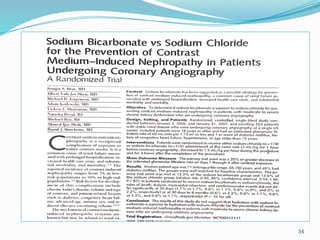
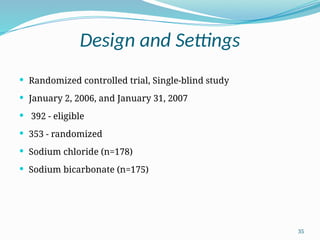
Design and Settings
 Randomized controlled trial, Single-blind study
 January 2, 2006, and January 31, 2007
 392 - eligible
 353 - randomized
 Sodium chloride (n=178)
 Sodium bicarbonate (n=175)
36
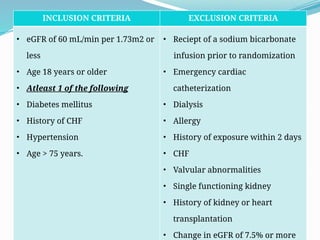
INCLUSION CRITERIA EXCLUSION CRITERIA
• eGFR of 60 mL/min per 1.73m2 or
less
• Age 18 years or older
• Atleast 1 of the following
• Diabetes mellitus
• History of CHF
• Hypertension
• Age > 75 years.
• Reciept of a sodium bicarbonate
infusion prior to randomization
• Emergency cardiac
catheterization
• Dialysis
• Allergy
• History of exposure within 2 days
• CHF
• Valvular abnormalities
• Single functioning kidney
• History of kidney or heart
transplantation
• Change in eGFR of 7.5% or more
37
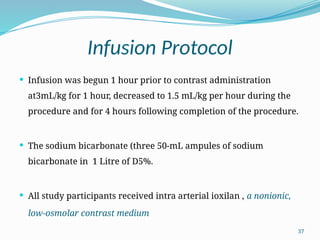
Infusion Protocol
 Infusion was begun 1 hour prior to contrast administration
at3mL/kg for 1 hour, decreased to 1.5 mL/kg per hour during the
procedure and for 4 hours following completion of the procedure.
 The sodium bicarbonate (three 50-mL ampules of sodium
bicarbonate in 1 Litre of D5%.
 All study participants received intra arterial ioxilan , a nonionic,
low-osmolar contrast medium
38
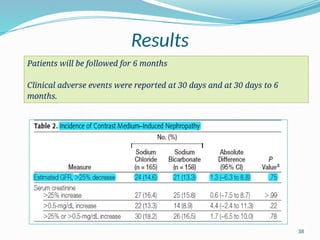
Results
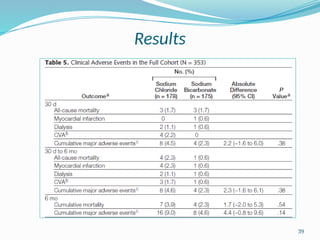
Patients will be followed for 6 months
Clinical adverse events were reported at 30 days and at 30 days to 6
months.
39
Results
40
Limitations
 The primary study end point could not be determined in 11.9%
of the study participants (as serial measurements of serum
creatinine levels were not available)
 Physicians performing cardiac catheterization were not blinded
to each patient’s treatment assignment.
 Single centered study
41
Conclusion
 Do not suggest that hydration with sodium bicarbonate is
superior to sodium chloride hydration in patients with moderate
to severe chronic kidney disease who are undergoing coronary
angiography.
 Incidence of CIN didn’t differ by treatment assignment.
 Adverse events frequency did not significantly differ between
groups.
42
Hydration
•KDIGO recommends i/v volume expansion with either sodium
chloride or sodium bicarbonate rather than no i/v volume
expansion , in patients at increased risk for CI-AKI.
43
N acetyl Cysteine
 ROS scavenger, decrease depletion of glutathione, increase
production of vasodilatory agents.
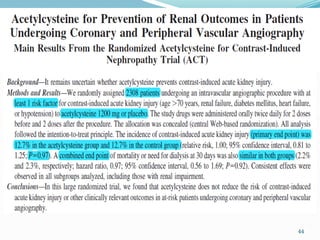
 There are great heterogeneity and conflicting results in the
available clinical trials and meta analysis examining the
effectiveness of acetyl cysteine in the prevention of contrast
nephropathy.
44
45
 Since the agent is potentially beneficial, well tolerated, and relatively
inexpensive, 2012
KDIGO guidelines that suggest administration of acetylcysteine to patients at
high risk.
Acetylcysteine Dosing
Tolerating PO intake?
600-1200 mg capsules PO Q12h X 4 doses
2 doses pre-contrast and 2 doses post-contrast isoptimal
Emergent Procedure?
1 dose before and 3 doses post cath or procedure is acceptable (Q12h
x 4 doses total)
IV Acetylcysteine?
600-1200 mg IV x 1 over 15 minutes, then 600-1200 mg PO/PT q12h x 4
doses post-procedure: For a high risk patient undergoing
cardiac catheterization or PE protocol CT scan with no PO
access
46
Diuretics
 Hypothesis – inhibits active sodium pump  decrease
oxygen demand
 Anto et al – mannitol beneficial 250 ml 20%/hr with hydration
before and after procedure –(22% CIN in Rx group,70% NS
group)
 Solomon et al – exacerbation of CIN on use of furosemide or
mannitol.
 Weinstein et al –worsening of renal function
 Weisberg et al – no protective effect.
1.Arch Internal Medicine,1981;141:1652-
1656.
2.NEJM,1994;331:1416-1420
3.Nephron 1992;62:413-
415.
47
Calcium channel blockers
 Neumayer et al – Nitrendipine. (Beneficial)
 Solomon et al – no benefit (78 pts).
 Khoury et al – Nifedipine10 mg,administered 1 hr before
imaging made no statistically significant difference in renal
function.
 Larsson et al – no benefit of felodipine in diabetics.
 Failed to gain as a prophylactic tool to date
48
No Role Of Following agents
 Statins
 Dopamine/Fenoldopam
 Theophylline
 Prostagladins
 Endothelial antagonist
 ANP
49
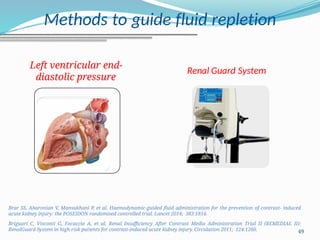
Methods to guide fluid repletion
Left ventricular end-
diastolic pressure
Renal Guard System
Brar SS, Aharonian V, Mansukhani P, et al. Haemodynamic-guided fluid administration for the prevention of contrast- induced
acute kidney injury: the POSEIDON randomised controlled trial. Lancet 2014; 383:1814.
Briguori C, Visconti G, Focaccio A, et al. Renal Insufficiency After Contrast Media Administration Trial II (REMEDIAL II):
RenalGuard System in high-risk patients for contrast-induced acute kidney injury. Circulation 2011; 124:1260.
50
Left ventricular (LV) end-diastolic pressure
51
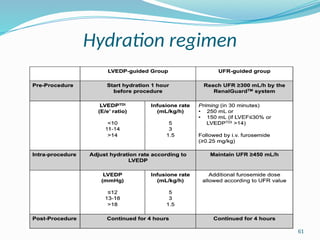
• A randomized trial tested the benefit of a fluid
replacement protocol guided by LV end-diastolic pressure
among patients with CKD and other risk factors for CIN.
• In this trial, 396 patients were assigned to LV end-diastolic
pressure-guided fluid management or to a control group.
• All patients received intravenous isotonic saline 3 mL/kg
for one hour prior to cardiac catheterization. LV
end-diastolic pressure was determined in all patients
prior to administration of contrast.
52
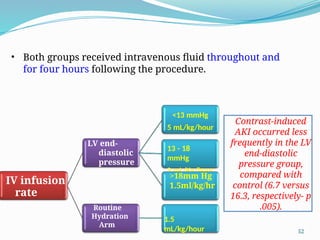
• Both groups received intravenous fluid throughout and
for four hours following the procedure.
IV infusion
rate
LV end-
diastolic
pressure
<13 mmHg
5 mL/kg/hour
13 - 18
mmHg
3 mL/Kg/hour
>18 mmHg
1.5 mL/Kg/hour
Routine
Hydration
Arm
>18mm Hg
1.5ml/kg/hr
1.5
mL/kg/hour
Contrast-induced
AKI occurred less
frequently in the LV
end-diastolic
pressure group,
compared with
control (6.7 versus
16.3, respectively- p
.005).
53
RenalGuard
system
54
Study design
 Multicenter, randomized controlled
 January 2009 to December 2010
 Iodixanol was used in all patients.
55
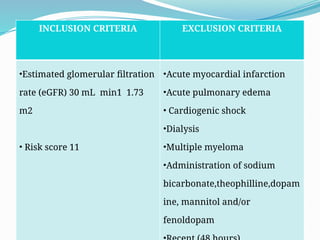
INCLUSION CRITERIA EXCLUSION CRITERIA
•Estimated glomerular filtration
rate (eGFR) 30 mL min1 1.73
m2
• Risk score 11
•Acute myocardial infarction
•Acute pulmonary edema
• Cardiogenic shock
•Dialysis
•Multiple myeloma
•Administration of sodium
bicarbonate,theophilline,dopam
ine, mannitol and/or
fenoldopam
56
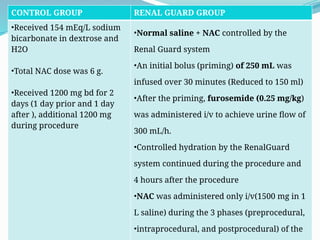
CONTROL GROUP RENAL GUARD GROUP
•Received 154 mEq/L sodium
bicarbonate in dextrose and
H2O
•Total NAC dose was 6 g.
•Received 1200 mg bd for 2
days (1 day prior and 1 day
after ), additional 1200 mg
during procedure
•Normal saline + NAC controlled by the
Renal Guard system
•An initial bolus (priming) of 250 mL was
infused over 30 minutes (Reduced to 150 ml)
•After the priming, furosemide (0.25 mg/kg)
was administered i/v to achieve urine flow of
300 mL/h.
•Controlled hydration by the RenalGuard
system continued during the procedure and
4 hours after the procedure
•NAC was administered only i/v(1500 mg in 1
L saline) during the 3 phases (preprocedural,
•intraprocedural, and postprocedural) of the
57
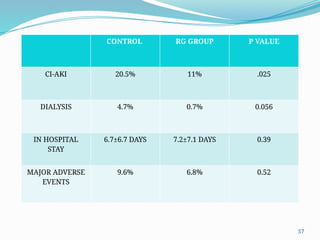
Results
CONTROL RG GROUP P VALUE
CI-AKI 20.5% 11% .025
DIALYSIS 4.7% 0.7% 0.056
IN HOSPITAL
STAY
6.7±6.7 DAYS 7.2±7.1 DAYS 0.39
MAJOR ADVERSE
EVENTS
9.6% 6.8% 0.52
58
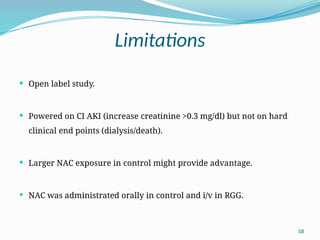
Limitations
 Open label study.
 Powered on CI AKI (increase creatinine >0.3 mg/dl) but not on hard
clinical end points (dialysis/death).
 Larger NAC exposure in control might provide advantage.
 NAC was administrated orally in control and i/v in RGG.
59
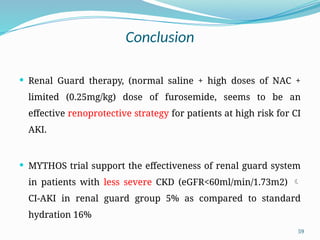
Conclusion
 Renal Guard therapy, (normal saline + high doses of NAC +
limited (0.25mg/kg) dose of furosemide, seems to be an
effective renoprotective strategy for patients at high risk for CI
AKI.
 MYTHOS trial support the effectiveness of renal guard system
in patients with less severe CKD (eGFR<60ml/min/1.73m2) 
CI-AKI in renal guard group 5% as compared to standard
hydration 16%
60
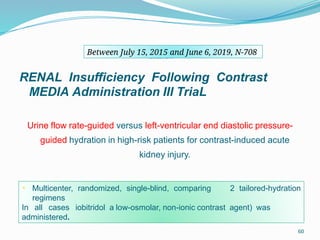
REMEDIAL III
RENAL Insufficiency Following Contrast
MEDIA Administration III TriaL
Urine flow rate-guided versus left-ventricular end diastolic pressure-
guided hydration in high-risk patients for contrast-induced acute
kidney injury.
• Multicenter, randomized, single-blind, comparing 2 tailored-hydration
regimens
In all cases iobitridol a low-osmolar, non-ionic contrast agent) was
administered.
Between July 15, 2015 and June 6, 2019, N-708
61
Hydration regimen
62
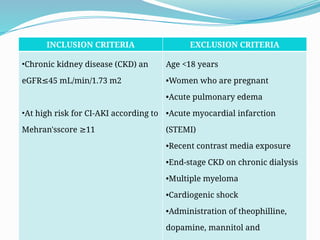
INCLUSION CRITERIA EXCLUSION CRITERIA
•Chronic kidney disease (CKD) an
eGFR 45 mL/min/1.73 m2
≤
•At high risk for CI-AKI according to
Mehran'sscore 11
≥
Age <18 years
•Women who are pregnant
•Acute pulmonary edema
•Acute myocardial infarction
(STEMI)
•Recent contrast media exposure
•End-stage CKD on chronic dialysis
•Multiple myeloma
•Cardiogenic shock
•Administration of theophilline,
dopamine, mannitol and
63
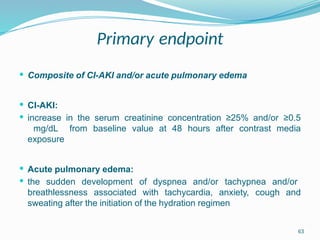
Primary endpoint
 Composite of CI-AKI and/or acute pulmonary edema
 CI-AKI:
 increase in the serum creatinine concentration ≥25% and/or ≥0.5
mg/dL from baseline value at 48 hours after contrast media
exposure
 Acute pulmonary edema:
 the sudden development of dyspnea and/or tachypnea and/or
breathlessness associated with tachycardia, anxiety, cough and
sweating after the initiation of the hydration regimen
64
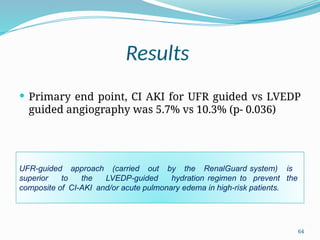
Results
 Primary end point, CI AKI for UFR guided vs LVEDP
guided angiography was 5.7% vs 10.3% (p- 0.036)
UFR-guided approach (carried out by the RenalGuard system) is
superior to the LVEDP-guided hydration regimen to prevent the
composite of CI-AKI and/or acute pulmonary edema in high-risk patients.
65
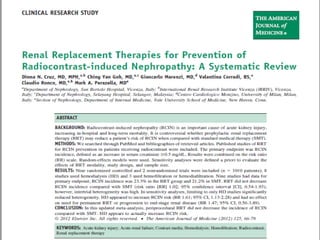
ROLE OF RRT IN CIN
PREVENTION
66
67
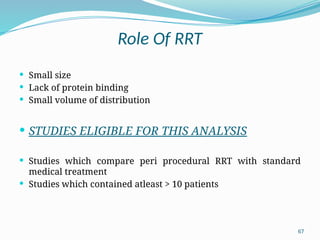
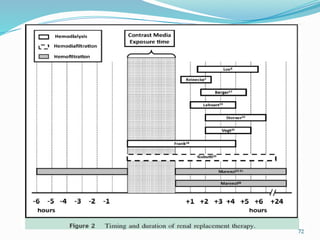
Role Of RRT
 Small size
 Lack of protein binding
 Small volume of distribution
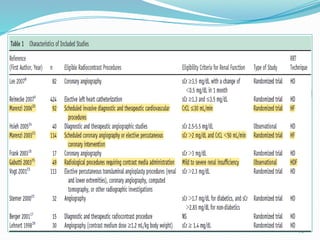
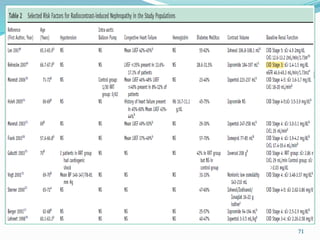
 STUDIES ELIGIBLE FOR THIS ANALYSIS
 Studies which compare peri procedural RRT with standard
medical treatment
 Studies which contained atleast > 10 patients
68
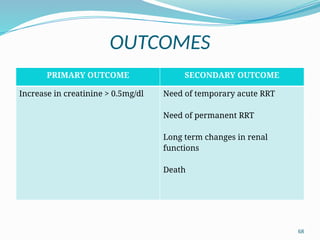
OUTCOMES
PRIMARY OUTCOME SECONDARY OUTCOME
Increase in creatinine > 0.5mg/dl Need of temporary acute RRT
Need of permanent RRT
Long term changes in renal
functions
Death
69
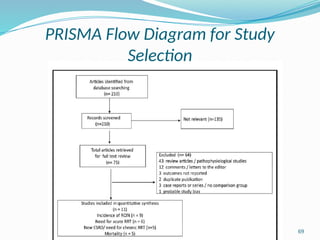
PRISMA Flow Diagram for Study
Selection
70
71
72
73
Results
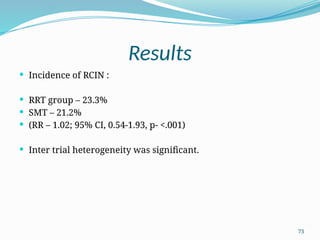
 Incidence of RCIN :
 RRT group – 23.3%
 SMT – 21.2%
 (RR – 1.02; 95% CI, 0.54-1.93, p- <.001)
 Inter trial heterogeneity was significant.
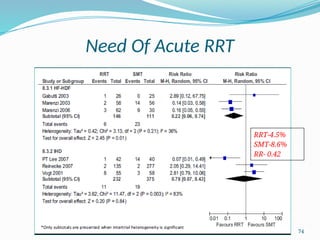
74
Need Of Acute RRT
RRT-4.5%
SMT-8.6%
RR- 0.42
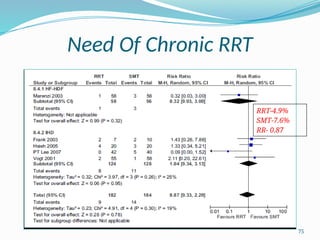
75
Need Of Chronic RRT
RRT-4.9%
SMT-7.6%
RR- 0.87
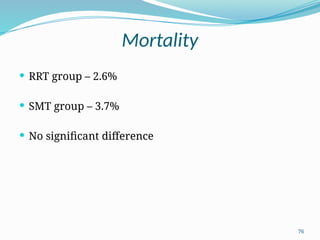
76
Mortality
 RRT group – 2.6%
 SMT group – 3.7%
 No significant difference
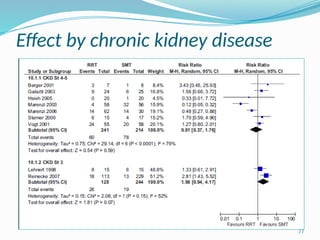
77
Effect by chronic kidney disease
78
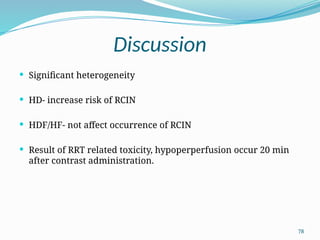
Discussion
 Significant heterogeneity
 HD- increase risk of RCIN
 HDF/HF- not affect occurrence of RCIN
 Result of RRT related toxicity, hypoperperfusion occur 20 min
after contrast administration.
79
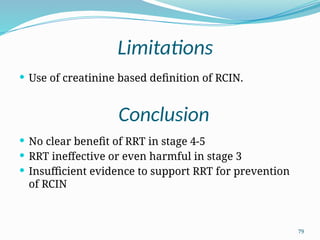
Conclusion
 Use of creatinine based definition of RCIN.
 No clear benefit of RRT in stage 4-5
 RRT ineffective or even harmful in stage 3
 Insufficient evidence to support RRT for prevention
of RCIN
Limitations
80
Special Circumstances
81
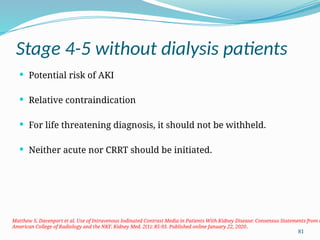
Stage 4-5 without dialysis patients
 Potential risk of AKI
 Relative contraindication
 For life threatening diagnosis, it should not be withheld.
 Neither acute nor CRRT should be initiated.
Matthew S. Davenport et al. Use of Intravenous Iodinated Contrast Media in Patients With Kidney Disease: Consensus Statements from t
American College of Radiology and the NKF. Kidney Med. 2(1): 85-93. Published online January 22, 2020.
82
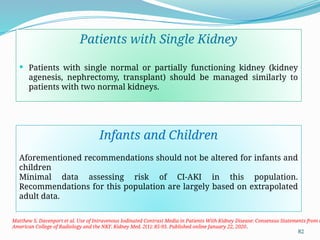
Patients with Single Kidney
 Patients with single normal or partially functioning kidney (kidney
agenesis, nephrectomy, transplant) should be managed similarly to
patients with two normal kidneys.
Matthew S. Davenport et al. Use of Intravenous Iodinated Contrast Media in Patients With Kidney Disease: Consensus Statements from t
American College of Radiology and the NKF. Kidney Med. 2(1): 85-93. Published online January 22, 2020.
Infants and Children
Aforementioned recommendations should not be altered for infants and
children
Minimal data assessing risk of CI-AKI in this population.
Recommendations for this population are largely based on extrapolated
adult data.
83
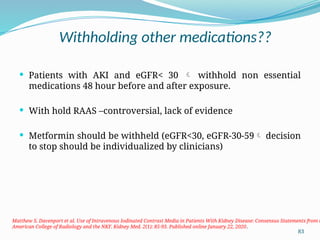
Withholding other medications??
 Patients with AKI and eGFR< 30  withhold non essential
medications 48 hour before and after exposure.
 With hold RAAS –controversial, lack of evidence
 Metformin should be withheld (eGFR<30, eGFR-30-59 decision
to stop should be individualized by clinicians)
Matthew S. Davenport et al. Use of Intravenous Iodinated Contrast Media in Patients With Kidney Disease: Consensus Statements from t
American College of Radiology and the NKF. Kidney Med. 2(1): 85-93. Published online January 22, 2020.
84
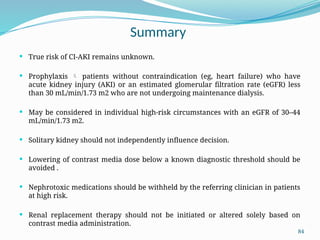
Summary
 True risk of CI-AKI remains unknown.
 Prophylaxis  patients without contraindication (eg, heart failure) who have
acute kidney injury (AKI) or an estimated glomerular filtration rate (eGFR) less
than 30 mL/min/1.73 m2 who are not undergoing maintenance dialysis.
 May be considered in individual high-risk circumstances with an eGFR of 30–44
mL/min/1.73 m2.
 Solitary kidney should not independently influence decision.
 Lowering of contrast media dose below a known diagnostic threshold should be
avoided .
 Nephrotoxic medications should be withheld by the referring clinician in patients
at high risk.
 Renal replacement therapy should not be initiated or altered solely based on
contrast media administration.
85
THANK YOU

modified contrast induced nephropathy.pptx

  • 1.
  • 2.
    2 Introduction  Incidence ofCIN in normal renal function even in the presence of diabetes – 1-2%  In patient with pre existing renal impairment or in presence of risk factors  25%  It is responsible for 11 % cases of hospital acquired AKI. Kidney disease: Improving Global Outcomes (KDIGO) Acute Kidney Injury Work Group. KDIGO CLINICAL PRACTICAL GUIDELINES FOR ACUTE KIDNEY INJURY. Kidney Int 2012;Suppl 2:1 -138;
  • 3.
    3 Mehran R, NikolskyE. Contrast-induced nephropathy: definition, epidemiology, and patients at risk. Kidney Int Suppl. 2006(100):S11–5. An absolute increase in serum creatinine of 0.5 mg/dL ≥ or a 25% ≥ relative increase in serum creatinine from the baseline value At 48–72 hours after exposure to contrast agent, peaks at 3–5 days in the absence of alternative causes for acute kidney injury Definition
  • 4.
    4 KDIGO Definition CI-AKI isdefined by the Kidney Disease Global Outcomes (KDIGO) guidelines as an “increase in serum creatinine of 0.3 mg/dL or greater within 48 hours of contrast use or a 50% or greater increase from baseline serum creatinine within 7 days” • or an increase in cystatin C >10% Kidney disease: Improving Global Outcomes (KDIGO) Acute Kidney Injury Work Group. KDIGO CLINICAL PRACTICAL GUIDELINES FOR ACUTE KIDNEY INJURY. Kidney Int 2012;Suppl 2:1 -138;
  • 5.
    5 Contrast-associated acute kidneyinjury (CA-AKI): Any AKI occurring within 48 hours after the administration of contrast media. Neither term implies a causal relationship between contrast medium administration and an AKI event. Contrast-induced acute kidney injury (CI-AKI): CI-AKI is the subset of CA- AKI that can be causally linked to contrast media administration. CI-AKI implies a causal relationship between intravenous contrast media and the development of AKI. Matthew S. Davenport et al. Use of Intravenous Iodinated Contrast Media in Patients With Kidney Disease: Consensus Statements from the American College of Radiology and the NKF. Kidney Med. 2(1): 85-93. Published online January 22, 2020.
  • 6.
  • 7.
    7 Risk factors PATIENT RELATEDPROCEDURE RELATED Renal impairment, Renal transplant High osmolar contrast agents Age, Diabetes Mellitus Large volume contrast Volume depletion Multiple sequential procedures Concomitant nephrotoxic drugs Intra-arterial administration Hypotension Heart Failure, MI
  • 8.
    8 Is there anyrisk score for CIN ?
  • 9.
  • 10.
  • 11.
    11 Chronic kidney disease Threshold GFR at which a clinically significant risk is incurred is not well defined.  CA- AKI increase with CKD stage:  eGFR> 60 – 5%  eGFR- 45-59- 10%  eGFR- 30-44 – 15%  eGFR<30 – 30% Matthew S. Davenport et al. Use of Intravenous Iodinated Contrast Media in Patients With Kidney Disease: Consensus Statements from t American College of Radiology and the NKF. Kidney Med. 2(1): 85-93. Published online January 22, 2020.
  • 12.
    12 Type of contrast HIGHOSMOLAR 1500-2000 mosm/kg LOW OSMOLAR 600 to 850 mosm/kg ISO OSMOLAR 300 mosm/kg DIATRIZOATE IOXAGLATE (IONIC) IODIXANOL MEGLUMINE IOHEXOL METRIZOATE IOVERSOL IOPAMIDOL
  • 13.
    13 Dose of contrast Dose < 125 ml – safe but not free of risk.  DM patients with creatinine > 5mg/dl - <20 ml  Dose < 10 ml can be safely used in advanced kidney disease.  V/CrCl ratio above 3.7 independently predicts CI-AKI. Kian K, Wyatt C et al. Safety of low-dose radiocontrast for interventional AV fistula salvage in stage 4 chronic kidney disease patients. Kidney Int. 2006 Apr;69(8):1444-9.
  • 14.
    14 Type of procedure Highest risk with interventional procedures than diagnostic.  Intra-arterial administration is associated with higher rate of CIN and LOCM is more beneficial over HOCM than with intravenous use.  Cardiac angiography  higher risk, intra arterial injection, increase chances of embolization, contrast medium dose to kidney will be more abrupt and concentrated. Kian K, Wyatt C et al. Safety of low-dose radiocontrast for interventional AV fistula salvage in stage 4 chronic kidney disease patients. Kidney Int. 2006 Apr;69(8):1444-9.
  • 15.
    15 Assessment of Populationfor CI-AKI Kidney disease: Improving Global Outcomes (KDIGO) Acute Kidney Injury Work Group. KDIGO CLINICAL PRACTICAL GUIDELINES FOR ACUTE KIDNEY INJURY. Kidney Int 2012;Suppl 2:1 -138; Screening for pre existing renal impairment : SCr concentration is > 1.3 mg/dl in men and >1.0 mg/dl) in women, equivalent to an eGFR < 60 ml/min per 1.73 m2. Choyke questionnaire : reduced the number of patients in need of a blood sample by 67%. Negative urine protein test and no history of diseases potentially associated with renal impairment, none had a SCr level >2.0 mg/dl, and only 1% had a level >1.7 mg/dl.
  • 16.
    16 Assessment of Populationfor CI-AKI Work Group recommends that, when a recent SCr is not available, a simple questionnaire or a dipstick testing for urine protein may be useful for identifying pre-existing kidney disease Kidney disease: Improving Global Outcomes (KDIGO) Acute Kidney Injury Work Group. KDIGO CLINICAL PRACTICAL GUIDELINES FOR ACUTE KIDNEY INJURY. Kidney Int 2012;Suppl 2:1 -138;
  • 17.
    17 Differential Diagnosis  Atheroembolicdisease : More commonly it is delayed, typically developing days to weeks following vascular instrumentation, Specific systemic manifestations common.  Ischemic ATN.  AIN
  • 18.
  • 19.
    19 Which patients needprophylaxis??  Indicated : AKI, eGFR <30ml/min/1,73m2, patient not on dialysis, eGFR- 30-44 + high risk factors  Not indicated – stable GFR, chronic hemodialysis patients, patients with risk of heart failure.  KDIGO- Recommended for patients not on dialysis with GFR<45 Matthew S. Davenport et al. Use of Intravenous Iodinated Contrast Media in Patients With Kidney Disease: Consensus Statements from t American College of Radiology and the NKF. Kidney Med. 2(1): 85-93. Published online January 22, 2020.
  • 20.
    20 Non Pharmacological Prevention Use lowest possible dose of contrast.  Use intravenous route of administration than intra-arterial.  KDIGO recommends either iso osmolar or low osmolar contrast media rather than high osmolar contrast media in patient with increase risk of CI-AKI.  Remote ischemic preconditioning
  • 21.
    21 Kidney int. 1995Jan;47(1):254-61
  • 22.
    22 IODIXANOL vs. LOCM •NEPHRIC trial: iodixanol vs iohexol, n -123: diabetics, serum creatinine -1.5 - 3.5 mg/dl (3% vs. 26%, p=0.02).  NEJM 2003;348(6):491-9. • RECOVER trial: n -300 iodixanol vs ioxaglate: (7.9% vs. 17%, p=0.021), in patients with severe CKD (12.5% vs. 53.3%, p -0.023), diabetics (10.4% vs 26.5%, p-0.041).  JACC 2006;48(5):924-30. • CARE trial: iodixanol vs iopamidol: contrary findings: moderate to severe CKD patients (20-59ml/min), no difference in CIN (6.7% vs. 4.4% p=0.39)  Circulation 2007;115(25);3189-96. • VALOR trial: n -300, iodixanol vs ioversol: (21.8% vs.23.8%, p-0.78).  Am H J 2008;156(4);776-82.  IMAPCT trial, PREDICT trial, ACTIVE trial: no difference in nephrotoxicity.
  • 23.
    23 Four Principal Strategies Hydration.  Use of phamocological agents to counteract the nephrotoxic effect of contrast.  Provision of preemptive RRT to remove contrast from circulation.
  • 24.
    24 Hydration •Counteract both hemodynamicalterations and direct tubulotoxic effects. •Suppression of vasopressin, RAS system, increase synthesis of vasodilatory prostaglandin. •Decrease cellular damage by dilution of contrast medium Dose, duration  no clear evidence Protocol: 1 mL/kg/h, 12 h before and 12 h after procedure or 3 mL/kg/h, 1 h before procedure; and 1 mL/kg/h, 3–6 h after procedure
  • 25.
    25 Isotonic vs. HypotonicSaline  Solomon et al. (1994 NEJM) published that 0.45% NS was more effective in preventing CIN than IV mannitol or furosemide (11% vs 28% vs 40%)  In a study by Mueller et al, intravenous administration of isotonic saline was found to be superior, compared with half-isotonic saline, in reducing the rates of CIN after percutaneous coronary intervention (0.7% versus 2%, respectively).
  • 26.
  • 27.
    27 • INCLUSION CRITERIAEXCLUSION CRITERIA • Serum creatinine concentration of between 1.4 - 3.0 mg/dL • Creatinine clearance9 between 25 and 60 mL!min • Known or suspected cardiomyopathy with EF <30%, • Clinical evidence of pulmonary edema • Valvular heart disease • Ongoing myocardial ischemia • History of contrast associated nephropathy • Allergy to radiocontrast material
  • 28.
    28 STRATEGIES  An "inpatient"hydration strategy  0.45 normal saline IV at a rate of 75 for 12 h before and 12 h after cardiac catheterization.  Unlimited oral intake was encouraged in the post catheterization.  An "outpatient" hydration strategy  1,000 mL of water taken orally over the 10 h before the scheduled cardiac catheterization.  Following this , IV 0.45 normal saline solution at a rate of 300 mL/h was started 30 to 60 min before procedure and continued for a 6 h.
  • 29.
  • 30.
    30 Limitations  Applicable toselected patients (mild to at most moderate renal dysfunction)  Safety of this protocol  unknown  Outpatient hydration strategy in this study resulted in significantly greater volume administration.  Underpowered study
  • 31.
    31 Conclusion  Outpatient hydrationconsists of oral precatheterization and IV postcatheterization hydration is comparable to 24-h IV hydration for maintaining a stable serum creatinine for patients with mild-to-moderate renal dysfunction undergoing elective cardiac catheterization.
  • 32.
    32 Oral vs. Intravenoussaline  53 patients were randomly assigned to either unrestricted oral fluids or to normal saline at 1 mL/kg per hour for 24 hours beginning 12 hours prior to the scheduled catheterization. AKI was significantly more common with oral hydration (35 versus 4 %, p-0.005).
  • 33.
    33 NACL vs. NaHCO3 •10 clinical trials in the past 5 years (largest trial 502 patients). • 6 had lower incidence of CIN in the NaHCO3 group, 4 showed no significant benefits  BOSS (Bicarbonate or Saline Study): no difference in the incidence of CIN in patients with CKD 3,4,5 undergoing CAG.  KDIGO – no recommendation favoring isotonic bicarbonate or saline.
  • 34.
  • 35.
    35 Design and Settings Randomized controlled trial, Single-blind study  January 2, 2006, and January 31, 2007  392 - eligible  353 - randomized  Sodium chloride (n=178)  Sodium bicarbonate (n=175)
  • 36.
    36 INCLUSION CRITERIA EXCLUSIONCRITERIA • eGFR of 60 mL/min per 1.73m2 or less • Age 18 years or older • Atleast 1 of the following • Diabetes mellitus • History of CHF • Hypertension • Age > 75 years. • Reciept of a sodium bicarbonate infusion prior to randomization • Emergency cardiac catheterization • Dialysis • Allergy • History of exposure within 2 days • CHF • Valvular abnormalities • Single functioning kidney • History of kidney or heart transplantation • Change in eGFR of 7.5% or more
  • 37.
    37 Infusion Protocol  Infusionwas begun 1 hour prior to contrast administration at3mL/kg for 1 hour, decreased to 1.5 mL/kg per hour during the procedure and for 4 hours following completion of the procedure.  The sodium bicarbonate (three 50-mL ampules of sodium bicarbonate in 1 Litre of D5%.  All study participants received intra arterial ioxilan , a nonionic, low-osmolar contrast medium
  • 38.
    38 Results Patients will befollowed for 6 months Clinical adverse events were reported at 30 days and at 30 days to 6 months.
  • 39.
  • 40.
    40 Limitations  The primarystudy end point could not be determined in 11.9% of the study participants (as serial measurements of serum creatinine levels were not available)  Physicians performing cardiac catheterization were not blinded to each patient’s treatment assignment.  Single centered study
  • 41.
    41 Conclusion  Do notsuggest that hydration with sodium bicarbonate is superior to sodium chloride hydration in patients with moderate to severe chronic kidney disease who are undergoing coronary angiography.  Incidence of CIN didn’t differ by treatment assignment.  Adverse events frequency did not significantly differ between groups.
  • 42.
    42 Hydration •KDIGO recommends i/vvolume expansion with either sodium chloride or sodium bicarbonate rather than no i/v volume expansion , in patients at increased risk for CI-AKI.
  • 43.
    43 N acetyl Cysteine ROS scavenger, decrease depletion of glutathione, increase production of vasodilatory agents.  There are great heterogeneity and conflicting results in the available clinical trials and meta analysis examining the effectiveness of acetyl cysteine in the prevention of contrast nephropathy.
  • 44.
  • 45.
    45  Since theagent is potentially beneficial, well tolerated, and relatively inexpensive, 2012 KDIGO guidelines that suggest administration of acetylcysteine to patients at high risk. Acetylcysteine Dosing Tolerating PO intake? 600-1200 mg capsules PO Q12h X 4 doses 2 doses pre-contrast and 2 doses post-contrast isoptimal Emergent Procedure? 1 dose before and 3 doses post cath or procedure is acceptable (Q12h x 4 doses total) IV Acetylcysteine? 600-1200 mg IV x 1 over 15 minutes, then 600-1200 mg PO/PT q12h x 4 doses post-procedure: For a high risk patient undergoing cardiac catheterization or PE protocol CT scan with no PO access
  • 46.
    46 Diuretics  Hypothesis –inhibits active sodium pump  decrease oxygen demand  Anto et al – mannitol beneficial 250 ml 20%/hr with hydration before and after procedure –(22% CIN in Rx group,70% NS group)  Solomon et al – exacerbation of CIN on use of furosemide or mannitol.  Weinstein et al –worsening of renal function  Weisberg et al – no protective effect. 1.Arch Internal Medicine,1981;141:1652- 1656. 2.NEJM,1994;331:1416-1420 3.Nephron 1992;62:413- 415.
  • 47.
    47 Calcium channel blockers Neumayer et al – Nitrendipine. (Beneficial)  Solomon et al – no benefit (78 pts).  Khoury et al – Nifedipine10 mg,administered 1 hr before imaging made no statistically significant difference in renal function.  Larsson et al – no benefit of felodipine in diabetics.  Failed to gain as a prophylactic tool to date
  • 48.
    48 No Role OfFollowing agents  Statins  Dopamine/Fenoldopam  Theophylline  Prostagladins  Endothelial antagonist  ANP
  • 49.
    49 Methods to guidefluid repletion Left ventricular end- diastolic pressure Renal Guard System Brar SS, Aharonian V, Mansukhani P, et al. Haemodynamic-guided fluid administration for the prevention of contrast- induced acute kidney injury: the POSEIDON randomised controlled trial. Lancet 2014; 383:1814. Briguori C, Visconti G, Focaccio A, et al. Renal Insufficiency After Contrast Media Administration Trial II (REMEDIAL II): RenalGuard System in high-risk patients for contrast-induced acute kidney injury. Circulation 2011; 124:1260.
  • 50.
    50 Left ventricular (LV)end-diastolic pressure
  • 51.
    51 • A randomizedtrial tested the benefit of a fluid replacement protocol guided by LV end-diastolic pressure among patients with CKD and other risk factors for CIN. • In this trial, 396 patients were assigned to LV end-diastolic pressure-guided fluid management or to a control group. • All patients received intravenous isotonic saline 3 mL/kg for one hour prior to cardiac catheterization. LV end-diastolic pressure was determined in all patients prior to administration of contrast.
  • 52.
    52 • Both groupsreceived intravenous fluid throughout and for four hours following the procedure. IV infusion rate LV end- diastolic pressure <13 mmHg 5 mL/kg/hour 13 - 18 mmHg 3 mL/Kg/hour >18 mmHg 1.5 mL/Kg/hour Routine Hydration Arm >18mm Hg 1.5ml/kg/hr 1.5 mL/kg/hour Contrast-induced AKI occurred less frequently in the LV end-diastolic pressure group, compared with control (6.7 versus 16.3, respectively- p .005).
  • 53.
  • 54.
    54 Study design  Multicenter,randomized controlled  January 2009 to December 2010  Iodixanol was used in all patients.
  • 55.
    55 INCLUSION CRITERIA EXCLUSIONCRITERIA •Estimated glomerular filtration rate (eGFR) 30 mL min1 1.73 m2 • Risk score 11 •Acute myocardial infarction •Acute pulmonary edema • Cardiogenic shock •Dialysis •Multiple myeloma •Administration of sodium bicarbonate,theophilline,dopam ine, mannitol and/or fenoldopam
  • 56.
    56 CONTROL GROUP RENALGUARD GROUP •Received 154 mEq/L sodium bicarbonate in dextrose and H2O •Total NAC dose was 6 g. •Received 1200 mg bd for 2 days (1 day prior and 1 day after ), additional 1200 mg during procedure •Normal saline + NAC controlled by the Renal Guard system •An initial bolus (priming) of 250 mL was infused over 30 minutes (Reduced to 150 ml) •After the priming, furosemide (0.25 mg/kg) was administered i/v to achieve urine flow of 300 mL/h. •Controlled hydration by the RenalGuard system continued during the procedure and 4 hours after the procedure •NAC was administered only i/v(1500 mg in 1 L saline) during the 3 phases (preprocedural, •intraprocedural, and postprocedural) of the
  • 57.
    57 Results CONTROL RG GROUPP VALUE CI-AKI 20.5% 11% .025 DIALYSIS 4.7% 0.7% 0.056 IN HOSPITAL STAY 6.7±6.7 DAYS 7.2±7.1 DAYS 0.39 MAJOR ADVERSE EVENTS 9.6% 6.8% 0.52
  • 58.
    58 Limitations  Open labelstudy.  Powered on CI AKI (increase creatinine >0.3 mg/dl) but not on hard clinical end points (dialysis/death).  Larger NAC exposure in control might provide advantage.  NAC was administrated orally in control and i/v in RGG.
  • 59.
    59 Conclusion  Renal Guardtherapy, (normal saline + high doses of NAC + limited (0.25mg/kg) dose of furosemide, seems to be an effective renoprotective strategy for patients at high risk for CI AKI.  MYTHOS trial support the effectiveness of renal guard system in patients with less severe CKD (eGFR<60ml/min/1.73m2)  CI-AKI in renal guard group 5% as compared to standard hydration 16%
  • 60.
    60 REMEDIAL III RENAL InsufficiencyFollowing Contrast MEDIA Administration III TriaL Urine flow rate-guided versus left-ventricular end diastolic pressure- guided hydration in high-risk patients for contrast-induced acute kidney injury. • Multicenter, randomized, single-blind, comparing 2 tailored-hydration regimens In all cases iobitridol a low-osmolar, non-ionic contrast agent) was administered. Between July 15, 2015 and June 6, 2019, N-708
  • 61.
  • 62.
    62 INCLUSION CRITERIA EXCLUSIONCRITERIA •Chronic kidney disease (CKD) an eGFR 45 mL/min/1.73 m2 ≤ •At high risk for CI-AKI according to Mehran'sscore 11 ≥ Age <18 years •Women who are pregnant •Acute pulmonary edema •Acute myocardial infarction (STEMI) •Recent contrast media exposure •End-stage CKD on chronic dialysis •Multiple myeloma •Cardiogenic shock •Administration of theophilline, dopamine, mannitol and
  • 63.
    63 Primary endpoint  Compositeof CI-AKI and/or acute pulmonary edema  CI-AKI:  increase in the serum creatinine concentration ≥25% and/or ≥0.5 mg/dL from baseline value at 48 hours after contrast media exposure  Acute pulmonary edema:  the sudden development of dyspnea and/or tachypnea and/or breathlessness associated with tachycardia, anxiety, cough and sweating after the initiation of the hydration regimen
  • 64.
    64 Results  Primary endpoint, CI AKI for UFR guided vs LVEDP guided angiography was 5.7% vs 10.3% (p- 0.036) UFR-guided approach (carried out by the RenalGuard system) is superior to the LVEDP-guided hydration regimen to prevent the composite of CI-AKI and/or acute pulmonary edema in high-risk patients.
  • 65.
    65 ROLE OF RRTIN CIN PREVENTION
  • 66.
  • 67.
    67 Role Of RRT Small size  Lack of protein binding  Small volume of distribution  STUDIES ELIGIBLE FOR THIS ANALYSIS  Studies which compare peri procedural RRT with standard medical treatment  Studies which contained atleast > 10 patients
  • 68.
    68 OUTCOMES PRIMARY OUTCOME SECONDARYOUTCOME Increase in creatinine > 0.5mg/dl Need of temporary acute RRT Need of permanent RRT Long term changes in renal functions Death
  • 69.
    69 PRISMA Flow Diagramfor Study Selection
  • 70.
  • 71.
  • 72.
  • 73.
    73 Results  Incidence ofRCIN :  RRT group – 23.3%  SMT – 21.2%  (RR – 1.02; 95% CI, 0.54-1.93, p- <.001)  Inter trial heterogeneity was significant.
  • 74.
    74 Need Of AcuteRRT RRT-4.5% SMT-8.6% RR- 0.42
  • 75.
    75 Need Of ChronicRRT RRT-4.9% SMT-7.6% RR- 0.87
  • 76.
    76 Mortality  RRT group– 2.6%  SMT group – 3.7%  No significant difference
  • 77.
    77 Effect by chronickidney disease
  • 78.
    78 Discussion  Significant heterogeneity HD- increase risk of RCIN  HDF/HF- not affect occurrence of RCIN  Result of RRT related toxicity, hypoperperfusion occur 20 min after contrast administration.
  • 79.
    79 Conclusion  Use ofcreatinine based definition of RCIN.  No clear benefit of RRT in stage 4-5  RRT ineffective or even harmful in stage 3  Insufficient evidence to support RRT for prevention of RCIN Limitations
  • 80.
  • 81.
    81 Stage 4-5 withoutdialysis patients  Potential risk of AKI  Relative contraindication  For life threatening diagnosis, it should not be withheld.  Neither acute nor CRRT should be initiated. Matthew S. Davenport et al. Use of Intravenous Iodinated Contrast Media in Patients With Kidney Disease: Consensus Statements from t American College of Radiology and the NKF. Kidney Med. 2(1): 85-93. Published online January 22, 2020.
  • 82.
    82 Patients with SingleKidney  Patients with single normal or partially functioning kidney (kidney agenesis, nephrectomy, transplant) should be managed similarly to patients with two normal kidneys. Matthew S. Davenport et al. Use of Intravenous Iodinated Contrast Media in Patients With Kidney Disease: Consensus Statements from t American College of Radiology and the NKF. Kidney Med. 2(1): 85-93. Published online January 22, 2020. Infants and Children Aforementioned recommendations should not be altered for infants and children Minimal data assessing risk of CI-AKI in this population. Recommendations for this population are largely based on extrapolated adult data.
  • 83.
    83 Withholding other medications?? Patients with AKI and eGFR< 30  withhold non essential medications 48 hour before and after exposure.  With hold RAAS –controversial, lack of evidence  Metformin should be withheld (eGFR<30, eGFR-30-59 decision to stop should be individualized by clinicians) Matthew S. Davenport et al. Use of Intravenous Iodinated Contrast Media in Patients With Kidney Disease: Consensus Statements from t American College of Radiology and the NKF. Kidney Med. 2(1): 85-93. Published online January 22, 2020.
  • 84.
    84 Summary  True riskof CI-AKI remains unknown.  Prophylaxis  patients without contraindication (eg, heart failure) who have acute kidney injury (AKI) or an estimated glomerular filtration rate (eGFR) less than 30 mL/min/1.73 m2 who are not undergoing maintenance dialysis.  May be considered in individual high-risk circumstances with an eGFR of 30–44 mL/min/1.73 m2.  Solitary kidney should not independently influence decision.  Lowering of contrast media dose below a known diagnostic threshold should be avoided .  Nephrotoxic medications should be withheld by the referring clinician in patients at high risk.  Renal replacement therapy should not be initiated or altered solely based on contrast media administration.
  • 85.

Editor's Notes

  • #6 Increase viscosity of tubular fluid , ppt of contrast with urinary protein increase exposure of tubules to conrast medium
  • #13 DM patients with creatinine > 5mg/dl risk from as little as 20 to 30 ml of contrast
  • #15 A CI-AKI Consensus Working Panel410 agreed that the risk of CI-AKI becomes clinically important when the baseline
  • #17 distinguishing between these two forms of AKI may be dif cult in hemodynamically unstable patients (“blue toe” syndrome) and livedo reticularis, and laboratory abnormalities that include eosinophilia, eosinophiluria, and hypocomplementemia.
  • #21 In conclusion, in patients undergoing cardiac angiography, only those with pre-existing RI alone or combined with DM are at higher risk for acute contrast nephrotoxicity. The incidence of acute nephrotoxicity in these high-risk patients is significantly less with the nonionic contrast media iohexol compared to the ionic contrast agent diatrizoate.
  • #22 Nephric Other end points were an increase in the creatinine concentration of 0.5 mg per deciliter or more, an increase of 1.0 mg per deciliter or more, and a change in the creatinine concentration from day 0 to day 7.
  • #28 Following completion of the IV hydration period, all treatment with IV fluids was discontinued
  • #34 Generation of ROS augmented in acidic ph, NAHCO3 stronger impact in lowering intratubular viscosity than isotonic saline
  • #38 baseline rate obtained prior to the procedure and lowest rate postprocedure on days 1 through 4
  • #56 This RenalGuard system includes a closed-loop fluid management system, a high-volume fluid pump, ahigh-accuracy dual weight measuring system, motion-detection artifact reduction, a single-use intravenous set and urine collection system that interfaces with a standard Foley catheter, real-time display of urine and replacement fluid volume, timely alerts to drain the urine bag or to replace the hydration fluid bag, and safety features such as automatic air and occlusion detection.
  • #57 Increase in sCr concentration 0.3 mg/dL above the baseline value at 48 hours after administration of CM Total volume of hydration was higher in renal guard as compared to other group (2999 vs. 1438) Furosemide dose to reach the target urine flow was 14±8 mg. Target urine flow was reached in the 93% of patients. Additional doses of furosemide (25±35 mg) in 42.5% of patients. The length of RenalGuard therapy was on average 5 hours 75 minutes Total volume of hydration was higher in renal guard as compared to other group (2999 vs. 1438) Furosemide dose to reach the target urine flow was 14±8 mg. Target urine flow was reached in the 93% of patients. Additional doses of furosemide (25±35 mg) in 42.5% of patients. The length of RenalGuard therapy was on average 5 hours 75 minutes
  • #67 Not because of the contrast removal, its due to bicarbonate based hydration to high risk pts in which we cant give fluid at higher rate to avoid overhydration Hypothesis ?? Increase effective corculatory volume unlikely with completely isovolemic protocol, recent data raised doubts abiut renoprotective benefits
  • #70 A total of 1010 patients treated in 5 countries are represented in this analysis: 445 patients in the RRT group and 565 in SMT, delay time from contrast exposure to the beginning of HD, when reported, ranged from 20-280 minutes.
  • #74 RRT – 4.5%, SMT- 8.6 %,
  • #75 4.9% in RRT, 7.6% IN SMT
  • #78 Caused by activation of inflamatory process, coagulation processess and release of vasoactive substances