BY
Magdy Abdelrahman Mohamed
2015
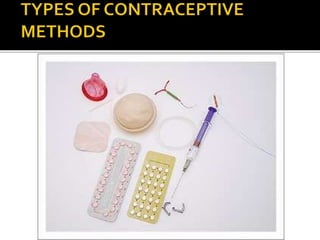
 1- Natural ( physiological).
 2- Mechanical.
 3- Chemical.
 4- Hormonal.
 5- Surgical (sterilization).
Barrier
Except
IUD
 Safe.
 100% effective.
 Free of side effects.
 Easily obtainable & cheap.
 Acceptable to the user and sexual
partner.
 Free of effects on future pregnancies.
 Abstinence.
 Coitus interruptus (withdrawal).
 Periodic abstinence ( fertility awareness
based methods, safe period).
 Lactational amenorrhea ( LAM ).
 Very old.
 Disadvantage:
 Lack of self control.
 Pre-ejaculatory fluid contains sperm.
 High failure rate ( 20% in typical use & 5 % in
perfect use).
 Based on understanding ovulatory cycle.
 Cooperation is very important.
 Free, safe, and acceptable to all religions.
 25% of women will experience unintended
pregnancy in first year (typical use).
 Some women combine with barrier methods
(use during fertile periods).
 Bellagio consensus (1989).
 Exclusive breastfeeding.
 Lactational amenorrhea.
 1st 6 months postpartum.
Mechanism
 Increase prolactin.
 Supression of gonadotrophin & anovulation.
 Luteal phase insufficiency.
 Barrier methods.
 Male condom.
 Female condom.
 Vaginal diaphragm.
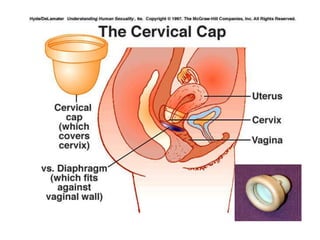
 Cervical cap.
 Intrauterine contraceptive device (IUCD).
 Advantage:
 Protect against sexually transmitted disease.
 No systemic side effects.
 Disadvantage:
 High failure rate.
 Interfere with sexual intercourse.
IUD is the world's most widely used
method of reversible birth control.
1- Inert ( no longer recommended because
of painful and heavy periods).
2-Copper Releasing.
3-Progesterone Releasing (IUS):
A-Progestasert (progesterone T) 1976 -
2001.
B-Mirena (levonorgestrel).
-Suspected pregnancy.
-Post partum puerperal sepsis.
-Immediately post-septic abortion
-Undiagnosed abnormal vaginal bleeding.
-Suspected gynecological malignancy.
(Cervical cancer, Endometrial cancer)
-Current STDs.
-Current PID.
-Anatomical abnormalities.
 Causes:
 Detached threads or hidden in the cervix.
 Expulsion.
 Perforation.
 Pregnancy.
 Investigations:
 TVS.
 X-ray.
 In the form of tablets, creams, jellies--- etc.
 Contains a spermicidal agent like nonoxynol-9.
 Applied 15-30 min before intercourse and not
washed before 6 hrs. postcoital.
 Can be used alone or with other barrier methods
to enhance their effectiveness.
 Oral:
 Combined oral contraceptives (COCs).
 Progesterone only pills (POPs).
 Injectable:
 Progesterone only ( depo-provera).
 Combined.
 Subdermal implant.
 Vaginal rings.
 Start on the 1st 5 days of the cycle
regularly every day.
 21 days 0n, 7 days off.
 Highly effective if used correctly.
 Rapid return of fertility after stoppage.
 Suitable for nulligravida and newly
married couples.
 Completely controlled by the woman
and can be stopped at any time unlike
other methods (IUD & Implants).
 Not interfere with sexual intercourse.
1-The need for daily use.
2- GIT:
 Nausea and vomiting.
 Increased incidence of gall bladder stones).
3-Central nervous system:
 Headache and migraine.
 Mood changes: depression, irritabilty.
4- Not suitable for breast feeding.
 < 6 months postpartum if breastfeeding.
 Smoker over the age of 35.
 Hypertension (systolic ≥ 160mm Hg or diastolic
≥ 100mm Hg).
 Current or past history of venous
thromboembolism (VTE).
 Ischemic heart disease.
 History of cerebrovascular accident.
 Start on the 1st 5 days of the cycle or
after 6 weeks postpartum.
 Daily tablet at the same time every day
without discontinuation.
 Woman consider herself fertile for the
first week of use.
 Suitable when breast feeding.
 Suitable when estrogen is
contraindicated.
 Immediate return of fertility.
 Less likely to cause metabolic
disturbances.
 Must be taken daily at the same time.
 Less effective than COCs.
 More likely to cause menstrual
irregularities.
Progesterone only ( Depo-provera).
 Every 3 months.
 Advantage:
 Highly effective.
 No daily use
 Not interfere with sexual intercourse.
 Disadvantages.
 Delayed return of fertility.
 Wt gain.
 Osteoporosis ( esp. in long term use)
Mesigyna:
 Norethinderone
enanthate 50 mg +
estradiol valerate 5
mg.
 Used every month.
 Need trained personal for insertion and
removal.
 Out patients procedure.
 99.5% effectiveness rate.
 good compliance.
 Amennorhoea is common.
 Types:
 Norplant (6 rods).
 Implanon (one rod).
 Vasectomy in males.
 Tubal ligation in females.
 Can be used within 72 hour after
unprontected intercourse:
 Examples:
 Levonorgestrel 0.75 mg.
 IUCD.
 Mifepristone ( progesterone antagonist).
Contraception.

Contraception.

  • 1.
  • 2.
     1- Natural( physiological).  2- Mechanical.  3- Chemical.  4- Hormonal.  5- Surgical (sterilization). Barrier Except IUD
  • 4.
     Safe.  100%effective.  Free of side effects.  Easily obtainable & cheap.  Acceptable to the user and sexual partner.  Free of effects on future pregnancies.
  • 6.
     Abstinence.  Coitusinterruptus (withdrawal).  Periodic abstinence ( fertility awareness based methods, safe period).  Lactational amenorrhea ( LAM ).
  • 7.
     Very old. Disadvantage:  Lack of self control.  Pre-ejaculatory fluid contains sperm.  High failure rate ( 20% in typical use & 5 % in perfect use).
  • 8.
     Based onunderstanding ovulatory cycle.  Cooperation is very important.  Free, safe, and acceptable to all religions.  25% of women will experience unintended pregnancy in first year (typical use).  Some women combine with barrier methods (use during fertile periods).
  • 9.
     Bellagio consensus(1989).  Exclusive breastfeeding.  Lactational amenorrhea.  1st 6 months postpartum.
  • 10.
    Mechanism  Increase prolactin. Supression of gonadotrophin & anovulation.  Luteal phase insufficiency.
  • 12.
     Barrier methods. Male condom.  Female condom.  Vaginal diaphragm.  Cervical cap.  Intrauterine contraceptive device (IUCD).
  • 15.
     Advantage:  Protectagainst sexually transmitted disease.  No systemic side effects.  Disadvantage:  High failure rate.  Interfere with sexual intercourse.
  • 16.
    IUD is theworld's most widely used method of reversible birth control. 1- Inert ( no longer recommended because of painful and heavy periods). 2-Copper Releasing. 3-Progesterone Releasing (IUS): A-Progestasert (progesterone T) 1976 - 2001. B-Mirena (levonorgestrel).
  • 17.
    -Suspected pregnancy. -Post partumpuerperal sepsis. -Immediately post-septic abortion -Undiagnosed abnormal vaginal bleeding. -Suspected gynecological malignancy. (Cervical cancer, Endometrial cancer) -Current STDs. -Current PID. -Anatomical abnormalities.
  • 18.
     Causes:  Detachedthreads or hidden in the cervix.  Expulsion.  Perforation.  Pregnancy.  Investigations:  TVS.  X-ray.
  • 20.
     In theform of tablets, creams, jellies--- etc.  Contains a spermicidal agent like nonoxynol-9.  Applied 15-30 min before intercourse and not washed before 6 hrs. postcoital.  Can be used alone or with other barrier methods to enhance their effectiveness.
  • 23.
     Oral:  Combinedoral contraceptives (COCs).  Progesterone only pills (POPs).  Injectable:  Progesterone only ( depo-provera).  Combined.  Subdermal implant.  Vaginal rings.
  • 25.
     Start onthe 1st 5 days of the cycle regularly every day.  21 days 0n, 7 days off.
  • 26.
     Highly effectiveif used correctly.  Rapid return of fertility after stoppage.  Suitable for nulligravida and newly married couples.  Completely controlled by the woman and can be stopped at any time unlike other methods (IUD & Implants).  Not interfere with sexual intercourse.
  • 27.
    1-The need fordaily use. 2- GIT:  Nausea and vomiting.  Increased incidence of gall bladder stones). 3-Central nervous system:  Headache and migraine.  Mood changes: depression, irritabilty. 4- Not suitable for breast feeding.
  • 28.
     < 6months postpartum if breastfeeding.  Smoker over the age of 35.  Hypertension (systolic ≥ 160mm Hg or diastolic ≥ 100mm Hg).  Current or past history of venous thromboembolism (VTE).  Ischemic heart disease.  History of cerebrovascular accident.
  • 29.
     Start onthe 1st 5 days of the cycle or after 6 weeks postpartum.  Daily tablet at the same time every day without discontinuation.  Woman consider herself fertile for the first week of use.
  • 31.
     Suitable whenbreast feeding.  Suitable when estrogen is contraindicated.  Immediate return of fertility.  Less likely to cause metabolic disturbances.
  • 32.
     Must betaken daily at the same time.  Less effective than COCs.  More likely to cause menstrual irregularities.
  • 33.
    Progesterone only (Depo-provera).  Every 3 months.  Advantage:  Highly effective.  No daily use  Not interfere with sexual intercourse.  Disadvantages.  Delayed return of fertility.  Wt gain.  Osteoporosis ( esp. in long term use)
  • 35.
    Mesigyna:  Norethinderone enanthate 50mg + estradiol valerate 5 mg.  Used every month.
  • 36.
     Need trainedpersonal for insertion and removal.  Out patients procedure.  99.5% effectiveness rate.  good compliance.  Amennorhoea is common.
  • 37.
     Types:  Norplant(6 rods).  Implanon (one rod).
  • 40.
     Vasectomy inmales.  Tubal ligation in females.
  • 42.
     Can beused within 72 hour after unprontected intercourse:  Examples:  Levonorgestrel 0.75 mg.  IUCD.  Mifepristone ( progesterone antagonist).