ACUTE & PERSISTENT
VAGINITIS
MAGDY ABDELRAHMAN MOHAMED
LECTURER OF OB/GYN
2017
Naturalbarriersagainstfemale genitaltract
infections:
•Vulva.
•Vagina.
•Cervix.
•Endometrium.
Vaginitis (vulvovaginitis)
• Premenarchal
• During reproductive period:
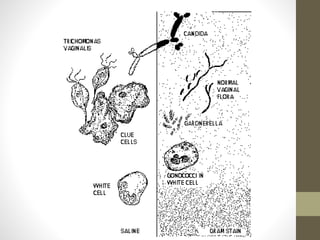
• Trichomonas.
• Bacterial vaginosis.
• Candidal infection.
• Senile vaginitis.
Vulvaginitis in reproductive age
•Bacterial Vaginosis (BV) (22-50%).
•Vulvovaginal Candidiasis (17-39%).
•Trichomoniasis (4-35%).
•Undiagnosed - 7-72% .
Bacterial Vaginosis
• Characterized by thin, homogenous, malodorous
frothy white-to-grey vaginal discharge, adherent
to the vaginal mucosa.
• Caused by an overgrowth of organisms like
Gardnerella vaginalis, Mobiluncus species,
Mycoplasma hominis, and Peptostreptococcus
species.
Bacterial Vaginosis
• For diagnosis of BV, 3 out of the following 4
criteria must be present (amsell’s criteria)
• Homogenous, white, adherent discharge.
• Vaginal pH higher than 4.5.
• Whiff test:Release of fishy odor from vaginal
discharge with potassium hydroxide (KOH).
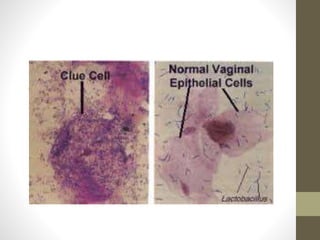
• Clue cells.
http://www.cdc.gov/std/treatmen
t/2006/toc.htm
Bacterial Vaginosis
• Treatment
• Metronidazole 500 mg twice daily for 7 days, or 2
g po single dose
• Metronidazole gel 0.75%, one full applicator (5g)
intravaginally, for 5 days,
• Clindamycin cream 2%, one full applicator (5 g)
intravaginally for 7 days.
Vaginal Candidiasis
• Second most common cause of vaginitis.
• Caused by Candida species (albicans, tropicalis,
glabrata)
• Risk Factors- Diabetes, pregnancy, broad
spectrum antibiotic therapy, COCs & steriod
therapy.
• Pruritus is the most common symptom.
Vaginal Candidiasis
• Thick, odorless, white vaginal discharge
(cottage cheese like).
• Associated with
• Vulvar candidiasis with vulvar burning,
• Dyspareunia
• Vulvar dysuria.
Treatment of Vaginal Candidiasis
• Antifungal Vaginal creams or suppositories can
be prescribed at a variety of doses and durations
of treatment.
• oral single dose treatment, such as
(clotrimazole 500 mg or fluconazol 150 mg) is
adequate.
• Longer courses of treatment are needed when
there are predisposing factors that cannot be
eliminated, such as steroid therapy.
Recurrent (resistant) candidiasis
• Non Albican subgroup.
• Other diagnoses, particularly herpes simplex,
which causes localized ulceration and soreness,
and dermatological conditions such as eczema
and lichen sclerosus et atrophicus.
• Management:
• Culture of the organism.
• Revise your diagnosis.
• Extended course of treatment ( 3-6 months)
Trichomoniasis
• Third most common.
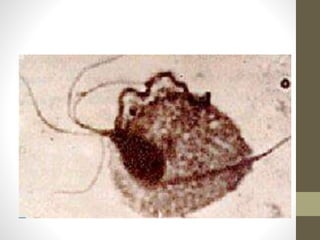
• Caused by Trichomonas Vaginalis, flagellated
protozoa.
• Sexually transmitted.
• Profuse frothy yellowish grey discharge.
• Vulvar/vaginal erythema and edema.
• Strawberry Cervix .
• Saline wet mount – motile oval or fusiform
protozoa.
http://www.cdc.gov/std/treatmen
t/2006/toc.htm
Trichomoniasis
• Recommended Regimen
• Metronidazole 2 g orally in a single dose.
• Alternative Regimen
• Metronidazole 500 mg twice a day for 7 days
• Sex partners of patients with T. vaginalis
should be treated.
Complications
• Bacterial vaginosis (BV) result in pelvic
inflammatory disease that result in infertility and
tubal pregnancy increase in adverse outcomes of
pregnancy such as premature labour,
premature rupture of membranes, amniotic fluid
infection and low-birth-weight infants
• Trichomoniasis may increase the risk of
transmission of human immunodeficiency virus,
and may cause delivery of low-birth-weight or
premature infants.
PERSISTENT VAGINITIS
Definition:
• Recurring attack.
• Chronic symptoms.
• Chronic symptoms with exacerbation at certain
time of menstrual periods.
Causes
• Common:
• Recurrent vulvovaginal candidiasis.
• Recurrent bacterial vaginosis.
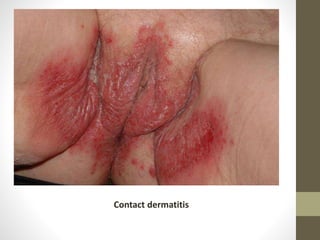
• Contact dermatitis.
• Uncommon:
• Desquamative inflammatory vaginitis. ( unknown aetiology)
• Intravaginal foreign body.
• Chronic fixed drug eruption.
• Type 1 hypersensetivity. (to latex condom & semen)
• Rare:
• Mucosal lichen planus.
• Crohn’s disease.
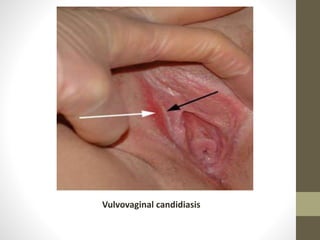
Vulvovaginal candidiasis
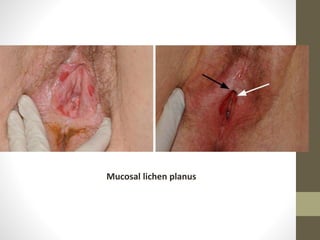
Mucosal lichen planus
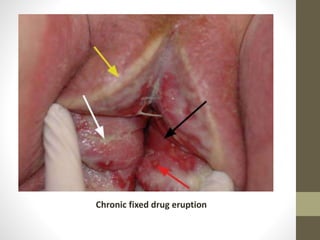
Chronic fixed drug eruption
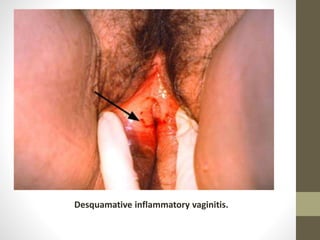
Desquamative inflammatory vaginitis.
Contact dermatitis
THANK
YOU

Acute and persistent vaginitis

  • 1.
    ACUTE & PERSISTENT VAGINITIS MAGDYABDELRAHMAN MOHAMED LECTURER OF OB/GYN 2017
  • 2.
  • 3.
    Vaginitis (vulvovaginitis) • Premenarchal •During reproductive period: • Trichomonas. • Bacterial vaginosis. • Candidal infection. • Senile vaginitis.
  • 4.
    Vulvaginitis in reproductiveage •Bacterial Vaginosis (BV) (22-50%). •Vulvovaginal Candidiasis (17-39%). •Trichomoniasis (4-35%). •Undiagnosed - 7-72% .
  • 5.
    Bacterial Vaginosis • Characterizedby thin, homogenous, malodorous frothy white-to-grey vaginal discharge, adherent to the vaginal mucosa. • Caused by an overgrowth of organisms like Gardnerella vaginalis, Mobiluncus species, Mycoplasma hominis, and Peptostreptococcus species.
  • 6.
    Bacterial Vaginosis • Fordiagnosis of BV, 3 out of the following 4 criteria must be present (amsell’s criteria) • Homogenous, white, adherent discharge. • Vaginal pH higher than 4.5. • Whiff test:Release of fishy odor from vaginal discharge with potassium hydroxide (KOH). • Clue cells.
  • 8.
    http://www.cdc.gov/std/treatmen t/2006/toc.htm Bacterial Vaginosis • Treatment •Metronidazole 500 mg twice daily for 7 days, or 2 g po single dose • Metronidazole gel 0.75%, one full applicator (5g) intravaginally, for 5 days, • Clindamycin cream 2%, one full applicator (5 g) intravaginally for 7 days.
  • 9.
    Vaginal Candidiasis • Secondmost common cause of vaginitis. • Caused by Candida species (albicans, tropicalis, glabrata) • Risk Factors- Diabetes, pregnancy, broad spectrum antibiotic therapy, COCs & steriod therapy. • Pruritus is the most common symptom.
  • 10.
    Vaginal Candidiasis • Thick,odorless, white vaginal discharge (cottage cheese like). • Associated with • Vulvar candidiasis with vulvar burning, • Dyspareunia • Vulvar dysuria.
  • 11.
    Treatment of VaginalCandidiasis • Antifungal Vaginal creams or suppositories can be prescribed at a variety of doses and durations of treatment. • oral single dose treatment, such as (clotrimazole 500 mg or fluconazol 150 mg) is adequate. • Longer courses of treatment are needed when there are predisposing factors that cannot be eliminated, such as steroid therapy.
  • 12.
    Recurrent (resistant) candidiasis •Non Albican subgroup. • Other diagnoses, particularly herpes simplex, which causes localized ulceration and soreness, and dermatological conditions such as eczema and lichen sclerosus et atrophicus. • Management: • Culture of the organism. • Revise your diagnosis. • Extended course of treatment ( 3-6 months)
  • 13.
    Trichomoniasis • Third mostcommon. • Caused by Trichomonas Vaginalis, flagellated protozoa. • Sexually transmitted. • Profuse frothy yellowish grey discharge. • Vulvar/vaginal erythema and edema. • Strawberry Cervix . • Saline wet mount – motile oval or fusiform protozoa.
  • 15.
    http://www.cdc.gov/std/treatmen t/2006/toc.htm Trichomoniasis • Recommended Regimen •Metronidazole 2 g orally in a single dose. • Alternative Regimen • Metronidazole 500 mg twice a day for 7 days • Sex partners of patients with T. vaginalis should be treated.
  • 17.
    Complications • Bacterial vaginosis(BV) result in pelvic inflammatory disease that result in infertility and tubal pregnancy increase in adverse outcomes of pregnancy such as premature labour, premature rupture of membranes, amniotic fluid infection and low-birth-weight infants • Trichomoniasis may increase the risk of transmission of human immunodeficiency virus, and may cause delivery of low-birth-weight or premature infants.
  • 18.
    PERSISTENT VAGINITIS Definition: • Recurringattack. • Chronic symptoms. • Chronic symptoms with exacerbation at certain time of menstrual periods.
  • 19.
    Causes • Common: • Recurrentvulvovaginal candidiasis. • Recurrent bacterial vaginosis. • Contact dermatitis. • Uncommon: • Desquamative inflammatory vaginitis. ( unknown aetiology) • Intravaginal foreign body. • Chronic fixed drug eruption. • Type 1 hypersensetivity. (to latex condom & semen) • Rare: • Mucosal lichen planus. • Crohn’s disease.
  • 20.
  • 21.
  • 22.
  • 23.
  • 24.
  • 25.