UNIT 6 MAKE-UP
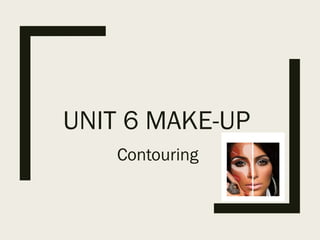
Contouring
Contouring
Contouring is a technique that is used to change the appearance
of the face or facial features by applying the make-up using special
techniques. Contouring products are available in liquid, cream or
powder form and consist of highlighter, shader and blusher.
Products used to contour
Blusher
Blusher is used to define, add warmth and give the skin a healthy glow.
Highlighter
Highlighter is used to emphasise/draw attention to the area and
should be two shades lighter than the foundation. Light pearlised
products are effective highlighters, however are best avoided on mature
skins or on hairy areas.
Shader
Shader is used to draw attention away from an area, therefore
minimising the feature, and should be two shades darker than the
foundation.
Contouring techniques
Contouring can be applied to correct eyes, face shapes, chins, jaw
line and noses. It is most commonly used for photographic make-
up.
■ If a liquid or cream product is being used it should be applied with
a damp make-up wedge before loose powder is applied.
■ If a powder based product is being used it should be applied with
the contouring brush after the loose powder has been applied.
Simply brush from the outer edges of the face inwards when
contouring face shapes as it will produce a more natural result.
(Apply blusher at the end of the make-up).
Face Shape Analysis
It is important that you can decide what face
shape a client has in order to decide if any
corrective contouring work is needed. When
deciding on the client’s face shape it is
important that they are sat upright to allow you
to see their face at the correct angle.
Corrective work for face shapes
When performing your corrective work on the
different face shapes your aim is always to
produce the highly desired oval shaped face.
On the following pictures you will see where
highlighter, shader and blusher has been
applied to produce the effect of an oval
shaped face.
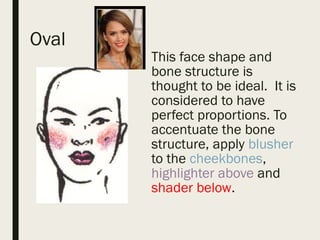
Oval
This face shape and
bone structure is
thought to be ideal. It is
considered to have
perfect proportions. To
accentuate the bone
structure, apply blusher
to the cheekbones,
highlighter above and
shader below.
Round This face shape has fuller,
rounded lower cheeks and
rounded corners to the
forehead. It will also be
shorter in length producing
the round shape. A round face
will need shading at the 4
corners and highlighting by
applying a narrow strip down
the centre of the face.
Blusher should be applied
high on the cheekbones and
blended out to the temples.
The aim is to add length to
the face.
Diamond
This face shape has a pointed
forehead and chin. It forms a
diamond shape through the
cheeks and sides of the
forehead. A diamond shaped
face will need shading at the
top of the forehead and the
chin to reduce these points
and highlighting at the 4
corners (temples and jaw line)
to draw out. Apply blusher to
the fullness of the cheeks.
Oblong
This face is long and
narrow in shape. The aim is
to reduce the length of the
face and create width.
Apply shader to the tip of
the chin and the top of the
forehead. Highlighter
should be applied to the
temples and lower jaw.
Blend the blusher out
along the cheekbones,
towards the ears.
Pear/triangle
This face shape has a narrow
forehead and wide, prominent lower
jaw, thus producing a triangle/pear
shaped face. The aim is to create
width to the forehead and to reduce
the width of the lower face. Shade at
the fullness of the lower cheek and
highlighting along the sides of the
forehead to draw out, therefore
having a balancing effect. Apply
blusher along the cheekbones,
towards the temples.
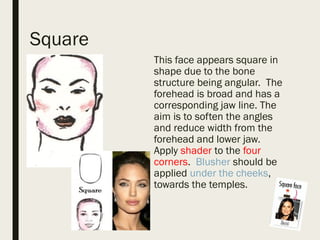
Square
This face appears square in
shape due to the bone
structure being angular. The
forehead is broad and has a
corresponding jaw line. The
aim is to soften the angles
and reduce width from the
forehead and lower jaw.
Apply shader to the four
corners. Blusher should be
applied under the cheeks,
towards the temples.
Heart
This shaped face has a wider
forehead and a narrow jaw,
which forms a point. A widows
peak in the hairline will often
accompany this face shape.
This face shape will need
shading at the sides of the
forehead and the point of the
chin. Highlighting should be
applied to the angles of the jaw
to aim to fill out this area.
Apply blusher to the fullness of
the cheeks.

Contouring

  • 1.
  • 2.
    Contouring Contouring is atechnique that is used to change the appearance of the face or facial features by applying the make-up using special techniques. Contouring products are available in liquid, cream or powder form and consist of highlighter, shader and blusher.
  • 3.
    Products used tocontour Blusher Blusher is used to define, add warmth and give the skin a healthy glow. Highlighter Highlighter is used to emphasise/draw attention to the area and should be two shades lighter than the foundation. Light pearlised products are effective highlighters, however are best avoided on mature skins or on hairy areas. Shader Shader is used to draw attention away from an area, therefore minimising the feature, and should be two shades darker than the foundation.
  • 4.
    Contouring techniques Contouring canbe applied to correct eyes, face shapes, chins, jaw line and noses. It is most commonly used for photographic make- up. ■ If a liquid or cream product is being used it should be applied with a damp make-up wedge before loose powder is applied. ■ If a powder based product is being used it should be applied with the contouring brush after the loose powder has been applied. Simply brush from the outer edges of the face inwards when contouring face shapes as it will produce a more natural result. (Apply blusher at the end of the make-up).
  • 5.
    Face Shape Analysis Itis important that you can decide what face shape a client has in order to decide if any corrective contouring work is needed. When deciding on the client’s face shape it is important that they are sat upright to allow you to see their face at the correct angle.
  • 6.
    Corrective work forface shapes When performing your corrective work on the different face shapes your aim is always to produce the highly desired oval shaped face. On the following pictures you will see where highlighter, shader and blusher has been applied to produce the effect of an oval shaped face.
  • 7.
    Oval This face shapeand bone structure is thought to be ideal. It is considered to have perfect proportions. To accentuate the bone structure, apply blusher to the cheekbones, highlighter above and shader below.
  • 8.
    Round This faceshape has fuller, rounded lower cheeks and rounded corners to the forehead. It will also be shorter in length producing the round shape. A round face will need shading at the 4 corners and highlighting by applying a narrow strip down the centre of the face. Blusher should be applied high on the cheekbones and blended out to the temples. The aim is to add length to the face.
  • 9.
    Diamond This face shapehas a pointed forehead and chin. It forms a diamond shape through the cheeks and sides of the forehead. A diamond shaped face will need shading at the top of the forehead and the chin to reduce these points and highlighting at the 4 corners (temples and jaw line) to draw out. Apply blusher to the fullness of the cheeks.
  • 10.
    Oblong This face islong and narrow in shape. The aim is to reduce the length of the face and create width. Apply shader to the tip of the chin and the top of the forehead. Highlighter should be applied to the temples and lower jaw. Blend the blusher out along the cheekbones, towards the ears.
  • 11.
    Pear/triangle This face shapehas a narrow forehead and wide, prominent lower jaw, thus producing a triangle/pear shaped face. The aim is to create width to the forehead and to reduce the width of the lower face. Shade at the fullness of the lower cheek and highlighting along the sides of the forehead to draw out, therefore having a balancing effect. Apply blusher along the cheekbones, towards the temples.
  • 12.
    Square This face appearssquare in shape due to the bone structure being angular. The forehead is broad and has a corresponding jaw line. The aim is to soften the angles and reduce width from the forehead and lower jaw. Apply shader to the four corners. Blusher should be applied under the cheeks, towards the temples.
  • 13.
    Heart This shaped facehas a wider forehead and a narrow jaw, which forms a point. A widows peak in the hairline will often accompany this face shape. This face shape will need shading at the sides of the forehead and the point of the chin. Highlighting should be applied to the angles of the jaw to aim to fill out this area. Apply blusher to the fullness of the cheeks.