Continuous Delivery
How it’s done at a SAAS start-up

Presenter: Stein Welberg
About Me
Studied at Twente University
Waterpolo Player
Identity & Access management expert
CTO @ Onegini
Why am I here?
Sell Onegini
Explain about Continuous Delivery
Inspire you to think about CD
Steal engineers ;-)
What is Onegini

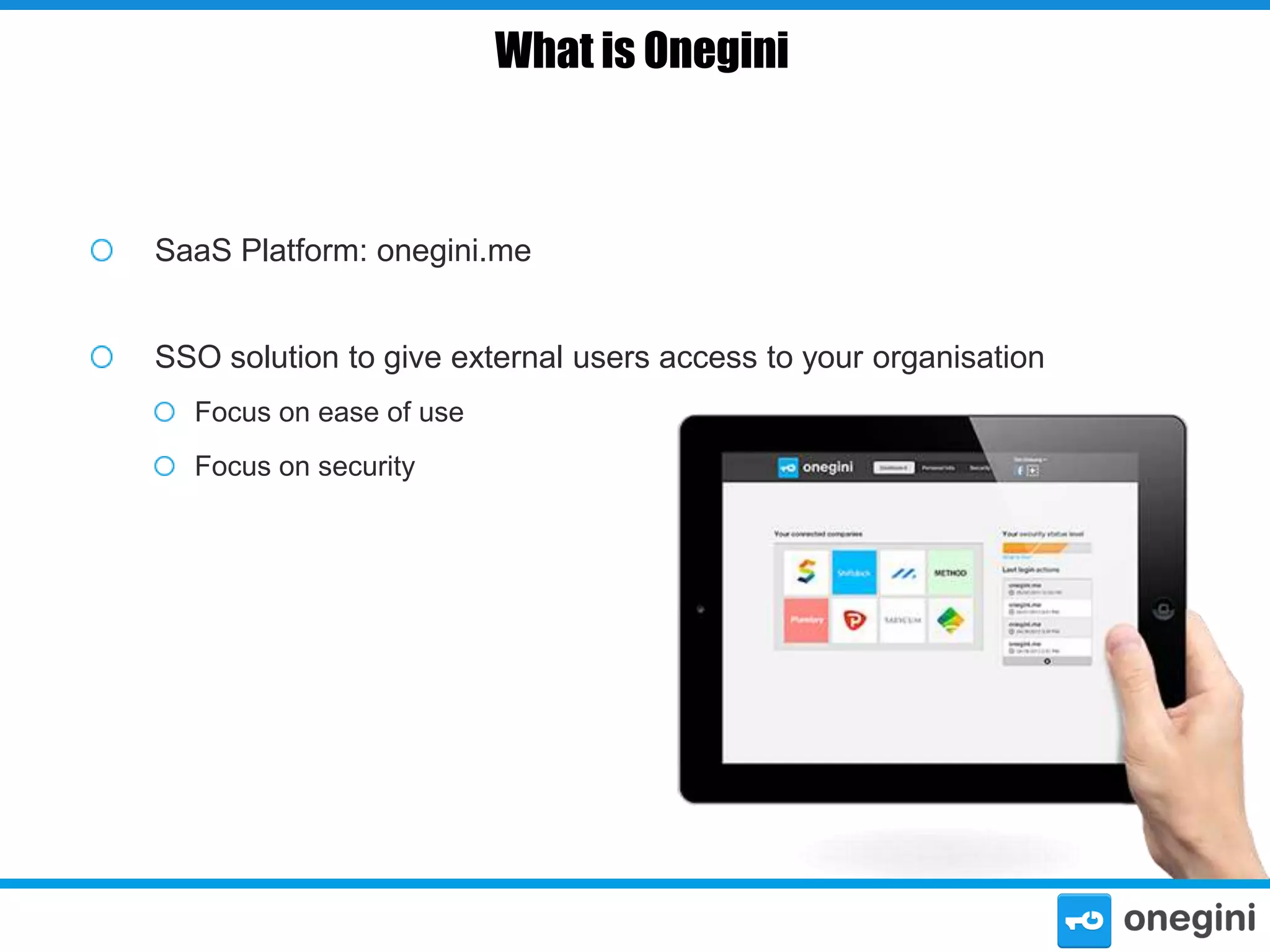
SaaS Platform: onegini.me
SSO solution to give external users access to your organisation
Focus on ease of use
Focus on security
Continuous Integration

"Continuous Integration is a software development practice where
members of a team integrate their work frequently, usually each
person integrates at least daily - leading to multiple integrations per
day.
Each integration is verified by an automated build (including test) to
detect integration errors as quickly as possible. Many teams find that
this approach leads to significantly reduced integration problems and
allows a team to develop cohesive software more rapidly."
- Martin Fowler
Continuous Delivery
Key concepts
Release early, release often

Small releases
Development close to business
Test the sh*t out of your application
Not just the code, also infra setup, db schema, etc!

Have software that can always go live!

Treat anything as software
Automate, automate, automate… automate!!!
Full deployment pipeline

Summary: Continuous Delivery is Continuous Integration on steriods
Continuous Delivery @ Onegini
A new release into production every 4 weeks
Devs could release anytime, business can’t keep up with us ;-)

Fully automated Deployments (infrastructure as code)
For all Business critical applications

Automated (integration / acceptance) testing
Critical issues are hardly ever found by our testers
Not all corner cases are tested automatically
Our road to Continuous Delivery
The challenges
Ruby (on Rails) and Java combined. Could not easily drop a war into e.g.
Google App engine or Azure.
Plans to use a graph / nosql database in the near future
Run (and be able to customize) and roll own virtual machine
Completely automated build environment testable and repeatable
No (manual) installation or installation manual ;-)
No SSH to the servers
No manual database changes
Time needed to update the production cluster must be less than one hour
Choices we made
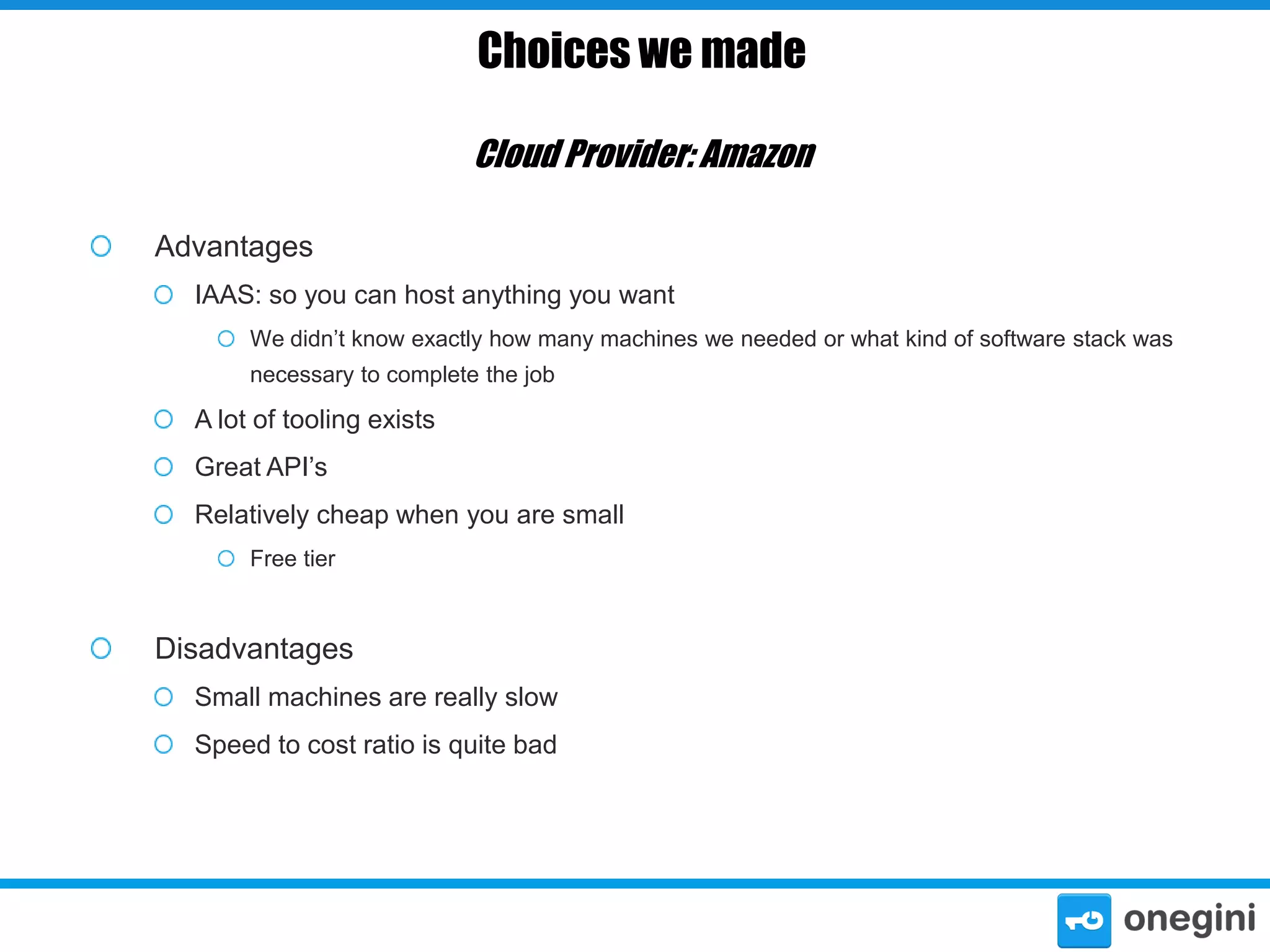
Cloud Provider: Amazon
Advantages
IAAS: so you can host anything you want
We didn’t know exactly how many machines we needed or what kind of software stack was
necessary to complete the job

A lot of tooling exists
Great API’s
Relatively cheap when you are small
Free tier

Disadvantages
Small machines are really slow
Speed to cost ratio is quite bad
Choices we made
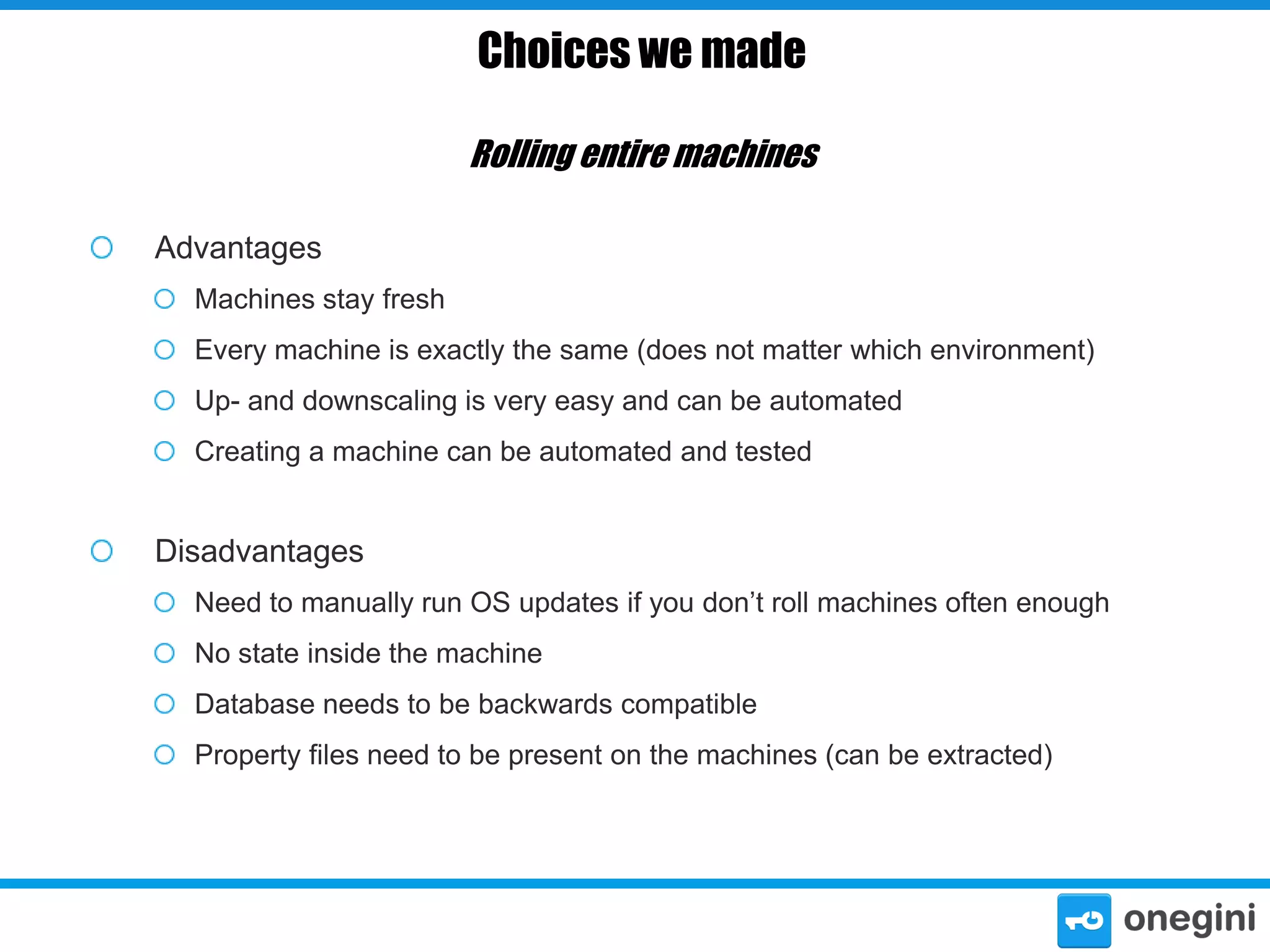
Rolling entire machines
Advantages
Machines stay fresh
Every machine is exactly the same (does not matter which environment)
Up- and downscaling is very easy and can be automated
Creating a machine can be automated and tested

Disadvantages
Need to manually run OS updates if you don’t roll machines often enough
No state inside the machine
Database needs to be backwards compatible

Property files need to be present on the machines (can be extracted)
Choices we made
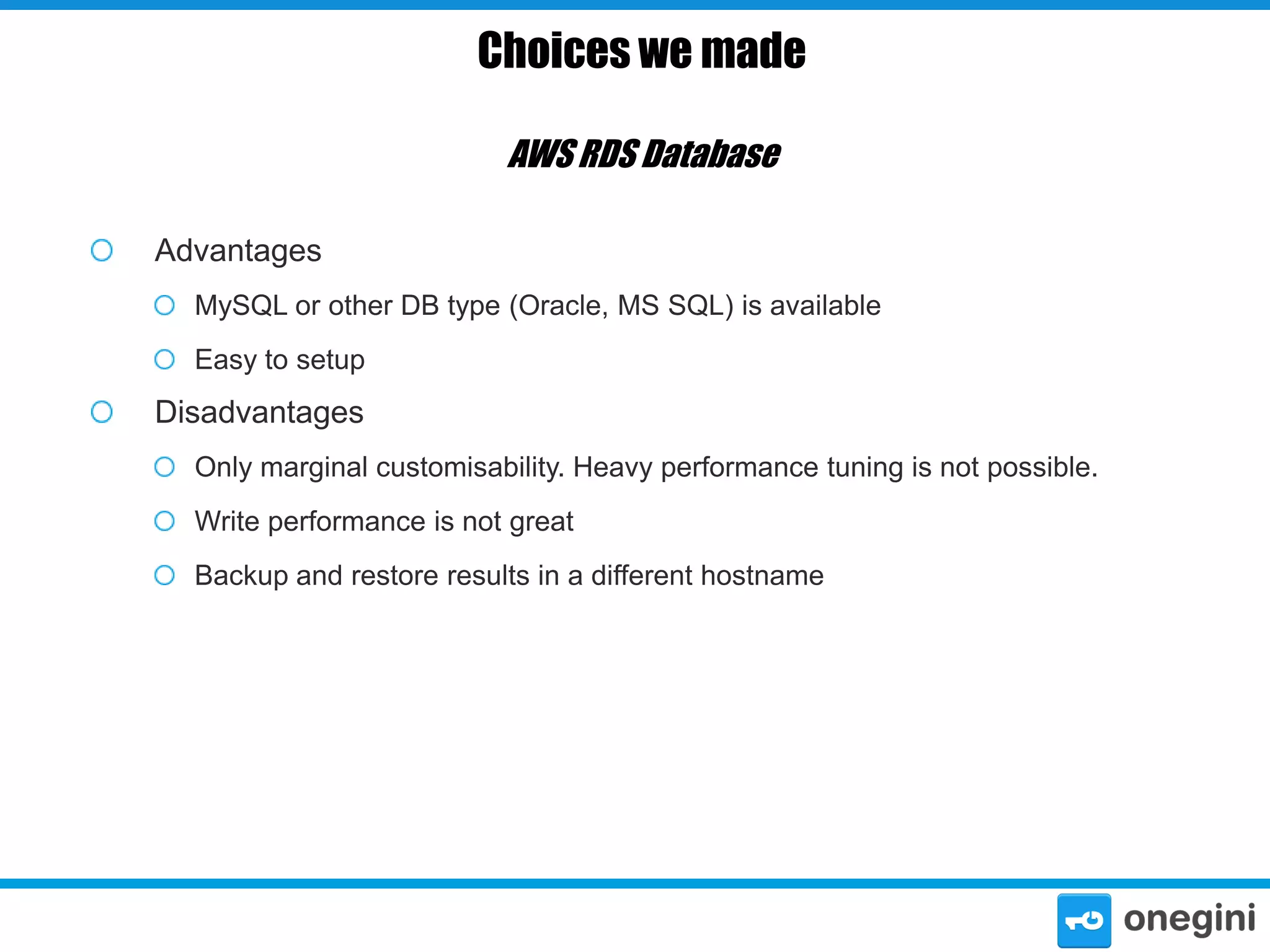
AWS RDS Database
Advantages
MySQL or other DB type (Oracle, MS SQL) is available
Easy to setup

Disadvantages
Only marginal customisability. Heavy performance tuning is not possible.
Write performance is not great
Backup and restore results in a different hostname
Choices we made
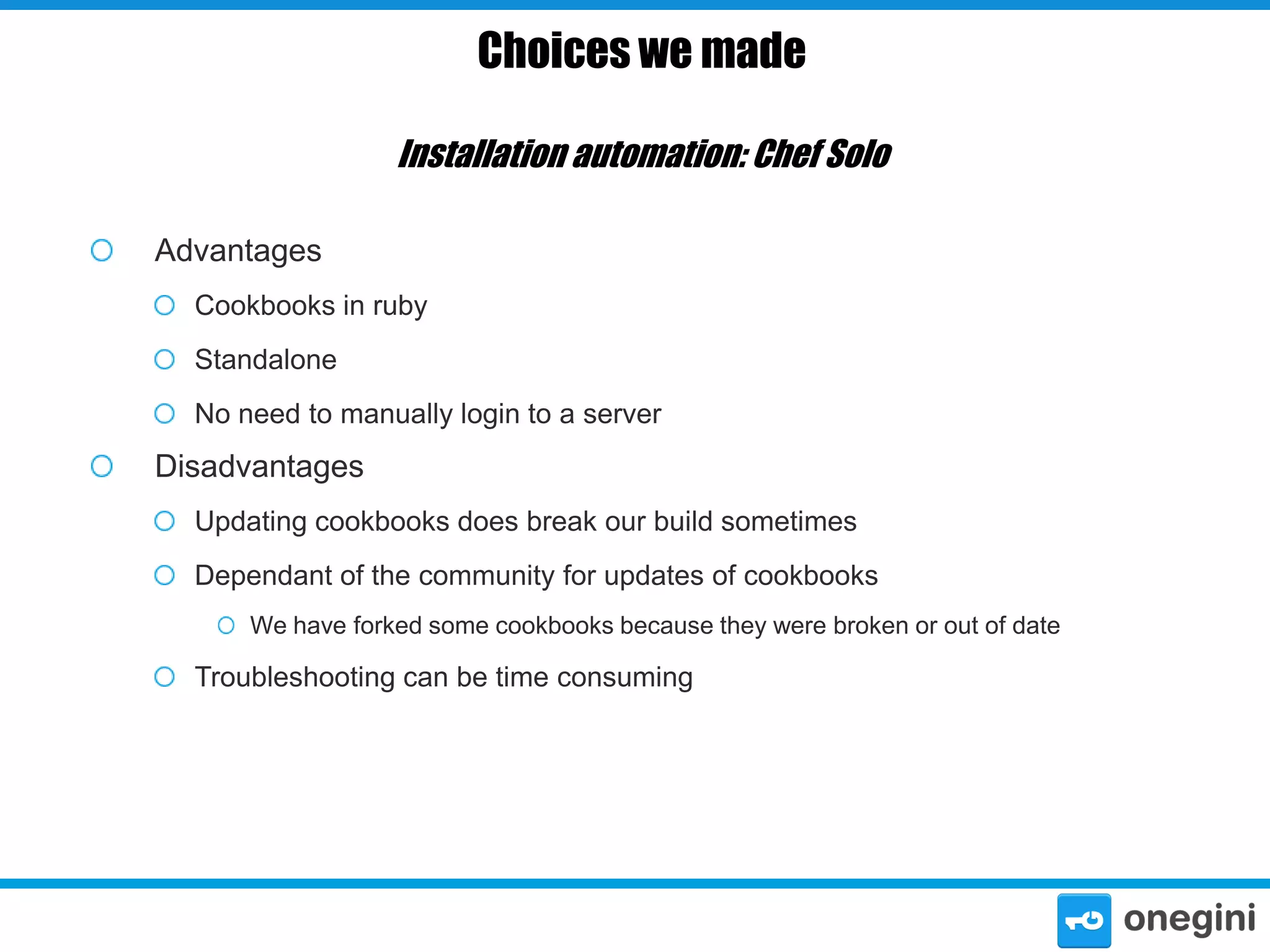
Installation automation: Chef Solo
Advantages
Cookbooks in ruby
Standalone
No need to manually login to a server

Disadvantages
Updating cookbooks does break our build sometimes
Dependant of the community for updates of cookbooks
We have forked some cookbooks because they were broken or out of date

Troubleshooting can be time consuming
Choices we made
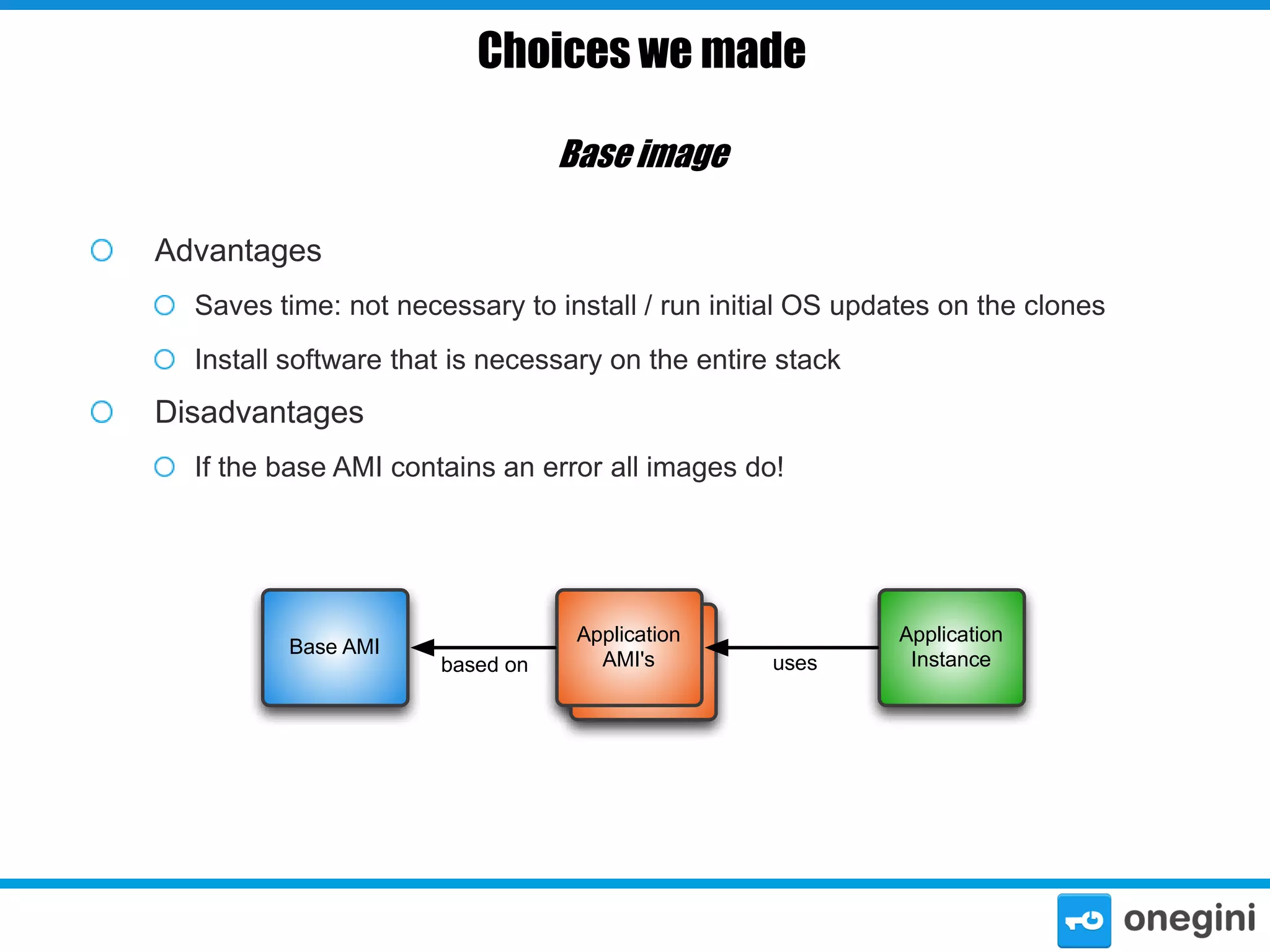
Base image
Advantages
Saves time: not necessary to install / run initial OS updates on the clones
Install software that is necessary on the entire stack

Disadvantages
If the base AMI contains an error all images do!

Base AMI

based on

Application
Application
AMI's
AMI's

uses

Application
Instance
Choices we made
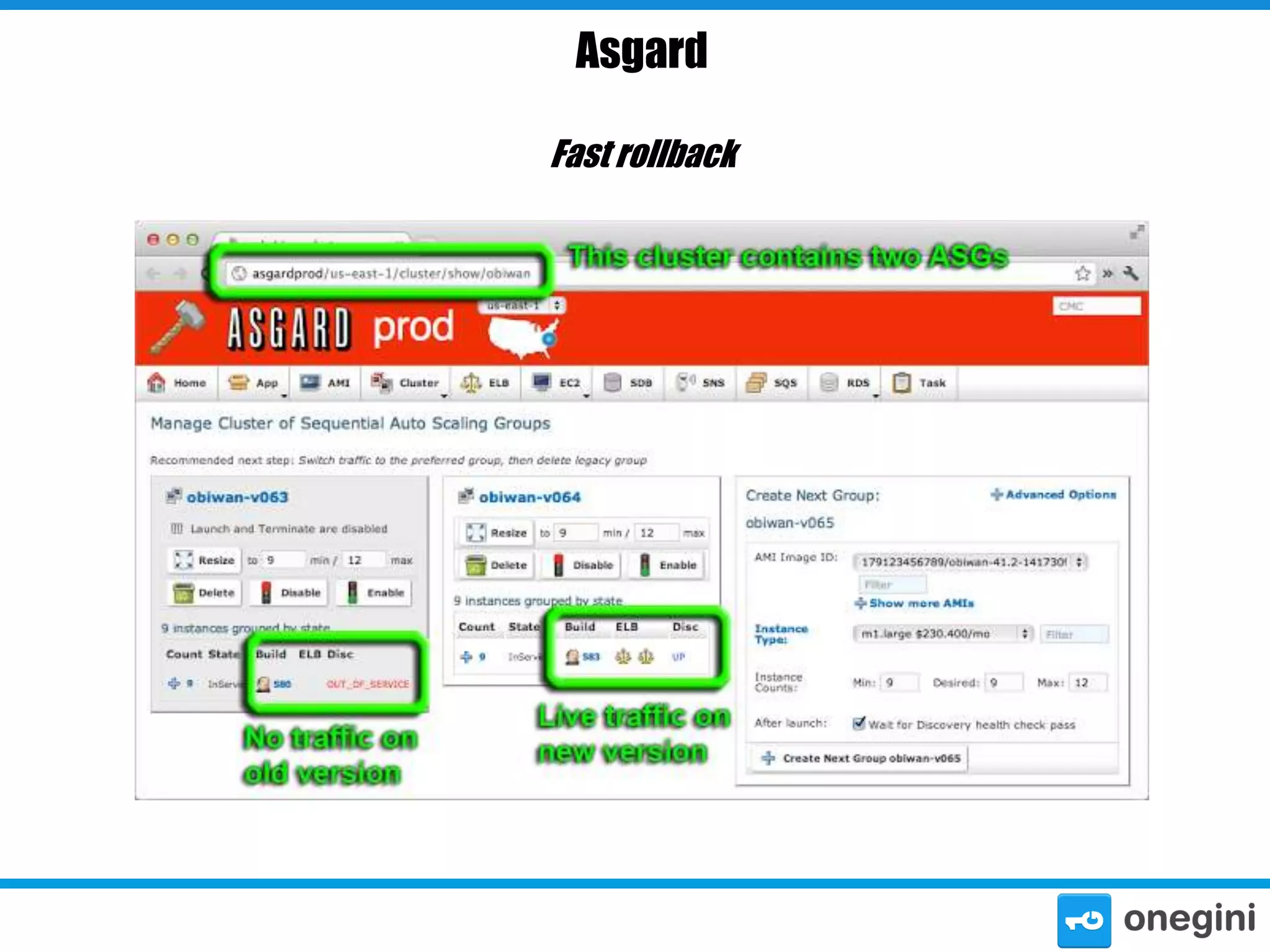
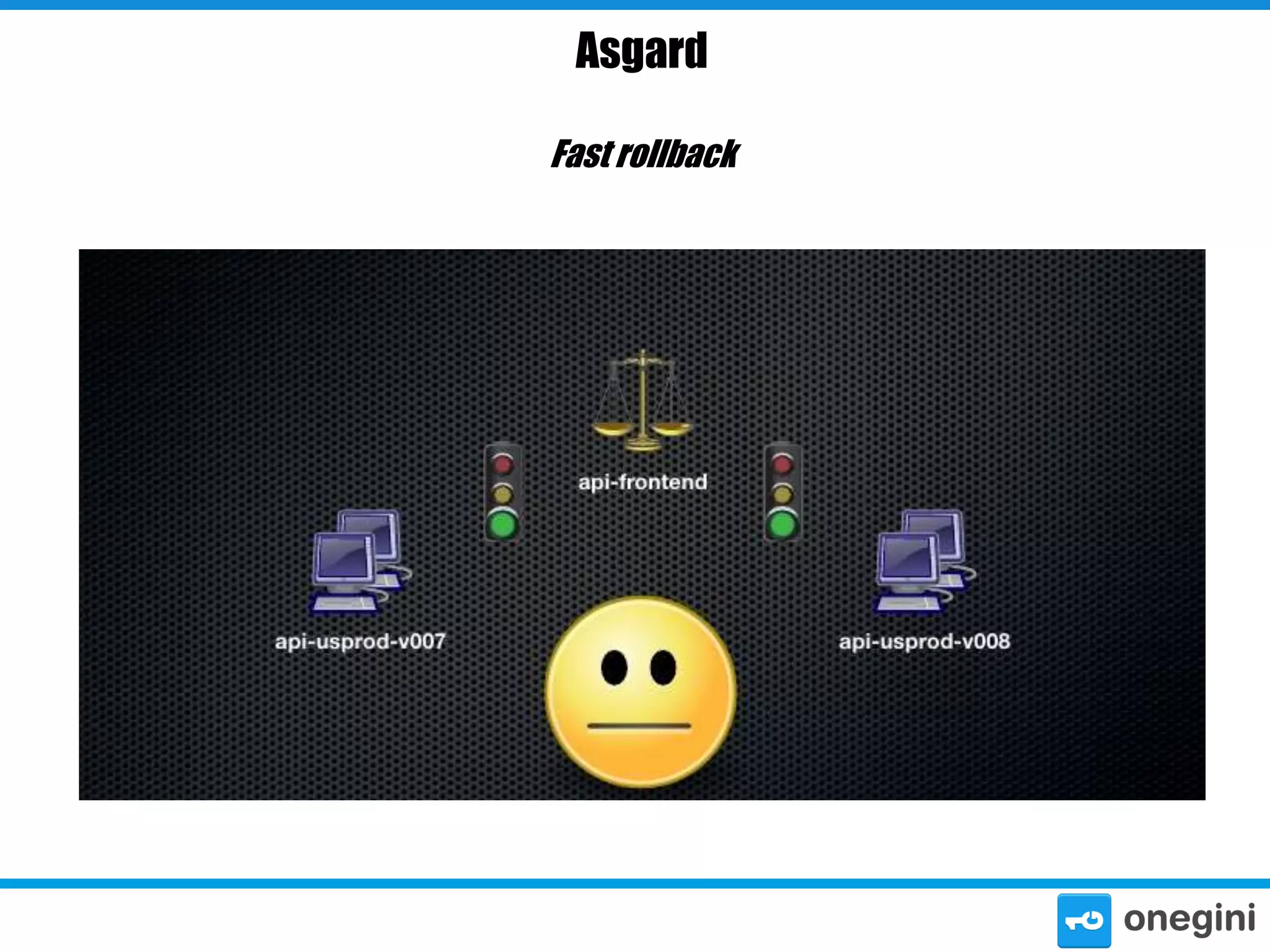
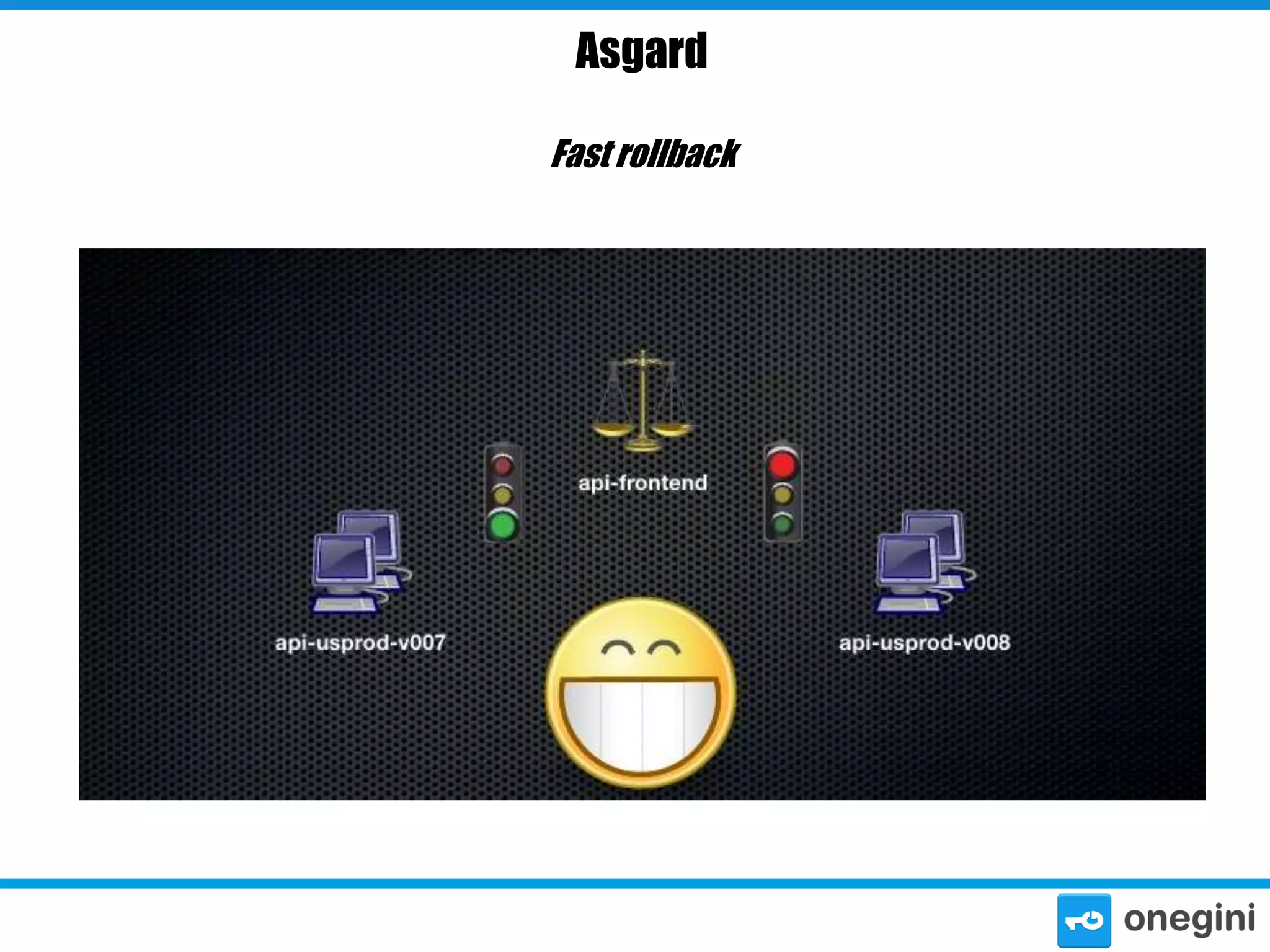
Asgard
Open-source tool by Netflix written in Groovy
Web-based AWS cloud management and deployment
Advantages
It provides the “rolling entire machines” approach
Uses the Amazon API’s
Provides it’s own API’s for automation
Amazon does not provide a UI to create Auto scaling groups

Disadvantages
Can only be used on Amazon AWS
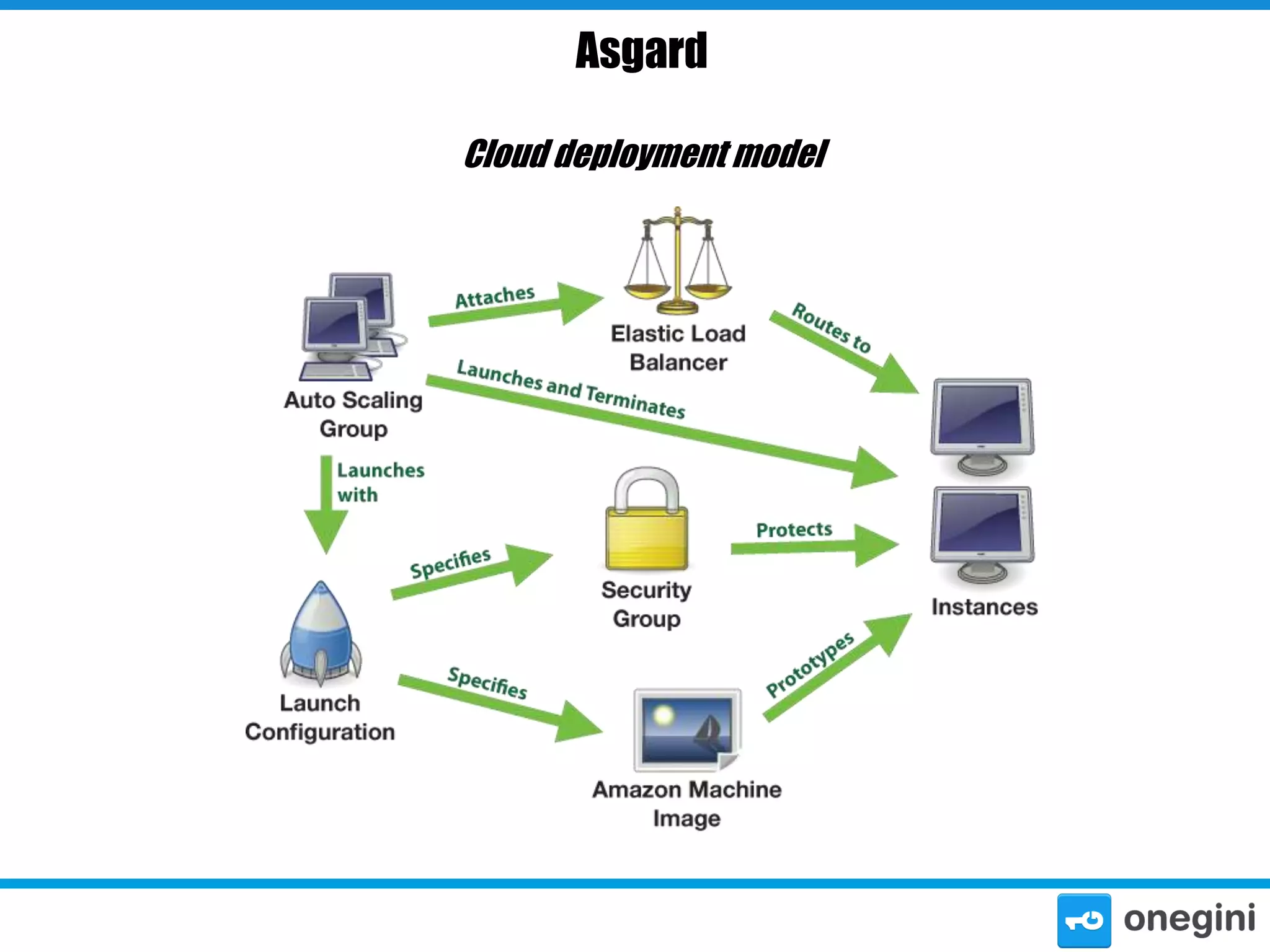
Asgard
Cloud deployment model
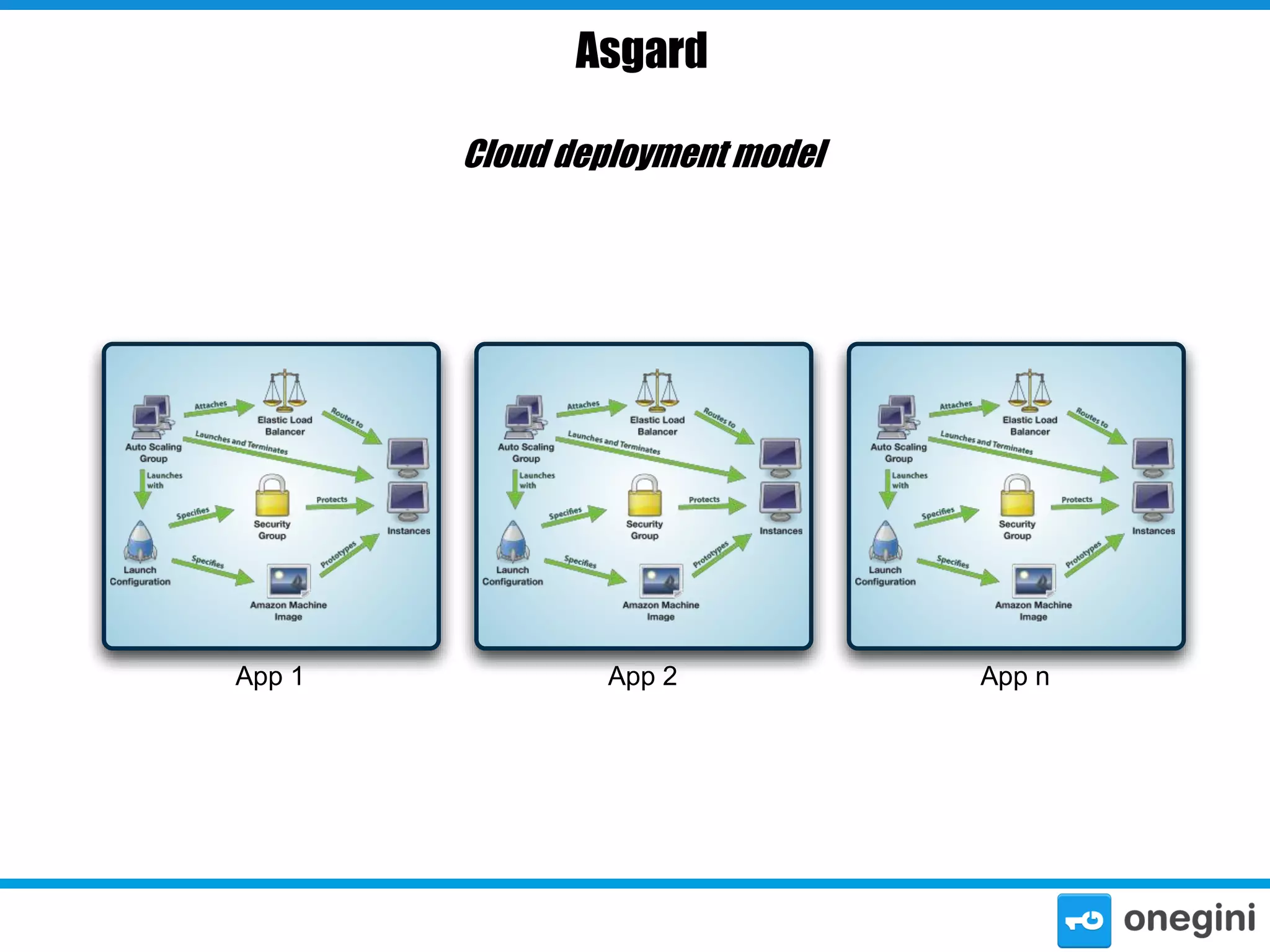
Asgard
Cloud deployment model

App 1

App 2

App n
Asgard
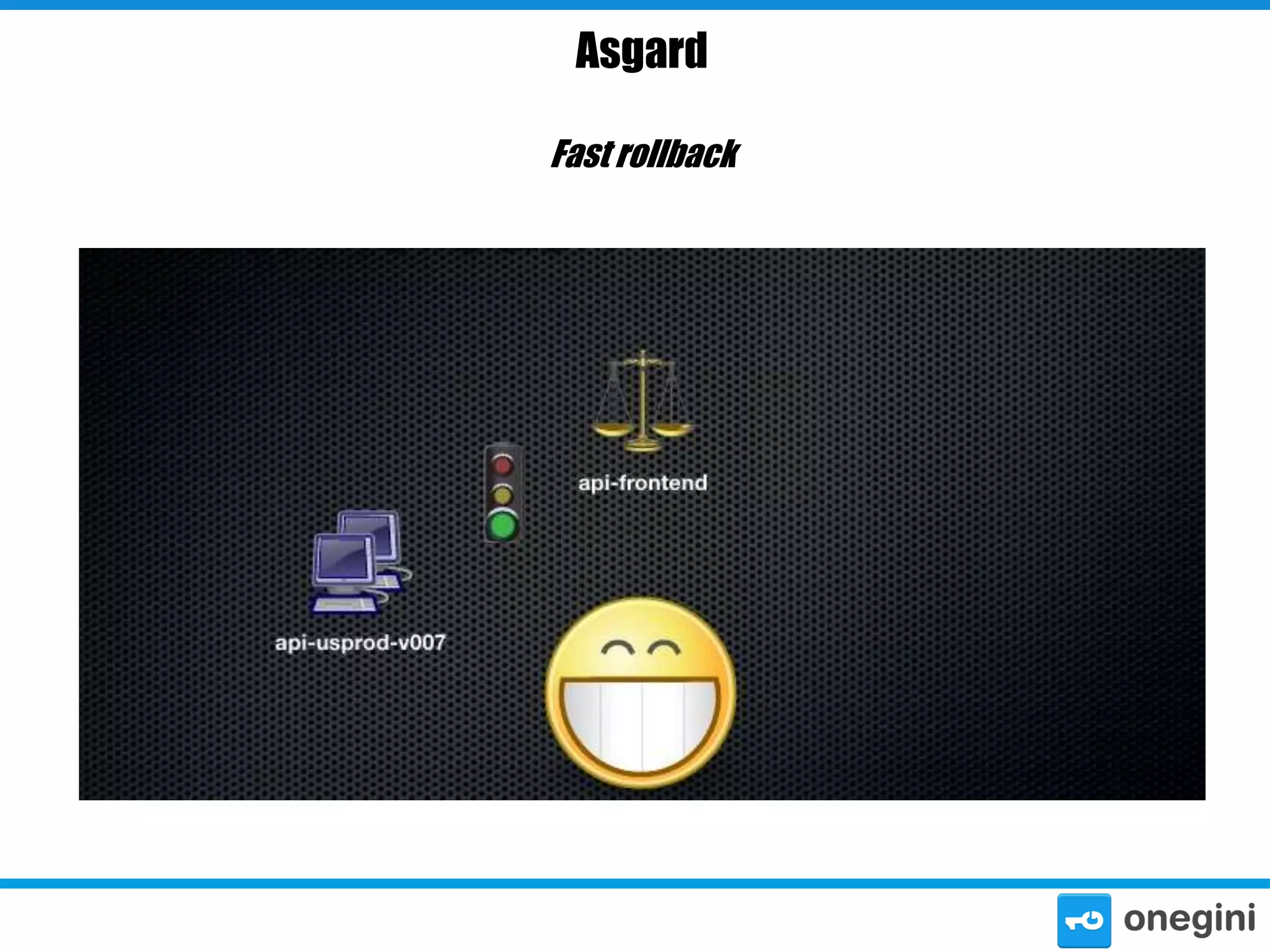
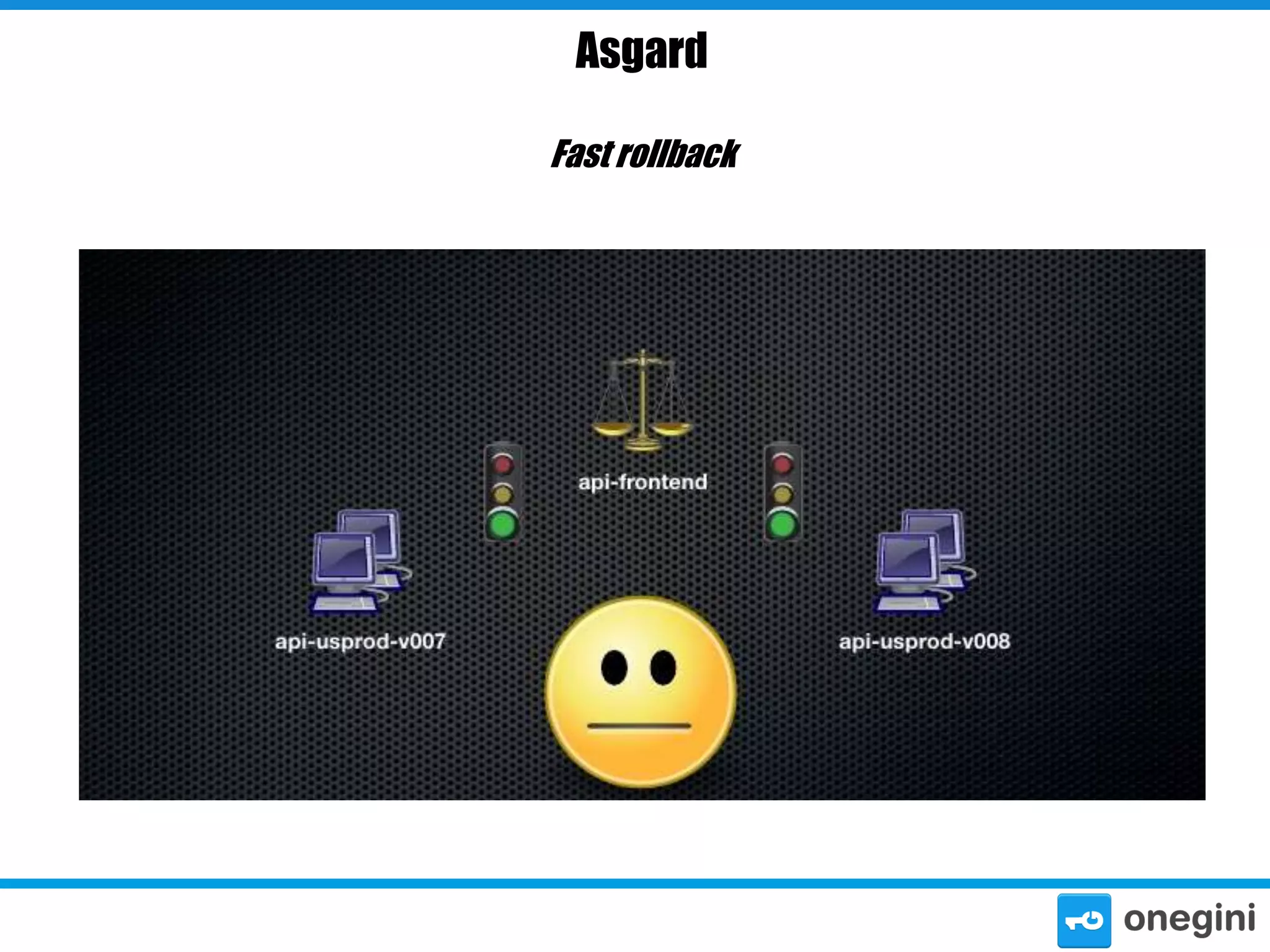
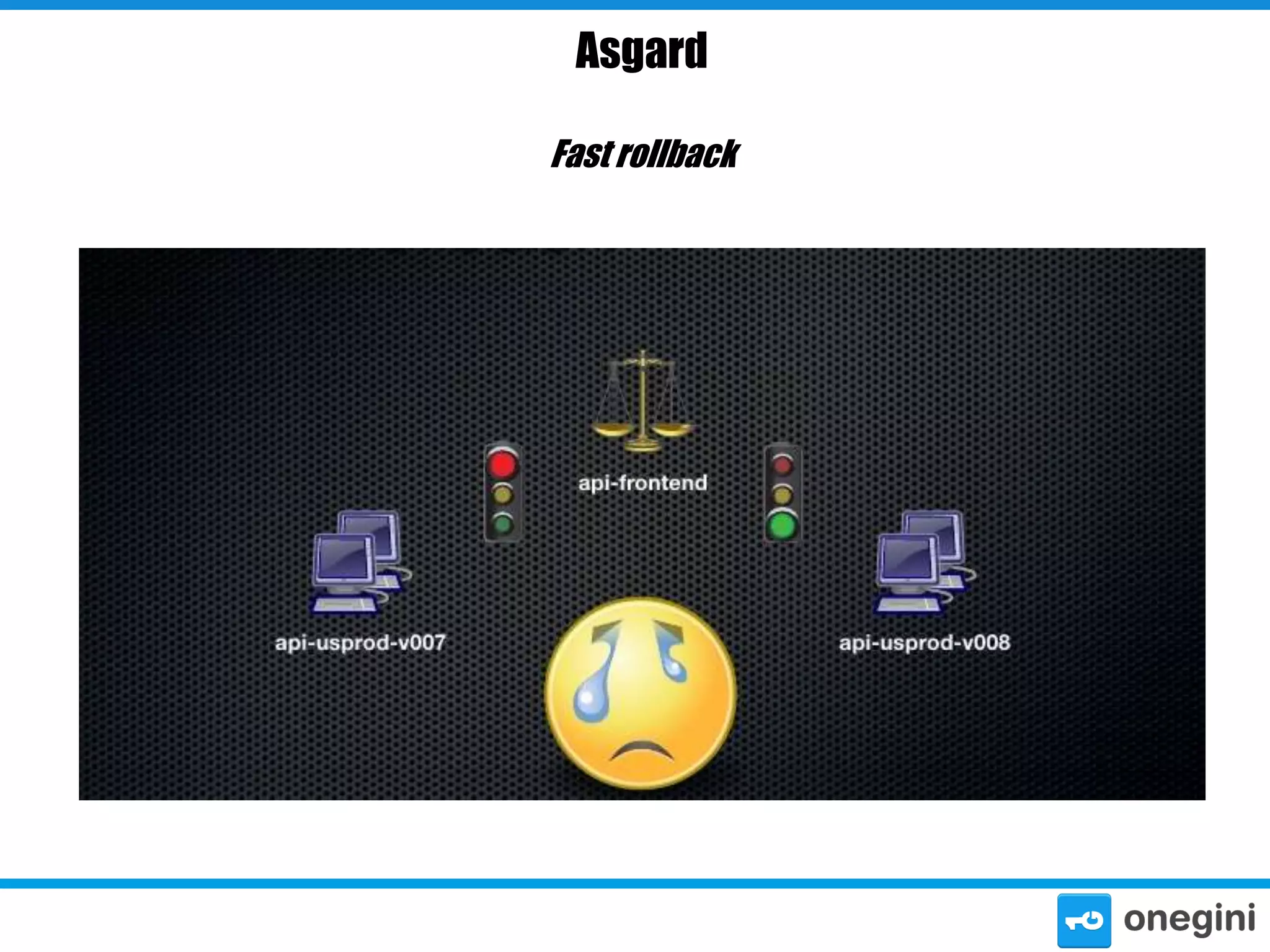
Fast rollback
Asgard
Fast rollback
Asgard
Fast rollback
Asgard
Fast rollback
Asgard
Fast rollback
Asgard
Fast rollback
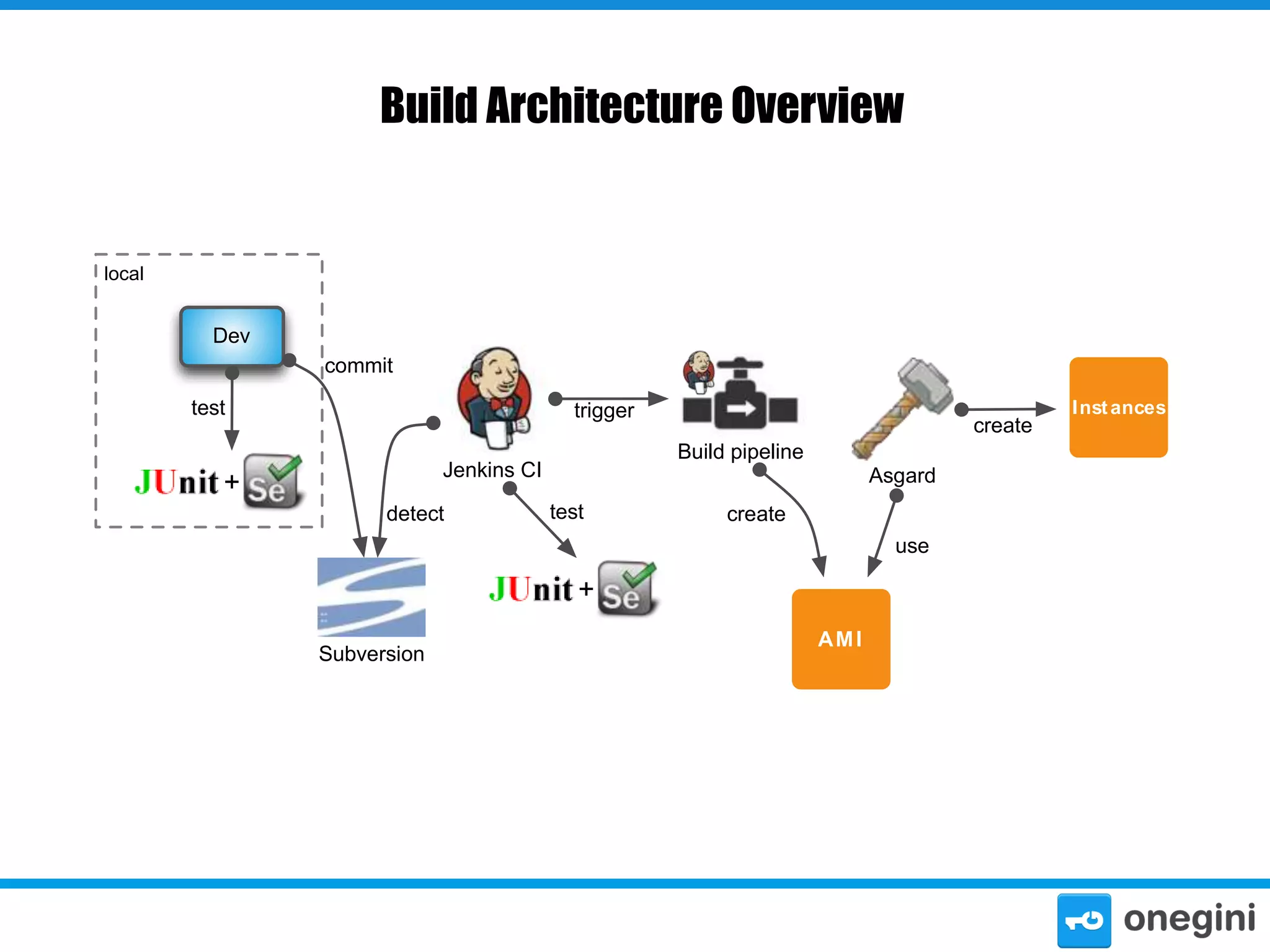
Build Architecture Overview

local

Dev
commit
test

trigger
Build pipeline

Jenkins CI

+

detect

create
Asgard

test

create
use

+
Subversion

AMI

Inst ances
Demo

Asgard
Chef Cookbook
Deploying a new version to test
Lessons learned
Needed to clean up old Amazon AMI’s, volumes, launch
configurations, etc
A lot of custom ruby scripts
AMI builder
Base AMI builder
Cleanup

Custom way to prevent building the entire pipeline in jenkins
Automating to starting a new machine and connecting to it via SSH is
quite ugly..
Amazon reuses IP addresses, this sometimes results in a fingerprint
conflict which causes a pipeline failure
The future
Amazon VPC setup
Network segmentation
In and egress filtering

Migration to another data center
Host data in a data center that is not owned by an American organisation
Continuous Delivery @ Onegini

Continuous Delivery @ Onegini

  • 1.
    Continuous Delivery How it’sdone at a SAAS start-up Presenter: Stein Welberg
  • 2.
    About Me Studied atTwente University Waterpolo Player Identity & Access management expert CTO @ Onegini
  • 3.
    Why am Ihere? Sell Onegini Explain about Continuous Delivery Inspire you to think about CD Steal engineers ;-)
  • 4.
    What is Onegini SaaSPlatform: onegini.me SSO solution to give external users access to your organisation Focus on ease of use Focus on security
  • 5.
    Continuous Integration "Continuous Integrationis a software development practice where members of a team integrate their work frequently, usually each person integrates at least daily - leading to multiple integrations per day. Each integration is verified by an automated build (including test) to detect integration errors as quickly as possible. Many teams find that this approach leads to significantly reduced integration problems and allows a team to develop cohesive software more rapidly." - Martin Fowler
  • 6.
    Continuous Delivery Key concepts Releaseearly, release often Small releases Development close to business Test the sh*t out of your application Not just the code, also infra setup, db schema, etc! Have software that can always go live! Treat anything as software Automate, automate, automate… automate!!! Full deployment pipeline Summary: Continuous Delivery is Continuous Integration on steriods
  • 7.
    Continuous Delivery @Onegini A new release into production every 4 weeks Devs could release anytime, business can’t keep up with us ;-) Fully automated Deployments (infrastructure as code) For all Business critical applications Automated (integration / acceptance) testing Critical issues are hardly ever found by our testers Not all corner cases are tested automatically
  • 8.
    Our road toContinuous Delivery The challenges Ruby (on Rails) and Java combined. Could not easily drop a war into e.g. Google App engine or Azure. Plans to use a graph / nosql database in the near future Run (and be able to customize) and roll own virtual machine Completely automated build environment testable and repeatable No (manual) installation or installation manual ;-) No SSH to the servers No manual database changes Time needed to update the production cluster must be less than one hour
  • 9.
    Choices we made CloudProvider: Amazon Advantages IAAS: so you can host anything you want We didn’t know exactly how many machines we needed or what kind of software stack was necessary to complete the job A lot of tooling exists Great API’s Relatively cheap when you are small Free tier Disadvantages Small machines are really slow Speed to cost ratio is quite bad
  • 10.
    Choices we made Rollingentire machines Advantages Machines stay fresh Every machine is exactly the same (does not matter which environment) Up- and downscaling is very easy and can be automated Creating a machine can be automated and tested Disadvantages Need to manually run OS updates if you don’t roll machines often enough No state inside the machine Database needs to be backwards compatible Property files need to be present on the machines (can be extracted)
  • 11.
    Choices we made AWSRDS Database Advantages MySQL or other DB type (Oracle, MS SQL) is available Easy to setup Disadvantages Only marginal customisability. Heavy performance tuning is not possible. Write performance is not great Backup and restore results in a different hostname
  • 12.
    Choices we made Installationautomation: Chef Solo Advantages Cookbooks in ruby Standalone No need to manually login to a server Disadvantages Updating cookbooks does break our build sometimes Dependant of the community for updates of cookbooks We have forked some cookbooks because they were broken or out of date Troubleshooting can be time consuming
  • 13.
    Choices we made Baseimage Advantages Saves time: not necessary to install / run initial OS updates on the clones Install software that is necessary on the entire stack Disadvantages If the base AMI contains an error all images do! Base AMI based on Application Application AMI's AMI's uses Application Instance
  • 14.
    Choices we made Asgard Open-sourcetool by Netflix written in Groovy Web-based AWS cloud management and deployment Advantages It provides the “rolling entire machines” approach Uses the Amazon API’s Provides it’s own API’s for automation Amazon does not provide a UI to create Auto scaling groups Disadvantages Can only be used on Amazon AWS
  • 15.
  • 16.
  • 17.
  • 18.
  • 19.
  • 20.
  • 21.
  • 22.
  • 23.
    Build Architecture Overview local Dev commit test trigger Buildpipeline Jenkins CI + detect create Asgard test create use + Subversion AMI Inst ances
  • 24.
  • 25.
    Lessons learned Needed toclean up old Amazon AMI’s, volumes, launch configurations, etc A lot of custom ruby scripts AMI builder Base AMI builder Cleanup Custom way to prevent building the entire pipeline in jenkins Automating to starting a new machine and connecting to it via SSH is quite ugly.. Amazon reuses IP addresses, this sometimes results in a fingerprint conflict which causes a pipeline failure
  • 26.
    The future Amazon VPCsetup Network segmentation In and egress filtering Migration to another data center Host data in a data center that is not owned by an American organisation