CONTEXTUALIZATION
OF CURRICULUM
Presented by Jerick Emanuel L. Merciales
Timeline
State shall:
1. take into
account regional
and sectoral needs
2. encourage local
planning
3. forster the
preservation,
enrichment and
dynamic evolution
of a Filipino
national culture
Deped shall adhere to the
following standards and
principles:
1. contextualized/global
curriculum shall be
CONTEXTUALIZED
2. curriculum shall be flexible
for LOCALIZATION.
INDIGENIZATION &
ENHANCEMENT
To protect and promote the
right of every Filipino to
quality, equitable, culture-
based and complete basic
education where:
1. Student learn in a child-
friendly, gender-sensitive,
safe and motivating
environment
2. Teachers facilitate
learning and constantly
nurture every learner
Some Features of the K-
12 Curriculum
1. learner-centered
2. research-based
standards
3. competence-based
4. seamless
5. decongested
culture-responsive and
sensitive
6. integrative and
contextualized
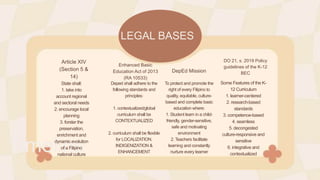
LEGAL BASES
Article XIV
(Section 5 &
14)
Enhanced Basic
Education Act of 2013
(RA 10533)
DepEd Mission
DO 21, s. 2019 Policy
guidelines of the K-12
BEC
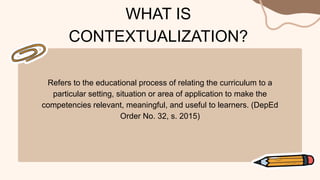
Refers to the educational process of relating the curriculum to a
particular setting, situation or area of application to make the
competencies relevant, meaningful, and useful to learners. (DepEd
Order No. 32, s. 2015)
WHAT IS
CONTEXTUALIZATION?
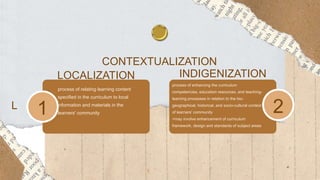
CONTEXTUALIZATION
process of relating learning content
specified in the curriculum to local
information and materials in the
learners' community
process of enhancing the curriculum
competencies, education resources, and teaching-
learning processes in relation to the bio-
geographical, historical, and socio-cultural context
of learners' community
=may involve enhancement of curriculum
framework, design and standards of subject areas
1 2
L
LOCALIZATION INDIGENIZATION
Don’t forget !
• When we localize, we do not
necessarily indigenize
• when we indigenize, we localize
The significance of contextualizing in filipino learners resides in
the practice of adapting educational material and methodologies
to coincide with the Philippines' cultural, social, and
geographical contexts. This approach identifies and capitalizes
on the specific characteristics of Filipino learners and their
different backgrounds in order to improve the effectiveness of
literacy teaching.
IMPORTANCE
IMPORTANCE
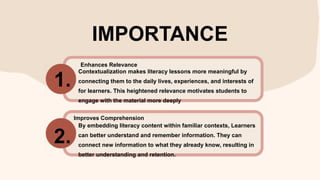
Contextualization makes literacy lessons more meaningful by
connecting them to the daily lives, experiences, and interests of
for learners. This heightened relevance motivates students to
engage with the material more deeply
By embedding literacy content within familiar contexts, Learners
can better understand and remember information. They can
connect new information to what they already know, resulting in
better understanding and retention.
1.
2.
Enhances Relevance
Improves Comprehension
IMPORTANCE
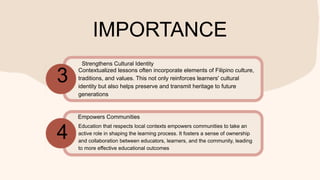
Contextualized lessons often incorporate elements of Filipino culture,
traditions, and values. This not only reinforces learners' cultural
identity but also helps preserve and transmit heritage to future
generations
Education that respects local contexts empowers communities to take an
active role in shaping the learning process. It fosters a sense of ownership
and collaboration between educators, learners, and the community, leading
to more effective educational outcomes
3
4
Strengthens Cultural Identity
Empowers Communities
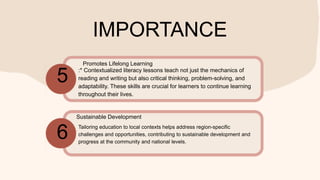
IMPORTANCE
:* Contextualized literacy lessons teach not just the mechanics of
reading and writing but also critical thinking, problem-solving, and
adaptability. These skills are crucial for learners to continue learning
throughout their lives.
Tailoring education to local contexts helps address region-specific
challenges and opportunities, contributing to sustainable development and
progress at the community and national levels.
5
6
Promotes Lifelong Learning
Sustainable Development
THOUGHTS TO PONDER
“Contextualization lies bringing out the right messages from the
abundant content; In sandwiching the subject between the
background of information and the foreground of its utility”
-SUYOG KETKAR-
CONTEXTUALIZATION_20240321_153204_0000.pptx

CONTEXTUALIZATION_20240321_153204_0000.pptx

  • 1.
  • 2.
    Timeline State shall: 1. takeinto account regional and sectoral needs 2. encourage local planning 3. forster the preservation, enrichment and dynamic evolution of a Filipino national culture Deped shall adhere to the following standards and principles: 1. contextualized/global curriculum shall be CONTEXTUALIZED 2. curriculum shall be flexible for LOCALIZATION. INDIGENIZATION & ENHANCEMENT To protect and promote the right of every Filipino to quality, equitable, culture- based and complete basic education where: 1. Student learn in a child- friendly, gender-sensitive, safe and motivating environment 2. Teachers facilitate learning and constantly nurture every learner Some Features of the K- 12 Curriculum 1. learner-centered 2. research-based standards 3. competence-based 4. seamless 5. decongested culture-responsive and sensitive 6. integrative and contextualized LEGAL BASES Article XIV (Section 5 & 14) Enhanced Basic Education Act of 2013 (RA 10533) DepEd Mission DO 21, s. 2019 Policy guidelines of the K-12 BEC
  • 3.
    Refers to theeducational process of relating the curriculum to a particular setting, situation or area of application to make the competencies relevant, meaningful, and useful to learners. (DepEd Order No. 32, s. 2015) WHAT IS CONTEXTUALIZATION?
  • 4.
    CONTEXTUALIZATION process of relatinglearning content specified in the curriculum to local information and materials in the learners' community process of enhancing the curriculum competencies, education resources, and teaching- learning processes in relation to the bio- geographical, historical, and socio-cultural context of learners' community =may involve enhancement of curriculum framework, design and standards of subject areas 1 2 L LOCALIZATION INDIGENIZATION
  • 5.
    Don’t forget ! •When we localize, we do not necessarily indigenize • when we indigenize, we localize
  • 6.
    The significance ofcontextualizing in filipino learners resides in the practice of adapting educational material and methodologies to coincide with the Philippines' cultural, social, and geographical contexts. This approach identifies and capitalizes on the specific characteristics of Filipino learners and their different backgrounds in order to improve the effectiveness of literacy teaching. IMPORTANCE
  • 7.
    IMPORTANCE Contextualization makes literacylessons more meaningful by connecting them to the daily lives, experiences, and interests of for learners. This heightened relevance motivates students to engage with the material more deeply By embedding literacy content within familiar contexts, Learners can better understand and remember information. They can connect new information to what they already know, resulting in better understanding and retention. 1. 2. Enhances Relevance Improves Comprehension
  • 8.
    IMPORTANCE Contextualized lessons oftenincorporate elements of Filipino culture, traditions, and values. This not only reinforces learners' cultural identity but also helps preserve and transmit heritage to future generations Education that respects local contexts empowers communities to take an active role in shaping the learning process. It fosters a sense of ownership and collaboration between educators, learners, and the community, leading to more effective educational outcomes 3 4 Strengthens Cultural Identity Empowers Communities
  • 9.
    IMPORTANCE :* Contextualized literacylessons teach not just the mechanics of reading and writing but also critical thinking, problem-solving, and adaptability. These skills are crucial for learners to continue learning throughout their lives. Tailoring education to local contexts helps address region-specific challenges and opportunities, contributing to sustainable development and progress at the community and national levels. 5 6 Promotes Lifelong Learning Sustainable Development
  • 10.
    THOUGHTS TO PONDER “Contextualizationlies bringing out the right messages from the abundant content; In sandwiching the subject between the background of information and the foreground of its utility” -SUYOG KETKAR-