

Content Strategy: Taking a 
“Story First” Approach 
October 2, 2014 
#LEARNwithPOSSIBLE 
@POSSIBLE
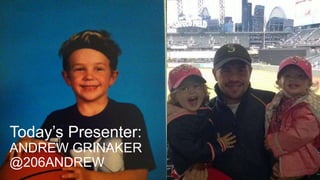
Today’s Presenter: 
ANDREW GRINAKER 
@206ANDREW
My Non-Profit Experience
STORY FIRST APPROACH 
NON-PROFIT EXAMPLES 
HOW DO YOU DO THIS? 
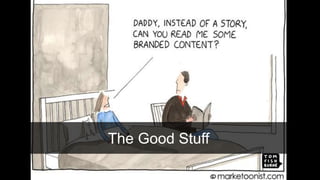
THE GOOD STUFF
STORY FIRST APPROACH
THE APPROACH IS QUITE 
SIMPLE. WE BELIEVE THAT 
THE STORY COMES FIRST. 
BEFORE THE CHANNEL.
WE DON’T FOCUS ON A 
FACEBOOK CONTENT STRATEGY 
OR A WEBSITE CONTENT 
STRATEGY. WE WANT TO FOCUS 
FIRST ON THE STORIES WE WANT 
TO TELL.
THESE STORIES SHOULD BE 
NARRATIVES MEANT TO 
ENTERTAIN, CAPTURE INTEREST 
AND MOST IMPORTANTLY EVOKE 
AN ACTION.
EQUALLY AS IMPORTANT 
THESE STORIES ARE NOT 
SINGLE MESSAGES OR 
ADVERTISEMENTS. THEY 
ARE A SERIES OF MESSAGES 
CONNECTED TO SOMETHING 
LARGER.
THESE STORIES REPRESENT 
WHAT THE BRAND OR 
ORGANIZATION BELIEVES IN 
AND WANTS THEIR 
AUDIENCE TO ENGAGE WITH 
AND FEEL A PART OF.
THESE BRAND STORIES 
SHOULD DRIVE THE 
PRIORITIES FOR ALL CONTENT 
PRODUCED, PUBLISHED AND 
PROMOTED.
WITH THIS ALIGNMENT, A 
BRAND OR ORGANIZATION IS 
BETTER POSITIONED TO 
ENSURE CONSISTENT 
MESSAGING AND APPROACH 
WITH EVERY CHANNEL AND 
EVERY TARGETED AUDIENCE 
TYPE.
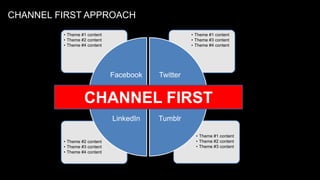
LET’S START WITH HOW WE 
HAVE TRADITIONALLY 
THOUGHT ABOUT CONTENT 
THROUGH THE LENS OF THE 
PUBLISHING CHANNEL.
CHANNEL FIRST APPROACH 
CHANNEL FIRST 
• Theme #1 content 
• Theme #2 content 
• Theme #3 content 
• Theme #2 content 
• Theme #3 content 
• Theme #4 content 
• Theme #1 content 
• Theme #3 content 
• Theme #4 content 
• Theme #1 content 
• Theme #2 content 
• Theme #4 content 
Facebook Twitter 
LinkedIn Tumblr
NOW ADJUSTING THAT 
THINKING TO CREATE A 
CONTENT STRATEGY WITH A 
“STORY FIRST” APPROACH AND 
MENTALITY.
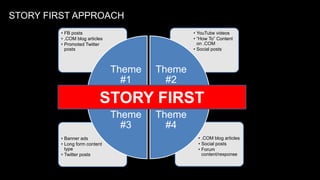
STORY FIRST APPROACH 
STORY FIRST 
• .COM blog articles 
• Social posts 
• Forum 
content/response 
• Banner ads 
• Long form content 
type 
• Twitter posts 
• YouTube videos 
• “How To” Content 
on .COM 
• Social posts 
• FB posts 
• .COM blog articles 
• Promoted Twitter 
posts 
Theme 
#1 
Theme 
#2 
Theme 
#4 
Theme 
#3
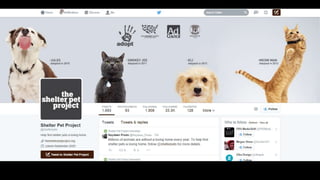
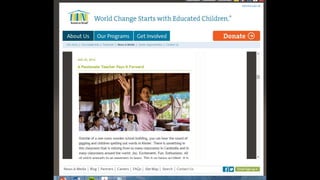
Non-Profit Examples
I am worried about the state of branded content 
Cool examples, but what about me?
Why/What/How
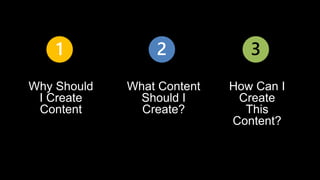
3 
Why Should 
I Create 
Content 
What Content 
Should I 
Create? 
How Can I 
Create 
This 
Content?
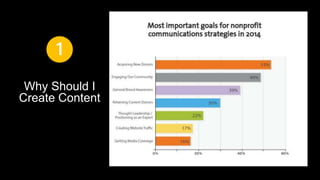
Why Should I Create Content?
Why Should I 
Create Content
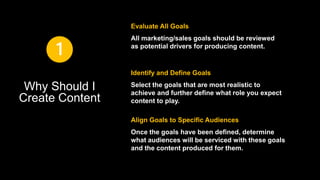
Evaluate All Goals 
All marketing/sales goals should be reviewed 
as potential drivers for producing content. 
Align Goals to Specific Audiences 
Once the goals have been defined, determine 
what audiences will be serviced with these goals 
and the content produced for them. 
Why Should I 
Create Content 
Identify and Define Goals 
Select the goals that are most realistic to 
achieve and further define what role you expect 
content to play.
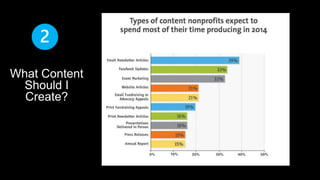
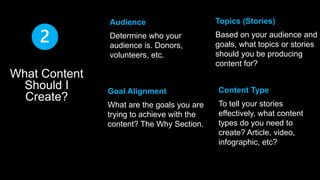
What Content Should I Create?
What Content 
Should I 
Create?
Topics (Stories) 
Based on your audience and 
goals, what topics or stories 
should you be producing 
content for? 
Content Type 
To tell your stories 
effectively, what content 
types do you need to 
create? Article, video, 
infographic, etc? 
Audience 
Determine who your 
audience is. Donors, 
volunteers, etc. 
Goal Alignment 
What are the goals you are 
trying to achieve with the 
content? The Why Section. 
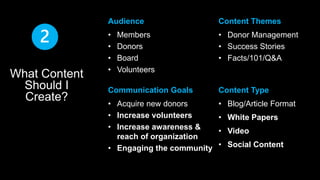
What Content 
Should I 
Create?
Content Themes 
• Donor Management 
• Success Stories 
• Facts/101/Q&A 
Content Type 
• Blog/Article Format 
• White Papers 
• Video 
• Social Content 
Audience 
• Members 
• Donors 
• Board 
• Volunteers 
Communication Goals 
• Acquire new donors 
• Increase volunteers 
• Increase awareness & 
reach of organization 
• Engaging the community 
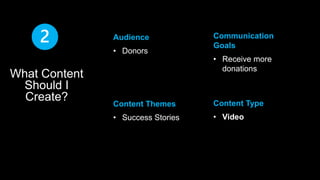
What Content 
Should I 
Create?
Content Type 
• Video 
Audience 
• Donors 
Content Themes 
• Success Stories 
Communication 
Goals 
• Receive more 
donations What Content 
Should I 
Create?
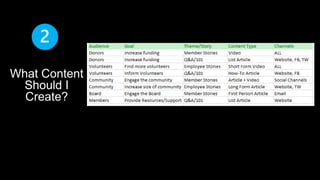
What Content 
Should I 
Create?
How Should I Create This Content?
3 
How Can I 
Create This 
Content?
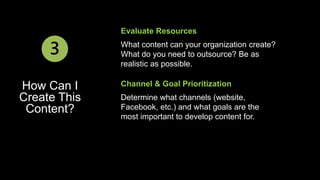
Evaluate Resources 
What content can your organization create? 
What do you need to outsource? Be as 
realistic as possible. 
3 
How Can I 
Create This 
Content? 
Channel & Goal Prioritization 
Determine what channels (website, 
Facebook, etc.) and what goals are the 
most important to develop content for.
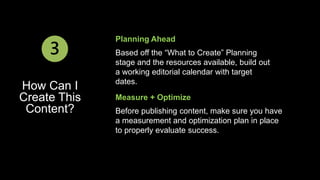
Planning Ahead 
Based off the “What to Create” Planning 
stage and the resources available, build out 
a working editorial calendar with target 
dates. 
Measure + Optimize 
Before publishing content, make sure you have 
a measurement and optimization plan in place 
to properly evaluate success. 
3 
How Can I 
Create This 
Content?
The Good Stuff
1) Find ways to break bigger stories into a number of smaller assets to build out 
your editorial calendar. 
2) Create a visual account of an event for your organization by using a service like 
Storify. 
3) Don’t be afraid to share content more than once. Your audience consumes 
content at different times. 
TOP 10 
“STORY 
FIRST” TIPS
4) You can duplicate and share stories, themes and even the same photo 
or video on different channels, but don’t copy/paste the text. 
5) Stay up-to-date on the latest technical enhancements for the 
publishing platforms. (Images, markup, etc.) 
6) Explore different types of articles to build. How-To, Lists, Advice, 
FAQs, First-Person, etc. 
TOP 10 
“STORY 
FIRST” TIPS
7) Leverage internal employees or board members as the subject of your 
“Story.” 
8) Always be looking to Steal Borrow ideas from other Non-Profits. Don’t limit 
yourself. 
9) Implement an RSS feed like Feedly or Pulse to locate and curate content OR 
Monitor Industry Trends with a service like Topsy or Technorati. 
10) Review through old marketing folders/files to locate pieces of content that 
could be updated and published. 
TOP 10 
“STORY 
FIRST” TIPS
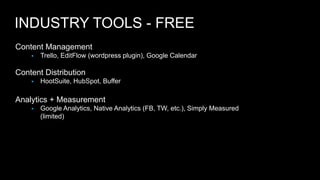
INDUSTRY TOOLS - FREE 
Content Management 
ď‚§ Trello, EditFlow (wordpress plugin), Google Calendar 
Content Distribution 
ď‚§ HootSuite, HubSpot, Buffer 
Analytics + Measurement 
ď‚§ Google Analytics, Native Analytics (FB, TW, etc.), Simply Measured 
(limited)
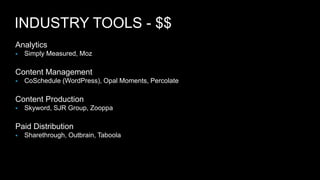
INDUSTRY TOOLS - $$ 
Analytics 
ď‚§ Simply Measured, Moz 
Content Management 
ď‚§ CoSchedule (WordPress), Opal Moments, Percolate 
Content Production 
ď‚§ Skyword, SJR Group, Zooppa 
Paid Distribution 
ď‚§ Sharethrough, Outbrain, Taboola
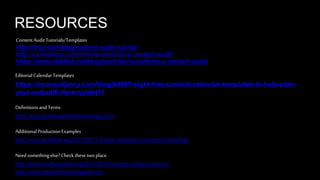
RESOURCES 
Content Audit Tutorials/Templates 
http://moz.com/blog/content-audit-tutorial 
http://uxmastery.com/how-to-conduct-a-content-audit/ 
https://www.distilled.net/blog/seo/how-to-perform-a-content-audit/ 
Editorial Calendar Templates 
https://econsultancy.com/blog/64587-eight-free-content-calendar-templates-to-help-plan-your- 
output#i.rfprerqyldnj11 
Definitions and Terms 
http://www.thelanguageofcontentstrategy.com/ 
Additional Production Examples 
http://www.socialbrite.org/2011/04/21/8-great-examples-of-nonprofit-storytelling/ 
Need something else? Check these two place. 
http://www.jonathoncolman.org/2013/02/04/content-strategy-resources/ 
http://www.nonprofitmarketingguide.com
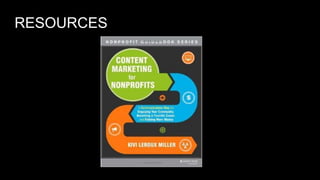
RESOURCES
KEY TAKEAWAYS 
1) Lead with the Story, not with the Channel. 
2) Identify why you are creating content and agree on goals before you start producing. 
3) Organize your content by Audience, Goal, Theme and Content Type. If this doesn’t work, choose 
something to structure your content! 
4) Find free (or paid) tools and resources to help the gaps of your strategy and execution.
Thank You.

Content Strategy for Non-Profits: Taking a Story First Approach

  • 1.
    Content Strategy: Takinga “Story First” Approach October 2, 2014 #LEARNwithPOSSIBLE @POSSIBLE
  • 2.
  • 3.
  • 4.
    STORY FIRST APPROACH NON-PROFIT EXAMPLES HOW DO YOU DO THIS? THE GOOD STUFF
  • 5.
  • 6.
    THE APPROACH ISQUITE SIMPLE. WE BELIEVE THAT THE STORY COMES FIRST. BEFORE THE CHANNEL.
  • 7.
    WE DON’T FOCUSON A FACEBOOK CONTENT STRATEGY OR A WEBSITE CONTENT STRATEGY. WE WANT TO FOCUS FIRST ON THE STORIES WE WANT TO TELL.
  • 8.
    THESE STORIES SHOULDBE NARRATIVES MEANT TO ENTERTAIN, CAPTURE INTEREST AND MOST IMPORTANTLY EVOKE AN ACTION.
  • 9.
    EQUALLY AS IMPORTANT THESE STORIES ARE NOT SINGLE MESSAGES OR ADVERTISEMENTS. THEY ARE A SERIES OF MESSAGES CONNECTED TO SOMETHING LARGER.
  • 10.
    THESE STORIES REPRESENT WHAT THE BRAND OR ORGANIZATION BELIEVES IN AND WANTS THEIR AUDIENCE TO ENGAGE WITH AND FEEL A PART OF.
  • 11.
    THESE BRAND STORIES SHOULD DRIVE THE PRIORITIES FOR ALL CONTENT PRODUCED, PUBLISHED AND PROMOTED.
  • 12.
    WITH THIS ALIGNMENT,A BRAND OR ORGANIZATION IS BETTER POSITIONED TO ENSURE CONSISTENT MESSAGING AND APPROACH WITH EVERY CHANNEL AND EVERY TARGETED AUDIENCE TYPE.
  • 13.
    LET’S START WITHHOW WE HAVE TRADITIONALLY THOUGHT ABOUT CONTENT THROUGH THE LENS OF THE PUBLISHING CHANNEL.
  • 14.
    CHANNEL FIRST APPROACH CHANNEL FIRST • Theme #1 content • Theme #2 content • Theme #3 content • Theme #2 content • Theme #3 content • Theme #4 content • Theme #1 content • Theme #3 content • Theme #4 content • Theme #1 content • Theme #2 content • Theme #4 content Facebook Twitter LinkedIn Tumblr
  • 15.
    NOW ADJUSTING THAT THINKING TO CREATE A CONTENT STRATEGY WITH A “STORY FIRST” APPROACH AND MENTALITY.
  • 16.
    STORY FIRST APPROACH STORY FIRST • .COM blog articles • Social posts • Forum content/response • Banner ads • Long form content type • Twitter posts • YouTube videos • “How To” Content on .COM • Social posts • FB posts • .COM blog articles • Promoted Twitter posts Theme #1 Theme #2 Theme #4 Theme #3
  • 17.
  • 30.
    I am worriedabout the state of branded content Cool examples, but what about me?
  • 31.
  • 32.
    3 Why Should I Create Content What Content Should I Create? How Can I Create This Content?
  • 33.
    Why Should ICreate Content?
  • 34.
    Why Should I Create Content
  • 35.
    Evaluate All Goals All marketing/sales goals should be reviewed as potential drivers for producing content. Align Goals to Specific Audiences Once the goals have been defined, determine what audiences will be serviced with these goals and the content produced for them. Why Should I Create Content Identify and Define Goals Select the goals that are most realistic to achieve and further define what role you expect content to play.
  • 36.
  • 37.
  • 38.
    Topics (Stories) Basedon your audience and goals, what topics or stories should you be producing content for? Content Type To tell your stories effectively, what content types do you need to create? Article, video, infographic, etc? Audience Determine who your audience is. Donors, volunteers, etc. Goal Alignment What are the goals you are trying to achieve with the content? The Why Section. What Content Should I Create?
  • 39.
    Content Themes •Donor Management • Success Stories • Facts/101/Q&A Content Type • Blog/Article Format • White Papers • Video • Social Content Audience • Members • Donors • Board • Volunteers Communication Goals • Acquire new donors • Increase volunteers • Increase awareness & reach of organization • Engaging the community What Content Should I Create?
  • 40.
    Content Type •Video Audience • Donors Content Themes • Success Stories Communication Goals • Receive more donations What Content Should I Create?
  • 41.
  • 42.
    How Should ICreate This Content?
  • 43.
    3 How CanI Create This Content?
  • 44.
    Evaluate Resources Whatcontent can your organization create? What do you need to outsource? Be as realistic as possible. 3 How Can I Create This Content? Channel & Goal Prioritization Determine what channels (website, Facebook, etc.) and what goals are the most important to develop content for.
  • 45.
    Planning Ahead Basedoff the “What to Create” Planning stage and the resources available, build out a working editorial calendar with target dates. Measure + Optimize Before publishing content, make sure you have a measurement and optimization plan in place to properly evaluate success. 3 How Can I Create This Content?
  • 46.
  • 47.
    1) Find waysto break bigger stories into a number of smaller assets to build out your editorial calendar. 2) Create a visual account of an event for your organization by using a service like Storify. 3) Don’t be afraid to share content more than once. Your audience consumes content at different times. TOP 10 “STORY FIRST” TIPS
  • 48.
    4) You canduplicate and share stories, themes and even the same photo or video on different channels, but don’t copy/paste the text. 5) Stay up-to-date on the latest technical enhancements for the publishing platforms. (Images, markup, etc.) 6) Explore different types of articles to build. How-To, Lists, Advice, FAQs, First-Person, etc. TOP 10 “STORY FIRST” TIPS
  • 49.
    7) Leverage internalemployees or board members as the subject of your “Story.” 8) Always be looking to Steal Borrow ideas from other Non-Profits. Don’t limit yourself. 9) Implement an RSS feed like Feedly or Pulse to locate and curate content OR Monitor Industry Trends with a service like Topsy or Technorati. 10) Review through old marketing folders/files to locate pieces of content that could be updated and published. TOP 10 “STORY FIRST” TIPS
  • 50.
    INDUSTRY TOOLS -FREE Content Management ď‚§ Trello, EditFlow (wordpress plugin), Google Calendar Content Distribution ď‚§ HootSuite, HubSpot, Buffer Analytics + Measurement ď‚§ Google Analytics, Native Analytics (FB, TW, etc.), Simply Measured (limited)
  • 51.
    INDUSTRY TOOLS -$$ Analytics ď‚§ Simply Measured, Moz Content Management ď‚§ CoSchedule (WordPress), Opal Moments, Percolate Content Production ď‚§ Skyword, SJR Group, Zooppa Paid Distribution ď‚§ Sharethrough, Outbrain, Taboola
  • 52.
    RESOURCES Content AuditTutorials/Templates http://moz.com/blog/content-audit-tutorial http://uxmastery.com/how-to-conduct-a-content-audit/ https://www.distilled.net/blog/seo/how-to-perform-a-content-audit/ Editorial Calendar Templates https://econsultancy.com/blog/64587-eight-free-content-calendar-templates-to-help-plan-your- output#i.rfprerqyldnj11 Definitions and Terms http://www.thelanguageofcontentstrategy.com/ Additional Production Examples http://www.socialbrite.org/2011/04/21/8-great-examples-of-nonprofit-storytelling/ Need something else? Check these two place. http://www.jonathoncolman.org/2013/02/04/content-strategy-resources/ http://www.nonprofitmarketingguide.com
  • 53.
  • 54.
    KEY TAKEAWAYS 1)Lead with the Story, not with the Channel. 2) Identify why you are creating content and agree on goals before you start producing. 3) Organize your content by Audience, Goal, Theme and Content Type. If this doesn’t work, choose something to structure your content! 4) Find free (or paid) tools and resources to help the gaps of your strategy and execution.
  • 55.

Editor's Notes

  • #4 We also have ton of POSSIBLE folk that have helped with Non-Profits.
  • #5 This is Forrester’s definition of Branded Content: Read the entire statement. I love this definition, except I don’t necessary agree with the last sentence that includes words like paid, sponsorship and placement. But we will get to that later.
  • #6 it’s become essential for nonprofits toidentify, articulate, and most importantly, market the impact they make with their programs.
  • #7 Reference what a “Channel” means. Facebook, YouTube, Pinterest, etc.
  • #15 As digital marketers, we have long identified specific channel strategies, like Facebook and Twitter and then moved to understand what content is needed. This approach prioritizes channels over specific content stories or themes, which in turn eliminates production efficiencies and creates overall marketing alignment issues.
  • #17 A story first approach to your content will start with the brand stories and branch off to identify content themes. Once these themes are identified, the specific content types, format and appropriate channels will be identified to ensure alignment and consistency.
  • #18 AGENDA OPTION 1
  • #19 AGENDA OPTION 1
  • #20 AGENDA OPTION 1
  • #21 AGENDA OPTION 1
  • #22 AGENDA OPTION 1
  • #23 AGENDA OPTION 1
  • #24 AGENDA OPTION 1
  • #25 AGENDA OPTION 1
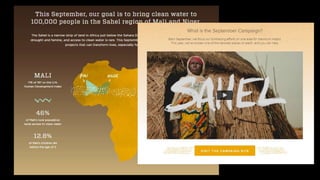
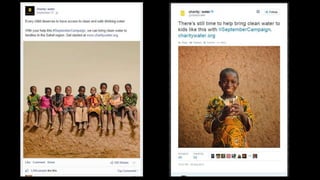
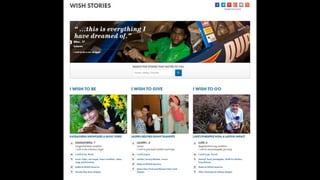
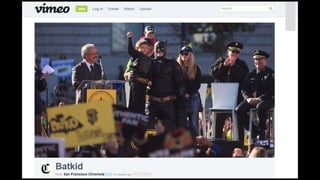
  • #26 By sharing all video wishes on its YouTube channel, publishing every granted wish on its website, and sharing content on Facebook and Twitter, the organization has put its brand online for the world to interact with. 
  • #27 By sharing all video wishes on its YouTube channel, publishing every granted wish on its website, and sharing content on Facebook and Twitter, the organization has put its brand online for the world to interact with. 
  • #28 By sharing all video wishes on its YouTube channel, publishing every granted wish on its website, and sharing content on Facebook and Twitter, the organization has put its brand online for the world to interact with. 
  • #29 AGENDA OPTION 1
  • #30 http://vimeo.com/79541124
  • #31 This is Forrester’s definition of Branded Content: Read the entire statement. I love this definition, except I don’t necessary agree with the last sentence that includes words like paid, sponsorship and placement. But we will get to that later.
  • #35 Can we build in Primary and Secondary focuses. Simplify and make more direct.
  • #36 Can we build in Primary and Secondary focuses. Simplify and make more direct.
  • #41 Add in more examples or utilize an interactive approach.
  • #42 Add in more examples or utilize an interactive approach.