




Content Strategy for Nonprofits, Part 2 
Developing Your Voice & 
Defining Your Strategy
Michaela Hackner 
Director of Content Strategy, Forum One 
Brett Meyer 
Lead Strategist, ThinkShout
Direction Setting
Web redesigns are like a science experiment…. 
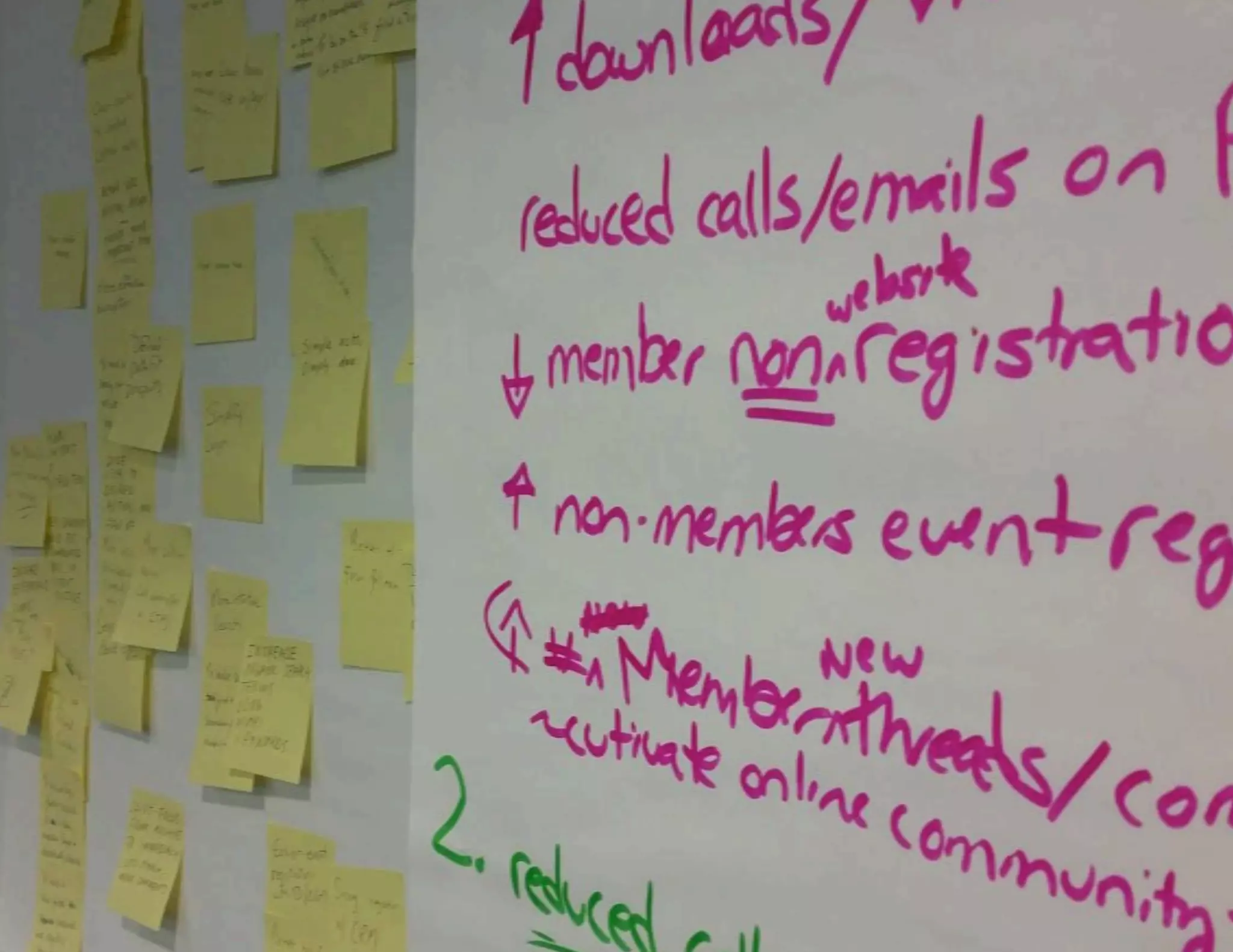
Define Goals and Measures 
● What are our website goals? 
● How can we measure our impact to know if we 
were successful?
Who are we speaking to? 
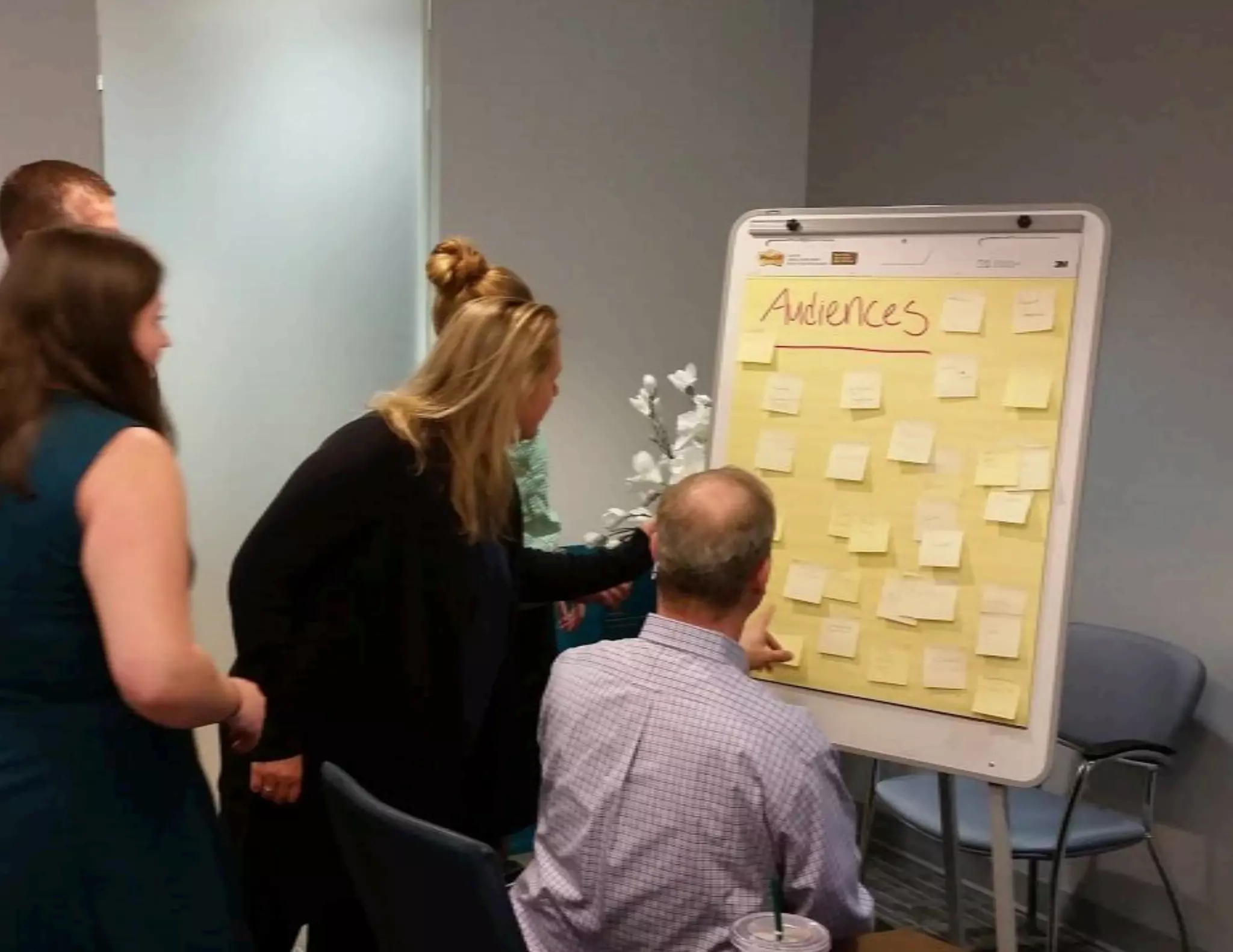
Define and Prioritize Audiences 
● Who are our audiences? 
● Which are the highest priority? 
● What’s their tolerance? 
● What are there motivations?
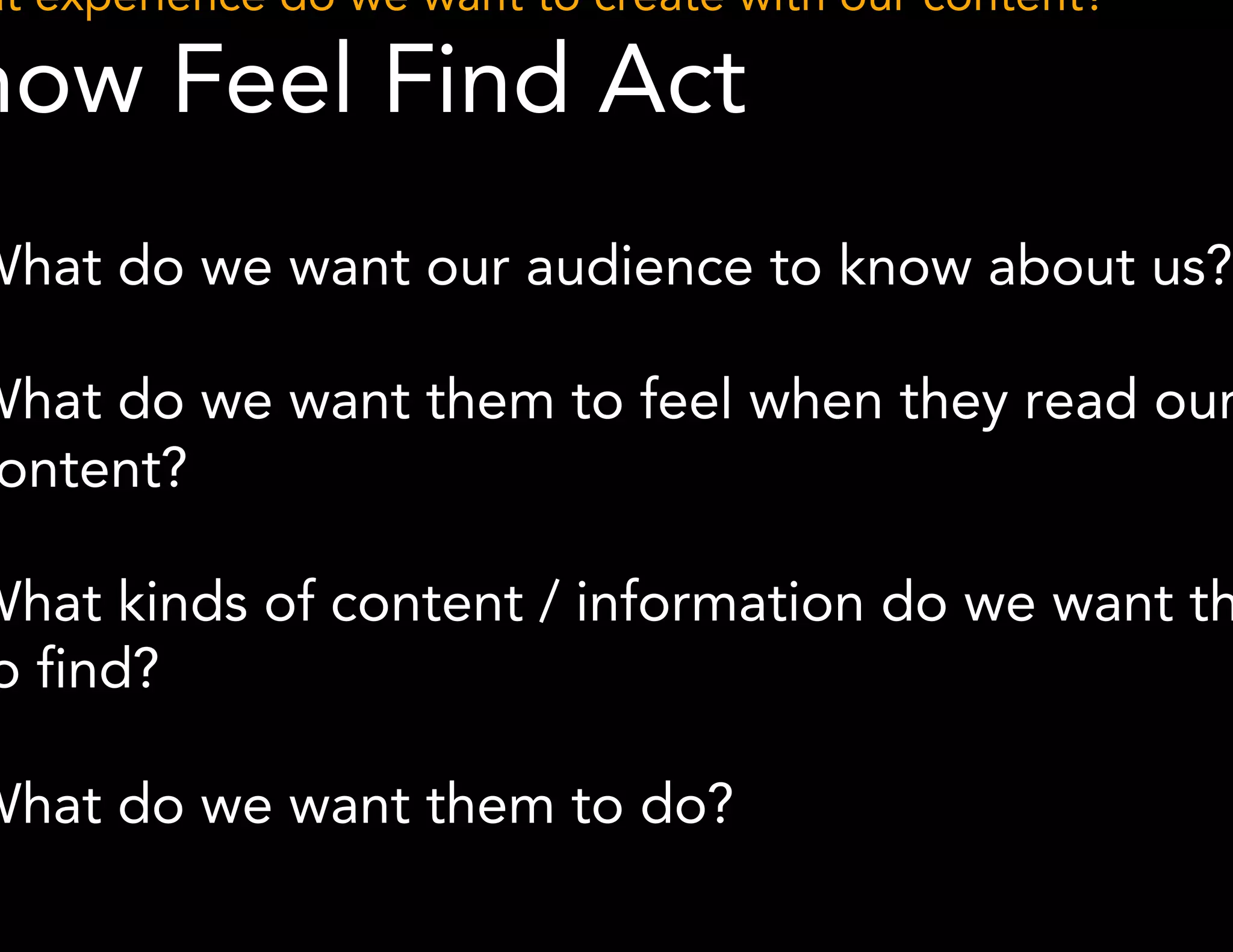
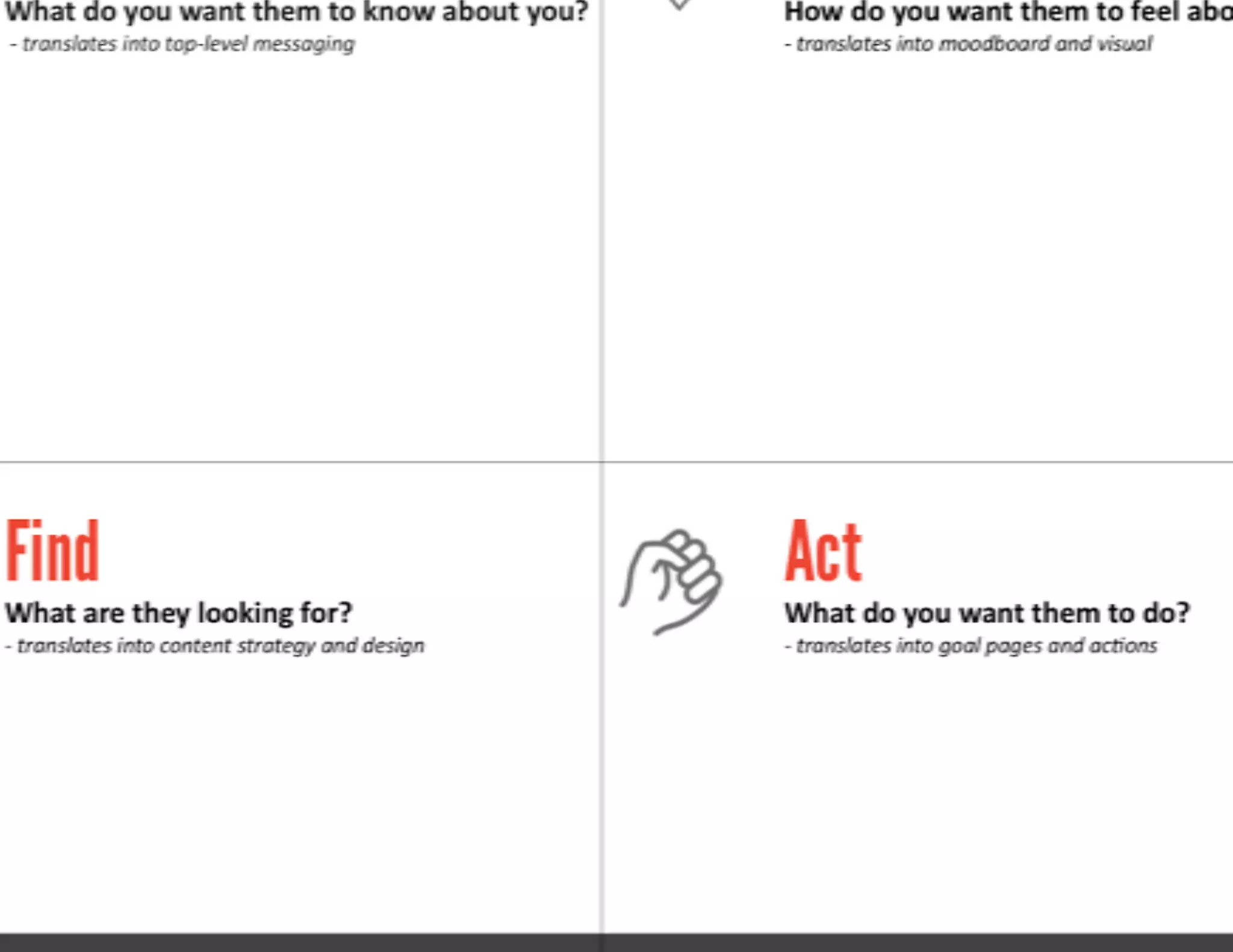
What experience do we want to create with our content? 
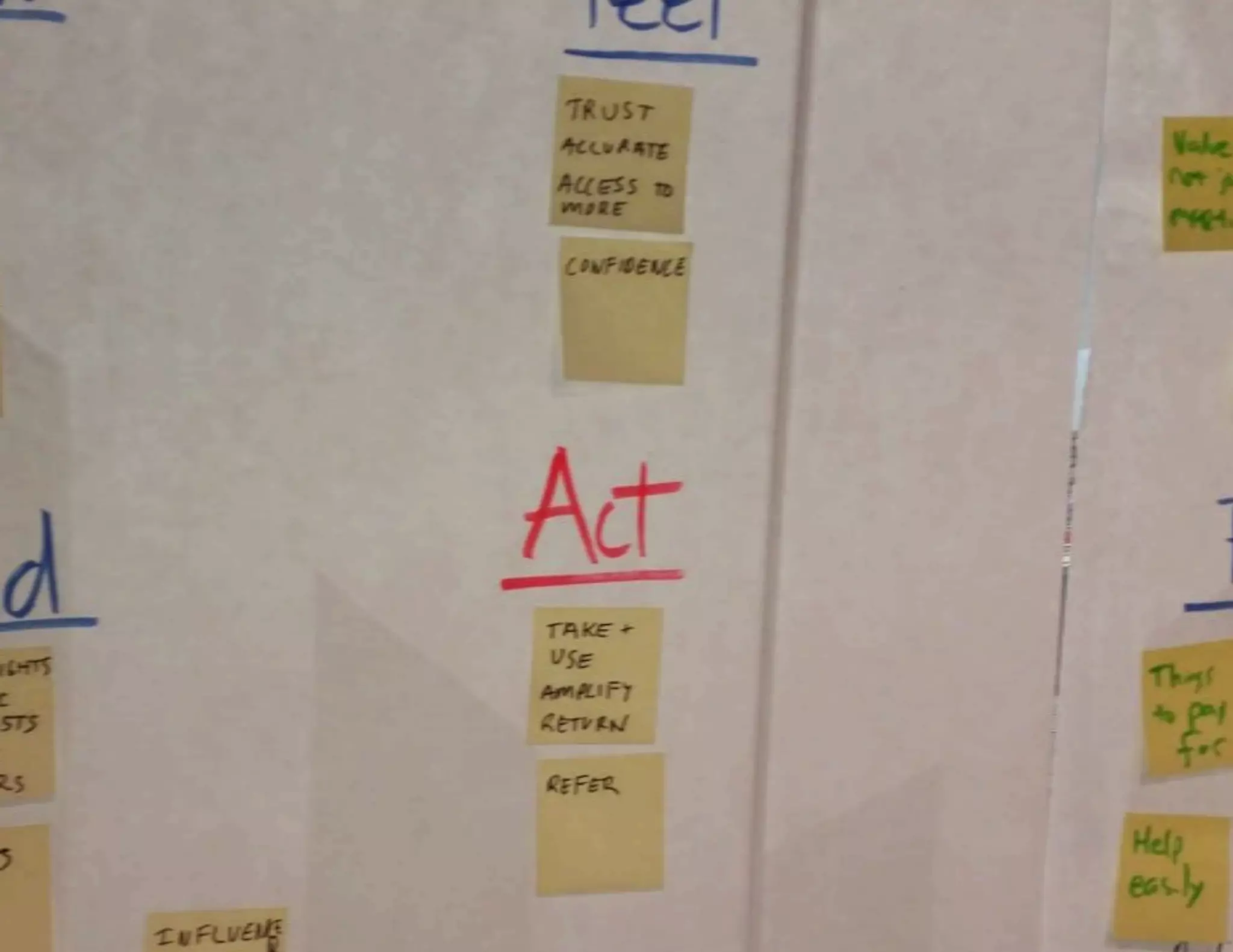
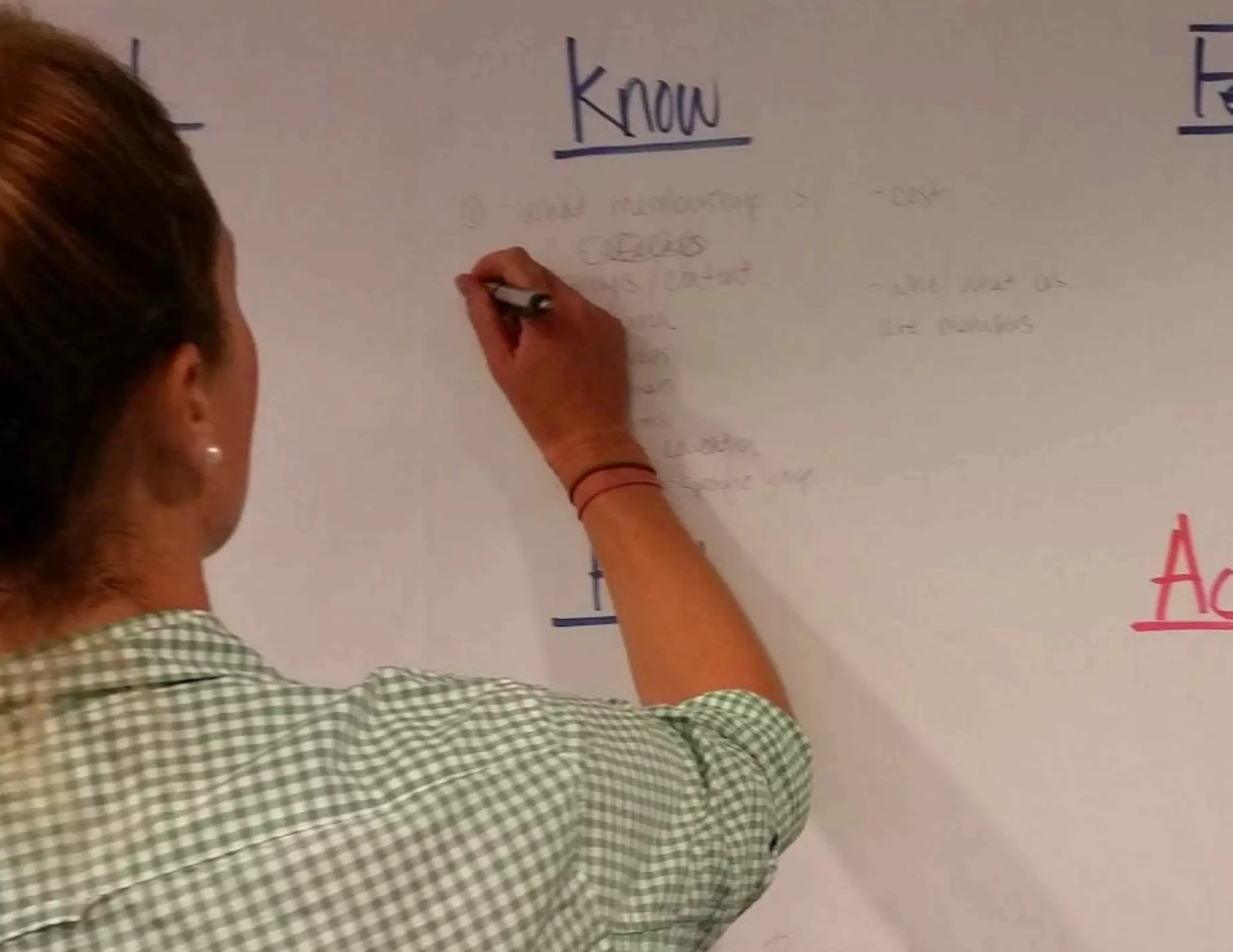
Know Feel Find Act 
● What do we want our audience to know about us? 
● What do we want them to feel when they read our 
*Methodology derived from John Schneider 
content? 
● What kinds of content / information do we want them to 
find? 
● What do we want them to do?
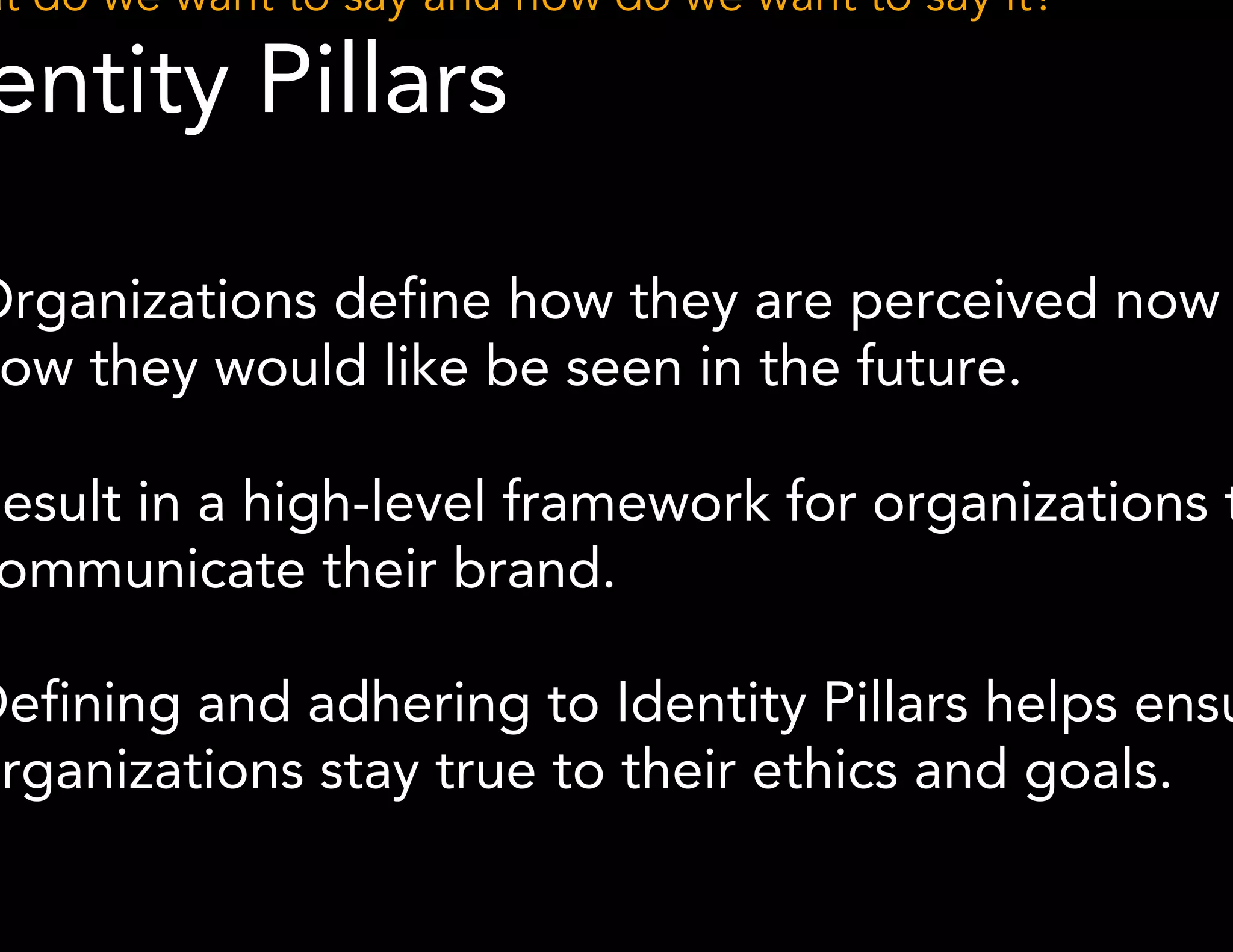
What do we want to say and how do we want to say it? 
Identity Pillars 
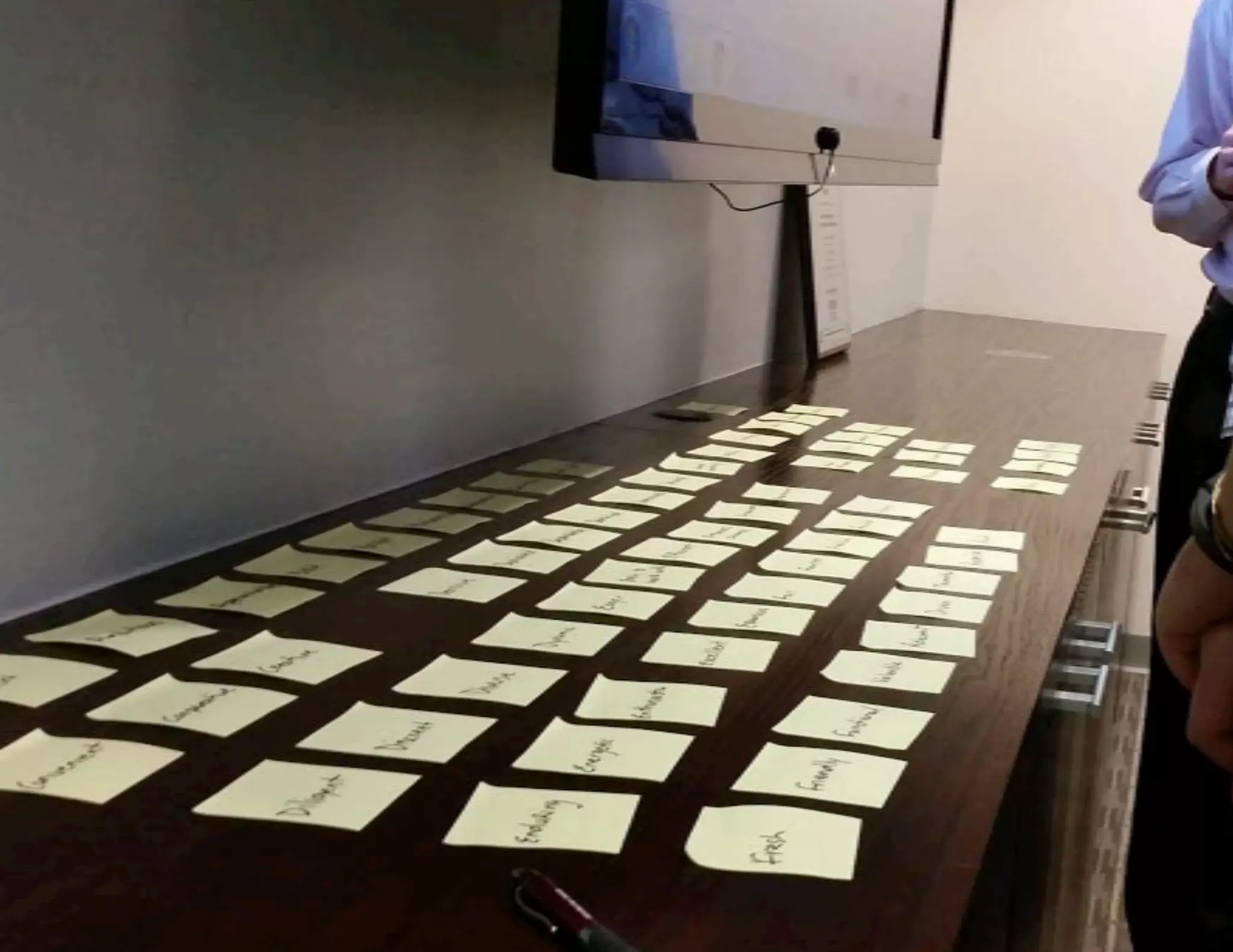
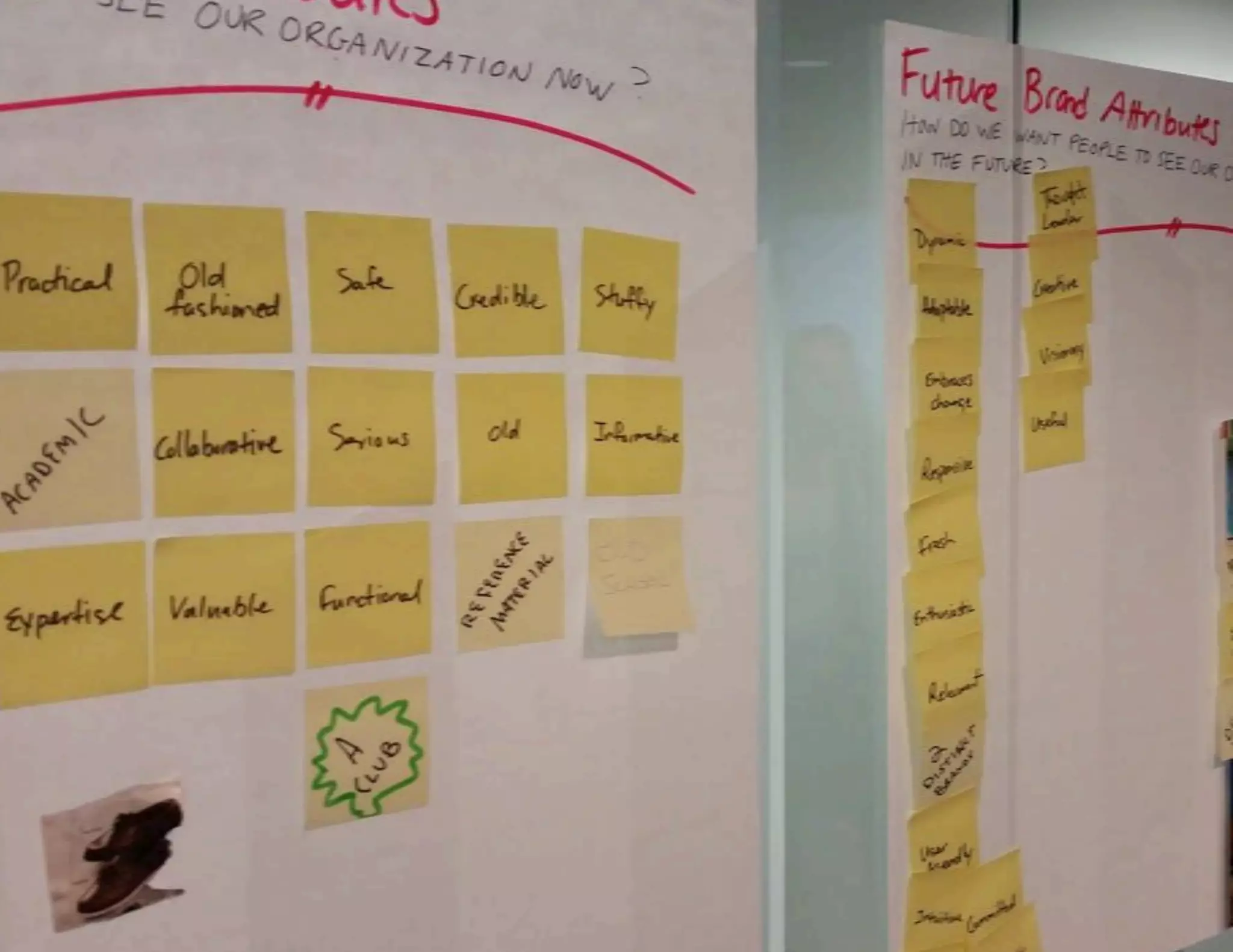
● Organizations define how they are perceived now and 
how they would like be seen in the future. 
● Result in a high-level framework for organizations to 
*Methodology derived from Ahava Leibtag 
communicate their brand. 
● Defining and adhering to Identity Pillars helps ensure 
organizations stay true to their ethics and goals.
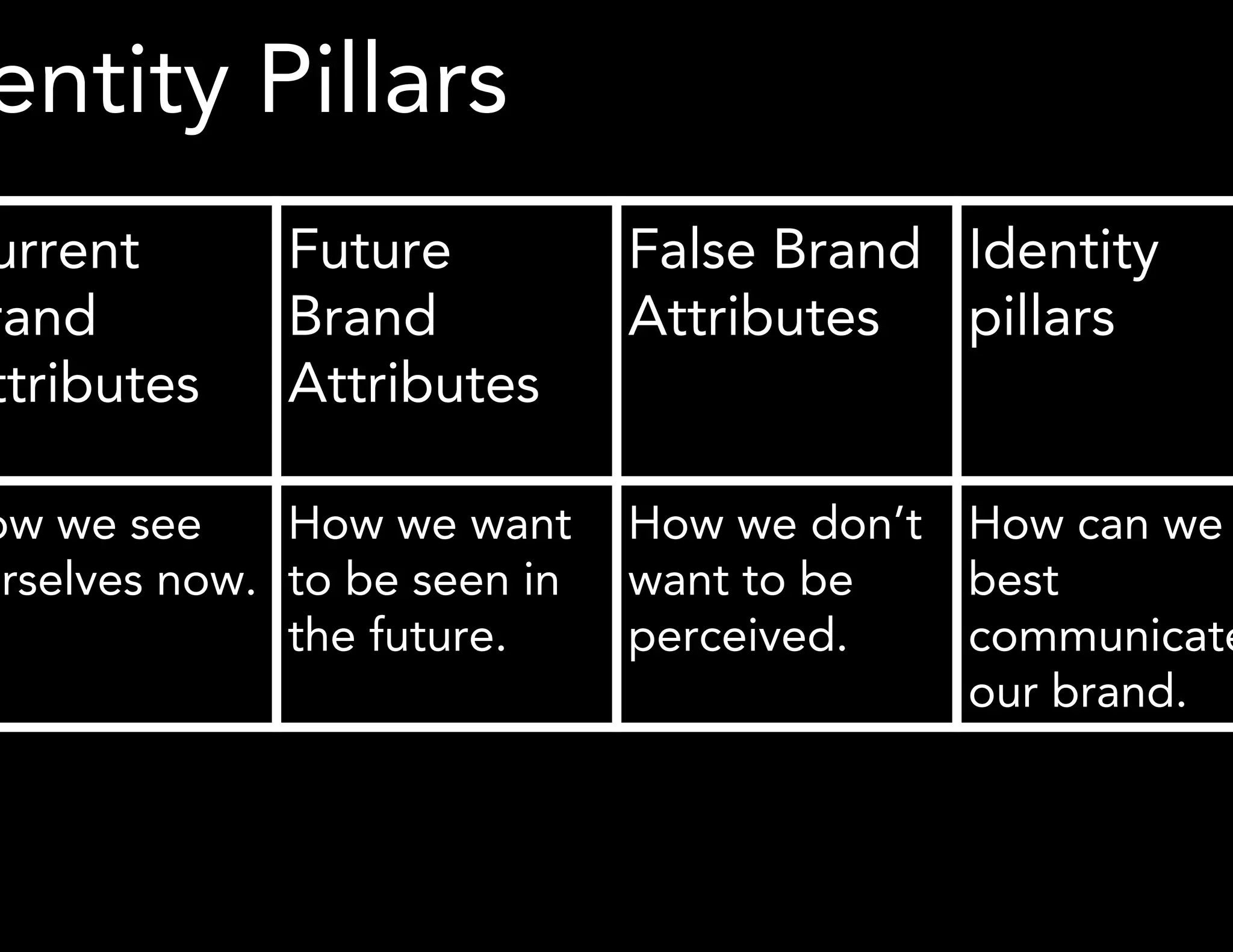
Identity Pillars 
Current 
Brand 
Attributes 
Future 
Brand 
Attributes 
False Brand 
Attributes 
Identity 
pillars 
How we see 
ourselves now. 
How we want 
to be seen in 
the future. 
How we don’t 
want to be 
perceived. 
How can we 
best 
communicate 
our brand. 
*Methodology derived from Ahava Leibtag
What do we want to say and how do we want to say it? 
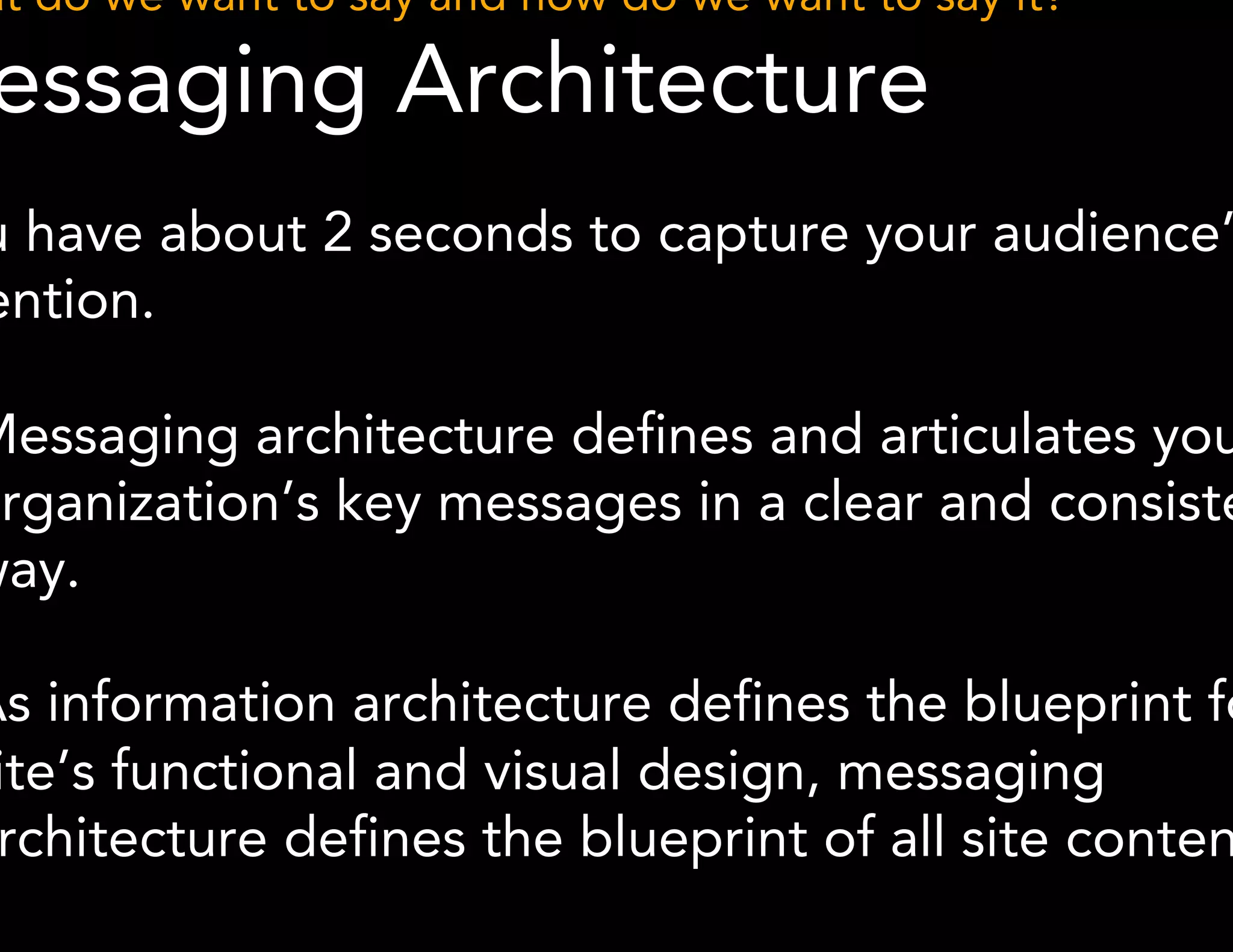
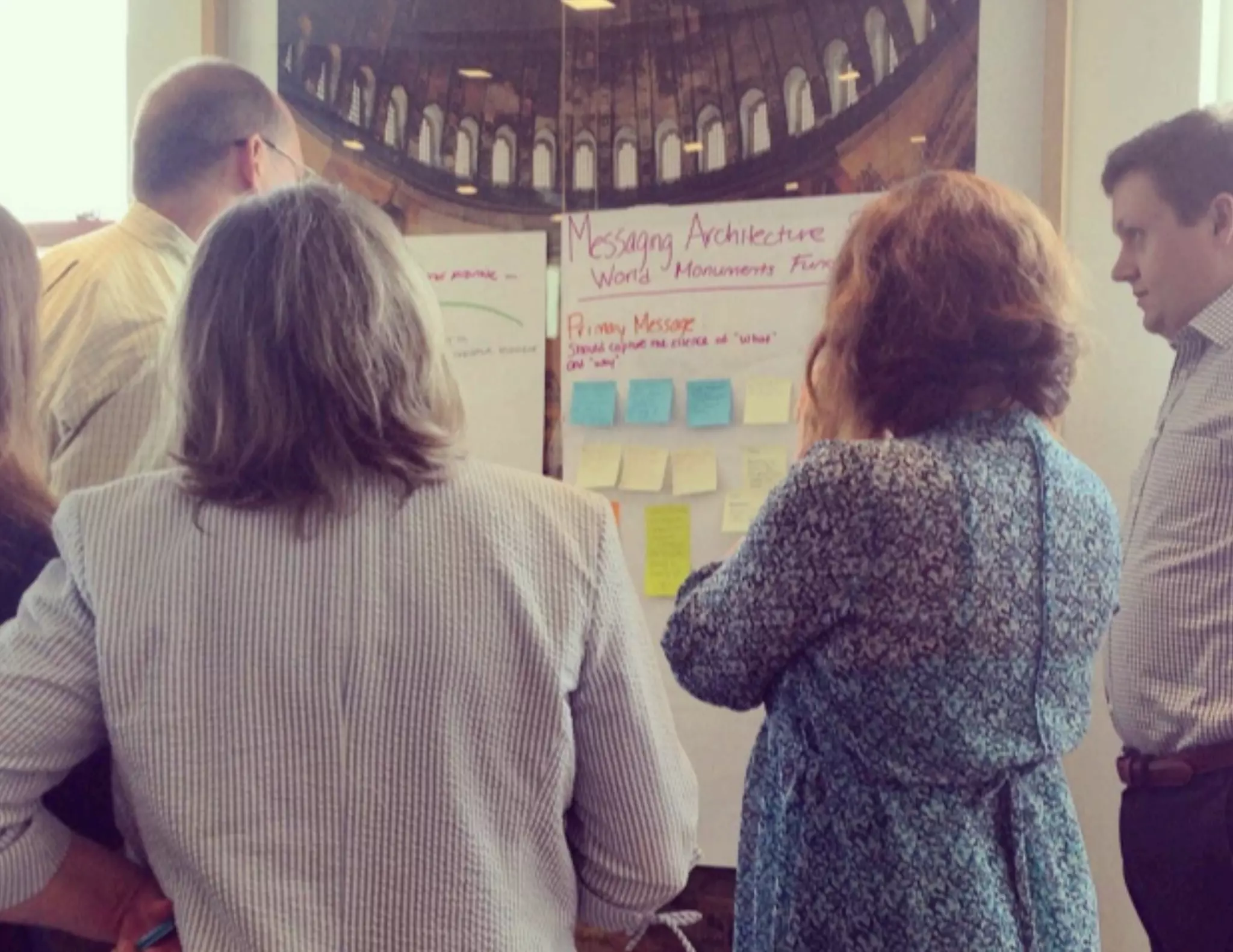
Messaging Architecture 
You have about 2 seconds to capture your audience’s 
attention. 
● Messaging architecture defines and articulates your 
organization’s key messages in a clear and consistent 
way. 
● As information architecture defines the blueprint for a 
site’s functional and visual design, messaging 
architecture defines the blueprint of all site content. 
*Methodology derived from Karen McGrane
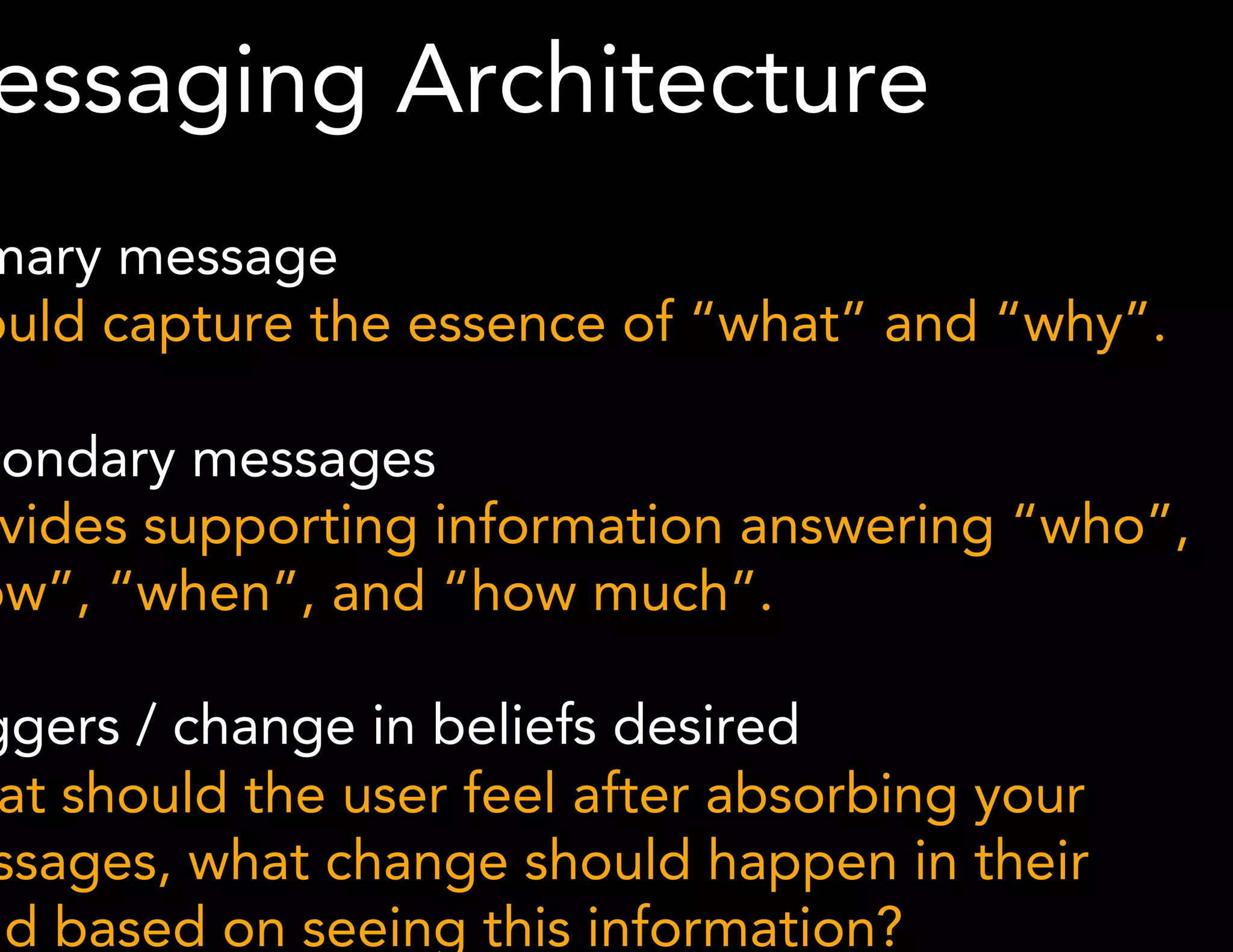
Messaging Architecture 
Primary message 
Should capture the essence of “what” and “why”. 
Secondary messages 
Provides supporting information answering “who”, 
“how”, “when”, and “how much”. 
Triggers / change in beliefs desired 
What should the user feel after absorbing your 
messages, what change should happen in their 
mind based on seeing this information? 
*Methodology derived from Karen McGrane
This is hard.
But worth it.
How do we maintain this vision? 
Vision / Product Brief 
● Develop a brief document that clearly articulates these 
outcomes. 
● Share it with the rest of the organization, and use it to 
keep your content and communications decisions 
consistent, and on track.
Content Production Planning
How does our content relate to our goals – and our audiences? 
Cores and Paths 
* Methodology derived from Boxes and Arrows 
Cores and Paths helps us: 
● Focus on the content & functionality that your users want 
● Consider the varied ways a user might arrive at this piece of 
content 
● Explore how we can engage users in supporting your 
organizational goals in the context of a core offering 
● Consider where we might want our users to go from there 
based upon your organizational goals
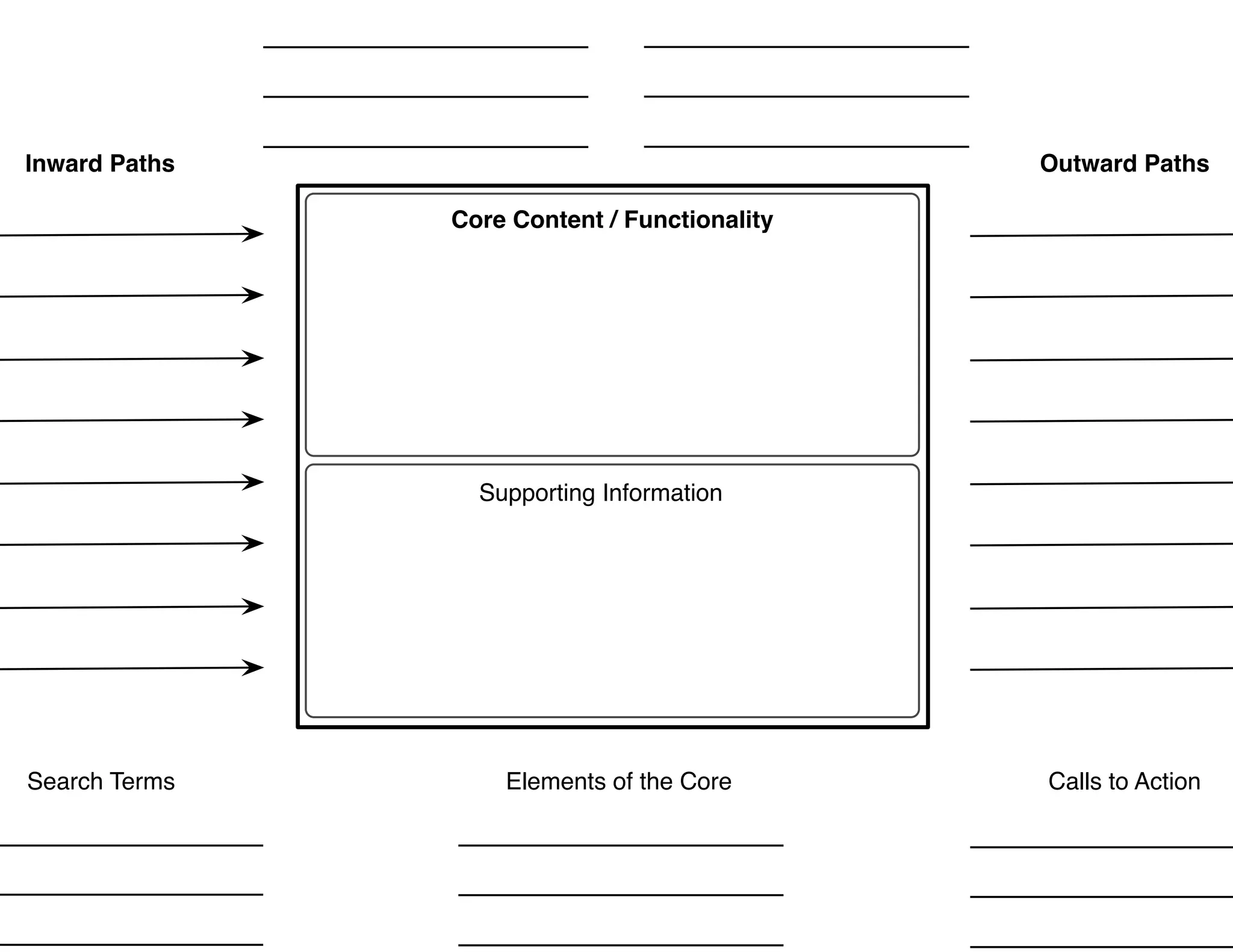
Inward Paths 
User Goals Organizational Goals 
Outward Paths 
Core Content / Functionality 
Supporting Information 
Search Terms Elements of the Core Calls to Action 
Based on the work of http://www.netflow-lindemann.de/
What is the journey we want our visitors to take? 
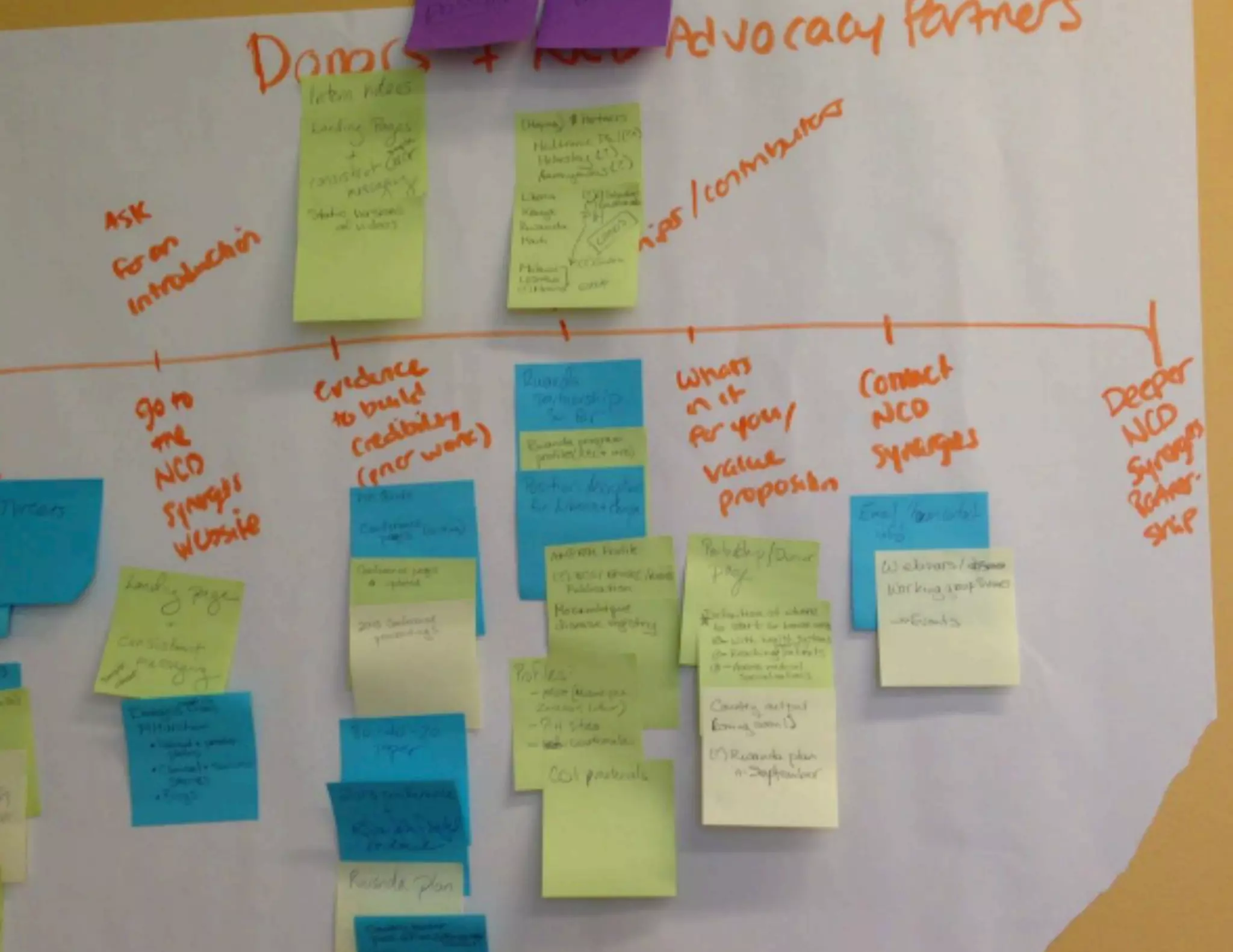
Journey Mapping 
Explore the “journeys” key audiences take as the become 
more deeply engaged in your organization. Mapping out 
this experience helps us: 
● Achieve a shared understanding of user needs and 
goals and how they relate to the content. 
● Identify what content is strong, where the gaps are, and 
derive an approach to strengthen conversions. 
*Methodology derived from Donna LiChaw and Lis Hubert
How can we ensure consistency throughout our content? 
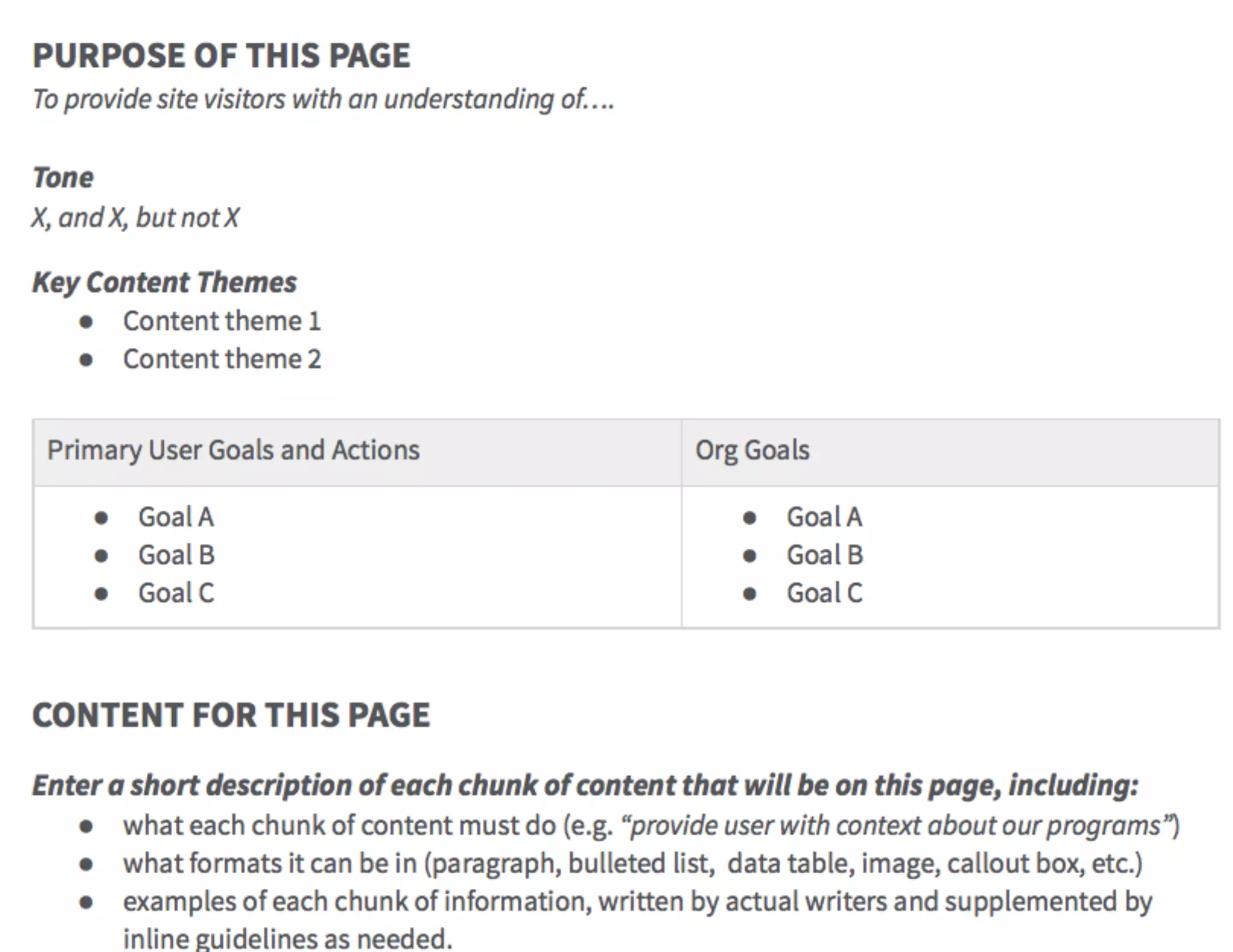
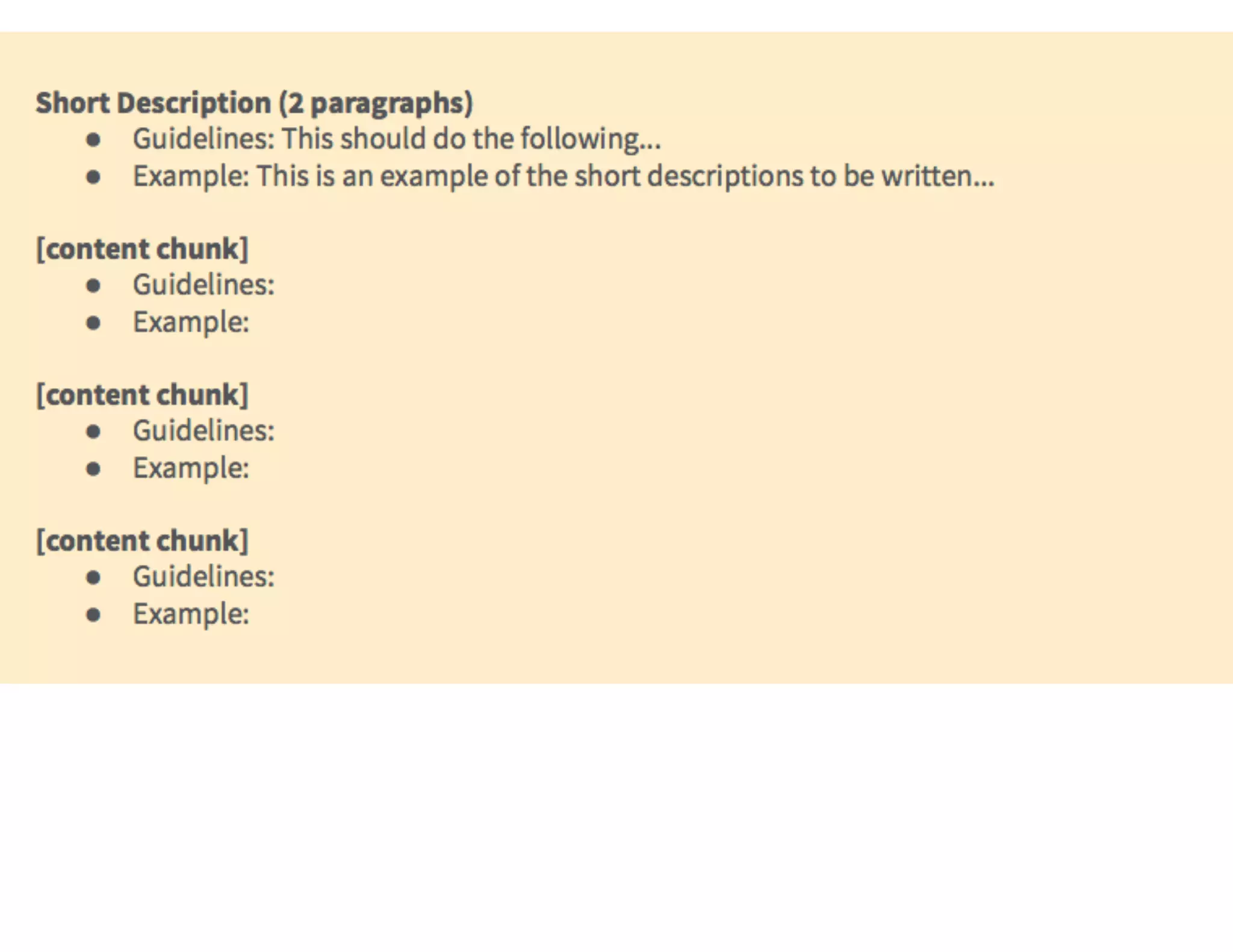
Content Creation Templates 
Once you’ve defined your messaging architecture, you 
need to apply those ideas to all your content. 
● Content creation templates help you outline your story 
before you start writing. 
● Doing so ensures you weave an appropriate, 
persuasive, and deliberate story across your website 
and communication channels.
How do we ensure our content stays fresh? 
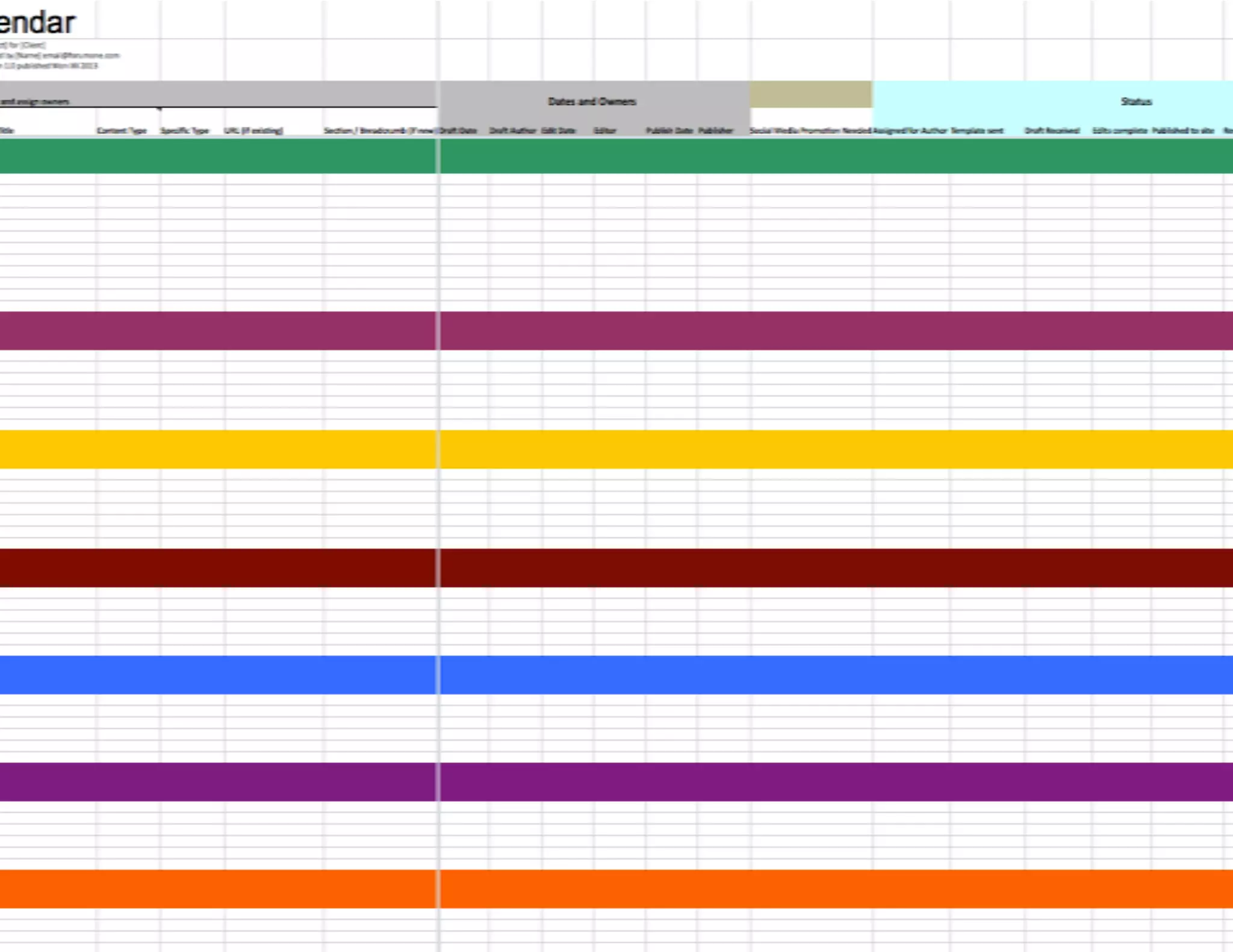
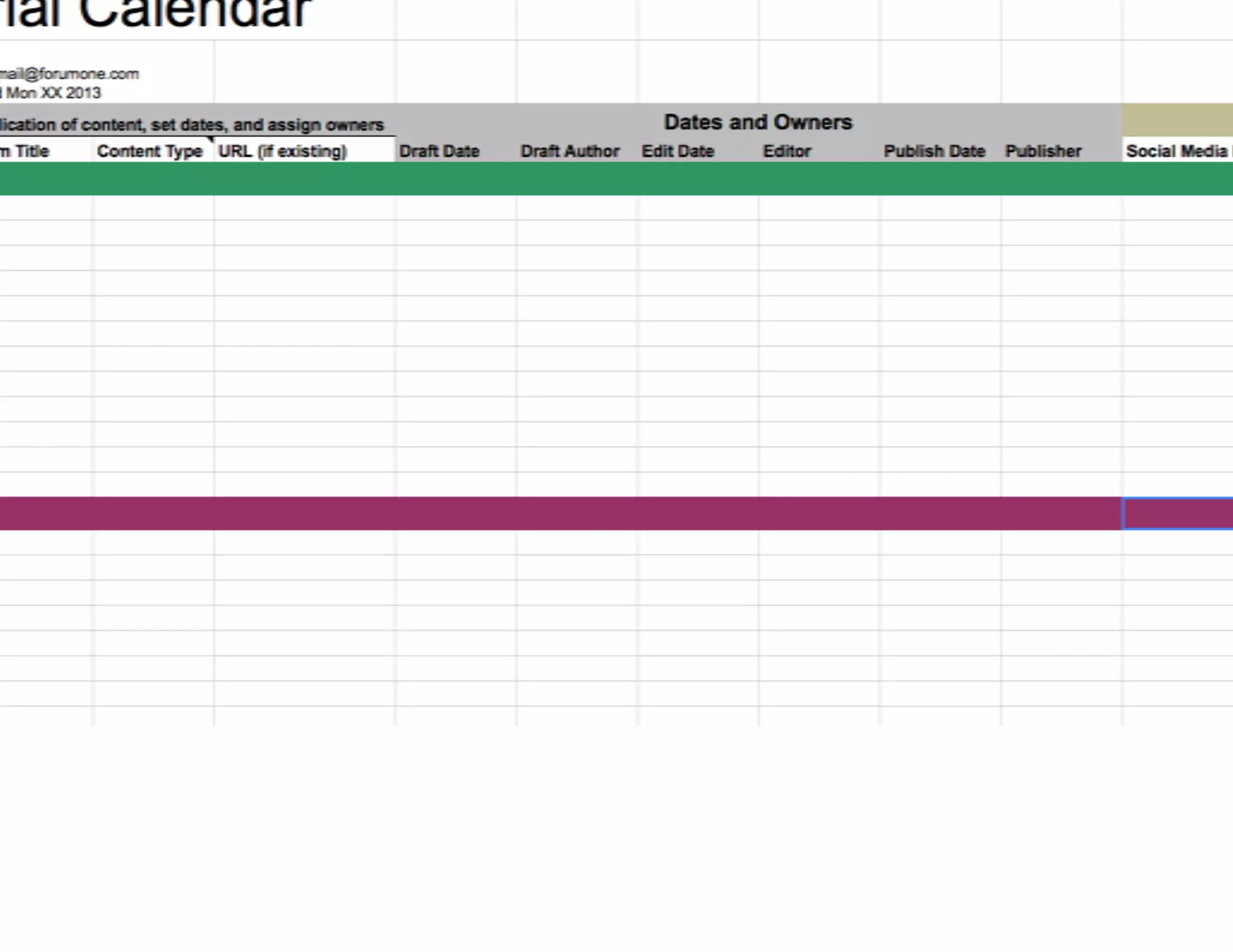
Editorial Calendar 
Content gets stale! Doing all the strategy work upfront is 
for naught if you don’t have a plan to maintain it over time. 
● Plan out the content you’ll need to write / refresh, identify 
owners, and keep track of the status. 
● Use this opportunity to re-evaluate older content (6+ 
months old).
Governance Planning
How do we ensure our content governance is successful? 
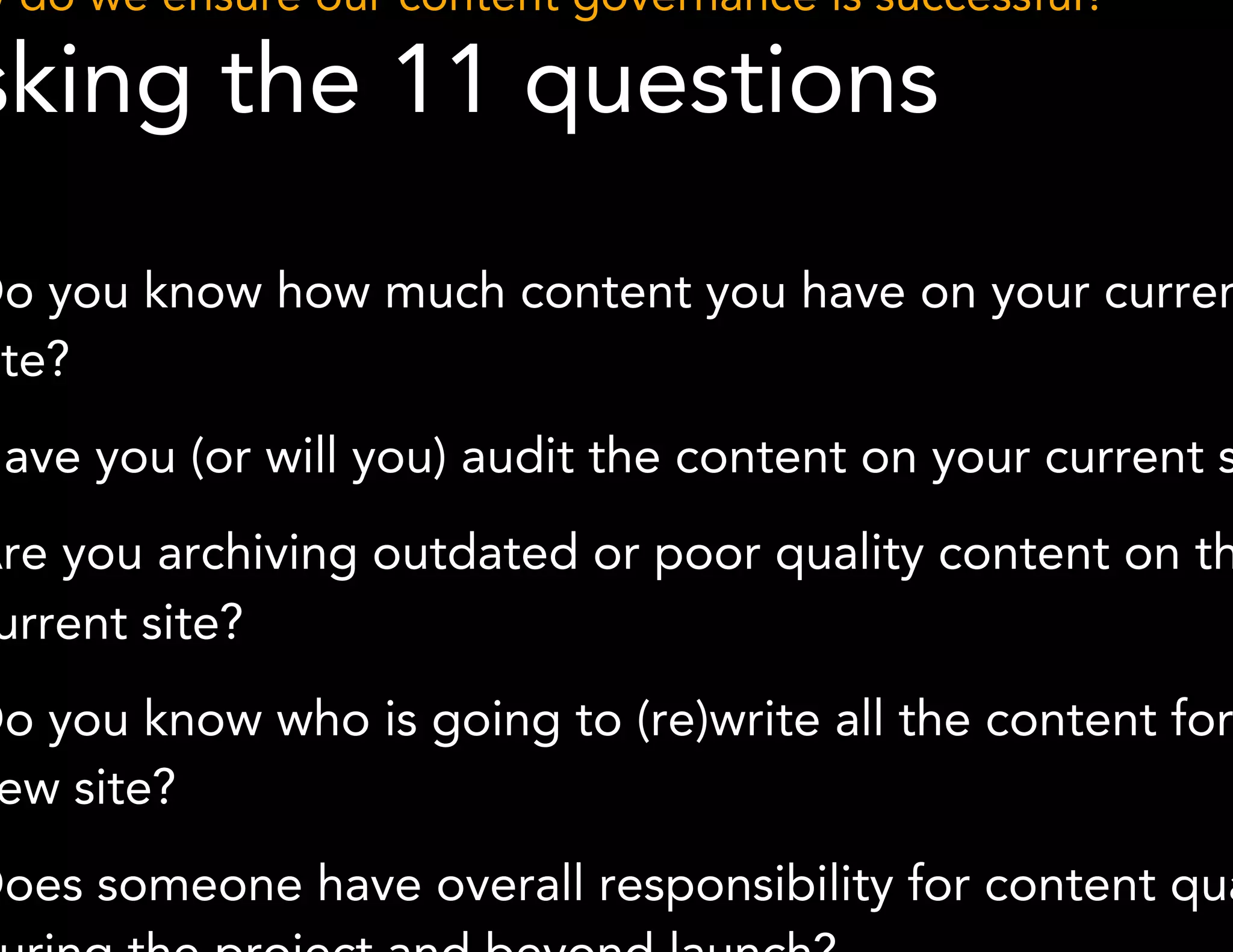
Asking the 11 questions 
1. Do you know how much content you have on your current site? 
2. Have you (or will you) audit the content on your current site? 
3. Are you archiving outdated or poor quality content on the 
*Methodology derived from GatherContent 
current site? 
4. Do you know who is going to (re)write all the content for the 
new site? 
5. Does someone have overall responsibility for content quality 
during the project and beyond launch?
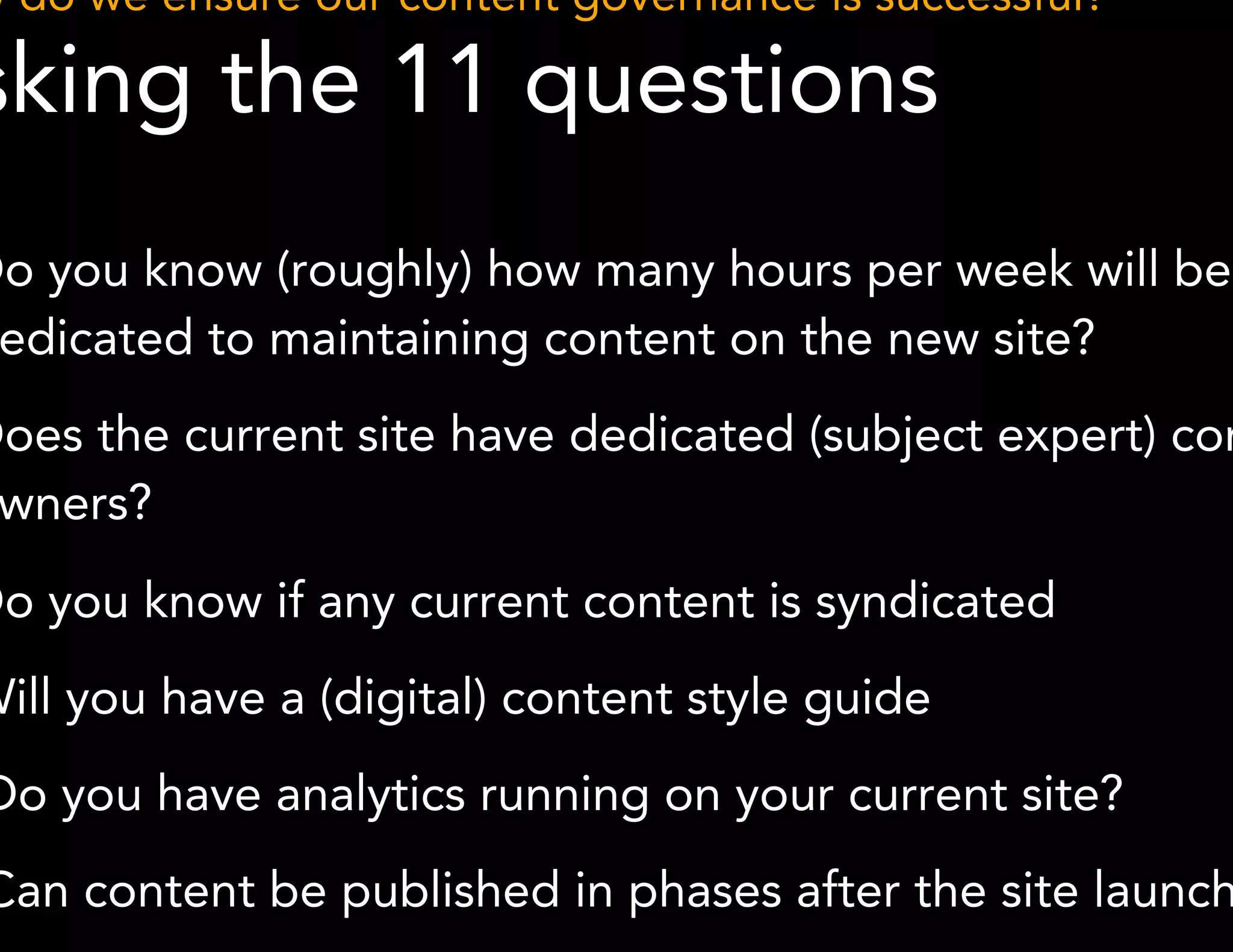
How do we ensure our content governance is successful? 
Asking the 11 questions 
6. Do you know (roughly) how many hours per week will be 
dedicated to maintaining content on the new site? 
7. Does the current site have dedicated (subject expert) content 
*Methodology derived from GatherContent 
owners? 
8. Do you know if any current content is syndicated 
9. Will you have a (digital) content style guide 
10.Do you have analytics running on your current site? 
11.Can content be published in phases after the site launches?
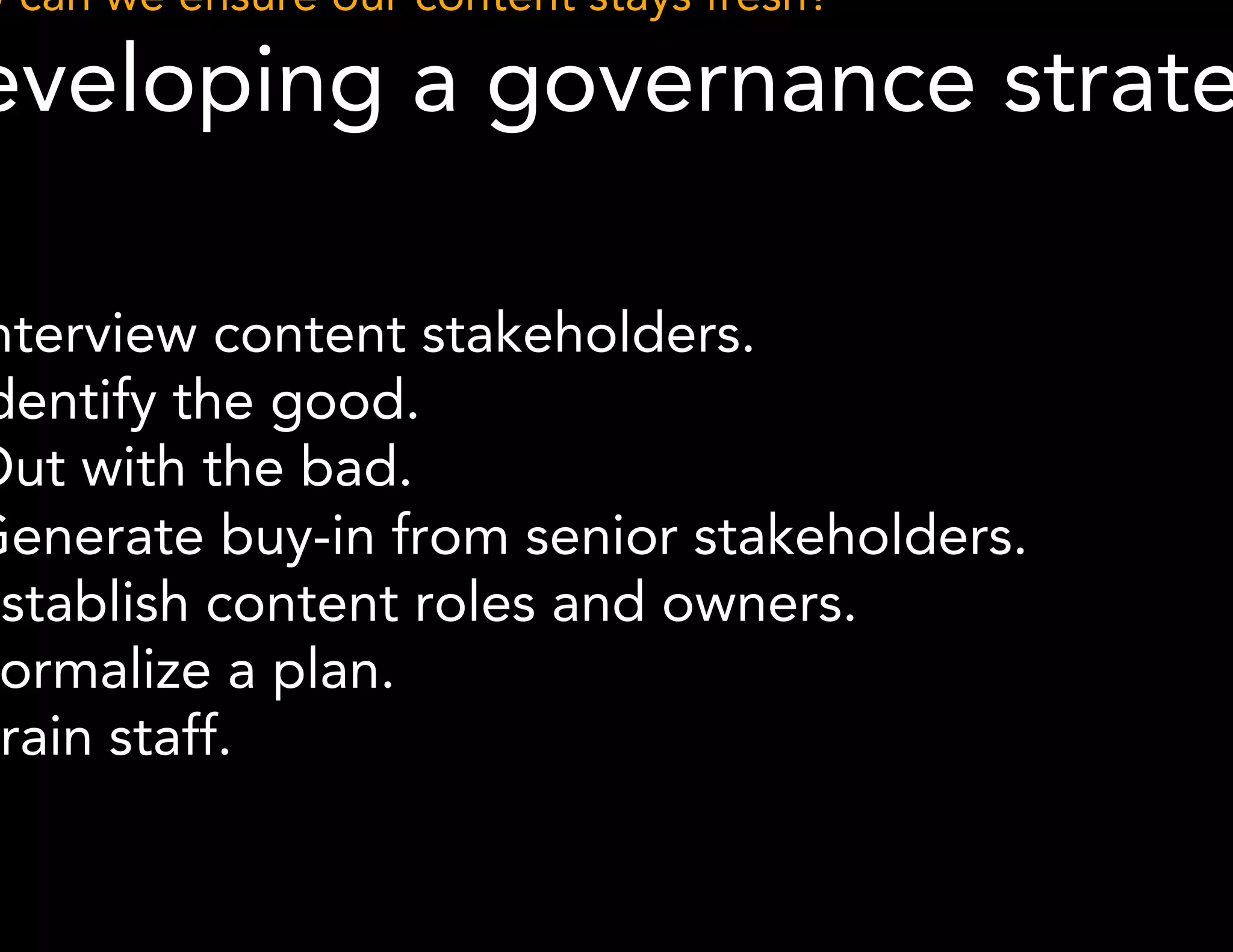
How can we ensure our content stays fresh? 
Developing a governance strategy 
● Interview content stakeholders. 
● Identify the good. 
● Out with the bad. 
● Generate buy-in from senior stakeholders. 
● Establish content roles and owners. 
● Formalize a plan. 
● Train staff.
Resources
• Epic List of Content Strategy Resources | Jon Colman 
• The Digital Crown: Winning at Content on the Web | Ahava 
Leibtag 
• Content Strategy at Work | Margot Bloomstein 
• Storymapping, A Macgyver Approach to Content Strategy | Donna 
Lichaw & Lis Hubert 
• Nicely Said | Nicole Fenton & Kate Kiefer Lee 
• GatherContent’s Blog 
• Content First User Experience | Steph Hay 
• How to Implement a Content First Workflow | Chromatic 
• MailChimp’s Style Guide 
• A Great Content Strategy’s Anatomy | Search Engine Journal
Giveaway!
GatherContent 
1- year subscription! 
How many times have you been waiting on a colleague or copywriter to 
hand over the content your project needs — or had a team mate trying 
to make sense of a big, badly-formatted Word document when they are 
pasting content into the CMS? What if you could avoid the usual 
headaches on your web projects? GatherContent is a content-first 
solution that helps organisations and their staff plan, organise and 
collaborate on website content. Pre-CMS.

NTEN Content Strategy Part II: Developing Your Voice and Defining Your Strategy

  • 1.
    Content Strategy forNonprofits, Part 2 Developing Your Voice & Defining Your Strategy
  • 2.
    Michaela Hackner Directorof Content Strategy, Forum One Brett Meyer Lead Strategist, ThinkShout
  • 4.
  • 6.
    Web redesigns arelike a science experiment…. Define Goals and Measures ● What are our website goals? ● How can we measure our impact to know if we were successful?
  • 8.
    Who are wespeaking to? Define and Prioritize Audiences ● Who are our audiences? ● Which are the highest priority? ● What’s their tolerance? ● What are there motivations?
  • 10.
    What experience dowe want to create with our content? Know Feel Find Act ● What do we want our audience to know about us? ● What do we want them to feel when they read our *Methodology derived from John Schneider content? ● What kinds of content / information do we want them to find? ● What do we want them to do?
  • 14.
    What do wewant to say and how do we want to say it? Identity Pillars ● Organizations define how they are perceived now and how they would like be seen in the future. ● Result in a high-level framework for organizations to *Methodology derived from Ahava Leibtag communicate their brand. ● Defining and adhering to Identity Pillars helps ensure organizations stay true to their ethics and goals.
  • 15.
    Identity Pillars Current Brand Attributes Future Brand Attributes False Brand Attributes Identity pillars How we see ourselves now. How we want to be seen in the future. How we don’t want to be perceived. How can we best communicate our brand. *Methodology derived from Ahava Leibtag
  • 18.
    What do wewant to say and how do we want to say it? Messaging Architecture You have about 2 seconds to capture your audience’s attention. ● Messaging architecture defines and articulates your organization’s key messages in a clear and consistent way. ● As information architecture defines the blueprint for a site’s functional and visual design, messaging architecture defines the blueprint of all site content. *Methodology derived from Karen McGrane
  • 20.
    Messaging Architecture Primarymessage Should capture the essence of “what” and “why”. Secondary messages Provides supporting information answering “who”, “how”, “when”, and “how much”. Triggers / change in beliefs desired What should the user feel after absorbing your messages, what change should happen in their mind based on seeing this information? *Methodology derived from Karen McGrane
  • 21.
  • 22.
  • 23.
    How do wemaintain this vision? Vision / Product Brief ● Develop a brief document that clearly articulates these outcomes. ● Share it with the rest of the organization, and use it to keep your content and communications decisions consistent, and on track.
  • 24.
  • 25.
    How does ourcontent relate to our goals – and our audiences? Cores and Paths * Methodology derived from Boxes and Arrows Cores and Paths helps us: ● Focus on the content & functionality that your users want ● Consider the varied ways a user might arrive at this piece of content ● Explore how we can engage users in supporting your organizational goals in the context of a core offering ● Consider where we might want our users to go from there based upon your organizational goals
  • 26.
    Inward Paths UserGoals Organizational Goals Outward Paths Core Content / Functionality Supporting Information Search Terms Elements of the Core Calls to Action Based on the work of http://www.netflow-lindemann.de/
  • 27.
    What is thejourney we want our visitors to take? Journey Mapping Explore the “journeys” key audiences take as the become more deeply engaged in your organization. Mapping out this experience helps us: ● Achieve a shared understanding of user needs and goals and how they relate to the content. ● Identify what content is strong, where the gaps are, and derive an approach to strengthen conversions. *Methodology derived from Donna LiChaw and Lis Hubert
  • 29.
    How can weensure consistency throughout our content? Content Creation Templates Once you’ve defined your messaging architecture, you need to apply those ideas to all your content. ● Content creation templates help you outline your story before you start writing. ● Doing so ensures you weave an appropriate, persuasive, and deliberate story across your website and communication channels.
  • 32.
    How do weensure our content stays fresh? Editorial Calendar Content gets stale! Doing all the strategy work upfront is for naught if you don’t have a plan to maintain it over time. ● Plan out the content you’ll need to write / refresh, identify owners, and keep track of the status. ● Use this opportunity to re-evaluate older content (6+ months old).
  • 35.
  • 36.
    How do weensure our content governance is successful? Asking the 11 questions 1. Do you know how much content you have on your current site? 2. Have you (or will you) audit the content on your current site? 3. Are you archiving outdated or poor quality content on the *Methodology derived from GatherContent current site? 4. Do you know who is going to (re)write all the content for the new site? 5. Does someone have overall responsibility for content quality during the project and beyond launch?
  • 37.
    How do weensure our content governance is successful? Asking the 11 questions 6. Do you know (roughly) how many hours per week will be dedicated to maintaining content on the new site? 7. Does the current site have dedicated (subject expert) content *Methodology derived from GatherContent owners? 8. Do you know if any current content is syndicated 9. Will you have a (digital) content style guide 10.Do you have analytics running on your current site? 11.Can content be published in phases after the site launches?
  • 38.
    How can weensure our content stays fresh? Developing a governance strategy ● Interview content stakeholders. ● Identify the good. ● Out with the bad. ● Generate buy-in from senior stakeholders. ● Establish content roles and owners. ● Formalize a plan. ● Train staff.
  • 39.
  • 40.
    • Epic Listof Content Strategy Resources | Jon Colman • The Digital Crown: Winning at Content on the Web | Ahava Leibtag • Content Strategy at Work | Margot Bloomstein • Storymapping, A Macgyver Approach to Content Strategy | Donna Lichaw & Lis Hubert • Nicely Said | Nicole Fenton & Kate Kiefer Lee • GatherContent’s Blog • Content First User Experience | Steph Hay • How to Implement a Content First Workflow | Chromatic • MailChimp’s Style Guide • A Great Content Strategy’s Anatomy | Search Engine Journal
  • 41.
  • 42.
    GatherContent 1- yearsubscription! How many times have you been waiting on a colleague or copywriter to hand over the content your project needs — or had a team mate trying to make sense of a big, badly-formatted Word document when they are pasting content into the CMS? What if you could avoid the usual headaches on your web projects? GatherContent is a content-first solution that helps organisations and their staff plan, organise and collaborate on website content. Pre-CMS.