P R O F. M A H U A M U K H E R J E E
CONSUMER MOTIVATION
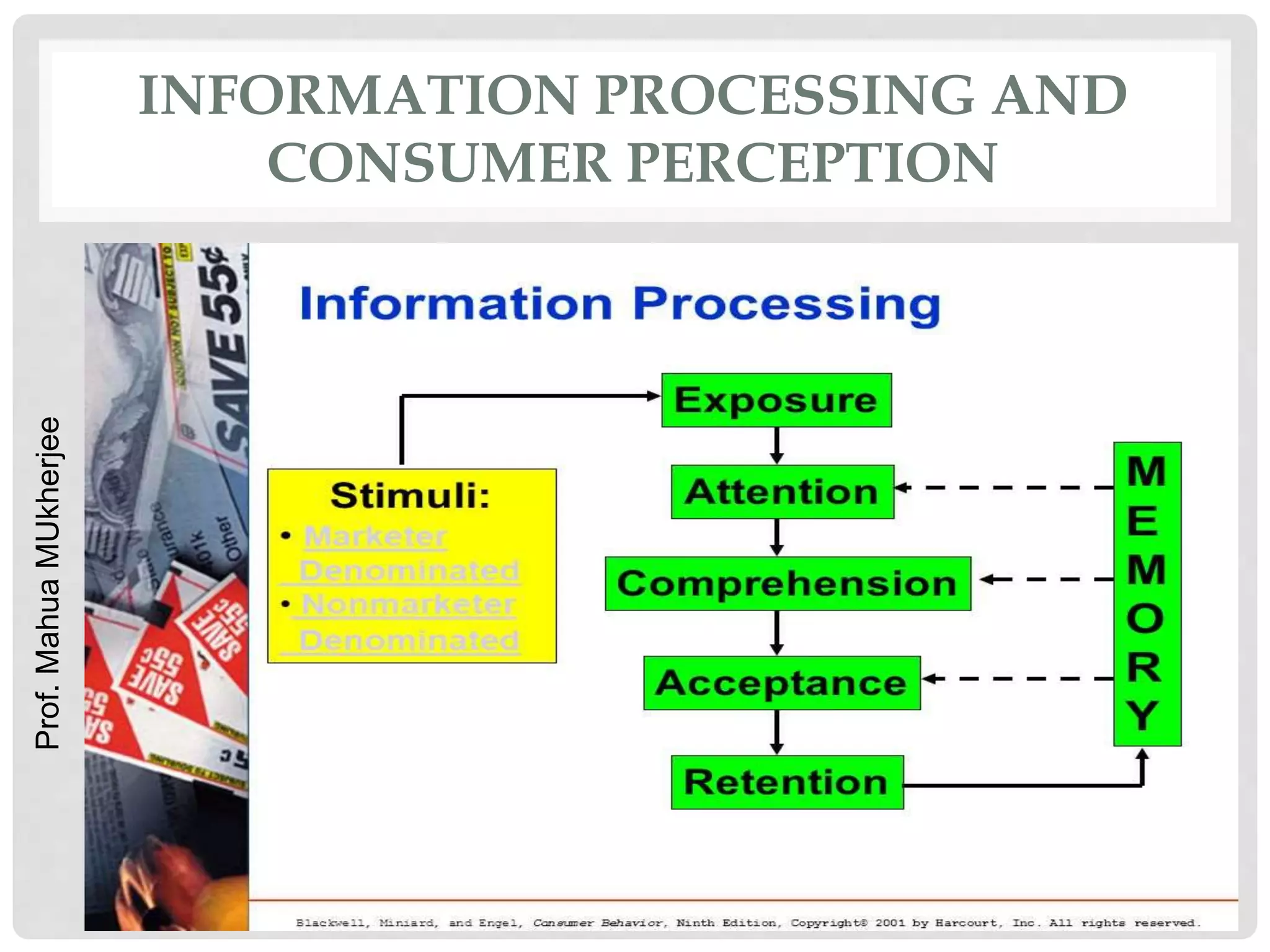
INFORMATION PROCESSING AND
CONSUMER PERCEPTION
Prof.MahuaMUkherjee
CONSUMER INFORMATION
PROCESSING
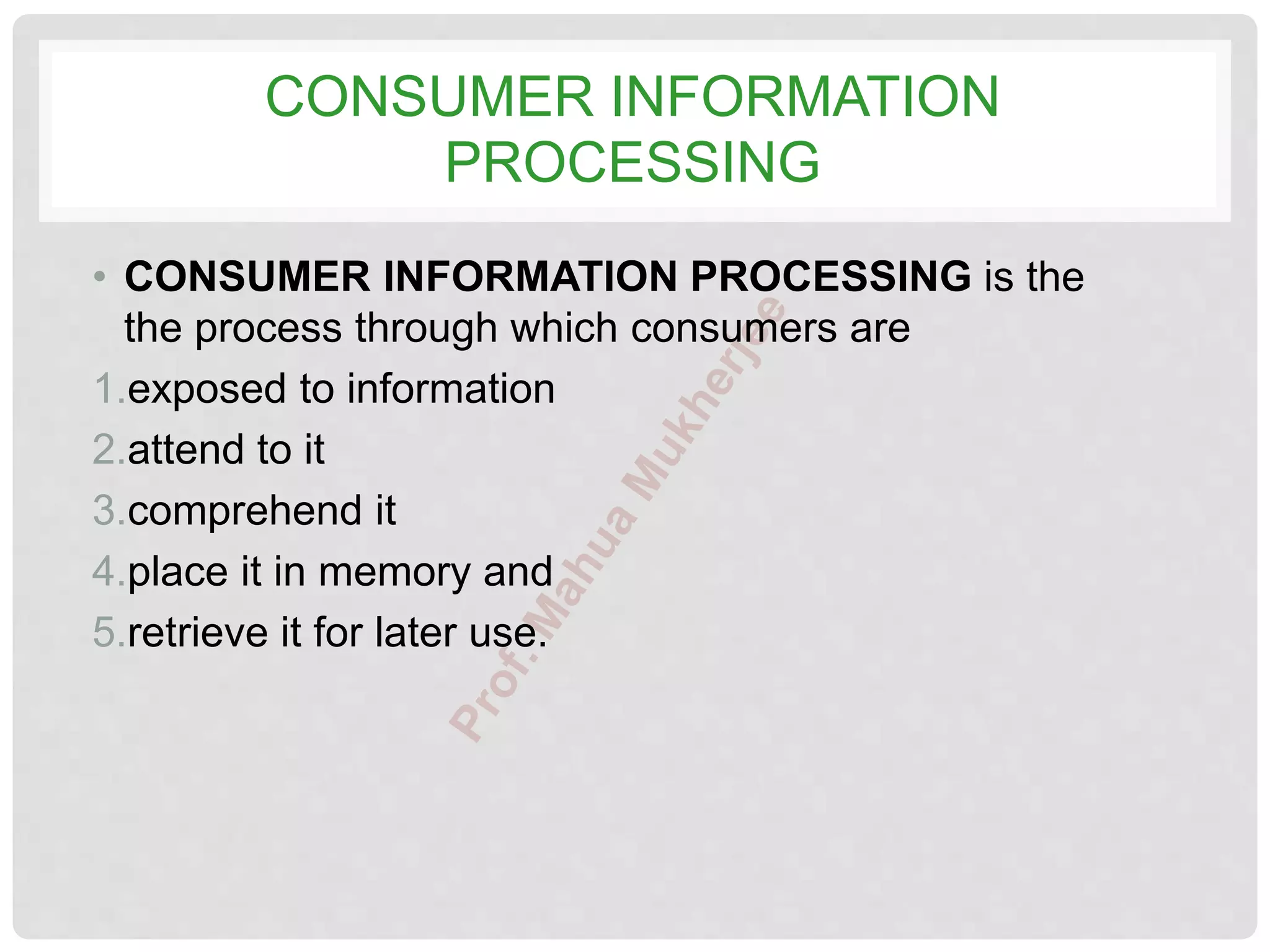
• CONSUMER INFORMATION PROCESSING is the
the process through which consumers are
1.exposed to information
2.attend to it
3.comprehend it
4.place it in memory and
5.retrieve it for later use.
CONSUMER INFORMATION
PROCESSING
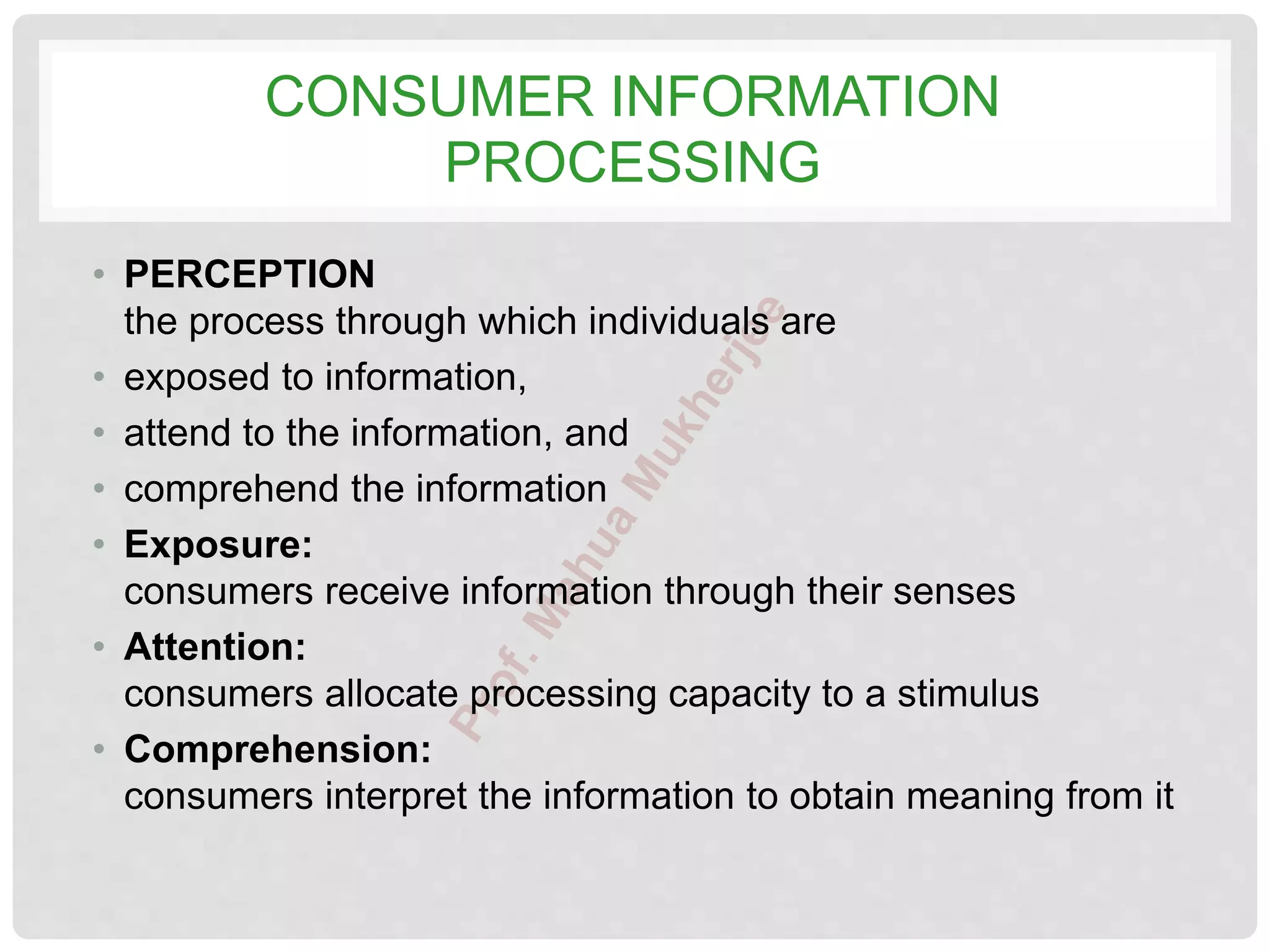
• PERCEPTION
the process through which individuals are
• exposed to information,
• attend to the information, and
• comprehend the information
• Exposure:
consumers receive information through their senses
• Attention:
consumers allocate processing capacity to a stimulus
• Comprehension:
consumers interpret the information to obtain meaning from it
CONSUMER INFORMATION
PROCESSING
Prof. Mahua Mukherjee
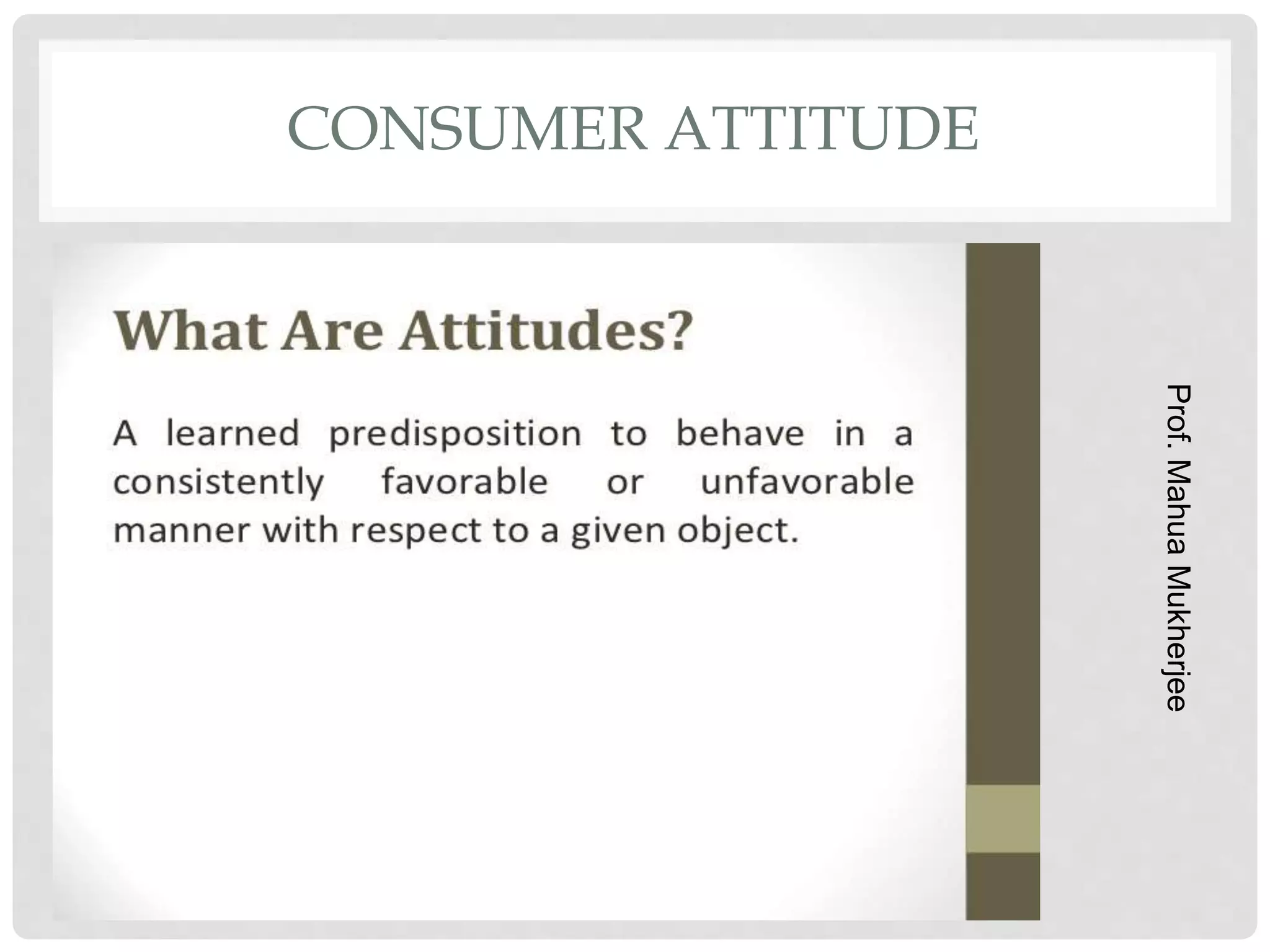
CONSUMER ATTITUDE
Prof.MahuaMukherjee
CONSUMER ATTITUDE
ATTITUDE CHANGE
ATTITUDE CHANGE
• Changing beliefs about competitor brands
• Associating the product with an admired group, cause or
event
• Altering multi – attribute model
• Changing the basic motivation function
• Resolving two conflicting attitudes
Therefore –
ATTITUDES ARE LEARNT
ATTITUDES CAN BE CHANGED OR INFLUENCED BY
OTHER STRATEGIES
PERSONALITY
Prof.MahuaMukherjee
PERSONALITY
SELF CONCEPT
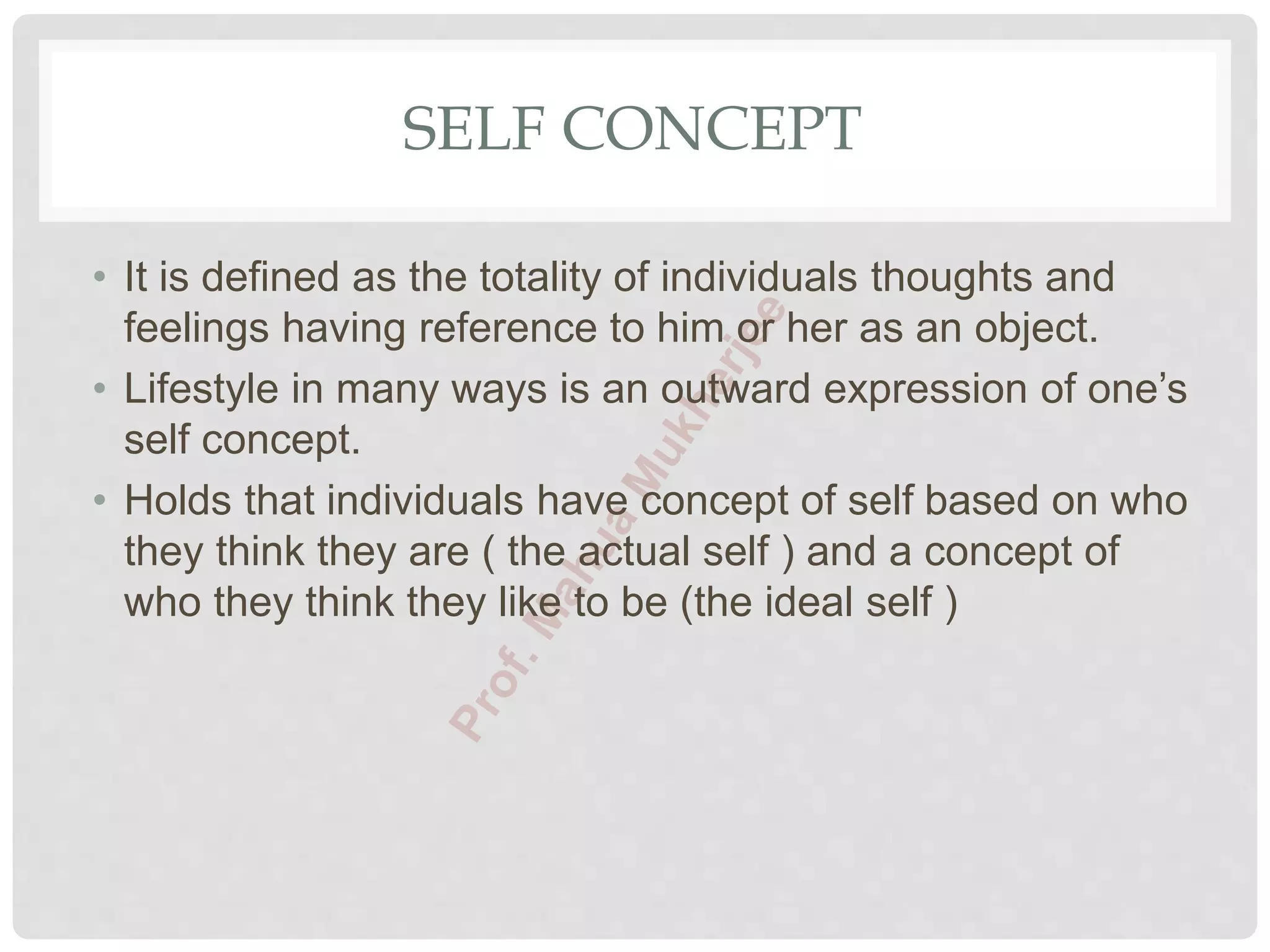
• It is defined as the totality of individuals thoughts and
feelings having reference to him or her as an object.
• Lifestyle in many ways is an outward expression of one’s
self concept.
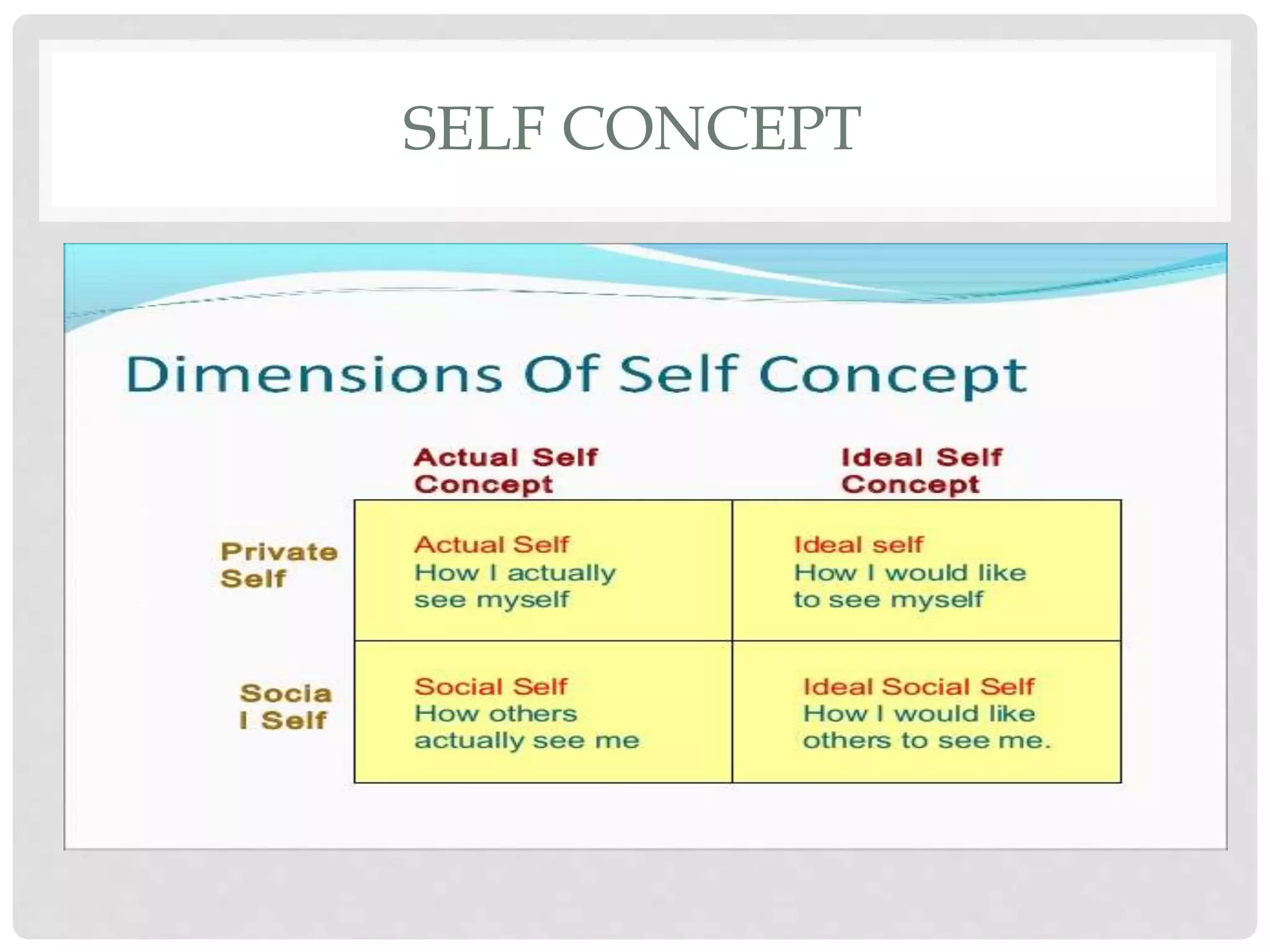
• Holds that individuals have concept of self based on who
they think they are ( the actual self ) and a concept of
who they think they like to be (the ideal self )
SELF CONCEPT
LIFESTYLE & PSYCHOGRAPHICS
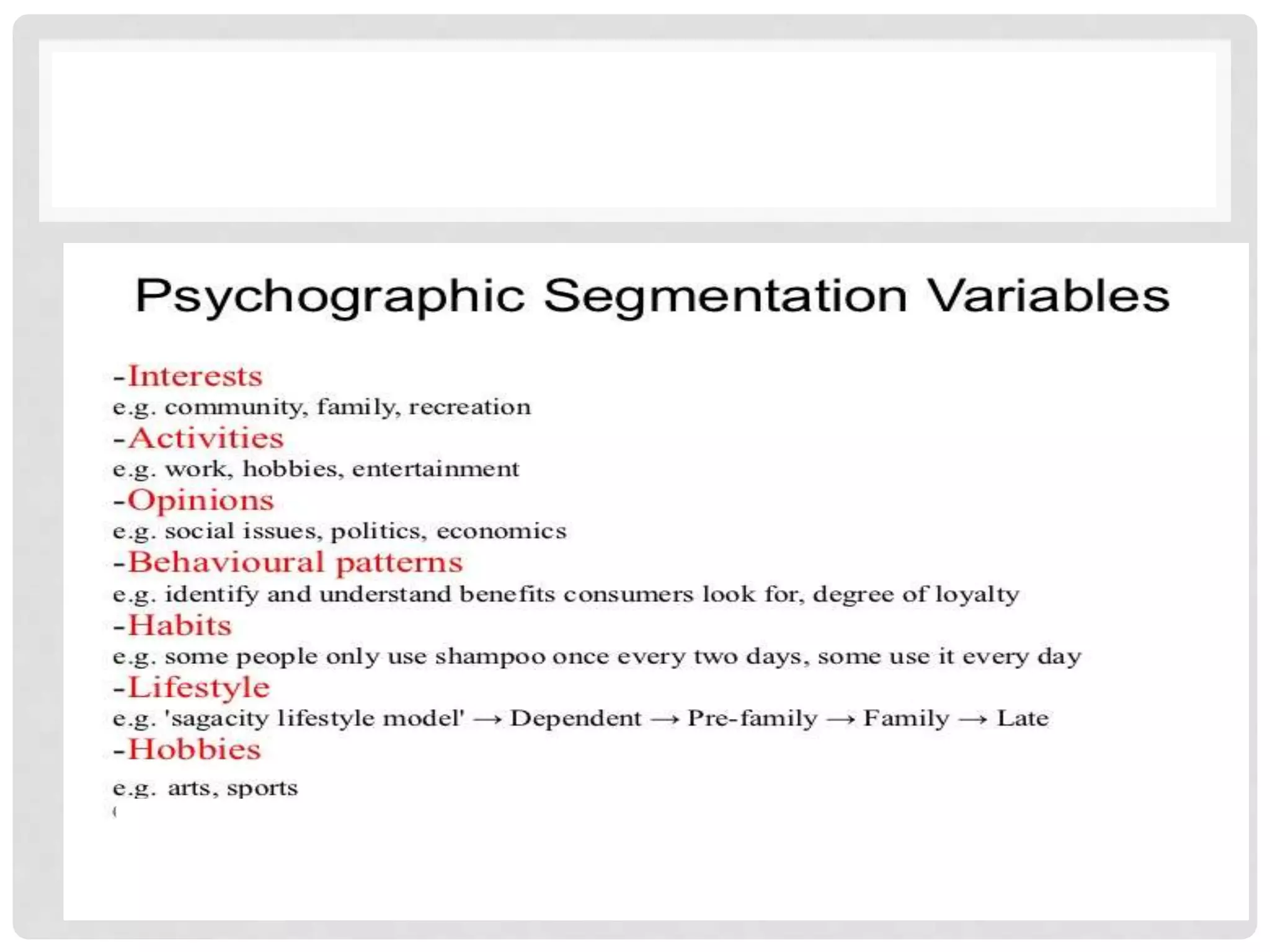
• Lifestyle can be viewed as a unique pattern which is
reflected and influenced by one’s buying habits.
• Psychographics may be viewed as the method of
defining lifestyle in measurable terms
e.
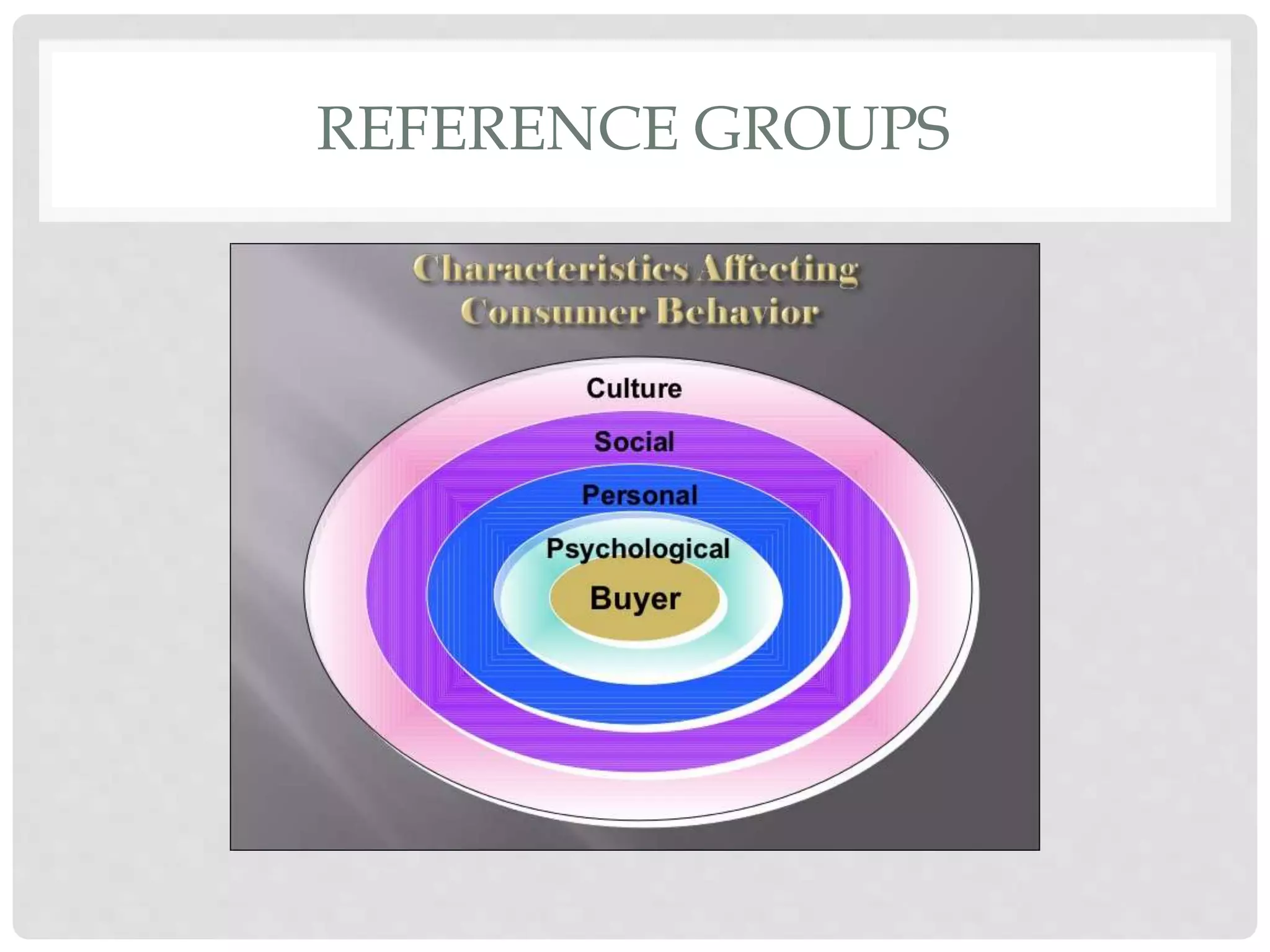
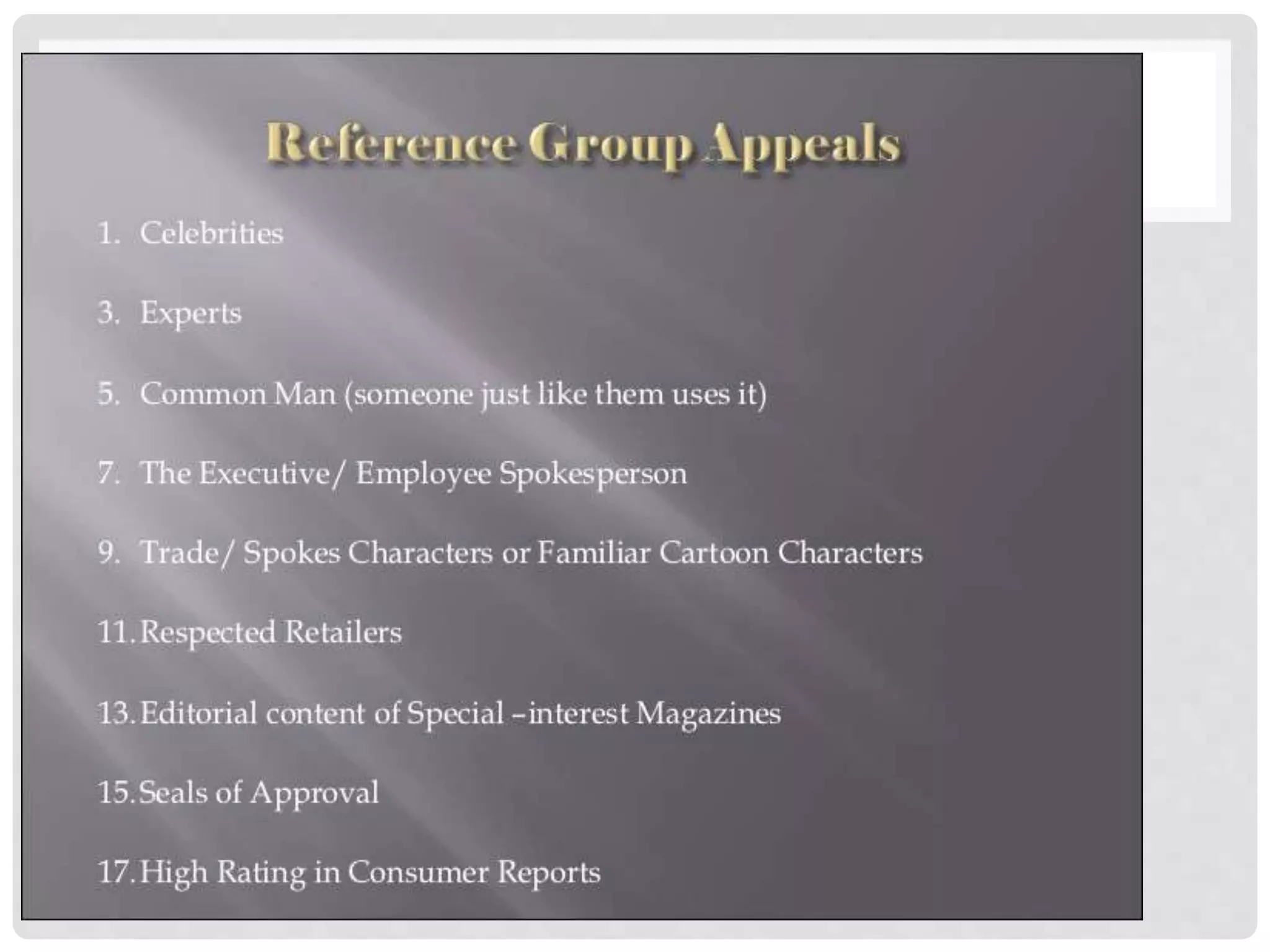
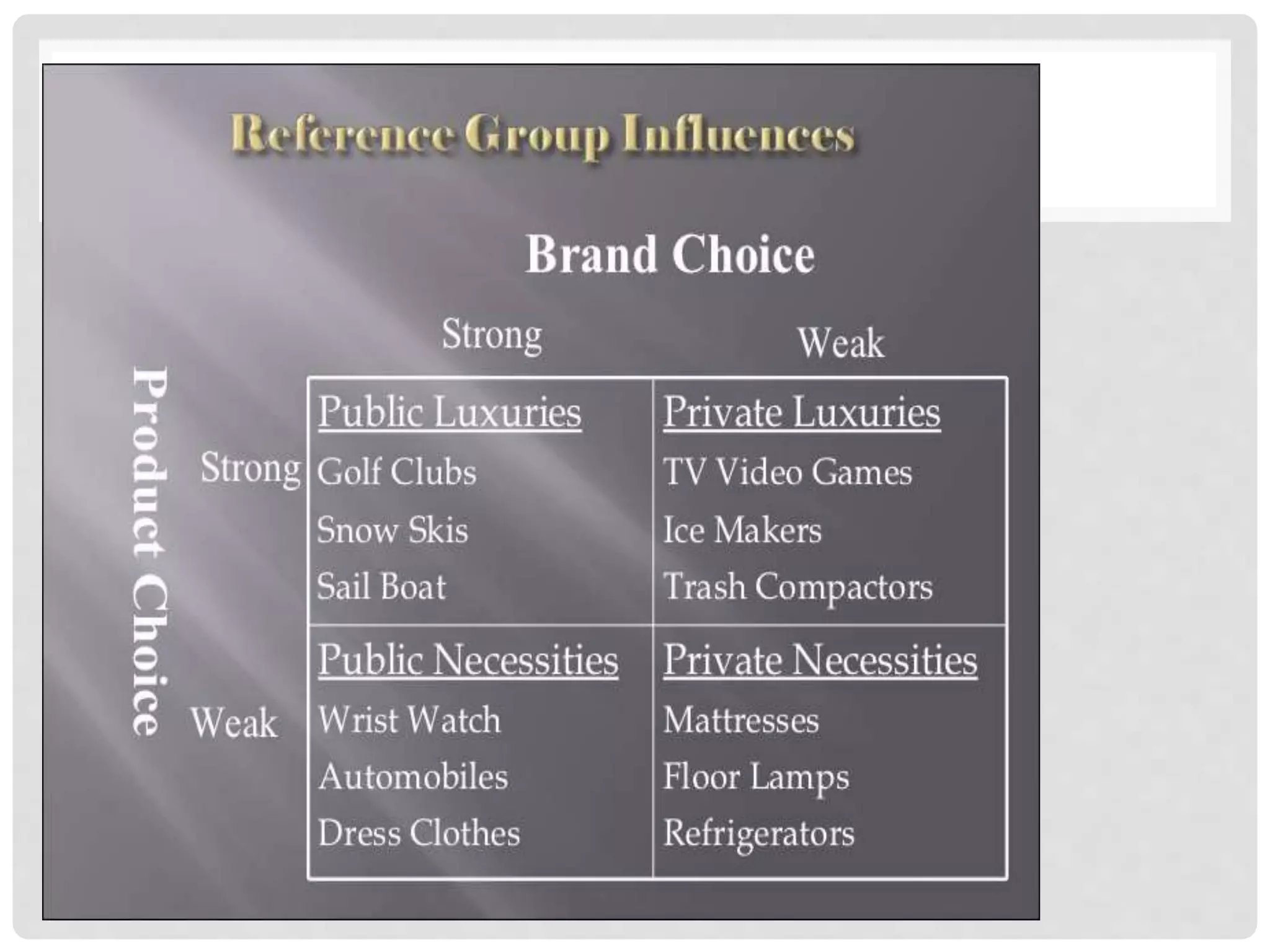
REFERENCE GROUPS
DIFFUSION OF INNOVATION
• When a new product is put into the market it must reach
its consumers and target public
• Diffusion process is concerned with the general
dimensions of how innovations spread and how they are
disseminated and assimilated in the market
• The marketers are vitally interested in this process
because their success or failure to a great extent
depends upon this
DIFFUSION PROCESS
• The diffusion process is mainly concerned with – how
the innovations (new products) spread within the
markets
• The diffusion process is the process by which
acceptance of an innovation( new product / service /
new idea or new practice) is spread by
communication (MASS MEDIA , SALES PEOPLE ,
INFORMAL CONVERSATIONS) to members of a
social system over a period of time.
BASIC ELEMENTS OF DIFFUSION
PROCESS
• THE INNOVATION
• THE CHANNELS OF DISTRIBUTION
• THE SOCIAL SYSTEM
• TIME
THE INNOVATION
Innovation implies new products
New products are in the agenda of every company
Its essential for growth and diversification
THE CHANNELS OF COMMUNICATION
• How quickly the innovation spreads
• Selection of channels
• Mass media or personalized channels depends upon the
nature of the product
• Channels help to communicate product related
information in a short period and in nan influential
manner
THE SOCIAL SYSTEM
• Diffusion takes place in a social setting known as social
system
• Social system is a physical social or cultural environment
to which people belong and within which they function
TIME
• Purchase time
• Adopter categories
• Rate of adoption
Consumer Motivation In Consumer Behaviour

Consumer Motivation In Consumer Behaviour

  • 1.
    P R OF. M A H U A M U K H E R J E E CONSUMER MOTIVATION
  • 2.
    INFORMATION PROCESSING AND CONSUMERPERCEPTION Prof.MahuaMUkherjee
  • 3.
    CONSUMER INFORMATION PROCESSING • CONSUMERINFORMATION PROCESSING is the the process through which consumers are 1.exposed to information 2.attend to it 3.comprehend it 4.place it in memory and 5.retrieve it for later use.
  • 4.
    CONSUMER INFORMATION PROCESSING • PERCEPTION theprocess through which individuals are • exposed to information, • attend to the information, and • comprehend the information • Exposure: consumers receive information through their senses • Attention: consumers allocate processing capacity to a stimulus • Comprehension: consumers interpret the information to obtain meaning from it
  • 5.
  • 6.
  • 7.
  • 11.
  • 12.
    ATTITUDE CHANGE • Changingbeliefs about competitor brands • Associating the product with an admired group, cause or event • Altering multi – attribute model • Changing the basic motivation function • Resolving two conflicting attitudes Therefore – ATTITUDES ARE LEARNT ATTITUDES CAN BE CHANGED OR INFLUENCED BY OTHER STRATEGIES
  • 13.
  • 14.
  • 15.
    SELF CONCEPT • Itis defined as the totality of individuals thoughts and feelings having reference to him or her as an object. • Lifestyle in many ways is an outward expression of one’s self concept. • Holds that individuals have concept of self based on who they think they are ( the actual self ) and a concept of who they think they like to be (the ideal self )
  • 16.
  • 17.
    LIFESTYLE & PSYCHOGRAPHICS •Lifestyle can be viewed as a unique pattern which is reflected and influenced by one’s buying habits. • Psychographics may be viewed as the method of defining lifestyle in measurable terms
  • 19.
  • 20.
  • 25.
    DIFFUSION OF INNOVATION •When a new product is put into the market it must reach its consumers and target public • Diffusion process is concerned with the general dimensions of how innovations spread and how they are disseminated and assimilated in the market • The marketers are vitally interested in this process because their success or failure to a great extent depends upon this
  • 26.
    DIFFUSION PROCESS • Thediffusion process is mainly concerned with – how the innovations (new products) spread within the markets • The diffusion process is the process by which acceptance of an innovation( new product / service / new idea or new practice) is spread by communication (MASS MEDIA , SALES PEOPLE , INFORMAL CONVERSATIONS) to members of a social system over a period of time.
  • 27.
    BASIC ELEMENTS OFDIFFUSION PROCESS • THE INNOVATION • THE CHANNELS OF DISTRIBUTION • THE SOCIAL SYSTEM • TIME
  • 28.
    THE INNOVATION Innovation impliesnew products New products are in the agenda of every company Its essential for growth and diversification
  • 29.
    THE CHANNELS OFCOMMUNICATION • How quickly the innovation spreads • Selection of channels • Mass media or personalized channels depends upon the nature of the product • Channels help to communicate product related information in a short period and in nan influential manner
  • 30.
    THE SOCIAL SYSTEM •Diffusion takes place in a social setting known as social system • Social system is a physical social or cultural environment to which people belong and within which they function
  • 31.
    TIME • Purchase time •Adopter categories • Rate of adoption