Learning Intentions and
Educational Robots
Dave Catlin
CEO Valiant Technology Ltd.
Constructionism 2016
1st – 5th Feb, Bangkok, Thailand
www.roamer-educational-robot.com
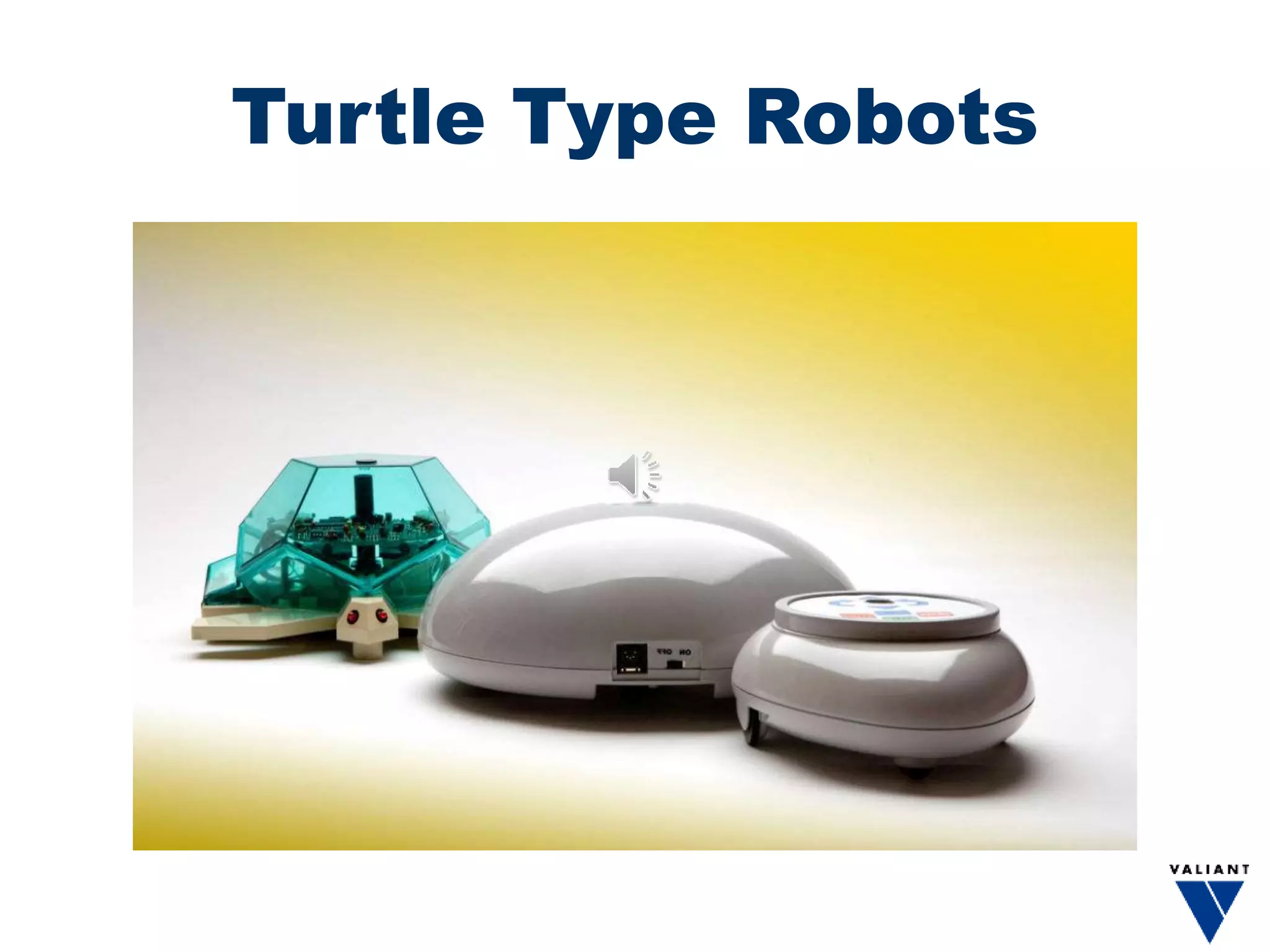
Turtle Type Robots
The Problem
Diversity
BBC Digi Zone 2014 Glasgow
Commonwealth Games
Kafuro School Project Uganda
Christ Hospital School,
West Sussex, England
Shanghai School
Project
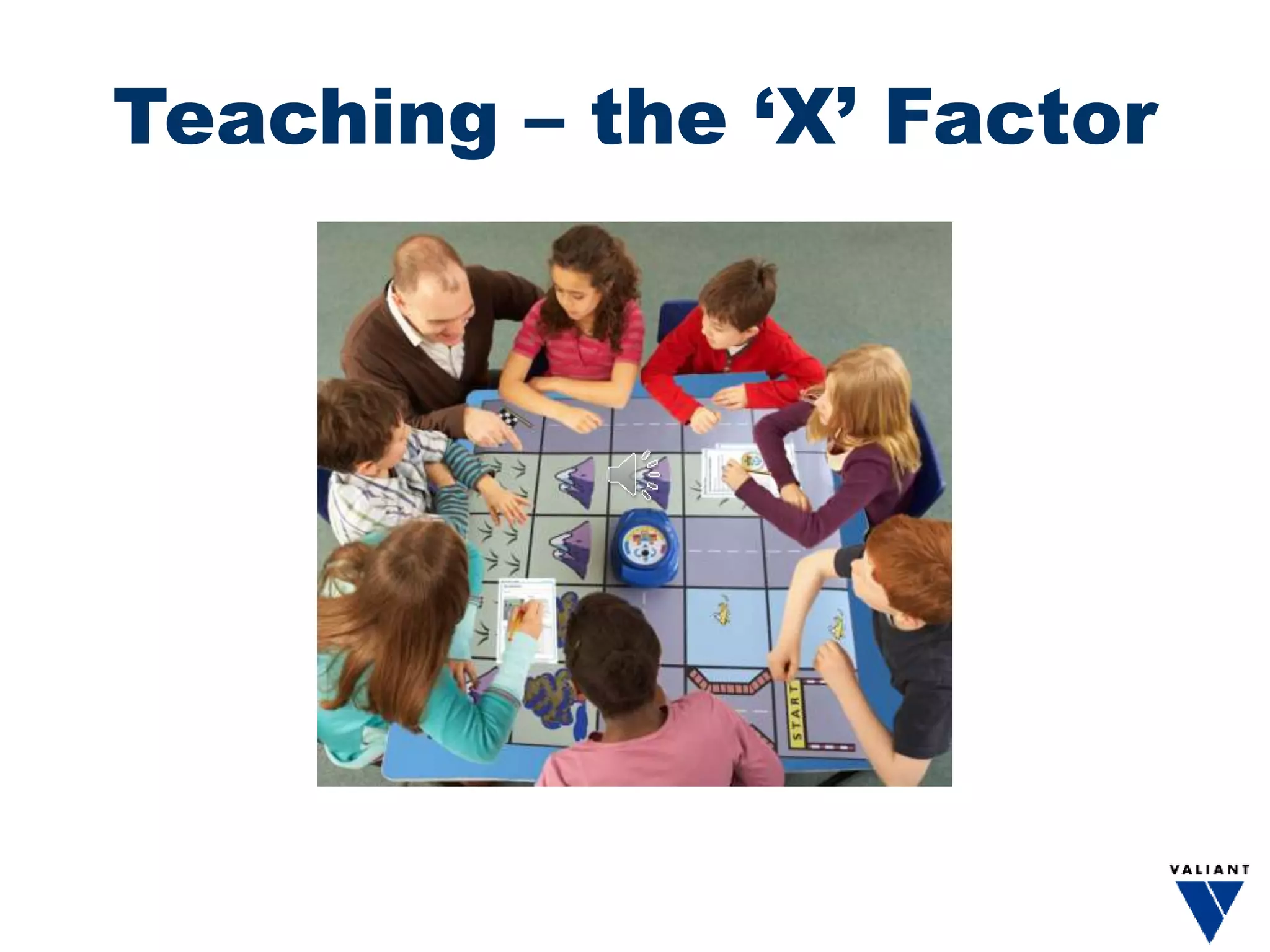
Teaching – the ‘X’ Factor
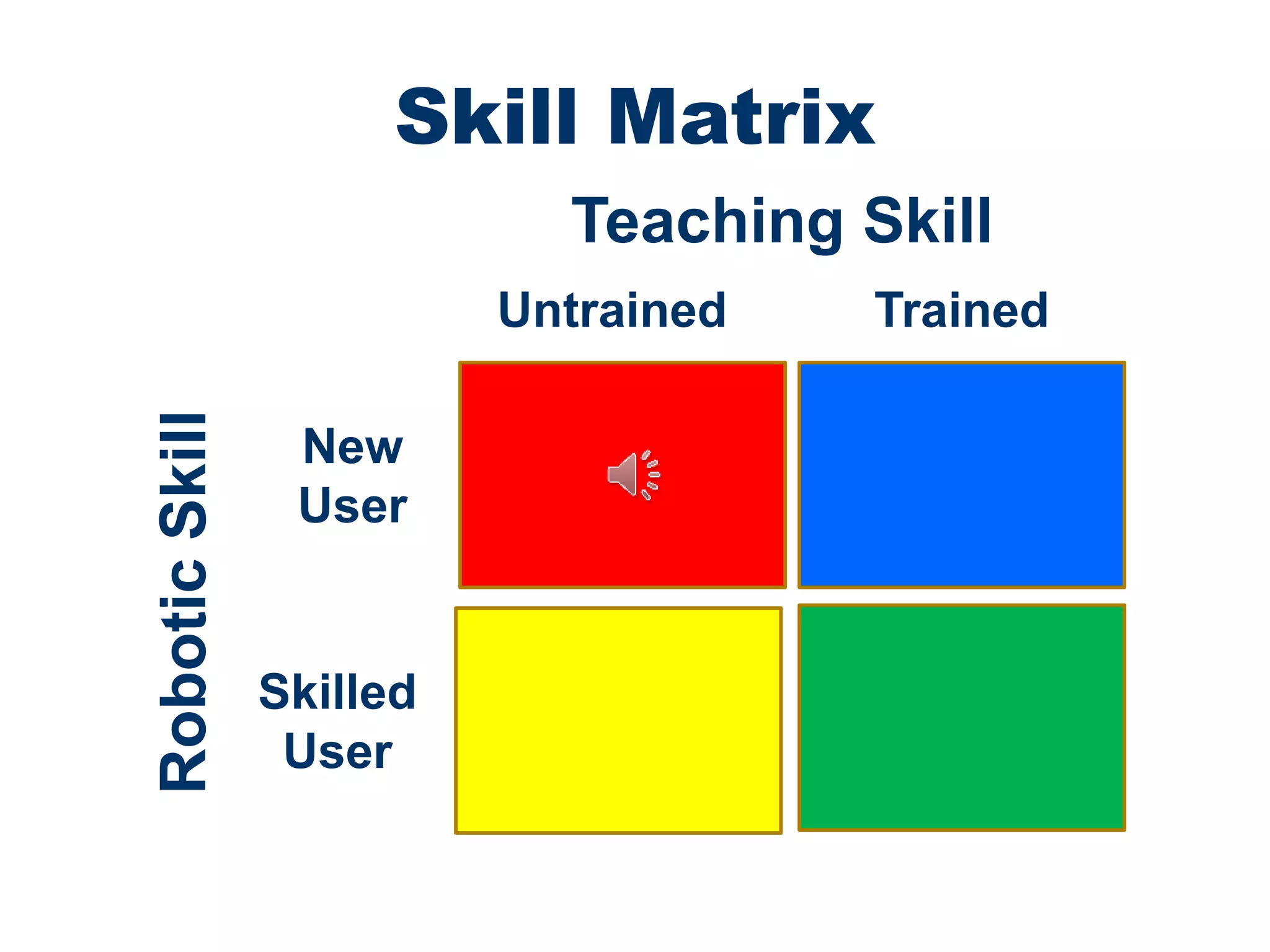
Skill Matrix
Untrained Trained
New
User
Skilled
User
Teaching Skill
RoboticSkill
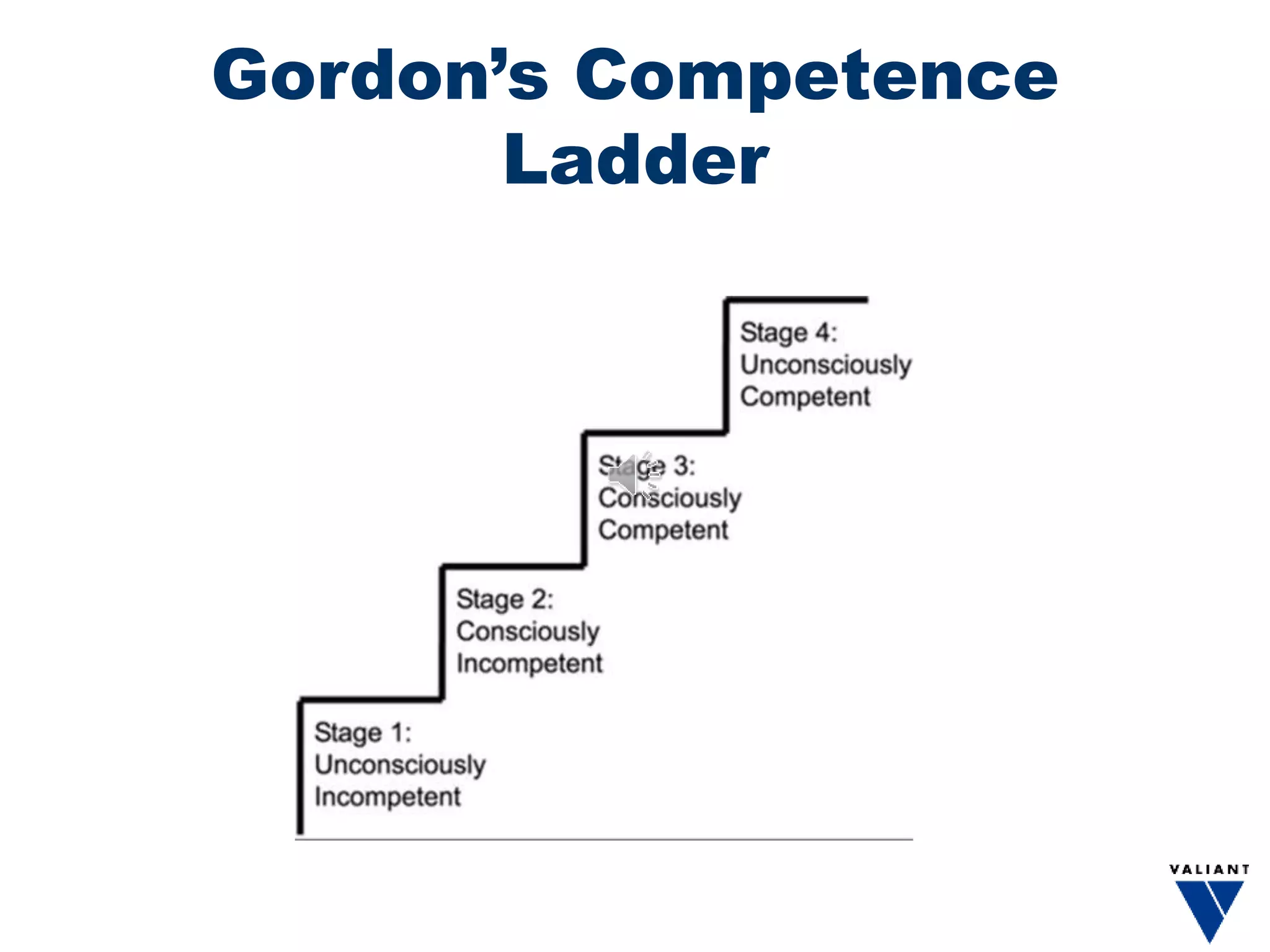
Gordon’s Competence
Ladder
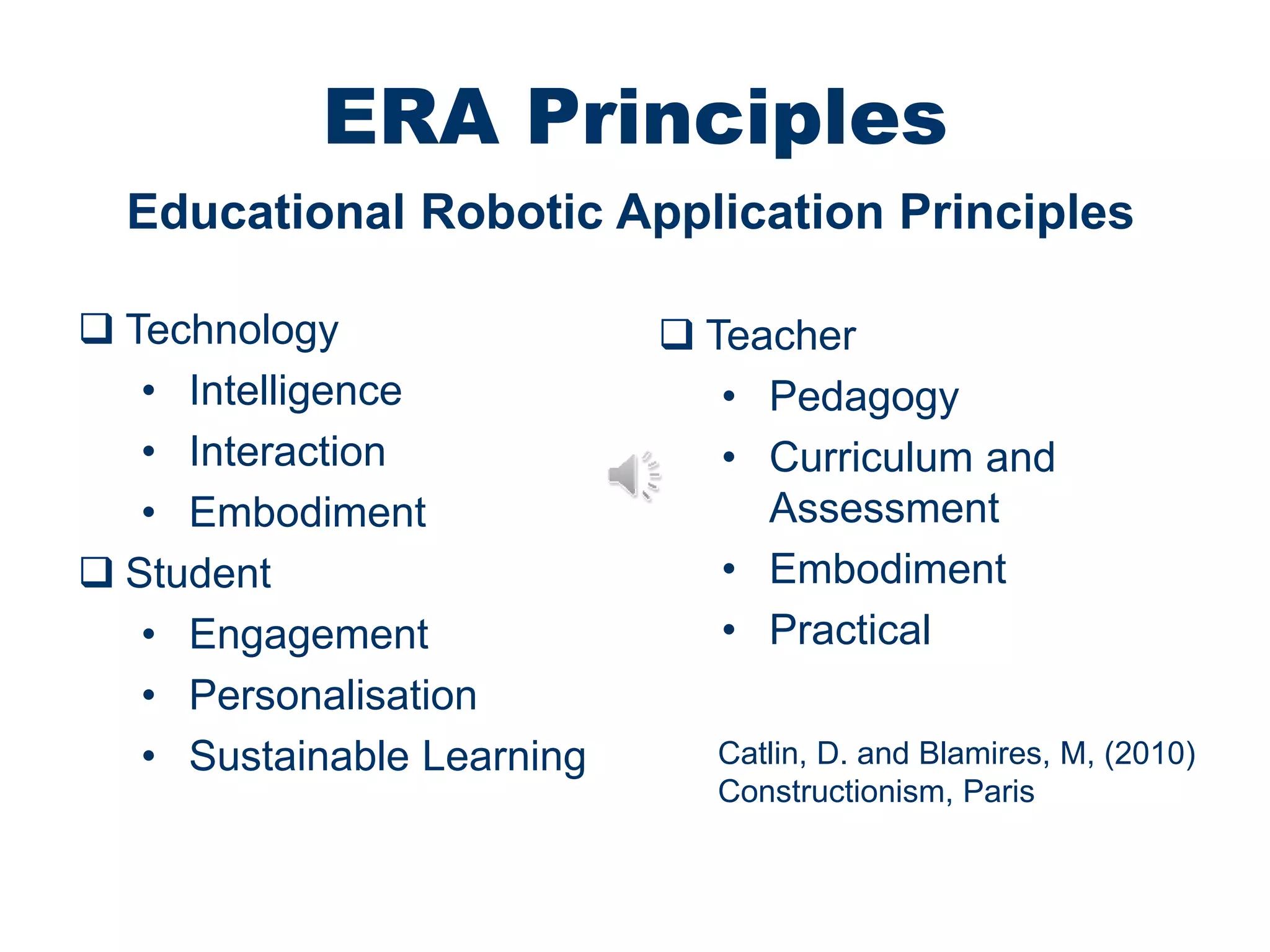
ERA Principles
 Technology
• Intelligence
• Interaction
• Embodiment
 Student
• Engagement
• Personalisation
• Sustainable Learning
Educational Robotic Application Principles
 Teacher
• Pedagogy
• Curriculum and
Assessment
• Embodiment
• Practical
Catlin, D. and Blamires, M, (2010)
Constructionism, Paris
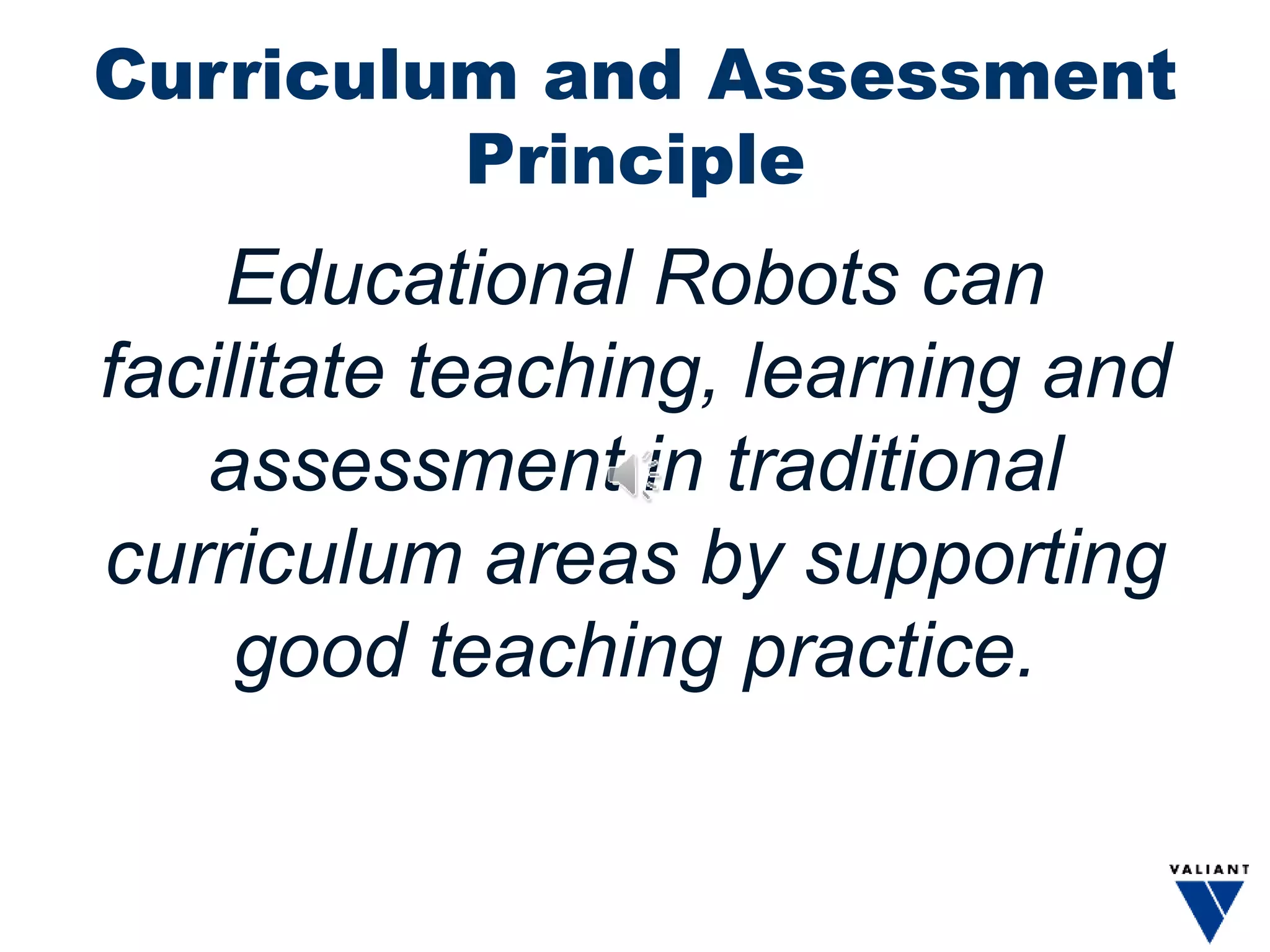
Curriculum and Assessment
Principle
Educational Robots can
facilitate teaching, learning and
assessment in traditional
curriculum areas by supporting
good teaching practice.
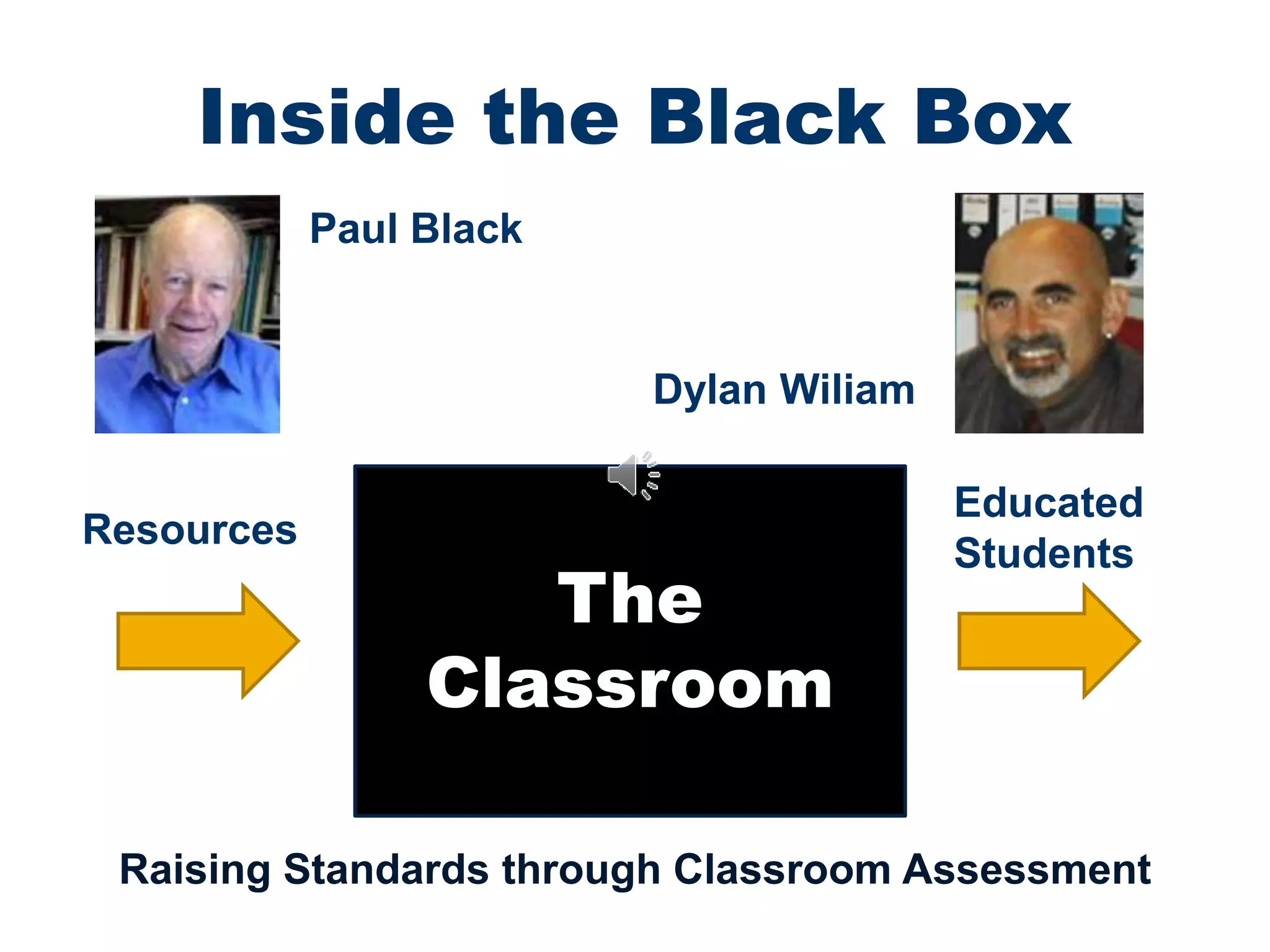
Inside the Black Box
The
Classroom
Paul Black
Dylan Wiliam
Raising Standards through Classroom Assessment
Resources
Educated
Students
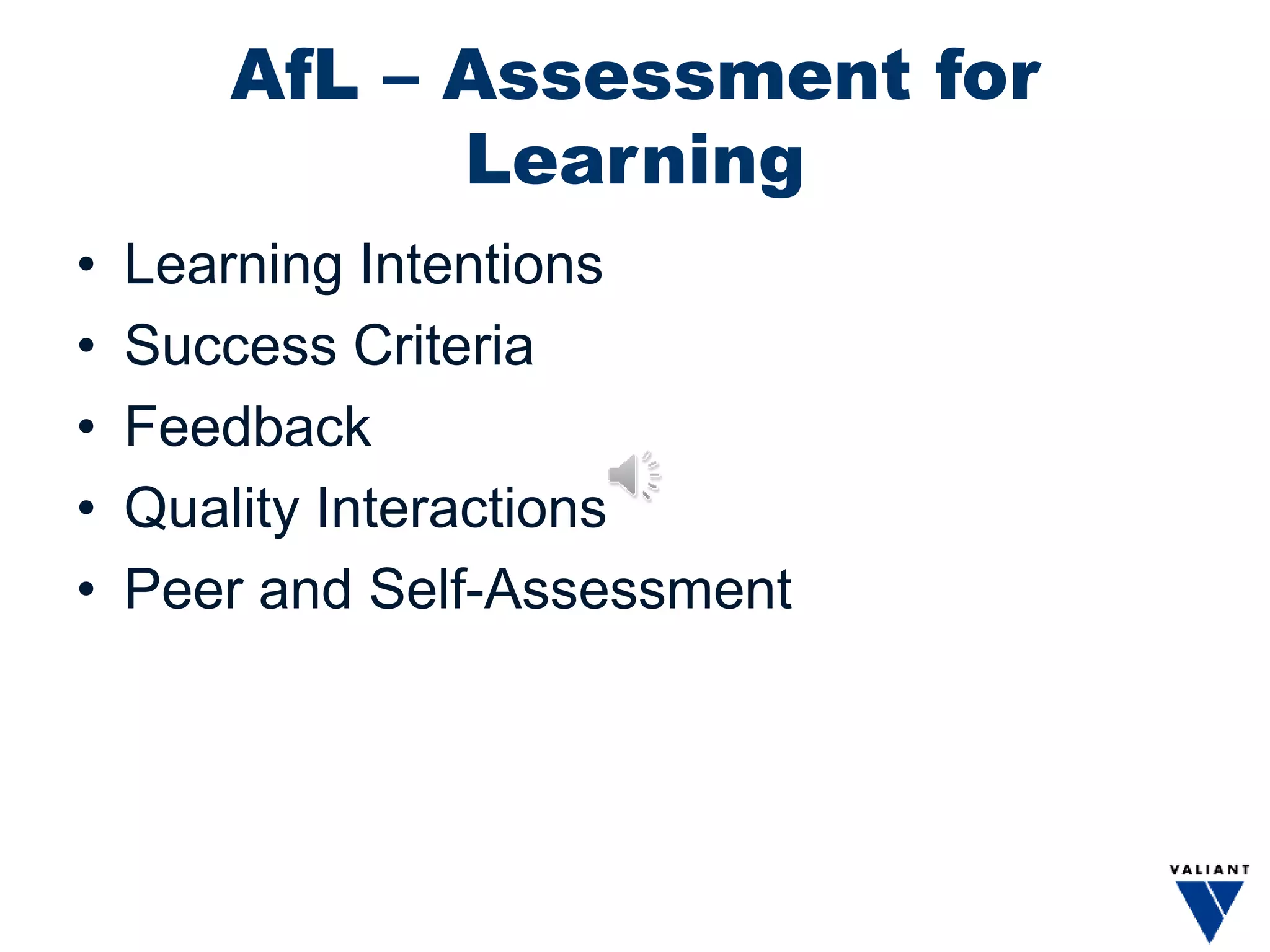
AfL – Assessment for
Learning
• Learning Intentions
• Success Criteria
• Feedback
• Quality Interactions
• Peer and Self-Assessment
AfL and Robots
• Catlin, D. (2012). Maximising the Effectiveness of Educational
Robotics through the Use of Assessment for Learning
Methodologies. 3rd International Conference on Teaching
Robotics, Teaching with Robotics. Riva La Garda, Italy.
• Catlin, D. (2014). Using Peer Assessment with Educational
Robots, Peer Review. Peer Review, Peer Assessment and
Self Assessment in Education, ist International Workshop,
collated with the 13th International Conference on Web-based
Learning ICW. Tallinn, Estonia: Springer Verlag.
• Catlin, D., Csizmadia, A. P., OMeara, J. G., & Younie, S.
(2015). Using Educational Robotics Research to Transform
the Classroom. RiE 2015: 6th International Conference on
Robotics in Education. Yverdon-les-Bains.
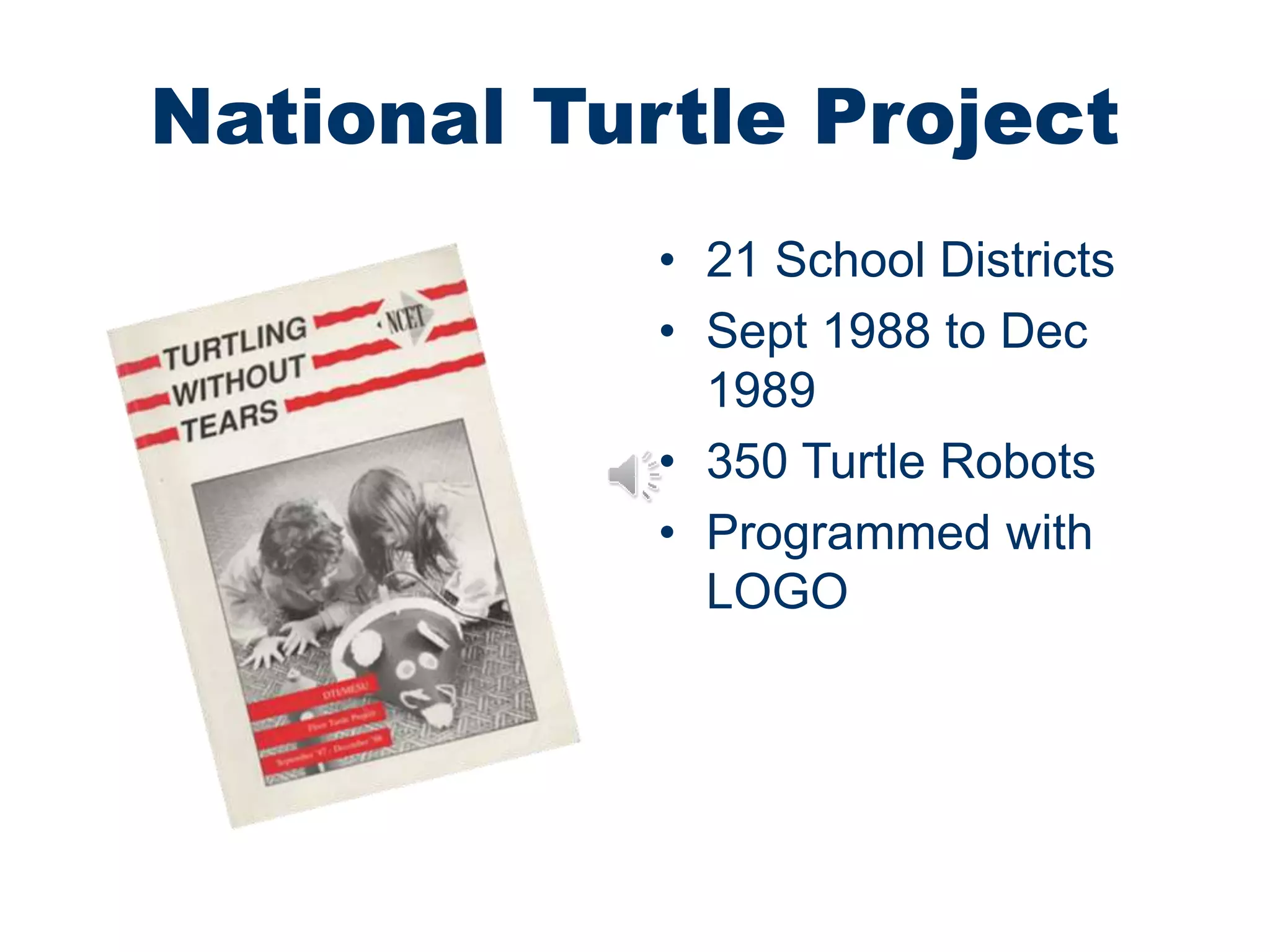
National Turtle Project
• 21 School Districts
• Sept 1988 to Dec
1989
• 350 Turtle Robots
• Programmed with
LOGO
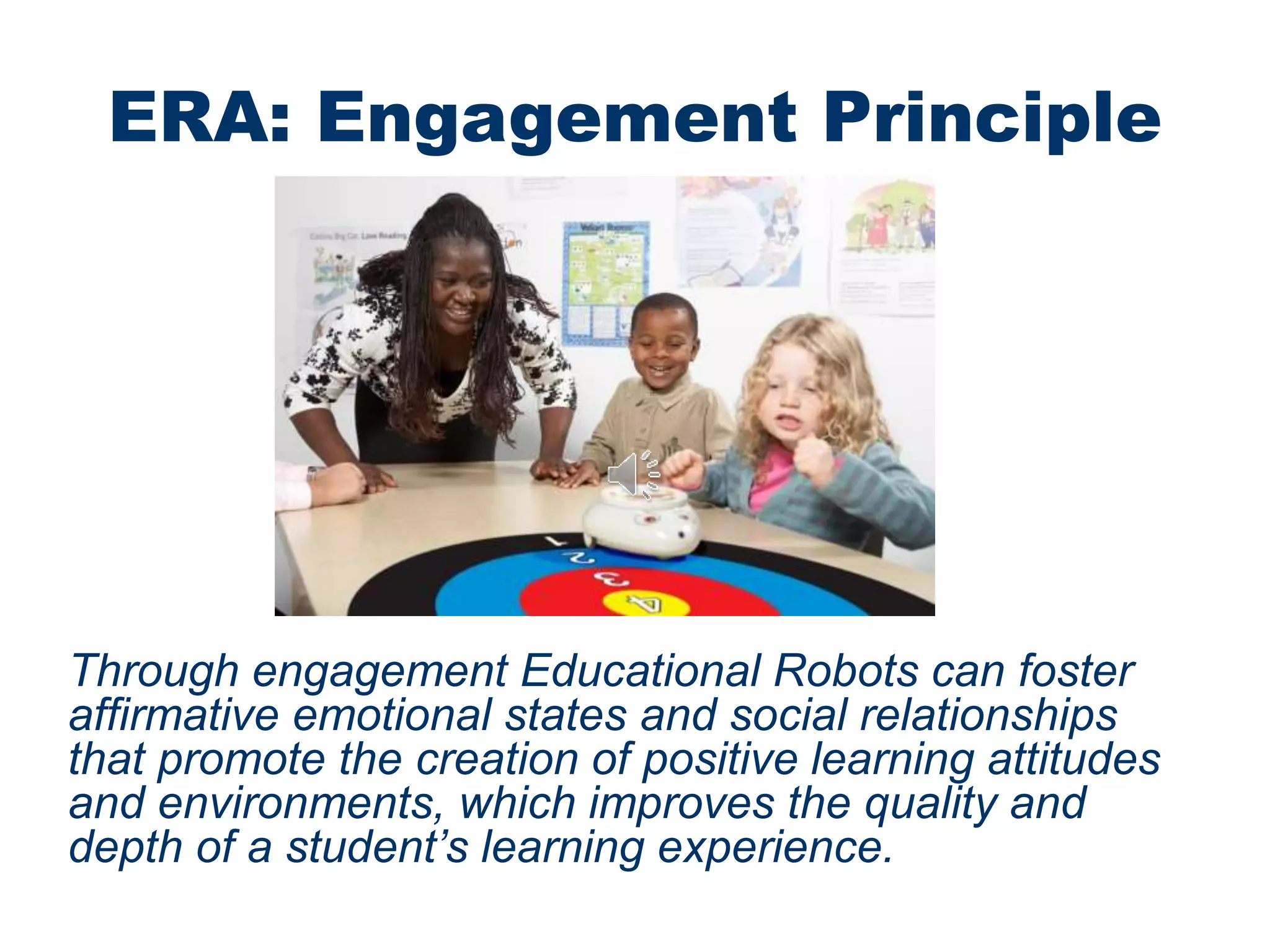
ERA: Engagement Principle
Through engagement Educational Robots can foster
affirmative emotional states and social relationships
that promote the creation of positive learning attitudes
and environments, which improves the quality and
depth of a student’s learning experience.
Methodology
• Review of AfL
information
• Teacher experience
and perspective
• Joe Bower Blog: Stop
writing the objectives
on the board.
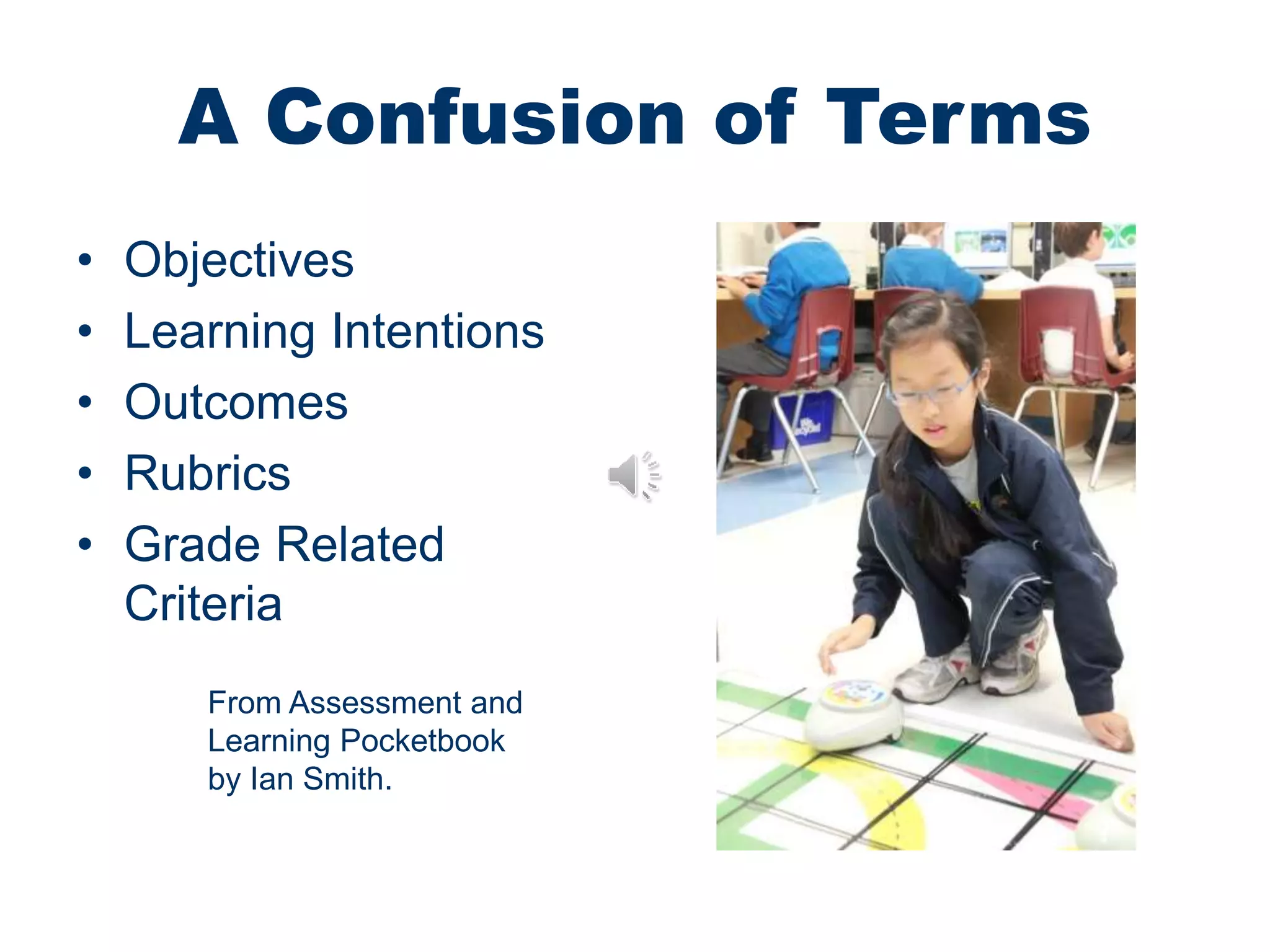
A Confusion of Terms
• Objectives
• Learning Intentions
• Outcomes
• Rubrics
• Grade Related
Criteria
From Assessment and
Learning Pocketbook
by Ian Smith.
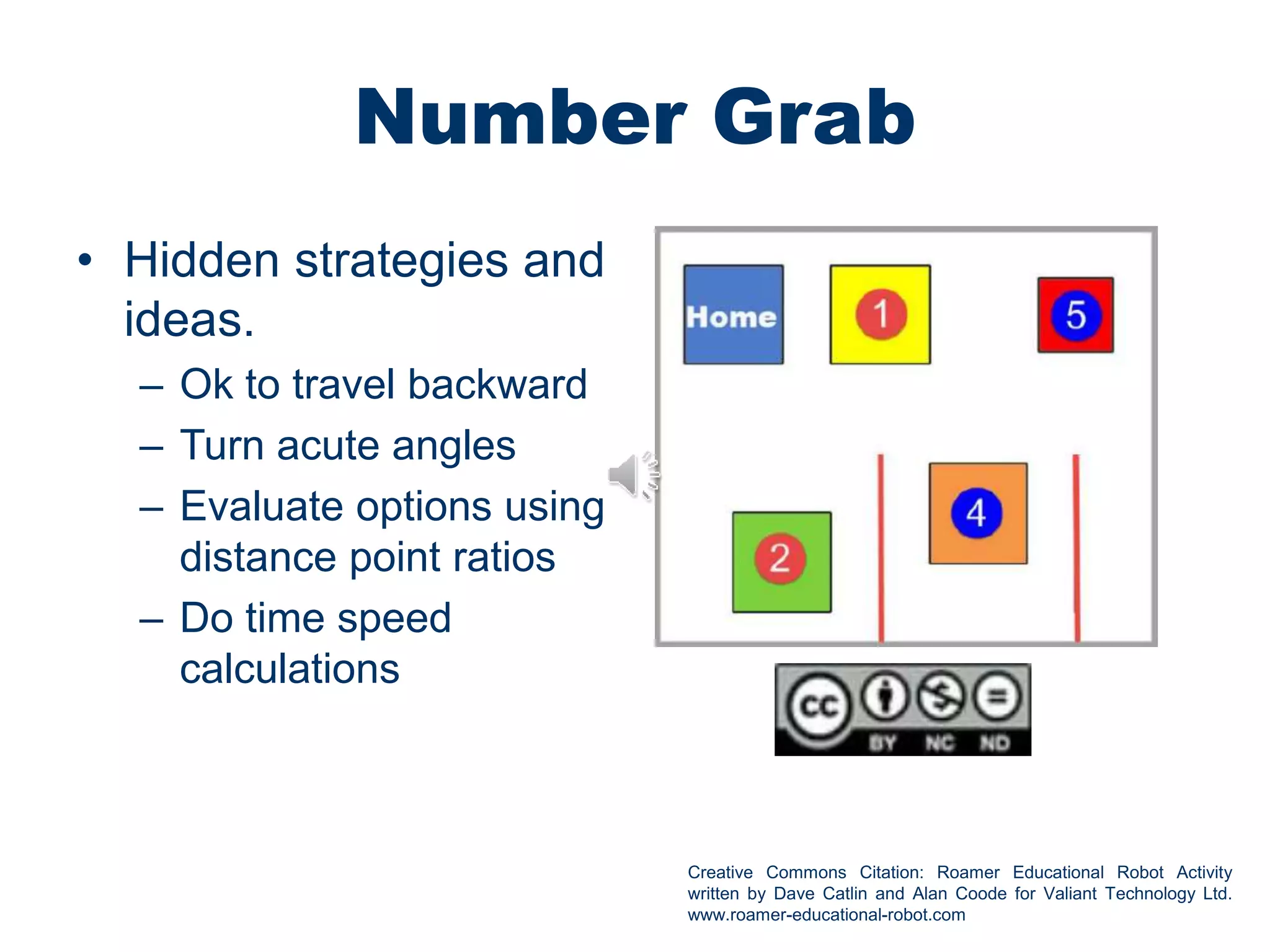
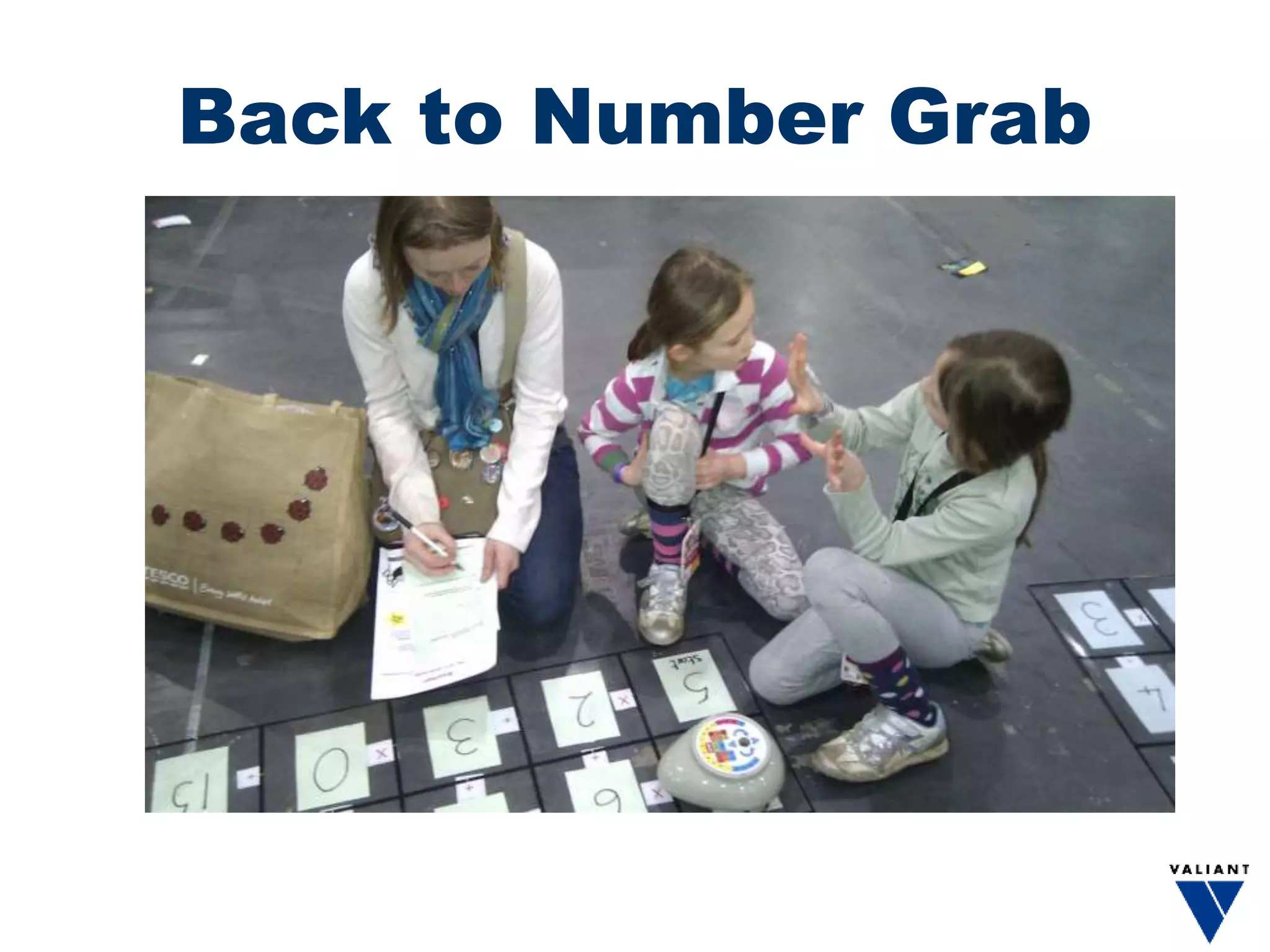
Number Grab
• Hidden strategies and
ideas.
– Ok to travel backward
– Turn acute angles
– Evaluate options using
distance point ratios
– Do time speed
calculations
Creative Commons Citation: Roamer Educational Robot Activity
written by Dave Catlin and Alan Coode for Valiant Technology Ltd.
www.roamer-educational-robot.com
Lesson Objectives
• Make strategic problem solving decisions
based on arithmetical operations and
estimations involving integers.
• Practice the rapid recall of number facts
and arithmetical operations on integers.
• Practice estimating distance, turn and
time.
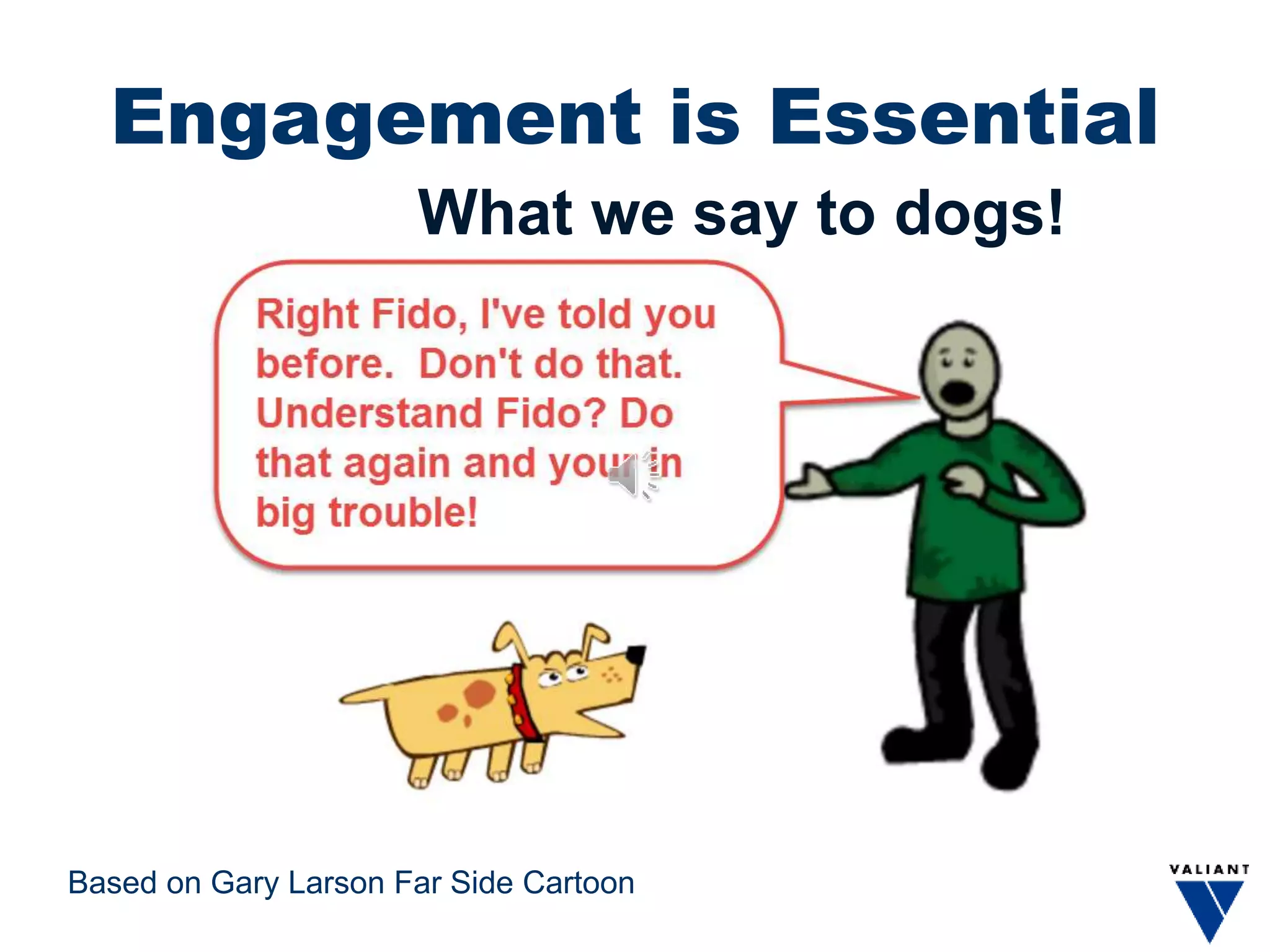
Engagement is Essential
What we say to dogs!
Based on Gary Larson Far Side Cartoon
What Children Understand
What dogs hear!
Based on Gary Larson Far Side Cartoon
Learning Intentions
• Focus on learning and not what students
have to do
• The child’s perspective on what they are
learning
• Should be negotiated with the students
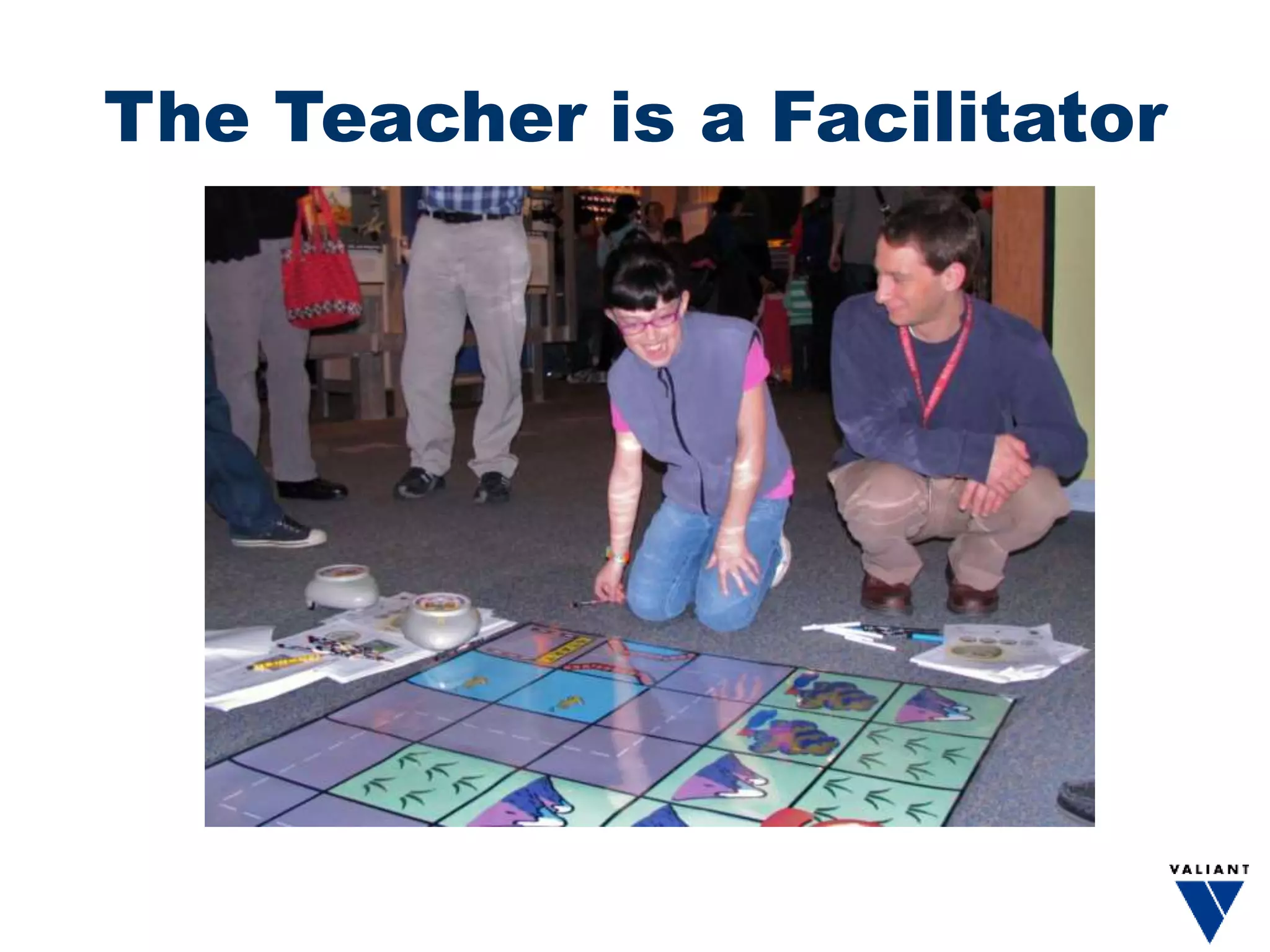
The Teacher is a Facilitator
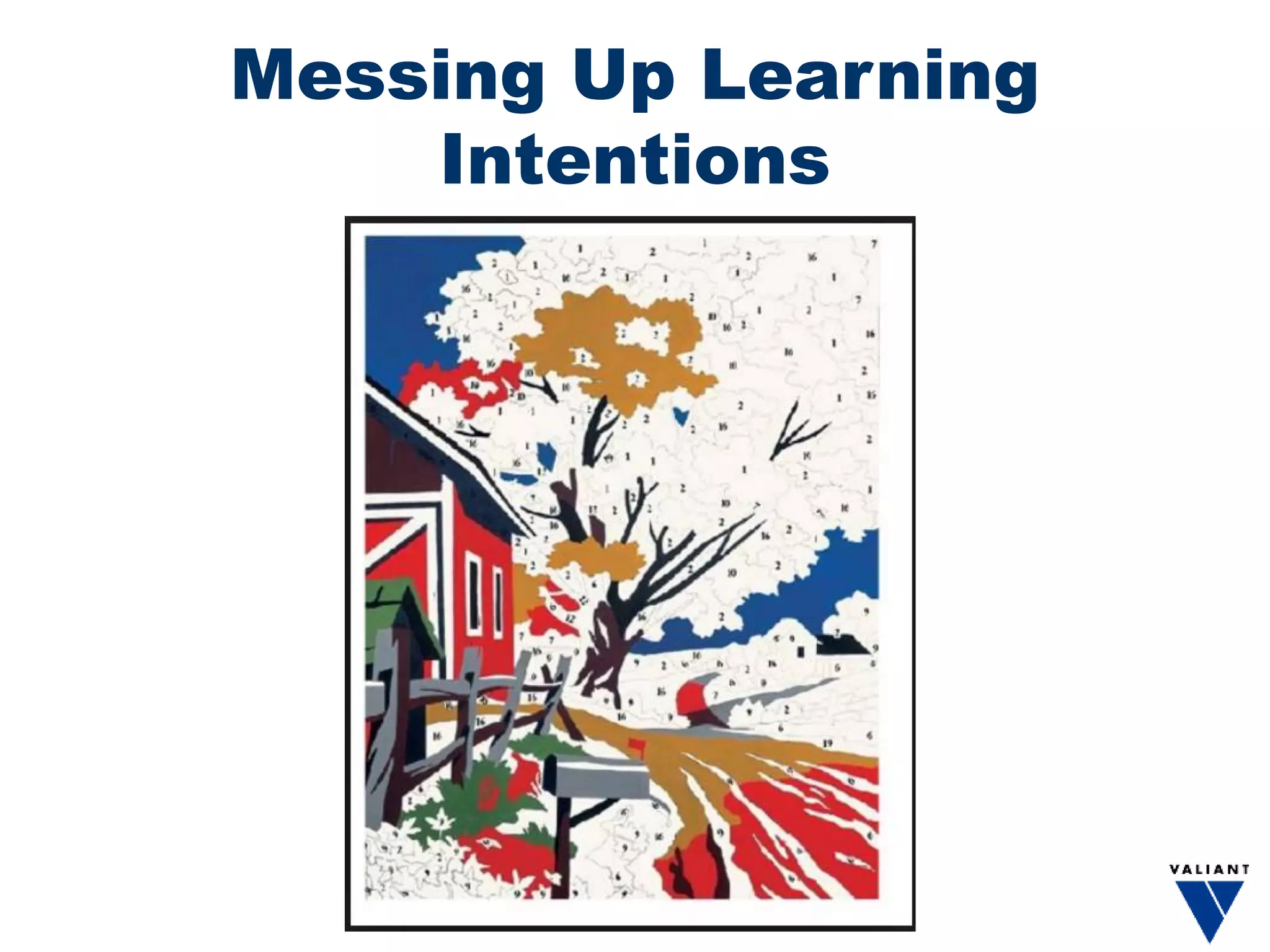
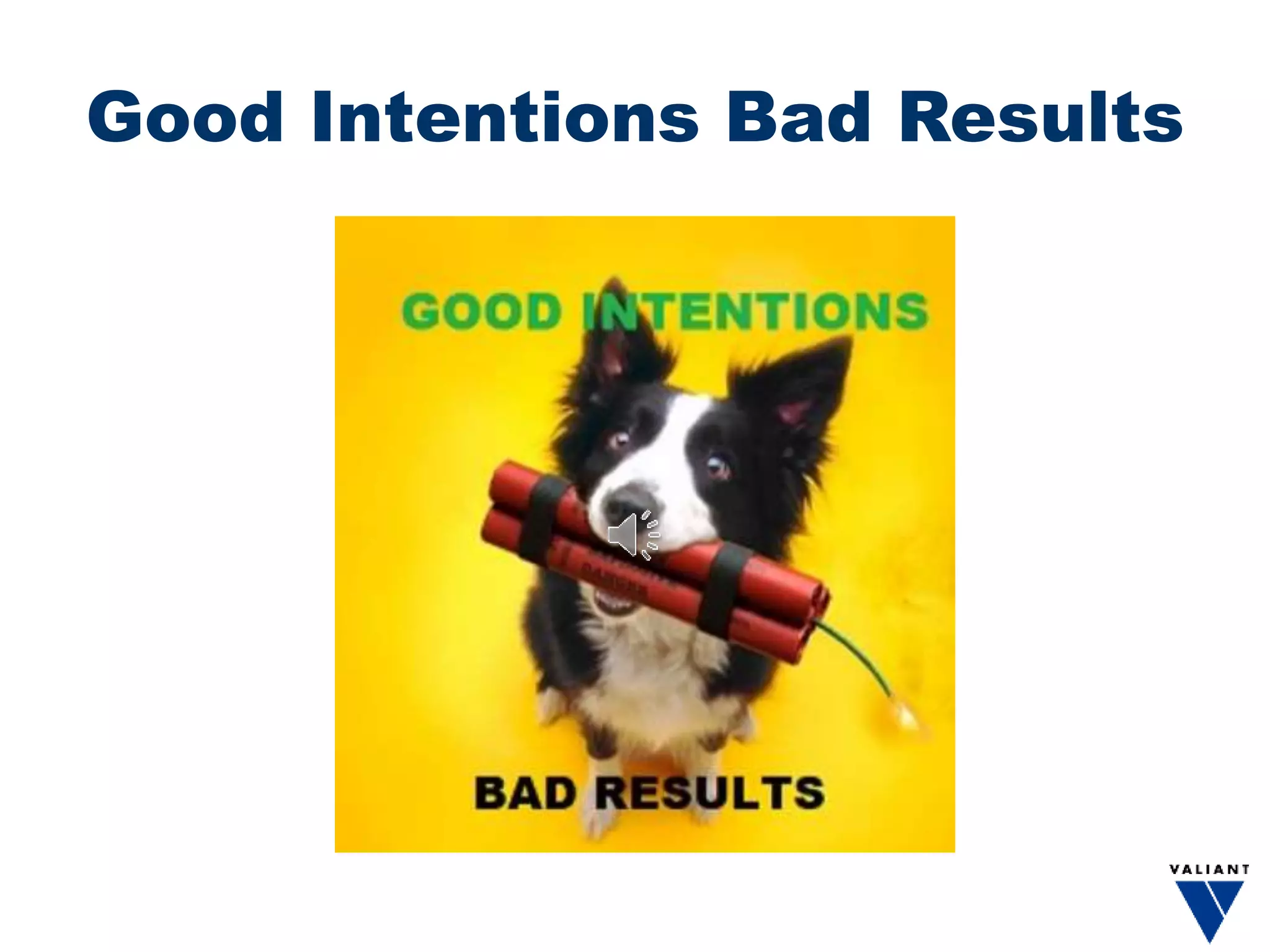
Good Intentions Bad Results
Messing Up Learning
Intentions
About Learning Intentions
• Assessment becomes ‘formative’ when
teachers use the evidence to adapt their
teaching to meet student learning needs.
• Teachers lead formative assessment, but it is
something students do.
• A narrow Learning Intention is not always
enough to direct student learning.
• Creating a good Learning Intention is more
craft than science.
• You need to make sure writing Learning
Intentions does not become a dull routine. .
Wiliam, D. (2011). Embedded Formative
Assessment. Bloomington: Solution Tree Press.
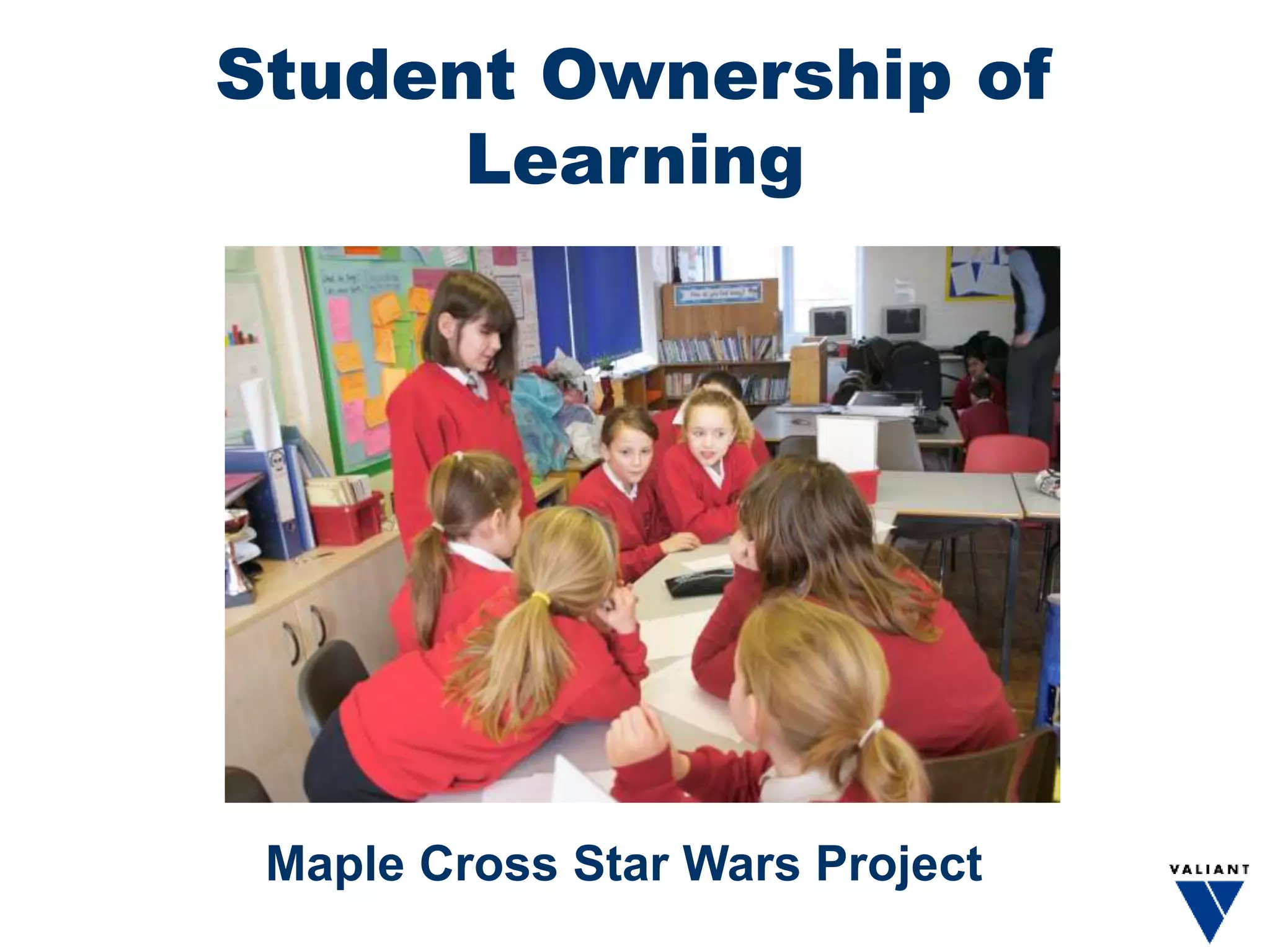
Student Ownership of
Learning
Maple Cross Star Wars Project
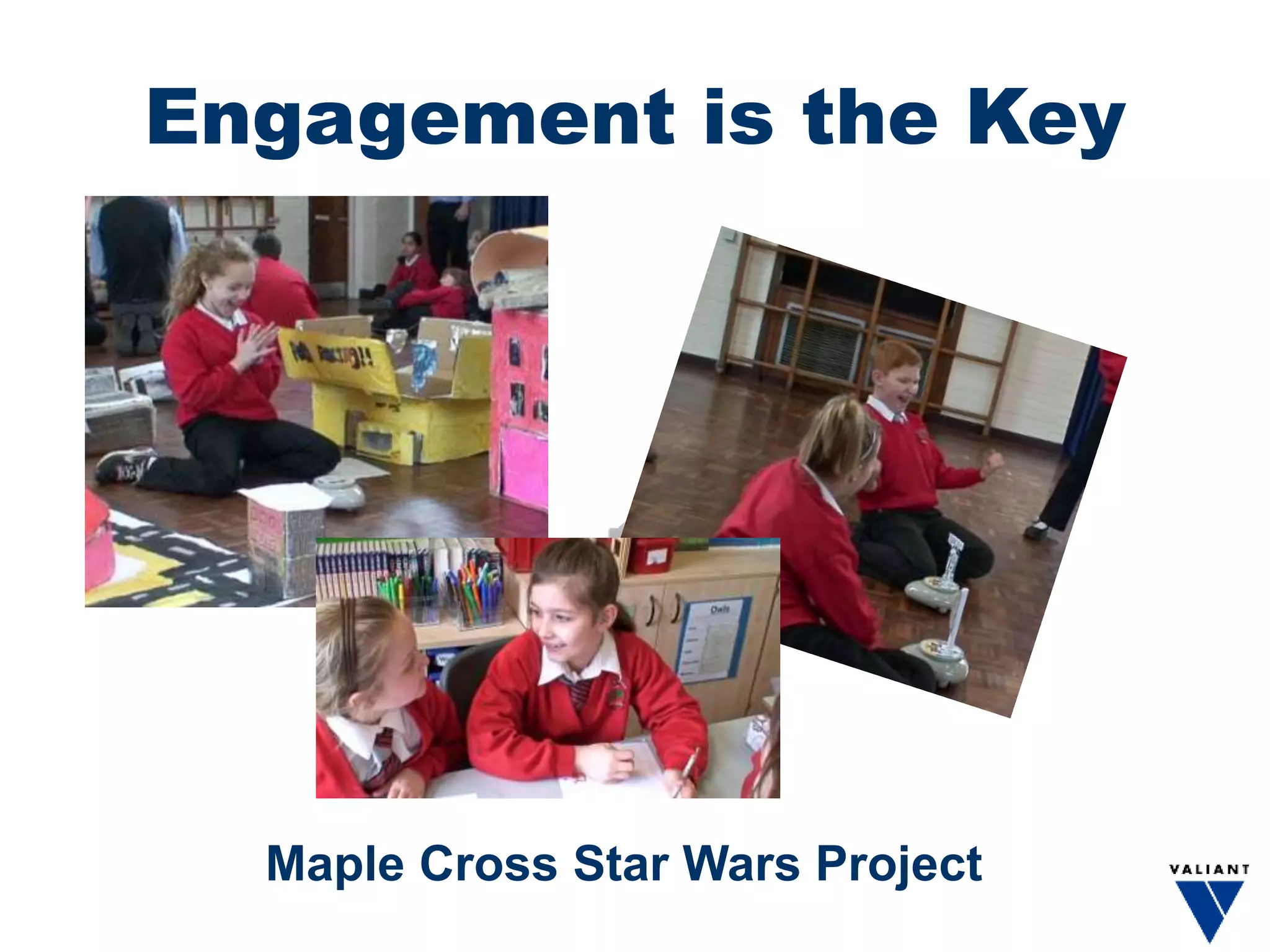
Engagement is the Key
Maple Cross Star Wars Project
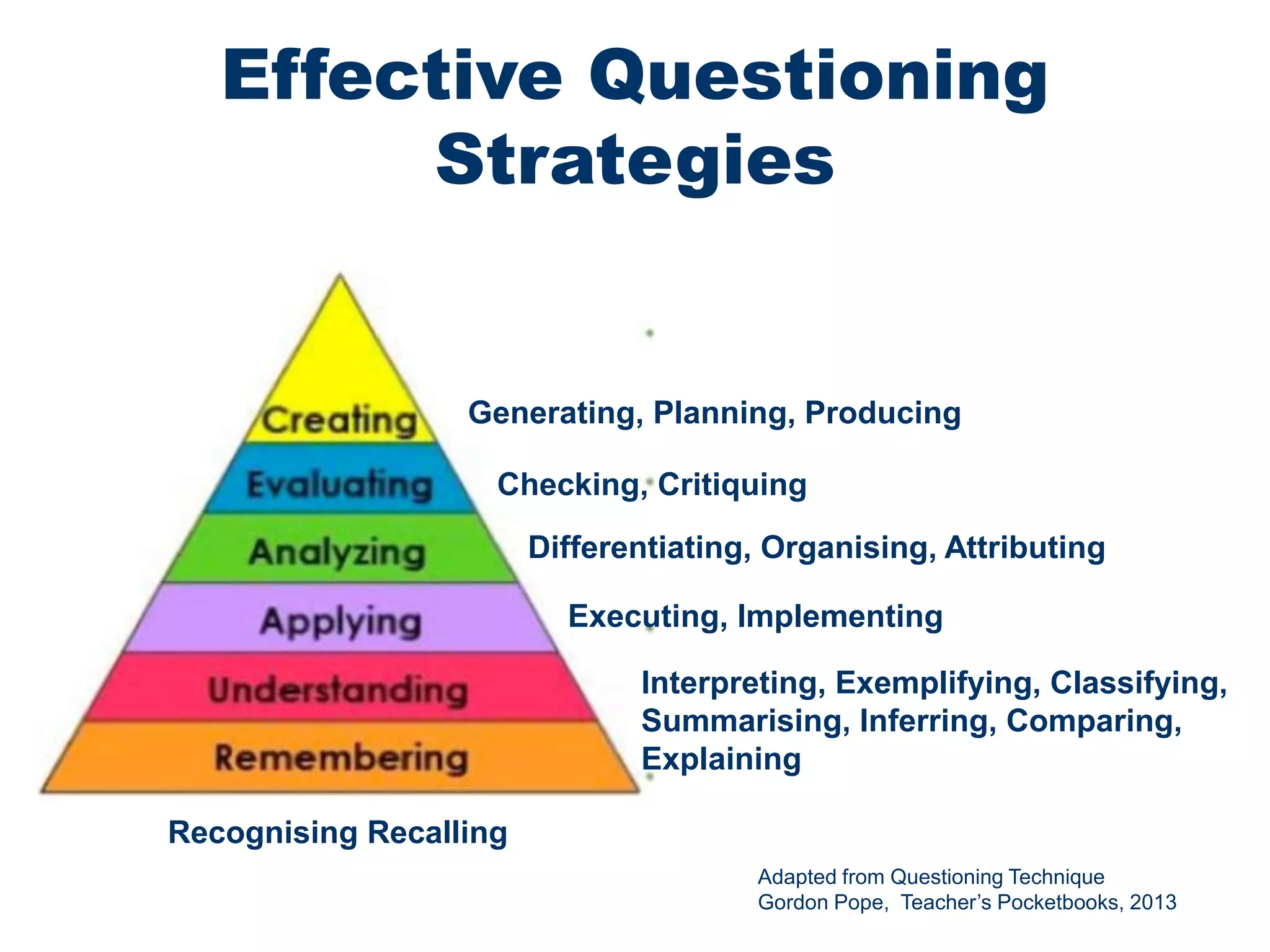
Effective Questioning
Strategies
Generating, Planning, Producing
Checking, Critiquing
Differentiating, Organising, Attributing
Executing, Implementing
Interpreting, Exemplifying, Classifying,
Summarising, Inferring, Comparing,
Explaining
Recognising Recalling
Adapted from Questioning Technique
Gordon Pope, Teacher’s Pocketbooks, 2013
Back to Number Grab
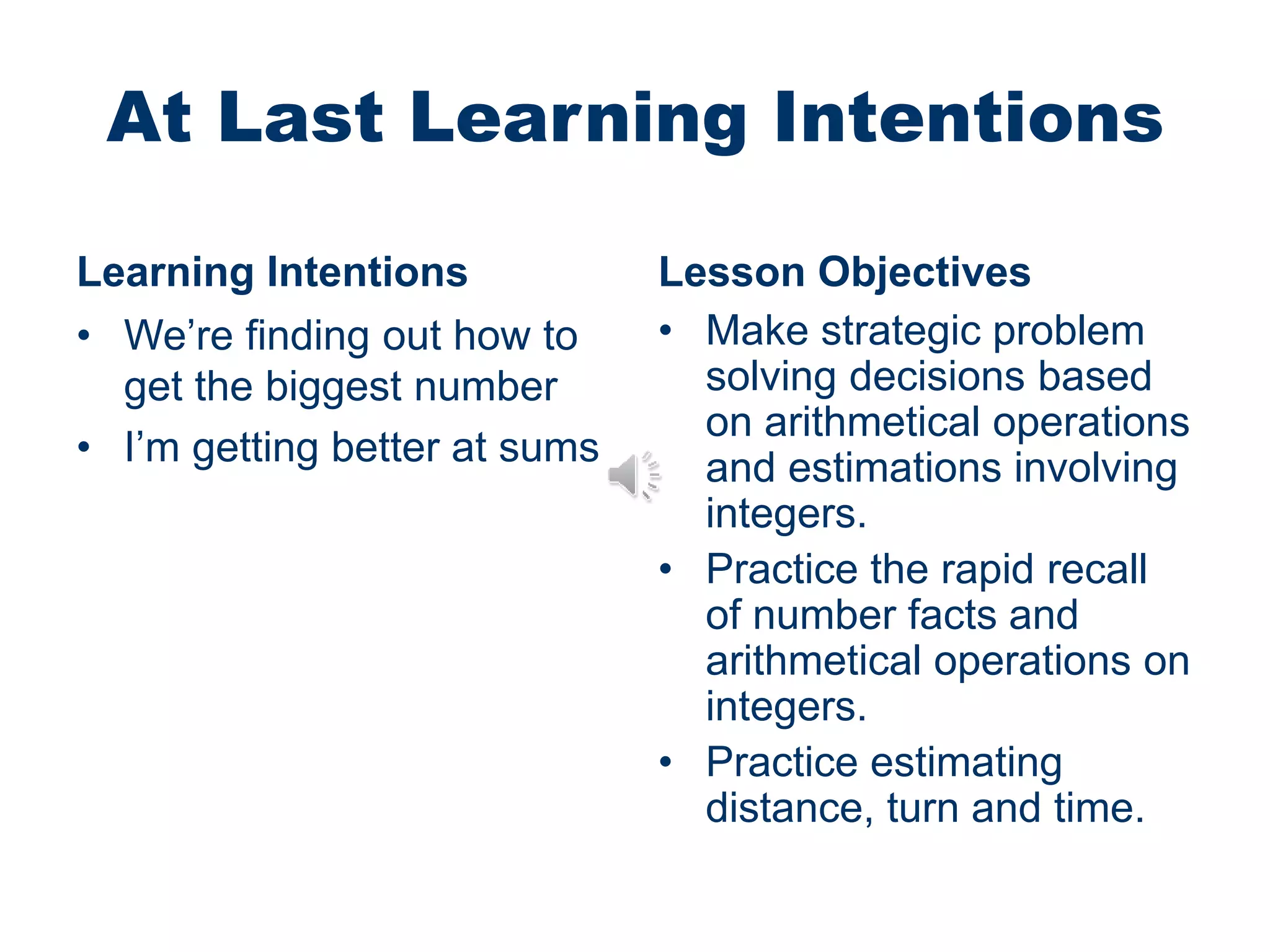
At Last Learning Intentions
Learning Intentions Lesson Objectives
• Make strategic problem
solving decisions based
on arithmetical operations
and estimations involving
integers.
• Practice the rapid recall
of number facts and
arithmetical operations on
integers.
• Practice estimating
distance, turn and time.
• We’re finding out how to
get the biggest number
• I’m getting better at sums
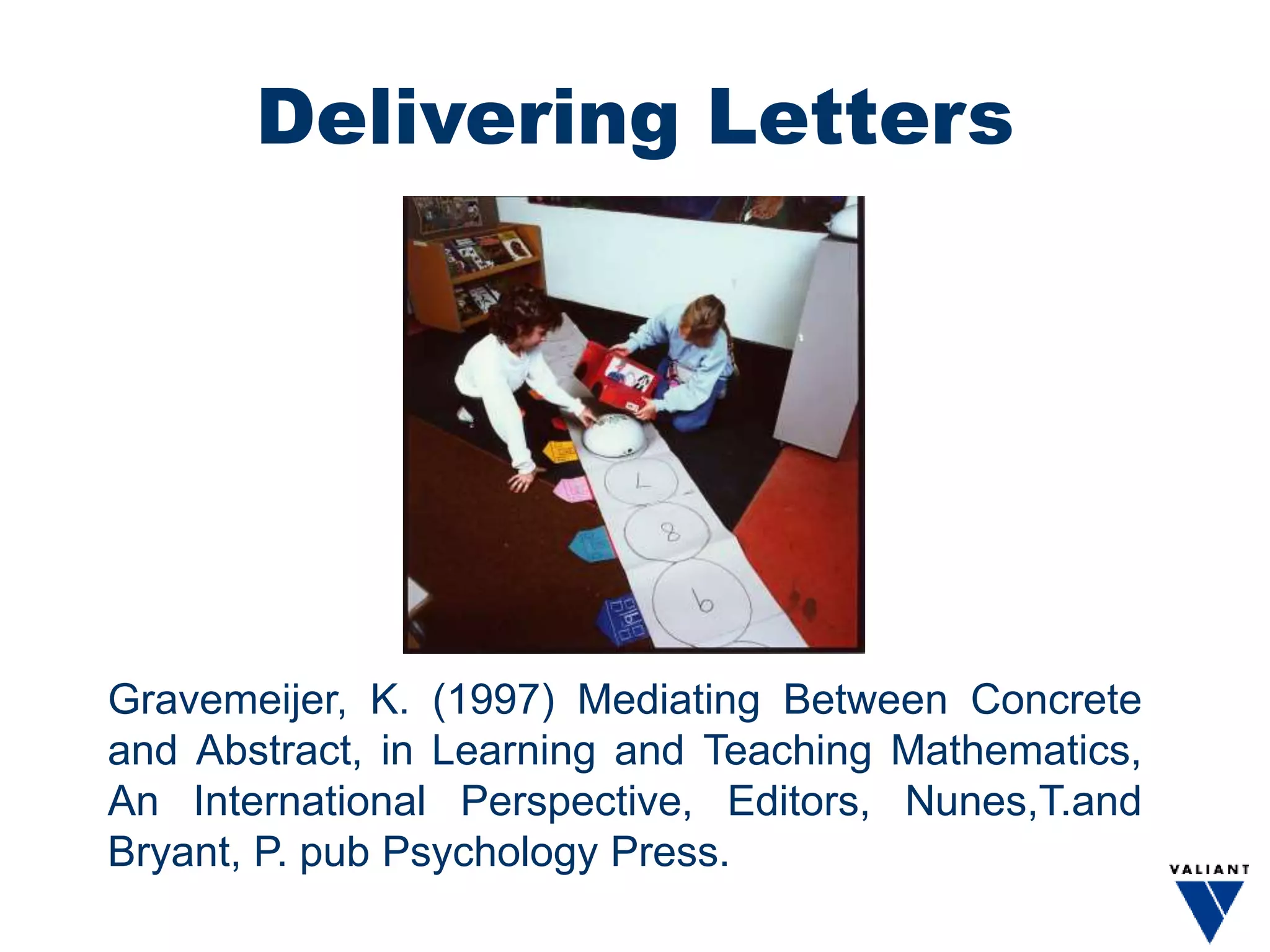
Delivering Letters
Gravemeijer, K. (1997) Mediating Between Concrete
and Abstract, in Learning and Teaching Mathematics,
An International Perspective, Editors, Nunes,T.and
Bryant, P. pub Psychology Press.
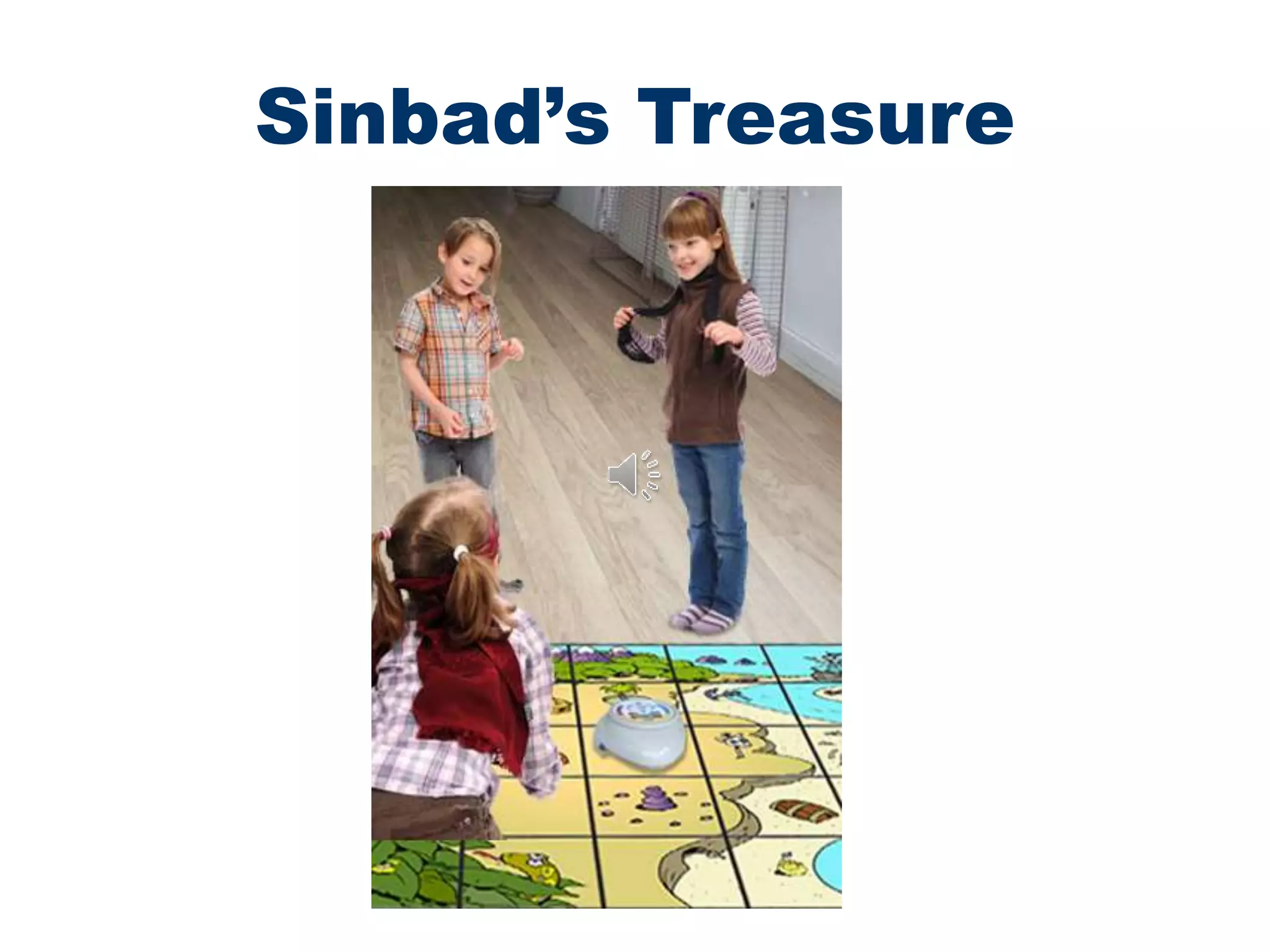
Sinbad’s Treasure
Do You Always Need a
Learning Intention?
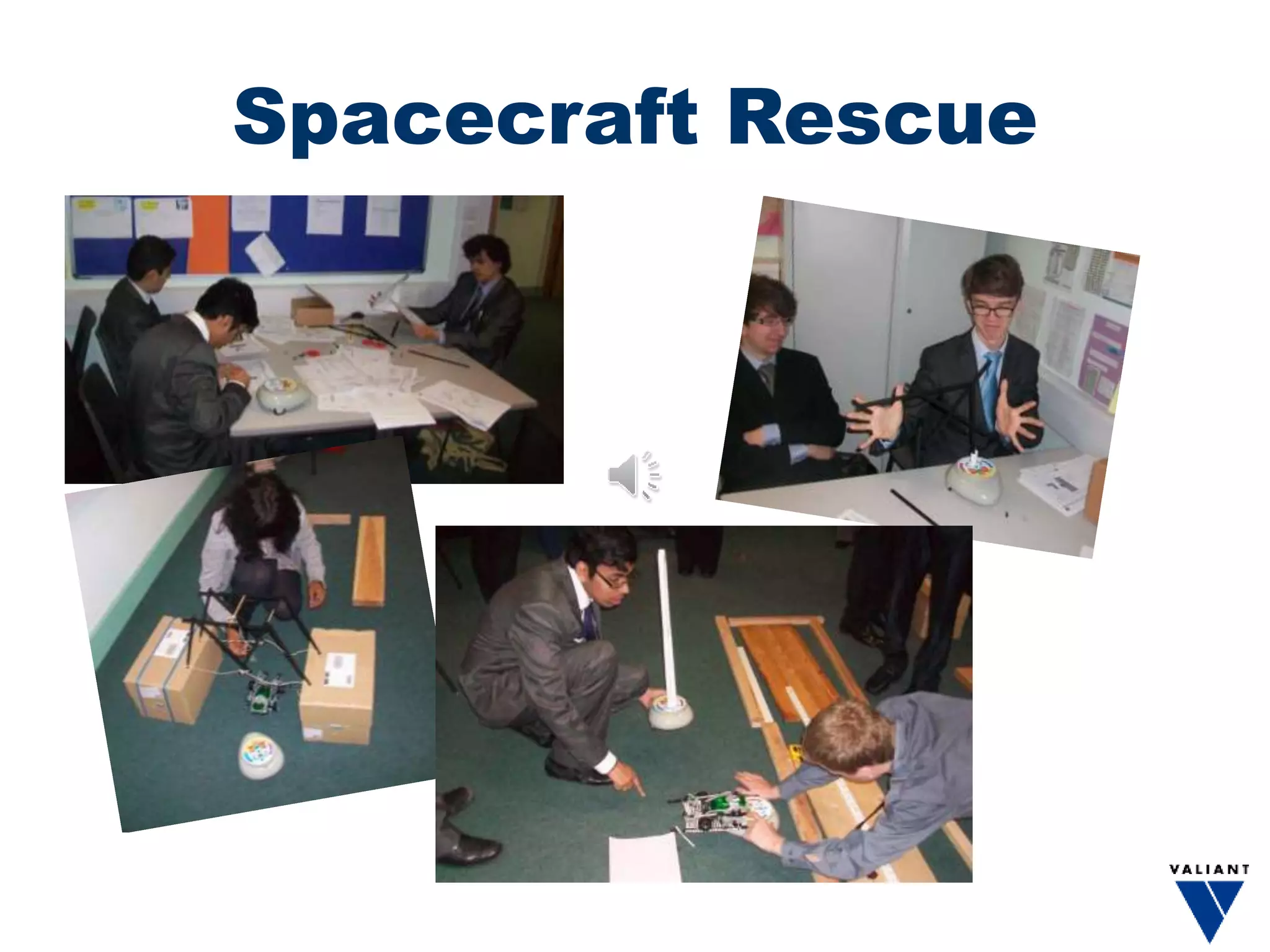
Spacecraft Rescue
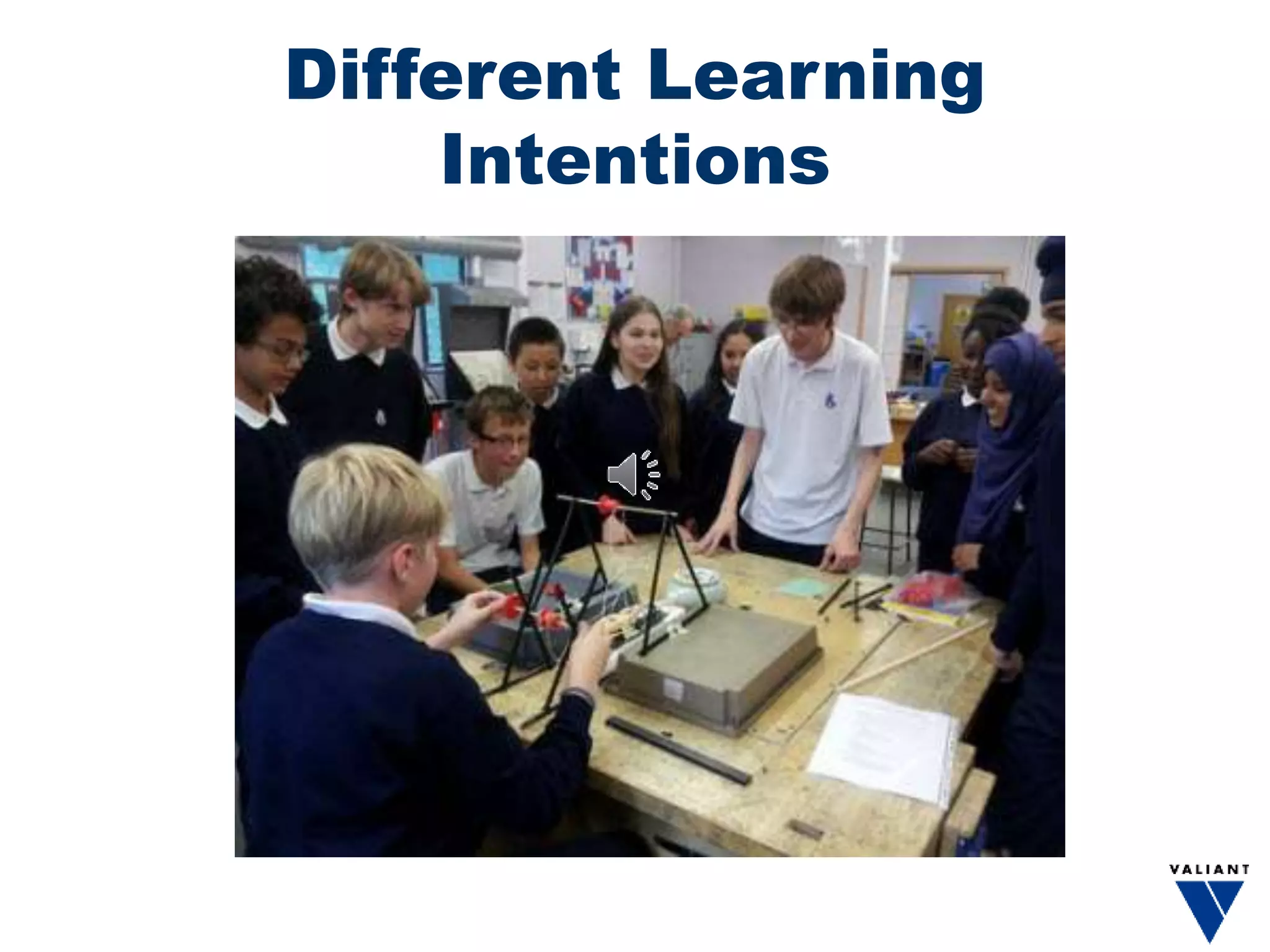
Different Learning
Intentions
Multiple Learning Intentions
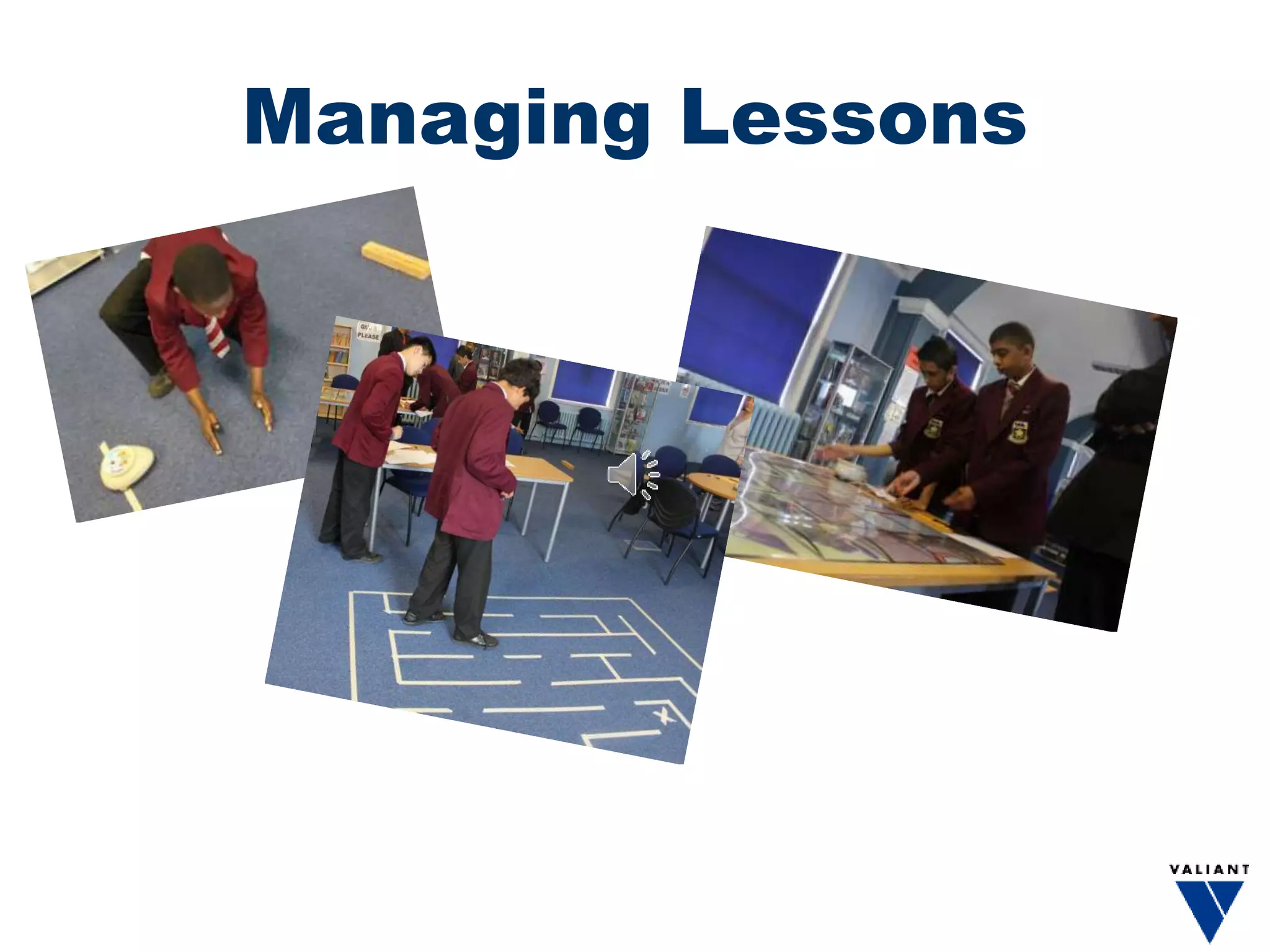
Managing Lessons
Summary
• Lesson Objectives relate to the curriculum
• Engage students before establishing Learning Intentions
• Help students to generate Learning Intentions
• Focus on learning not what-to-do
• Use effective questioning to develop Learning Intentions
• Try and establish Learning Intentions at the start of the
lesson
• It is not always possible to set up a Learning Intention.
• Change the Learning Intentions if it improves learning
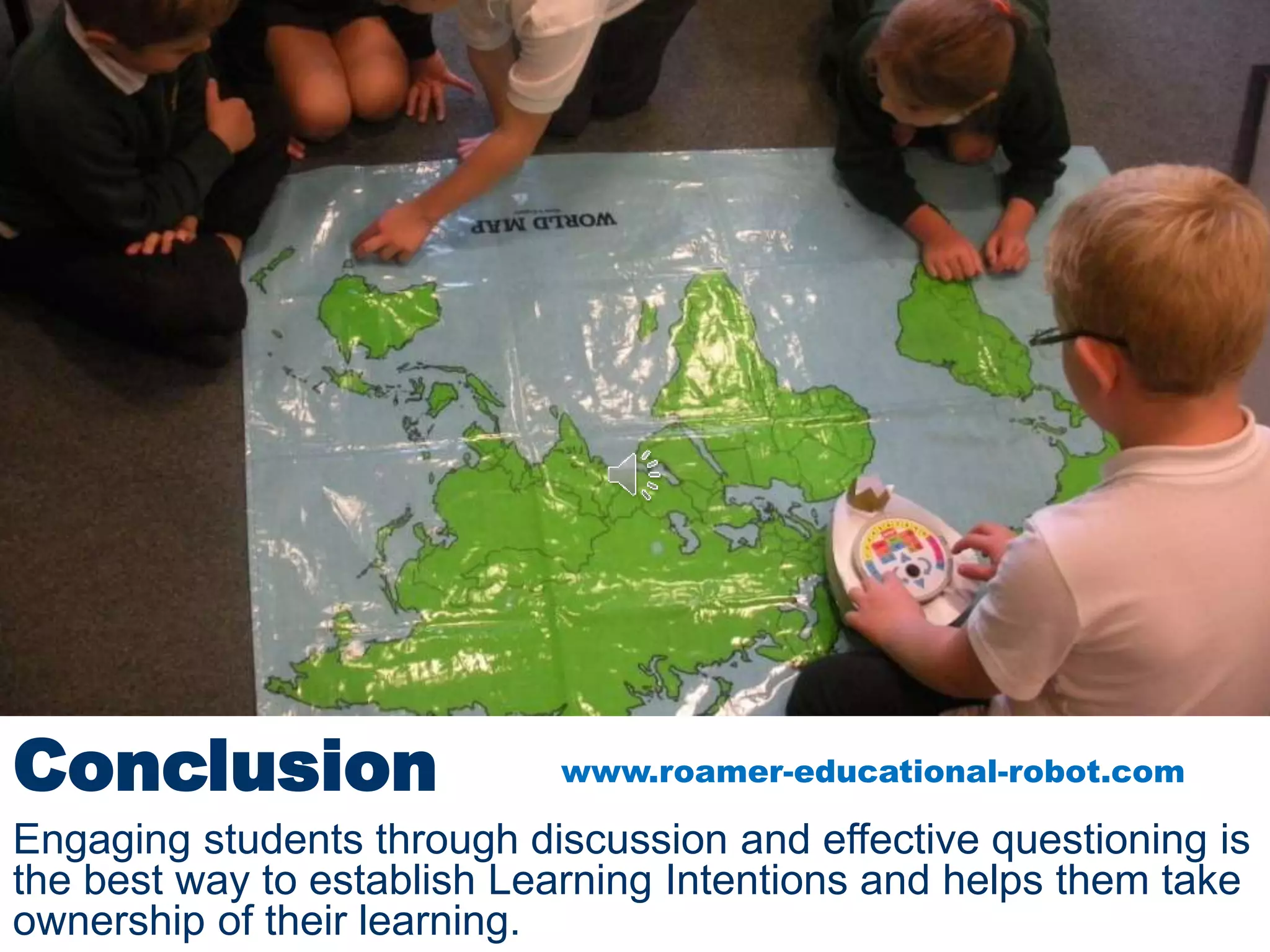
Conclusion
Engaging students through discussion and effective questioning is
the best way to establish Learning Intentions and helps them take
ownership of their learning.
www.roamer-educational-robot.com

Constructionsim 2016 presentation

  • 1.
    Learning Intentions and EducationalRobots Dave Catlin CEO Valiant Technology Ltd. Constructionism 2016 1st – 5th Feb, Bangkok, Thailand www.roamer-educational-robot.com
  • 2.
  • 3.
  • 4.
    Diversity BBC Digi Zone2014 Glasgow Commonwealth Games Kafuro School Project Uganda Christ Hospital School, West Sussex, England Shanghai School Project
  • 5.
    Teaching – the‘X’ Factor
  • 6.
  • 7.
  • 8.
    ERA Principles  Technology •Intelligence • Interaction • Embodiment  Student • Engagement • Personalisation • Sustainable Learning Educational Robotic Application Principles  Teacher • Pedagogy • Curriculum and Assessment • Embodiment • Practical Catlin, D. and Blamires, M, (2010) Constructionism, Paris
  • 9.
    Curriculum and Assessment Principle EducationalRobots can facilitate teaching, learning and assessment in traditional curriculum areas by supporting good teaching practice.
  • 10.
    Inside the BlackBox The Classroom Paul Black Dylan Wiliam Raising Standards through Classroom Assessment Resources Educated Students
  • 11.
    AfL – Assessmentfor Learning • Learning Intentions • Success Criteria • Feedback • Quality Interactions • Peer and Self-Assessment
  • 12.
    AfL and Robots •Catlin, D. (2012). Maximising the Effectiveness of Educational Robotics through the Use of Assessment for Learning Methodologies. 3rd International Conference on Teaching Robotics, Teaching with Robotics. Riva La Garda, Italy. • Catlin, D. (2014). Using Peer Assessment with Educational Robots, Peer Review. Peer Review, Peer Assessment and Self Assessment in Education, ist International Workshop, collated with the 13th International Conference on Web-based Learning ICW. Tallinn, Estonia: Springer Verlag. • Catlin, D., Csizmadia, A. P., OMeara, J. G., & Younie, S. (2015). Using Educational Robotics Research to Transform the Classroom. RiE 2015: 6th International Conference on Robotics in Education. Yverdon-les-Bains.
  • 13.
    National Turtle Project •21 School Districts • Sept 1988 to Dec 1989 • 350 Turtle Robots • Programmed with LOGO
  • 14.
    ERA: Engagement Principle Throughengagement Educational Robots can foster affirmative emotional states and social relationships that promote the creation of positive learning attitudes and environments, which improves the quality and depth of a student’s learning experience.
  • 15.
    Methodology • Review ofAfL information • Teacher experience and perspective • Joe Bower Blog: Stop writing the objectives on the board.
  • 16.
    A Confusion ofTerms • Objectives • Learning Intentions • Outcomes • Rubrics • Grade Related Criteria From Assessment and Learning Pocketbook by Ian Smith.
  • 17.
    Number Grab • Hiddenstrategies and ideas. – Ok to travel backward – Turn acute angles – Evaluate options using distance point ratios – Do time speed calculations Creative Commons Citation: Roamer Educational Robot Activity written by Dave Catlin and Alan Coode for Valiant Technology Ltd. www.roamer-educational-robot.com
  • 18.
    Lesson Objectives • Makestrategic problem solving decisions based on arithmetical operations and estimations involving integers. • Practice the rapid recall of number facts and arithmetical operations on integers. • Practice estimating distance, turn and time.
  • 19.
    Engagement is Essential Whatwe say to dogs! Based on Gary Larson Far Side Cartoon
  • 20.
    What Children Understand Whatdogs hear! Based on Gary Larson Far Side Cartoon
  • 21.
    Learning Intentions • Focuson learning and not what students have to do • The child’s perspective on what they are learning • Should be negotiated with the students
  • 22.
    The Teacher isa Facilitator
  • 23.
  • 24.
  • 25.
    About Learning Intentions •Assessment becomes ‘formative’ when teachers use the evidence to adapt their teaching to meet student learning needs. • Teachers lead formative assessment, but it is something students do. • A narrow Learning Intention is not always enough to direct student learning. • Creating a good Learning Intention is more craft than science. • You need to make sure writing Learning Intentions does not become a dull routine. . Wiliam, D. (2011). Embedded Formative Assessment. Bloomington: Solution Tree Press.
  • 26.
    Student Ownership of Learning MapleCross Star Wars Project
  • 27.
    Engagement is theKey Maple Cross Star Wars Project
  • 28.
    Effective Questioning Strategies Generating, Planning,Producing Checking, Critiquing Differentiating, Organising, Attributing Executing, Implementing Interpreting, Exemplifying, Classifying, Summarising, Inferring, Comparing, Explaining Recognising Recalling Adapted from Questioning Technique Gordon Pope, Teacher’s Pocketbooks, 2013
  • 29.
  • 30.
    At Last LearningIntentions Learning Intentions Lesson Objectives • Make strategic problem solving decisions based on arithmetical operations and estimations involving integers. • Practice the rapid recall of number facts and arithmetical operations on integers. • Practice estimating distance, turn and time. • We’re finding out how to get the biggest number • I’m getting better at sums
  • 31.
    Delivering Letters Gravemeijer, K.(1997) Mediating Between Concrete and Abstract, in Learning and Teaching Mathematics, An International Perspective, Editors, Nunes,T.and Bryant, P. pub Psychology Press.
  • 32.
  • 33.
    Do You AlwaysNeed a Learning Intention?
  • 34.
  • 35.
  • 36.
  • 37.
  • 38.
    Summary • Lesson Objectivesrelate to the curriculum • Engage students before establishing Learning Intentions • Help students to generate Learning Intentions • Focus on learning not what-to-do • Use effective questioning to develop Learning Intentions • Try and establish Learning Intentions at the start of the lesson • It is not always possible to set up a Learning Intention. • Change the Learning Intentions if it improves learning
  • 39.
    Conclusion Engaging students throughdiscussion and effective questioning is the best way to establish Learning Intentions and helps them take ownership of their learning. www.roamer-educational-robot.com