Action Research
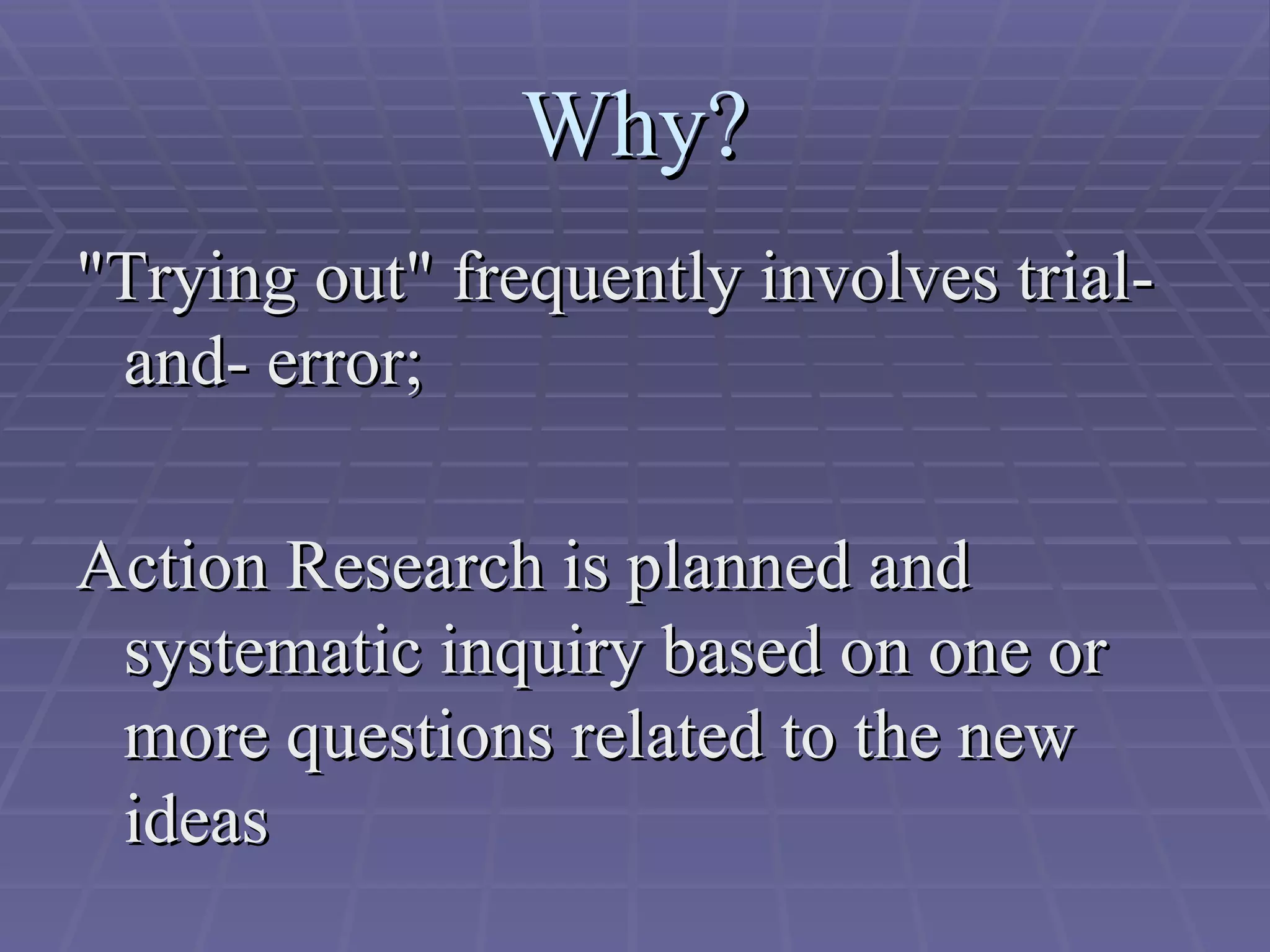
Why? "Trying out" frequently involves trial-and- error;  Action Research is planned and systematic inquiry based on one or more questions related to the new ideas
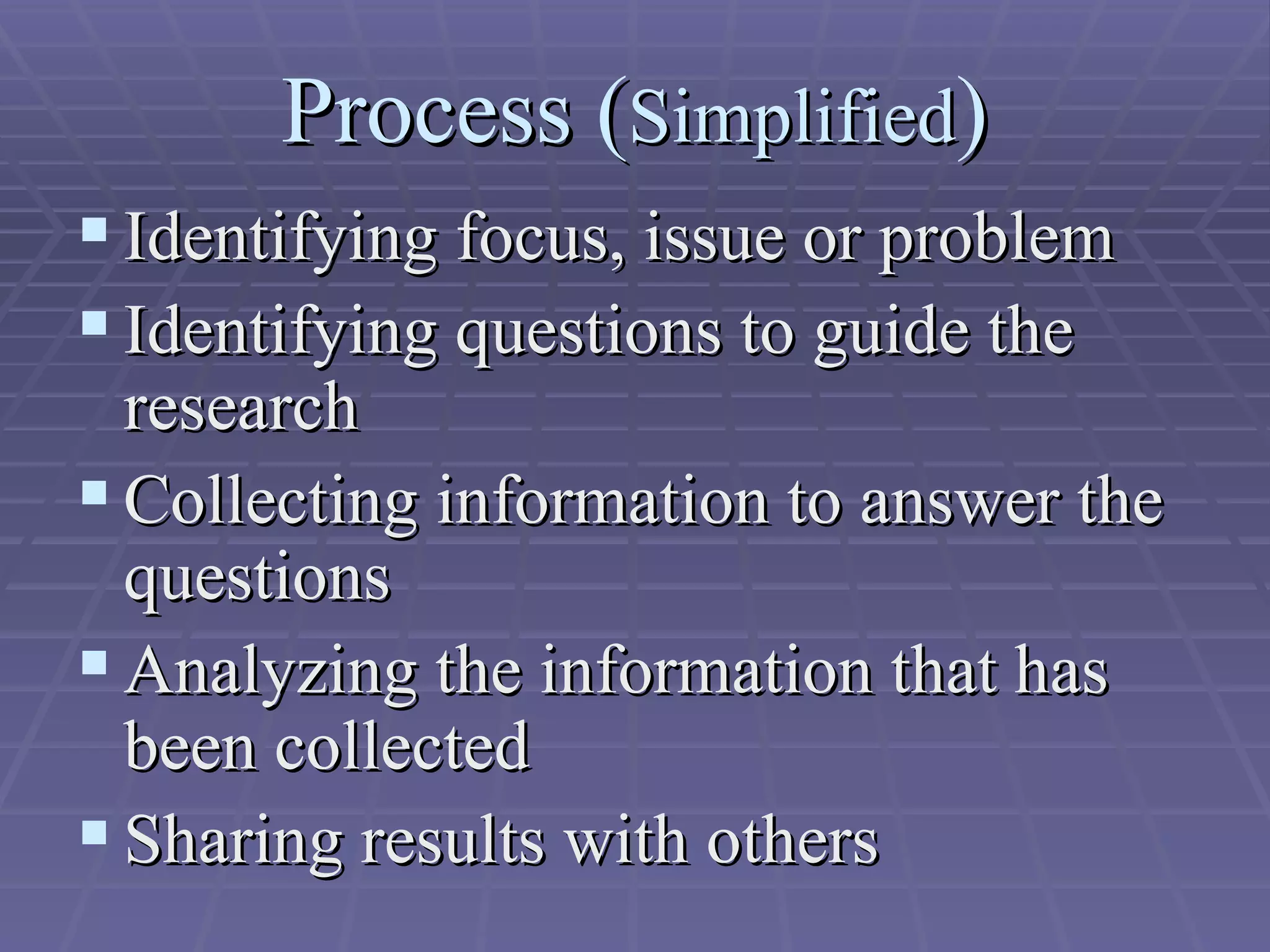
Process ( Simplified ) Identifying focus, issue or problem Identifying questions to guide the research Collecting information to answer the questions  Analyzing the information that has been collected  Sharing results with others
What’s Your Problem? Implementing more FA – assessment FOR learning into the classroom
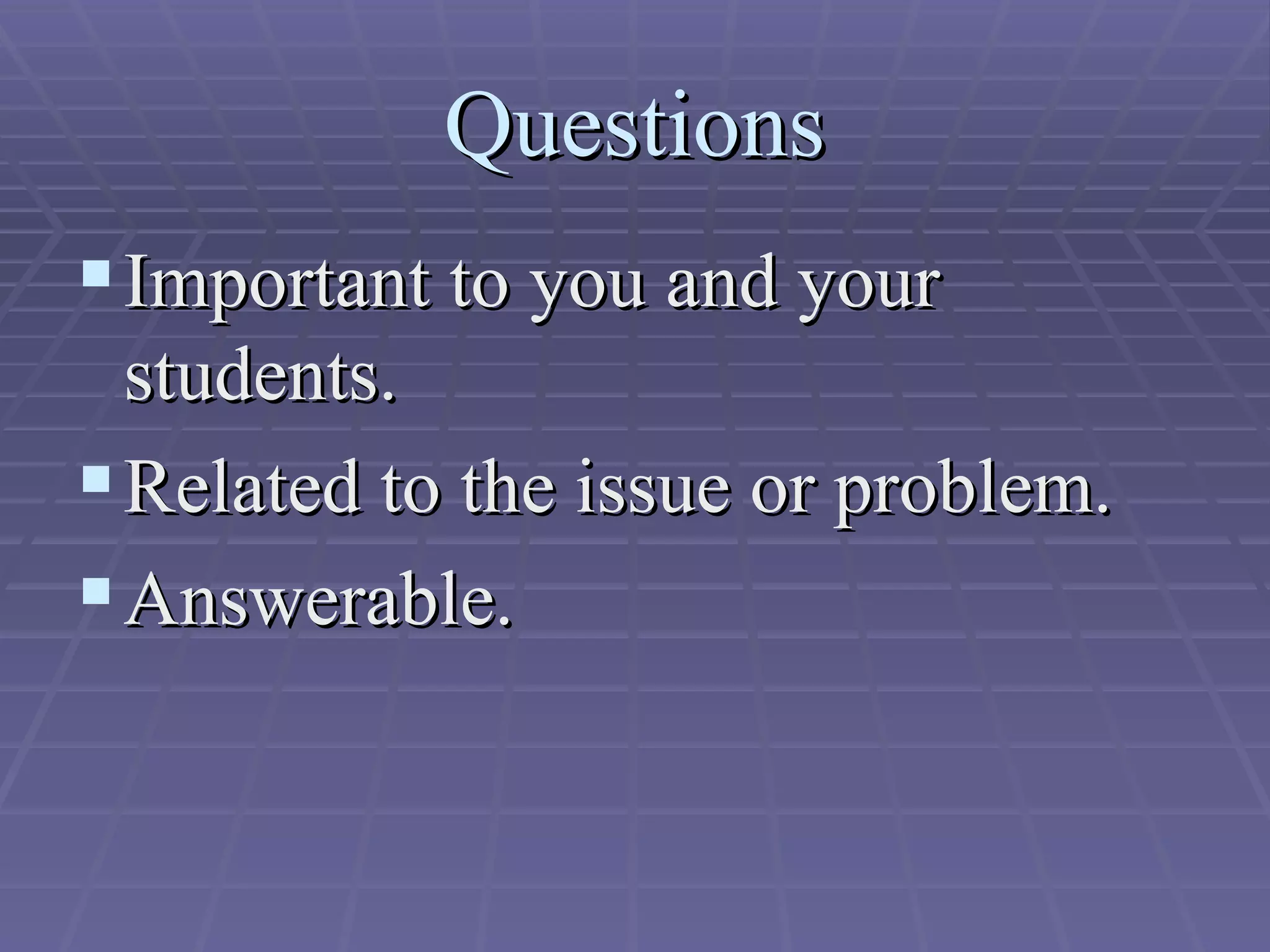
Questions Important to you and your students. Related to the issue or problem. Answerable.
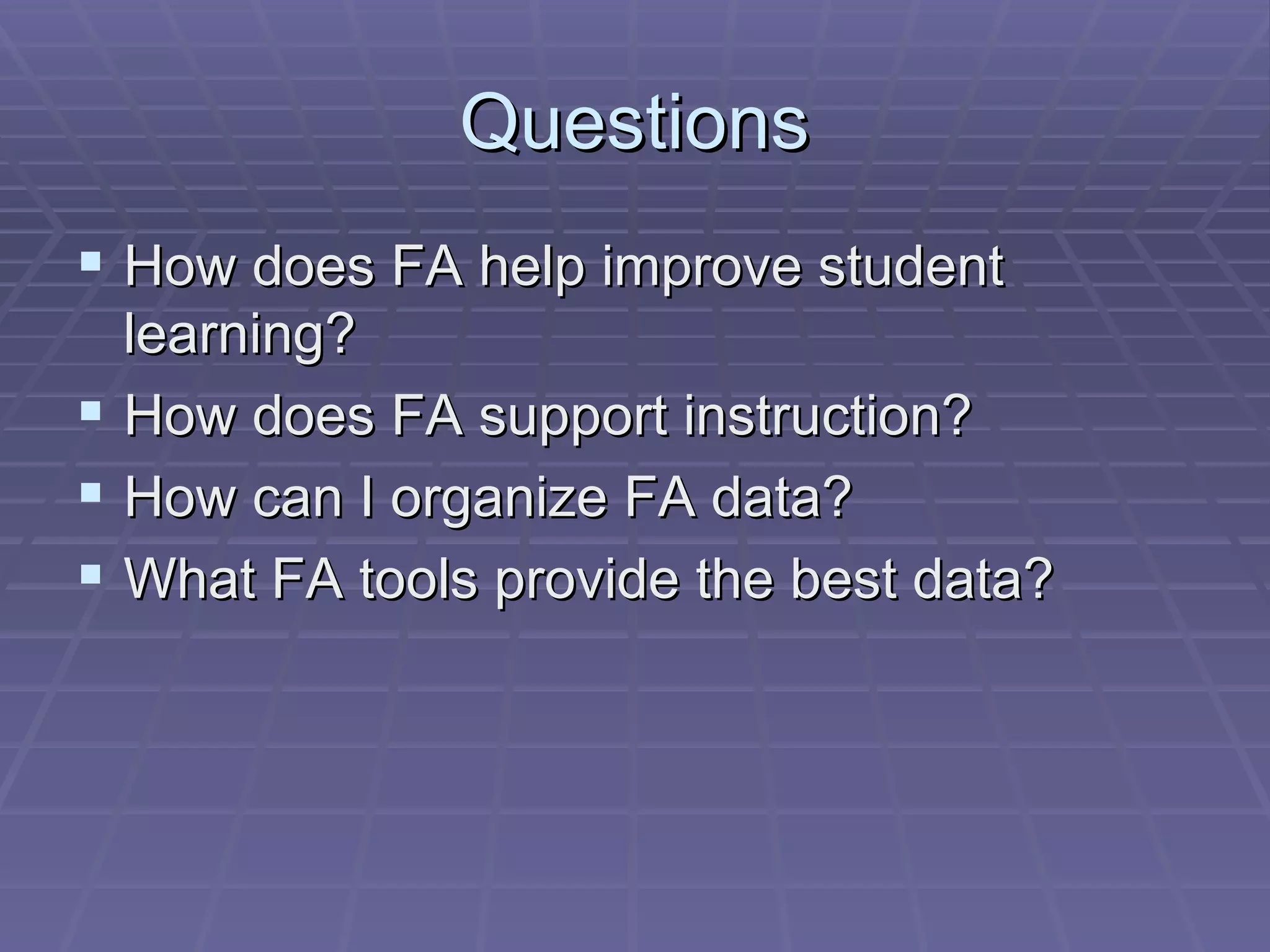
Questions How does FA help improve student learning? How does FA support instruction? How can I organize FA data? What FA tools provide the best data?
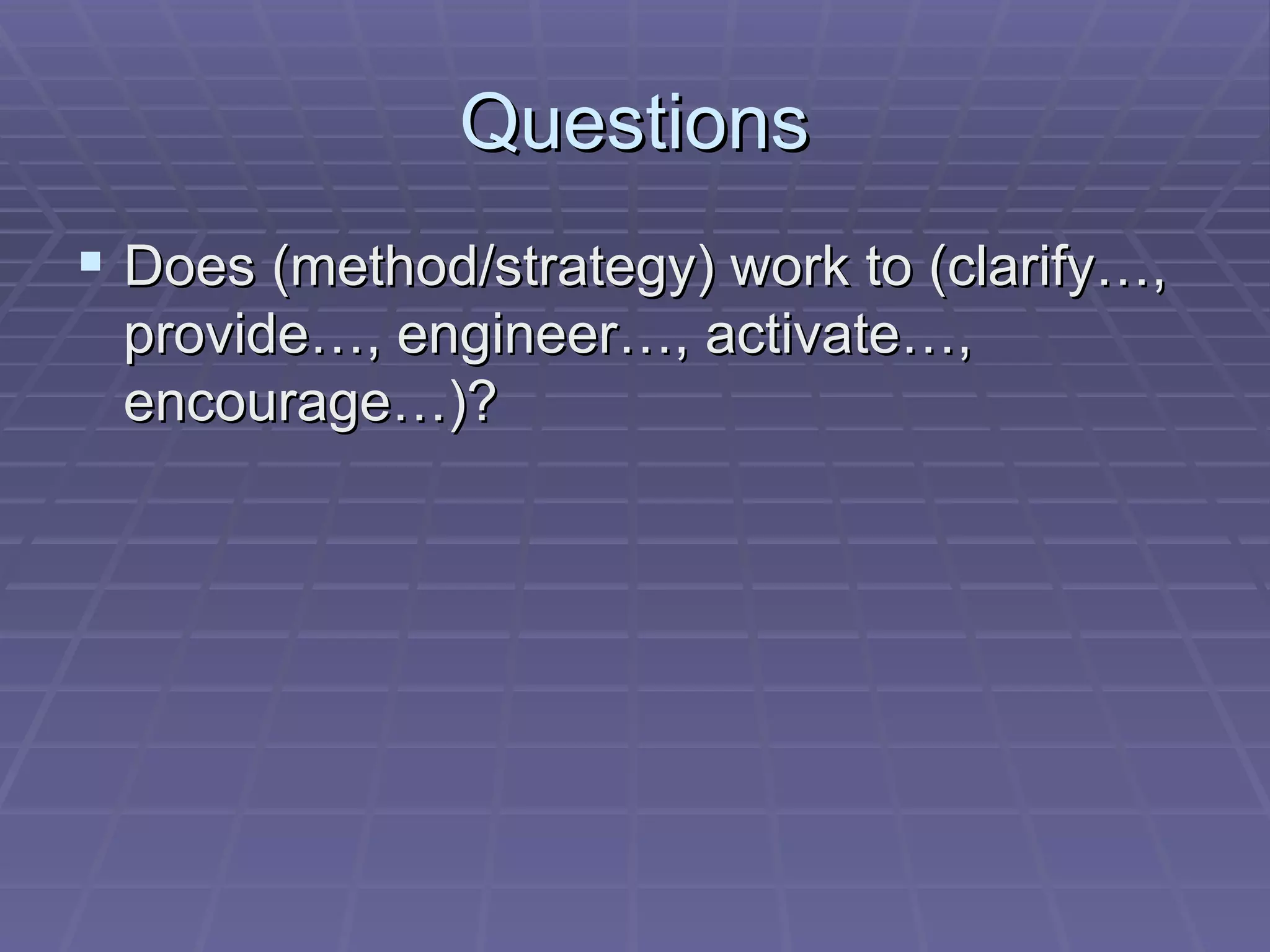
Questions Does (method/strategy) work to (clarify…, provide…, engineer…, activate…, encourage…)?
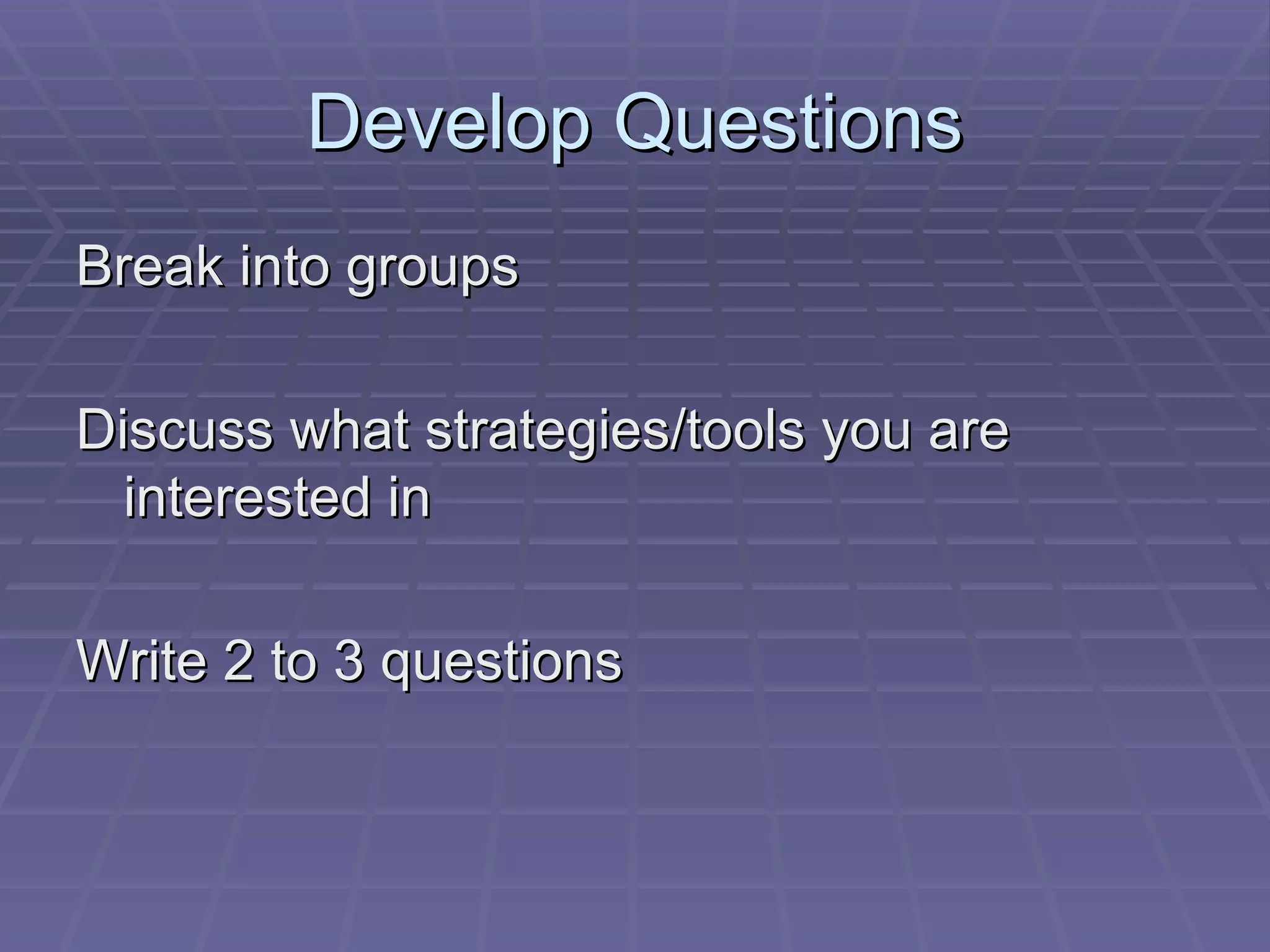
Develop Questions Break into groups Discuss what strategies/tools you are interested in Write 2 to 3 questions
Closure What strategies/tools did you choose?
Next Session Data Collection Methods
 
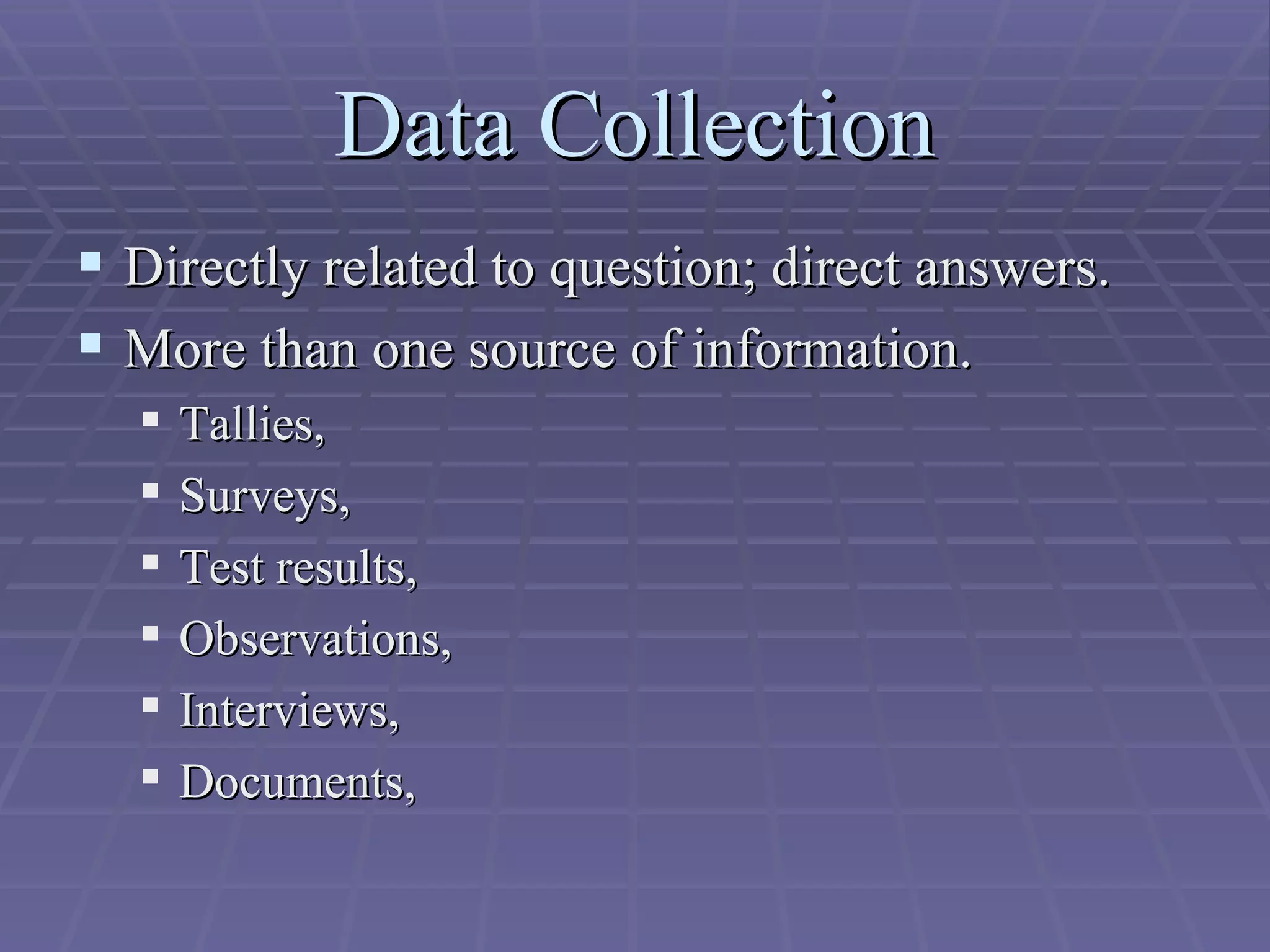
Data Collection Directly related to question; direct answers. More than one source of information. Tallies, Surveys, Test results, Observations, Interviews, Documents,
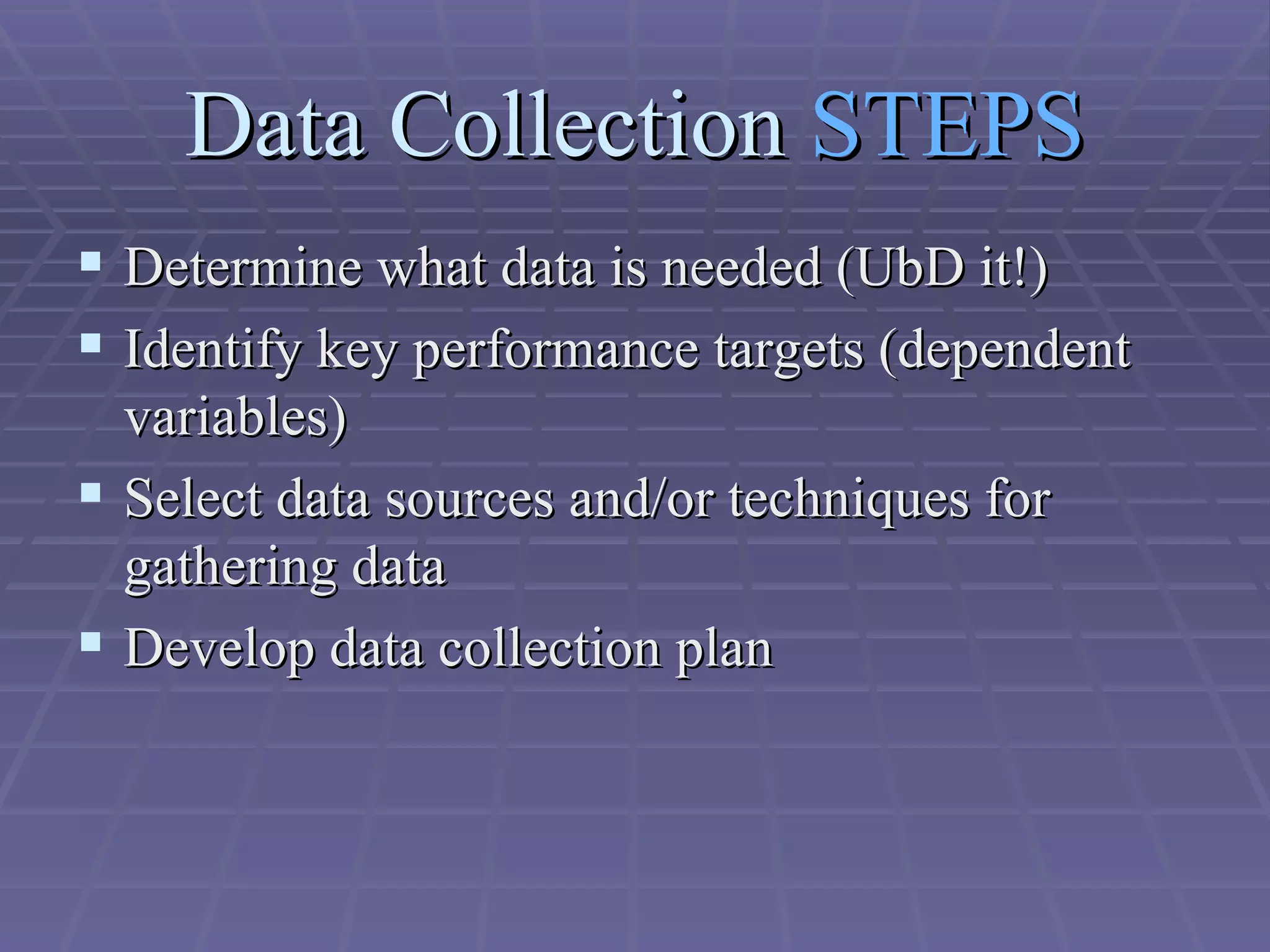
Data Collection  STEPS Determine what data is needed (UbD it!) Identify key performance targets (dependent variables)  Select data sources and/or techniques for gathering data Develop data collection plan
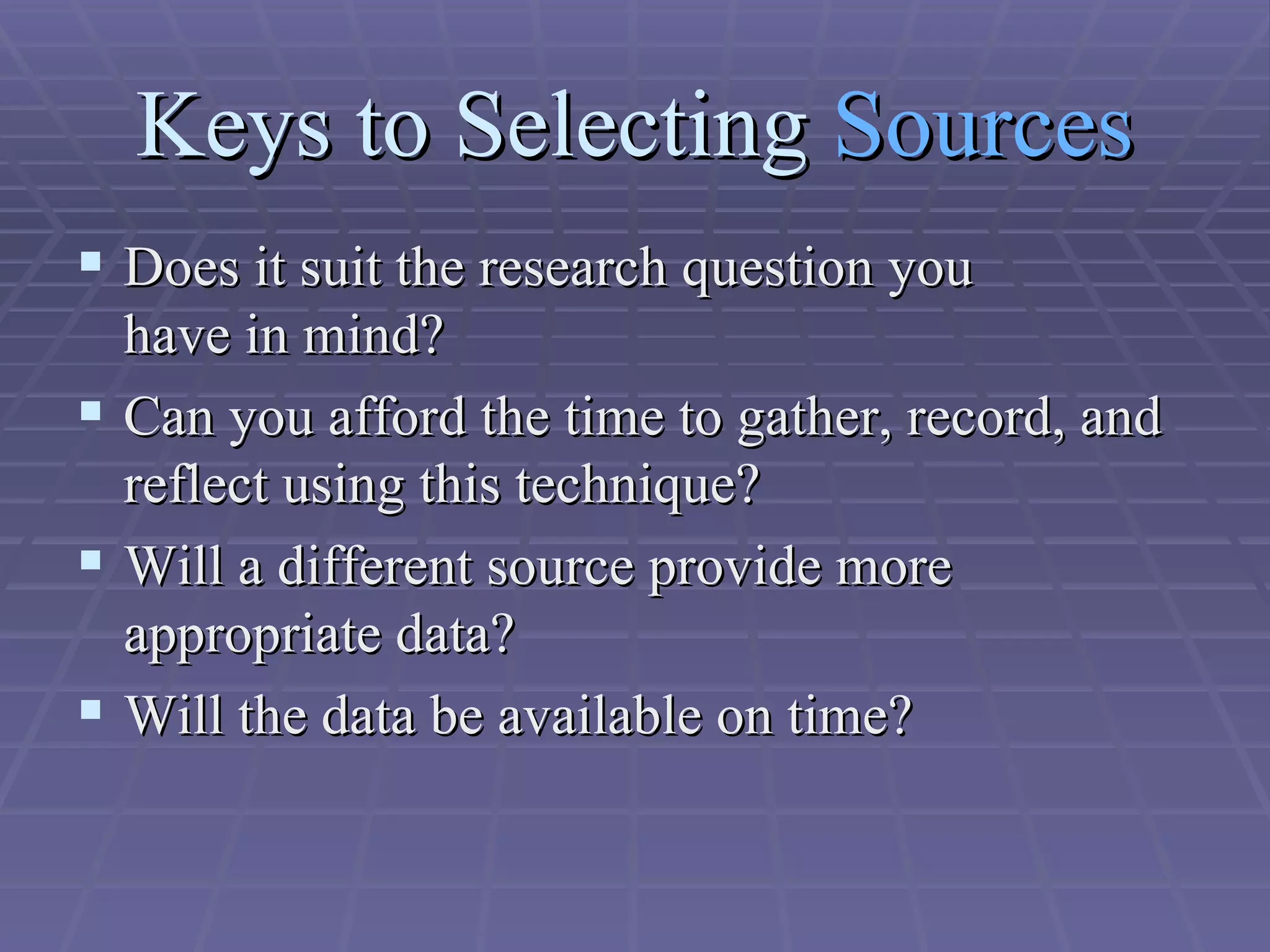
Keys to Selecting  Sources Does it suit the research question you  have in mind?  Can you afford the time to gather, record, and reflect using this technique?  Will a different source provide more  appropriate data?  Will the data be available on time?
W’s of Data Collection (PLAN) WHY are we collecting this data? WHAT exactly are we collecting? WHO are the subjects? WHERE will we collect the data? WHEN are we going to collect? WHO is going to collect? hoW will data be collected?
Data Analysis You will know that you have gathered enough information when new data bring no surprises.  (Redundancy or Data saturation) Examine data. Create categories or themes. classroom data, individual data, or subgroup data Summarize.
Share Informal or planned. Can lead to other questions, further analysis or interpretations. Can be used by others.
Action Research Plan Focus – Formative Assessment Question(s) – based on Five Pillars Write research question(s) Innovation description Resources needed Timeline Data Collection Plan Follow STEPS Develop Plan

Action Research Pd

  • 1.
  • 2.
    Why? "Trying out"frequently involves trial-and- error; Action Research is planned and systematic inquiry based on one or more questions related to the new ideas
  • 3.
    Process ( Simplified) Identifying focus, issue or problem Identifying questions to guide the research Collecting information to answer the questions Analyzing the information that has been collected Sharing results with others
  • 4.
    What’s Your Problem?Implementing more FA – assessment FOR learning into the classroom
  • 5.
    Questions Important toyou and your students. Related to the issue or problem. Answerable.
  • 6.
    Questions How doesFA help improve student learning? How does FA support instruction? How can I organize FA data? What FA tools provide the best data?
  • 7.
    Questions Does (method/strategy)work to (clarify…, provide…, engineer…, activate…, encourage…)?
  • 8.
    Develop Questions Breakinto groups Discuss what strategies/tools you are interested in Write 2 to 3 questions
  • 9.
  • 10.
    Next Session DataCollection Methods
  • 11.
  • 12.
    Data Collection Directlyrelated to question; direct answers. More than one source of information. Tallies, Surveys, Test results, Observations, Interviews, Documents,
  • 13.
    Data Collection STEPS Determine what data is needed (UbD it!) Identify key performance targets (dependent variables) Select data sources and/or techniques for gathering data Develop data collection plan
  • 14.
    Keys to Selecting Sources Does it suit the research question you have in mind? Can you afford the time to gather, record, and reflect using this technique? Will a different source provide more appropriate data? Will the data be available on time?
  • 15.
    W’s of DataCollection (PLAN) WHY are we collecting this data? WHAT exactly are we collecting? WHO are the subjects? WHERE will we collect the data? WHEN are we going to collect? WHO is going to collect? hoW will data be collected?
  • 16.
    Data Analysis Youwill know that you have gathered enough information when new data bring no surprises. (Redundancy or Data saturation) Examine data. Create categories or themes. classroom data, individual data, or subgroup data Summarize.
  • 17.
    Share Informal orplanned. Can lead to other questions, further analysis or interpretations. Can be used by others.
  • 18.
    Action Research PlanFocus – Formative Assessment Question(s) – based on Five Pillars Write research question(s) Innovation description Resources needed Timeline Data Collection Plan Follow STEPS Develop Plan