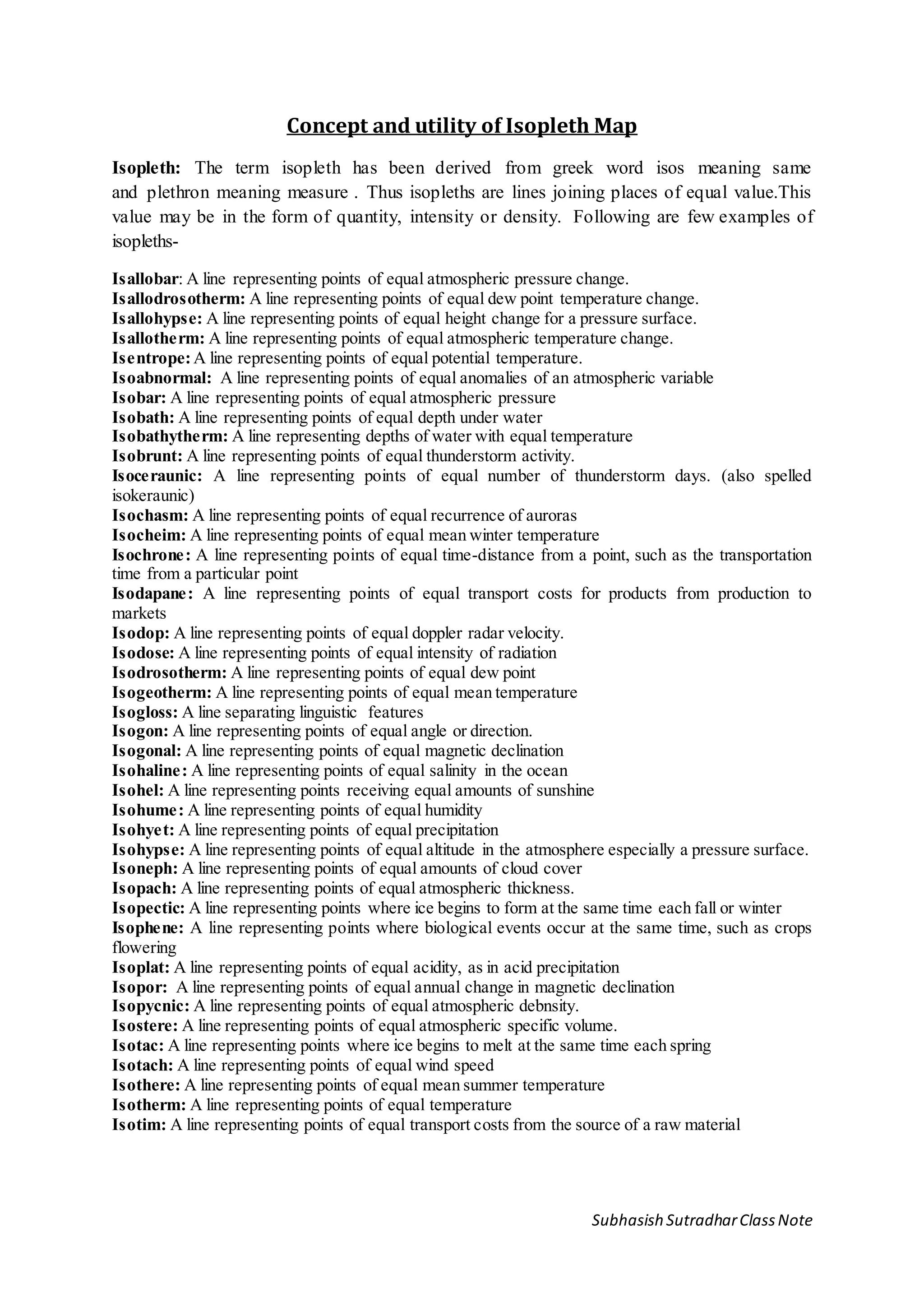
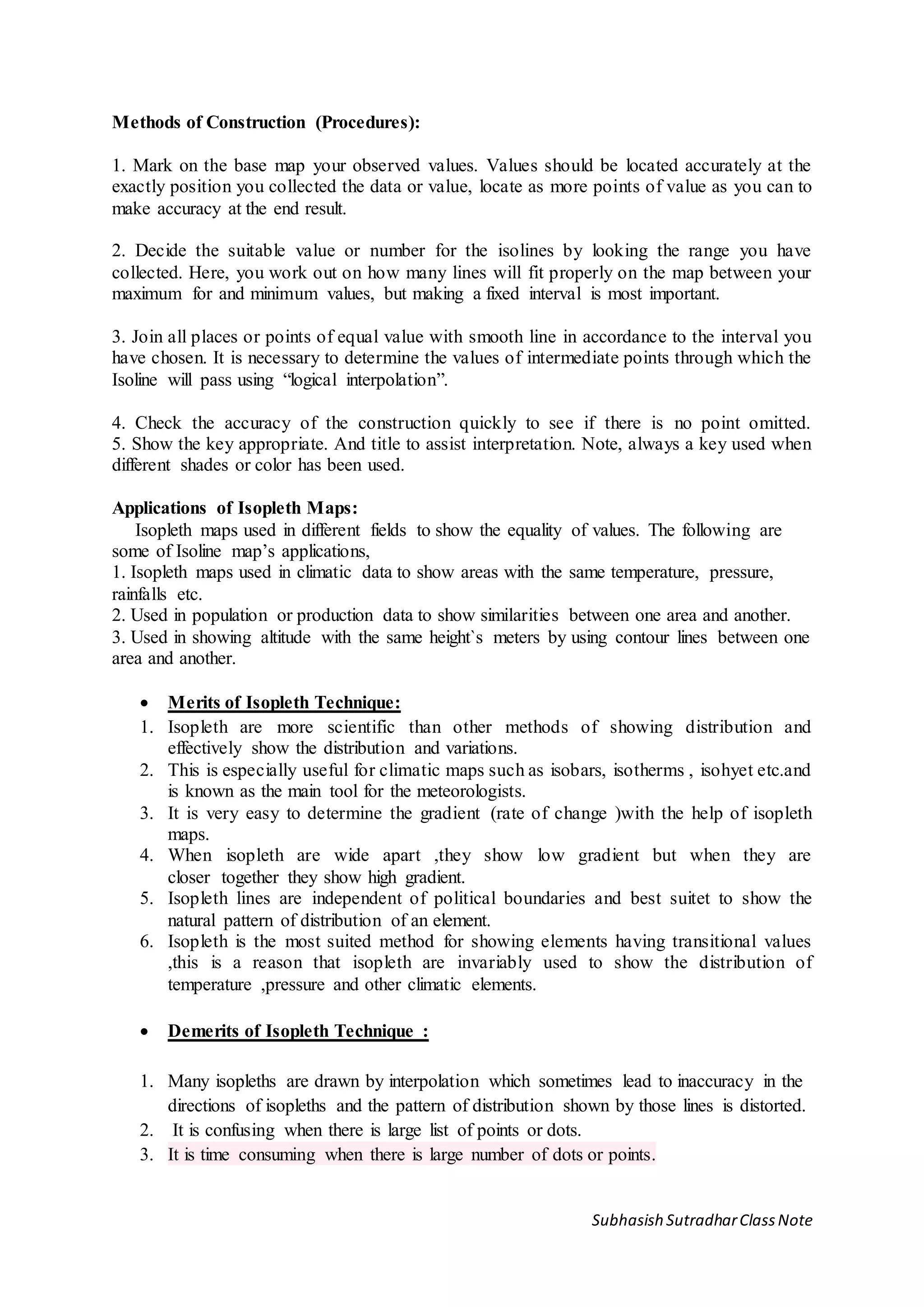
Isopleth maps connect points of equal value through isolines to show variations and distributions of elements. Values can represent quantities, intensities or densities and common examples include isobars (equal pressure), isotherms (equal temperature), and isohyets (equal precipitation). Isopleth maps are constructed by marking data points, determining suitable interval values, joining equal points with smooth lines, and adding a key. They have various applications in climatology, demography, and showing altitude or terrain. Merits include scientific accuracy while demerits can include inaccuracies from interpolation of many data points.