Computers and more
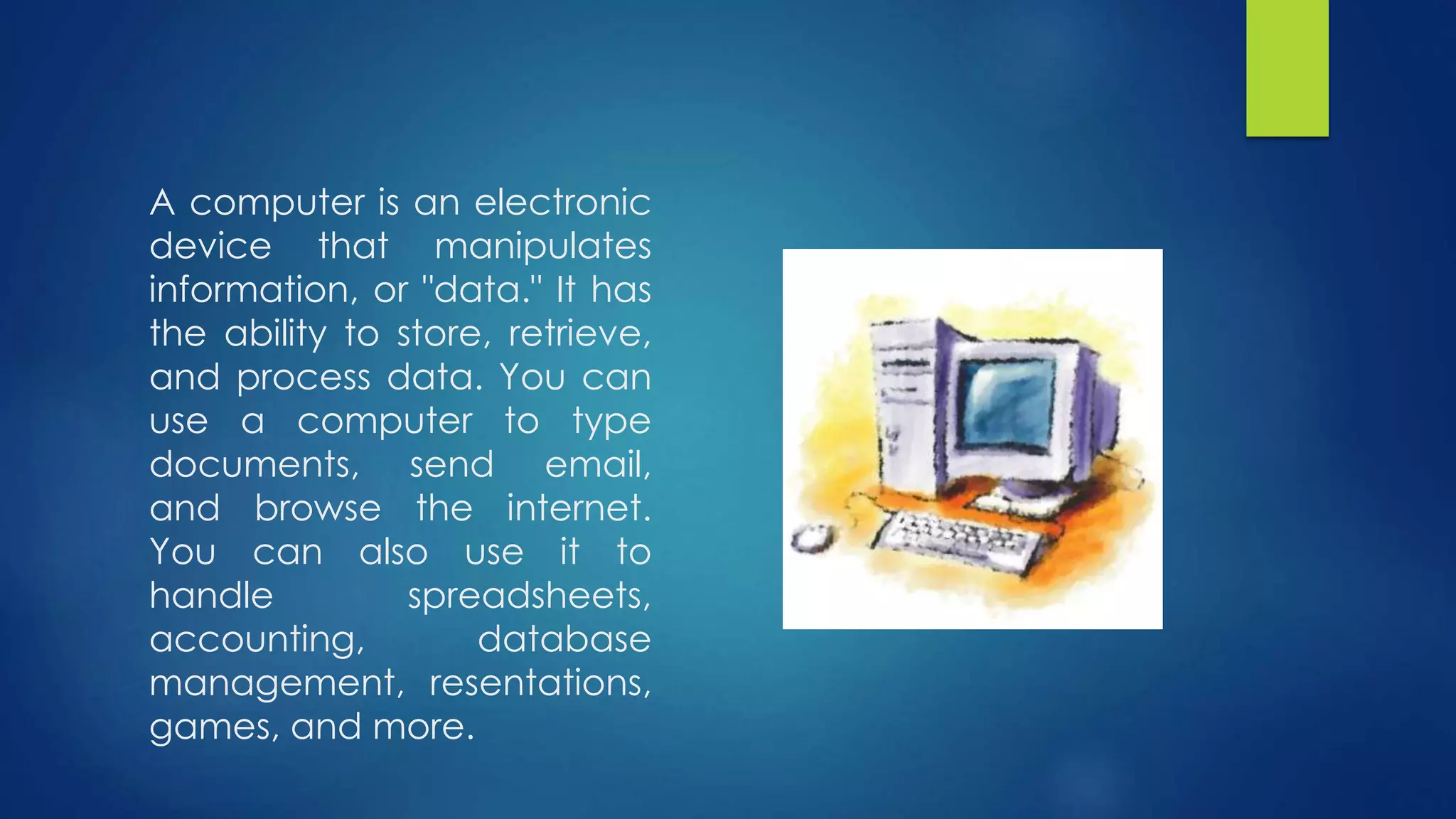
A computer is an electronic 
device that manipulates 
information, or "data." It has 
the ability to store, retrieve, 
and process data. You can 
use a computer to type 
documents, send email, 
and browse the internet. 
You can also use it to 
handle spreadsheets, 
accounting, database 
management, resentations, 
games, and more.
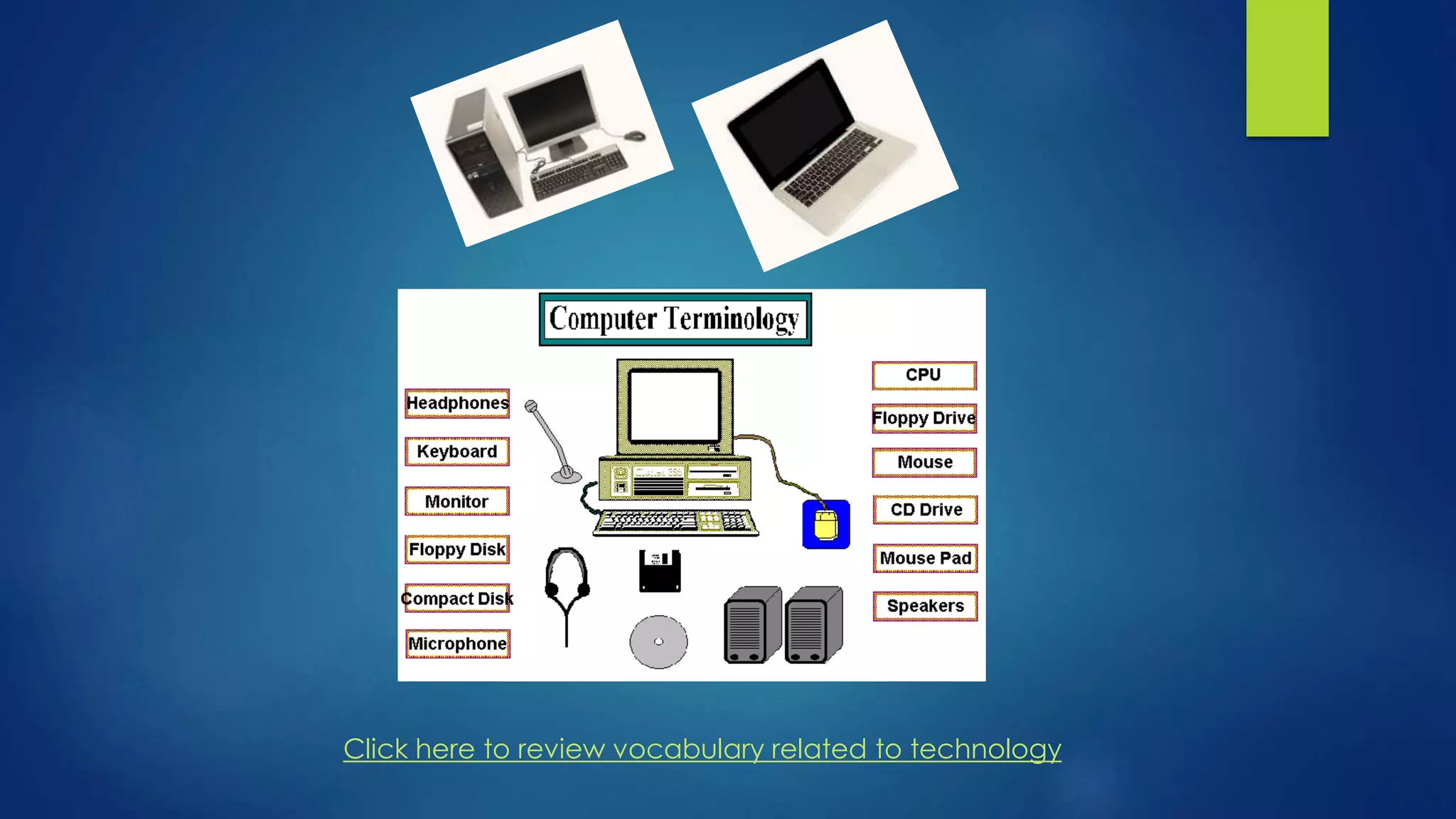
Click here to review vocabulary related to technology
Ports 
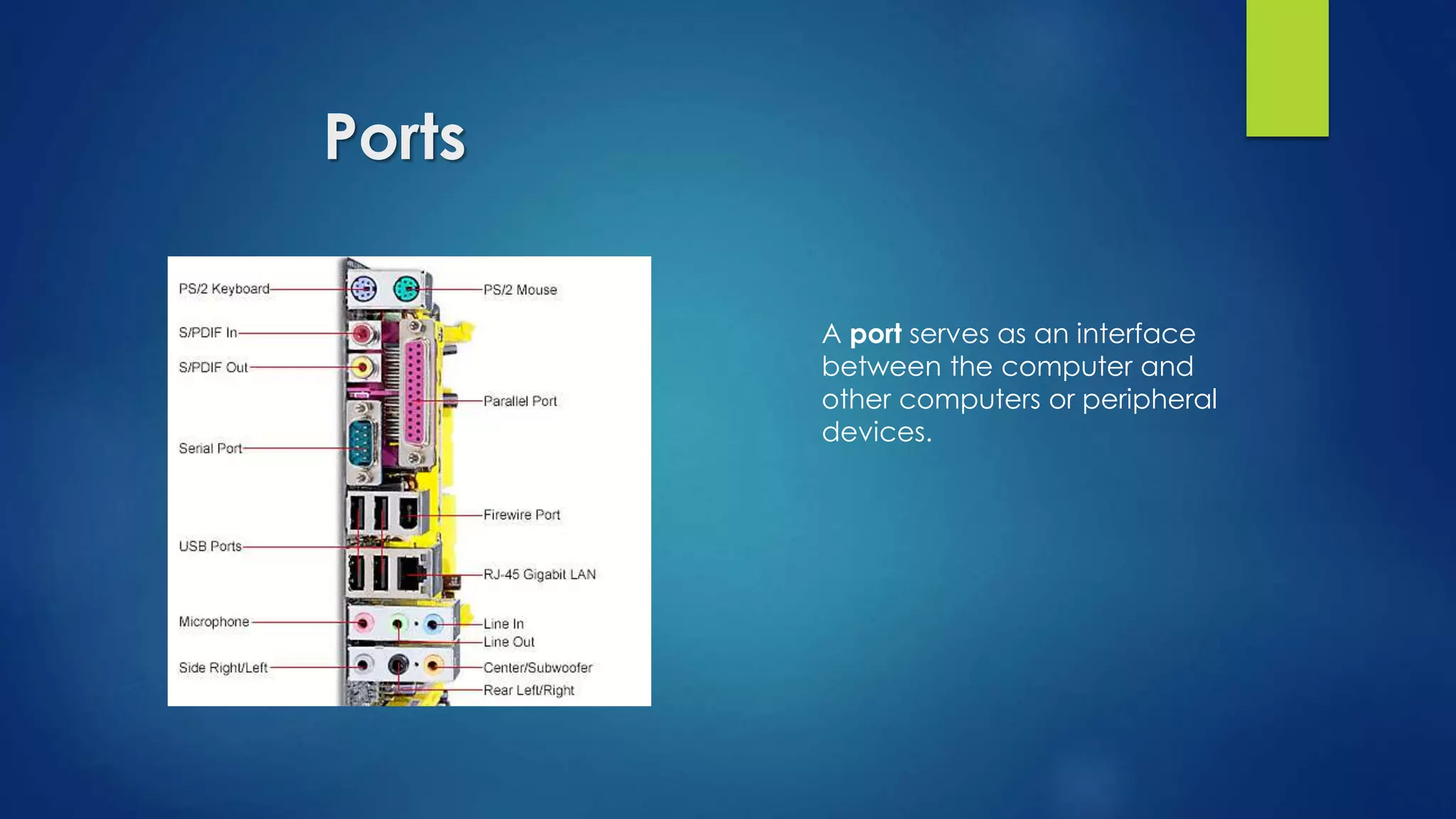
A port serves as an interface 
between the computer and 
other computers or peripheral 
devices.
Operative systems 
 An operating system (OS) is a collection of software that manages 
computer hardware resources and provides common services for computer 
programs. The operating system is an essential component of the system 
software in a computer system. Application programs usually require an 
operating system to function.
Organizational scope 
A communications protocol is a set of rules for exchanging information over 
network links. In a protocol stack, each protocol leverages the services of the 
protocol below it. 
• Intranets 
• Extranet 
• Internetwork 
• Internet 
• Darknet
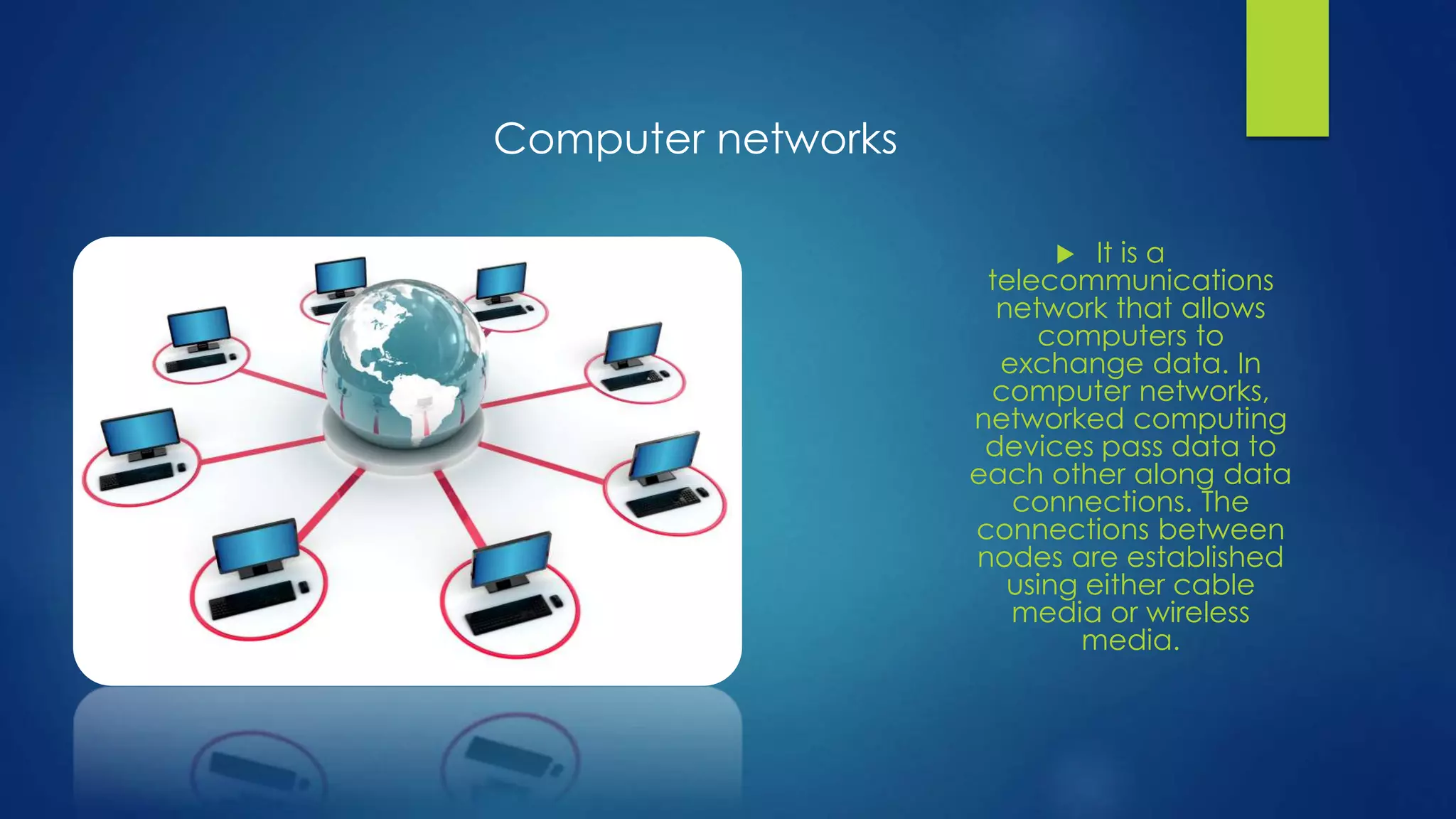
 It is a 
telecommunications 
network that allows 
computers to 
exchange data. In 
computer networks, 
networked computing 
devices pass data to 
each other along data 
connections. The 
connections between 
nodes are established 
using either cable 
media or wireless 
media. 
Computer networks
One way to categorize the different types of computer network designs is 
by their scope or scale. For historical reasons, the networking industry refers 
to nearly every type of design as some kind of area network. Common 
examples of area network types are: 
 LAN - Local Area Network 
 WLAN - Wireless Local Area Network 
 WAN - Wide Area Network 
 MAN - Metropolitan Area Network 
 SAN - Storage Area Network, System Area Network, Server Area 
Network, or sometimes Small Area Network 
 CAN - Campus Area Network, Controller Area Network, or sometimes 
Cluster Area Network 
 PAN - Personal Area Network 
 DAN - Desk Area Network
Bridging (networking) 
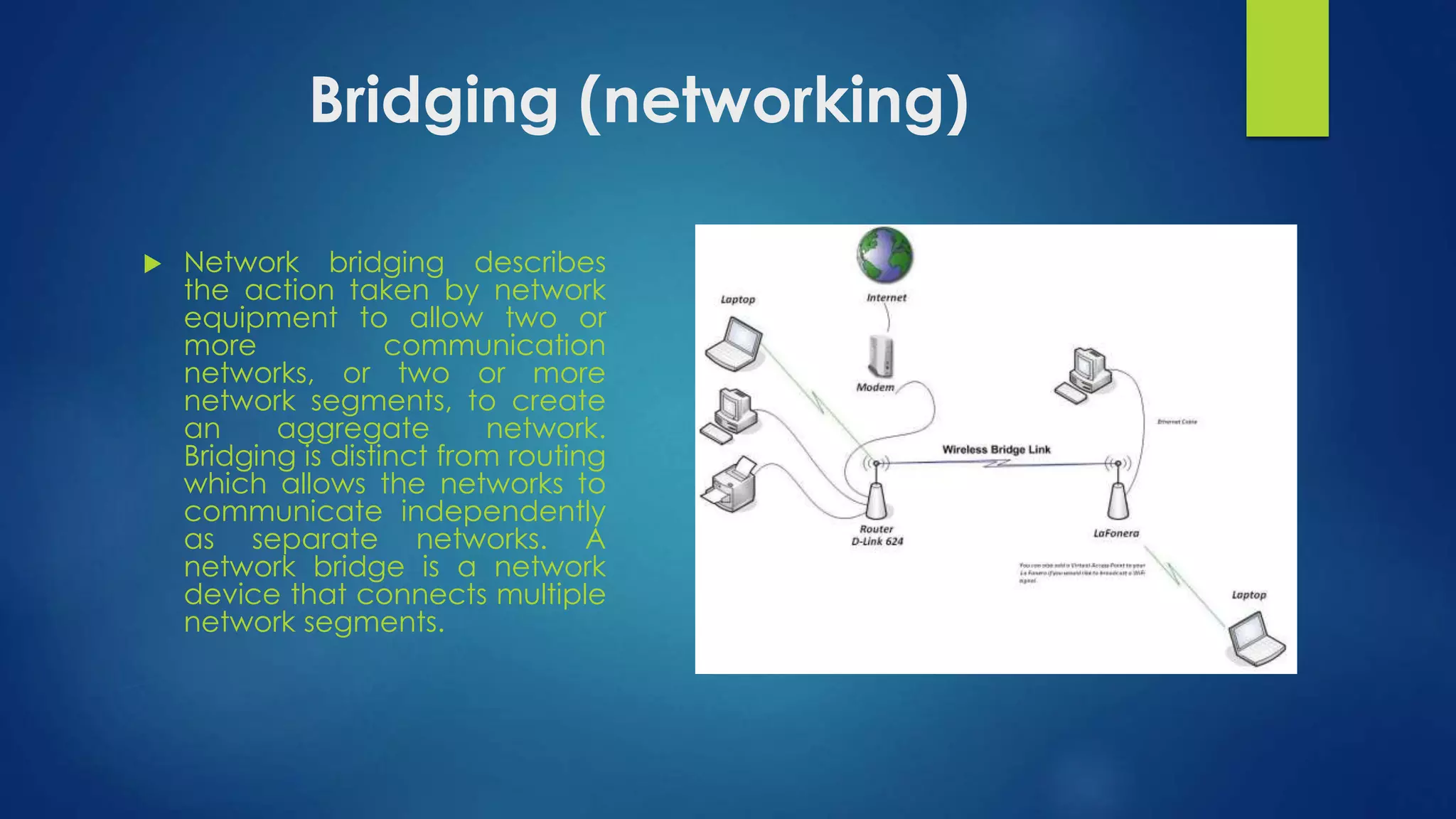
 Network bridging describes 
the action taken by network 
equipment to allow two or 
more communication 
networks, or two or more 
network segments, to create 
an aggregate network. 
Bridging is distinct from routing 
which allows the networks to 
communicate independently 
as separate networks. A 
network bridge is a network 
device that connects multiple 
network segments.

Computers and more

  • 1.
  • 2.
    A computer isan electronic device that manipulates information, or "data." It has the ability to store, retrieve, and process data. You can use a computer to type documents, send email, and browse the internet. You can also use it to handle spreadsheets, accounting, database management, resentations, games, and more.
  • 3.
    Click here toreview vocabulary related to technology
  • 4.
    Ports A portserves as an interface between the computer and other computers or peripheral devices.
  • 5.
    Operative systems An operating system (OS) is a collection of software that manages computer hardware resources and provides common services for computer programs. The operating system is an essential component of the system software in a computer system. Application programs usually require an operating system to function.
  • 6.
    Organizational scope Acommunications protocol is a set of rules for exchanging information over network links. In a protocol stack, each protocol leverages the services of the protocol below it. • Intranets • Extranet • Internetwork • Internet • Darknet
  • 7.
     It isa telecommunications network that allows computers to exchange data. In computer networks, networked computing devices pass data to each other along data connections. The connections between nodes are established using either cable media or wireless media. Computer networks
  • 8.
    One way tocategorize the different types of computer network designs is by their scope or scale. For historical reasons, the networking industry refers to nearly every type of design as some kind of area network. Common examples of area network types are:  LAN - Local Area Network  WLAN - Wireless Local Area Network  WAN - Wide Area Network  MAN - Metropolitan Area Network  SAN - Storage Area Network, System Area Network, Server Area Network, or sometimes Small Area Network  CAN - Campus Area Network, Controller Area Network, or sometimes Cluster Area Network  PAN - Personal Area Network  DAN - Desk Area Network
  • 9.
    Bridging (networking) Network bridging describes the action taken by network equipment to allow two or more communication networks, or two or more network segments, to create an aggregate network. Bridging is distinct from routing which allows the networks to communicate independently as separate networks. A network bridge is a network device that connects multiple network segments.