NAME :VEHİT
SURNAME :ALTINCI
LECTURER :KAREN HOWELLS
COURSE :MIS404
NUMBER :113077
DEPARTMENT:ACCOUNTING INFORMATION
SYSTEM
Definition of Ethics:
 Ethics is a set of moral principles that govern
the behavior of a group or individual.
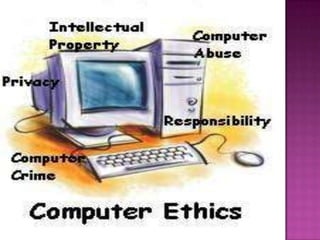
Therefore, computer ethics is set of moral
principles that regulate the use of
computers. Some common issues of
computer ethics include intellectual property
rights (such as copyrighted electronic
content), privacy concerns, and how
computers affect society.
According to following these slides is
computer ethics definition
 For example, while it is easy to duplicate
copyrighted electronic (or digital) content,
computer ethics would suggest that it is
wrong to do so without the author's approval.
 And while it may be possible to access
someone's personal information on a
computer system, computer ethics would
advise that such an action is unethical.
 As technology advances, computers continue
to have a greater impact on society.
 Therefore, computer ethics promotes the
discussion of how much influence computers
should have in areas such as artificial
intelligence and human communication.
 As the world of computers evolves,
computer ethics continues to create ethical
standards that address new issues raised by
new technologies.
Materials of respectivelty
 Software copyright is the extension
of copyright law to machine readable software.
 While many of the legal principles and policy
debates concerning software copyright have
close parallels in other domains of copyright
 law, there are a number of distinctive issues that
arise with software.
 This article will primarily focus on topics
peculiar to software.
 Software copyright is used by proparitery
software companies to prevent the
unauthorized copying of their
software. free and open source licenses also
rely on copyright law to enforce their terms.
 For instance, copyleft licenses impose a
duty on licensees to share their modifications
to the copylefted work with the user or copy
owner under some circumstances.
 No such duty would apply had the software
in question been in the public domain.
To be following these rules
 Without the permission of the copyright
holder,
 One can not make copies of the software
program.
 Reproduce copies for your computer or local
network.
 You can not download the Internet copy
program.

Computer ethics & copyright

  • 1.
    NAME :VEHİT SURNAME :ALTINCI LECTURER:KAREN HOWELLS COURSE :MIS404 NUMBER :113077 DEPARTMENT:ACCOUNTING INFORMATION SYSTEM
  • 2.
    Definition of Ethics: Ethics is a set of moral principles that govern the behavior of a group or individual. Therefore, computer ethics is set of moral principles that regulate the use of computers. Some common issues of computer ethics include intellectual property rights (such as copyrighted electronic content), privacy concerns, and how computers affect society.
  • 3.
    According to followingthese slides is computer ethics definition  For example, while it is easy to duplicate copyrighted electronic (or digital) content, computer ethics would suggest that it is wrong to do so without the author's approval.  And while it may be possible to access someone's personal information on a computer system, computer ethics would advise that such an action is unethical.
  • 5.
     As technologyadvances, computers continue to have a greater impact on society.  Therefore, computer ethics promotes the discussion of how much influence computers should have in areas such as artificial intelligence and human communication.  As the world of computers evolves, computer ethics continues to create ethical standards that address new issues raised by new technologies.
  • 7.
    Materials of respectivelty Software copyright is the extension of copyright law to machine readable software.  While many of the legal principles and policy debates concerning software copyright have close parallels in other domains of copyright  law, there are a number of distinctive issues that arise with software.  This article will primarily focus on topics peculiar to software.
  • 9.
     Software copyrightis used by proparitery software companies to prevent the unauthorized copying of their software. free and open source licenses also rely on copyright law to enforce their terms.  For instance, copyleft licenses impose a duty on licensees to share their modifications to the copylefted work with the user or copy owner under some circumstances.  No such duty would apply had the software in question been in the public domain.
  • 10.
    To be followingthese rules  Without the permission of the copyright holder,  One can not make copies of the software program.  Reproduce copies for your computer or local network.  You can not download the Internet copy program.