COMPOSITE
MATERIALS
Jerome Christo. S
DEFINITION:
A COMPOSITE MATERIAL is produced from two or more
constituent materials with notably dissimilar chemical or physical
properties which are merged to create a material with properties
unlike the individual elements.
CONSTITUENTS:
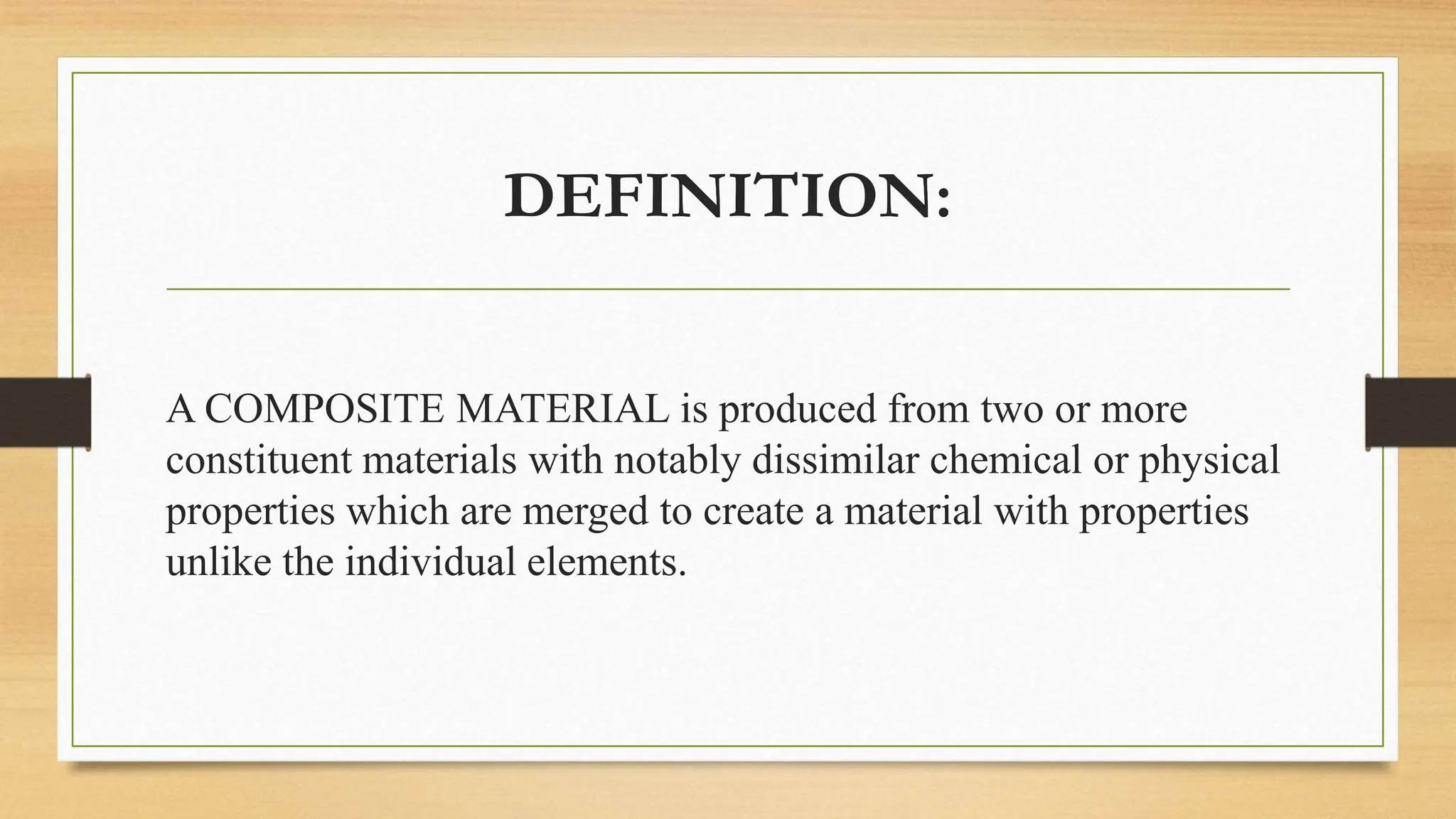
• Matrix(binder):
 Binds the fibers together.
 Protects fibers from corrosion and wear.
 Determines surface quality.
 Provides rigidity and shape to the structure.
• Reinforcement:
 Carries 70-90% load.
 Determines structural properties of the composite.
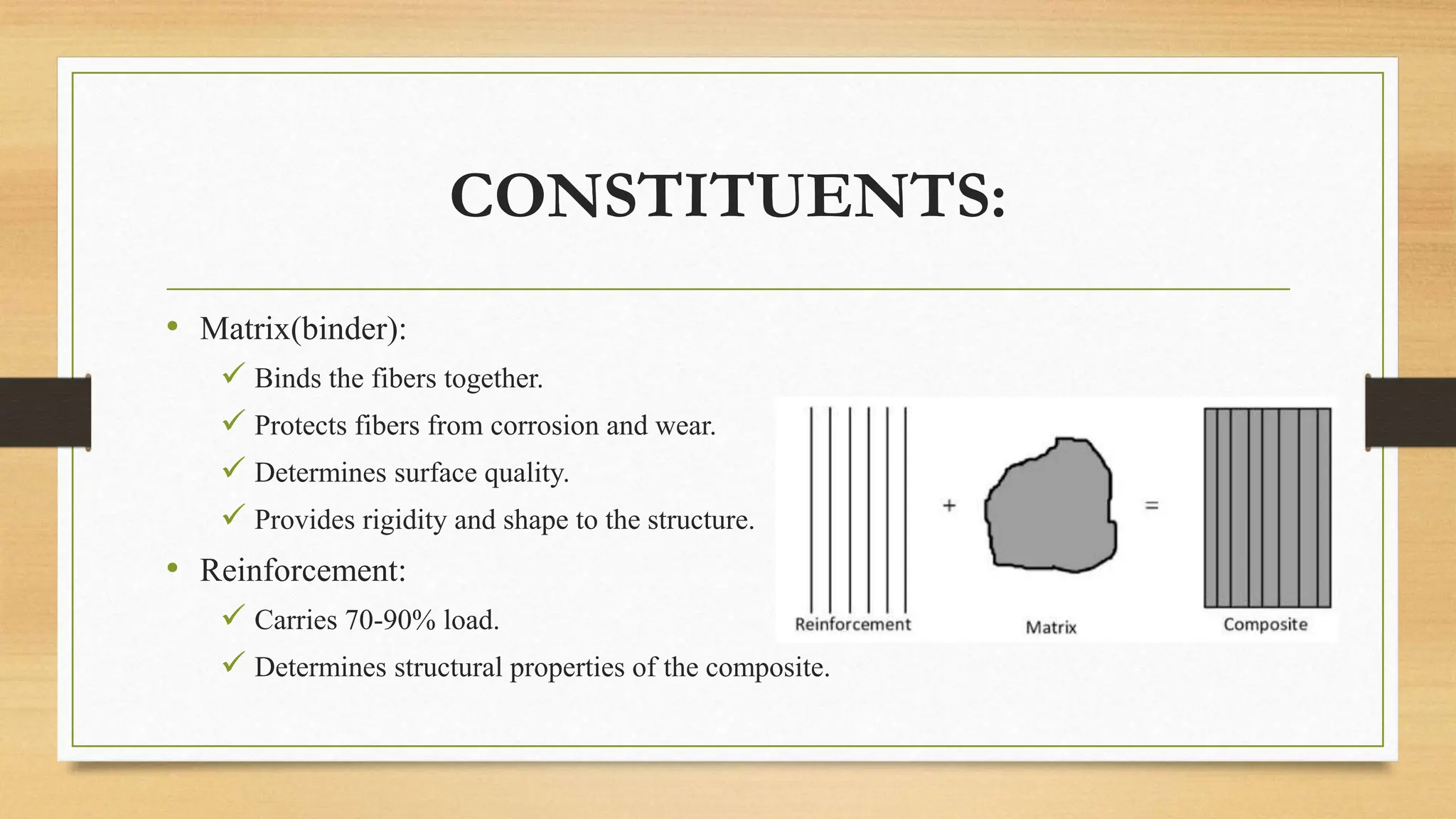
MATRIX
 Organic Matrix Composites (OMCs)
 Polymer Matrix Composites (PMCs)
 Carbon‐Carbon composites
 Metal Matrix Composites (MMC)
 Ceramic Matrix Composites (CMC)
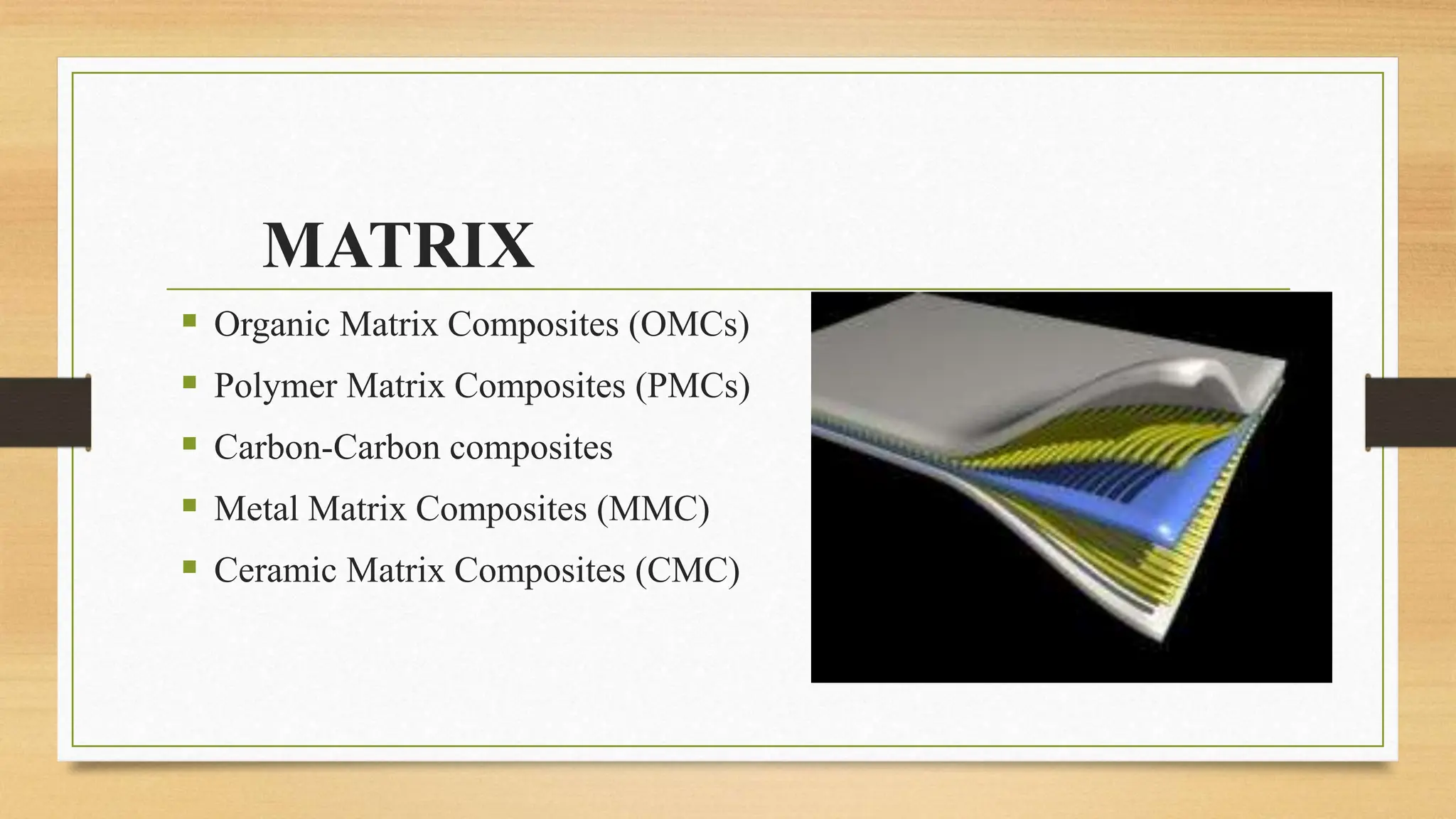
REINFORCEMENT
Fibre reinforced composites
Particulate reinforced composites
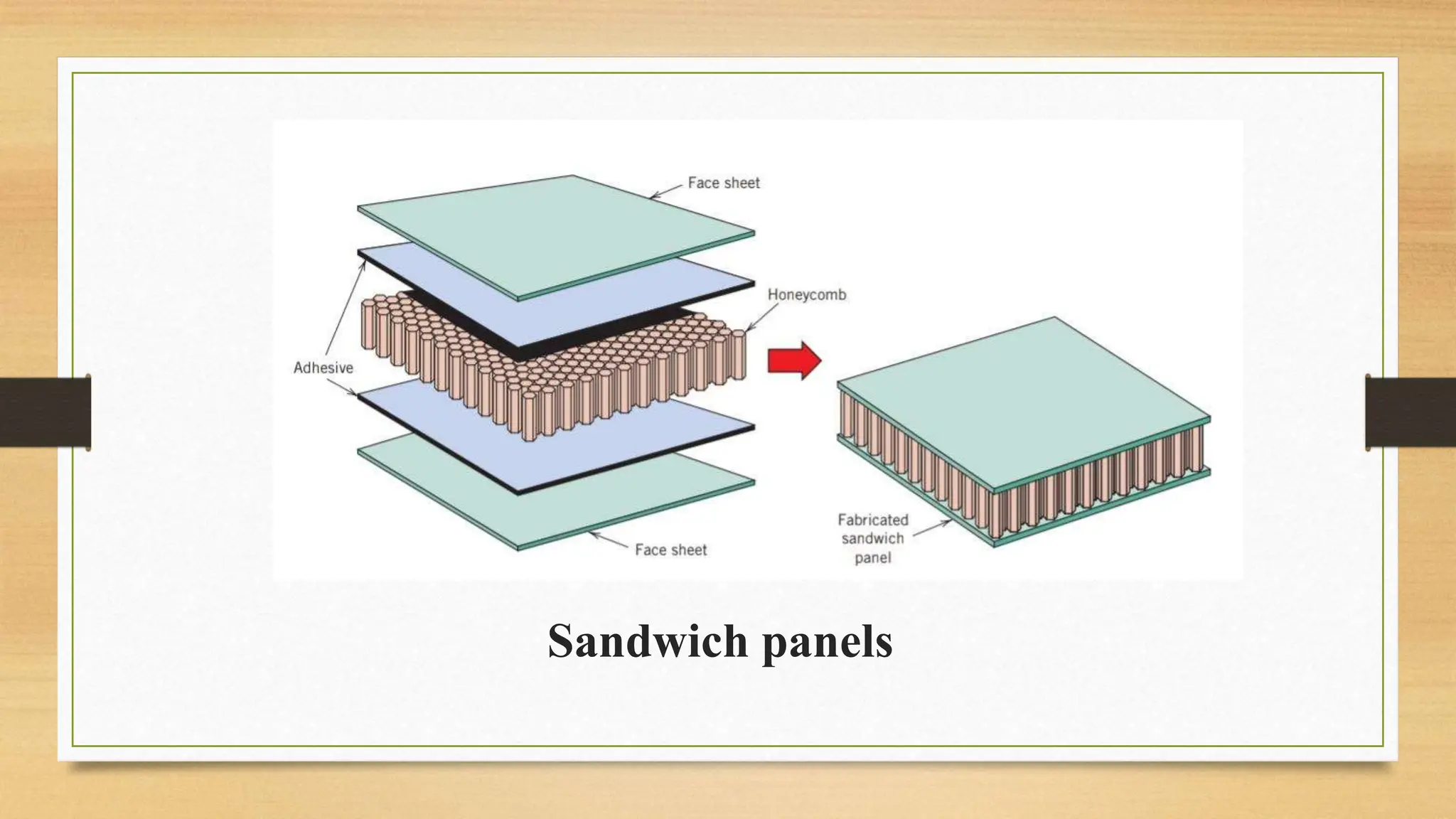
Structural composites
(Laminar, sandwich)
Sandwich panels
ALLOYS vs COMPOSITES:
Alloy
• Atleast one component should be
metal.
• Constituents combine chemically.
Composite
• Both constituents can be non
metallic.
• Constituents remain chemically
distinct.
ADVANTAGES
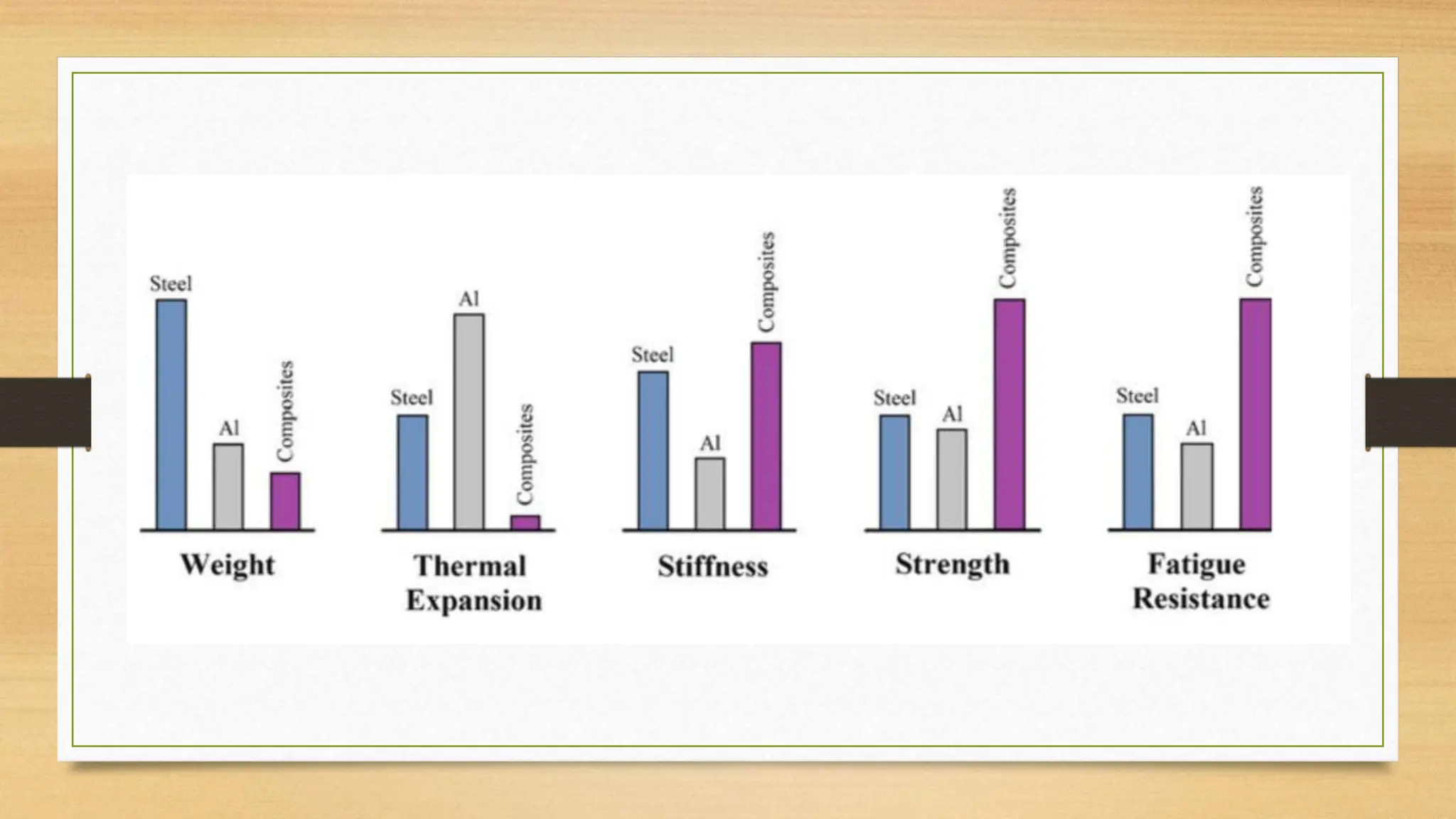
• High strength to weight ratio
• Lightweight
• Fire resistance
• Electrical properties
• Colour
• Low thermal conductivity
• Design flexibility
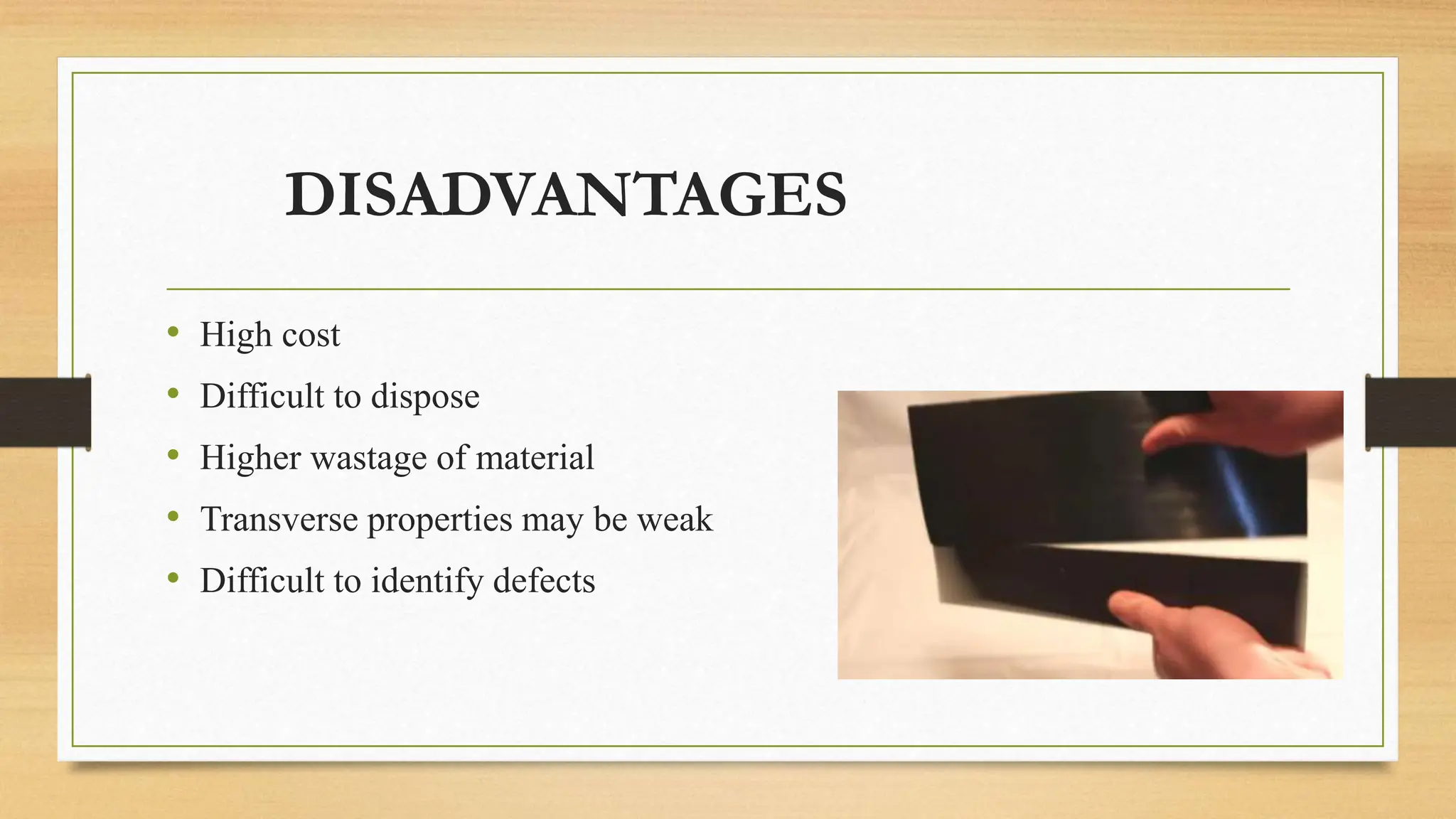
DISADVANTAGES
• High cost
• Difficult to dispose
• Higher wastage of material
• Transverse properties may be weak
• Difficult to identify defects
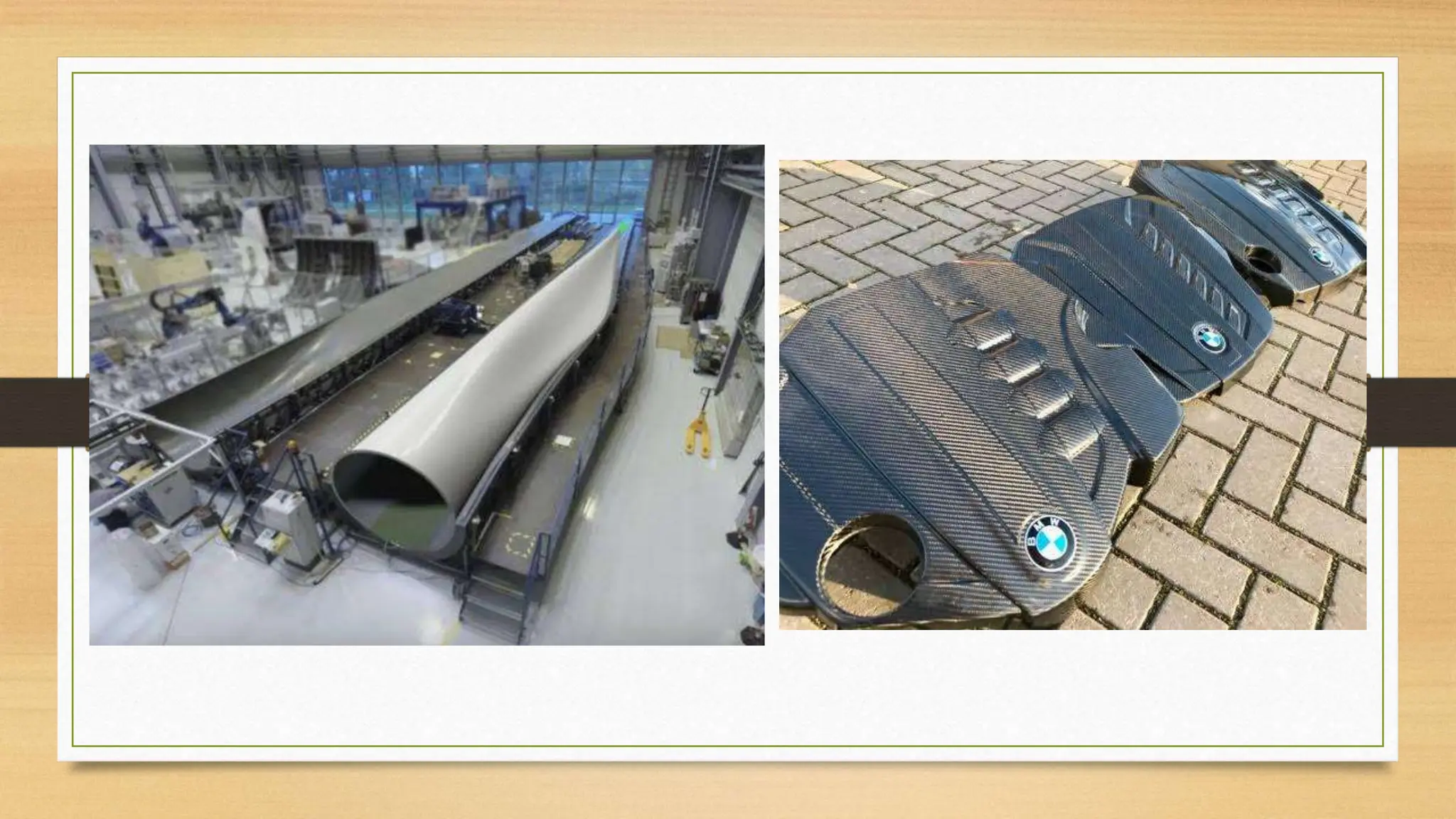
APPLICATIONS:
 Motorsports
 Aerospace
 Construction
 Sports equipments
Manufacturing
methods
Hand layup
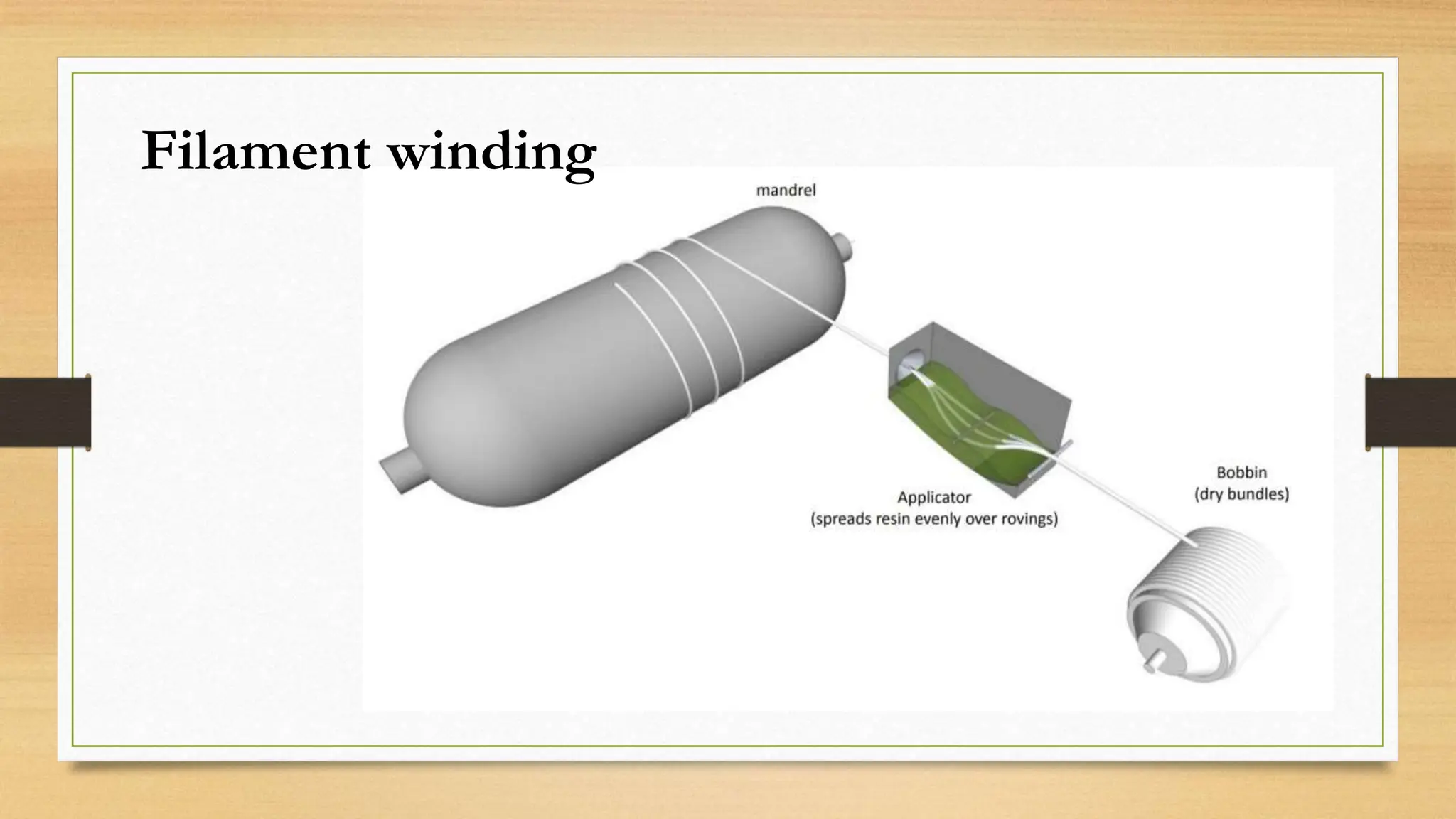
Filament winding
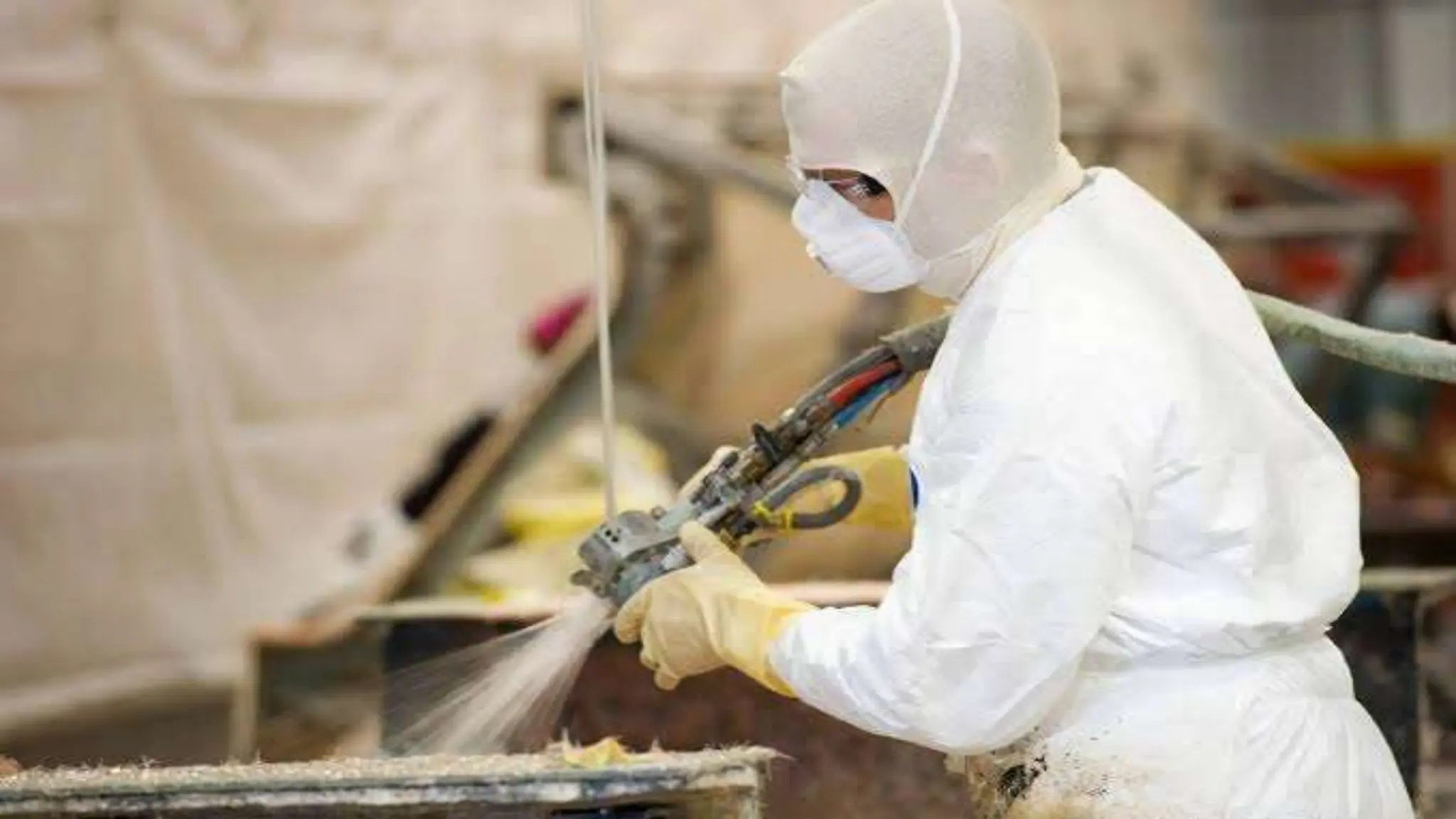
Spray up
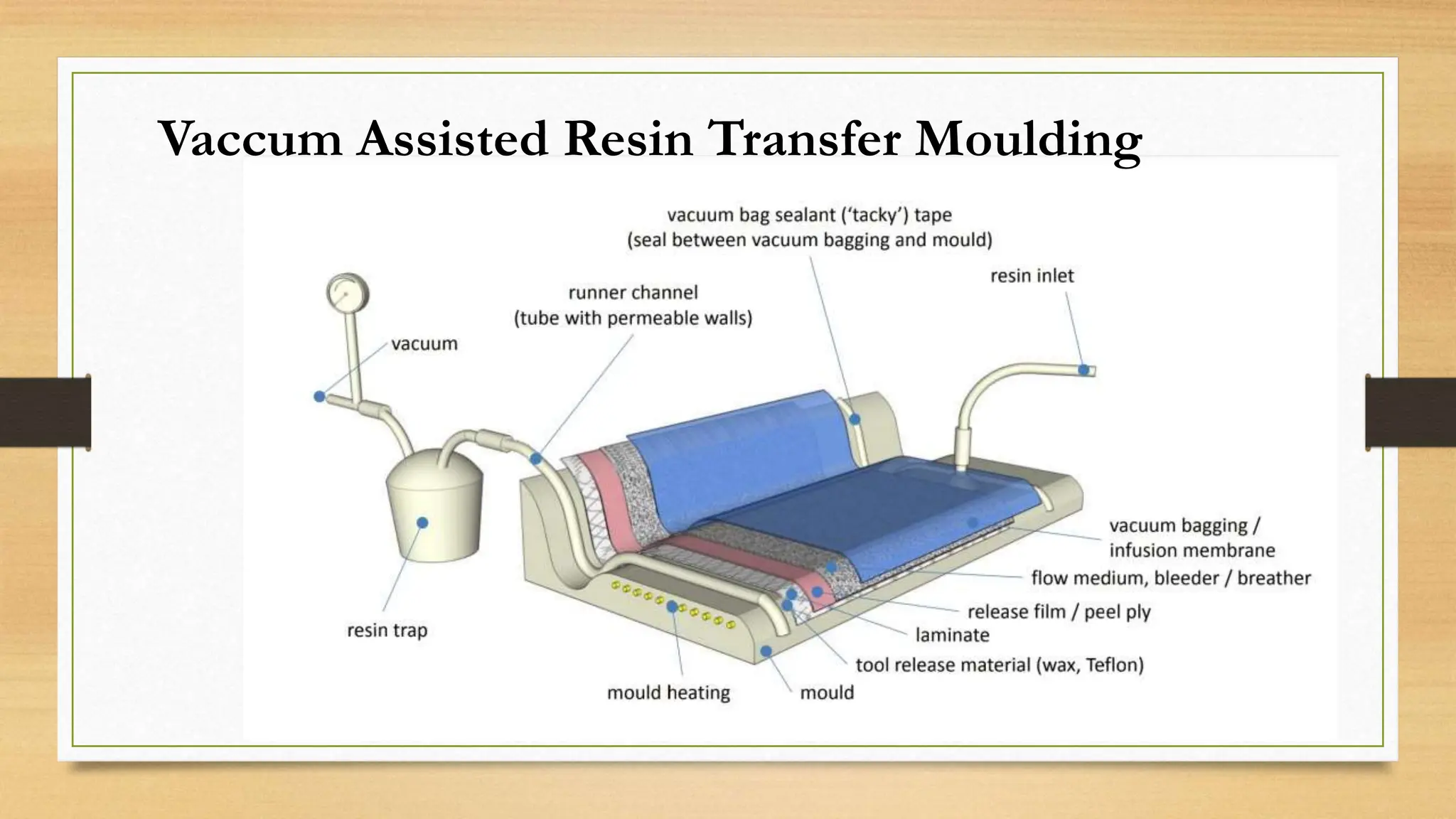
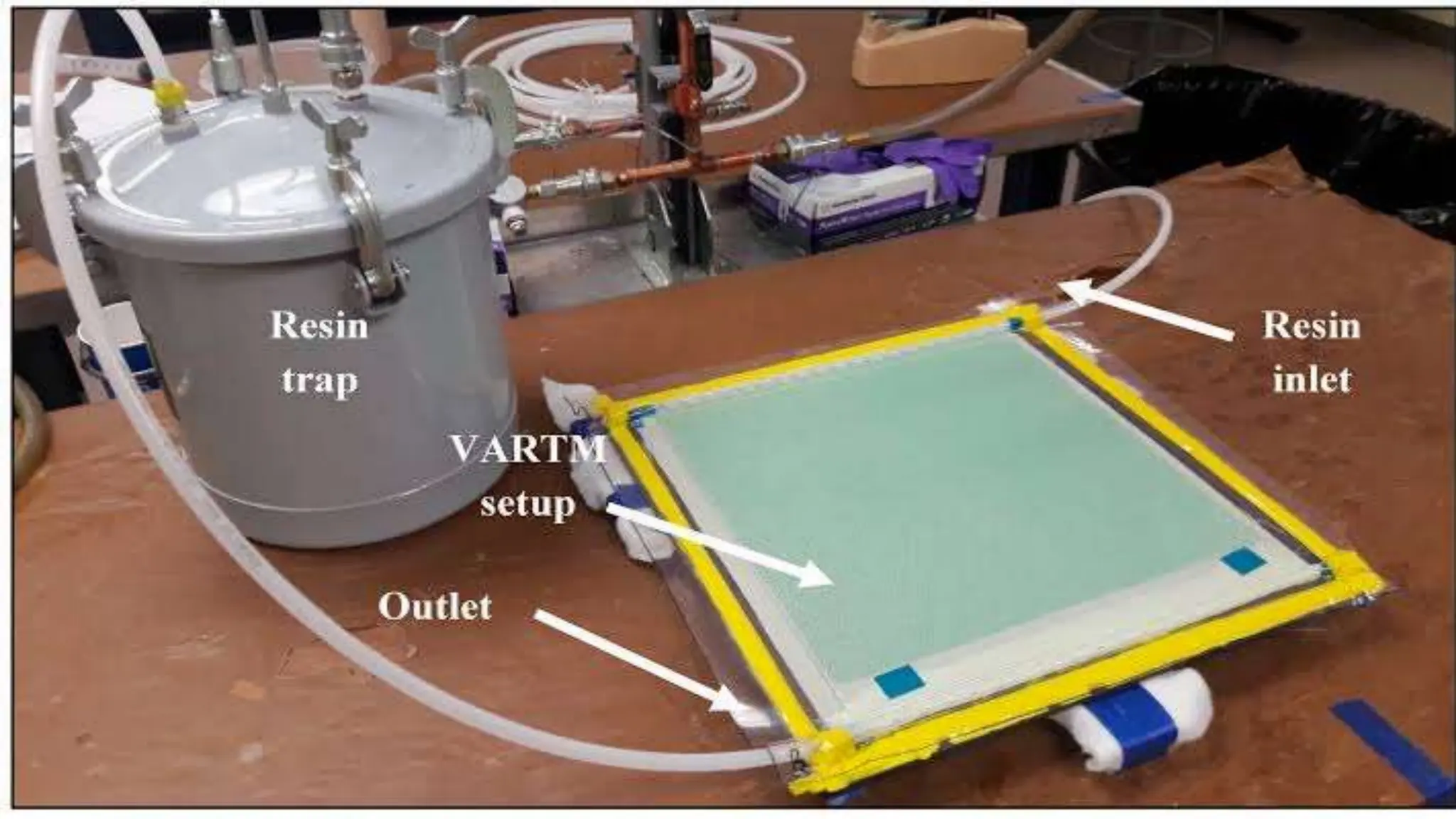
Vaccum Assisted Resin Transfer Moulding
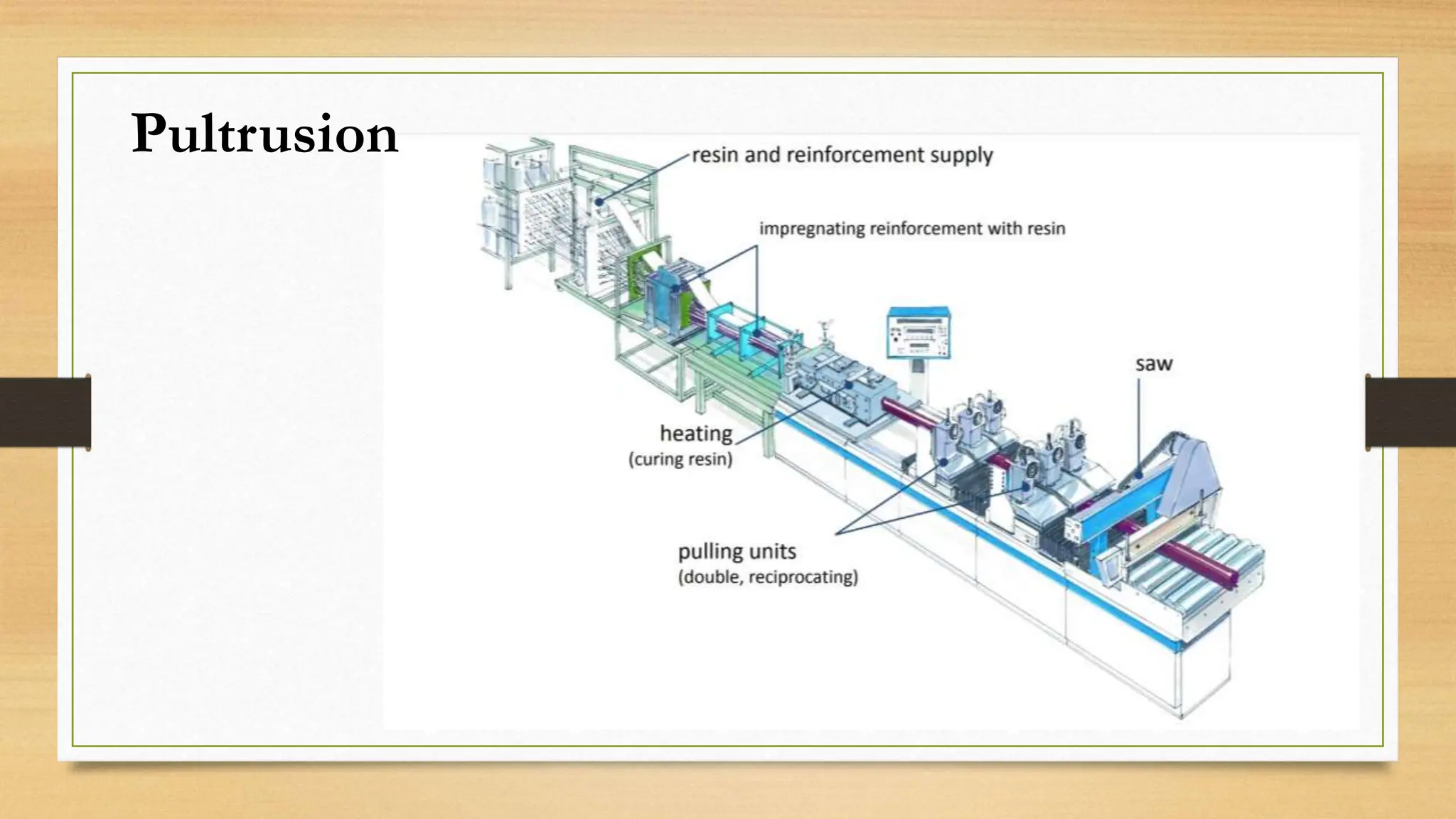
Pultrusion
Stir casting
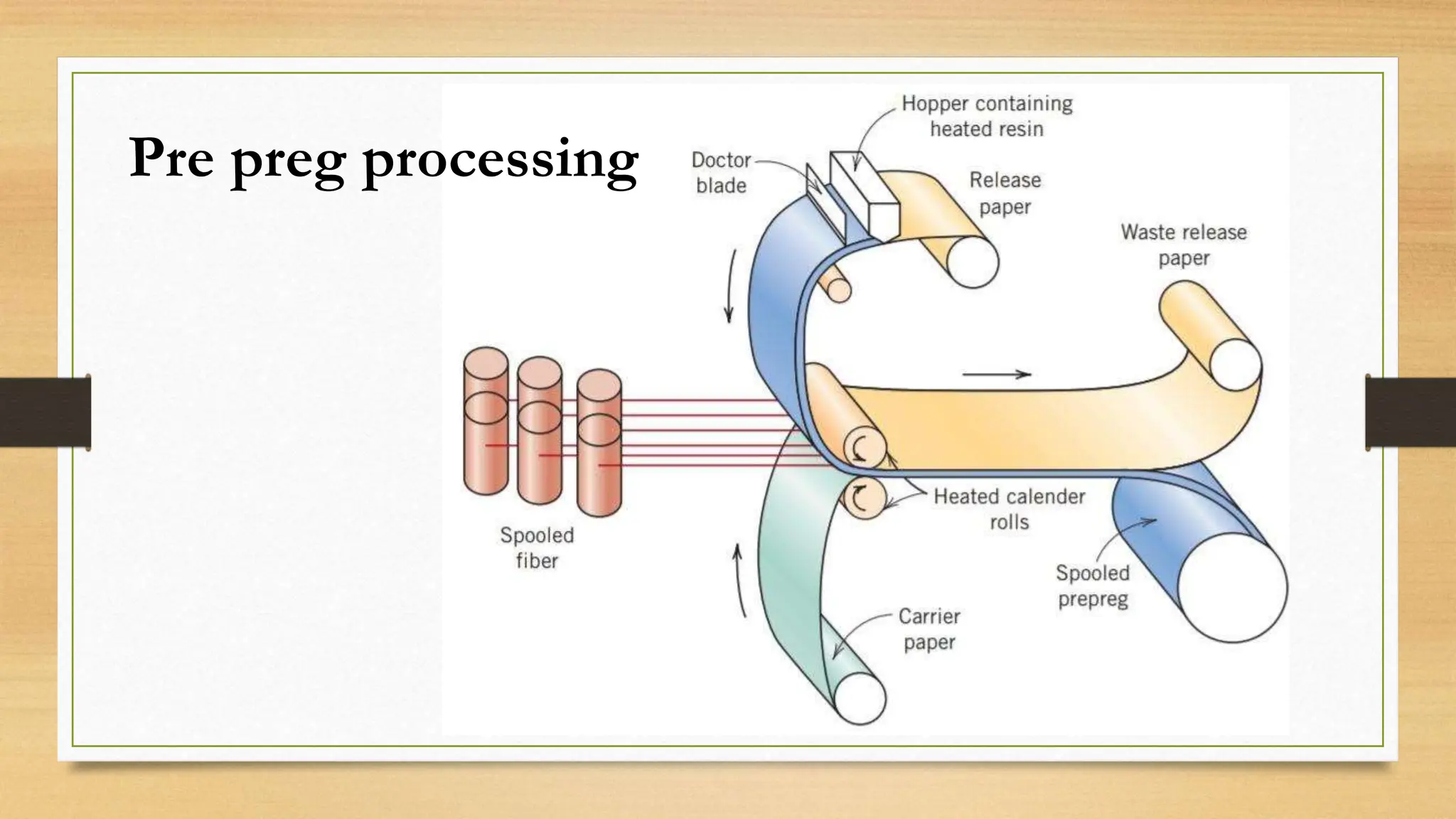
Pre preg processing
Autoclave
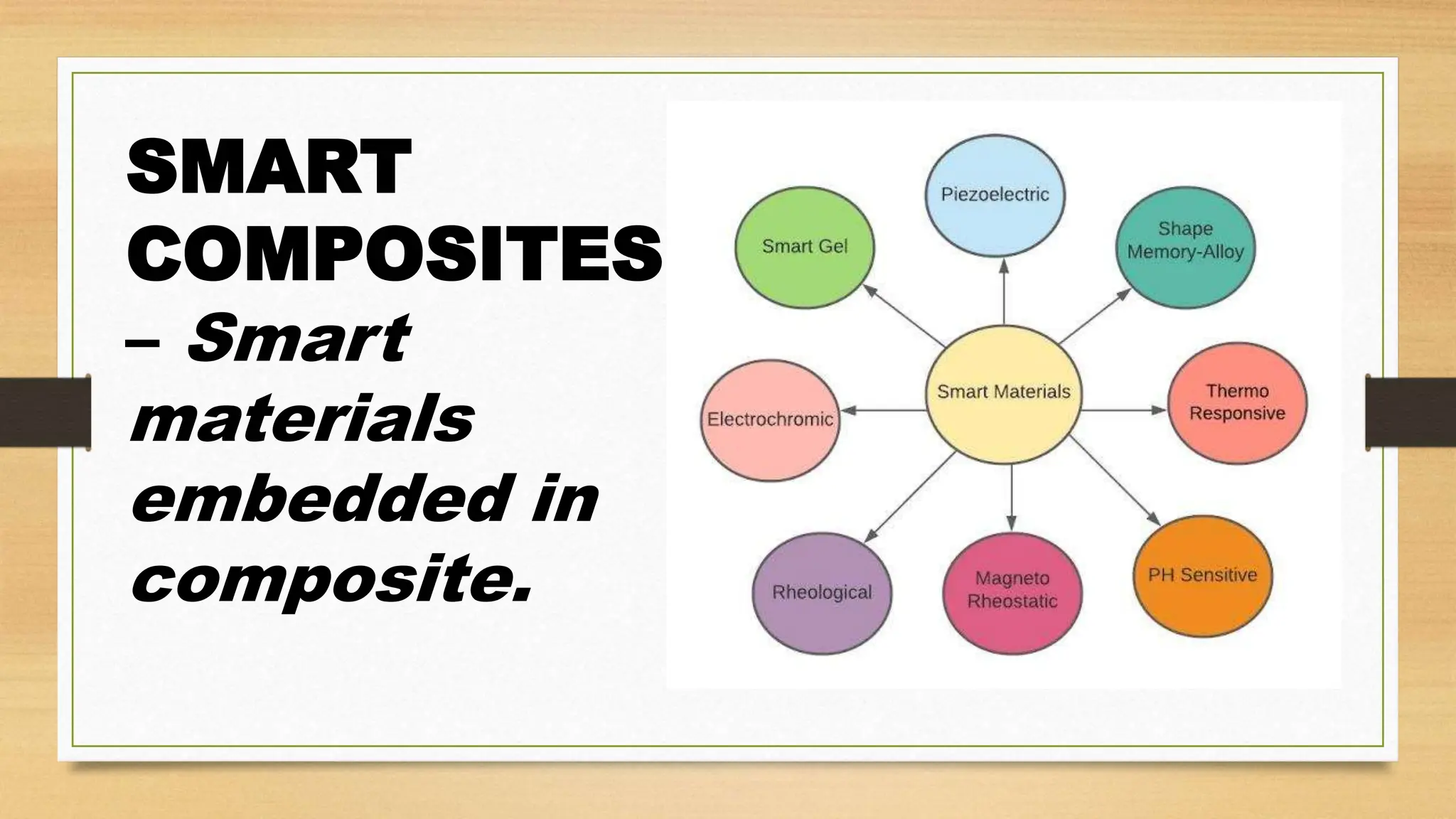
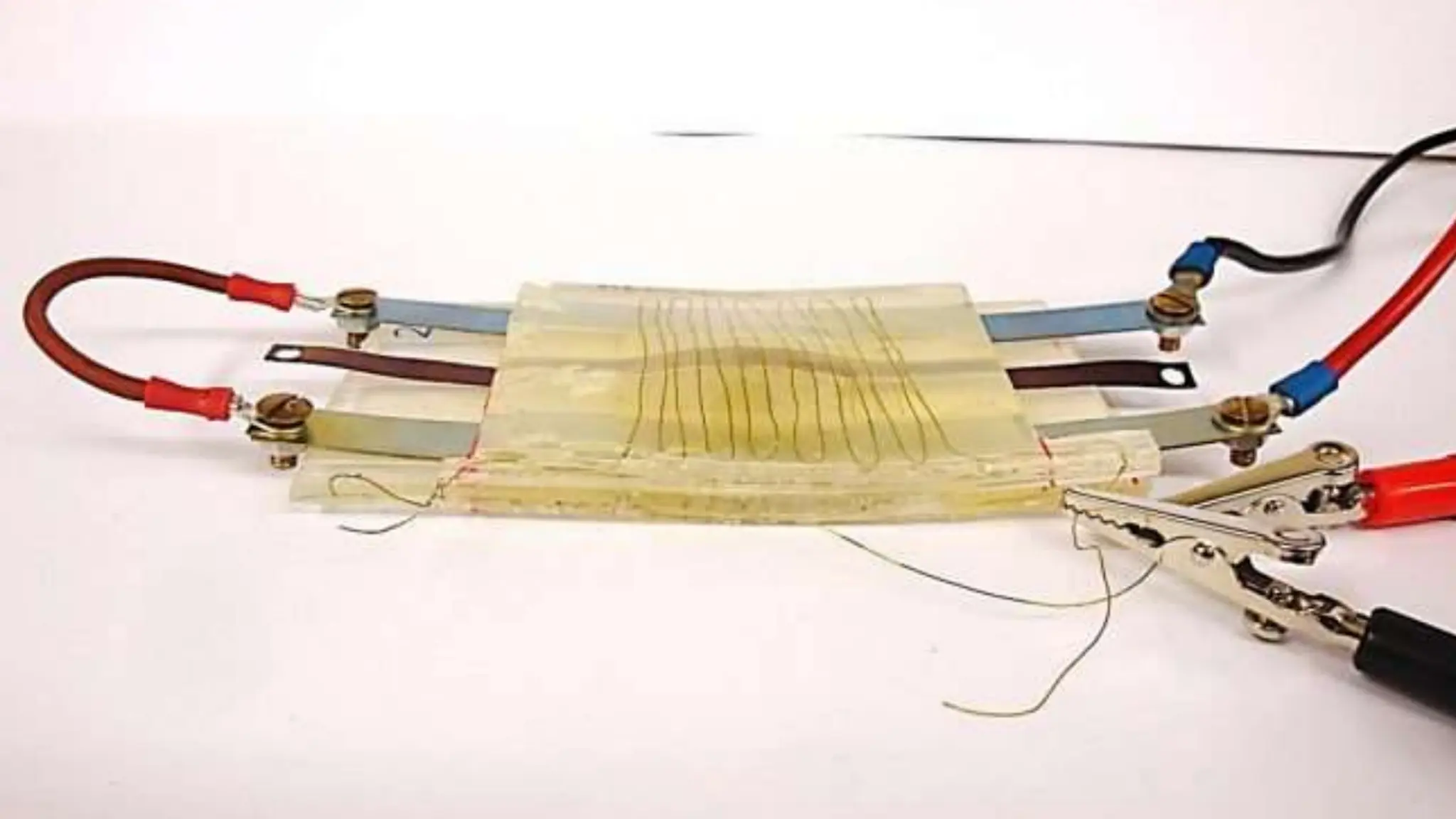
SMART
COMPOSITES
– Smart
materials
embedded in
composite.
THANK YOU...

Composite materials