1. Obstructed labor occurs when there is failure of progress of labor due to mechanical reasons despite adequate uterine contractions and can lead to maternal and neonatal mortality. (2) It is most common in low-resource settings with inadequate intrapartum care. (3) Cephalopelvic disproportion and malpresentations are the main etiologies of obstructed labor.
2. Prolonged labor in obstructed labor results in pathological changes including thinning of the lower uterine segment which can rupture, edema of bladder and vagina, and fetal distress. Symptoms include abdominal pain, cessation of contractions and bleeding. Management involves relieving obstruction through vaginal or abdominal delivery depending on the situation. (4)

![Pathologic changes (ctd.)
2. Avascular pressure necrosis- Presenting part wedged
with no advance for considerable time »
Sloughing after several days [usually in primi]
i. Vagina alone – heals by scaring » stenosis of the
vagina (Acquired gynatresia) » Dyspareunia.
ii. Proximal urethra + bladder neck » UVF, VVF
iii. Rectum – RVF (occurs in 15% of VVF)
3. Vulva – Usually edematous esp with early pushing
called also “Kannula syndrome” [ Kannulla= to push in zulu ]
9
December 13, 2023](https://image.slidesharecdn.com/complicationoflabor-231213205259-76a4cffc/85/COMPLICATION-OF-LABOR-pptx-9-320.jpg)
![Pathologic changes (ctd.)
D. Fetus
i. Caput - which may be considerable (even reaching the
perineum with no engagement) leading to Dxtic error of station
ii. Molding - results in decrease in BPD of 0.5cm
usually not dangerous but if > 0.5cm »» chance IC hemorrhage
(cerebral birth trauma).
iii. Fetal asphyxia – 2o to placental insufficiency from strong
& prolonged contraction
-fetal distress and meconium passage » if severe fetal » death
iv. Increased perinatal (fetal + ENN) morbidity & mortality
[Cerebral birth trauma, aspyxia and infection].
10
December 13, 2023](https://image.slidesharecdn.com/complicationoflabor-231213205259-76a4cffc/85/COMPLICATION-OF-LABOR-pptx-10-320.jpg)
![Clinical presentation
A. Primigravid
Hx - usually a young teenage
- Hx of prolonged labor at home (days).
- Usually no ANC follow up
P/E – Tired, exhausted and anxious.
- Dehydrated + Acidotic [^PR, ^RR, ^T], BP
usually normal unless septicemic.
- Distended atonic bowl.
- Bladder distended with difficult catheterization.
13
December 13, 2023](https://image.slidesharecdn.com/complicationoflabor-231213205259-76a4cffc/85/COMPLICATION-OF-LABOR-pptx-13-320.jpg)
![Clinical presentation(ctd.)
B. Multigravid - finding vary if the patient is seen prior to
or after Ux rupture.
i. Before rupture – generally findings are as primi +
- often three tumor abdomen [edematous enlarged
bladder, distended tender lower ux segment & tonically
contracted upper segment] - P/V- Cx is fully dilated.
ii. After rupture – two presentation
a. if presenting part is impacted, temponade effect on torn
Ux vessels, minimal or no hemorrhage with no
hypovolumic shock »» clinical presn. is as above (i)
b. if it is not impacted and major vessels involved profound
shock often mixed (hypovolumic +septic)
15
December 13, 2023](https://image.slidesharecdn.com/complicationoflabor-231213205259-76a4cffc/85/COMPLICATION-OF-LABOR-pptx-15-320.jpg)
![Management (ctd.)
B. Definitive management
- some sort of operative delivery is needed [Vaginal or Abd.]
- No wait and see policy and non-operative methods has no
place.
Abdominal delivery (Indication)
- Alive child with incomplete dilation or high station (criteria
for instrumental delivery not met)
- Ruptured Ux
- Eminent Ux rupture even if fetus is dead
- Dead fetus – when the criteria for destructive or
instrumental delivery not met.
19
December 13, 2023](https://image.slidesharecdn.com/complicationoflabor-231213205259-76a4cffc/85/COMPLICATION-OF-LABOR-pptx-19-320.jpg)
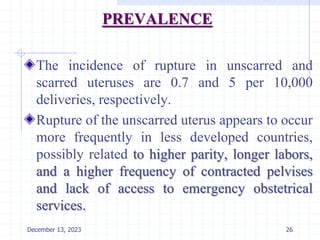
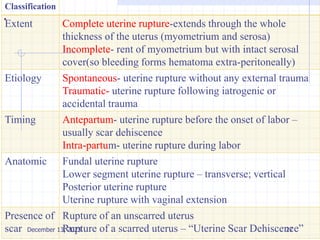
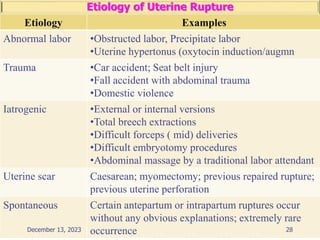
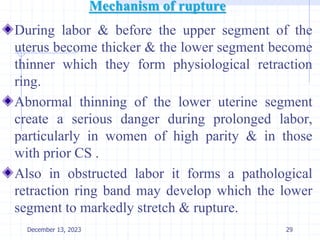
![Mechanism
Progressive thickning of the upper uterine segment
at the expense of the thinning lower uterine
segment
In primigravidas contraction ceases at some point
when OL sets in before Ux rupture [“Primis Ux is
wise”]
spontaneous rupture in primigravidas is rare;
rupture usually associated with use of oxytocin,
operative vaginal deliveries.
In multigravidas Ux contraction continues until
finally the progressively thinning lower Ux
segment ruptures.
30
December 13, 2023](https://image.slidesharecdn.com/complicationoflabor-231213205259-76a4cffc/85/COMPLICATION-OF-LABOR-pptx-30-320.jpg)
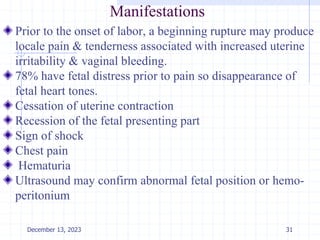
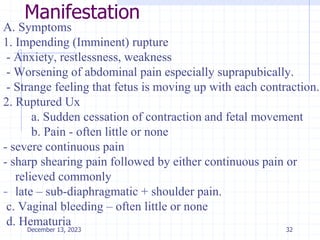
![Manifestation (ctd.)
B. Signs
a. Vital sign – vary from normal BP + PR to profound shock
(No BP +PR)
[Factors: +Temponade effect, Time elapsed, +involvement of
major vessels]
b. Variable pallor
c. Abdomen
- Soft to diffuse tenderness with Ux difficult to feel
- Variable abdominal + bowl distension
- Ux contraction is often absent & defect may be felt if tear is
anterion
- FHB usually absent unless a recent rupture.
- Fetal part may be easily appreciated only if extruded (Difficult if
abdomen is tense) + Shifting dullness
33
December 13, 2023](https://image.slidesharecdn.com/complicationoflabor-231213205259-76a4cffc/85/COMPLICATION-OF-LABOR-pptx-33-320.jpg)
![Manifestation (ctd.)
d. PV
- Jammed presenting part or may have receded to the brim
[“ loss of station”]
- variable bleeding
- catheterization – frank blood (only if there
is associated bladder rupture)
- Rarely : delivery of placenta before fetus or loop of bowl felt
Dxtic Investigations
- of limited value + no time to do them
34
December 13, 2023](https://image.slidesharecdn.com/complicationoflabor-231213205259-76a4cffc/85/COMPLICATION-OF-LABOR-pptx-34-320.jpg)
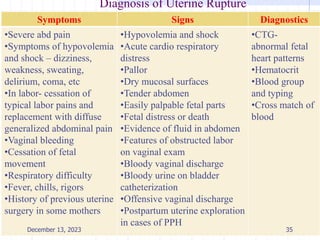
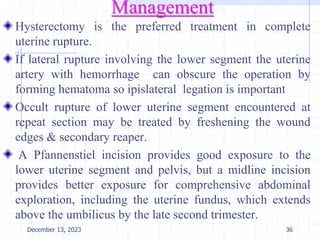
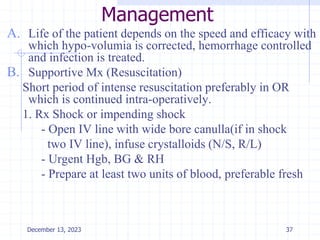
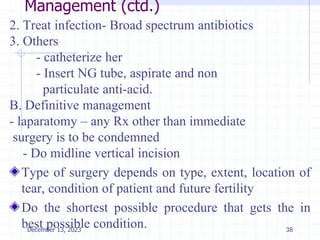
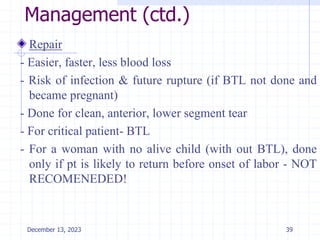
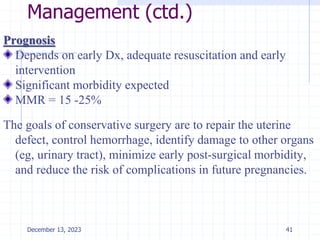
![Management (ctd.)
Hysterectomy
- TAH if the pt is stable – standard Mx
- Subtotal HE if pt is critical [Decrease
anesthesia time, bleeding and ureteral injury]
Post op care
- Equally important especially in the first 24 hours
- Continue resuscitation + antibiotics
- Watch for 20 hemorrhage
- Monitor VS, UOP
Prognosis
Depends on early Dx, adequate resuscitation and early
intervention
Significant morbidity expected
MMR = 15 -25%
40
December 13, 2023](https://image.slidesharecdn.com/complicationoflabor-231213205259-76a4cffc/85/COMPLICATION-OF-LABOR-pptx-40-320.jpg)
![Surveillance
Maternal surveillance
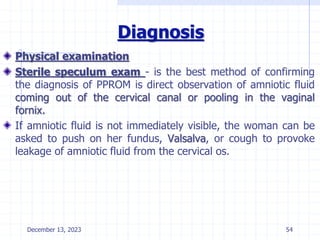
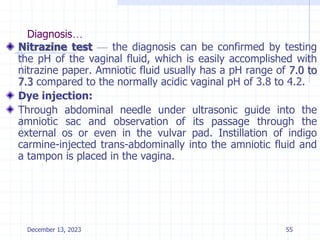
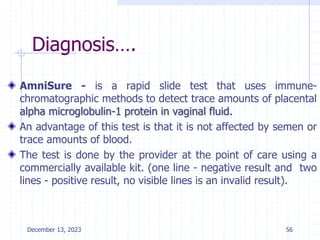
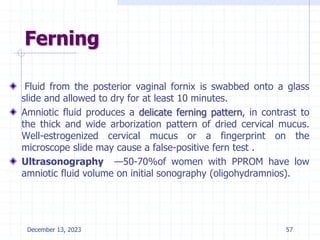
Monitor for signs of infection(Chorioamnionitis)(Fever, Abdominal
tenderness, Offensive Vx discharge, Fetal tachycardia, maternal
tachycardia
Leukocytosis).
Fetal surveillance
Kick counts
Non stress tests
Biophysical profile [BPP]
Antenatal steroids
Dexamethasone 6mg bid ;04 doses
Betamethasone 12mg daily;02doses
Hydrocortisone 2 g IM x 1 dose
December 13, 2023 62](https://image.slidesharecdn.com/complicationoflabor-231213205259-76a4cffc/85/COMPLICATION-OF-LABOR-pptx-62-320.jpg)



![Abnormal pregnancy and labour 2024 [Autosaved].pdf](https://cdn.slidesharecdn.com/ss_thumbnails/abnormalpregnancyandlabour2024autosaved-250205172802-595407a0-thumbnail.jpg?width=640&height=640&fit=bounds)


