An easy way to
automate complex UI
Test automation practices and tips
About me
 7+ years in IT
 Automation Engineer
 Scrum Master
 Betsson project, Ciklum

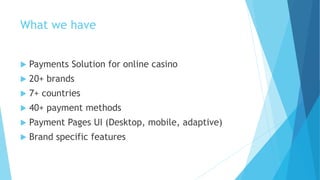
What we have
 Payments Solution for online casino
 20+ brands
 7+ countries
 40+ payment methods
 Payment Pages UI (Desktop, mobile, adaptive)
 Brand specific features
Complex UI?*
*from automation perspective
Complex UI?
 Complex fronted:
 Dynamic
 Async
 Adaptive
 Complex backend:
 Hardly configurable
 Overflown
 Slow
 Unstable
Complex tests
 Complex behavior
 Complex architecture
 Slow
 Fragile
 Overflown with scenario's
 «Test smells» *
 *http://xunitpatterns.com/TestSmells.html
What automation we want?
 Easy to write
 Clear to understand
 Simple to work with
Agenda
 Fakes & test doubles
 Test & Patterns
 Tips and tricks (test sugar & screenshots)
Fakes & test doubles
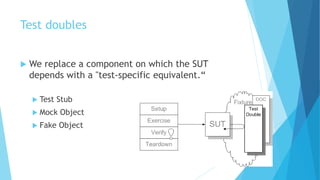
Test doubles
 We replace a component on which the SUT
depends with a "test-specific equivalent.“
 Test Stub
 Mock Object
 Fake Object
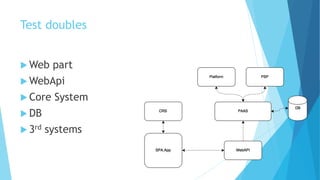
Test doubles
 Web part
 WebApi
 Core System
 DB
 3rd systems
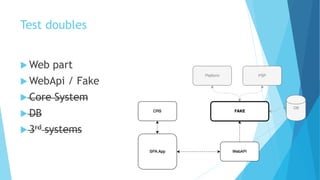
Test doubles
 Web part
 WebApi / Fake
 Core System
 DB
 3rd systems
What can we solve with Fake
 Test without dependent components
 … without Backend
 … without 3rd Party services
 … without DB
 Test unavailable component
 Simplify scenarios precondition
 Fix Slow/ Fragile / Heavyweight tests
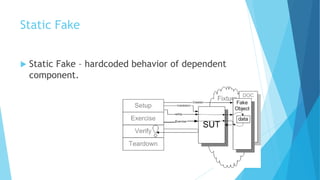
Static Fake
 Static Fake – hardcoded behavior of dependent
component.
Static Fake. Pros
 Have all specific behaviors
 Any language for implementation*
 Use for prototyping & local testing
 Speedup tests
 *Sometimes it very hard to mock backend on JavaScript
Static Fake. Cons
 It is not easy to implement
 Test scenarios are not clear
 Support
Dynamic Fake
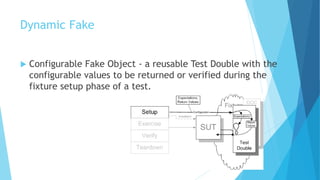
 Configurable Fake Object - a reusable Test Double with the
configurable values to be returned or verified during the
fixture setup phase of a test.
Dynamic Fake. Pros
 Have all specific behaviors
 Configured from test
 Scenarios are clear & readable
Dynamic Fake. Cons
 Much harder for development
 Can’t/hard to used for prototyping or local testing
Pitfalls
 Fake – not a silver bullet
 Additional test layer:
Contract tests on fake/depended
component
 Do not test Fake, test SUT
Tests and Patterns
Tests & Patterns. Problems
 Scenarios duplicates
 Overflown locators / base classes /behavior
 Tones of code
 Inheritance hell
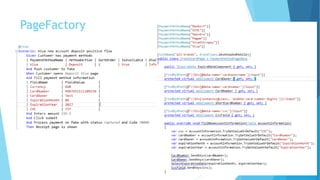
PageFactory
 PageFactory + [Attributes]
 Factory return needed page based on SiteName, PaymentMethod,
IsMobile
 No new for Page Object creation
 Fallback (from brand to common)
 Result: ~ -55% duplicates in test scenarios.
 Test request needed page from Factory (same method for all
brands)
 Test prepares and transmits data to PageObject
PageFactory
Common Naming
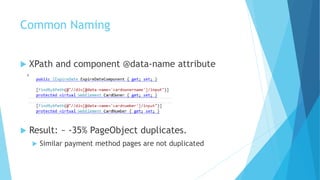
 XPath and component @data-name attribute
 Result: ~ -35% PageObject duplicates.
 Similar payment method pages are not duplicated
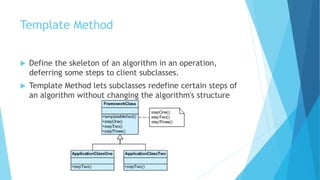
Template Method
 Define the skeleton of an algorithm in an operation,
deferring some steps to client subclasses.
 Template Method lets subclasses redefine certain steps of
an algorithm without changing the algorithm's structure
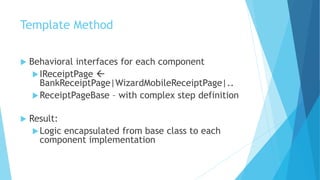
Template Method
 Behavioral interfaces for each component
IReceiptPage 
BankReceiptPage|WizardMobileReceiptPage|..
ReceiptPageBase – with complex step definition
 Result:
Logic encapsulated from base class to each
component implementation
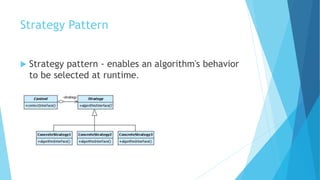
Strategy Pattern
 Strategy pattern - enables an algorithm's behavior
to be selected at runtime.
Strategy Pattern
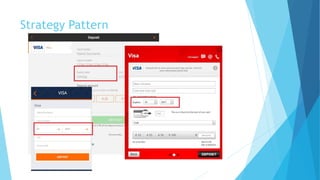
Strategy Pattern
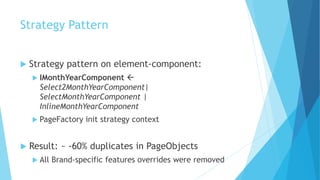
 Strategy pattern on element-component:
 IMonthYearComponent 
Select2MonthYearComponent|
SelectMonthYearComponent |
InlineMonthYearComponent
 PageFactory init strategy context
 Result: ~ -60% duplicates in PageObjects
 All Brand-specific features overrides were removed
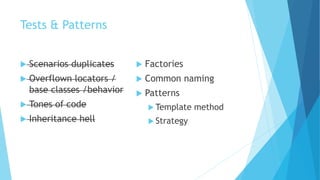
Tests & Patterns
 Scenarios duplicates
 Overflown locators /
base classes /behavior
 Tones of code
 Inheritance hell
 Factories
 Common naming
 Patterns
 Template method
 Strategy
Tests sugar. Screenshots
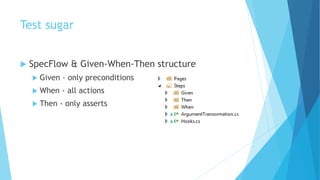
Test sugar
 SpecFlow & Given-When-Then structure
 Given - only preconditions
 When - all actions
 Then - only asserts
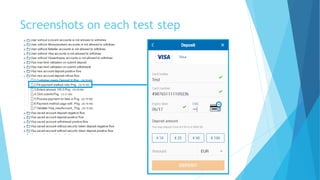
Screenshots on each test step
Screenshots in tests
 SpecFlow [AfterStep]
 Screenshot all steps
 Keep history
Screenshots. Visual testing
 Use extra step
 Continue on failure
 Use emulations
 Hardcode/Ignore dynamic values
How to make your life easier?
 Fake complex backend
 Simplify your architecture
 apply patterns
 use best practices
 Improve test feedback – use text, visual
information
What automation we get?
 Easy to write
 Clear to understand
 Simple to work with
That's all folks!
Questions?
Links
Test Doubles:
• http://xunitpatterns.com/Test%20Double.html
• https://www.martinfowler.com/bliki/TestDouble.html
Patterns:
• https://sourcemaking.com/design_patterns/behavioral_patterns
Me (Ivan Pashko):
• https://www.facebook.com/groups/1180099188730673/
Pictures:
• https://pixabay.com | https://unsplash.com

An easy way to automate complex UI

  • 1.
    An easy wayto automate complex UI Test automation practices and tips
  • 2.
    About me  7+years in IT  Automation Engineer  Scrum Master  Betsson project, Ciklum 
  • 3.
    What we have Payments Solution for online casino  20+ brands  7+ countries  40+ payment methods  Payment Pages UI (Desktop, mobile, adaptive)  Brand specific features
  • 4.
  • 5.
    Complex UI?  Complexfronted:  Dynamic  Async  Adaptive  Complex backend:  Hardly configurable  Overflown  Slow  Unstable
  • 6.
    Complex tests  Complexbehavior  Complex architecture  Slow  Fragile  Overflown with scenario's  «Test smells» *  *http://xunitpatterns.com/TestSmells.html
  • 7.
    What automation wewant?  Easy to write  Clear to understand  Simple to work with
  • 8.
    Agenda  Fakes &test doubles  Test & Patterns  Tips and tricks (test sugar & screenshots)
  • 9.
    Fakes & testdoubles
  • 10.
    Test doubles  Wereplace a component on which the SUT depends with a "test-specific equivalent.“  Test Stub  Mock Object  Fake Object
  • 11.
    Test doubles  Webpart  WebApi  Core System  DB  3rd systems
  • 12.
    Test doubles  Webpart  WebApi / Fake  Core System  DB  3rd systems
  • 13.
    What can wesolve with Fake  Test without dependent components  … without Backend  … without 3rd Party services  … without DB  Test unavailable component  Simplify scenarios precondition  Fix Slow/ Fragile / Heavyweight tests
  • 14.
    Static Fake  StaticFake – hardcoded behavior of dependent component.
  • 15.
    Static Fake. Pros Have all specific behaviors  Any language for implementation*  Use for prototyping & local testing  Speedup tests  *Sometimes it very hard to mock backend on JavaScript
  • 16.
    Static Fake. Cons It is not easy to implement  Test scenarios are not clear  Support
  • 17.
    Dynamic Fake  ConfigurableFake Object - a reusable Test Double with the configurable values to be returned or verified during the fixture setup phase of a test.
  • 18.
    Dynamic Fake. Pros Have all specific behaviors  Configured from test  Scenarios are clear & readable
  • 19.
    Dynamic Fake. Cons Much harder for development  Can’t/hard to used for prototyping or local testing
  • 20.
    Pitfalls  Fake –not a silver bullet  Additional test layer: Contract tests on fake/depended component  Do not test Fake, test SUT
  • 21.
  • 22.
    Tests & Patterns.Problems  Scenarios duplicates  Overflown locators / base classes /behavior  Tones of code  Inheritance hell
  • 23.
    PageFactory  PageFactory +[Attributes]  Factory return needed page based on SiteName, PaymentMethod, IsMobile  No new for Page Object creation  Fallback (from brand to common)  Result: ~ -55% duplicates in test scenarios.  Test request needed page from Factory (same method for all brands)  Test prepares and transmits data to PageObject
  • 24.
  • 25.
    Common Naming  XPathand component @data-name attribute  Result: ~ -35% PageObject duplicates.  Similar payment method pages are not duplicated
  • 26.
    Template Method  Definethe skeleton of an algorithm in an operation, deferring some steps to client subclasses.  Template Method lets subclasses redefine certain steps of an algorithm without changing the algorithm's structure
  • 27.
    Template Method  Behavioralinterfaces for each component IReceiptPage  BankReceiptPage|WizardMobileReceiptPage|.. ReceiptPageBase – with complex step definition  Result: Logic encapsulated from base class to each component implementation
  • 28.
    Strategy Pattern  Strategypattern - enables an algorithm's behavior to be selected at runtime.
  • 29.
  • 30.
    Strategy Pattern  Strategypattern on element-component:  IMonthYearComponent  Select2MonthYearComponent| SelectMonthYearComponent | InlineMonthYearComponent  PageFactory init strategy context  Result: ~ -60% duplicates in PageObjects  All Brand-specific features overrides were removed
  • 31.
    Tests & Patterns Scenarios duplicates  Overflown locators / base classes /behavior  Tones of code  Inheritance hell  Factories  Common naming  Patterns  Template method  Strategy
  • 32.
  • 33.
    Test sugar  SpecFlow& Given-When-Then structure  Given - only preconditions  When - all actions  Then - only asserts
  • 34.
  • 35.
    Screenshots in tests SpecFlow [AfterStep]  Screenshot all steps  Keep history
  • 36.
    Screenshots. Visual testing Use extra step  Continue on failure  Use emulations  Hardcode/Ignore dynamic values
  • 37.
    How to makeyour life easier?  Fake complex backend  Simplify your architecture  apply patterns  use best practices  Improve test feedback – use text, visual information
  • 38.
    What automation weget?  Easy to write  Clear to understand  Simple to work with
  • 39.
  • 40.
    Links Test Doubles: • http://xunitpatterns.com/Test%20Double.html •https://www.martinfowler.com/bliki/TestDouble.html Patterns: • https://sourcemaking.com/design_patterns/behavioral_patterns Me (Ivan Pashko): • https://www.facebook.com/groups/1180099188730673/ Pictures: • https://pixabay.com | https://unsplash.com