Download as PDF, PPTX


















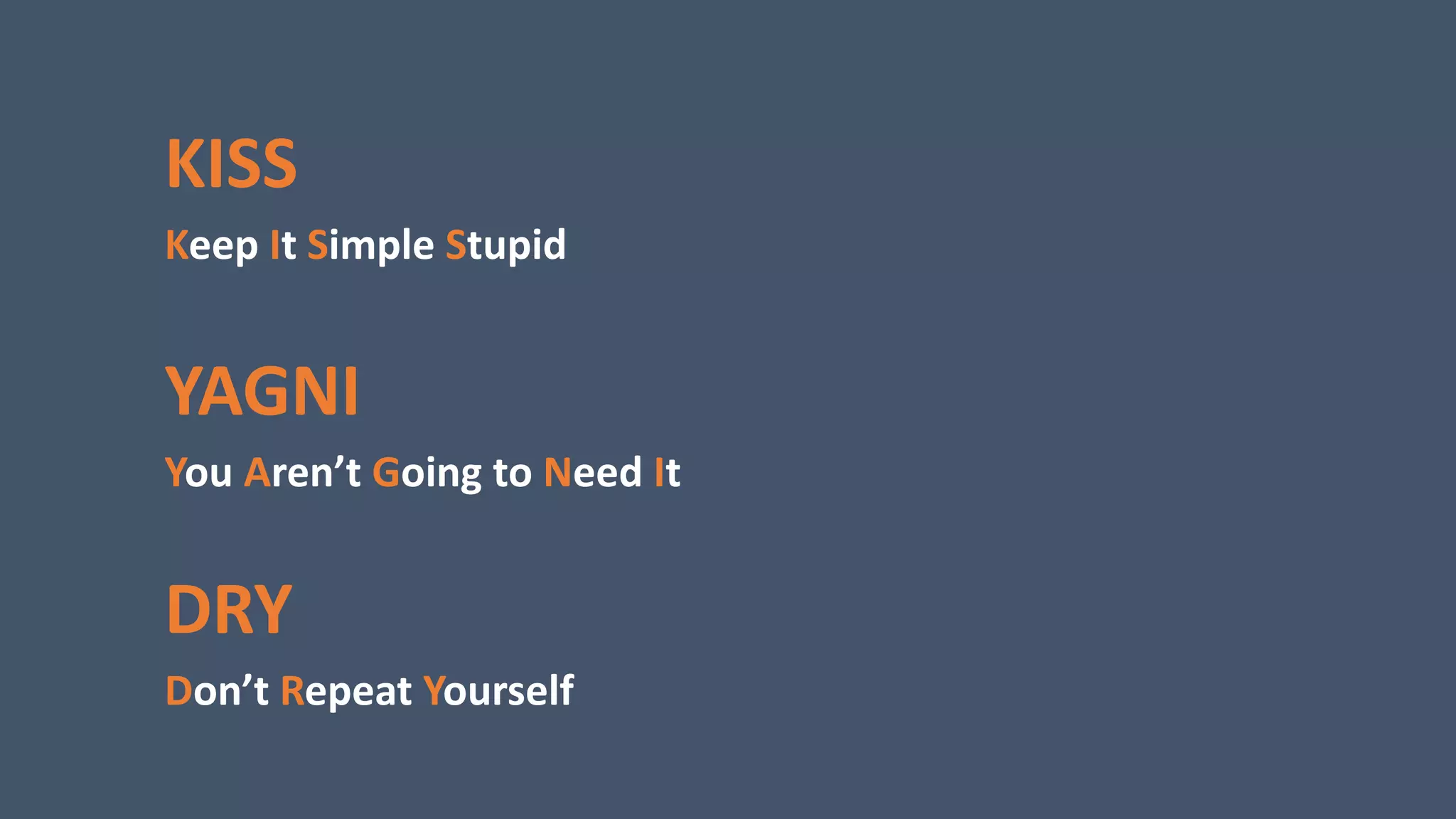
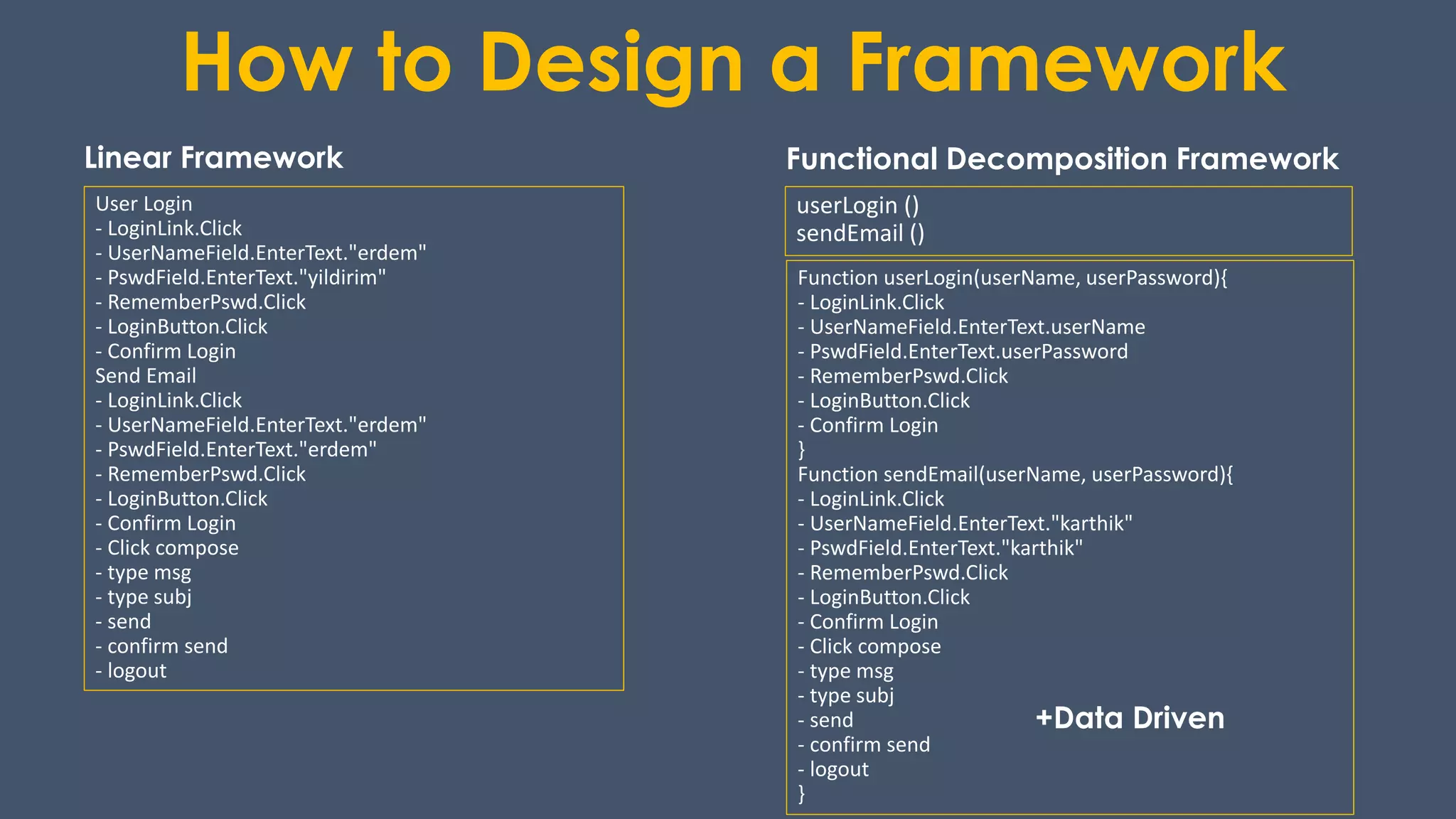


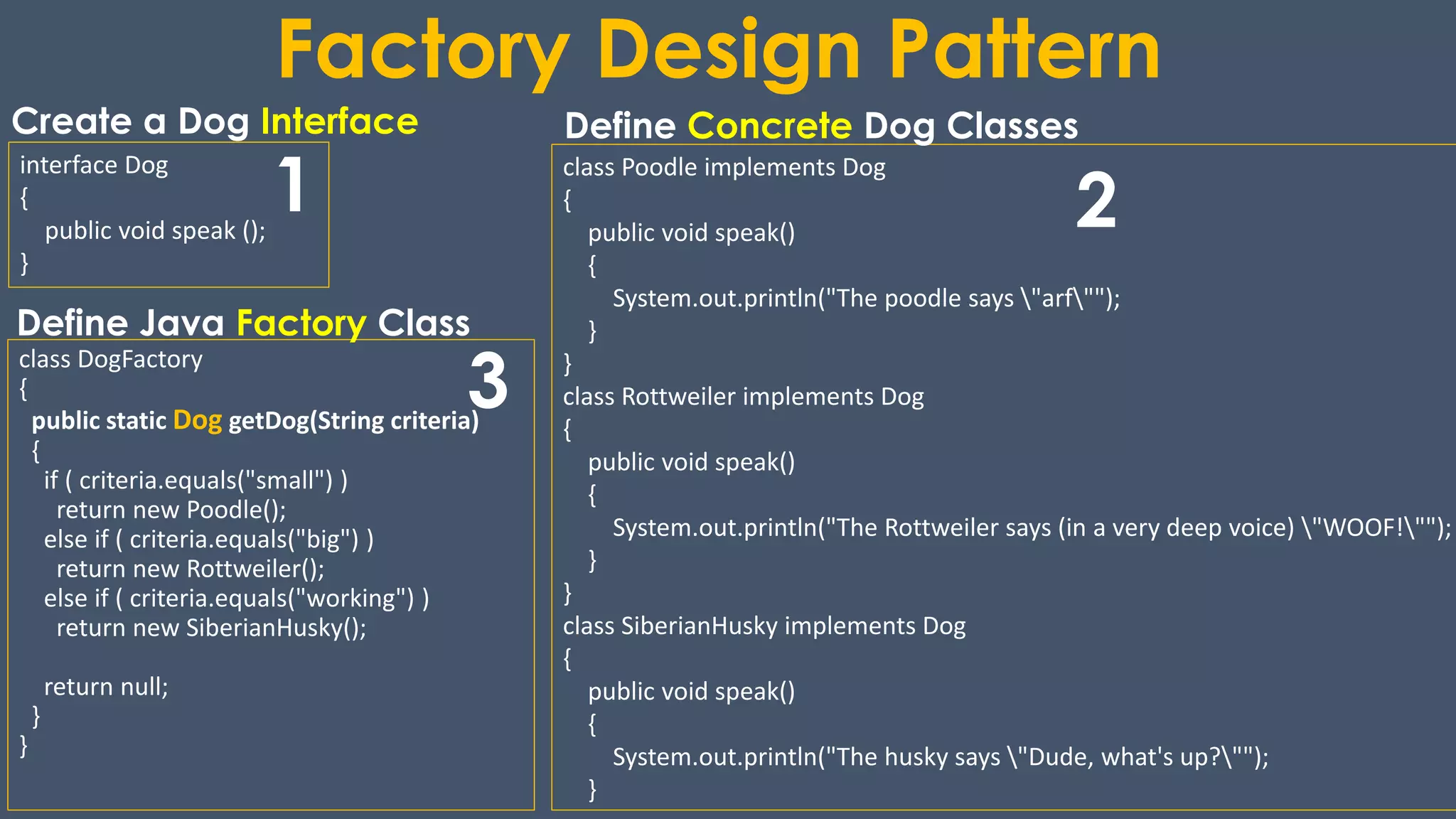
![Factory Design Pattern
public class JavaFactoryPatternExample
{
public static void main(String[] args)
{
// create a small dog
Dog dog = DogFactory.getDog("small");
dog.speak();
// create a big dog
dog = DogFactory.getDog("big");
dog.speak();
// create a working dog
dog = DogFactory.getDog("working");
dog.speak();
}
}
4
Factory Pattern Test Program
The poodle says "arf"
The Rottweiler says (in a very deep voice) "WOOF!"
The husky says "Dude, what's up?"
Brings
Decoupling
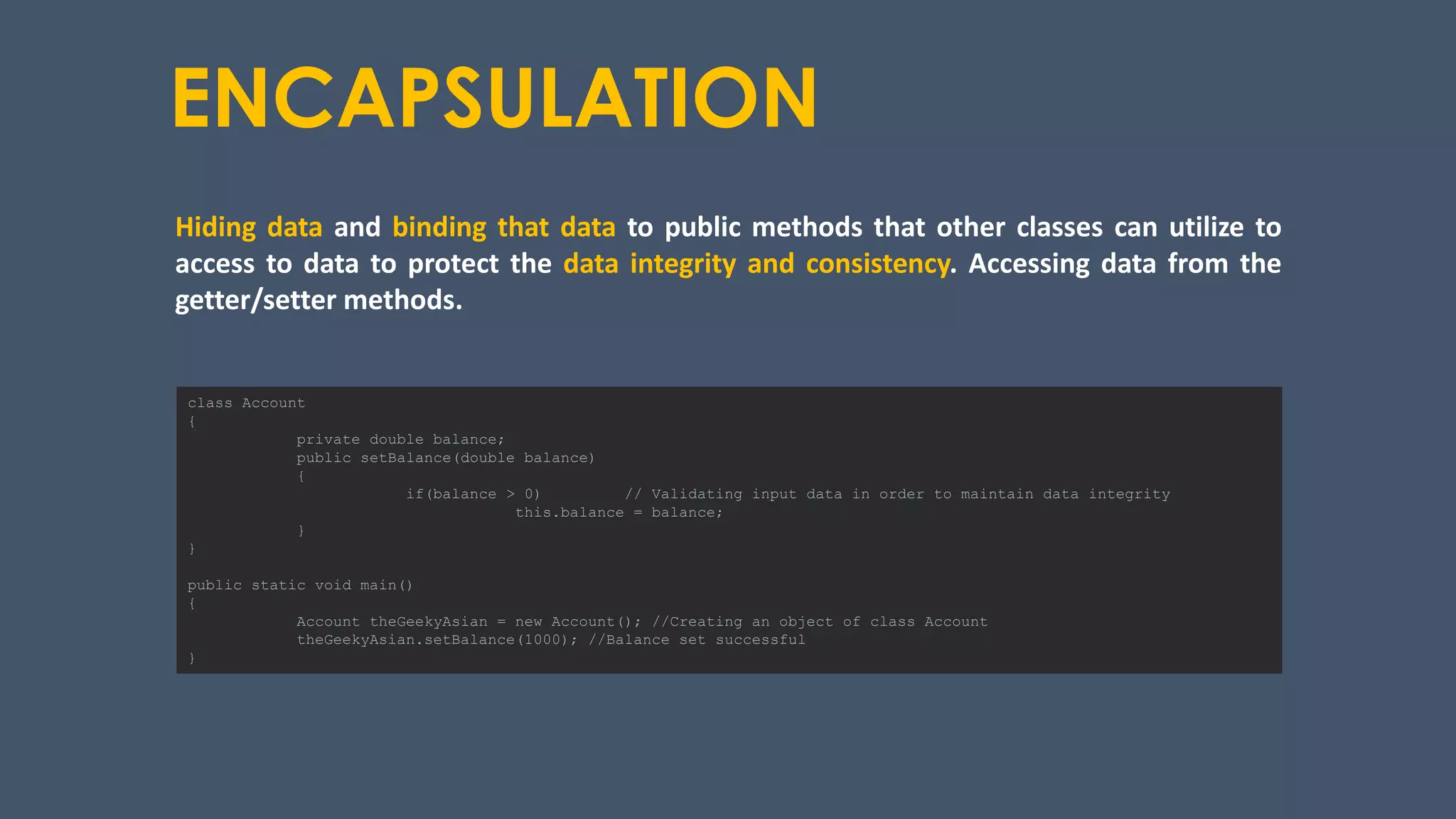
Encapsulation](https://image.slidesharecdn.com/6traitsofasuccessfultestautomationarchitecture-181030181129/75/6-Traits-of-a-Successful-Test-Automation-Architecture-38-2048.jpg)







![Dev Team
Version
Control
Build & Unit
Tests
UI Test
Automation
(Smoke)
Deploy (Prod)
UI Test
Automation
(Smoke)
UI Test
Automation
(Full Set)
Monitoring
Dev CI Pre-Production Production
Check in
Trigger
Trigger
Approval
Approval
Approval
Approval
Feedback
Feedback
Feedback
Feedback
Feedback
Automated Test Runs
After Nightly Build [1]
• Unit Test
Automation
• Web Service Test
Automation
• UI Test Automation
(Full Set)
• Cross Browser &
Platform Tests
Automated Test Runs
After Weekly Build [2]
• Automated Non
Functional Tests
(Performance &
Load Tests)
• Static Code Quality
Analysis
Feedback
Feedback
Feedback](https://image.slidesharecdn.com/6traitsofasuccessfultestautomationarchitecture-181030181129/75/6-Traits-of-a-Successful-Test-Automation-Architecture-65-2048.jpg)






![POLYMORPHISM
The ability to take multiple forms. The name polymorphism defines itself. Poly means
many, and morph means forms. It is a process of a method of a class taking
different/many forms.
Static Polymorphism – Known as Method Overloading
Dynamic Polymorphism – Known as Method Overriding
class Numbers
{
public int sum(int numberA, int numberB)
{
return numberA + numberB;
}
public double sum(double numberA, double numberB) //Here, method overloading takes place,
{ //by providing another feature to the same method 'sum'
return numberA + numberB;
}
}
class Test
{
public static void main(String[] args)
{
Numbers objNumber = new Numbers();
System.out.println("Sum of two integer numbers is: " + objNumber.sum(2,3);
System.out.println("Sum of two double numbers is: " + objNumber.sum(2.5,3.2);
}
}](https://image.slidesharecdn.com/6traitsofasuccessfultestautomationarchitecture-181030181129/75/6-Traits-of-a-Successful-Test-Automation-Architecture-77-2048.jpg)
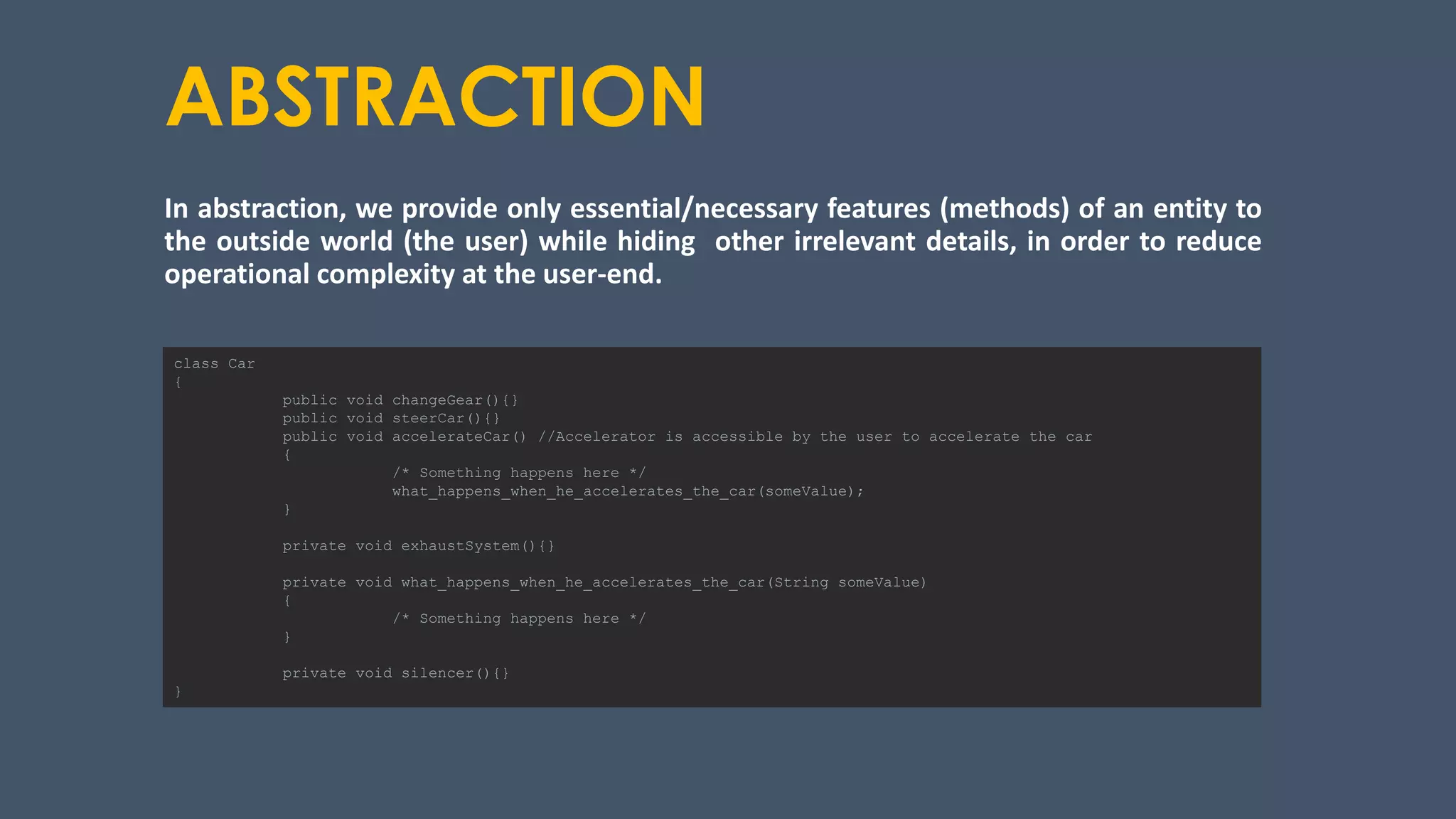








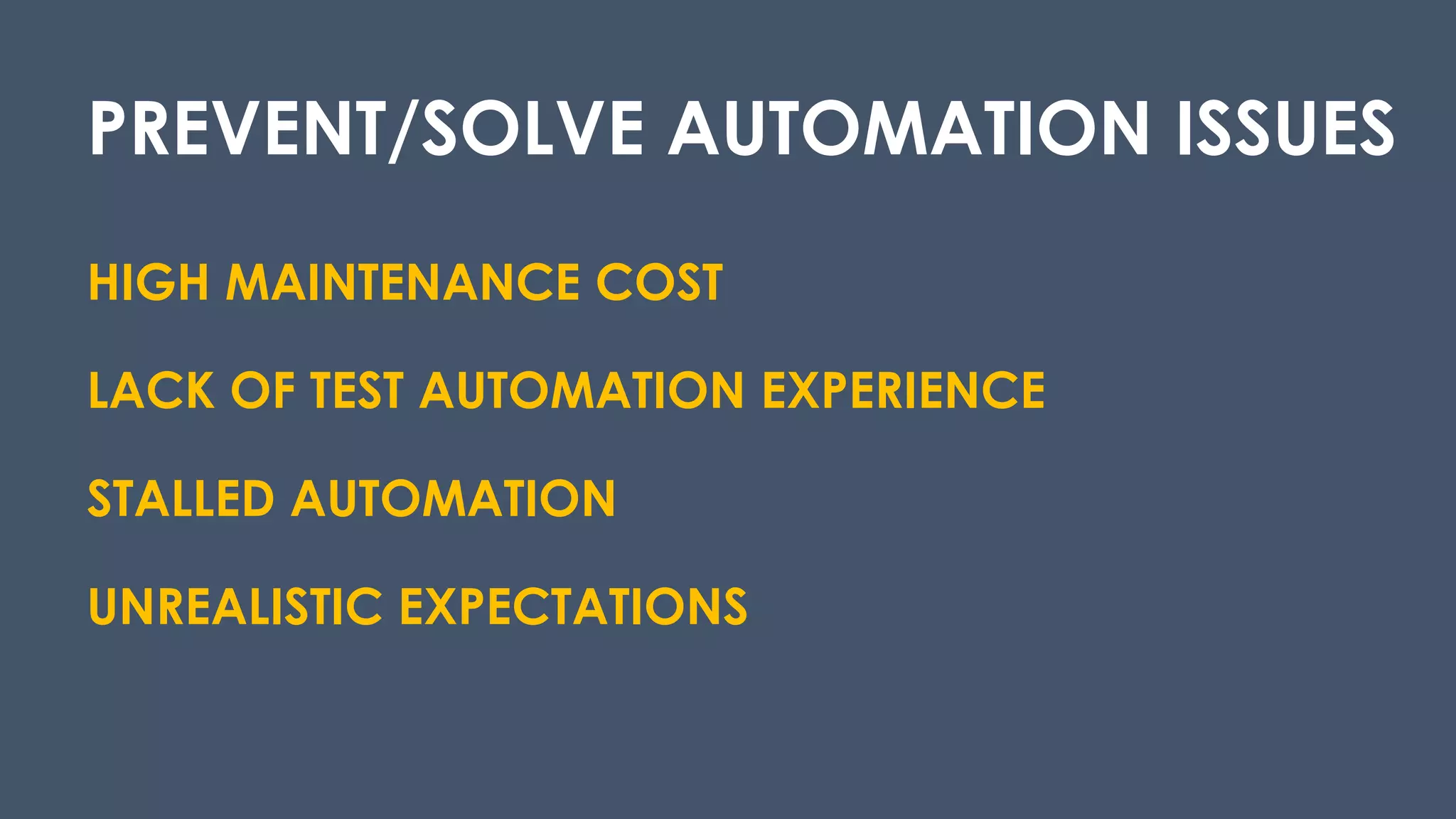
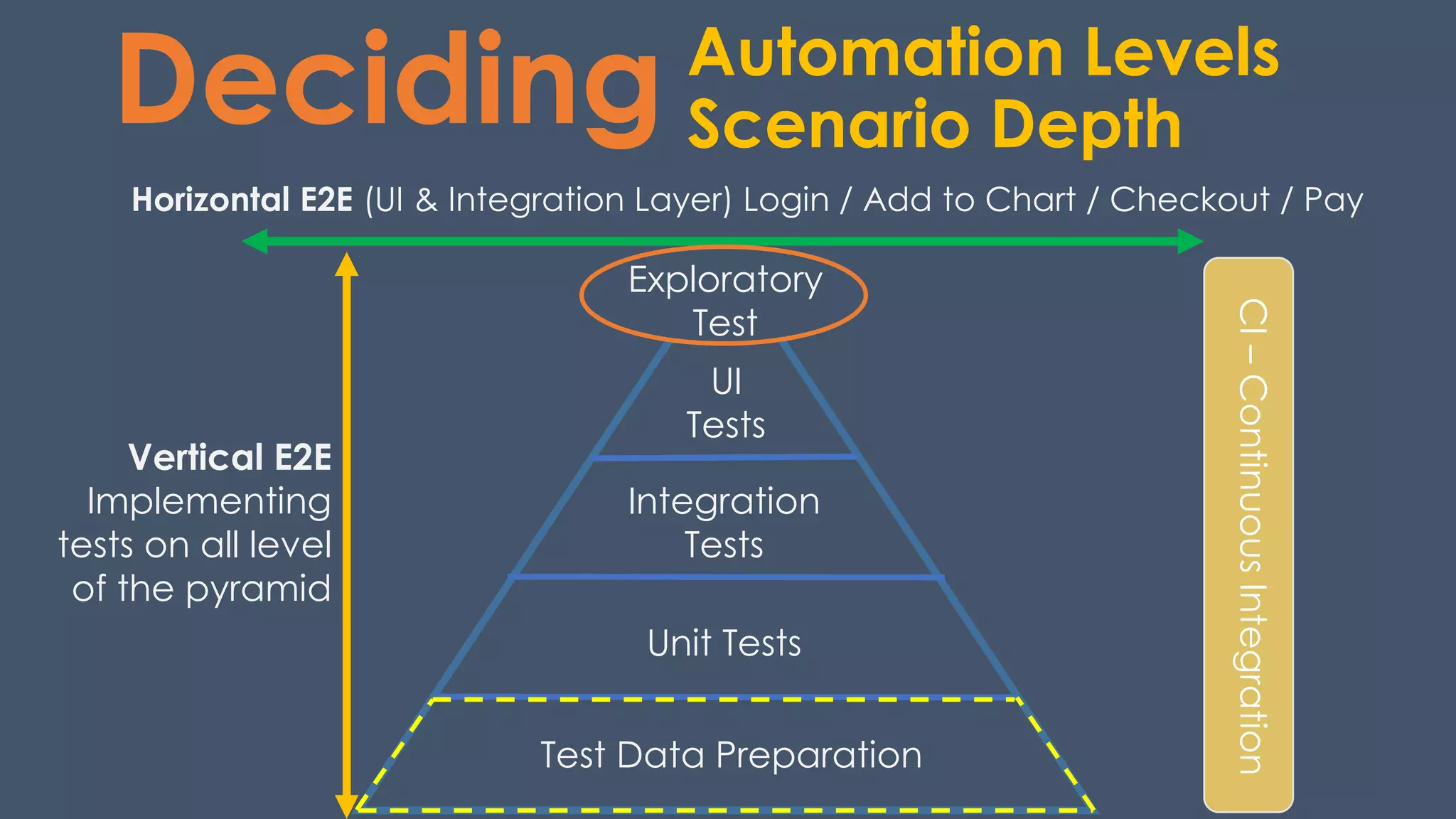
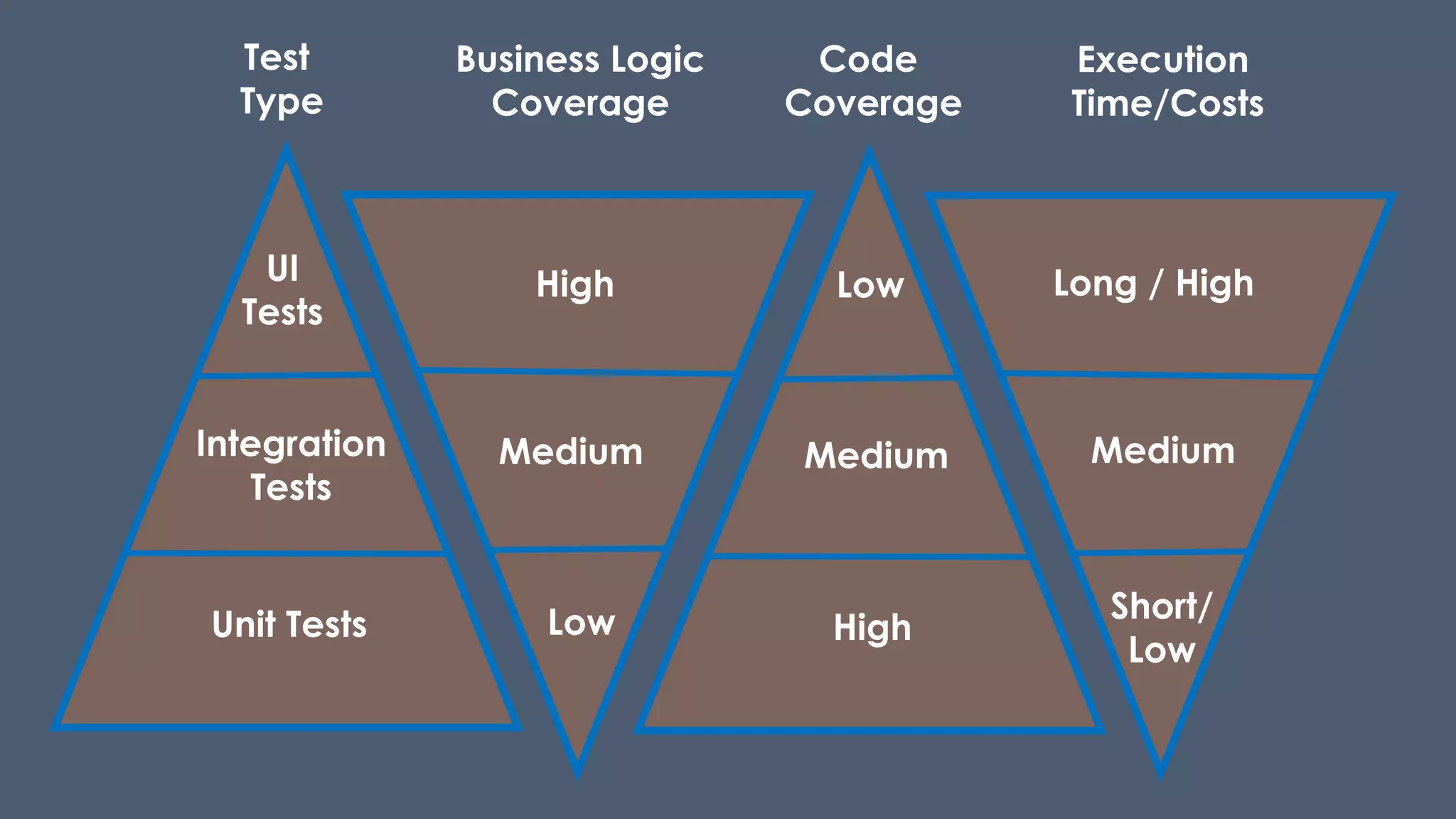
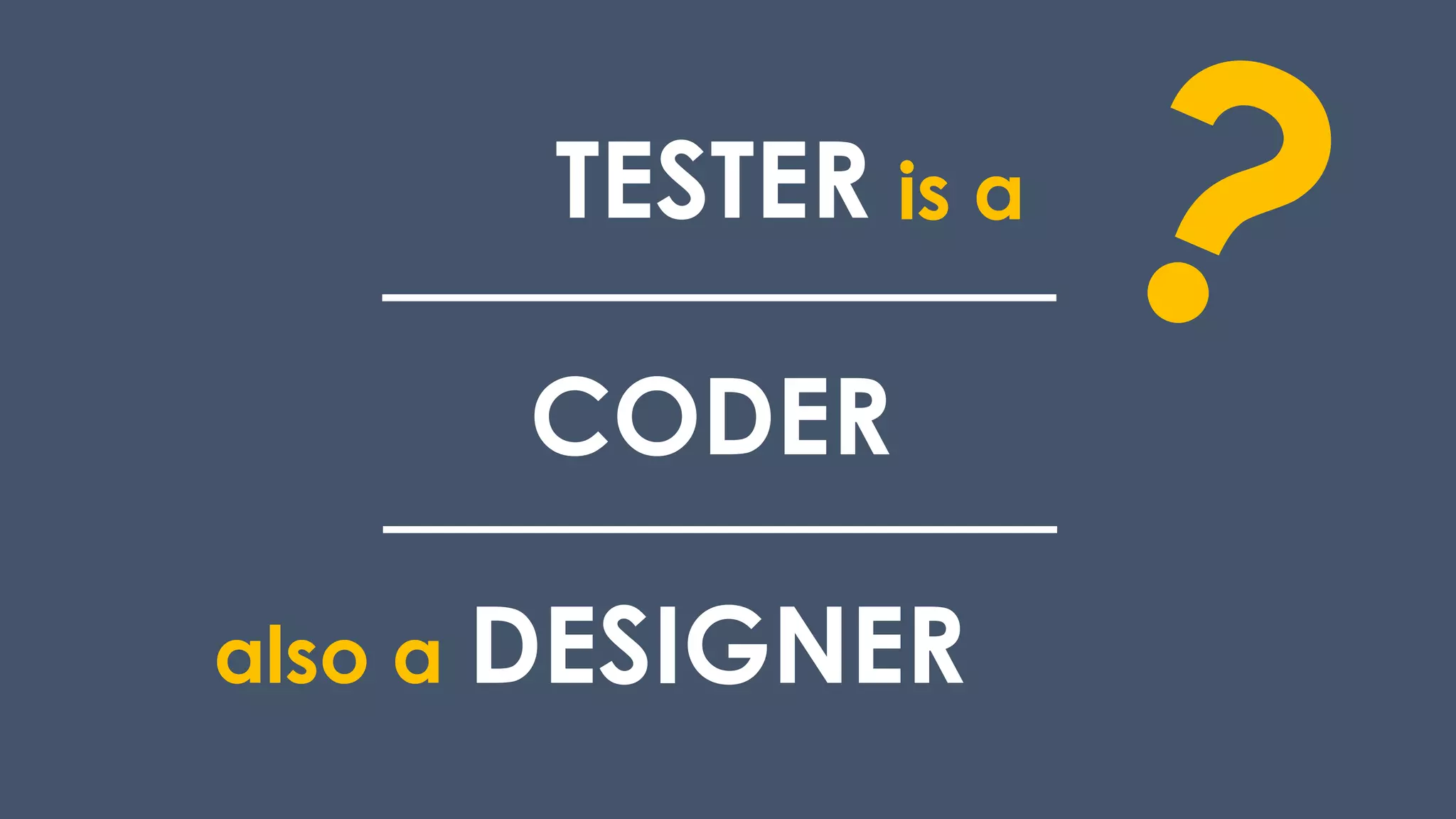
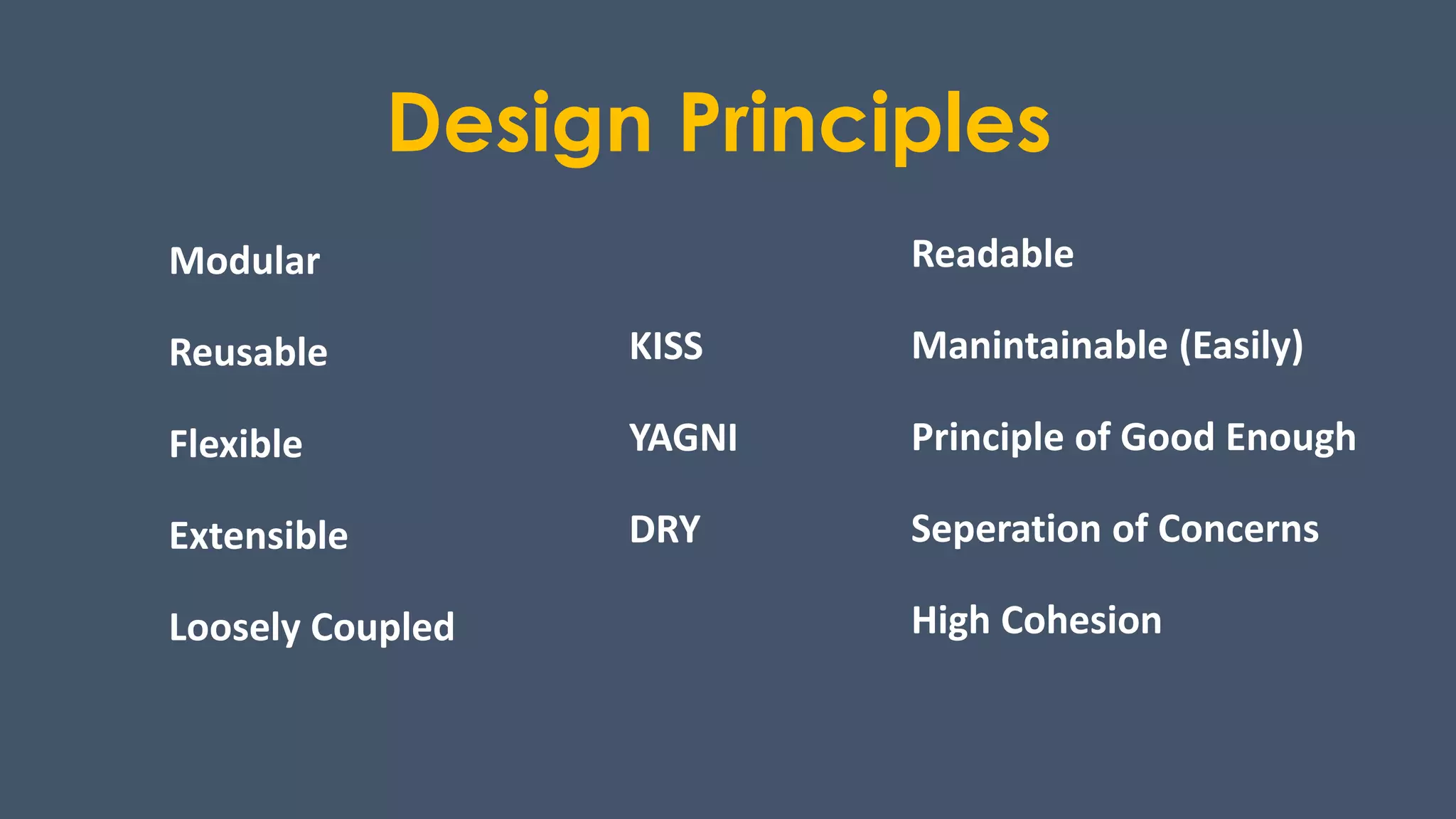
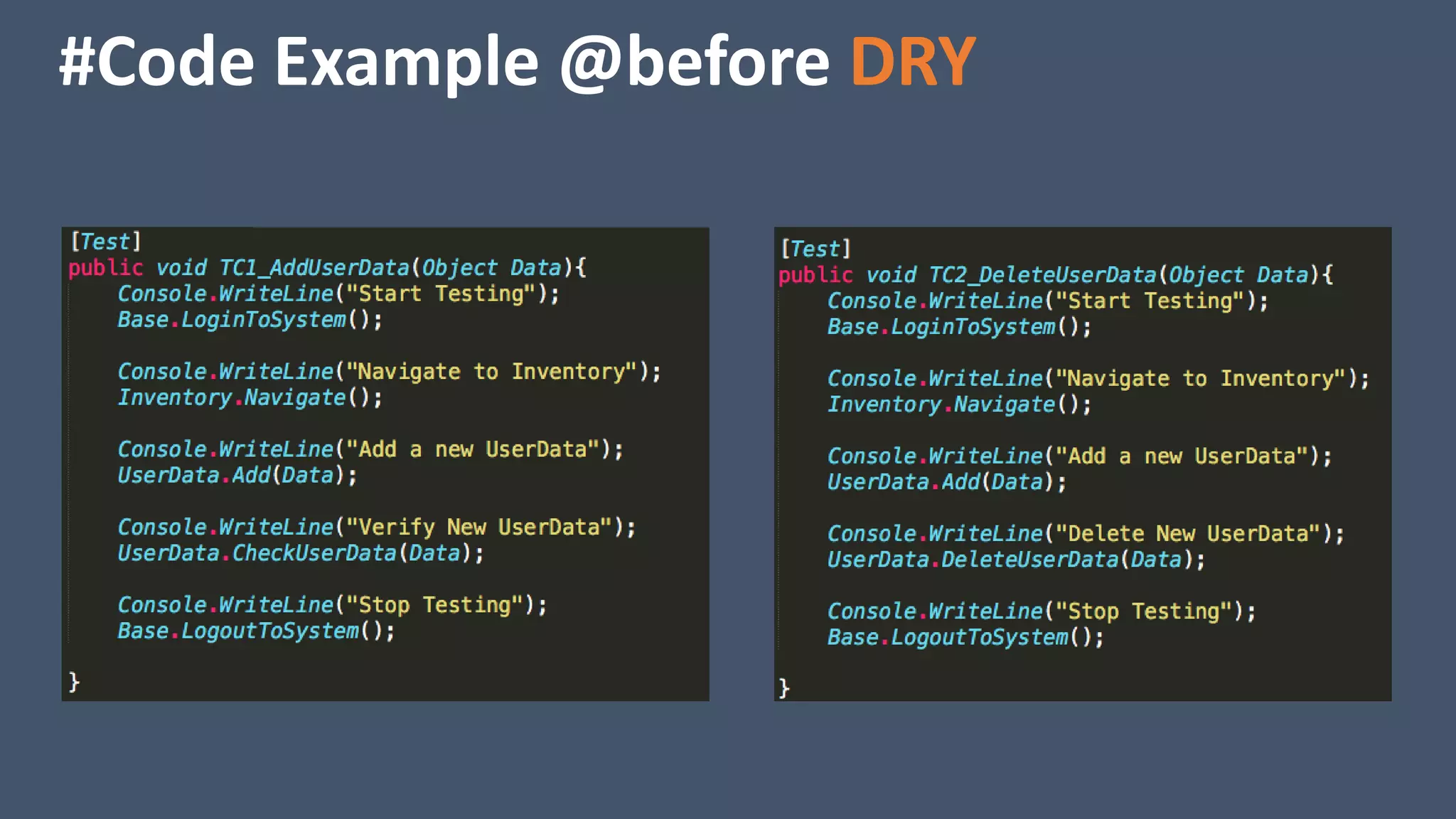
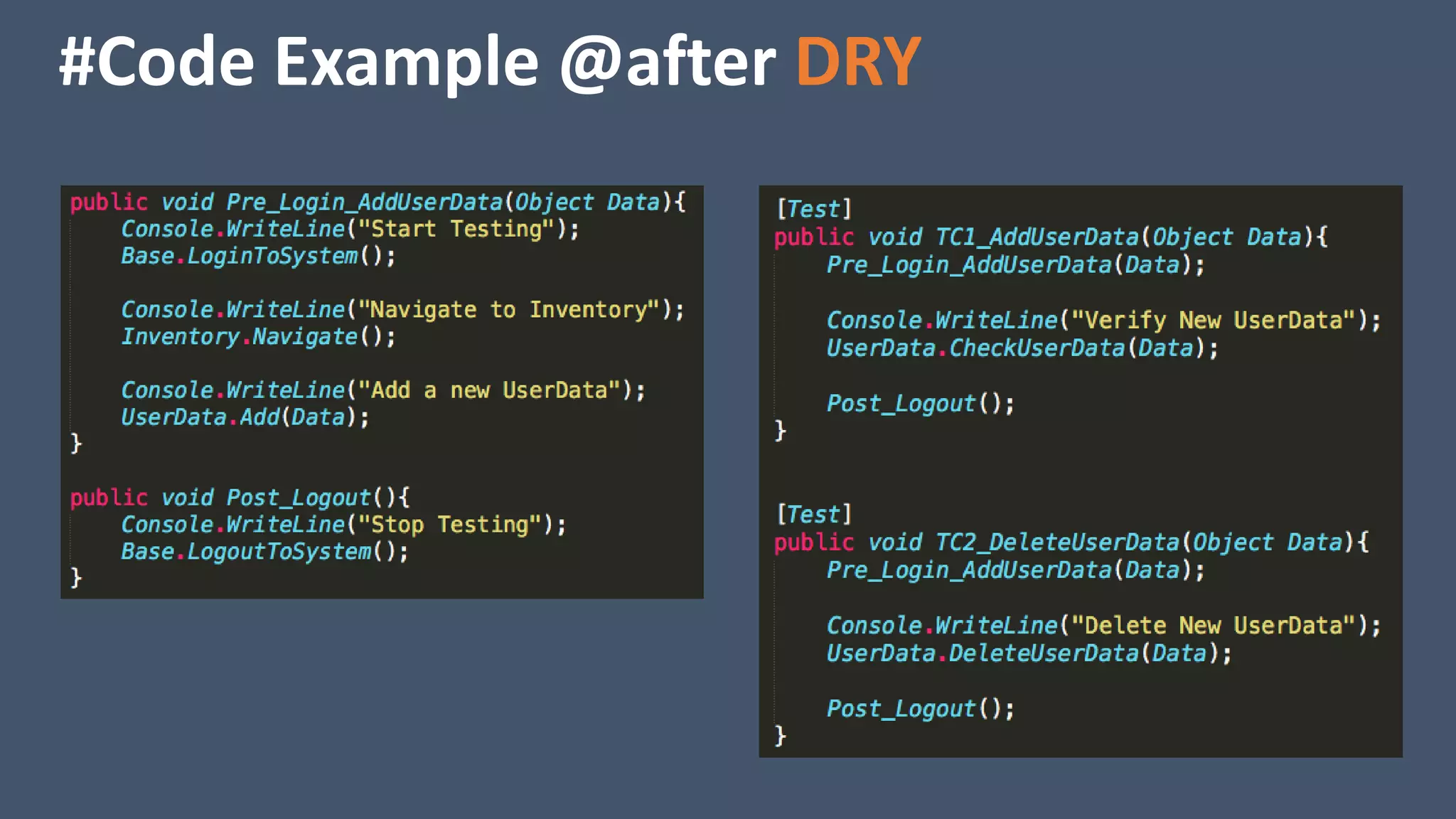
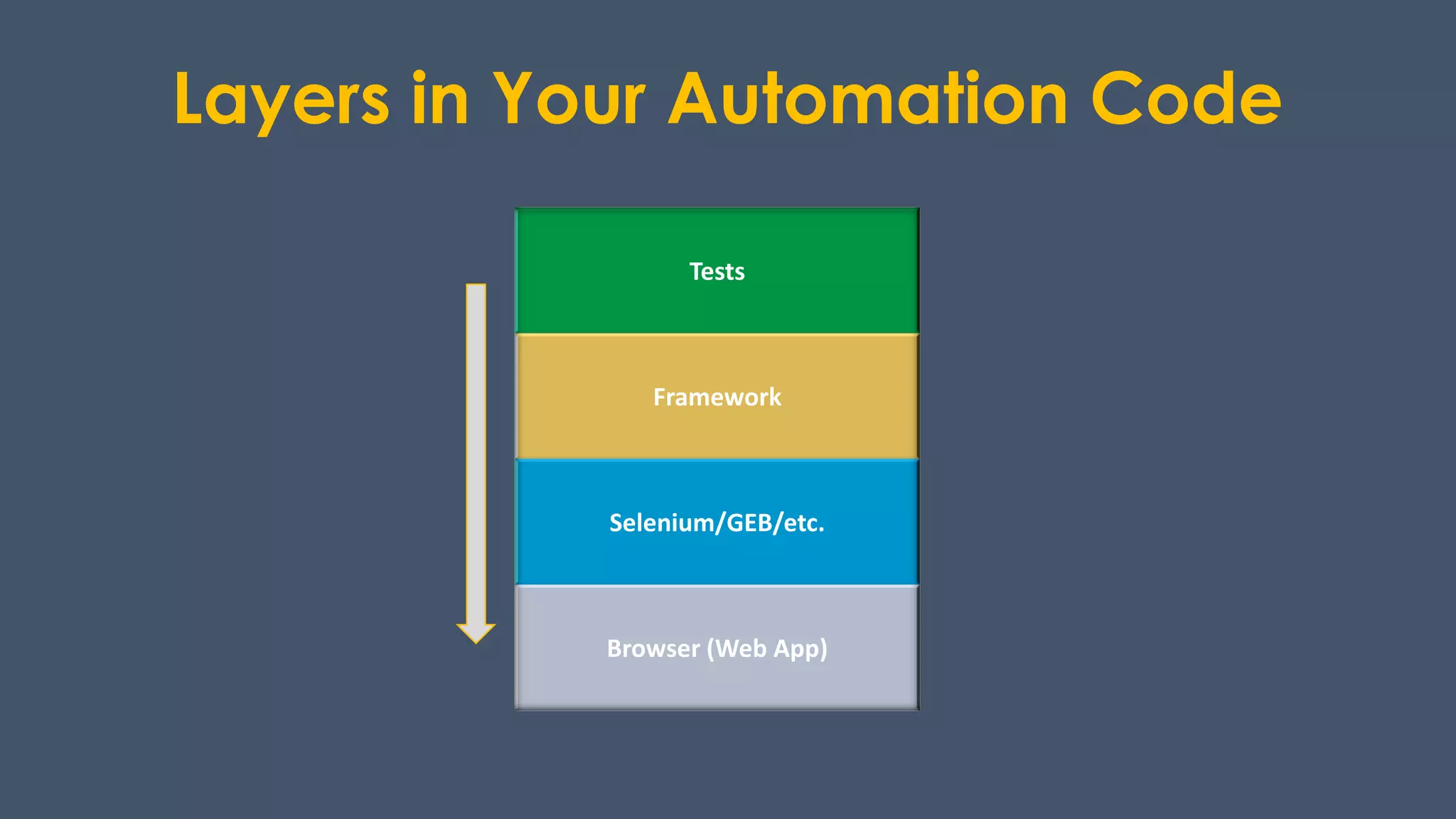
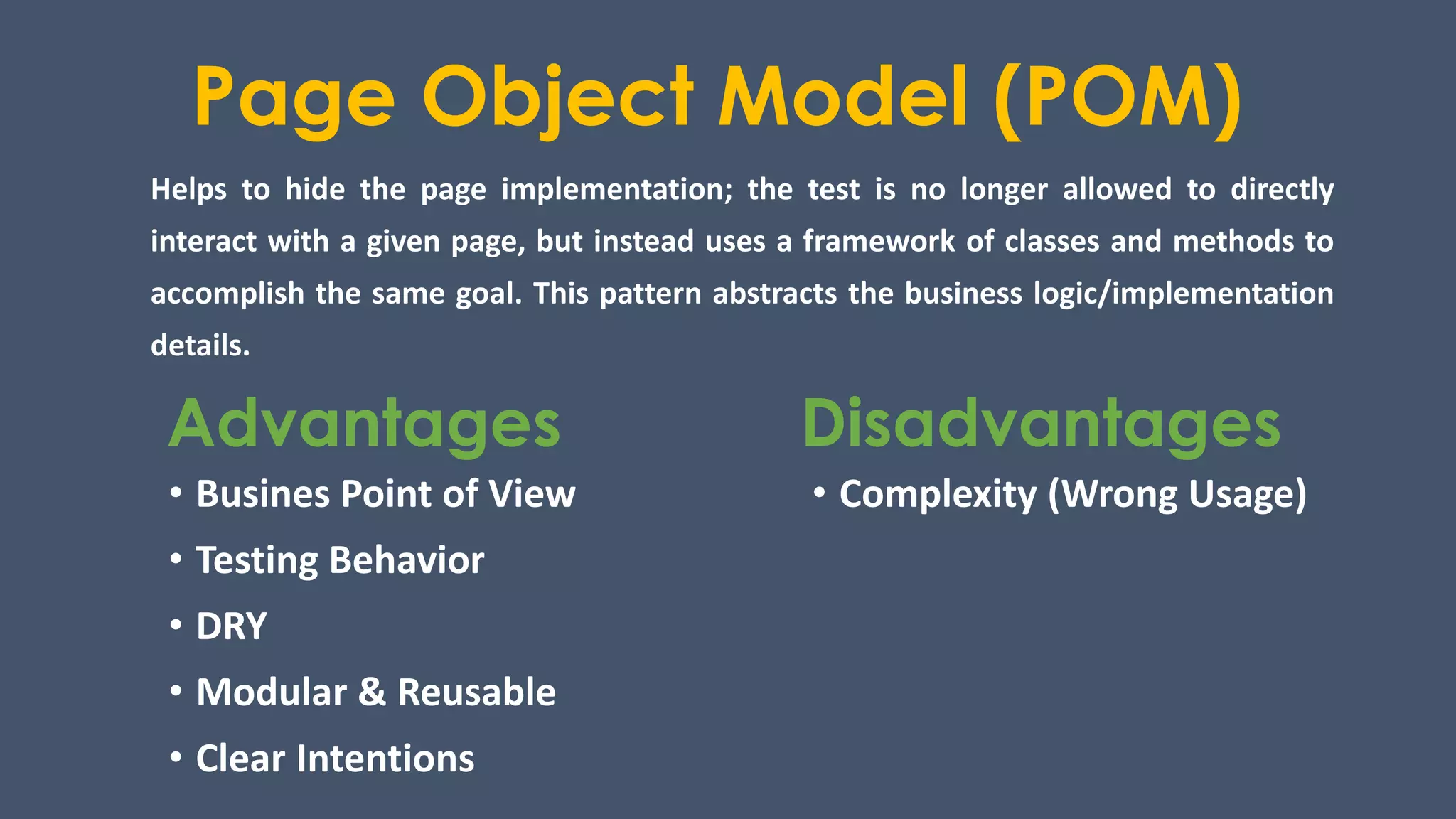
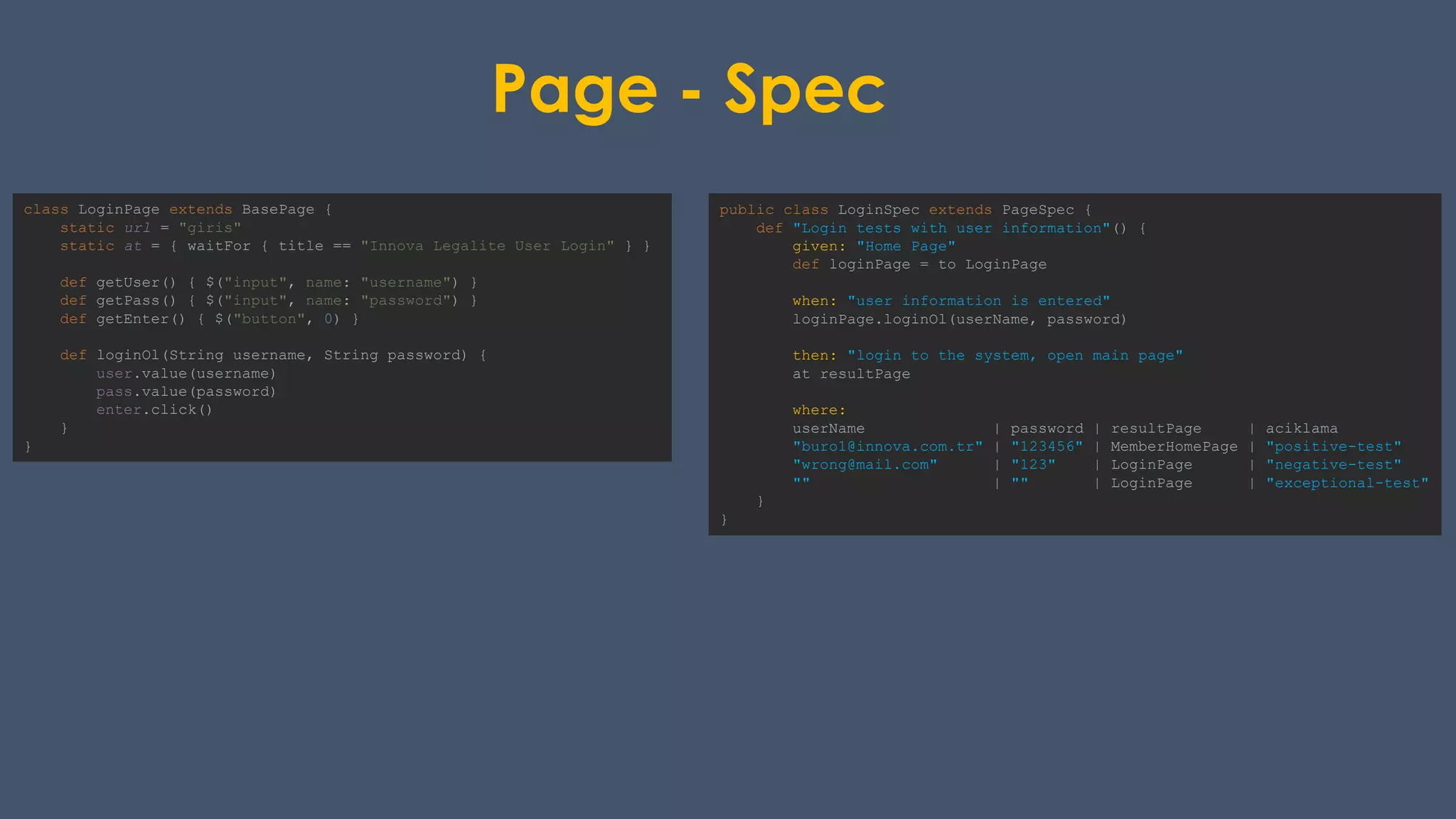
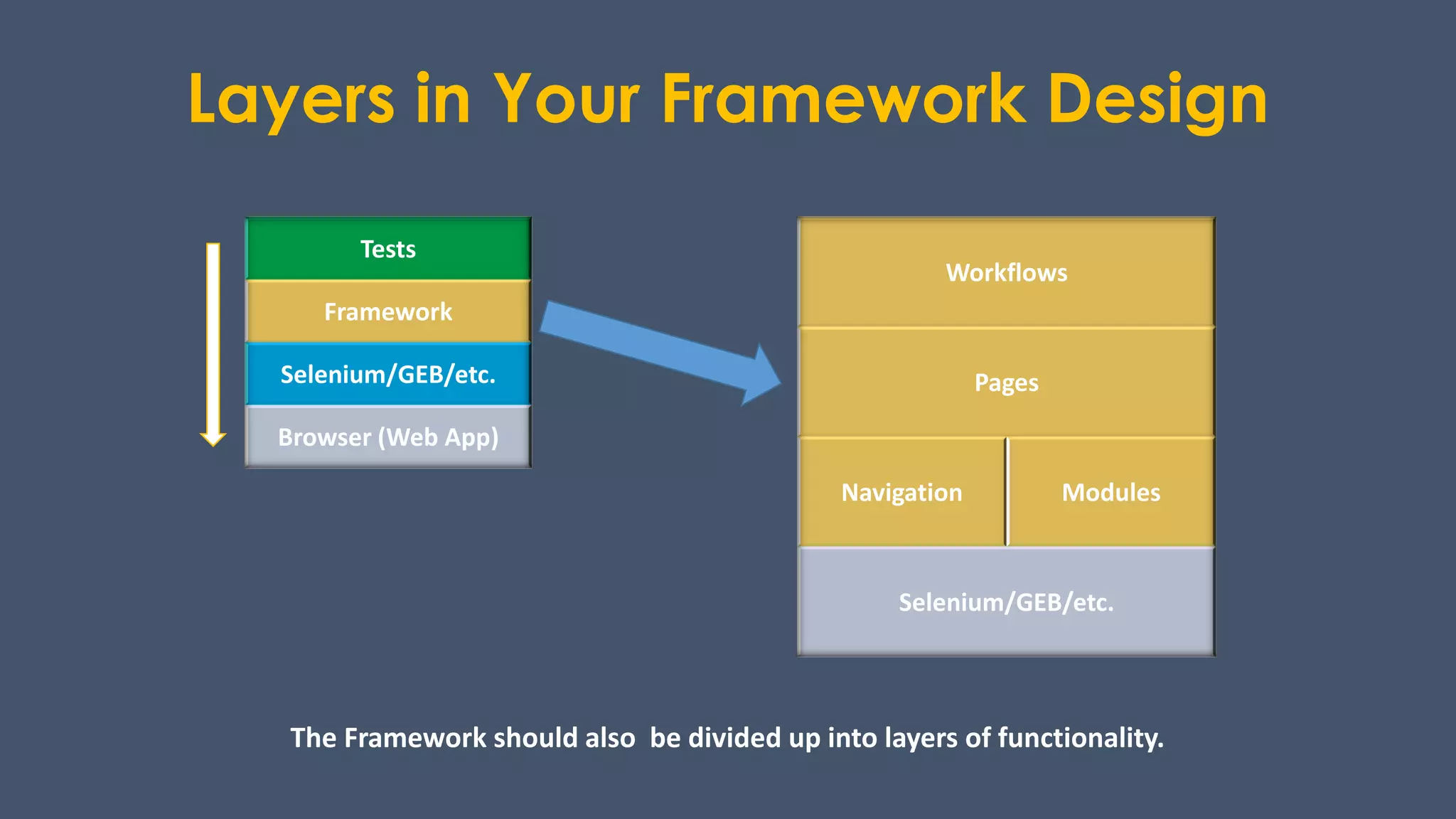
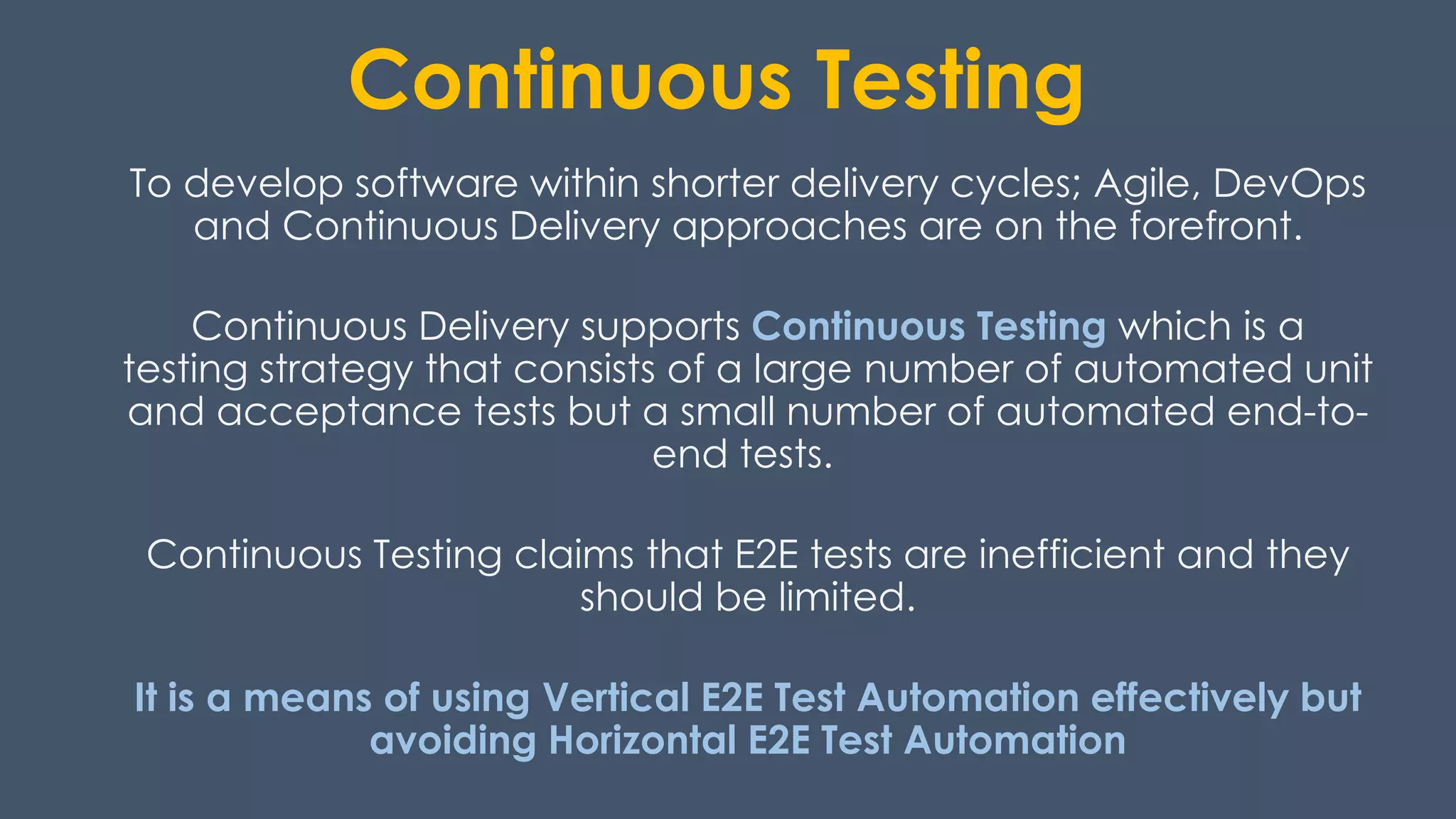
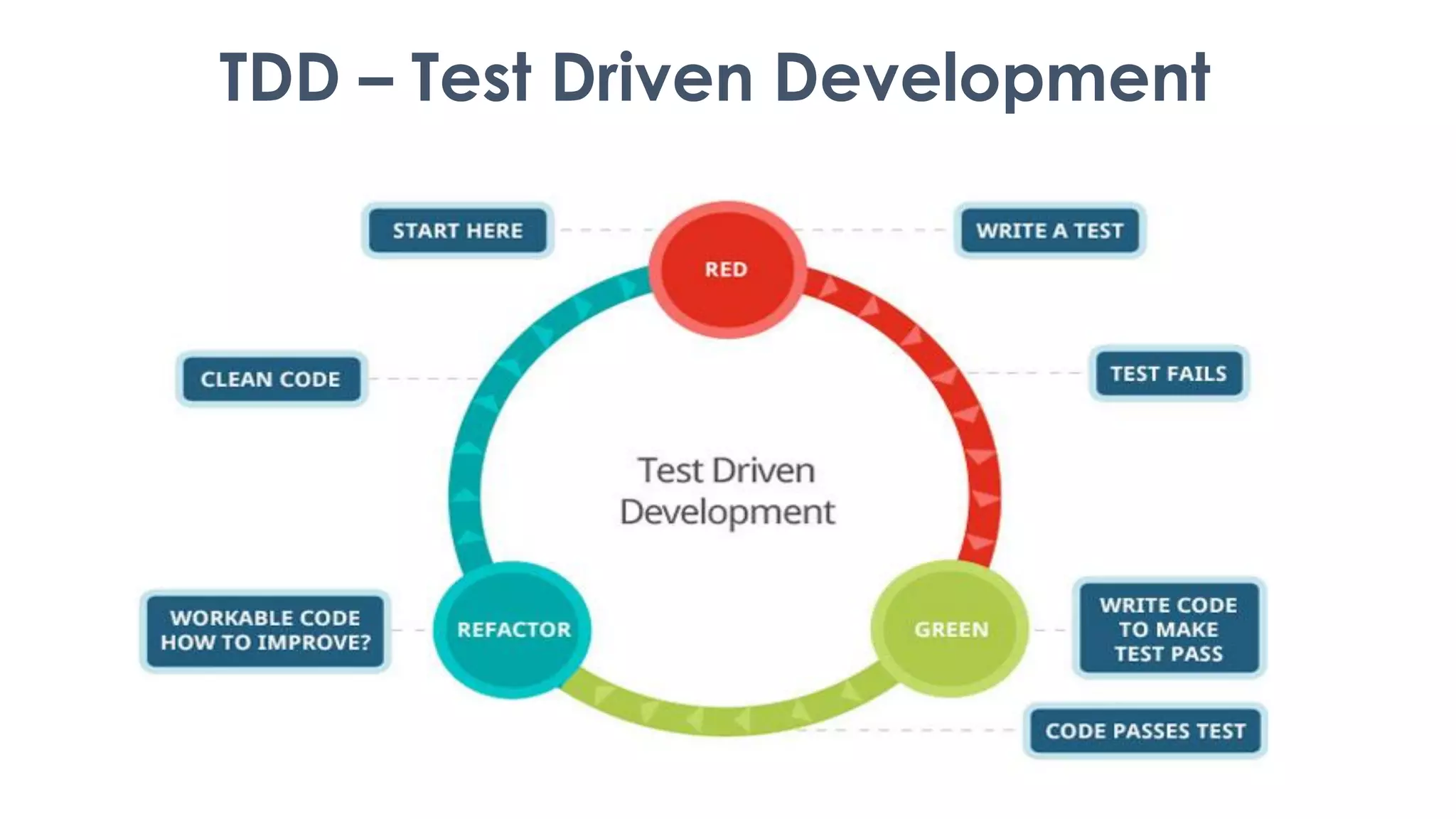
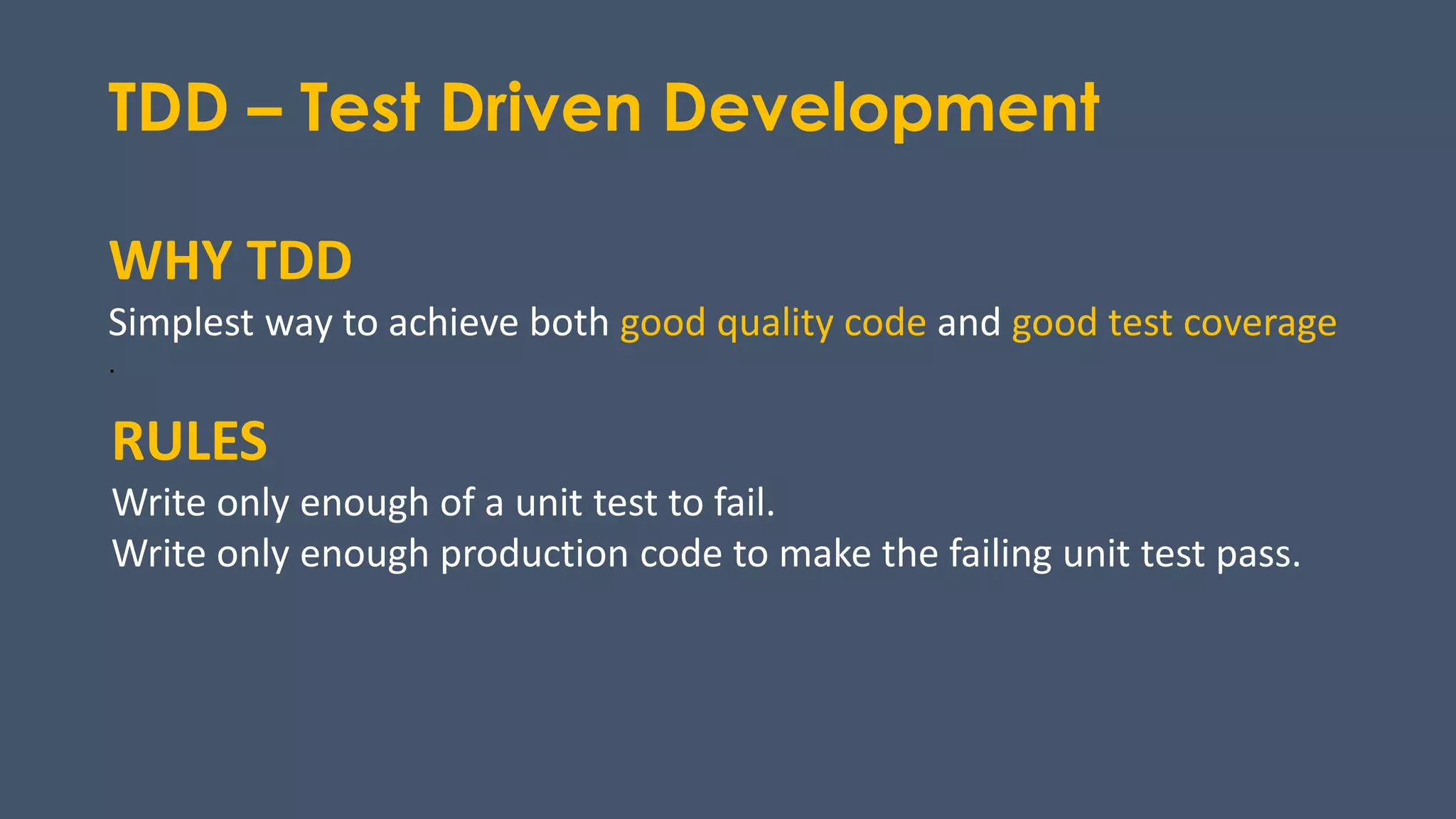
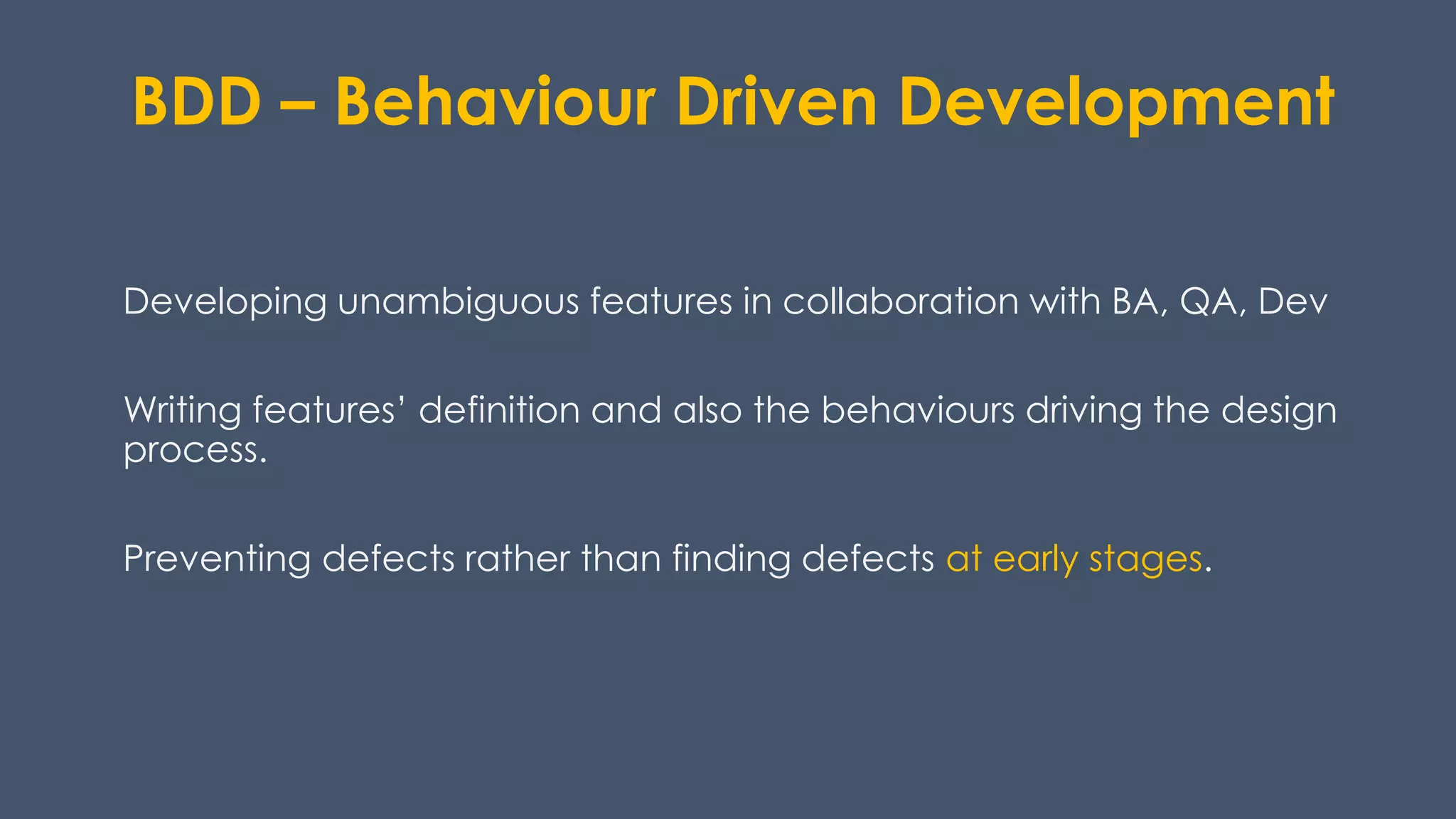
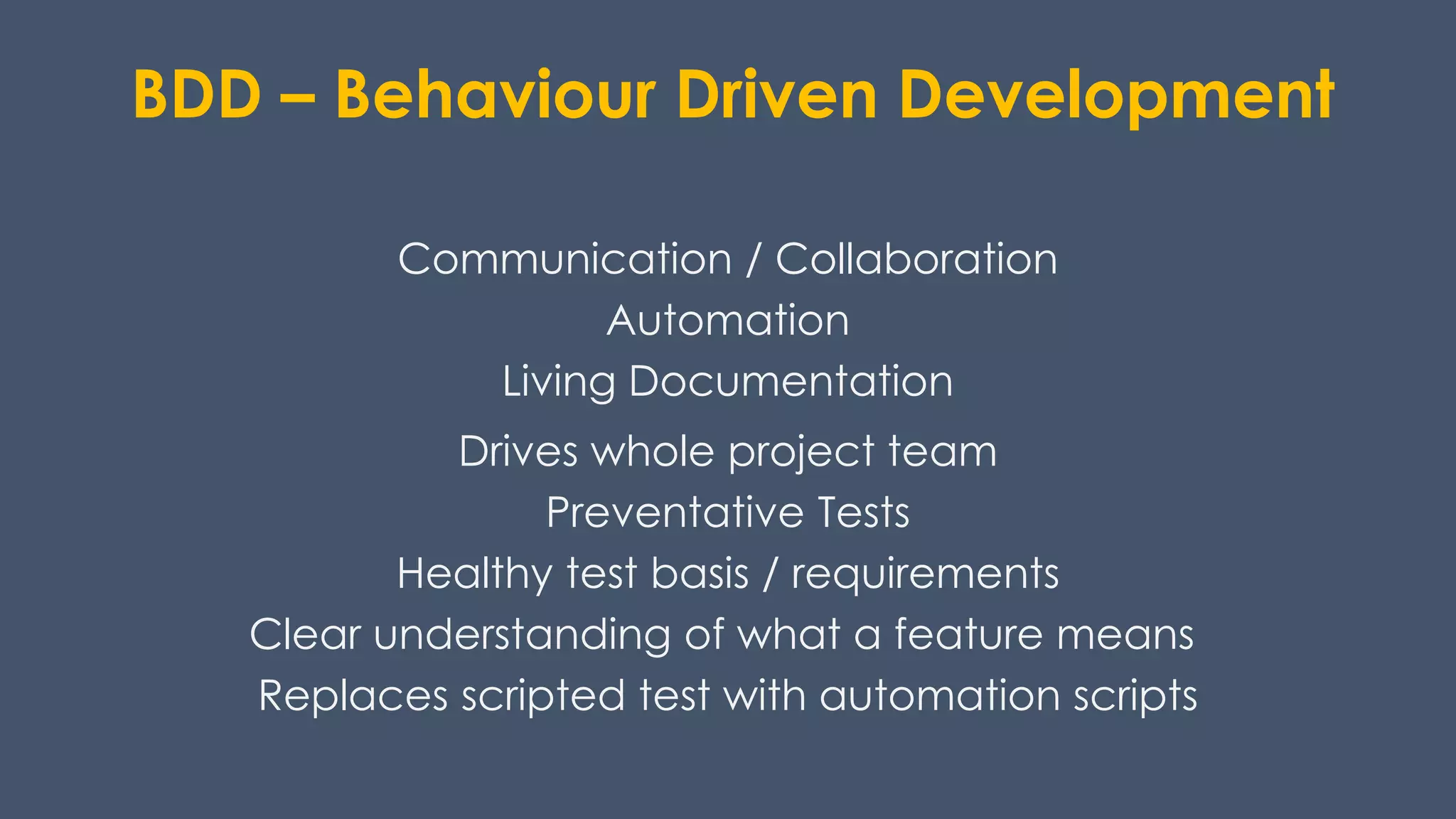
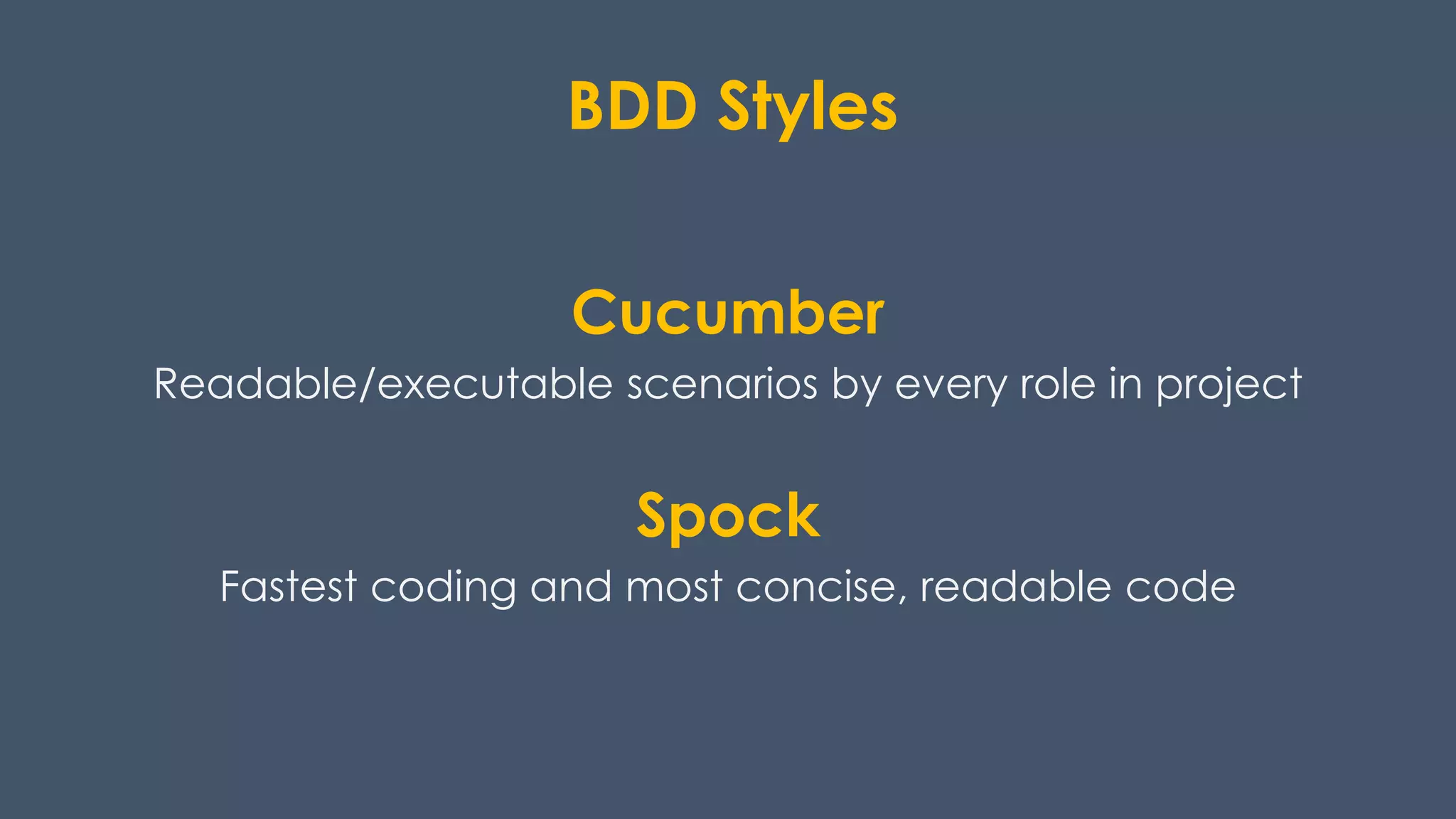
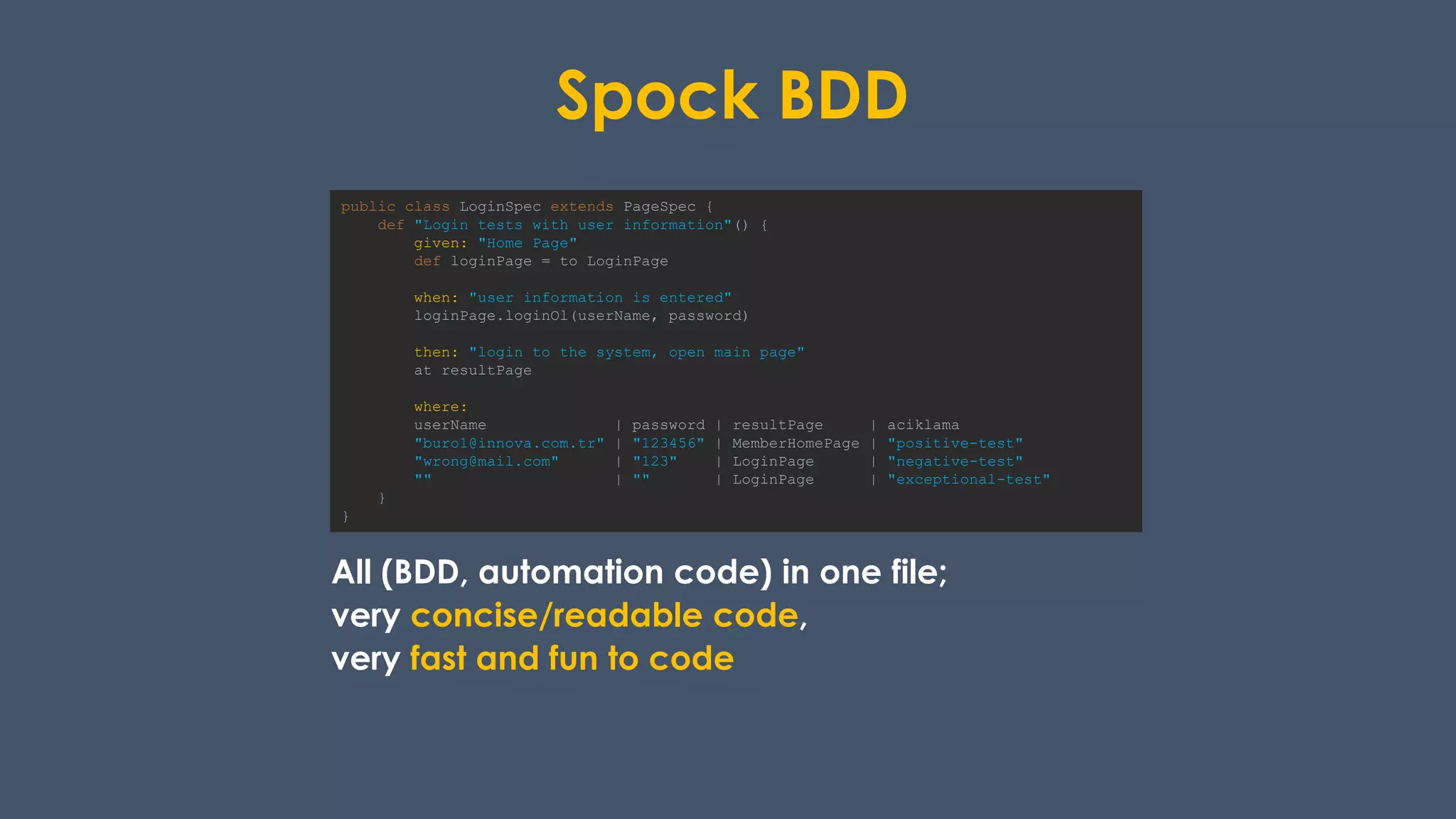
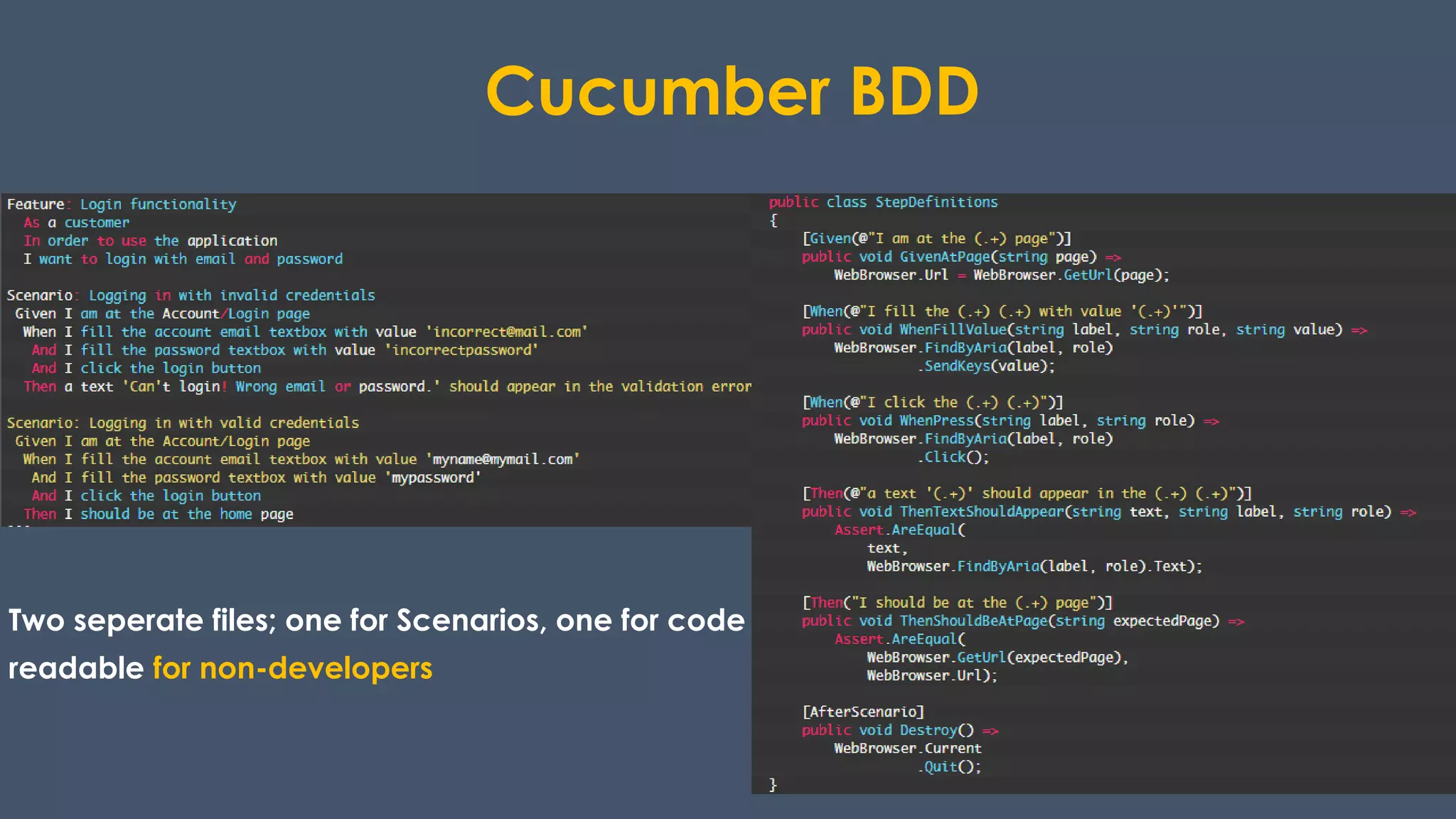
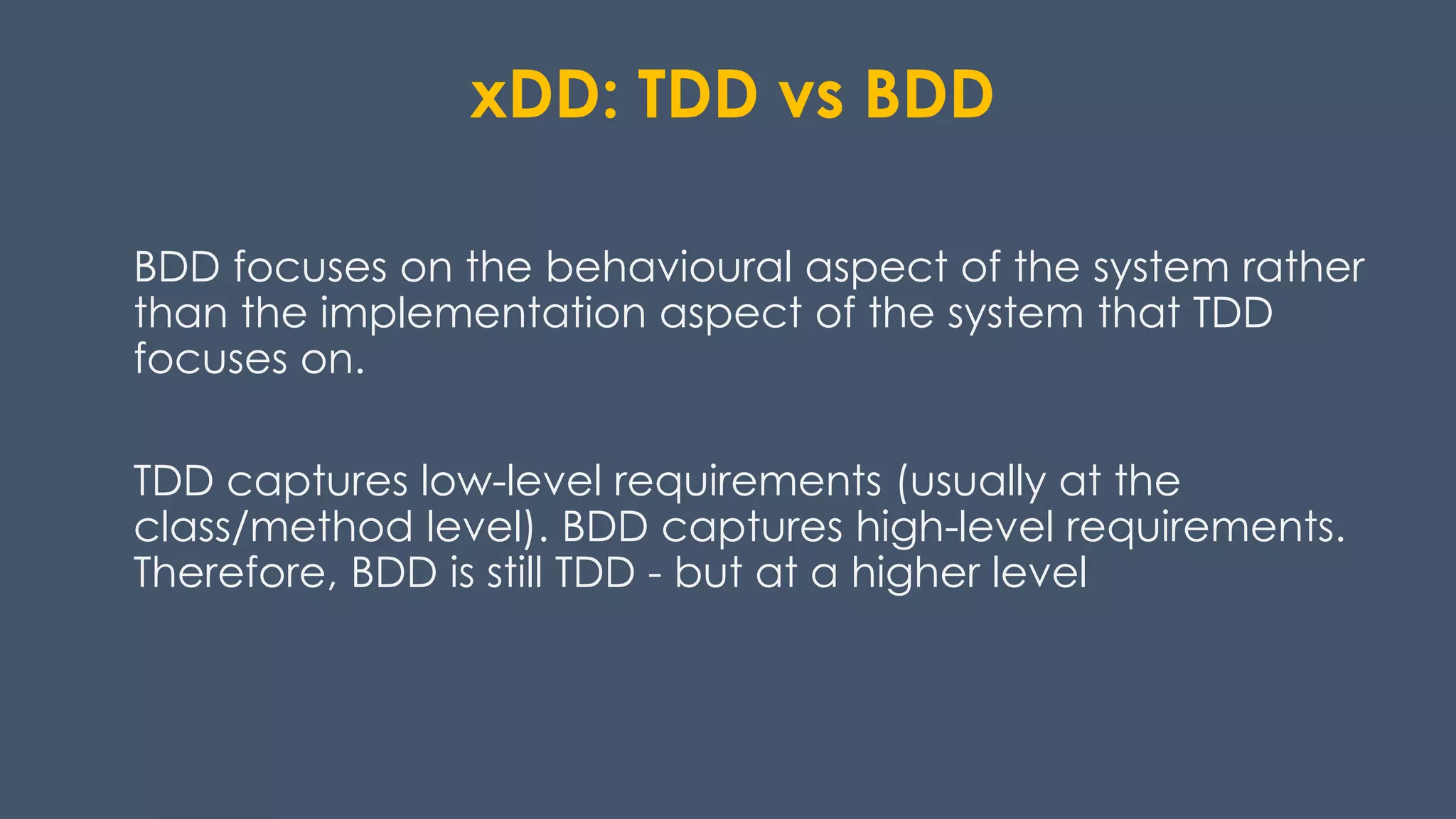
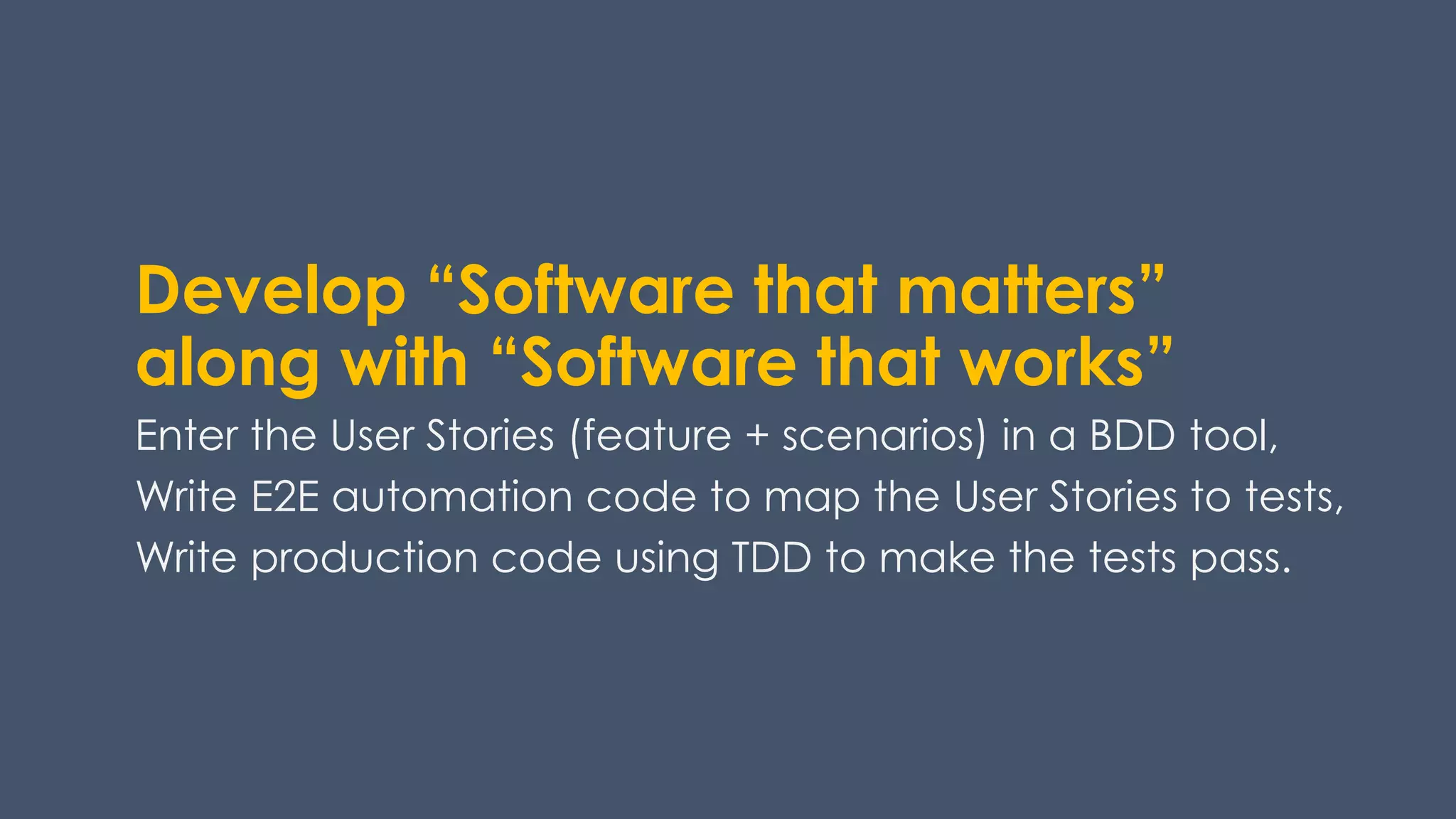
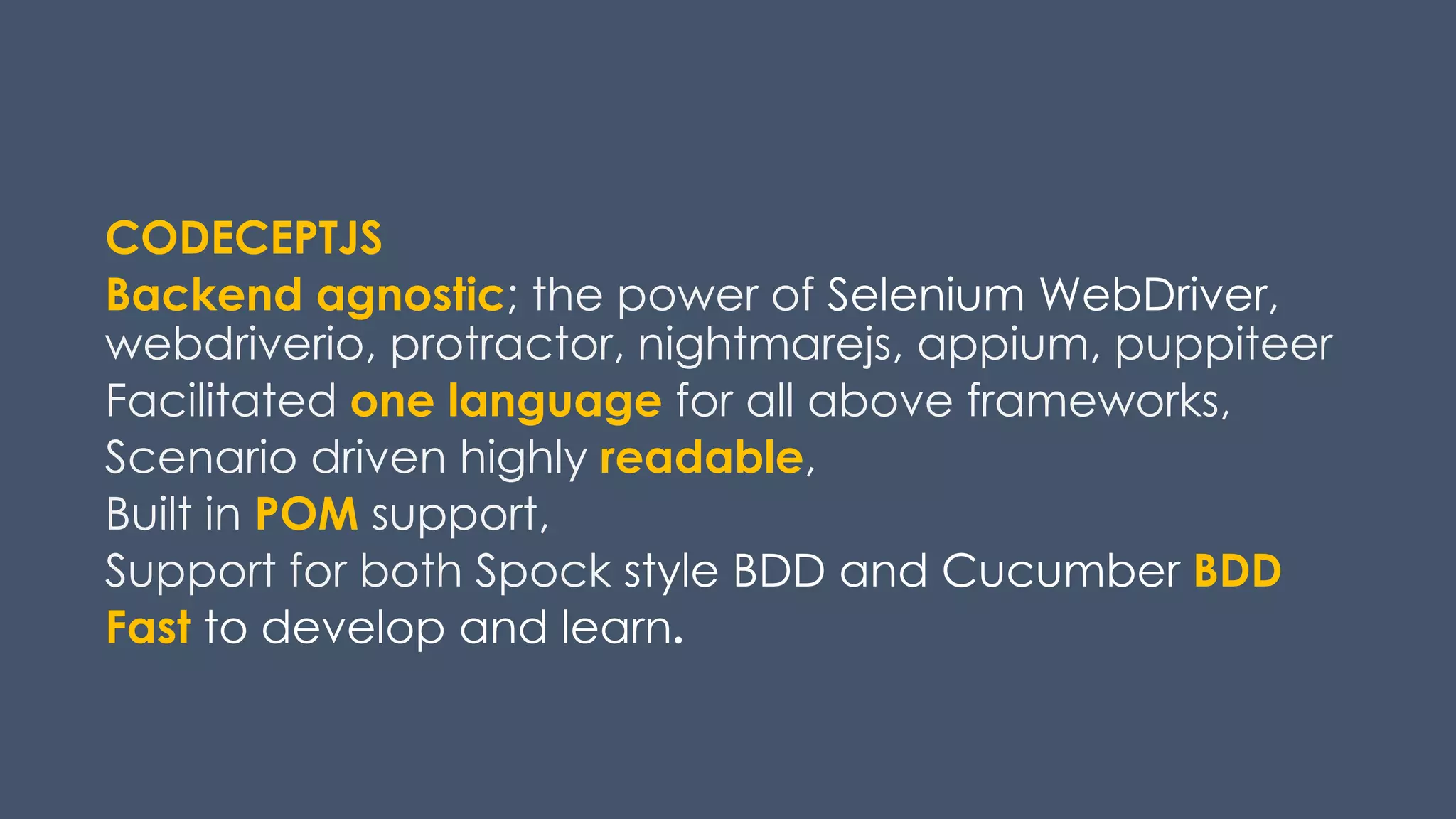
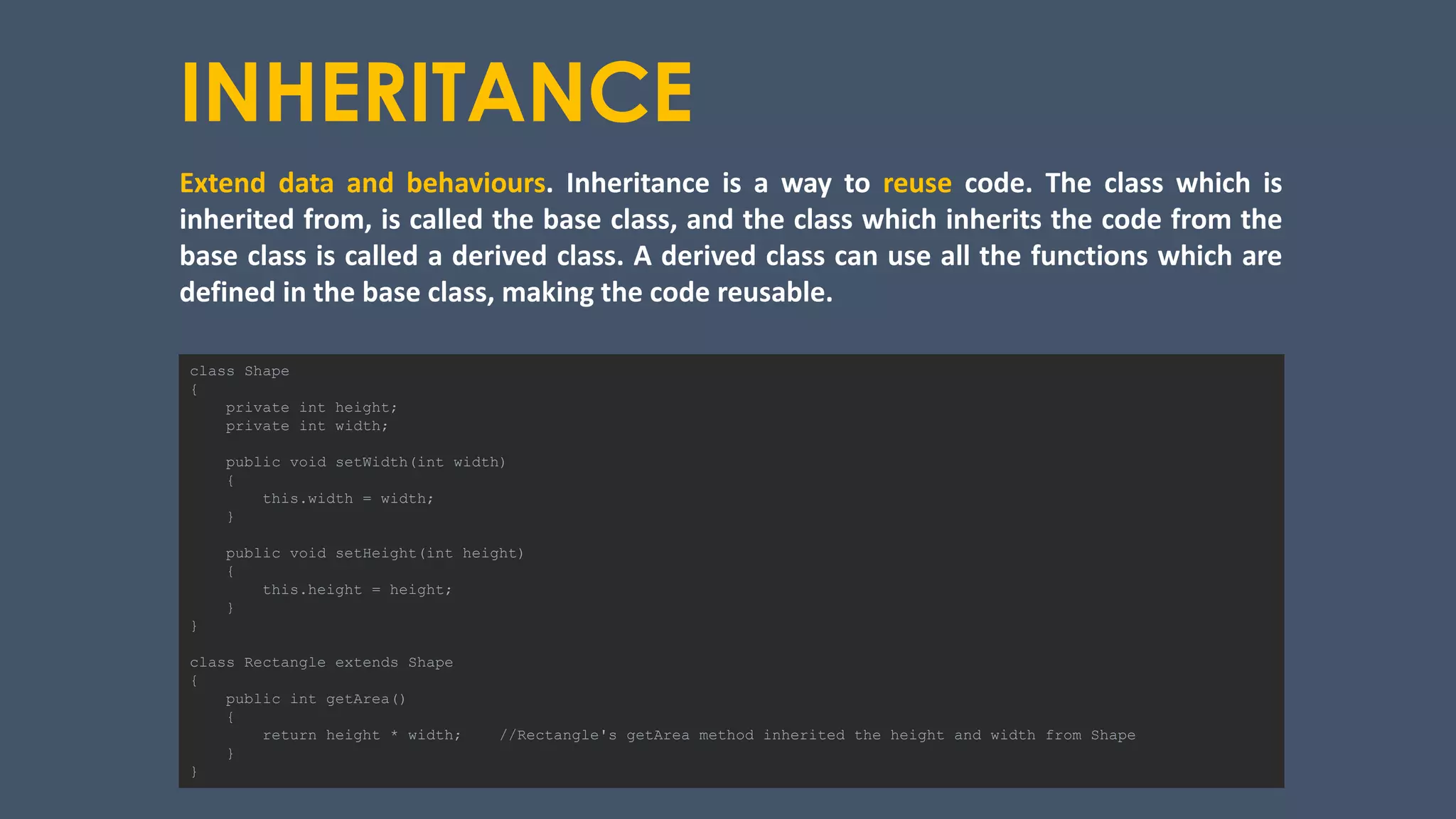
This document discusses 6 traits of a successful test automation architecture: 1. Deciding which test levels to automate by considering factors like efficiency, expected vs unexpected scenarios, and intelligence vs repetitiveness. 2. Design principles for test automation including modularity, reusability, and separation of concerns. 3. Locator strategy which determines whether tests are flaky or robust, prioritizing unique, descriptive locators that are unlikely to change. 4. Methodology such as behavior driven development, test driven development, and continuous testing approaches. 5. Framework and language selection considering project dynamics and technologies. Examples mentioned are Geb, Spock, Groovy, and CodeceptJS. 6.


![Vibe Coding vs. Spec-Driven Development [Free Meetup]](https://cdn.slidesharecdn.com/ss_thumbnails/vibecodingvsspecdrivendevelopment-251209105622-43f455e7-thumbnail.jpg?width=640&height=640&fit=bounds)


