Chapter:  Interactions of    Living Things Table of Contents Section 3:  Matter and Energy Section 1:  The Environment Section 2:  Interactions Among   Living Organisms
Section 1 The Environment
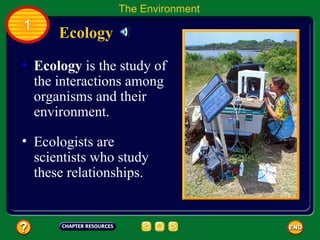
Ecology  is the study of the interactions among organisms and their environment.   Ecologists are scientists who study these relationships.   Ecology The Environment 1
Ecologists organize the environmental factors that influence organisms into two groups—nonliving and living (or once-living.)  Abiotic  (ay bi AH tihk)  factors  are the non-living parts of the environment.  Ecology The Environment 1 Living or once-living organisms in the environment are called  biotic  (bi AH tihk)  factors .
In any environment, birds, insects, and other living things, including humans, depend on one another for food and shelter.  They also depend on the abiotic factors that surround them, such as water, sunlight, temperature, air, and soil. Abiotic Factors The Environment 1
Topic: Ecology Ecology is the study of how living things interact in their environment. There are  biotic  or living factors. There are also  abiotic  or non-living factors like water, sunlight, temperature, air, and soil.
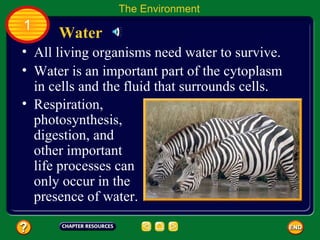
All living organisms need water to survive.  Water is an important part of the cytoplasm in cells and the fluid that surrounds cells.  Water The Environment 1 Respiration, photosynthesis, digestion, and other important life processes can only occur in the presence of water.
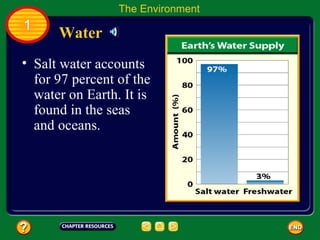
Salt water accounts for 97 percent of the water on Earth. It is found in the seas and oceans.  Water The Environment 1
Topic: Water Water is necessary for all life All chemical processes in an organism require water
The availability of sunlight is a major factor in determining where green plants and other photosynthetic organisms live.  Light and Temperature The Environment 1 By the process of photosynthesis, energy from the Sun is changed into chemical energy that is used for life process.
Some areas of the world have a fairly consistent temperature year round, but other areas have seasons during which temperatures vary.  Light and Temperature The Environment 1 Water environments throughout the world also have widely varied temperatures.
Topic: Light and Temperature The amount of light, and the range of temperature during a year will determine how much food plants can make.
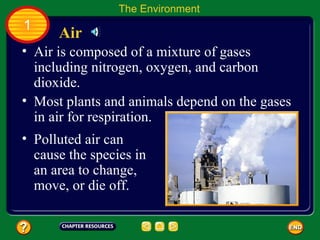
Air is composed of a mixture of gases including nitrogen, oxygen, and carbon dioxide.  Air The Environment 1 Polluted air can cause the species in an area to change, move, or die off.  Most plants and animals depend on the gases in air for respiration.
Clouds and weather occur in the bottom 8 km to 16 km of the atmosphere.  Air The Environment 1 All species are affected by the weather in the area where they live.  Higher altitudes have less air pressure. Few organisms live at extreme air pressures.
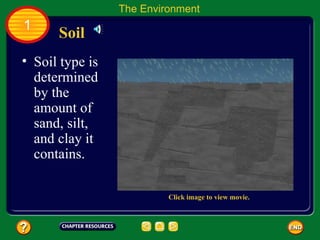
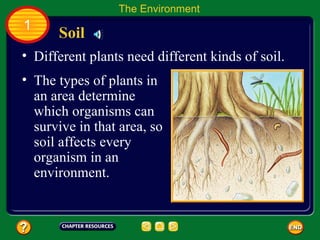
Soil type is determined by the amount of sand, silt, and clay it contains.  Soil The Environment 1 Click image to view movie.
Different plants need different kinds of soil.  Soil The Environment 1 The types of plants in an area determine which organisms can survive in that area, so soil affects every organism in an environment.
Topic: Air and Soil All species are affected by the weather in the area where they live .  The types of plants in an area determine which organisms can survive in that area, so soil affects every organism in an environment.
What Have You Learned? What is ecology? What are the differences in biotic and abiotic factors? How can light and temperature affect living things? How can soil affect organisms in an environment?
Organisms depend on other organisms for food, shelter, protection, and reproduction.  Biotic Factors The Environment 1 How organisms interact with one another and with abiotic factors can be described in an organized way.
The living world is highly organized. Atoms are arranged into molecules, which in turn might be organized into cells.  Levels of Organization The Environment 1 Cells form tissues, tissues form organs, and organs form organ systems.  Together, organ systems form organisms.  Click image to view movie.
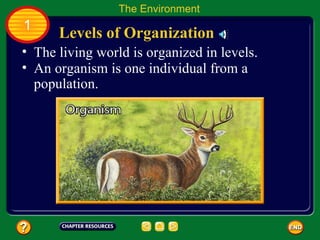
The living world is organized in levels.  Levels of Organization The Environment 1 An organism is one individual from a population.
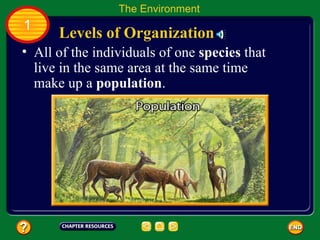
All of the individuals of one  species  that live in the same area at the same time make up a  population .  Levels of Organization The Environment 1
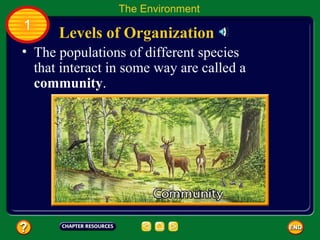
The populations of different species that interact in some way are called a  community . Levels of Organization The Environment 1
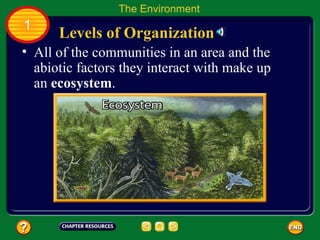
All of the communities in an area and the abiotic factors they interact with make up an  ecosystem .  Levels of Organization The Environment 1
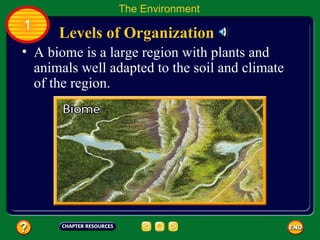
A biome is a large region with plants and animals well adapted to the soil and climate of the region. Levels of Organization The Environment 1
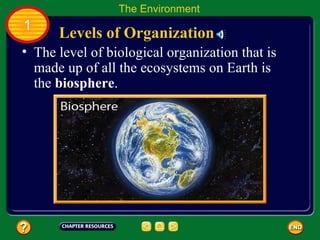
The level of biological organization that is made up of all the ecosystems on Earth is the  biosphere .  Levels of Organization The Environment 1

Complete Chapter 9:1 The Environment

  • 1.
    Chapter: Interactionsof Living Things Table of Contents Section 3: Matter and Energy Section 1: The Environment Section 2: Interactions Among Living Organisms
  • 2.
    Section 1 TheEnvironment
  • 3.
    Ecology isthe study of the interactions among organisms and their environment. Ecologists are scientists who study these relationships. Ecology The Environment 1
  • 4.
    Ecologists organize theenvironmental factors that influence organisms into two groups—nonliving and living (or once-living.) Abiotic (ay bi AH tihk) factors are the non-living parts of the environment. Ecology The Environment 1 Living or once-living organisms in the environment are called biotic (bi AH tihk) factors .
  • 5.
    In any environment,birds, insects, and other living things, including humans, depend on one another for food and shelter. They also depend on the abiotic factors that surround them, such as water, sunlight, temperature, air, and soil. Abiotic Factors The Environment 1
  • 6.
    Topic: Ecology Ecologyis the study of how living things interact in their environment. There are biotic or living factors. There are also abiotic or non-living factors like water, sunlight, temperature, air, and soil.
  • 7.
    All living organismsneed water to survive. Water is an important part of the cytoplasm in cells and the fluid that surrounds cells. Water The Environment 1 Respiration, photosynthesis, digestion, and other important life processes can only occur in the presence of water.
  • 8.
    Salt water accountsfor 97 percent of the water on Earth. It is found in the seas and oceans. Water The Environment 1
  • 9.
    Topic: Water Wateris necessary for all life All chemical processes in an organism require water
  • 10.
    The availability ofsunlight is a major factor in determining where green plants and other photosynthetic organisms live. Light and Temperature The Environment 1 By the process of photosynthesis, energy from the Sun is changed into chemical energy that is used for life process.
  • 11.
    Some areas ofthe world have a fairly consistent temperature year round, but other areas have seasons during which temperatures vary. Light and Temperature The Environment 1 Water environments throughout the world also have widely varied temperatures.
  • 12.
    Topic: Light andTemperature The amount of light, and the range of temperature during a year will determine how much food plants can make.
  • 13.
    Air is composedof a mixture of gases including nitrogen, oxygen, and carbon dioxide. Air The Environment 1 Polluted air can cause the species in an area to change, move, or die off. Most plants and animals depend on the gases in air for respiration.
  • 14.
    Clouds and weatheroccur in the bottom 8 km to 16 km of the atmosphere. Air The Environment 1 All species are affected by the weather in the area where they live. Higher altitudes have less air pressure. Few organisms live at extreme air pressures.
  • 15.
    Soil type isdetermined by the amount of sand, silt, and clay it contains. Soil The Environment 1 Click image to view movie.
  • 16.
    Different plants needdifferent kinds of soil. Soil The Environment 1 The types of plants in an area determine which organisms can survive in that area, so soil affects every organism in an environment.
  • 17.
    Topic: Air andSoil All species are affected by the weather in the area where they live . The types of plants in an area determine which organisms can survive in that area, so soil affects every organism in an environment.
  • 18.
    What Have YouLearned? What is ecology? What are the differences in biotic and abiotic factors? How can light and temperature affect living things? How can soil affect organisms in an environment?
  • 19.
    Organisms depend onother organisms for food, shelter, protection, and reproduction. Biotic Factors The Environment 1 How organisms interact with one another and with abiotic factors can be described in an organized way.
  • 20.
    The living worldis highly organized. Atoms are arranged into molecules, which in turn might be organized into cells. Levels of Organization The Environment 1 Cells form tissues, tissues form organs, and organs form organ systems. Together, organ systems form organisms. Click image to view movie.
  • 21.
    The living worldis organized in levels. Levels of Organization The Environment 1 An organism is one individual from a population.
  • 22.
    All of theindividuals of one species that live in the same area at the same time make up a population . Levels of Organization The Environment 1
  • 23.
    The populations ofdifferent species that interact in some way are called a community . Levels of Organization The Environment 1
  • 24.
    All of thecommunities in an area and the abiotic factors they interact with make up an ecosystem . Levels of Organization The Environment 1
  • 25.
    A biome isa large region with plants and animals well adapted to the soil and climate of the region. Levels of Organization The Environment 1
  • 26.
    The level ofbiological organization that is made up of all the ecosystems on Earth is the biosphere . Levels of Organization The Environment 1