Compensation Management
Relation between compensation management
and PMS ,types of performance linked
compensation scheme , VPLP, ESOP, economic
value added, Performance matrix, Various
dimension of performance compensation
AMIT KR. VERMA
What Expert Says :
“If you pick the right people and give them the opportunity to
spread their wings - and put compensation and rewards as a carrier
behind it - you almost don’t have to manage them.”
— Jack Welch
Brief About Compensation
Compensation management is the act of distributing some type of
monetary value to an employee for their work by means of the company's
policy or procedures. In basic terms, it is paying an employee based
upon the decided pay and benefit package for the position.
Relation between compensation
management and PMS
From compensation management point of view, pms helps in achieving
the following critical goals:
• It helps in recognizing the efforts and contributions of employees
objectively, and thus facilitates effective job pricing through cost
optimization and rewarding of talented performers.
• It facilitates suitable compensation design by providing for rewarding
employees based on performance metrics.
• It helps employees develop their core competencies and achieve their
goals.
Continued..
• It helps retain good performers through competitive compensation
design , and offer flexibility for increased income based on
performance.
• It helps attracts good performers from compensation.
Types of performance linked
compensation scheme
It can also be termed as Performance related pay (PRP) which
encompasses several company wide schemes such as employee
participation and share ownership schemes awarded to the employees.
• Base pay : Base pay, or basic pay, is the minimum amount that an
employee receives for working for an organisation.
• Performance-related pay : Performance-related pay is a generic term
for reward systems where payments are made based on the
performance, either of the individual (individual performance-related
pay) or a team of employees (group performance-related schemes).
Continued..
• There are many types of performance related pay, and the most
popular ones are described below:
• 1. Piecework schemes: Piecework schemes are appropriate where
output can be measured easily in units. They are typically used for
paying freelance, creative people. Freelance writers for example are
often paid based on the number of words.
• 2. Individual performance-related pay schemes : In this scheme
employee receives either a bonus, or an increase in base pay on
meeting previously agreed objectives or based on assessment by their
manager, or both.
Continued..
• 3. Group-related performance-related pay schemes: This schemes
are similar to individual, in that rewards are paid based on the
achievement of targets. However the targets are set for a group of
employees, such as a particular department, or branch of a company,
rather than for an individual. Since the rewards apply to a group.
• 4. Knowledge contingent pay : It is where an employee will receive a
pay rise or a bonus, or both, for work-related learning.
• 5. Commissions : It is a form of remuneration normally used for sales
staff. The staff may receive a low basic pay, but will then receive
commission, based on a percentage of the amount of their sales.
Some more plans are:
Profit-related pay
Stock option plans
VPLP
Voluntary Personal Leave Program (VPLP)
Provides information on employee participation in the program
VPLP allows eligible employees to receive additional leave time in return
for a corresponding reduction in pay. The program is available to rank-
and-file and excluded employees, and employees may voluntarily
participate on a continuous basis.
ESOP
Employee Stock Ownership Plan (ESOP)
An ESOP is a defined contribution employee benefit plan that allows
employees to become owners of stock in the company they work for. It is
an equity based deferred compensation plan.
First, only an ESOP is required by law to invest primarily in the securities
of the sponsoring employer.
Second, an ESOP is unique among qualified employee benefit plans in
its ability to borrow money. As a result, "leveraged ESOPs" may be used
as a technique of corporate finance.
Economic Value Added (EVA)
It was pioneered by stern stewart and co.,a US based management
consultancy firm.
It is defined as ,’return on invested capital (ROIC)minus an appropriate
charge for the cost of capital invested in an enterprise as a financial
performance measure that captures the economic value added of an
enterprise.’
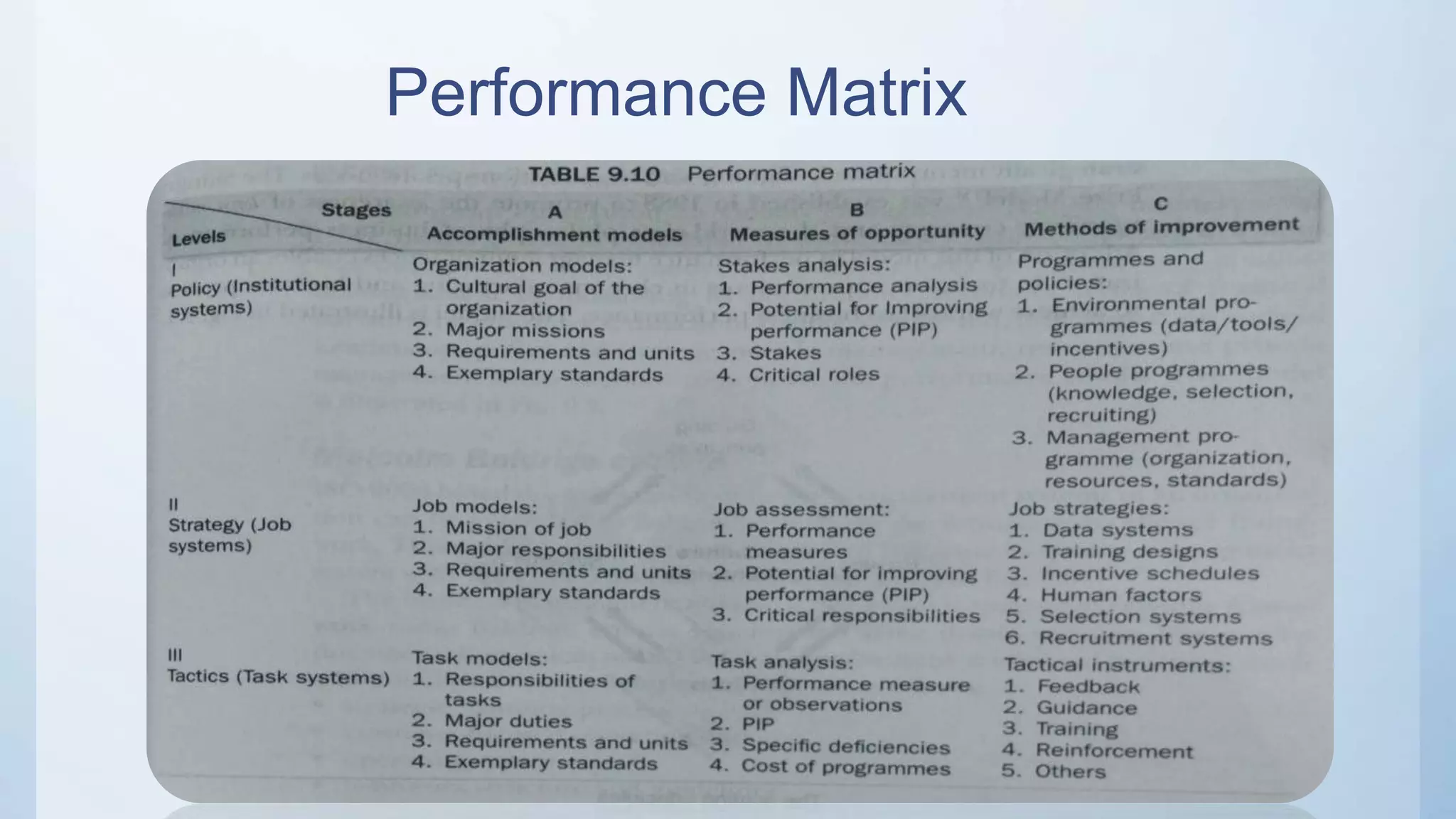
Performance Matrix
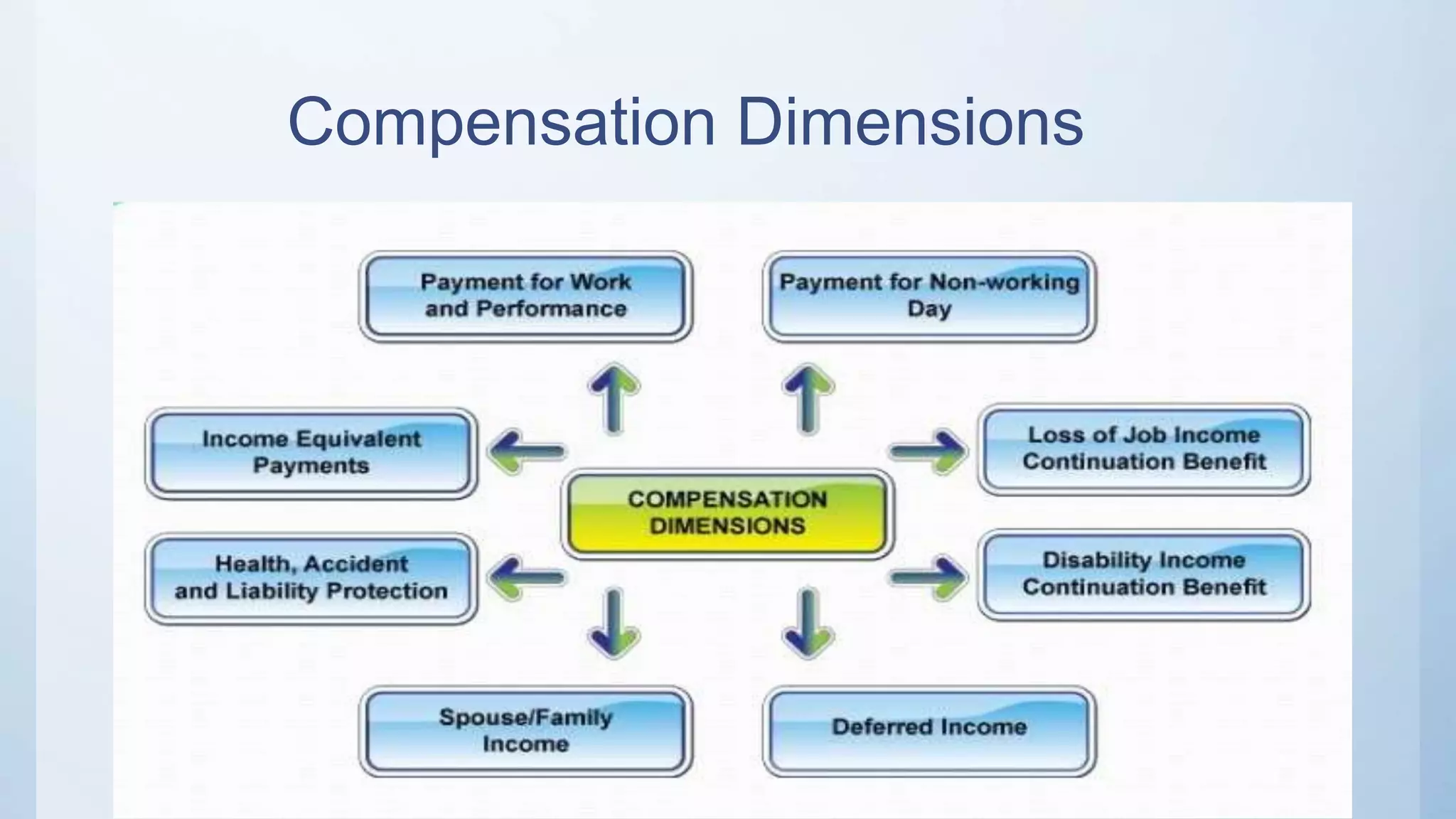
Compensation Dimensions
References
Books:
• Compensation management by Deepak Kumar Bhattacharyya
Online:
http://erepo.usiu.ac.ke/bitstream/handle/11732/2193/The%20Relationship%20between%20Performance%20Management%20Systems
%20and%20Employee%20Performance%20A%20Case%20Study%20of%20Assorted%20ways%20Limited.pdf?sequence=3
https://www.paycor.com/resource-center/the-link-between-performance-management-and-employee-engagement
https://study.com/academy/lesson/what-is-compensation-management-definition-components.html
https://www.mspb.gov/MSPBSEARCH/viewdocs.aspx?docnumber=224104&version=224323&application=ACROBAT
https://www.google.co.in/search?q=dimension+of+performance+compensatioin&rlz=1C1CHZL_enIN763IN763&source=lnms&tbm=isch
&sa=X&ved=0ahUKEwiv7ez75tHYAhUDQY8KHdqyDCsQ_AUICigB&biw=1349&bih=561#imgrc=ZuxlkEqr9oS-UM:
http://hrmanual.calhr.ca.gov/Home/ManualItem/1/2114
.Thank you

Compensation management

  • 1.
    Compensation Management Relation betweencompensation management and PMS ,types of performance linked compensation scheme , VPLP, ESOP, economic value added, Performance matrix, Various dimension of performance compensation AMIT KR. VERMA
  • 2.
    What Expert Says: “If you pick the right people and give them the opportunity to spread their wings - and put compensation and rewards as a carrier behind it - you almost don’t have to manage them.” — Jack Welch
  • 3.
    Brief About Compensation Compensationmanagement is the act of distributing some type of monetary value to an employee for their work by means of the company's policy or procedures. In basic terms, it is paying an employee based upon the decided pay and benefit package for the position.
  • 4.
    Relation between compensation managementand PMS From compensation management point of view, pms helps in achieving the following critical goals: • It helps in recognizing the efforts and contributions of employees objectively, and thus facilitates effective job pricing through cost optimization and rewarding of talented performers. • It facilitates suitable compensation design by providing for rewarding employees based on performance metrics. • It helps employees develop their core competencies and achieve their goals.
  • 5.
    Continued.. • It helpsretain good performers through competitive compensation design , and offer flexibility for increased income based on performance. • It helps attracts good performers from compensation.
  • 6.
    Types of performancelinked compensation scheme It can also be termed as Performance related pay (PRP) which encompasses several company wide schemes such as employee participation and share ownership schemes awarded to the employees. • Base pay : Base pay, or basic pay, is the minimum amount that an employee receives for working for an organisation. • Performance-related pay : Performance-related pay is a generic term for reward systems where payments are made based on the performance, either of the individual (individual performance-related pay) or a team of employees (group performance-related schemes).
  • 7.
    Continued.. • There aremany types of performance related pay, and the most popular ones are described below: • 1. Piecework schemes: Piecework schemes are appropriate where output can be measured easily in units. They are typically used for paying freelance, creative people. Freelance writers for example are often paid based on the number of words. • 2. Individual performance-related pay schemes : In this scheme employee receives either a bonus, or an increase in base pay on meeting previously agreed objectives or based on assessment by their manager, or both.
  • 8.
    Continued.. • 3. Group-relatedperformance-related pay schemes: This schemes are similar to individual, in that rewards are paid based on the achievement of targets. However the targets are set for a group of employees, such as a particular department, or branch of a company, rather than for an individual. Since the rewards apply to a group. • 4. Knowledge contingent pay : It is where an employee will receive a pay rise or a bonus, or both, for work-related learning. • 5. Commissions : It is a form of remuneration normally used for sales staff. The staff may receive a low basic pay, but will then receive commission, based on a percentage of the amount of their sales. Some more plans are: Profit-related pay Stock option plans
  • 9.
    VPLP Voluntary Personal LeaveProgram (VPLP) Provides information on employee participation in the program VPLP allows eligible employees to receive additional leave time in return for a corresponding reduction in pay. The program is available to rank- and-file and excluded employees, and employees may voluntarily participate on a continuous basis.
  • 10.
    ESOP Employee Stock OwnershipPlan (ESOP) An ESOP is a defined contribution employee benefit plan that allows employees to become owners of stock in the company they work for. It is an equity based deferred compensation plan. First, only an ESOP is required by law to invest primarily in the securities of the sponsoring employer. Second, an ESOP is unique among qualified employee benefit plans in its ability to borrow money. As a result, "leveraged ESOPs" may be used as a technique of corporate finance.
  • 11.
    Economic Value Added(EVA) It was pioneered by stern stewart and co.,a US based management consultancy firm. It is defined as ,’return on invested capital (ROIC)minus an appropriate charge for the cost of capital invested in an enterprise as a financial performance measure that captures the economic value added of an enterprise.’
  • 12.
  • 13.
  • 14.
    References Books: • Compensation managementby Deepak Kumar Bhattacharyya Online: http://erepo.usiu.ac.ke/bitstream/handle/11732/2193/The%20Relationship%20between%20Performance%20Management%20Systems %20and%20Employee%20Performance%20A%20Case%20Study%20of%20Assorted%20ways%20Limited.pdf?sequence=3 https://www.paycor.com/resource-center/the-link-between-performance-management-and-employee-engagement https://study.com/academy/lesson/what-is-compensation-management-definition-components.html https://study.com/academy/lesson/what-is-compensation-management-definition-components.html https://www.mspb.gov/MSPBSEARCH/viewdocs.aspx?docnumber=224104&version=224323&application=ACROBAT https://www.google.co.in/search?q=dimension+of+performance+compensatioin&rlz=1C1CHZL_enIN763IN763&source=lnms&tbm=isch &sa=X&ved=0ahUKEwiv7ez75tHYAhUDQY8KHdqyDCsQ_AUICigB&biw=1349&bih=561#imgrc=ZuxlkEqr9oS-UM: http://hrmanual.calhr.ca.gov/Home/ManualItem/1/2114
  • 15.

Editor's Notes

  • #11 In a leveraged ESOP, the ESOP or its corporate sponsor borrows money from a bank or other qualified lender. The company usually gives the lender a guarantee that it will make contributions to the trust which enable the trust to amortize the loan