COMMUNITY
DEVELOPMENT
AND TOURISM
Presented by Gelica
WHAT IS A COMMUNITY
 Common Definition:-
 Community is defined as a group of people living in a specific area (village,
town or neighborhood) and are sharing the common interest (such as values,
benefits and norms).
 Other Definition:-
 A group of people living together
 A group of individuals with common interest
 Ecologist describes community as the assembly of spieces interacting and
sharing a specific area.
TYPES OF COMMUNITY
 Location based community
 Identity (interest) based community
 Organizational based community
 Virtual community
 Paul James (Professor of Globalization and Cultural Diversity at Western
Sydney University) developed a taxonomy to map relations
 Grounded community relations
 Life style relations
 Projected community relations
SENSE OF COMMUNITY
 McMillian and Chavis (1986) identifies four elements
 Membership
 Influence
 Integration and fulfillment of needs
 Shared emotional connection
WHAT IS
COMMUNITY
DEVELOPMENT
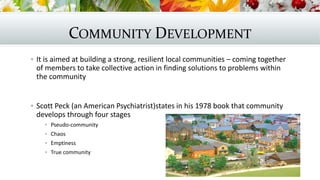
COMMUNITY DEVELOPMENT
 It is aimed at building a strong, resilient local communities – coming together
of members to take collective action in finding solutions to problems within
the community
 Scott Peck (an American Psychiatrist)states in his 1978 book that community
develops through four stages
 Pseudo-community
 Chaos
 Emptiness
 True community
COMMUNITY DEVELOPMENT
 There are numerous approaches used
 These are significant to the economic, political, cultural, social and
environmental enhancement of the community
COMMUNITY DEVELOPMENT
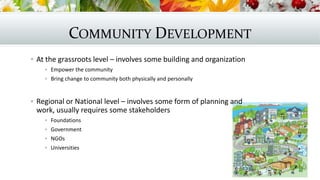
 At the grassroots level – involves some building and organization
 Empower the community
 Bring change to community both physically and personally
 Regional or National level – involves some form of planning and
work, usually requires some stakeholders
 Foundations
 Government
 NGOs
 Universities
COMMUNITY DEVELOPMENT
 Economic development
 Sustainable development
 Asset-Based community development
 Tourism Based community Development
TOURISM
WHAT IS TOURISM
 Defined as the movement of an individual to places other than their usual
environment for leisure, business or other purposes
 Outbound
 Inbound
 Domestic
WHY TOURISM
 Vital source of income
 Create frame work of employment
 Hotels
 Food services
 Travel services
 Transportation
 infrastructure
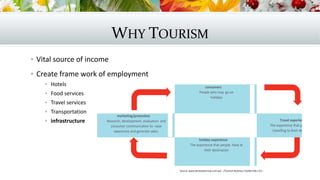
consumers
People who may go on
holidays
marketing/promotion
Research, development, evaluation and
consumer communication to raise
awareness and generate sales.
Travel experience
The experience that people have
travelling to their destination
holiday experience
The experience that people have at
their destination
Source: www.destinationnsw.com.au/.../Tourism-Business-Toolkit-VOL1-Ch...
COMMUNITY
DEVELOPMENT AND
TOURISM
COMMUNITY BASED TOURISM(CBT)
Source: :prof. Dr. Syed Rashidul Hasan Dept. of Tourism & Hospitality Management University of Dhaka Bangladesh
WHY USE CBT
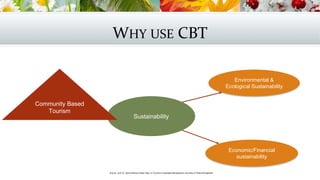
Sustainability
Economic/Financial
sustainability
Environmental &
Ecological Sustainability
Community Based
Tourism
Source: :prof. Dr. Syed Rashidul Hasan Dept. of Tourism & Hospitality Management University of Dhaka Bangladesh
MODEL APPROACH
 Model 1: Transit travelers destined for natural/man-made attractions via
community settlements
 Model 2: Only Community (no other added attractions)
 Model 3: Community blended with natural/man-made tourists attractions
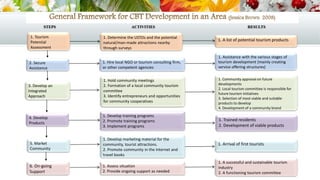
1. Tourism
Potential
Assessment
5. Market
Community
4. Develop
Products
2. Secure
Assistance
3. Develop an
Integrated
Approach
6. On-going
Support
1. Determine the USTOs and the potential
natural/man-made attractions nearby
through surveys
1. Hire local NGO or tourism consulting firm,
or other competent agencies
1. Hold community meetings
2. Formation of a local community tourism
committee
3. Identify entrepreneurs and opportunities
for community cooperatives
1. Develop training programs
2. Promote training programs
3. Implement programs
1. Develop marketing material for the
community, tourist attractions.
2. Promote community in the Internet and
travel books
1. Assess situation
2. Provide ongoing support as needed
1. A list of potential tourism products
1. Community approval on future
developments
2. Local tourism committee is responsible for
future tourism initiatives
3. Selection of most viable and suitable
products to develop
4. Development of a community brand
1. Assistance with the various stages of
tourism development (mainly creating
service offering structures)
1. Trained residents
2. Development of viable products
1. Arrival of first tourists
1. A successful and sustainable tourism
industry
2. A functioning tourism committee
STEPS ACTIVITIES RESULTS
REFERENCES
 Brown, J., Mitchell, N. and Beresford, Michael (Eds,) (2004). The Protected Landscape Approach: Linking Nature,
Culture and Community. IUCN, Gland, Switserland and Cambridge, UK. Xw+270pp. Plus 12 color plates
 James, P., Nadarajah, Y., Haive, K. and Stead, V(2012). Sustainable Communities, Sustainable Development: Other
Paths for Papua New Guinea Check |url= value (help). Honolulu: University of Hawaii Press.
 McMillan, D.W., & Chavis, D.M. 1986. "Sense of community: A definition and theory," p. 16.
 M. Scott Peck, (1987). The Different Drum: Community-Making and Peace, pp. 83-85.
 Rashidul Hasan. S. (2015). Community-Based Tourism. Slideshare.net/srhaasan75/some-proposed-models-for-
successful-community-based-tourism

Community development and tourism

  • 1.
  • 2.
    WHAT IS ACOMMUNITY  Common Definition:-  Community is defined as a group of people living in a specific area (village, town or neighborhood) and are sharing the common interest (such as values, benefits and norms).  Other Definition:-  A group of people living together  A group of individuals with common interest  Ecologist describes community as the assembly of spieces interacting and sharing a specific area.
  • 3.
    TYPES OF COMMUNITY Location based community  Identity (interest) based community  Organizational based community  Virtual community  Paul James (Professor of Globalization and Cultural Diversity at Western Sydney University) developed a taxonomy to map relations  Grounded community relations  Life style relations  Projected community relations
  • 4.
    SENSE OF COMMUNITY McMillian and Chavis (1986) identifies four elements  Membership  Influence  Integration and fulfillment of needs  Shared emotional connection
  • 5.
  • 6.
    COMMUNITY DEVELOPMENT  Itis aimed at building a strong, resilient local communities – coming together of members to take collective action in finding solutions to problems within the community  Scott Peck (an American Psychiatrist)states in his 1978 book that community develops through four stages  Pseudo-community  Chaos  Emptiness  True community
  • 7.
    COMMUNITY DEVELOPMENT  Thereare numerous approaches used  These are significant to the economic, political, cultural, social and environmental enhancement of the community
  • 8.
    COMMUNITY DEVELOPMENT  Atthe grassroots level – involves some building and organization  Empower the community  Bring change to community both physically and personally  Regional or National level – involves some form of planning and work, usually requires some stakeholders  Foundations  Government  NGOs  Universities
  • 9.
    COMMUNITY DEVELOPMENT  Economicdevelopment  Sustainable development  Asset-Based community development  Tourism Based community Development
  • 10.
  • 11.
    WHAT IS TOURISM Defined as the movement of an individual to places other than their usual environment for leisure, business or other purposes  Outbound  Inbound  Domestic
  • 12.
    WHY TOURISM  Vitalsource of income  Create frame work of employment  Hotels  Food services  Travel services  Transportation  infrastructure consumers People who may go on holidays marketing/promotion Research, development, evaluation and consumer communication to raise awareness and generate sales. Travel experience The experience that people have travelling to their destination holiday experience The experience that people have at their destination Source: www.destinationnsw.com.au/.../Tourism-Business-Toolkit-VOL1-Ch...
  • 13.
  • 14.
    COMMUNITY BASED TOURISM(CBT) Source::prof. Dr. Syed Rashidul Hasan Dept. of Tourism & Hospitality Management University of Dhaka Bangladesh
  • 15.
    WHY USE CBT Sustainability Economic/Financial sustainability Environmental& Ecological Sustainability Community Based Tourism Source: :prof. Dr. Syed Rashidul Hasan Dept. of Tourism & Hospitality Management University of Dhaka Bangladesh
  • 16.
    MODEL APPROACH  Model1: Transit travelers destined for natural/man-made attractions via community settlements  Model 2: Only Community (no other added attractions)  Model 3: Community blended with natural/man-made tourists attractions
  • 17.
    1. Tourism Potential Assessment 5. Market Community 4.Develop Products 2. Secure Assistance 3. Develop an Integrated Approach 6. On-going Support 1. Determine the USTOs and the potential natural/man-made attractions nearby through surveys 1. Hire local NGO or tourism consulting firm, or other competent agencies 1. Hold community meetings 2. Formation of a local community tourism committee 3. Identify entrepreneurs and opportunities for community cooperatives 1. Develop training programs 2. Promote training programs 3. Implement programs 1. Develop marketing material for the community, tourist attractions. 2. Promote community in the Internet and travel books 1. Assess situation 2. Provide ongoing support as needed 1. A list of potential tourism products 1. Community approval on future developments 2. Local tourism committee is responsible for future tourism initiatives 3. Selection of most viable and suitable products to develop 4. Development of a community brand 1. Assistance with the various stages of tourism development (mainly creating service offering structures) 1. Trained residents 2. Development of viable products 1. Arrival of first tourists 1. A successful and sustainable tourism industry 2. A functioning tourism committee STEPS ACTIVITIES RESULTS
  • 19.
    REFERENCES  Brown, J.,Mitchell, N. and Beresford, Michael (Eds,) (2004). The Protected Landscape Approach: Linking Nature, Culture and Community. IUCN, Gland, Switserland and Cambridge, UK. Xw+270pp. Plus 12 color plates  James, P., Nadarajah, Y., Haive, K. and Stead, V(2012). Sustainable Communities, Sustainable Development: Other Paths for Papua New Guinea Check |url= value (help). Honolulu: University of Hawaii Press.  McMillan, D.W., & Chavis, D.M. 1986. "Sense of community: A definition and theory," p. 16.  M. Scott Peck, (1987). The Different Drum: Community-Making and Peace, pp. 83-85.  Rashidul Hasan. S. (2015). Community-Based Tourism. Slideshare.net/srhaasan75/some-proposed-models-for- successful-community-based-tourism