ECOTOURISM
Community Participation
in Tourism Planning
Mrs. Sushma
Sahu
Submitted by
Institute of Tourism &
Hotel Management, Pt.
Ravishankar Shukla
University, Raipur (CG)
DEFINITION
"Ecotourism is environmentally
responsible travel and visitation to
relatively undisturbed natural
areas, in order to enjoy, study and
appreciate nature (and any
accompanying cultural features -
both past and present), that
promotes conservation, has low
visitor impact, and provides for
beneficially active socio-economic
involvement of local
populations”(Ceballos-Lascurain, 1993)
OVERVIEW
COMPONENTS OF
ECOTOURISM
• Natural areas
• Contains educational and
interpretive features
• Minimizes negative impacts
• Supports the protection of natural
areas by generating economic
benefits for host communities,
organizations and authorities
managing natural areas with
conservation purposes
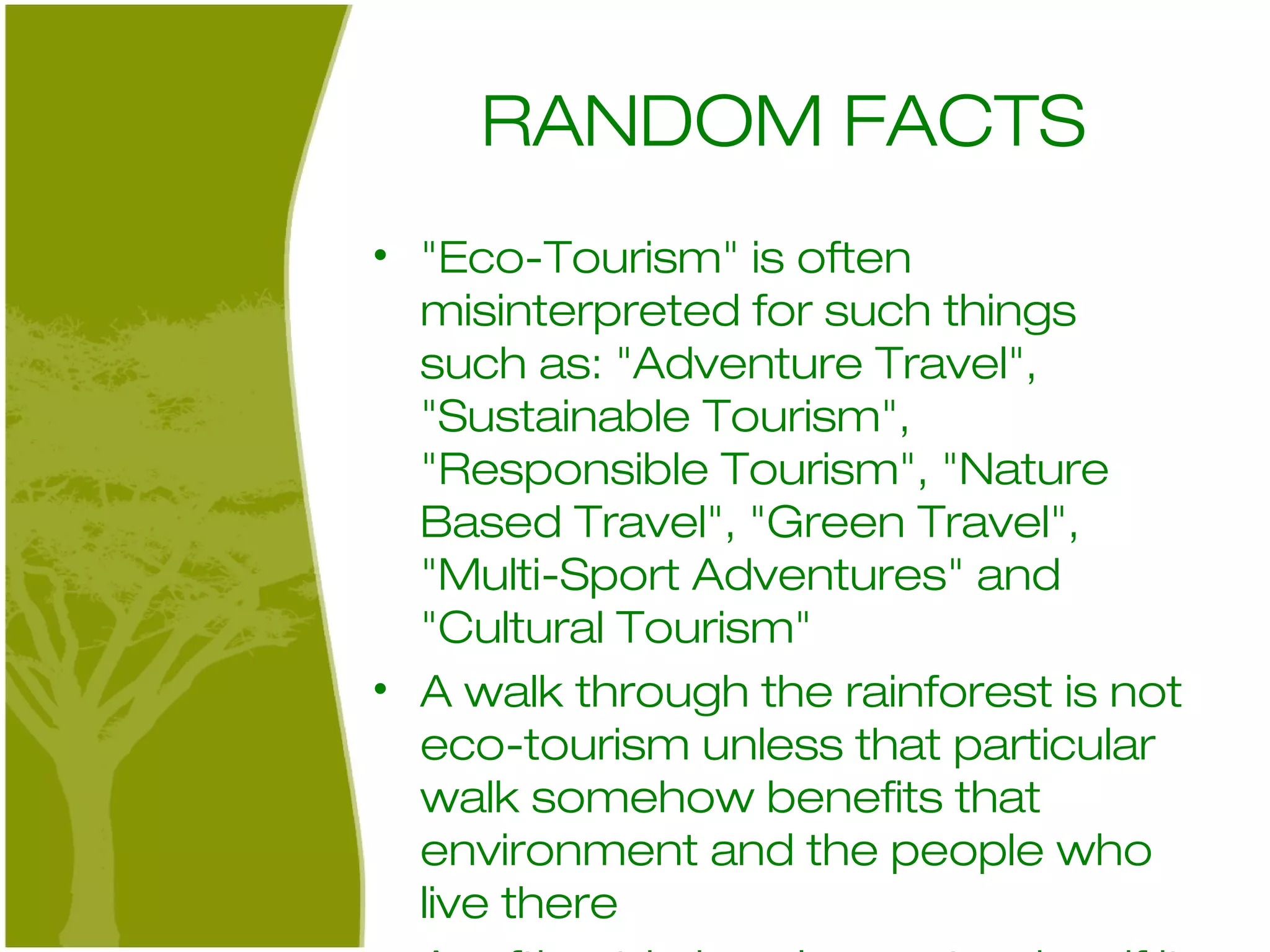
RANDOM FACTS
• "Eco-Tourism" is often
misinterpreted for such things
such as: "Adventure Travel",
"Sustainable Tourism",
"Responsible Tourism", "Nature
Based Travel", "Green Travel",
"Multi-Sport Adventures" and
"Cultural Tourism"
• A walk through the rainforest is not
eco-tourism unless that particular
walk somehow benefits that
environment and the people who
live there
DEVELOPMENT
DENSITY
• Too low development density:
- No harm done to the reserve
- No facilities for visitors/travelers
• Too high development density:
- Many facilities for visitors to
enjoy, high profit.
- Loss of the protected area,
threatens wildlife animal,
destroys the landscape.
- Negative impact: land
degradation, water pollution.
ENDANGERED
SPECIES
BALANCE BETWEEN
ALLOWING
TRAVELLERS
ACCESS TO
WILDLIFE &
PRESERVATION OF
THEIR ECOLOGICAL
INTERGRITY
PARTICIPATION OF
THE LOCALS
After ecotourism started:
• Locals gave up farming and
hunting and participated in
ecotourism business (ex: family
hotels, souvenir shops, guides)
• Population of agricultural business
dropped from 98% to 18%
• After 2002, hotels moved out from
the reserve area to lower the
development density.
MAN VERSUS NATURE:
WHO’S NEEDS DO WE
PROTECT?
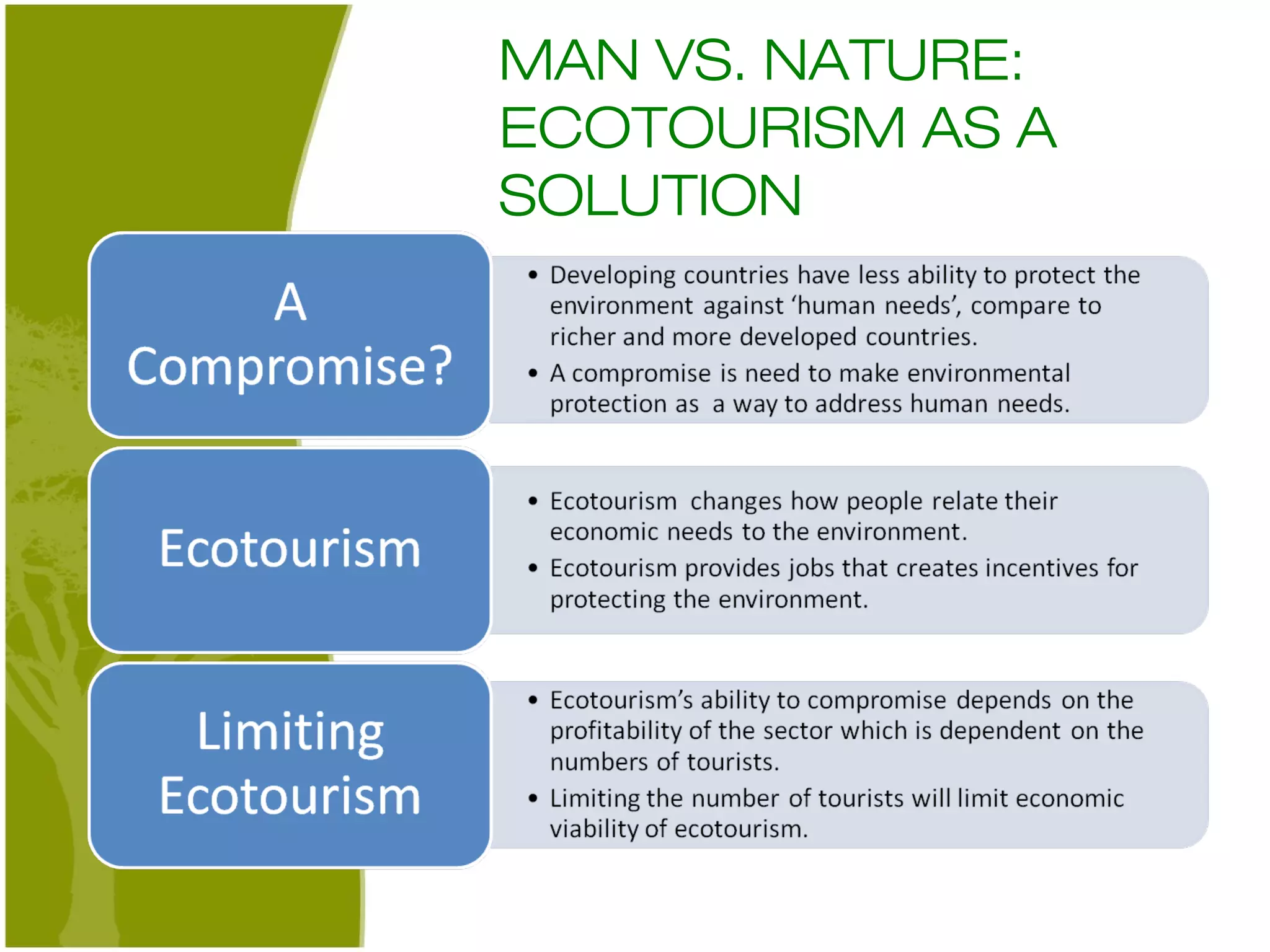
MAN VS. NATURE:
ECOTOURISM AS A
SOLUTION
UNLIMITED ECOTOURISM
COMMUNITY BASED
ECOTOURISM
• The connection between the
chosen environmental area,
adjacent ecosystems, and local
people must be established
• It is difficult to protect the flora and
fauna unless there are economic
benefits to the country as well as
to the local people
• The many potential benefits that
can be derived from ecotourism
need to be integrated with
conservation management and
community development in order
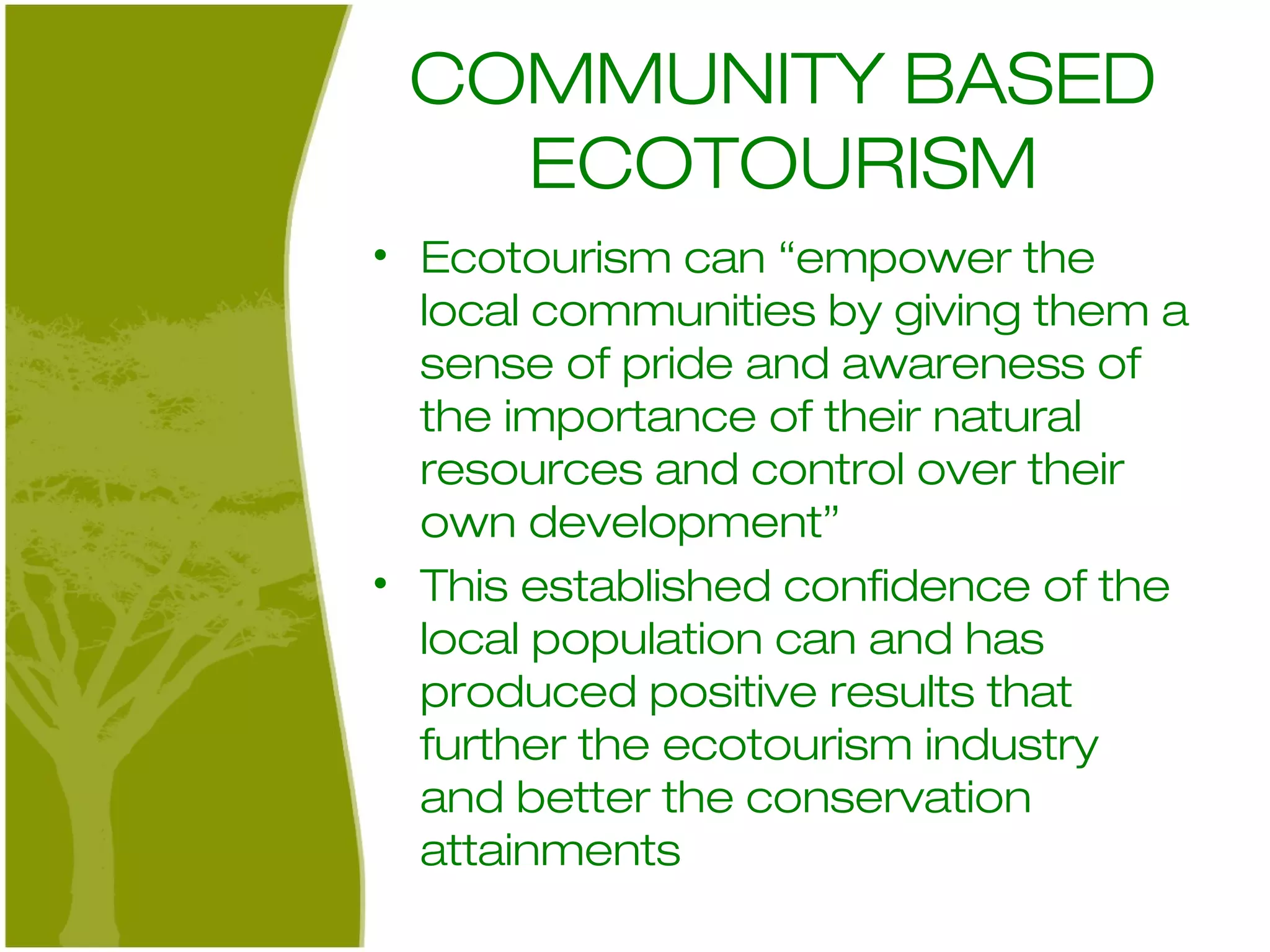
COMMUNITY BASED
ECOTOURISM
• Ecotourism can “empower the
local communities by giving them a
sense of pride and awareness of
the importance of their natural
resources and control over their
own development”
• This established confidence of the
local population can and has
produced positive results that
further the ecotourism industry
and better the conservation
attainments
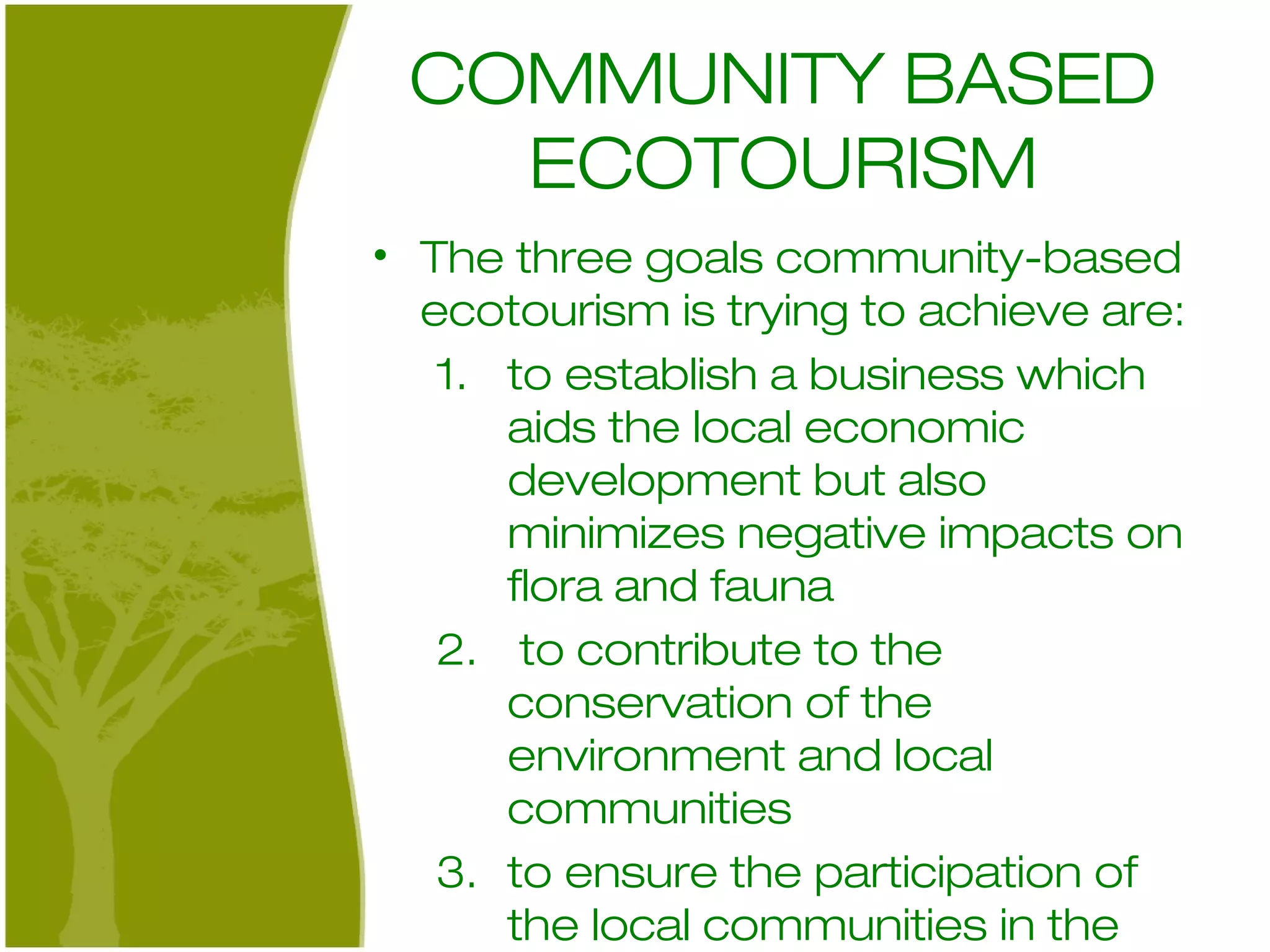
COMMUNITY BASED
ECOTOURISM
• The three goals community-based
ecotourism is trying to achieve are:
1. to establish a business which
aids the local economic
development but also
minimizes negative impacts on
flora and fauna
2. to contribute to the
conservation of the
environment and local
communities
3. to ensure the participation of
the local communities in the
CONCLUSION
• Ecotourism is a unique endeavor that altered
conservation efforts in numerous ways. The
idea of fusing conservation and ecotourism
aims for benefits for all stakeholders,
however as revealed above, in order for this
to be effective concrete values, regulation
systems, economic plans, and evaluation of
biological effects must be established and
maintained. Ecotourism is an innovative
approach to sustainable and profitable
conservation and hopefully with further
research and refinement ecotourism will
grow in success.
ANY QUERIES

Eco Tourism and Community Participation in Tourism Planning

  • 1.
    ECOTOURISM Community Participation in TourismPlanning Mrs. Sushma Sahu Submitted by Institute of Tourism & Hotel Management, Pt. Ravishankar Shukla University, Raipur (CG)
  • 2.
    DEFINITION "Ecotourism is environmentally responsibletravel and visitation to relatively undisturbed natural areas, in order to enjoy, study and appreciate nature (and any accompanying cultural features - both past and present), that promotes conservation, has low visitor impact, and provides for beneficially active socio-economic involvement of local populations”(Ceballos-Lascurain, 1993)
  • 3.
  • 4.
    COMPONENTS OF ECOTOURISM • Naturalareas • Contains educational and interpretive features • Minimizes negative impacts • Supports the protection of natural areas by generating economic benefits for host communities, organizations and authorities managing natural areas with conservation purposes
  • 5.
    RANDOM FACTS • "Eco-Tourism"is often misinterpreted for such things such as: "Adventure Travel", "Sustainable Tourism", "Responsible Tourism", "Nature Based Travel", "Green Travel", "Multi-Sport Adventures" and "Cultural Tourism" • A walk through the rainforest is not eco-tourism unless that particular walk somehow benefits that environment and the people who live there
  • 6.
    DEVELOPMENT DENSITY • Too lowdevelopment density: - No harm done to the reserve - No facilities for visitors/travelers • Too high development density: - Many facilities for visitors to enjoy, high profit. - Loss of the protected area, threatens wildlife animal, destroys the landscape. - Negative impact: land degradation, water pollution.
  • 7.
  • 8.
    BALANCE BETWEEN ALLOWING TRAVELLERS ACCESS TO WILDLIFE& PRESERVATION OF THEIR ECOLOGICAL INTERGRITY
  • 10.
    PARTICIPATION OF THE LOCALS Afterecotourism started: • Locals gave up farming and hunting and participated in ecotourism business (ex: family hotels, souvenir shops, guides) • Population of agricultural business dropped from 98% to 18% • After 2002, hotels moved out from the reserve area to lower the development density.
  • 11.
    MAN VERSUS NATURE: WHO’SNEEDS DO WE PROTECT?
  • 12.
  • 13.
  • 15.
    COMMUNITY BASED ECOTOURISM • Theconnection between the chosen environmental area, adjacent ecosystems, and local people must be established • It is difficult to protect the flora and fauna unless there are economic benefits to the country as well as to the local people • The many potential benefits that can be derived from ecotourism need to be integrated with conservation management and community development in order
  • 16.
    COMMUNITY BASED ECOTOURISM • Ecotourismcan “empower the local communities by giving them a sense of pride and awareness of the importance of their natural resources and control over their own development” • This established confidence of the local population can and has produced positive results that further the ecotourism industry and better the conservation attainments
  • 17.
    COMMUNITY BASED ECOTOURISM • Thethree goals community-based ecotourism is trying to achieve are: 1. to establish a business which aids the local economic development but also minimizes negative impacts on flora and fauna 2. to contribute to the conservation of the environment and local communities 3. to ensure the participation of the local communities in the
  • 19.
    CONCLUSION • Ecotourism isa unique endeavor that altered conservation efforts in numerous ways. The idea of fusing conservation and ecotourism aims for benefits for all stakeholders, however as revealed above, in order for this to be effective concrete values, regulation systems, economic plans, and evaluation of biological effects must be established and maintained. Ecotourism is an innovative approach to sustainable and profitable conservation and hopefully with further research and refinement ecotourism will grow in success.
  • 21.