Presented by
Suman Sultan
Presented to
Sir Shabbir Ahmad
course title
Community Organization and Development
Community-based interventions
address the individual, social and
environmental influences on behavior
making them consistent with ecological
models of health.
 Statement of the community problem/goal to
be addressed
 Specific behaviors of whom that need to
change
 Improvements in community-level outcomes
that should result
 Direct observation of the problem or goal
 Conducting behavioral surveys
 Interviewing key people in the community
 Reviewing archival or existing records
 Targets of change or prioritized groups
for whom behaviors or outcomes should
change
 Agents of change or those implementing
the intervention
 Personal contacts - Who will you speak with about
what?
 Interviews - What questions will you ask of whom
about the problem or goal and possible
interventions?
 Focus groups - From what groups will you seek
what kinds of information?
 Community forums - What public situations would
present an opportunity for you to discuss the
problem or goal, and how will you use the
opportunity?
 Concerns surveys - What questions of whom will
you ask about the problem or goal and potential
solutions?
 Those for whom the current situation is a problem. Who is affected
by the issue, problem, or goal?
 The negative (positive) consequences for those directly affected
and the broader community. What effect does the problem or issue
have on the lives of those affected?
 Personal and environmental factors to be influenced (i.e., people's
experience and history; knowledge and skills; barriers and
opportunities; social support and caring relationships; living
conditions that put them at risk for or protect them from
experiencing certain problems).
 The behavior or lack of behavior that causes or maintains the
problem. What behaviors of whom would need to change for the
problem (or goal) to be eliminated (addressed).
 A description of what success would look like. How will
the community or group be different if the intervention
is successful?
 Those goals the intervention is targeted to accomplish.
How will you know if your intervention is successful?
 The specific objectives the intervention will achieve.
What will change by how much and by when?

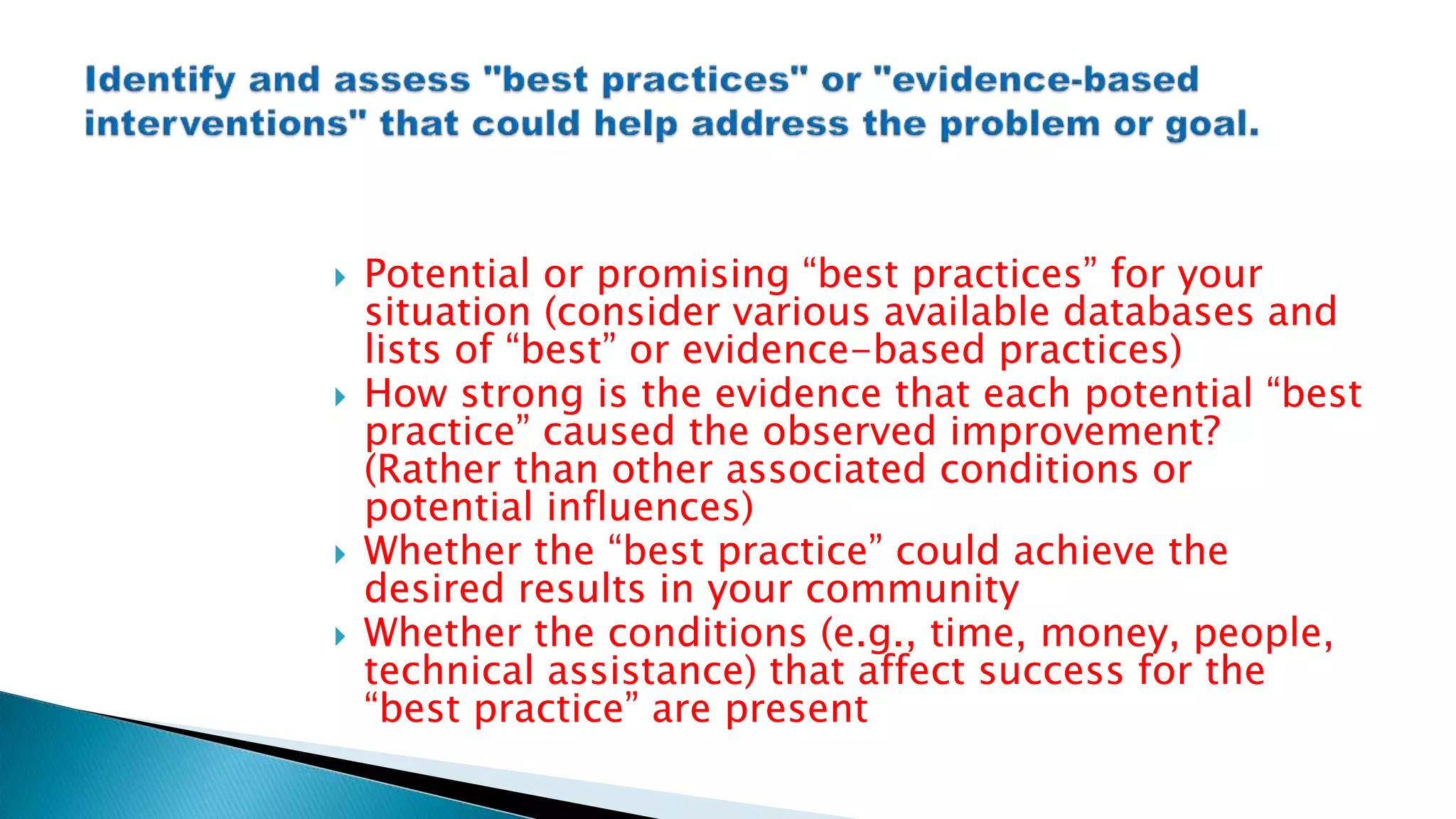
 Potential or promising “best practices” for your
situation (consider various available databases and
lists of “best” or evidence-based practices)
 How strong is the evidence that each potential “best
practice” caused the observed improvement?
(Rather than other associated conditions or
potential influences)
 Whether the “best practice” could achieve the
desired results in your community
 Whether the conditions (e.g., time, money, people,
technical assistance) that affect success for the
“best practice” are present
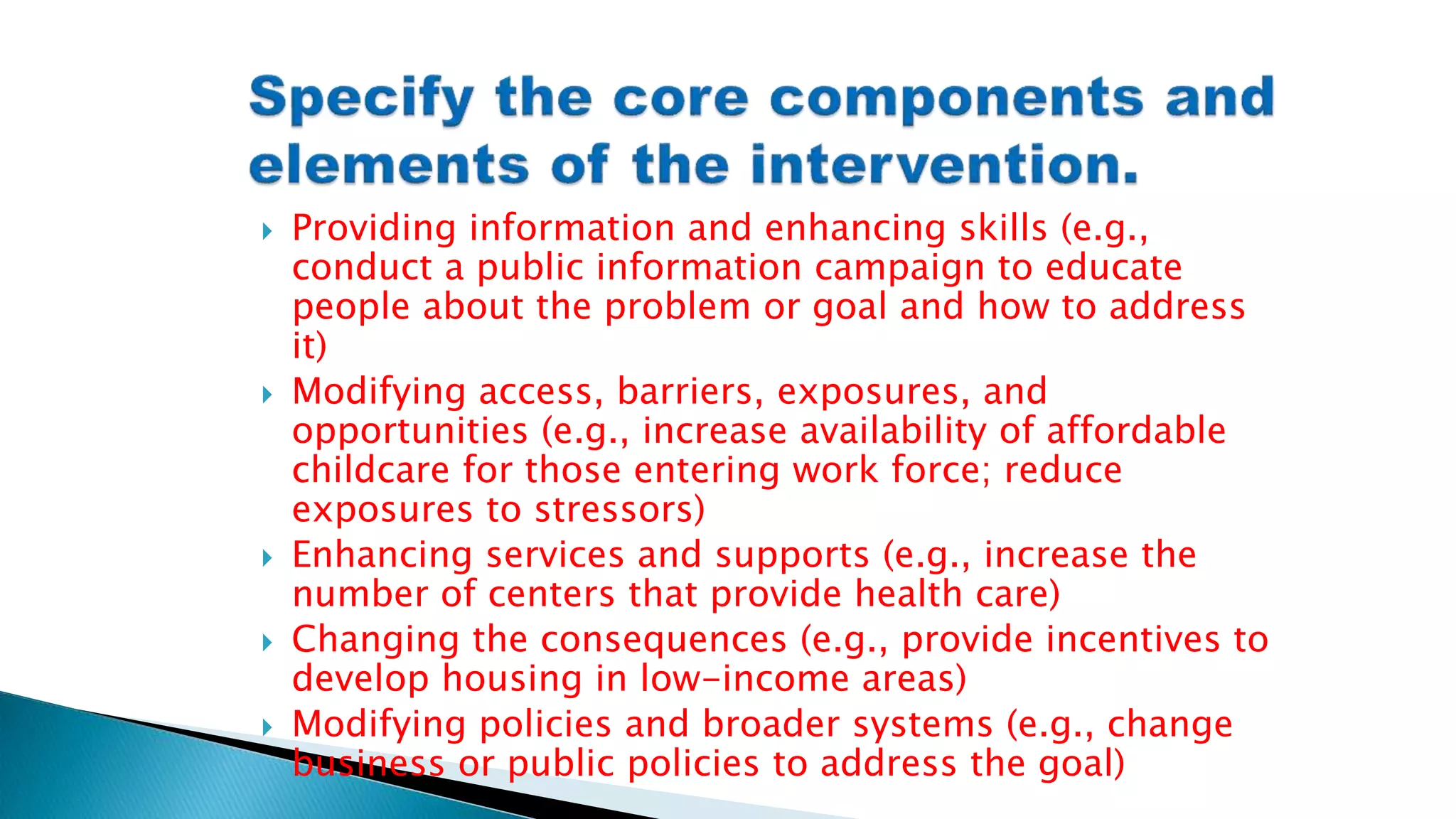
 Providing information and enhancing skills (e.g.,
conduct a public information campaign to educate
people about the problem or goal and how to address
it)
 Modifying access, barriers, exposures, and
opportunities (e.g., increase availability of affordable
childcare for those entering work force; reduce
exposures to stressors)
 Enhancing services and supports (e.g., increase the
number of centers that provide health care)
 Changing the consequences (e.g., provide incentives to
develop housing in low-income areas)
 Modifying policies and broader systems (e.g., change
business or public policies to address the goal)
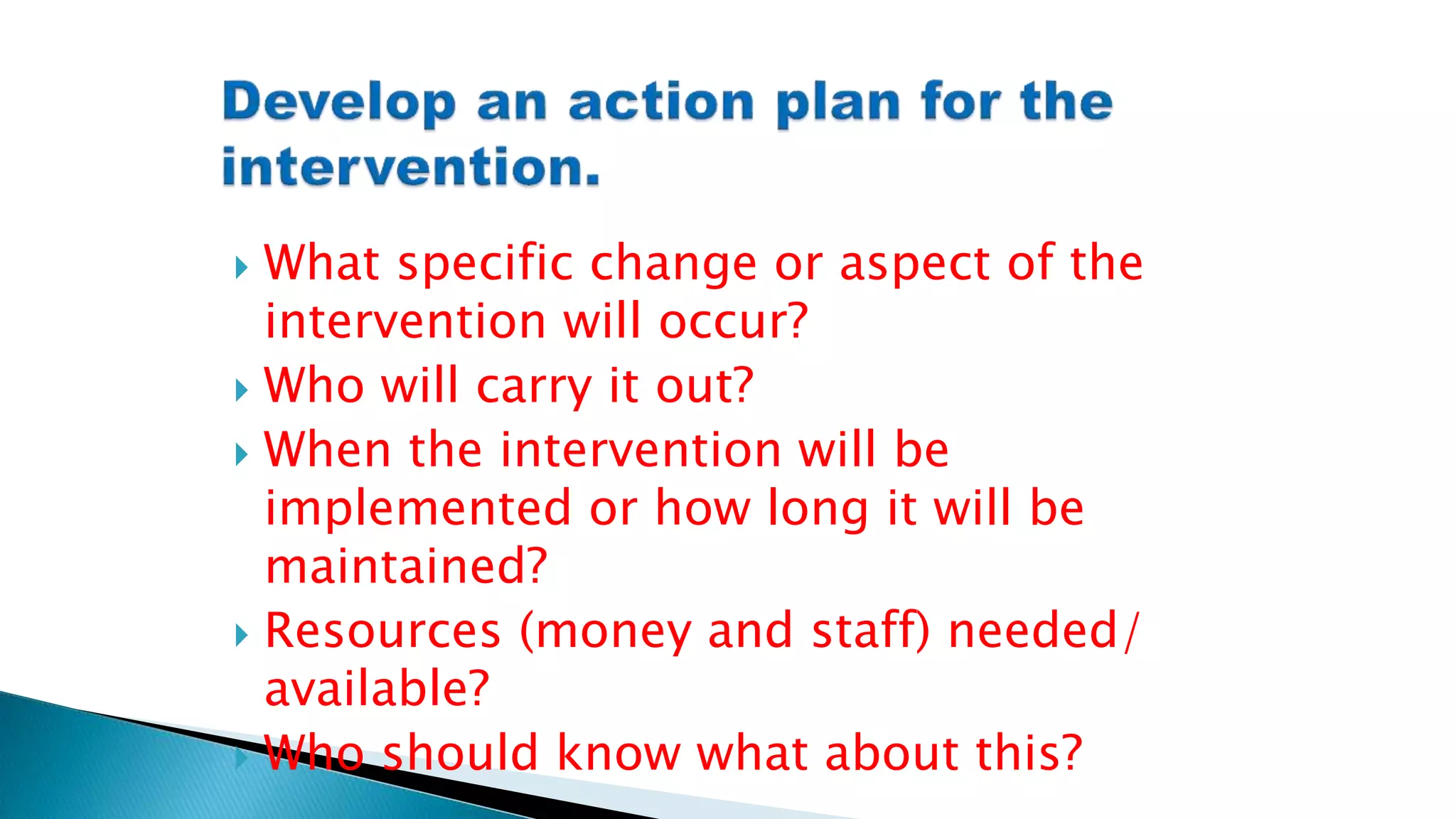
 What specific change or aspect of the
intervention will occur?
 Who will carry it out?
 When the intervention will be
implemented or how long it will be
maintained?
 Resources (money and staff) needed/
available?
 Who should know what about this?
 Test the intervention and with whom
 Assess the quality of implementation of the intervention
 Assess results and consequences or side effects
 Collect and use feedback to adapt and improve the
intervention

Community development

  • 1.
    Presented by Suman Sultan Presentedto Sir Shabbir Ahmad course title Community Organization and Development
  • 2.
    Community-based interventions address theindividual, social and environmental influences on behavior making them consistent with ecological models of health.
  • 3.
     Statement ofthe community problem/goal to be addressed  Specific behaviors of whom that need to change  Improvements in community-level outcomes that should result
  • 4.
     Direct observationof the problem or goal  Conducting behavioral surveys  Interviewing key people in the community  Reviewing archival or existing records
  • 5.
     Targets ofchange or prioritized groups for whom behaviors or outcomes should change  Agents of change or those implementing the intervention
  • 6.
     Personal contacts- Who will you speak with about what?  Interviews - What questions will you ask of whom about the problem or goal and possible interventions?  Focus groups - From what groups will you seek what kinds of information?  Community forums - What public situations would present an opportunity for you to discuss the problem or goal, and how will you use the opportunity?  Concerns surveys - What questions of whom will you ask about the problem or goal and potential solutions?
  • 7.
     Those forwhom the current situation is a problem. Who is affected by the issue, problem, or goal?  The negative (positive) consequences for those directly affected and the broader community. What effect does the problem or issue have on the lives of those affected?  Personal and environmental factors to be influenced (i.e., people's experience and history; knowledge and skills; barriers and opportunities; social support and caring relationships; living conditions that put them at risk for or protect them from experiencing certain problems).  The behavior or lack of behavior that causes or maintains the problem. What behaviors of whom would need to change for the problem (or goal) to be eliminated (addressed).
  • 8.
     A descriptionof what success would look like. How will the community or group be different if the intervention is successful?  Those goals the intervention is targeted to accomplish. How will you know if your intervention is successful?  The specific objectives the intervention will achieve. What will change by how much and by when? 
  • 9.
     Potential orpromising “best practices” for your situation (consider various available databases and lists of “best” or evidence-based practices)  How strong is the evidence that each potential “best practice” caused the observed improvement? (Rather than other associated conditions or potential influences)  Whether the “best practice” could achieve the desired results in your community  Whether the conditions (e.g., time, money, people, technical assistance) that affect success for the “best practice” are present
  • 10.
     Providing informationand enhancing skills (e.g., conduct a public information campaign to educate people about the problem or goal and how to address it)  Modifying access, barriers, exposures, and opportunities (e.g., increase availability of affordable childcare for those entering work force; reduce exposures to stressors)  Enhancing services and supports (e.g., increase the number of centers that provide health care)  Changing the consequences (e.g., provide incentives to develop housing in low-income areas)  Modifying policies and broader systems (e.g., change business or public policies to address the goal)
  • 12.
     What specificchange or aspect of the intervention will occur?  Who will carry it out?  When the intervention will be implemented or how long it will be maintained?  Resources (money and staff) needed/ available?  Who should know what about this?
  • 13.
     Test theintervention and with whom  Assess the quality of implementation of the intervention  Assess results and consequences or side effects  Collect and use feedback to adapt and improve the intervention