Copyright © 2014 by The University of Kansas
ASSIGNMENT
PREPARED BY
 USAMA SALIS
UNDER THE SUPERVISION
 SIR SHABBIR AHMAD
Copyright © 2014 by The University of Kansas
Healthy Cities / Healthy
Communities
 A theoretical framework for a process by which citizens can create
healthy communities.
 Communities where all systems work well and together and where all
citizens enjoy a good quality of life.
 Loosely-defined strategy that involves all community members addressing
issues that are important to them.
Copyright © 2014 by The University of Kansas
Two Premises of Healthy Cities/
Healthy Communities
 A comprehensive view of health.
 A commitment to healthy promotion.
Copyright © 2014 by The University of Kansas
Prerequisites for Health in
Communities
 Peace
 Shelter
 Education
 Food
 Income
 Stable ecosystem
 Social justice
 Equity
 Sustainable resources
Copyright © 2014 by The University of Kansas
How to Promote Community Health
 Build public policy.
 Create supportive environments.
 Strengthen community action.
 Develop personal skills.
 Re-orient services.
Copyright © 2014 by The University of Kansas
Community Environments
 Natural
 Economic
 Leisure
 Political
 Work
 Built
 Social
Copyright © 2014 by The University of Kansas
Why use Healthy Cities/Healthy
Communities?
 Community perspective.
 Participatory planning and community ownership.
 Range of ideas.
 Knowledge of the community.
 Community-wide ties.
 Achievable and measurable goals
 Identification and use of community assets and
resources.
 Community self-image.
 Community commitment to the long-term process.
Copyright © 2014 by The University of Kansas
Who should participate?
 Elected and appointed officials.
 Those most affected by the issue.
 People who will carry out the initiative or those whose lives will be
affected by it.
 Agencies and groups involved in implementing the effort.
 Community opinion leaders.
Copyright © 2014 by The University of Kansas
Components of Healthy Cities/
Healthy Communities
 Create a compelling vision based on shared values.
 Embrace a broad definition of health and well-being.
 Address quality-of-life for everyone.
 Engage diverse citizen participation and be citizen-driven.
 Seek multi-sectoral membership in widespread community ownership.
 Acknowledge the social determinants of health and the interrelationship of
health and other issues.
 Address issues through collaborative problem-solving.
 Focus on system change.
 Build capacity using local assets and resources.
 Measure and benchmark progress and outcomes.
Copyright © 2014 by The University of Kansas
Three Social Determinants of Health
 Socio-economic equality.
 Social connectedness.
 Sense of personal efficacy.
Copyright © 2014 by The University of Kansas
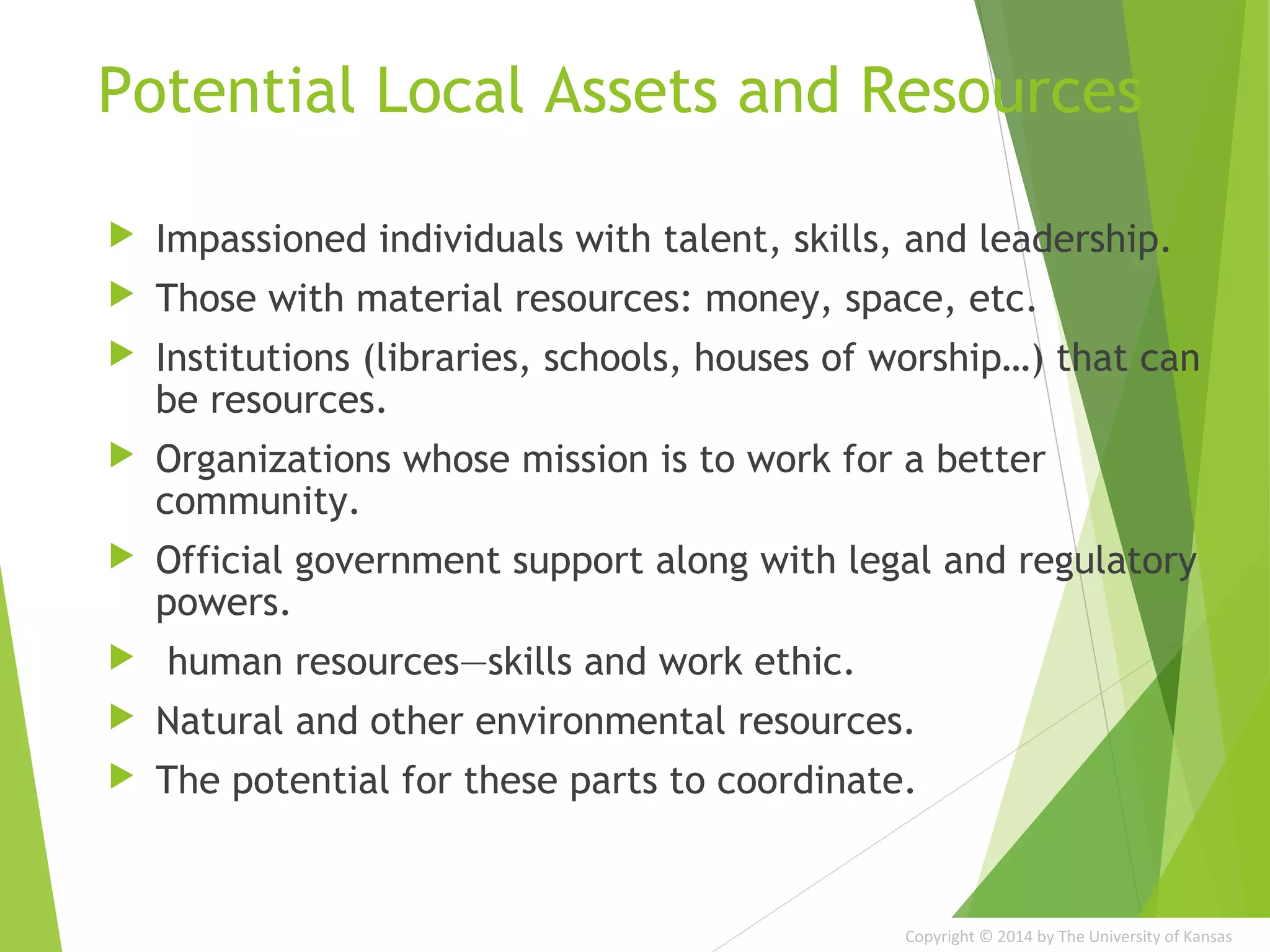
Potential Local Assets and Resources
 Impassioned individuals with talent, skills, and leadership.
 Those with material resources: money, space, etc.
 Institutions (libraries, schools, houses of worship…) that can
be resources.
 Organizations whose mission is to work for a better
community.
 Official government support along with legal and regulatory
powers.
 human resources—skills and work ethic.
 Natural and other environmental resources.
 The potential for these parts to coordinate.
Copyright © 2014 by The University of Kansas
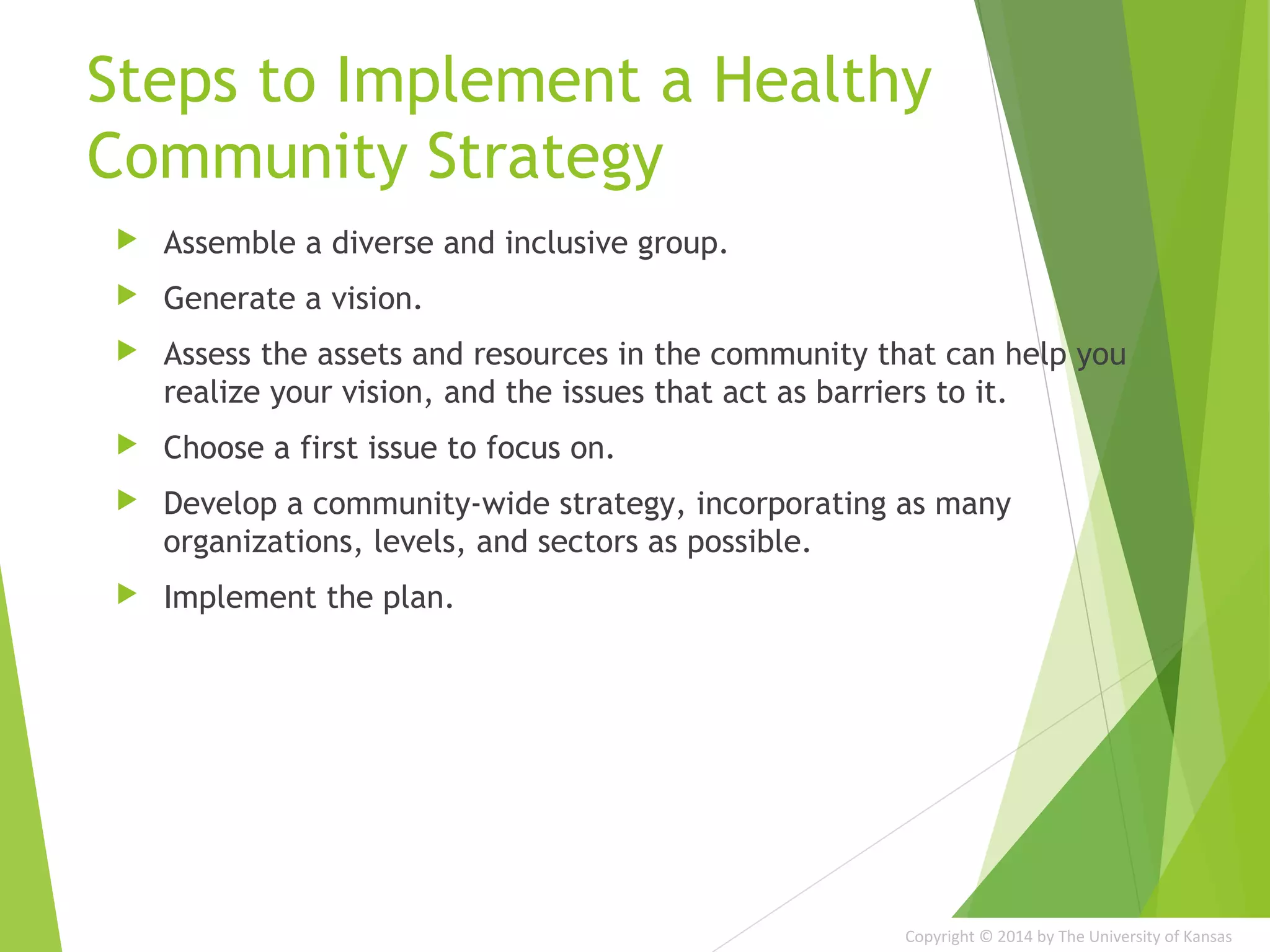
Steps to Implement a Healthy
Community Strategy
 Assemble a diverse and inclusive group.
 Generate a vision.
 Assess the assets and resources in the community that can help you
realize your vision, and the issues that act as barriers to it.
 Choose a first issue to focus on.
 Develop a community-wide strategy, incorporating as many
organizations, levels, and sectors as possible.
 Implement the plan.
Copyright © 2014 by The University of Kansas
Steps to Implement a Healthy
Community Strategy (cont.)
 Monitor and adjust your initiative or intervention.
 Establish new systems that will maintain and build on the gains you’ve
made.
 Celebrate benchmarks and successes.
 Tackle the next issues.

Healthy community design

  • 1.
    Copyright © 2014by The University of Kansas ASSIGNMENT PREPARED BY  USAMA SALIS UNDER THE SUPERVISION  SIR SHABBIR AHMAD
  • 2.
    Copyright © 2014by The University of Kansas Healthy Cities / Healthy Communities  A theoretical framework for a process by which citizens can create healthy communities.  Communities where all systems work well and together and where all citizens enjoy a good quality of life.  Loosely-defined strategy that involves all community members addressing issues that are important to them.
  • 3.
    Copyright © 2014by The University of Kansas Two Premises of Healthy Cities/ Healthy Communities  A comprehensive view of health.  A commitment to healthy promotion.
  • 4.
    Copyright © 2014by The University of Kansas Prerequisites for Health in Communities  Peace  Shelter  Education  Food  Income  Stable ecosystem  Social justice  Equity  Sustainable resources
  • 5.
    Copyright © 2014by The University of Kansas How to Promote Community Health  Build public policy.  Create supportive environments.  Strengthen community action.  Develop personal skills.  Re-orient services.
  • 6.
    Copyright © 2014by The University of Kansas Community Environments  Natural  Economic  Leisure  Political  Work  Built  Social
  • 7.
    Copyright © 2014by The University of Kansas Why use Healthy Cities/Healthy Communities?  Community perspective.  Participatory planning and community ownership.  Range of ideas.  Knowledge of the community.  Community-wide ties.  Achievable and measurable goals  Identification and use of community assets and resources.  Community self-image.  Community commitment to the long-term process.
  • 8.
    Copyright © 2014by The University of Kansas Who should participate?  Elected and appointed officials.  Those most affected by the issue.  People who will carry out the initiative or those whose lives will be affected by it.  Agencies and groups involved in implementing the effort.  Community opinion leaders.
  • 9.
    Copyright © 2014by The University of Kansas Components of Healthy Cities/ Healthy Communities  Create a compelling vision based on shared values.  Embrace a broad definition of health and well-being.  Address quality-of-life for everyone.  Engage diverse citizen participation and be citizen-driven.  Seek multi-sectoral membership in widespread community ownership.  Acknowledge the social determinants of health and the interrelationship of health and other issues.  Address issues through collaborative problem-solving.  Focus on system change.  Build capacity using local assets and resources.  Measure and benchmark progress and outcomes.
  • 10.
    Copyright © 2014by The University of Kansas Three Social Determinants of Health  Socio-economic equality.  Social connectedness.  Sense of personal efficacy.
  • 11.
    Copyright © 2014by The University of Kansas Potential Local Assets and Resources  Impassioned individuals with talent, skills, and leadership.  Those with material resources: money, space, etc.  Institutions (libraries, schools, houses of worship…) that can be resources.  Organizations whose mission is to work for a better community.  Official government support along with legal and regulatory powers.  human resources—skills and work ethic.  Natural and other environmental resources.  The potential for these parts to coordinate.
  • 12.
    Copyright © 2014by The University of Kansas Steps to Implement a Healthy Community Strategy  Assemble a diverse and inclusive group.  Generate a vision.  Assess the assets and resources in the community that can help you realize your vision, and the issues that act as barriers to it.  Choose a first issue to focus on.  Develop a community-wide strategy, incorporating as many organizations, levels, and sectors as possible.  Implement the plan.
  • 13.
    Copyright © 2014by The University of Kansas Steps to Implement a Healthy Community Strategy (cont.)  Monitor and adjust your initiative or intervention.  Establish new systems that will maintain and build on the gains you’ve made.  Celebrate benchmarks and successes.  Tackle the next issues.