Here is where your presentation begins
Objectives
After the session, the pupils will be able to…
● define communication
● identify the essential communication skills for leaders
● Employ the ways to improve communication skills
● appreciate the importance of communication
Effective leadership is the backbone to any
group or organization. The leader acts as a
facilitator for the group and without it the
group has little chance for success. A groups
communication is only as good as its
leader's.
What is Communication?
Mutual interaction among two or more individuals is
termed as ‘Communication’.
Existence of life becomes impossible
without Communication & mutual understanding.
When it comes to making sure that things are getting in
the right way & are successively moving forward, good
communication skills are a building block.
So, it is really necessary to improve our communication
skills, whether verbal or written.
• Effective leadership is the backbone to any
group or organization. The leader acts as a
facilitator for the group and without it the
group has little chance for success.
• A groups communication is only as good as
its leader's.
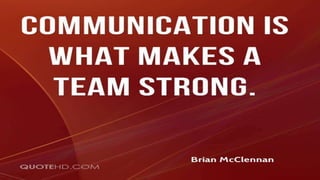
• Communication is one of the most important
aspects in the effective management of a
club/organization.
• Without communication, even poor
communication, members wouldn't know
when to come to meetings or what events
were being organized.
‘to be a good communicator, it’s essential to be a
good listener first’.
-The most important communication skill for
leaders is the ability to listen. Professional
listening skills include listening for the message,
listening for any emotions behind the message
and considering relevant questions about the
message.
• In the classroom-When used effectively,
praise can turn around behavior challenges
and improve students' attitudes about
learning. That makes meaningful and
appropriate praise even more important.
• For leaders-Genuine compliments can be a
great way to build a positive culture. When
you learn how to give and accept
compliments, they are also building empathy.
Compliments is an easy way to build a
positive community.
• Think of the “who,” “what,” “when,” “where,” “why” and
“how” as you explain what needs to be done
• Explaining the reason (the “why”) is especially vital,
particularly in regard to deadlines.
• Help them realize that their task is only part of a
series of tasks for a big project.
• People like to know the reasons they are doing
something. Establish check-in times to discuss
progress.
• Leaders in school, Company or other
Organization are closely being observe by the
people around them
• Even when walking around campus with a smile on
your face that is a form of communication.
• The actions that you do inside/outside of school
campus. It sends a message to others.
• The way you talk and deal with others.
• Because communication takes form
in many ways, it is arguably the most
important skill. Though each person
will have different ways of
communicating, whether it be verbal
or nonverbal.
• It is okay to use acronyms and informal
language when you are communicating with a
buddy or friend.
• Effective communicators target their message
based on who they are speaking to, so try to
keep the other person in mind, when you are
trying to get your message across.
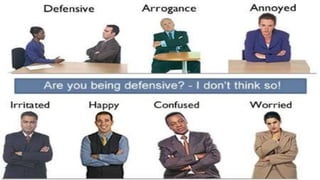
• This is important for face-to-face meetings and
video conferencing. Make sure that you appear
accessible, so have open body language.
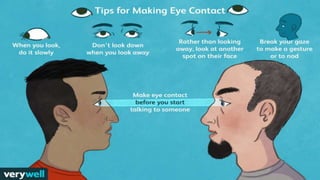
• This means that you should not cross your
arms. And keep eye contact so that the other
person knows that you are paying attention.
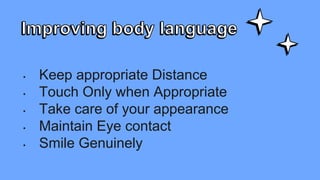
• Keep appropriate Distance
• Touch Only when Appropriate
• Take care of your appearance
• Maintain Eye contact
• Smile Genuinely
• For written and verbal communication, practice being
brief yet specific enough, that you provide enough
information for the other person to understand what you
are trying to say.
• And if you are responding to an email, make sure that
you read the entire email before crafting your response.
• Always pause before you speak, not saying the
first thing that comes to mind. Take a moment and
pay close attention to what you say and how you
say it. This one habit will allow you to avoid
embarrassments.
• Thinking before you speak is a really good habit to
develop, to avoid causing trouble in your life.
• Even when you are speaking on the phone, smile
because your positive attitude will shine through
and the other person will know it. When you smile
often and exude a positive attitude, people will
respond positively to you.
• Smiling causes chemical reactions in your brain
that increase the production of Dopamine and
Serotonin – the feel-good hormones. These
hormones help to increase happiness and
decrease stress.
• Find a partner and talk about a certain topic
• Each person will have 2 mins. to share
• The listener can ask a follow up question
• Find another partner again when you hear the
sound of an alarm clock
• Team building is the process of creating a team
that cohesively works together towards a
common goal. The importance and main purpose
of team building is to create a strong team
through forming bonds and connections.
• Creating these bonds through team building is
very beneficial organizations. The benefits of team
building include increased communication,
planning skills, motivation, and collaboration.
Team
Building
• Spelling Station
• Can you fill me?
• Balloon Caterpillar
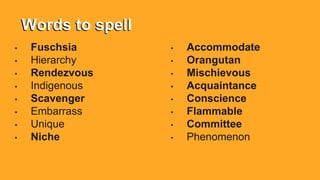
Words to spell
• Fuschsia
• Hierarchy
• Rendezvous
• Indigenous
• Scavenger
• Embarrass
• Unique
• Niche
• Accommodate
• Orangutan
• Mischievous
• Acquaintance
• Conscience
• Flammable
• Committee
• Phenomenon
communication-workshop n Team Building- FINAL.pptx

communication-workshop n Team Building- FINAL.pptx

  • 1.
    Here is whereyour presentation begins
  • 2.
    Objectives After the session,the pupils will be able to… ● define communication ● identify the essential communication skills for leaders ● Employ the ways to improve communication skills ● appreciate the importance of communication
  • 3.
    Effective leadership isthe backbone to any group or organization. The leader acts as a facilitator for the group and without it the group has little chance for success. A groups communication is only as good as its leader's.
  • 4.
    What is Communication? Mutualinteraction among two or more individuals is termed as ‘Communication’. Existence of life becomes impossible without Communication & mutual understanding. When it comes to making sure that things are getting in the right way & are successively moving forward, good communication skills are a building block. So, it is really necessary to improve our communication skills, whether verbal or written.
  • 5.
    • Effective leadershipis the backbone to any group or organization. The leader acts as a facilitator for the group and without it the group has little chance for success. • A groups communication is only as good as its leader's.
  • 6.
    • Communication isone of the most important aspects in the effective management of a club/organization. • Without communication, even poor communication, members wouldn't know when to come to meetings or what events were being organized.
  • 8.
    ‘to be agood communicator, it’s essential to be a good listener first’.
  • 9.
    -The most importantcommunication skill for leaders is the ability to listen. Professional listening skills include listening for the message, listening for any emotions behind the message and considering relevant questions about the message.
  • 10.
    • In theclassroom-When used effectively, praise can turn around behavior challenges and improve students' attitudes about learning. That makes meaningful and appropriate praise even more important.
  • 11.
    • For leaders-Genuinecompliments can be a great way to build a positive culture. When you learn how to give and accept compliments, they are also building empathy. Compliments is an easy way to build a positive community.
  • 12.
    • Think ofthe “who,” “what,” “when,” “where,” “why” and “how” as you explain what needs to be done • Explaining the reason (the “why”) is especially vital, particularly in regard to deadlines.
  • 13.
    • Help themrealize that their task is only part of a series of tasks for a big project. • People like to know the reasons they are doing something. Establish check-in times to discuss progress.
  • 14.
    • Leaders inschool, Company or other Organization are closely being observe by the people around them
  • 15.
    • Even whenwalking around campus with a smile on your face that is a form of communication. • The actions that you do inside/outside of school campus. It sends a message to others. • The way you talk and deal with others.
  • 16.
    • Because communicationtakes form in many ways, it is arguably the most important skill. Though each person will have different ways of communicating, whether it be verbal or nonverbal.
  • 18.
    • It isokay to use acronyms and informal language when you are communicating with a buddy or friend. • Effective communicators target their message based on who they are speaking to, so try to keep the other person in mind, when you are trying to get your message across.
  • 19.
    • This isimportant for face-to-face meetings and video conferencing. Make sure that you appear accessible, so have open body language. • This means that you should not cross your arms. And keep eye contact so that the other person knows that you are paying attention.
  • 22.
    • Keep appropriateDistance • Touch Only when Appropriate • Take care of your appearance • Maintain Eye contact • Smile Genuinely
  • 23.
    • For writtenand verbal communication, practice being brief yet specific enough, that you provide enough information for the other person to understand what you are trying to say. • And if you are responding to an email, make sure that you read the entire email before crafting your response.
  • 24.
    • Always pausebefore you speak, not saying the first thing that comes to mind. Take a moment and pay close attention to what you say and how you say it. This one habit will allow you to avoid embarrassments. • Thinking before you speak is a really good habit to develop, to avoid causing trouble in your life.
  • 25.
    • Even whenyou are speaking on the phone, smile because your positive attitude will shine through and the other person will know it. When you smile often and exude a positive attitude, people will respond positively to you.
  • 26.
    • Smiling causeschemical reactions in your brain that increase the production of Dopamine and Serotonin – the feel-good hormones. These hormones help to increase happiness and decrease stress.
  • 28.
    • Find apartner and talk about a certain topic • Each person will have 2 mins. to share • The listener can ask a follow up question • Find another partner again when you hear the sound of an alarm clock
  • 34.
    • Team buildingis the process of creating a team that cohesively works together towards a common goal. The importance and main purpose of team building is to create a strong team through forming bonds and connections. • Creating these bonds through team building is very beneficial organizations. The benefits of team building include increased communication, planning skills, motivation, and collaboration.
  • 35.
    Team Building • Spelling Station •Can you fill me? • Balloon Caterpillar
  • 36.
    Words to spell •Fuschsia • Hierarchy • Rendezvous • Indigenous • Scavenger • Embarrass • Unique • Niche • Accommodate • Orangutan • Mischievous • Acquaintance • Conscience • Flammable • Committee • Phenomenon

Editor's Notes

  • #2  Becoming a good leader requires important leadership skills. Learning and developing good leadership skills as a student leader will serve the student well when they leave a learning environment. Whether you’re new to the role of leader or you’ve been a student leader for some time, challenge yourself to learn important skills that will make you a better leader. 
  • #8 In order to lead others, one must be able to communicate their ideas and instructions in a clear and compelling way. Communication skills can be learned in school through a variety of classes, from language and linguistics to public speech and debate. These skills include poised self-expression and the ability to construct and structure complex ideas
  • #9 Do not underestimate the power of listening. Listening is an essential part of communication and a good leader knows how to listen well when communicating with others. When you listen to those you lead, you learn more and you increase rapport with the individuals you are leading.
  • #10 Practice active listening skills & pay close attention to what other people have to say. Also, you can clear obscurities by re-framing their questions for better understanding. Ask for clarification to avoid misunderstandings. At that moment, the person speaking to you should be the most important person in your life. Another important point is to have one conversation at a time. This means that if you are speaking to someone on the phone, do not respond to an email, or send a text at the same time.
  • #19 ny informal language, has no place in your message. You cannot assume that the other person knows what the acronym means. Some acronyms have different meanings to different people, do you want to be misunderstood?
  • #22 Good eye contact during communication helps establish a relationship with those you’re speaking to, it shows confidence and it makes you more personable. Learning to use your vocal effectively is also important, allowing you to express emotions, affecting your message’s tone to grab the attention of your listeners.
  • #25 Because while most of us are pretty careless with the words we choose, words are just so powerful. They can be helpful or hurtful, and can have a direct influence on the outcome of a situation, creating a positive or negative reaction
  • #27 Communicating effectively is a teachable skill, therefore following a few of the tips outlined above, will enable you to hone up on your communication skills.
  • #32 No one is born with all the essential leadership qualities. We communicate to help each other